Spider Prevalence and Cost Transparency in Norcross

Spiders are a regular sight in Norcross neighborhoods, especially around the edges of lawns, basements, and attics. Their presence is usually harmless, but a sudden surge can make homeowners uneasy, prompting calls to pest‑control professionals.
2024 data highlights the seasonal spike. According to the Georgia Department of Public Health, spider sightings increase 45 % during the summer months in Fulton County. Warm, humid weather creates an ideal breeding ground, and outdoor lighting attracts insects that serve as spider prey.
When a spider problem escalates, budgeting becomes a top concern. Homeowners need clear, upfront pricing to compare options, avoid surprise fees, and plan maintenance alongside other household expenses. Transparent cost information also builds trust, showing that a service provider respects the homeowner’s financial planning.
That’s where Anthem Pest Control steps in. As a locally‑based expert, we’ve serviced Norcross homes for years, learning the specific spider species that thrive here and the most effective treatment methods. Our 24‑hour service line (877‑371‑8196) ensures you can reach a technician any time the problem appears, and our commitment to transparent pricing means you’ll receive a detailed estimate before any work begins.
Our approach starts with a thorough inspection, followed by a customized treatment plan that targets the species you’re dealing with while protecting family and pets. Because we disclose every cost component—from labor to materials—homeowners can confidently allocate funds and schedule follow‑up visits if needed.
With this foundation of prevalence data and pricing clarity, the next section will break down the exact costs you can expect for spider control in Norcross, GA, helping you make an informed decision without hidden surprises.
Defining Infestations and Climate Drivers in Norcross
What qualifies as a spider infestation?
A true infestation goes beyond the occasional lone spider you spot on a porch. Homeowners should look for persistent, dense webs in corners, basements, or attics, multiple species sharing the same structure, and regular indoor activity such as spiders hunting at night or dropping from ceilings. When webs appear in the same location month after month and you’re finding spiders inside living spaces, the situation has crossed the line from a casual sighting to an infestation that warrants professional treatment.
Norcross climate and its impact on spiders
Norcross sits in a humid subtropical zone, with average temperatures ranging from 65 °F in winter to 80 °F in summer. The combination of warm days, mild nights, and consistently high humidity creates an ideal environment for web‑building spiders. Moisture softens the silk, allowing webs to expand quickly, while the moderate temperature range keeps spiders active year‑round rather than forcing them into seasonal dormancy.
Neighborhood hotspots
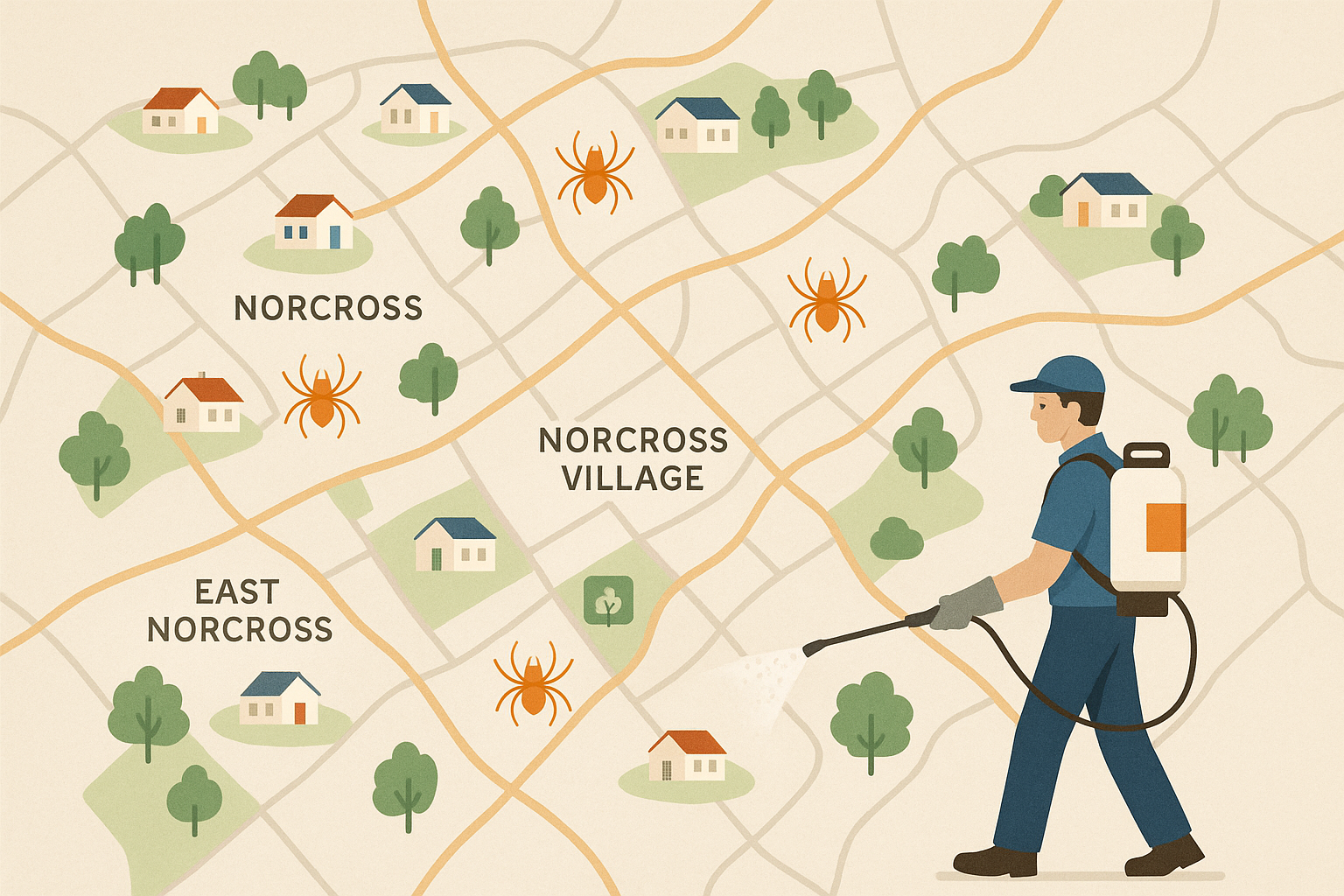
Spider activity isn’t uniform across the city; certain neighborhoods provide the perfect blend of vegetation, moisture, and housing style that encourages colonies to thrive. The three areas most frequently flagged by our technicians are:
- East Norcross – dense tree canopies and older homes with crawl‑space access.
- Norcross Village – tightly packed homes, well‑watered lawns, and frequent outdoor lighting.
- Norcross North – newer developments with extensive mulch beds and shaded patios.
These trends align with the EPA’s 2023 residential pest prevalence report, which notes higher spider sightings in humid, suburban settings similar to our local neighborhoods.
Micro‑climates and spider hotspots
Even within a single block, subtle differences—such as a shaded garage, a leaky pipe, or a pile of firewood—can create micro‑climates that attract spiders. Homeowners who notice webs clustering near these moisture‑rich zones should treat those spots as early warning signs. Addressing leaks, trimming vegetation, and reducing outdoor lighting can lower the micro‑environment’s suitability for spiders, making professional control more effective and less costly.
Common Spider Species and Their Risks

Black Widow
Black widows are instantly recognizable by their glossy black bodies and the distinctive red hourglass on the underside of the abdomen. Their venom is neurotoxic and can cause severe muscle cramps, sweating, and nausea. According to the CDC, medical attention is required in only 1‑2 % of bites, but the symptoms can be alarming enough to warrant a doctor’s visit.
Brown Recluse
Brown recluse spiders prefer quiet, undisturbed spaces such as closets, basements, and woodpiles. They are light‑brown with a violin‑shaped marking on the cephalothorax. Their bite can lead to necrotic lesions that take weeks to heal. Activity peaks in late summer and early fall, when the spiders are most active outdoors before seeking shelter inside homes.
Orb Weaver
Orb weavers spin large, circular webs that often drape across porch ceilings and garden trellises. These spiders are harmless to humans; their venom is weak and rarely causes any reaction beyond a mild irritation. The primary issue they present is visual – their massive webs can be unsightly and create a perception of infestation.
House Spider
House spiders, such as the common American house spider, are frequent indoor visitors. They are small, brownish‑gray, and typically hide in corners, behind furniture, or in ceiling cracks. While they pose virtually no health threat, their webs can accumulate dust and reduce the aesthetic appeal of a room.
Health Risks
- Venomous bites from black widows and brown recluses may require medical care.
- Allergic reactions, though rare, can occur after a bite.
- Secondary infections are possible if a bite is not properly cleaned.
Property Risks
- Extensive webbing on ceilings, corners, and insulation can attract dust and reduce indoor air quality.
- Thick webs may impede airflow in HVAC ducts, lowering system efficiency and increasing energy costs.
- Visible webs can diminish curb appeal and make a home feel unkempt.
“Black Widow bites require medical attention 1‑2 % of cases (CDC, 2022).”
What Determines the Price of Spider Control
Inspection Fees
The first line item on any spider‑control quote is the inspection fee. In Norcross, technicians typically charge between $75 and $120 for a thorough walk‑through, which includes identifying entry points, locating nests, and assessing the level of infestation. Larger homes or properties with complex layouts—multiple levels, attached garages, or extensive landscaping—often push the fee toward the top of that range because more time is required to map out problem areas.
Treatment Type
Once the inspection is complete, the treatment option you choose drives the bulk of the price. A one‑time interior spray, aimed at eliminating spiders you see inside the house, usually starts around $150 for a modest 1,200‑sq‑ft home. Quarterly barrier applications, which treat the exterior and create a protective shield that lasts through the season, can run $250‑$350 per year. For homeowners who want a long‑term, low‑maintenance solution, Integrated Pest Management (IPM) programs combine regular monitoring, targeted treatments, and preventive measures; these comprehensive plans often start near $500 annually.
Home Size Tiers
Home size is a straightforward multiplier; larger square footage means more product and more labor. Below are typical price brackets for two common sizes.
| Home Size (sq ft) | One‑time Interior Spray | Quarterly Barrier (annual) | IPM Program (annual) |
|---|---|---|---|
| ≈ 1,200 sq ft | $150 – $180 | $260 – $300 | $520 – $560 |
| ≈ 2,500 sq ft | $210 – $250 | $380 – $440 | $680 – $740 |
Species Severity
Not all spiders are created equal. If the inspection uncovers a venomous species such as the brown recluse or black widow, most companies add a $50 surcharge to cover the higher‑toxicity chemicals and additional safety protocols required.
Seasonality Impact
Demand spikes in the summer months when spiders are most active. In Norcross, many providers raise their rates by 10‑15 percent from June through August to account for increased labor and material costs. Scheduling treatment in the shoulder seasons—late spring or early fall—can shave a few dollars off the final bill.
Additional Fees and Guarantees
Beyond the core line items, many companies include ancillary charges that can tip the scale. A standard travel fee in the Norcross metro area is $15‑$25, reflecting the distance to the job site. If you request an emergency visit outside normal business hours, expect a 20‑30 percent premium on labor. Most reputable operators, including Anthem Pest Control, also offer a satisfaction guarantee—usually a free re‑treatment within 30 days if spiders return—so the upfront cost may include a small deposit that is refunded after the guarantee period expires.
National Benchmarks
The figures above align closely with the National Pest Management Association’s 2023 pricing survey, which reports a national average inspection fee of $92 and average treatment costs ranging from $140 for single‑visit interior sprays to $520 for full‑service IPM contracts. You can review the full survey here: NPMA 2023 pricing survey.
Pricing Packages Available in Norcross
Anthem Pest Control structures its spider‑control pricing in three clearly defined packages so Norcross homeowners can pick the level of protection that matches their budget and infestation severity.
Basic One‑Time Treatment
Cost: $120‑$180 per visit. This entry‑level option includes a thorough interior spray that targets common house spiders, a 30‑day guarantee that covers any re‑infestation, and a detailed post‑treatment report. It’s best suited for households that have noticed a few isolated spiders or are looking for a quick, cost‑effective fix before the summer surge. For example, a family that only sees occasional orb weavers in the basement can rely on this single visit and still stay within a modest budget.
Quarterly Barrier Program
Cost: $350‑$450 per year. The quarterly plan spreads four scheduled treatments throughout the year, creating a protective barrier that deters spiders from entering your home. After each visit, a technician conducts a re‑inspection to verify that the barrier remains intact and adjusts the application if needed. Ongoing monitoring helps catch early signs before they become a full‑blown infestation. Homeowners who entertain guests regularly or have children playing outdoors often prefer the quarterly barrier because it maintains a consistently low spider presence throughout the year.
Full‑Service IPM Package
Cost: $600‑$800 per year. This comprehensive Integrated Pest Management (IPM) solution goes beyond spraying. Technicians seal obvious entry points, provide homeowner education on spider‑proofing habits, perform an annual comprehensive review of your property, and grant priority service for any urgent calls. The package includes a 12‑month warranty that covers any spider activity linked to the original treatment, giving you peace of mind all year long. If you own a historic home with many cracks or have previously battled venomous species, the Full‑Service IPM package provides the most thorough protection, reducing the need for emergency calls.
Below is a side‑by‑side view of what each tier delivers, making it easier to match the service to your specific needs.
| Package | Inclusions | Treatment Frequency | Warranty / Guarantee | Ideal Customer |
|---|---|---|---|---|
| Basic One‑Time Treatment | Interior spray, post‑treatment report | Single visit | 30‑day guarantee | Minor, isolated infestations; tight budget |
| Quarterly Barrier Program | Four sprays, re‑inspection after each visit | Four times per year | 30‑day guarantee per visit | Active households seeking year‑round protection |
| Full‑Service IPM Package | Sealing entry points, homeowner education, annual review, priority service | Four sprays + annual review | 12‑month warranty | Homes with high risk, prior venomous sightings, or desire for comprehensive prevention |
When choosing a plan, consider the current level of spider activity, your willingness to schedule regular visits, and whether you value extra services such as entry‑point sealing or educational guidance. The Basic One‑Time Treatment solves immediate problems, the Quarterly Barrier keeps spiders at bay year‑round, and the Full‑Service IPM offers the highest level of prevention and convenience.
Although the Full‑Service IPM costs more upfront, its sealing, priority service, and year‑long warranty often prevent expensive emergency calls later.
All packages include Anthem’s guarantee, so you won’t pay twice for the same spider problem.
“We called Anthem after spotting a Black Widow in our garage. Their technician explained the cost up front, completed the treatment, and we haven’t seen another spider since. Transparent pricing made the decision easy.” – Sarah L., East Norcross
Select the plan that fits your comfort level, and enjoy a spider‑free home all year.
For the most up‑to‑date pricing details, visit Anthem Pest Control’s spider‑control pricing page.
DIY Methods Versus Professional Services
Common DIY options
- Over‑the‑counter aerosol or pump sprays
- Sticky glue traps placed in corners or along baseboards
- Vacuuming visible spiders and webs, then discarding the bag
- Essential‑oil sprays (e.g., peppermint, citrus) mixed with water
Why DIY often falls short
While a quick spray or a handful of traps can reduce the number of visible spiders, these methods rarely provide the thorough coverage needed for an infestation. Most consumer products lose their potency after a few days, leaving gaps where spiders can re‑enter. Improper application—such as spraying directly on fabrics or missing cracks and voids—creates inconsistent protection and often requires repeated treatments.
Safety concerns
Many over‑the‑counter insecticides contain chemicals that can linger on surfaces, posing inhalation or dermal risks to children, pets, and anyone with respiratory sensitivities. Essential‑oil mixtures may seem “natural,” but they can still irritate skin or eyes, especially in confined indoor spaces where ventilation is limited. The EPA’s residential pesticide safety guidelines stress the importance of proper labeling, protective equipment, and ventilation when using any chemical control.
Cost‑benefit snapshot
DIY efforts typically cost between $30 and $70 for a one‑time purchase of sprays, traps, and accessories. Professional spider control, however, ranges from $120 to $800 depending on the severity of the problem, property size, and whether a follow‑up visit is required. While the upfront price is higher, a licensed technician applies EPA‑approved products with guaranteed residual activity, identifies hidden entry points, and offers a service agreement that prevents future outbreaks.
| Approach | Typical Cost | Coverage Duration | Effectiveness |
|---|---|---|---|
| DIY sprays & traps | $30‑$70 | 1‑2 weeks | Partial, spot‑treatment |
| Professional service (Anthem Pest Control) | $120‑$800 | 4‑12 weeks (with residuals) | Comprehensive, long‑term control |
For homeowners who value safety, lasting results, and a clear plan of action, investing in a professional service often delivers the best return. For more details on pesticide safety, see the EPA residential pesticide safety guidelines.
Seasonal Timing and Prevention Checklist
In Norcross, the spider season really takes off as soon as the weather warms. The moment daytime highs consistently hit the mid‑50s, insects—spiders’ favorite meals—begin to emerge, and the eight‑legged residents follow. That’s why early spring, specifically March through April, is the optimal window for a pre‑emptive treatment. Acting before the first generation of house spiders matures lets you knock the problem down at its source, saving you time, chemicals, and money later in summer.
Why early spring (March‑April) is the ideal window
Early spring treatment hits spiders before their prey populations explode. By the time summer arrives, a single untreated spider can have produced dozens of egg sacs, each containing hundreds of hatchlings. A March‑April application creates a protective barrier that keeps the initial invasion low, making any follow‑up visits quicker and less expensive.
Prevention steps you can start today
Pairing that timely treatment with a solid home‑maintenance routine creates a barrier that spiders find hard to cross. Below is a quick‑check list you can run through each month:
- Seal cracks and gaps around windows, doors, and the foundation.
- Reduce outdoor lighting or switch to yellow‑bug lights to keep insects away.
- Trim trees, shrubs, and vines so they don’t touch the house.
- Vacuum corners, ceiling edges, and stored boxes regularly.
- Remove clutter such as cardboard boxes, firewood piles, and unused items.
Sealing cracks eliminates the tiny entryways spiders use to slip inside, especially around windows and utility openings. Outdoor lights act like a beacon for flies and moths, which in turn lure spiders; swapping to amber bulbs or motion‑sensors cuts that attraction. Overgrown shrubs create a bridge from the yard to your roof, giving spiders a direct highway. Regular vacuuming not only removes webs but also captures egg sacs before they hatch. Finally, clutter offers hidden hide‑outs where spiders can build permanent colonies.
For more detailed, region‑specific tips, consult the Georgia Extension guide. It covers everything from landscaping best practices to seasonal inspection schedules, complementing the checklist above.
We recommend booking your spring service at least two weeks before the first expected surge of insects, giving the treatment time to work its magic.
Frequently Asked Questions About Spider Control
Will spider control affect my pets?
At Anthem Pest Control we rely exclusively on EPA‑approved, low‑toxicity formulations that are proven safe for household animals. The active ingredients break down quickly once the spray dries, so keeping pets away from treated zones for the recommended 30‑minute drying period eliminates any risk. After that window, cats, dogs, and even small mammals can move freely without exposure concerns. For detailed safety data, see the EPA’s pet‑safety guidelines.
How long does a treatment last?
Professional spider sprays are designed to leave a residual barrier that remains effective for roughly 30‑60 days. The exact duration depends on the specific product, humidity, temperature, and foot traffic in the treated area. In cooler, drier conditions the residual activity may linger closer to the 60‑day mark, while hot, humid summers can shorten it toward 30 days. The CDC’s pesticide information page outlines how environmental factors influence residual performance.
Do I need multiple visits?
For minor spider sightings a single, well‑executed treatment often suffices. However, larger homes, dense landscaping, or the presence of venomous species such as black widows usually call for a follow‑up visit or enrollment in a seasonal barrier program. Re‑treatments reinforce the protective layer and help break the spider life cycle before it re‑establishes. Industry best practices, as highlighted by the National Pest Management Association (NPMA), recommend assessing the infestation level after the first service to determine if additional applications are warranted.
Final Takeaways and How to Get Started
When it comes to spider control in Norcross, the price you pay is driven by several key factors: the severity of the infestation, the size of your home, the type of treatment (spot‑service vs. full‑home program), and whether you choose a one‑time fix or a licensed technician. Typical pricing tiers range from $80‑$120 for a basic DIY kit, $150‑$250 for a single professional visit, and $300‑$500 for an annual protection package that includes seasonal follow‑ups. DIY solutions can be budget‑friendly but often lack the thoroughness and safety guarantees of a licensed technician. Timing matters, too—treating in early spring catches spiders before they establish nests, while late‑summer applications help prevent indoor migrations. Finally, safety considerations such as child‑ and pet‑friendly products should never be an afterthought.
Anthem Pest Control is right here in Norcross, offering a 100 % satisfaction guarantee and a complimentary inspection to pinpoint exactly what your home needs. Our technicians use EPA‑approved formulations that protect your family and pets while delivering lasting results.
Ready to take the next step? Call 877‑371‑8196 or visit https://anthempest.com/ for a no‑obligation quote today. Our friendly team will schedule a free on‑site assessment and walk you through the most cost‑effective plan for your situation.
Spring is the ideal window to lock in current pricing before seasonal demand drives rates up. By booking now you secure today’s rates and give your home a proactive shield against spider invasions throughout the year.
Visit Anthem Pest Control to learn more and start your spider‑free season.