Why Spider Problems Matter for Woodstock Homeowners

Woodstock, Georgia’s warm, humid climate creates a welcoming environment for several spider species that homeowners often encounter. The most common culprits include the Southern house spider, which builds messy sheet‑like webs in corners and basements; the brown recluse, a shy hunter that prefers undisturbed closets, attics, and wood piles; and the infamous black widow, which favors sheltered, dry spots such as crawl spaces and outdoor sheds. Each species has a preferred habitat, but all thrive when they find easy access points into your home.
Health and Property Concerns
While most spiders are harmless, a bite from a brown recluse or black widow can trigger serious medical reactions, ranging from localized pain to systemic allergic responses that require immediate attention. Even non‑venomous species can cause discomfort—think of the psychological unease of waking up to a web draped over a bedroom lamp or the nuisance of sticky silk on windowsills. Over time, dense webs can damage delicate décor, collect dust, and attract other insects that feed on spider silk, creating a feedback loop of infestation.
What Spider Activity Reveals
Spiders don’t appear out of thin air; they’re usually chasing a thriving population of insects. A sudden surge in spider sightings often signals an underlying issue—perhaps a hidden ant trail, a moth infestation, or cracks that let tiny pests slip inside. In other words, spiders act as early warning signs that your home may need a broader pest‑control assessment.
Spot‑the‑Signs Checklist
- Clusters of irregular, tangled webs in corners, ceilings, or storage areas.
- Dead insects caught in silk, indicating a food source nearby.
- Unexplained bite marks, especially on exposed skin after evening activities.
- Increasing indoor sightings, particularly during late summer and early fall.
What You’ll Learn Next
In the sections that follow, we’ll break down seasonal spider patterns specific to Woodstock, walk you through safe and effective treatment options, and give you a clear picture of pricing so you can budget confidently. Finally, we’ll show how Anthem Pest Control leverages local expertise, transparent rates, and environmentally responsible methods to keep your home spider‑free year after year.
Seasonal Spider Activity in Woodstock, GA
According to the seasonal spider activity chart for Woodstock, the most pronounced surge occurs from August through October, with a secondary uptick in late spring (April‑May). Those peak months line up with the life cycle of many common house spiders, which lay egg sacs in midsummer and hatch as temperatures stay warm. In spring, newly emerged spiderlings search for shelter, creating a noticeable rise in indoor sightings before the summer lull.
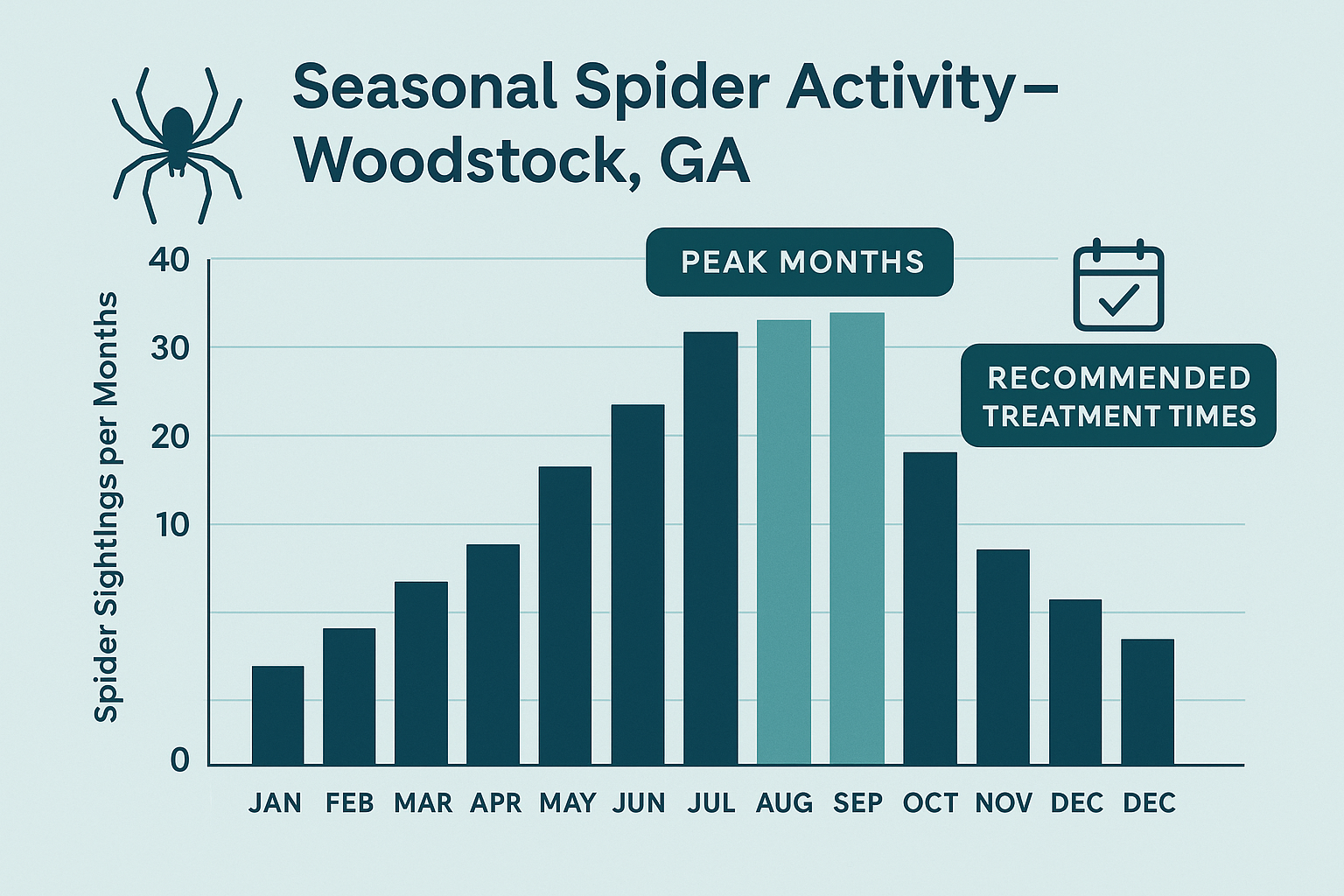
The spikes aren’t random; they’re driven by Woodstock’s subtropical climate. Warm evenings and high humidity create ideal conditions for insects—spiders’ primary food source—to thrive around outdoor lights, porch walls, and garden foliage. Those insects swarm, and spiders follow, setting up webs close to the house where they can catch prey. When night temperatures stay above 70°F, spider metabolism stays active, extending the period they’re willing to venture indoors.
Optimal treatment windows take advantage of these patterns. By intervening before the insects and spiders reach their peak, homeowners can keep populations low and avoid costly infestations later in the year.
- Late spring (mid‑April to early May): Apply a pre‑emptive barrier around the home’s exterior. This stops wandering spiderlings from establishing footholds as they emerge from egg sacs.
- Late summer (late August to early September): Conduct a follow‑up treatment targeting the primary peak. Focus on interior cracks, window frames, and outdoor lighting zones where adult spiders congregate.
- Fall spot checks (October): Perform targeted applications in high‑risk areas—garage doors, crawl spaces, and attics—where spiders may seek shelter for winter.
Missing these windows can have a domino effect. If a homeowner skips the spring barrier, spiderlings quickly mature, leading to dense webbing by August. The resulting infestation often requires multiple visits, higher‑grade products, and more labor, which drives up the overall cost of control. Moreover, a large indoor population can attract secondary pests, such as flies and beetles, compounding the problem.
Local expertise confirms the timing strategy. Massey Services recommends a two‑phase approach—spring and late summer—to keep Woodstock homes spider‑free. Community Pest Solutions echoes this, noting that homeowners who act before the August‑October peak see up to 40% lower treatment expenses. Trusting a seasoned provider like Anthem Pest Control ensures the right products are applied at the right moment, protecting your family and property without breaking the bank.
Professional Inspection and Treatment Methods
Step‑by‑step exterior and interior inspection
A certified technician starts at the perimeter, checking door frames, window screens, and the foundation for cracks or gaps where spiders can slip inside. Next, the inspector moves to crawl spaces and under‑deck areas, looking for moisture buildup and spider webs that signal a hidden colony. Inside the home, they examine corners, closets, basements, and ceiling voids, paying special attention to high‑traffic entry points such as utility openings and vent grates. The walk‑through ends with a quick review of the surrounding landscaping—overgrown shrubs, woodpiles, and outdoor lighting can all create inviting habitats for wandering spiders.
Tools and technologies
Modern pest professionals rely on a mix of low‑tech and high‑tech gear. A handheld moisture meter pinpoints damp spots that attract prey insects, which in turn lure spiders. Flashlights with focused beams reveal fine silk strands that are invisible to the naked eye. All findings are captured in a digital report—often a tablet with a clipboard‑style interface—so homeowners receive a clear map of “hotspots” and a transparent action plan.

Treatment options
- Spot‑on residual sprays – Applied directly to high‑traffic entry points such as door thresholds and window sills, these sprays leave a lasting barrier that kills spiders on contact.
- Perimeter barrier treatments – A professional-grade formulation is sprayed around the foundation, garden beds, and along the base of exterior walls to create a protective moat.
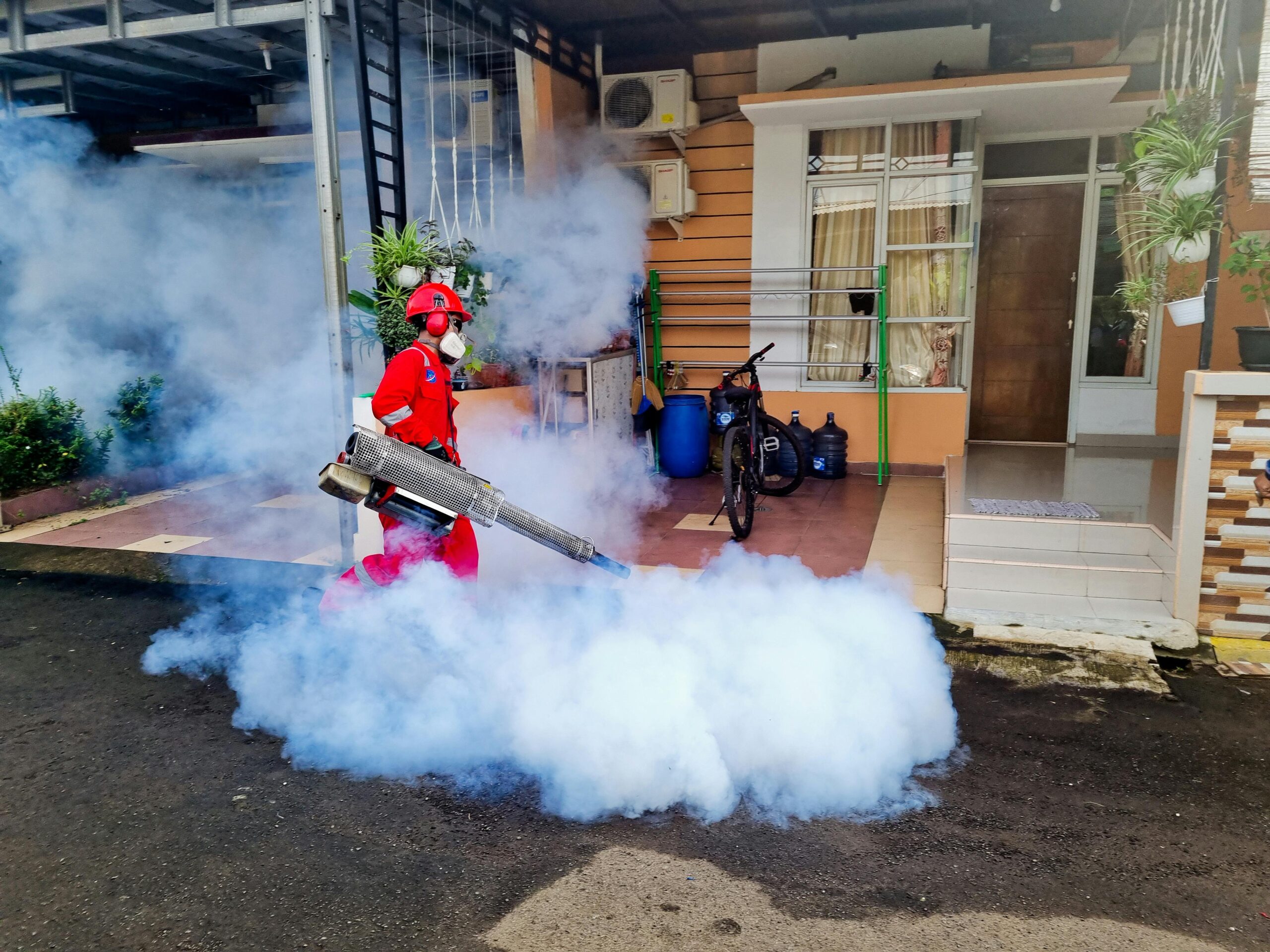
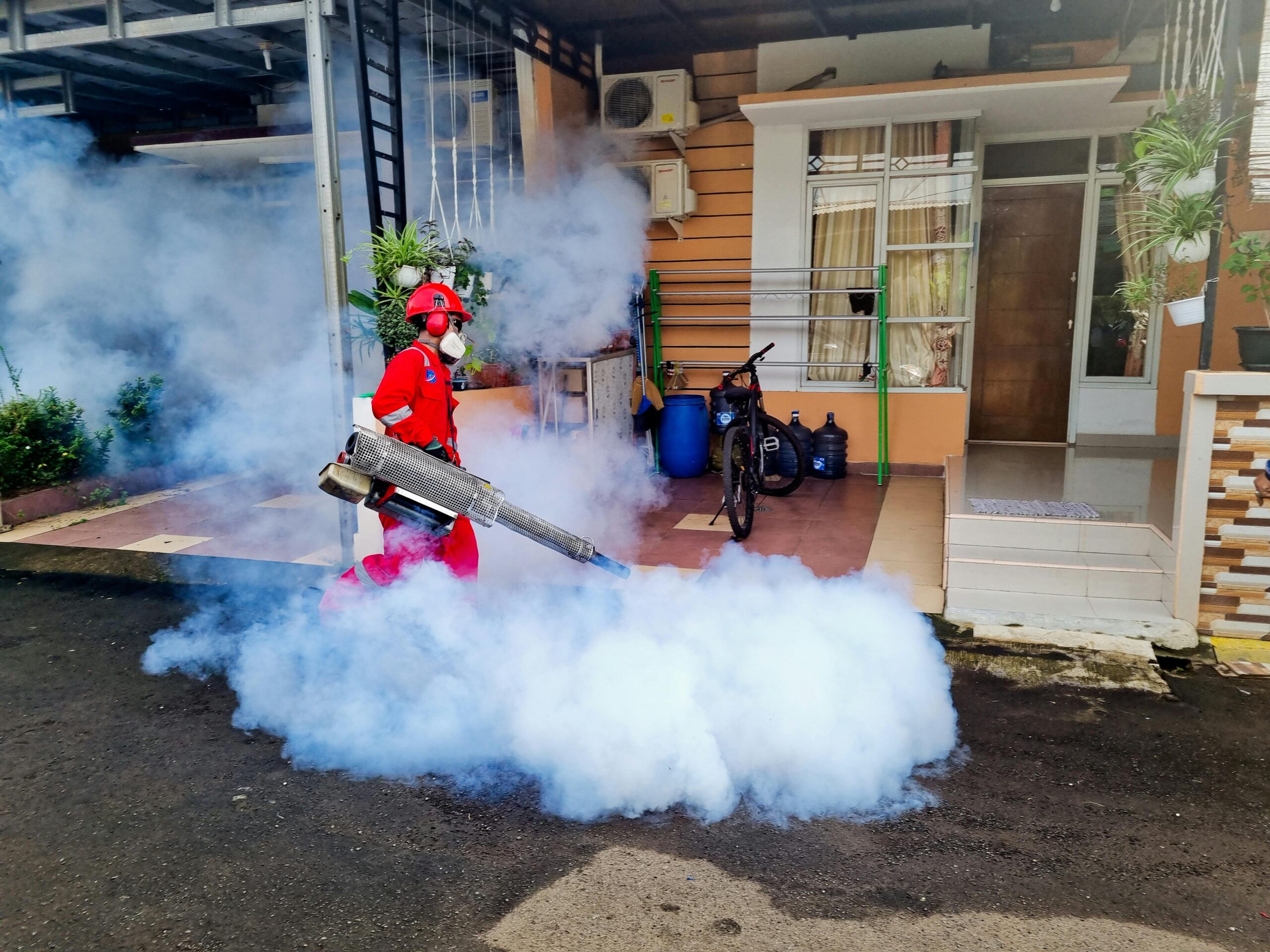
- Indoor fogging or ULV (ultra‑low volume) applications – For severe indoor infestations, a fine mist disperses a fast‑acting insecticide that reaches cracks, crevices, and ceiling voids without excessive residue.
- Integrated Pest Management (IPM) – Beyond chemicals, IPM focuses on sealing cracks, trimming vegetation away from the house, reducing outdoor lighting that attracts insects, and removing clutter where spiders can hide.
Safety considerations
Reputable companies, including Anthem Pest Control, prioritize low‑toxicity products that meet EPA standards. Pet‑friendly options are available for households with dogs or cats, and technicians wear protective gear to minimize exposure. All formulations are applied according to label directions, ensuring that residue levels remain well below harmful thresholds while still delivering effective control.
How Anthem Pest Control customizes your plan
Anthem begins by evaluating three key factors: the square footage of your home, the severity of the spider activity, and any specific preferences you have—such as a desire for pet‑safe chemicals or a focus on non‑chemical IPM strategies. Based on this assessment, they draft a tailored treatment schedule that might combine a perimeter barrier with a targeted indoor ULV application, followed by a few months of monitoring visits. Homeowners receive a written estimate that breaks down labor, product costs, and any optional add‑ons, so there are no surprise fees.
Understanding Spider Control Pricing
What Drives the Cost?
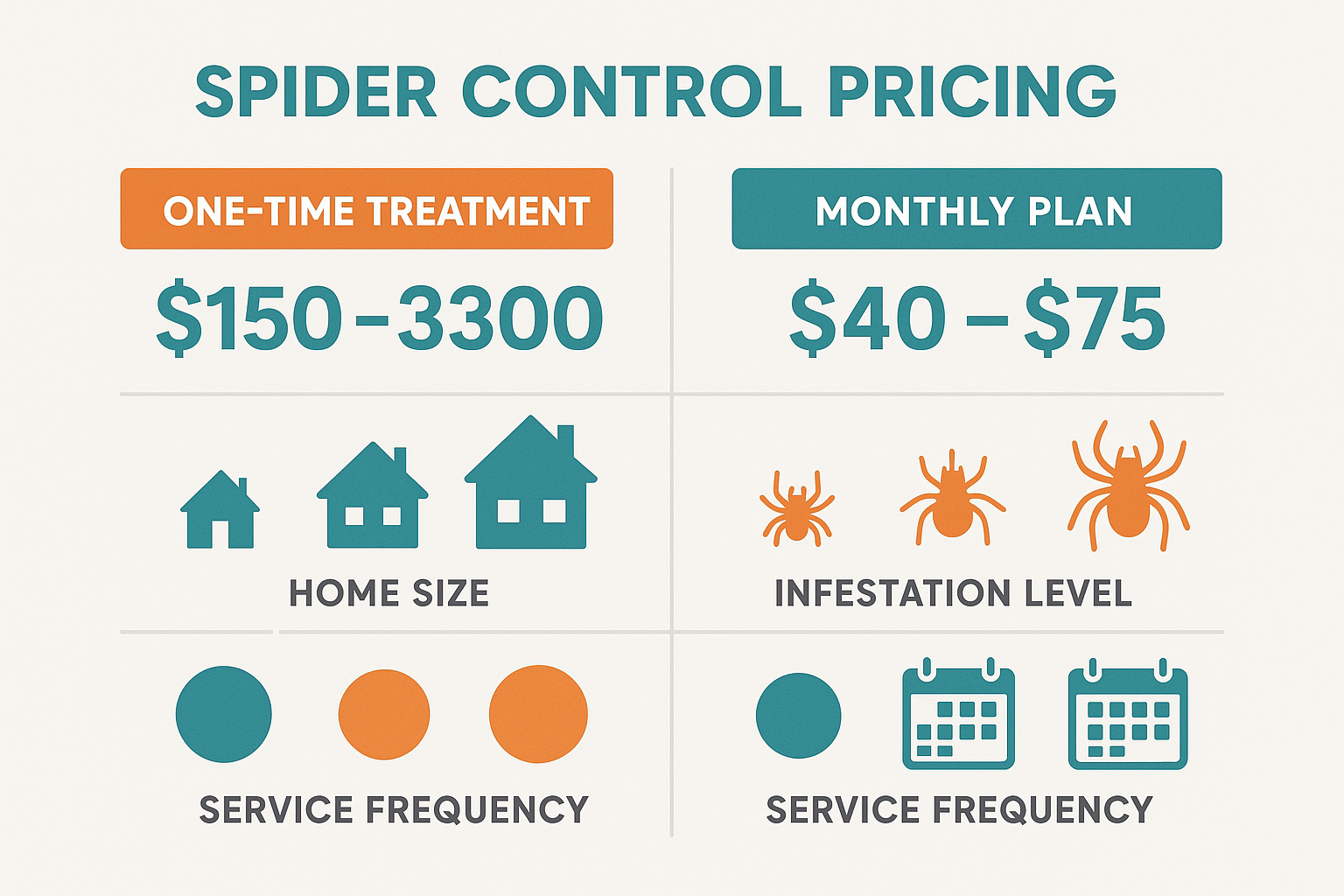
Spider control isn’t a one‑size‑fits‑all service. Prices shift based on three core variables:
- Home size. A small cottage may need only a single spray zone, while a large 3,500‑sq‑ft house often requires multiple applications and more product.
- Infestation level. Low‑level sightings usually need a single treatment zone. Medium infestations cover several rooms, and high infestations can demand a full‑property sweep.
- Service frequency. One‑off treatments give immediate knock‑down. Monthly or quarterly plans maintain a barrier, reducing the chance of re‑infestation and often delivering better long‑term efficacy.
One‑Time vs. Recurring Plans
A one‑time treatment typically ranges from $150 to $300, reflecting the size of your home and the severity of the spider problem. This option is ideal if you’ve just spotted a few spiders and want a quick fix.
Recurring plans, on the other hand, are billed per visit—usually $40 to $75. While the per‑visit cost appears lower, the total outlay over a year can add up. The advantage is continuous protection, which often prevents secondary pest issues such as insects that spiders prey on.
Cost‑Benefit Snapshot
Consider the upfront investment versus ongoing protection. A single $225 treatment eliminates the current infestation, but without follow‑up, spiders may return, especially after seasonal changes. A four‑month plan at $260 spreads the expense across four visits, keeping a residual barrier in place and potentially saving you from future exterminations for ants, roaches, or other pests that thrive when spiders disappear.
Sample Pricing Table
| Service Type | Number of Visits | Total Cost | Average Cost per Visit |
|---|---|---|---|
| One‑time treatment | 1 | $225 | $225 |
| 4‑month recurring plan | 4 | $260 | $65 |
Additional Fees & Transparency
Anthem Pest Control keeps pricing clear. Most homeowners see a nominal initial inspection fee of $30‑$50, which is often credited toward the first treatment. Follow‑up visits after the initial service may carry a small travel surcharge in remote areas, but these charges are disclosed up front. There are no hidden mark‑ups; every quote lists product, labor, and any applicable fees.
Industry Benchmarks
Our pricing aligns with national standards. According to Bug Busters USA, the average cost for spider control across the United States falls within the $150‑$350 range for one‑time services and $35‑$80 per visit for maintenance plans. Anthem’s rates sit comfortably within these benchmarks while offering the added benefit of local expertise in Woodstock, Georgia.
Protect Your Home with Anthem Pest Control
Spiders thrive when they’re left unchecked, especially during Woodstock’s warm months when indoor humidity spikes. A timely, professional spider control plan stops a few stray webs from becoming a full‑blown infestation. Regular seasonal inspections catch early activity, allowing technicians to treat problem areas before spiders spread to corners, basements, and attics. In short, acting early saves you time, stress, and the cost of extensive remediation later.
Why Choose Anthem Pest Control?
- Locally trained technicians – Our crew knows Woodstock’s unique spider species and the best entry points to target.
- Safe and effective products – We use EPA‑registered solutions that protect your family and pets while eliminating spiders.
- Transparent pricing – No hidden fees; you’ll receive a clear, itemized quote before any work begins.
- Customized IPM plans – Integrated Pest Management blends chemical treatment, habitat modification, and preventive advice tailored to your home.
Ready to see how these advantages work for you? Schedule a free, no‑obligation inspection today. Our specialists will walk through your property, identify spider hotspots, and recommend a plan that fits your budget and comfort level.
Whether you’re dealing with a few stray webs or a full‑blown infestation, our team is ready to restore comfort to your home. Call us today for a complimentary quote and discover how affordable peace of mind can be.
Visit Anthem Pest Control for your free quote now, or call 877‑371‑8196. Let us protect your Woodstock residence with expertise you can trust.