Identify Stink Bugs and Recognize Early Warning Signs

Stink bugs are small, shield‑shaped insects that often go unnoticed until they become a nuisance. In Kennesaw, the most common culprit is the brown‑marmorated stink bug (Halyomorpha halys). Knowing what they look like and where they like to hide gives you a head start on preventing a full‑blown infestation.
Physical description of the brown‑marmorated stink bug
These bugs measure roughly ½ inch (12–15 mm) long and have a distinctive, almost triangular “shield” on their backs. Their coloration is a mottled brown with lighter bands along the edges, and the underside is a pale, creamy hue. When you turn one over, you’ll see a row of tiny puncture‑like spots that run the length of the abdomen—an easy visual cue for homeowners.
Other stink‑bug species you might encounter in Georgia
While the brown‑marmorated variety dominates, a few native species occasionally turn up in the area. The green stink bug (Acrosternum hilare) sports a bright olive‑green body and a more rounded shape, while the southern green stink bug (Nezara viridula) displays a vivid green carapace with a subtle yellowish edge. Both are larger—about ¾ inch—and lack the pronounced brown banding of the brown‑marmorated type, making color the quickest way to tell them apart.
Typical entry points around your home
Stink bugs are opportunistic invaders. They squeeze through the smallest gaps, so inspect your foundation for cracks wider than a pencil tip. Eaves and roof vents are favorite highways, especially when they’re not sealed with mesh. Window screens with torn holes, loose door frames, and even gaps around utility lines provide easy access. A quick visual sweep of these vulnerable spots each spring can save you a lot of hassle later.
Early warning signs to watch for
When disturbed, stink bugs release a faint, unpleasant odor—often described as “rotting cilantro.” You may notice this scent if you brush against a bug on a light fixture or window sill. Dead stink bugs accumulating in lamps, ceiling fans, or behind appliances are another red flag. Look for tiny black fecal spots on walls, windows, or outdoor furniture; these are the insects’ waste and appear as specks no larger than a pinhead. Finally, an uptick in numbers during late summer—especially on the porch or in the kitchen—signals that the colony is preparing to overwinter inside your home.
Why early detection matters
Catching stink bugs early reduces the amount of pesticide you’ll need, because a small, localized treatment is far more effective than a broad, heavy‑duty spray after the bugs have multiplied. Early action also protects your garden and ornamental plants; stink bugs feed on fruit, tomatoes, and ornamental shrubs, leaving behind wilting foliage and reduced yields. By spotting the signs now, you limit both the chemical cost and the potential damage to your landscaping.
Stink Bug Seasonal Activity and Optimal Treatment Windows
Understanding the Stink Bug Life Cycle in Georgia
Stink bugs spend the cold months as adult hibernators in leaf litter, fence cracks, or attic corners. When daytime temperatures consistently hit 55‑60°F in early spring, these overwintering adults awaken, seek shelter inside homes, and begin mating. Females lay clusters of eggs on the undersides of leaves; nymphs emerge, molt five times, and become reproductive adults by midsummer. By late fall, the new generation seeks out warm hiding spots to survive the winter, restarting the cycle.
Reading the Seasonal Activity Chart
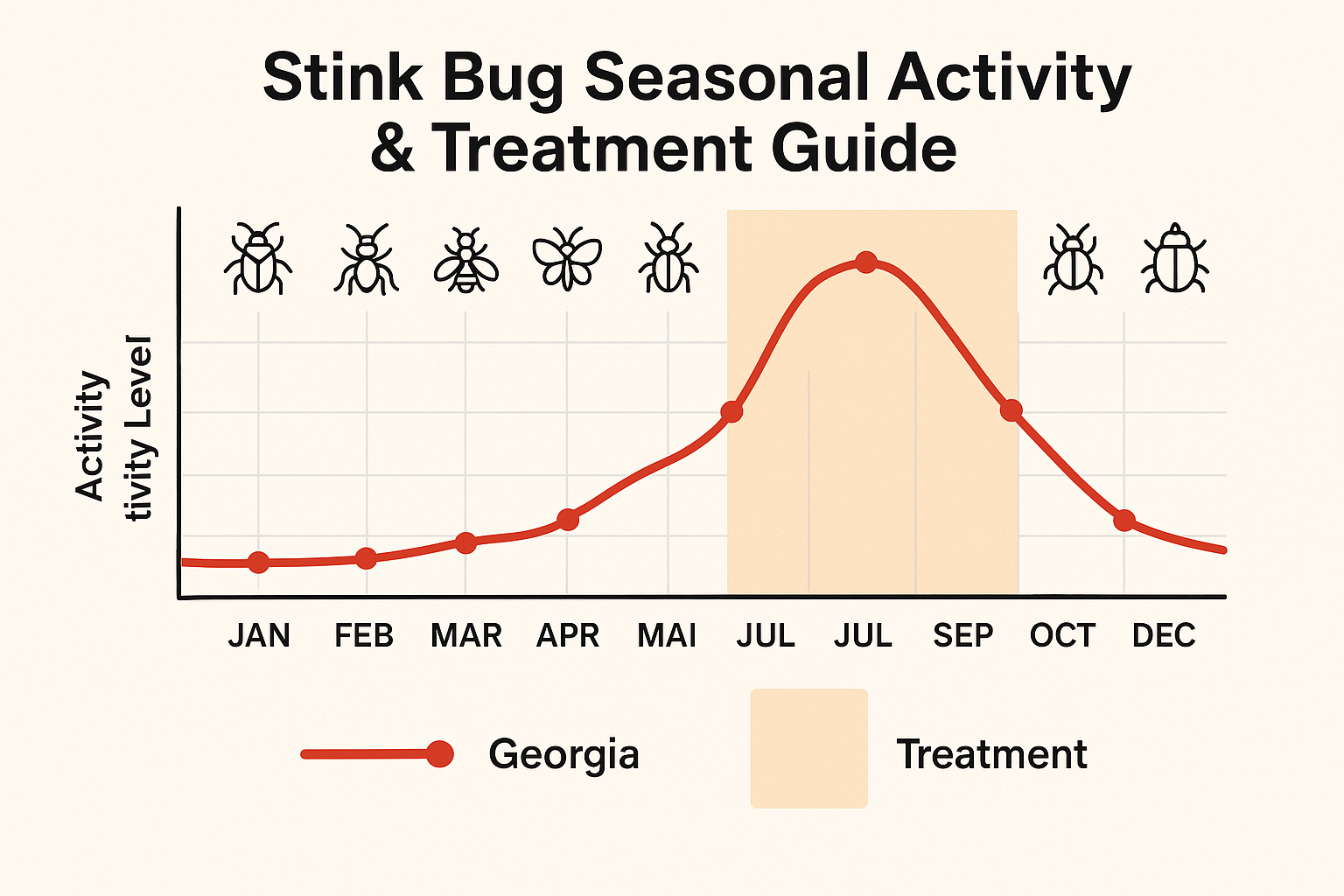
The chart shows a classic bell‑shaped pattern:
| Month | Activity Level |
|---|---|
| Jan‑Feb | Very Low |
| Mar‑Apr | Low‑Increasing |
| May‑Jun | Moderate |
| Jul‑Sep | High (Peak) |
| Oct‑Nov | Declining |
| Dec | Very Low |
Optimal Treatment Schedule
Early‑spring perimeter spray – Around late March to early April, before bugs cross your foundation, apply a residual barrier on exterior walls, windows, and door frames. This stops adults from entering and gives you a head start.
Mid‑summer “boost” – During the July‑September peak, a second treatment targets any insects that slipped through the first line and reduces the breeding population inside the home.
Fall follow‑up – In late October, a final application catches late‑season entrants seeking shelter for overwintering. It also treats any residual nymphs that survived the summer spray.
Why Climate Beats the Calendar
Georgia’s climate isn’t a strict 30‑day month system. A warm spell in April can advance emergence, while a cool June can delay nymph development. Temperature and humidity dictate how quickly bugs become active. Aligning your service dates with the activity chart—rather than a fixed “May 1st” rule—ensures you treat the pest when it’s most vulnerable.
Quick‑Tip Checklist
- Mark late March for the first perimeter spray.
- Set a reminder for mid‑July to schedule the summer boost.
- Schedule a late‑October follow‑up before the first frost.
- Check local forecasts: if a warm front arrives early, move the spring treatment up a week.
- Keep doors and screens sealed; eliminate leaf‑litter piles near the foundation.
Comparing Stink Bug Control Costs in the Kennesaw Area
Knowing exactly what you’ll pay for stink‑bug control saves you from surprise invoices and helps you plan your household budget. In Kennesaw, where summer heat drives bugs indoors, transparent pricing lets homeowners choose the right protection without over‑paying.
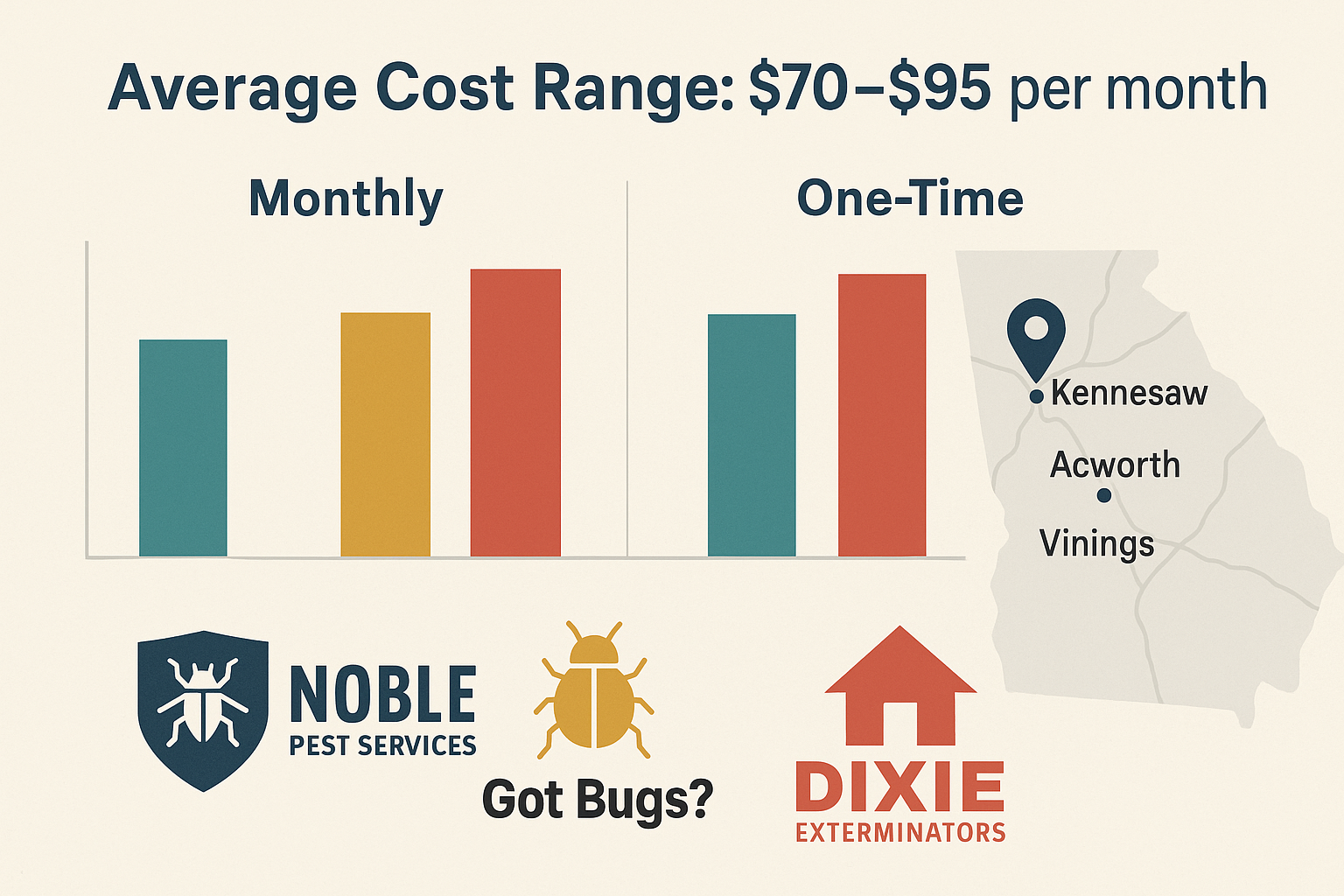
The recent cost infographic breaks the market down into two simple buckets. Monthly service plans typically fall between $70 and $95 per month, while a one‑time treatment ranges from $150 to $250 depending on the size of the property and the severity of the infestation.
Provider‑by‑Provider Pricing
- Noble Pest Services – Offers a $75/month plan that includes two follow‑up visits and a 1‑year warranty. One‑time treatments start at $165 for homes under 1,500 sq ft.
- Got Bugs? – Charges $90/month for a comprehensive package that adds quarterly exterior inspections. Their one‑time fee is $210 for properties up to 2,000 sq ft.
- Dixie Exterminators – Provides a $70/month “basic” option with a single post‑treatment check. One‑time services begin at $150 but increase quickly for larger homes.
Key Variables That Influence the Final Price
Even within the same provider, a few core factors can shift the quote up or down. Understanding these will help you ask the right questions during the estimate.
- Square footage – Larger homes need more product and longer treatment times.
- Infestation severity – Heavy populations require additional applications or stronger formulations.
- Service frequency – Monthly plans spread the cost, while a single intensive treatment concentrates it.
- Combo services – Adding ant, mosquito, or rodent control usually adds a modest surcharge.
Industry Context
For a broader view, consult the Anthem Pest Control pricing guide. It outlines national averages and explains why regional markets like Kennesaw may sit at the higher end of the spectrum due to climate‑driven pest pressure.
Quick “Cost Calculator” Tip
Start with your home’s square footage, then choose a service model:
- Multiply the square footage (in hundreds) by $10 for a rough monthly estimate.
- Add $30‑$50 if you need a one‑time deep treatment.
- Factor in an extra $20 per month for any bundled pest services.
Example: A 2,000 sq ft house (20 × $10) = $200/month. Add $40 for a one‑time stink‑bug blast, and $20 for mosquito coverage, landing you at roughly $260 for a comprehensive annual plan.
Treatment Options: DIY Methods vs Professional Services
Common DIY tactics
Many Kennesaw homeowners start with simple, low‑cost tricks: sticky traps placed near windows, homemade soap‑spray mixtures, vacuuming visible bugs, and sealing obvious cracks with caulk. These methods can catch a few stray stink bugs, especially early in the season, and they give a sense of immediate control without a bill.
Limitations of DIY
While DIY feels empowering, it often falls short on several fronts. Coverage is inconsistent—most people only treat the areas they can see, leaving hidden entry points untouched. Improper use of over‑the‑counter pesticides can create health hazards for pets and family members, especially if the product isn’t EPA‑approved or mixed correctly. Finally, stink bugs are masters at slipping through tiny gaps around door frames, eaves, and siding, so a homeowner’s toolbox rarely reaches those hidden spots.
What a professional service includes
When you call Anthem Pest Control, a licensed technician begins with a thorough inspection that goes beyond the obvious. They examine hard‑to‑see locations such as door frames, window sills, roof eaves, and even the undersides of decks. Based on that assessment, they apply a targeted perimeter treatment that creates a protective barrier around the home, followed by interior sprays that safely reach cracks and voids where bugs congregate. The service finishes with a monitoring plan—sticky perimeter traps and scheduled follow‑ups—to ensure any new invaders are caught early.
Safety advantages of licensed technicians
Professional pest controllers handle EPA‑approved products with the proper protective equipment, minimizing exposure risks for you and your family. They also stay up‑to‑date on Georgia’s local regulations, guaranteeing that every application meets state safety standards. This expertise eliminates the guesswork and potential mishandling that can turn a simple spray into a health concern.
Cost‑benefit analysis
DIY solutions may seem cheap—often under $50 for traps and a bottle of soap—but the savings are short‑lived. Homeowners frequently find themselves re‑applying treatments, buying more products, and dealing with repeated infestations. A professional stink‑bug program typically ranges from $150 to $300 per treatment, yet it delivers long‑term protection, reduces the likelihood of re‑infestation, and protects the structural integrity of your home. In the end, the modest upfront investment often pays for itself by preventing costly damage and the time spent on repeated DIY attempts.

The close‑up image above illustrates the meticulous inspection a professional provides. By identifying even the smallest gaps around a door frame, the technician can apply a focused treatment that seals the entry point, something most DIY efforts simply overlook.
In short, DIY methods can offer a quick visual fix, but they rarely achieve the comprehensive, safe, and lasting results that a licensed professional delivers. For Kennesaw homeowners who value peace of mind and long‑term protection, partnering with Anthem Pest Control is the smarter, safer route.
Protect Your Home Today with Anthem Pest Control
Three Pillars of Effective Stink‑Bug Management
First, early identification lets you spot the tell‑tale signs—tiny brown‑black bugs, squash‑shaped damage, or a sweet, lingering odor—before an infestation spreads throughout your walls and garden. Second, seasonal timing is critical; treating in early spring or late summer targets the bugs when they’re most active and before they seek shelter for the winter. Third, a clear grasp of cost options (single‑visit treatments, seasonal protection plans, or warranty‑based packages) empowers you to choose a solution that fits your budget while delivering lasting protection. Knowing these three pillars equips any homeowner to make informed decisions and avoid surprise expenses later.
Why a Professional Inspection Beats DIY
A trained technician can locate hidden entry points that most homeowners overlook. Cracks in the foundation, gaps behind eaves, poorly sealed door frames, and even tiny vent openings become highways for stink bugs. During a thorough inspection, the specialist maps these vulnerabilities, recommends precise sealing methods, and applies targeted treatments only where they’re needed. This focused approach eliminates the guesswork of DIY sprays or traps, which often miss the bugs’ true hideouts and can leave you with recurring problems.
Anthem Pest Control’s Edge
- U.S.–wide service network: No matter where you are in Kennesaw, a local technician is just a call away, ensuring prompt response times.
- EPA‑approved, low‑toxicity products: Safe for children, pets, and the environment while remaining lethal to stink bugs.
- Transparent pricing: You receive an upfront quote with no hidden fees, so you know exactly what you’re paying for.
- Customized treatment plans: Each inspection results in a strategy tailored to your home’s construction, landscaping, and bug pressure level.
- Satisfaction guarantee: If bugs return within the service window, Anthem will re‑treat at no extra cost, giving you confidence in the investment.
Take the First Step—Free, No‑Obligation Quote
If you’ve noticed any of the signs discussed, or simply want peace of mind this season, contact Anthem for a free inspection and customized quote. Our specialists will assess your property, explain the best treatment plan, and answer any questions you have, all without any obligation to purchase.
Call now at 877‑371‑8196 or visit Anthem Pest Control to schedule your appointment and protect your home today.