Stink Bug Trouble in a Tucker Kitchen
Imagine you’re prepping dinner in your Tucker kitchen, the aroma of sautéing onions filling the air, when a faint, sour‑sweet smell drifts from the countertop. You glance down and see a cluster of brown‑marmorated stink bugs, their shield‑shaped backs glistening in the kitchen light. One accidental crush releases that notorious, lingering odor that makes even the most seasoned chef wince. Understanding stink bug control cost Tucker GA helps homeowners plan for professional treatment before infestations get out of hand.
That moment is becoming all too common across the Atlanta metro area. The brown‑marmorated stink bug, an invasive species native to East Asia, slipped through shipping containers and found a home in Georgia’s warm summers and abundant fruit trees. Since 2018, county pest reports show a steady uptick in sightings, and Tucker’s suburban neighborhoods—filled with gardens, mulch beds, and outdoor lighting—provide the perfect hibernation sites. As the bugs seek shelter for the winter, they often wander indoors, turning kitchens, pantries, and even laundry rooms into temporary bug‑infested zones.
That’s why we’ve put together a transparent, data‑driven guide that walks you through every dollar you might spend to reclaim your kitchen. From a one‑time interior spray to a seasonal perimeter barrier, we break down the average price ranges you’ll encounter in Tucker, explain what factors drive those numbers, and list the actionable steps you can take before the next wave arrives. Think of it as your personal budget map for a pest‑free home.
When you’re ready to move from DIY to professional help, Anthem Pest Control will be our local benchmark. Known for safe, EPA‑approved treatments and clear pricing, Anthem’s technicians specialize in BMSB identification, indoor exclusion, and long‑term prevention plans tailored to Tucker’s climate. Throughout the article we’ll reference real‑world quotes, service packages, and contact details so you can compare options side‑by‑side and choose the solution that fits both your budget and peace of mind.
Understanding Stink Bugs in Tucker

The brown‑marmorated stink bug (BMSB) is instantly recognizable by its shield‑shaped body and mottled brown‑green coloration, often with a subtle amber hue along the edges. Adults measure about ½ inch long and develop through five nymphal stages before reaching maturity. In Tucker, the life cycle begins in early spring when eggs hatch on host plants, progresses through the summer as nymphs feed and grow, and culminates in late fall when adults seek warm indoor shelter to overwinter.
Suburban Georgia offers an ideal backdrop for BMSB proliferation. Mild winter lows rarely dip below the bug’s survival threshold, allowing more individuals to survive the season. The region’s abundant host plants—such as maple, oak, and ornamental roses—provide a continuous food source, while well‑maintained lawns and garden beds create perfect breeding grounds. These conditions combine to make Tucker a hotspot for the species.
According to the University of Georgia Extension, “stink bug sightings in Fulton County increased by 42 % between 2022‑2024” (source).
Older Tucker homes built between 1970 and 1999 often have vulnerable entry points where BMSB can slip inside:
- Eaves and roof vents lacking fine mesh screens
- Cracks around exterior doors and windows
- Utility openings for wiring, plumbing, or HVAC ducts
- Gaps around siding or foundation vents
Early detection is crucial. Spotting a few bugs on the exterior or noticing the characteristic “stink” odor can prompt timely sealing of these gaps, preventing a large overwintering population from establishing inside your home. Proactive monitoring each fall gives you the upper hand before the bugs become a costly indoor nuisance.
Seasonal Activity and Risks
Annual Stink‑Bug Calendar for Tucker, GA
In Tucker, brown marmorated stink bugs emerge from overwintering sites in late spring (mid‑April to early May) as temperatures rise above 55 °F. They mate and lay eggs on leaf undersides, causing a rapid population increase through June and July.
The outdoor peak arrives in late summer (mid‑August to early September). Nymphs mature, and as nights cool, the bugs seek indoor shelter, gathering in wall voids, attics, and crawl spaces throughout October.
During winter they remain dormant inside homes until the first warm days of spring, when they exit and the cycle restarts.
Health and Indoor‑Air Concerns
When disturbed, stink bugs emit a strong, sulfur‑like odor that can linger in confined spaces, lowering indoor air quality and triggering headaches or nausea in sensitive people. Direct contact may cause mild skin irritation or allergic reactions for a small number of individuals.
Homeowners with allergies or respiratory issues should treat heavy infestations promptly to avoid persistent nuisance and indoor‑air problems.
Agricultural Impact for Home Gardeners
Gardeners must watch the summer peak. Stink bugs feed on many vegetables—especially tomatoes, peppers, and fruiting plants—by piercing stems and fruits, leading to discoloration, deformation, and reduced yields.
Early detection and timely treatment protect both your home and garden from these dual threats.
For detailed guidance on pest‑related odors and indoor‑air‑quality standards, see the EPA’s indoor‑air‑quality page.
The Inspection Process with Anthem Pest
When you call Anthem Pest in Tucker, the first thing you’ll notice is that the initial walk‑through is completely free – a standard offering across most Georgia markets. A certified technician arrives with a clipboard, a flashlight, and a clear plan to locate every possible stink‑bug hideaway before any chemicals are applied, helping you understand the stink bug control cost Tucker GA for your home.
Step‑by‑step inspection
- Exterior perimeter walk‑through: The technician scans the house’s foundation, siding, and landscaping for cracks, gaps, or damaged screens that could serve as entry points.
- Interior visual check: Rooms are examined for tell‑tale signs such as brown‑ish stains, dead bugs, or the distinctive “shield‑shaped” bodies on walls and windows.
- Attic and crawl‑space evaluation: Using a portable ladder and a flashlight, the inspector looks for clusters of bugs, moisture problems, and potential pathways from the roof or ground.
- Identification of entry points: Every opening – from vent covers to utility line penetrations – is marked for future sealing.
- Active nests: Hot‑spots where stink bugs are breeding or congregating are pinpointed for targeted treatment.
“Technician notes 12 entry points, 3 active nests in the attic, and 5 outdoor hot‑spots.”
After the walk‑through, the technician logs the findings into a detailed written report. This document not only lists the observed issues but also outlines a customized treatment plan, including recommended products, timing, and any follow‑up visits. Homeowners receive the report on the spot, so they can review the recommendations before deciding on next steps.
Anthem’s free‑inspection policy is verified on their website’s “Free Inspection” page, where the same promise is highlighted for Tucker residents. The transparency of the written report builds trust and ensures you know exactly what will be done, why, and at what cost.

Treatment Options Overview
Chemical Barrier Spray
Our technicians apply a residual pyrethroid formulation along the exterior walls, foundation, and entry points of your home. The spray creates a thin, long‑lasting “protective wall” that knocks down any stink bugs that attempt to cross. Because the chemical adheres to surfaces for weeks, you typically see a sharp drop in indoor sightings after just one application. We target cracks, vents, and window frames—areas where bugs are most likely to gain entry.
Indoor Fogging
When a stink bug population has already taken hold inside, we use a low‑pressure fogger to disperse a fine mist directly onto hiding spots such as wall voids, ceiling corners, and baseboards. The fog penetrates deep crevices, delivering a quick knock‑down effect. Safety is paramount: we advise homeowners to ventilate the space, turn off HVAC systems, and temporarily relocate pets and children until the fog settles and the area is aired out.
Integrated Pest Management (IPM)
IPM is a holistic approach that blends physical exclusion, sanitation, and monitoring with minimal chemical use. Our team will seal cracks, repair screens, and eliminate outdoor lighting that attracts stink bugs. We also advise on removing food sources—like fallen fruit or garden debris—and set up sticky traps to gauge activity levels. Regular inspections let us adjust the plan before an infestation reaches a tipping point.
Each of these methods offers distinct advantages, and the right mix often depends on the severity of the problem, your home’s construction, and your comfort with chemicals. A comparison table will be added later to highlight the pros and cons of each option, helping you make an informed decision that balances effectiveness, safety, and cost.
Cost Breakdown of Stink Bug Control
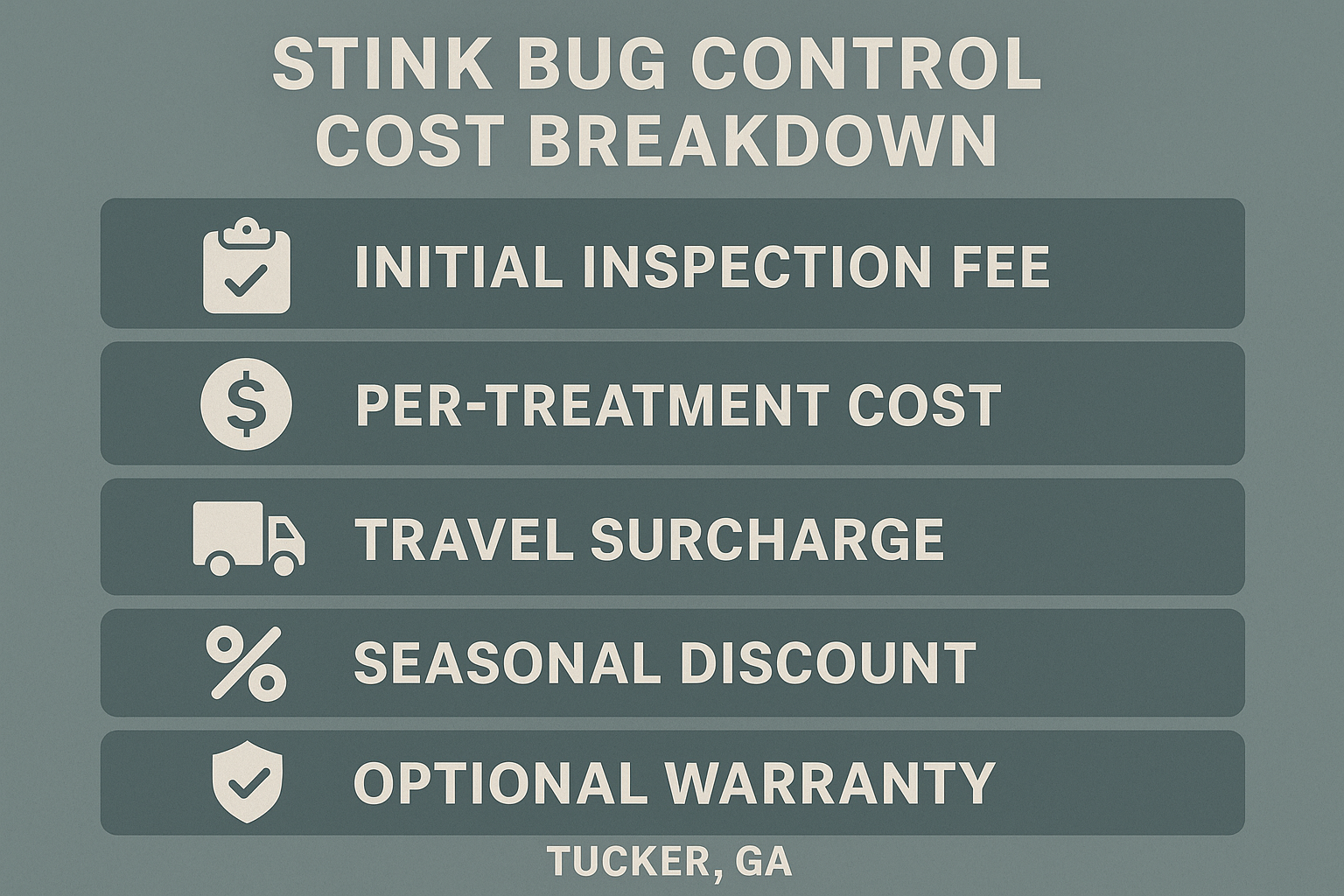
When you call Anthem Pest Control in Tucker, the first thing we do is assess the situation. Our pricing is straightforward so you know exactly what you’re paying for.
Initial Inspection Fee
We charge $0–$75 for a thorough walk‑through and identification of stink bug activity. Most homeowners who sign a service contract see this fee waived, making the first step virtually free.
Per‑Treatment Cost
A standard treatment for a 1,500‑sq ft home in Tucker runs between $120 and $250. This range reflects the 2024 GAPMA survey and covers interior spray, perimeter barrier, and any necessary crack‑and‑crevice work.
Travel/Service Call Surcharge
If the job is more than 10 miles from our nearest depot, a $25–$45 surcharge applies. Tucker is generally within our service radius, so most customers won’t see this charge.
Seasonal Discount
Schedule your treatment between September 1 and October 15 and receive a 10 % discount. That’s the time stink bugs are looking for a warm place to overwinter, so early action saves you money.
Warranty/Follow‑Up
We offer a 90‑day guarantee visit for $50, ensuring any lingering bugs are taken care of. For ongoing peace of mind, an optional annual service plan is $180 per year, covering two treatments and a yearly inspection.
Estimated Total for a Typical Tucker Home
Combining a waived inspection (or the low‑end $0 fee) with one full treatment, most homeowners can expect to spend between $120 and $250. Adding the optional warranty brings the range to $170–$300, while the annual plan spreads the cost to roughly $180 per year after the first treatment.
Factors Influencing Pricing in Tucker
When you request a stink‑bug treatment, the price you see isn’t a random number—it reflects a handful of concrete variables that affect how much time, product, and expertise are needed. Understanding these factors helps you see why two quotes for the same neighborhood can look different.
Local labor rates
Anthem Pest’s technicians are paid in line with the average hourly pest‑tech wage in Fulton County, which the Bureau of Labor Statistics reports as $28 per hour in 2024. This baseline labor cost is built into every estimate, ensuring fair compensation for the skilled work performed.
Home size and layout
Bigger homes or multi‑story properties naturally require more travel time between rooms and a larger amount of treatment product. A sprawling 3,500‑sq‑ft house with a two‑story layout will typically cost more than a compact 1,800‑sq‑ft ranch because the technician spends additional minutes mapping out entry points and applying treatments.
Infestation severity
The number of active stink‑bug nests dramatically shifts material usage. A light infestation—usually 1‑2 nests—might need a single spray and a small amount of residual barrier. A heavy situation with 10 + nests demands multiple applications, higher‑dose products, and extra labor, which raises the overall price.
Accessibility challenges
Homes with tight crawl spaces, limited attic access, or cluttered basements increase the time a technician spends navigating the area. Each extra minute adds to labor costs, so properties with hard‑to‑reach spots often see a modest price bump.
Putting it all together
When you request a quote, Anthem Pest evaluates each of these elements—local wage rates, square footage, infestation level, and access difficulty—to create a transparent, customized price. This approach guarantees you’re paying for exactly what the job requires, no hidden fees.
DIY Methods vs Professional Control
When stink bugs start showing up in a Tucker home, many homeowners reach for the nearest over‑the‑counter solution. The most common DIY tools are insect sprays, sticky trap strips, and the vacuum‑and‑dispose method. Together they usually cost between $30 and $80 for a season.
- OTC spray – aerosol or pump‑spray applied around windows, doors, and cracks.
- Sticky traps – adhesive ribbons placed in corners to catch wandering bugs.
- Vacuum removal – using a shop‑vac to suck bugs into a sealed bag.
Case study: A Tucker homeowner bought a $70 spray and treated the interior. After one week the visible bug count dropped about 70 %, but two weeks later new insects re‑appeared in the attic and garage,
Financing, Discounts, and Guarantees
At Anthem Pest we understand that a sudden stink‑bug infestation can strain a household budget. That’s why we pair transparent pricing with flexible payment options and protective guarantees, so you can protect your home without breaking the bank.
0 % APR Financing
Any service total that exceeds $300 qualifies for our interest‑free financing. Eligible homeowners must be U.S. residents with a verifiable credit history and a minimum credit score of 620. The application is completed online in just a few minutes—no paperwork, no hidden fees. Once approved, you can spread the cost over 12 equal monthly payments, and the balance remains at 0 % APR for the entire term.
Senior & Military Discounts
We salute Georgia’s seniors and service members with a straightforward 5 % discount on all stink‑bug treatments. The discount is applied automatically when you provide a valid senior ID or active‑duty military identification during scheduling. It works for both one‑time treatments and ongoing prevention plans, making professional pest control accessible to those who have served our community.
90‑Day Guarantee
Our confidence in the treatment’s effectiveness is backed by a 90‑day guarantee. If stink bugs return within 90 days of the initial service, we’ll return at no extra charge to re‑treat the affected areas. The guarantee covers the same level of service you received originally, ensuring you don’t pay twice for the same problem.
Together, these incentives turn a potentially costly pest emergency into a manageable expense. Financing eases cash‑flow concerns, discounts reward the community members who need it most, and the guarantee provides peace of mind that the job is truly done. With Anthem Pest, you get a clear price, flexible payment, and the assurance that your home stays bug‑free.
Frequently Asked Questions
Stink bugs are a seasonal nuisance in Tucker, and many homeowners wonder how to protect their homes without compromising safety. Below we answer the most frequently asked questions.
Do stink bugs damage my home’s structure?
No, stink bugs do not chew through wood, drywall, or any building materials. Their primary nuisance is the foul odor they release when disturbed and the potential for contaminating pantry items. While a large swarm can make a room smell unpleasant, you won’t find cracked beams or rotted siding caused by these insects.
Are the chemicals safe for pets and children?
Anthem Pest uses EPA‑registered pyrethroid formulations that carry a “low toxicity” rating when applied according to label directions. The EPA’s safety assessment confirms that, with proper ventilation and adherence to the re‑entry interval, exposure risk to humans and pets is minimal. Our technicians are trained to apply the product precisely, ensuring a protective barrier without lingering residues in living spaces.
How often should I schedule treatments?
In Tucker, Georgia, stink bugs become most active in the fall as they seek warm overwintering sites. We recommend an annual pre‑winter treatment—typically in late September to early October—to intercept the migration before bugs enter walls and attics. Homeowners who notice persistent activity should schedule a follow‑up visit within 2‑4 weeks of the initial service.
What if I have a severe infestation?
For heavy infestations, a two‑step approach works best: a thorough interior inspection, followed by a targeted treatment that focuses on entry points, cracks, and voids where bugs congregate. After the first application, we reassess and, if needed, apply a supplemental dose to eliminate any survivors.
Our team follows EPA‑approved protocols, uses low‑toxicity products, and tailors each service to your home’s layout. Call us at 877‑371‑8196 for a free inspection and personalized plan.
How Anthem Pest Handles Stink Bug Control in Tucker
When stink bugs start invading your kitchen or siding, you need a team that knows the local landscape as well as you know your home. Anthem Pest’s Tucker crew combines years of statewide experience with a deep‑dive into the quirks of Georgia’s stink‑bug hotspots, so you get a solution that works before the bugs even think about returning.
Georgia‑Specific Training for Every Technician
All Anthem technicians complete a mandatory Georgia‑focused certification that covers the most active stink‑bug breeding zones—from the river‑edge wetlands of Gwinnett County to the ornamental gardens that line Tucker’s historic neighborhoods. They also study the seasonal flight patterns that dictate when bugs are most likely to seek shelter indoors, allowing them to schedule treatments at the optimal window for maximum impact.
Partnering with the University of Georgia Extension
Our commitment to data‑driven control means we stay synced with the University of Georgia Extension’s latest monitoring reports. This partnership gives us real‑time insight into emerging infestations, regional population spikes, and the newest, research‑backed treatment methods. In practice, it translates to a proactive approach: we can often treat homes before a local surge even hits the streets.
“Anthem Pest showed up right when the stink bugs were getting out of hand. Their tech explained why they were showing up in our yard and treated the whole house in under an hour. We’ve had no problems since—highly recommend them to any Tucker neighbor!” — Jenna L., Tucker, GA
Safe, Effective, and Transparent Service
Every step of our process is designed with your family’s safety in mind. We use EPA‑approved products that target stink bugs while leaving pets and children unharmed. Before any application, we provide a clear, itemized estimate and walk you through the treatment plan, so there are no surprises—just a bug‑free home you can trust.
Sources & References
At Anthem Pest, we believe every cost estimate is backed by reliable research and real‑world data. Below are the primary sources that informed our stink‑bug control cost guide for Tucker, Georgia.
Our methodology combined peer‑reviewed research, federal guidelines, industry surveys, and Anthem’s own service records to build a comprehensive cost model.
- University of Georgia Extension – Stink Bug Management Guide, which outlines biology, seasonal activity, and recommended treatment thresholds for residential properties.
- EPA Indoor Air Quality – Pest‑Related Odors, providing federal guidance on health implications of indoor stink‑bug odors and best practices for mitigation.
- Pest World (National Pest Management Association) Stink Bug Fact Sheet, a concise industry reference covering identification, life cycle, and typical control methods.
- GA Pest Management Association (GAPMA) 2024 pricing survey, internal data that captures average service fees, discount structures, and financing options among Georgia pest‑control providers.
- Bureau of Labor Statistics – Fulton County hourly wage data for 2024, used to calculate labor cost components specific to the Tucker market.
- Anthem Pest website – current inspection policies, financing programs, and promotional discounts that directly affect the final price presented to homeowners.
Each source is publicly available, so homeowners can review the original documents for full transparency.
All figures were cross‑checked against the latest local wage statistics and our 2024 pricing survey to ensure the cost estimates reflect real‑world conditions for Tucker homeowners.
Secure Professional Stink Bug Protection Today
When it comes to stink bugs, the numbers are simple: a clear, upfront price paired with a treatment that lasts season after season saves you both money and stress. Our transparent cost structure means you know exactly what you’re paying for—no hidden fees, no surprise add‑ons. By choosing a professional service, you eliminate the guesswork of DIY sprays that often need re‑application, protecting your home for the long haul and preserving the peace of mind you deserve.
Consider the math: a $30 DIY aerosol might seem cheap, but most homeowners end up buying three to four cans to see any noticeable reduction, and the chemicals can linger on countertops. In contrast, a professionally applied treatment for Tucker homes typically runs around $200‑$250, includes a thorough perimeter seal, and comes with a warranty that covers re‑infestation for the season. That single investment protects every room, eliminates repeated purchases, and safeguards your family’s health.
Why Anthem Pest Is the Smart Choice for Tucker Homeowners
- Free, no‑obligation inspection: We assess the severity of the infestation before any work begins.
- Guaranteed results: If stink bugs return, we’ll re‑treat at no extra cost.
- Financing options: Flexible payment plans keep the upfront cost comfortable.
- Local expertise: Our technicians know Tucker’s climate, building styles, and the seasonal patterns that drive stink‑bug activity.
Ready to take the next step? Call Anthem Pest today at 877‑371‑8196 for a free, customized quote tailored to your Tucker home. One quick conversation puts a professional plan in your hands, complete with a timeline, exact pricing, and the confidence that the job will be done right.
Our Tucker‑trained technicians are ready to protect your home and family without breaking the bank. Let us handle the stink‑bug invasion with professional stink bug control cost Tucker GA services so you can enjoy a fresh‑smelling kitchen again.
Visit Anthem Pest Control to learn more about our services and schedule your inspection.