Why Knowing Termite Costs Matters for Chamblee Homeowners

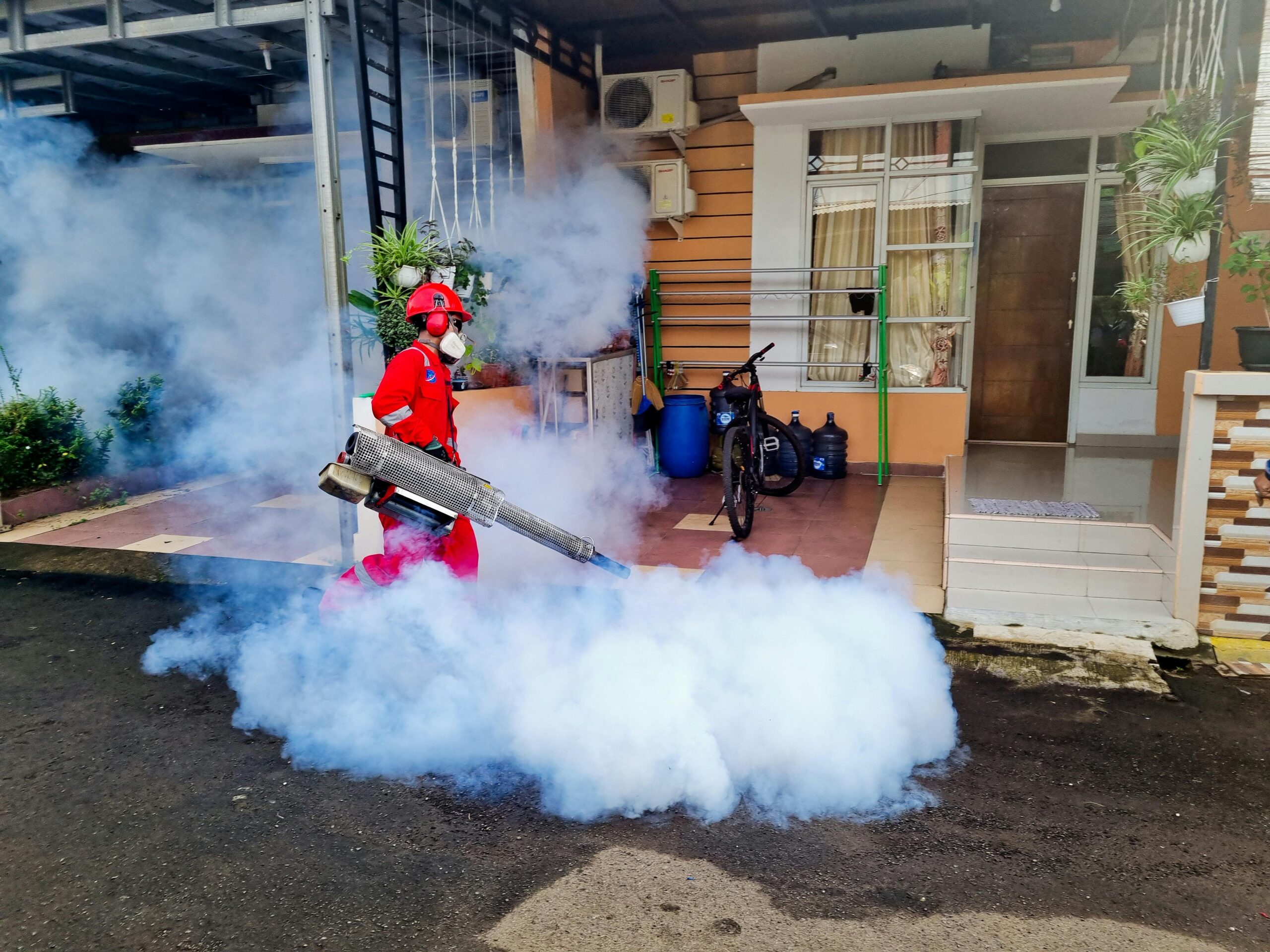
In Chamblee’s warm, humid climate, termites thrive year‑round, silently eating away at wood, drywall, and even concrete supports. A single colony can compromise a home’s foundation, roof joists, or porch decking, leading to repairs that easily run into the tens of thousands of dollars. Unlike surface‑level pests, termites work from the inside out, so damage often goes unnoticed until structural integrity is at risk.
Recent EPA research highlights that the Atlanta metro area—Chamblee included—reports one of the highest concentrations of subterranean termite activity in the Southeast. The agency’s overview of termite control notes that aggressive, moisture‑rich soils accelerate colony growth, making early detection and treatment crucial for homeowners.
Understanding the typical cost range for inspection, prevention, and eradication empowers you to budget proactively rather than reactively. Knowing whether a standard barrier treatment might cost $800–$1,200, versus a localized spot‑treatment at $400–$600, helps you allocate funds for routine inspections and avoid surprise expenses when an infestation is discovered late.
In the sections that follow, we’ll break down:
- The specific threats termites pose to Chamblee homes.
- Key drivers behind pricing, from property size to treatment type.
- Comparative treatment options, including liquid barriers and baiting systems.
- How Anthem Pest’s transparent pricing stacks up against regional averages.
By framing termite control as a financial decision as much as a safety one, you’ll be better equipped to protect your home’s value and your family’s peace of mind.
The Subterranean Menace: Termites in Chamblee
In Chamblee, the Eastern Subterranean Termite (Reticulitermes flavipes) is the clear front‑runner when it comes to wood‑destroying pests. This species thrives underground, sending tiny workers through the soil to locate and chew cellulose in foundations, decks, and crawl spaces.
Two local factors make Chamblee a termite haven: a loamy‑clay soil that retains moisture and the region’s humid subtropical climate. Consistent moisture levels keep the soil damp enough for termites to build mud tubes, while summer temperatures above 75 °F accelerate colony growth.
According to the 2024 EPA report, “Georgia ranks among the top 5 states for termite damage, with an estimated $300‑$400 million in annual losses” (EPA, 2024). This statewide figure reflects the intensity of activity we see right here in the Chamblee metro area.
Neighborhood data from local inspections highlight three hotspots: Peachtree Creek, Brookhaven, and the Historic Chamblee district. These areas share older timber framing and mature landscaping—conditions that invite subterranean colonies to establish permanent feeding grounds.
A quick glance at a neighborhood map reveals clusters of reported activity along the north‑south corridor of Peachtree Creek, a pocket of infestations near Brookhaven’s commercial strip, and scattered reports in the historic district’s brick‑lined streets. The pattern mirrors the soil‑moisture gradient across the city.
For homeowners, the presence of Eastern Subterranean Termites translates into silent, progressive damage that often goes unnoticed until structural components weaken. Moisture‑prone basements, wood‑siding, and any direct soil contact become prime entry points, making early detection essential.
Because the infestation pattern aligns closely with local soil and climate, a professional inspection that maps colony activity can pinpoint vulnerable structures before costly repairs are needed. Anthem Pest Control leverages this regional insight to tailor treatment plans that protect Chamblee homes from the subterranean threat.
Seasonality also plays a role: termite foraging peaks in late spring through early fall when soil temperatures rise above 68 °F. Scheduling a preventive treatment during this window reduces the likelihood of colonies establishing new tunnels in newly poured foundations.
What Drives the Price Tag?
When you request a termite‑control quote in Chamblee, the number you see isn’t random. It reflects a combination of measurable factors that each add a predictable amount to the final bill. Understanding those variables helps you compare estimates with confidence and avoid surprise fees later on.
Primary Cost Drivers
- Inspection fees – A thorough inspection usually costs between $80 and $150. Technicians must spend time locating colonies, identifying damage, and mapping the infestation.
- Property size (square footage) – Larger homes require more bait stations, more liquid applications, or a greater number of treated zones. Pricing often scales at roughly $0.05 to $0.10 per square foot.
- Infestation severity – A light, early‑stage infestation may be handled with spot treatments, while a severe, multi‑colony problem can demand extensive soil barriers and repeated follow‑ups.
- Treatment type – Options range from liquid termiticides and bait‑system installations to fumigation. Each method carries its own material and labor costs, with bait systems typically on the lower end and whole‑house fumigation at the top.
Accessibility Factors
How easily technicians can reach the vulnerable areas matters, too. Homes with cramped crawl spaces, low‑lying basements, or extensive landscaping can increase labor time and may require specialized equipment. In Chamblee’s humid climate, moisture‑laden soils often mean extra barrier treatments to keep termites from re‑entering.
Local Licensing Requirements
Georgia mandates that all pest‑control operators hold a license from the Georgia Department of Agriculture. Licensing fees, mandatory continuing‑education, and state‑required insurance are built into the contractor’s overhead and, ultimately, your quote. Choosing a fully licensed provider ensures compliance and protects you from liability.
Concrete Example
Consider a 2,000‑sq‑ft home in the nearby Peachtree Creek neighborhood. Because that area sits on higher‑water‑table soil, moisture levels stay elevated year‑round. The added soil treatment typically bumps the total cost by 15‑20 percent compared with a drier‑soil property of the same size. If a standard treatment for a 2,000‑sq‑ft home averages $2,200, you might see a final estimate of $2,530 to $2,640 after accounting for the moisture surcharge.
Seasonal Demand and Contractor Competition
Termite activity peaks in the warm, wet months of late spring and early summer. During that window, many homeowners request service, so demand spikes and some contractors raise prices to manage workload. Conversely, in the cooler off‑season, you’ll often find more competitive quotes as companies vie for business. Asking for multiple estimates during a low‑demand period can reveal a broader price range and give you leverage when negotiating.
Your Treatment Toolbox and the Expected Investment
When it comes to safeguarding a Chamblee home from termite damage, the right tool in your treatment toolbox can make all the difference. Below, we break down the four most common approaches, how they work, and the realistic price range you’ll encounter on a typical single‑family residence. Understanding these options helps you weigh effectiveness against budget, so you can choose a solution that fits both your home’s needs and your wallet.
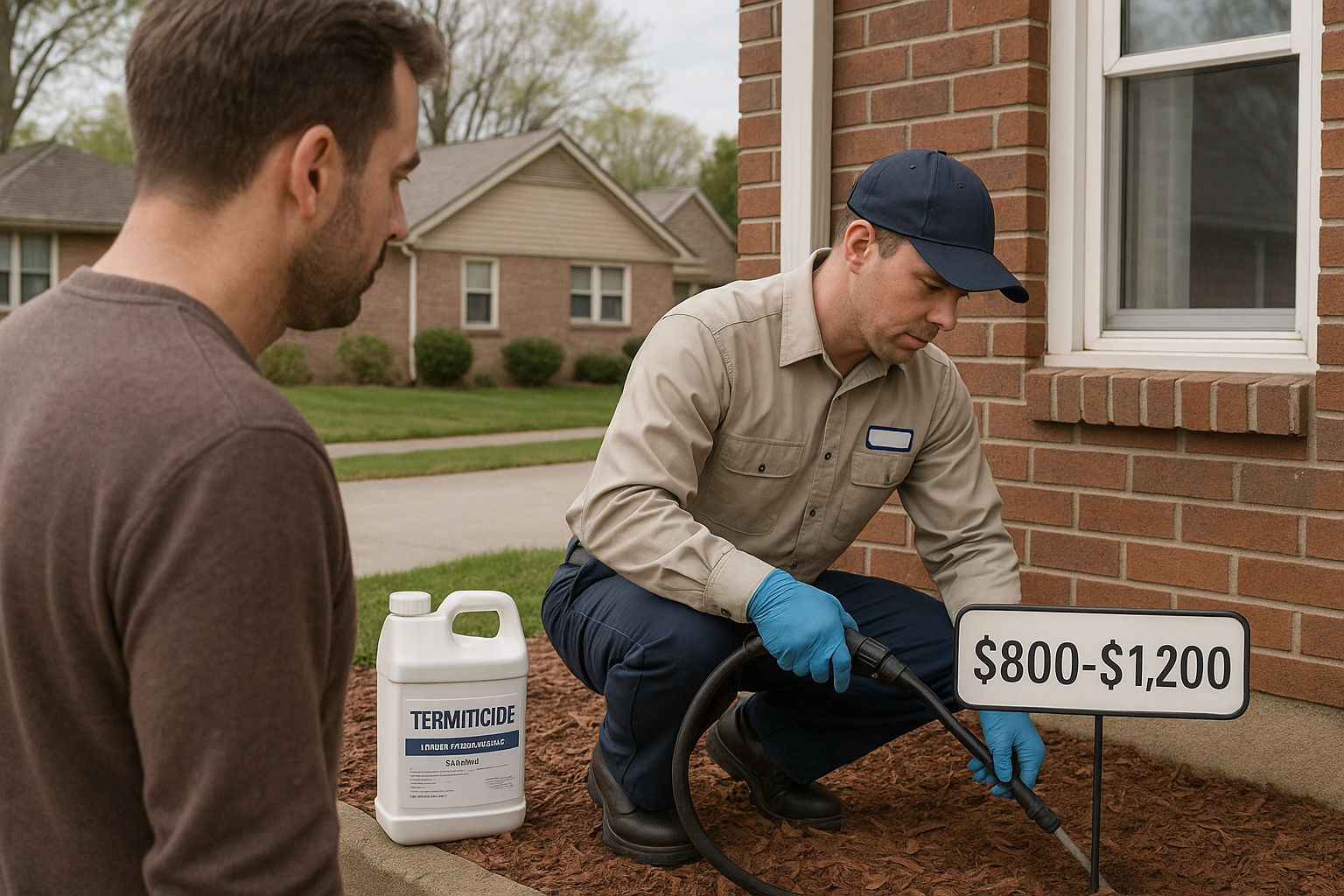
Liquid Termiticides – A Chemical Shield Around Your Foundation
Liquid termiticides are applied as a continuous trench or spray around the perimeter of a home, forming a chemical barrier that termites cannot cross without dying. The product penetrates soil and wood, creating a protective moat that stops both subterranean and dry‑wood termites from infiltrating structural components. For a typical Chamblee property, the cost falls between $500 and $1,500, depending on soil conditions, the size of the lot, and the specific formulation used. A recent case in nearby Brookhaven demonstrated the process: a homeowner opted for a premixed termiticide, and the technician completed a 120‑foot perimeter treatment in under three hours. Post‑treatment inspections showed zero termite activity for the following two years, validating the long‑term value of this method.
Baiting Systems – Continuous Monitoring and Targeted Elimination
Baiting systems involve installing discreet monitoring stations—usually in the crawl space or near the foundation—filled with wood‑based bait laced with a slow‑acting insecticide. Worker termites feed on the bait and share the toxin throughout the colony, eventually collapsing it from the inside. Installation costs for a standard two‑station setup range from $1,200 to $3,000, which includes the bait stations, the bait material, and the first year of monitoring visits. The price variation reflects the number of stations required and the service contract length. According to the NPMA 2023 baiting cost survey, the median expense for residential baiting in the Southeast aligns closely with these figures, confirming that baiting is a competitive, colony‑targeted alternative to barrier treatments.
Structural Fumigation – Whole‑House Gas Treatment
Structural fumigation, often called “tenting,” encloses the entire home in an airtight canvas tent and releases a gaseous fumigant—typically sulfuryl fluoride—that penetrates every void, wall cavity, and piece of furniture. The gas kills termites at all life stages, providing a comprehensive eradication. Because the process requires professional setup, safety monitoring, and post‑treatment ventilation, the price bracket sits between $2,500 and $5,000 for an average Chamblee home. This range accounts for the size of the structure, local labor rates, and any additional prep work such as moving valuables. EPA safety regulations mandate strict exposure limits and certified applicator oversight, ensuring that the treatment is both effective and compliant with federal health standards.
Heat Treatment – Raising Wood Temperature to Lethal Levels
Heat treatment uses specialized equipment to raise the temperature of all wooden components in a home to 120 °F (49 °C) for a sustained period, a level that is lethal to termites at every developmental stage. The heat is circulated through walls, floors, and furniture, eliminating the need for chemicals. In the Atlanta metro area, including Chamblee, homeowners are increasingly choosing this eco‑friendly option, especially in homes with children or pets. The investment typically falls between $2,000 and $4,000, reflecting the cost of equipment rental, technician expertise, and the time required to heat a full‑size residence uniformly. As the method gains traction, many local pest‑control firms now offer heat treatment as a standard service, positioning it as a safe, residue‑free alternative to traditional chemicals.
Comparing Treatment Methods at a Glance
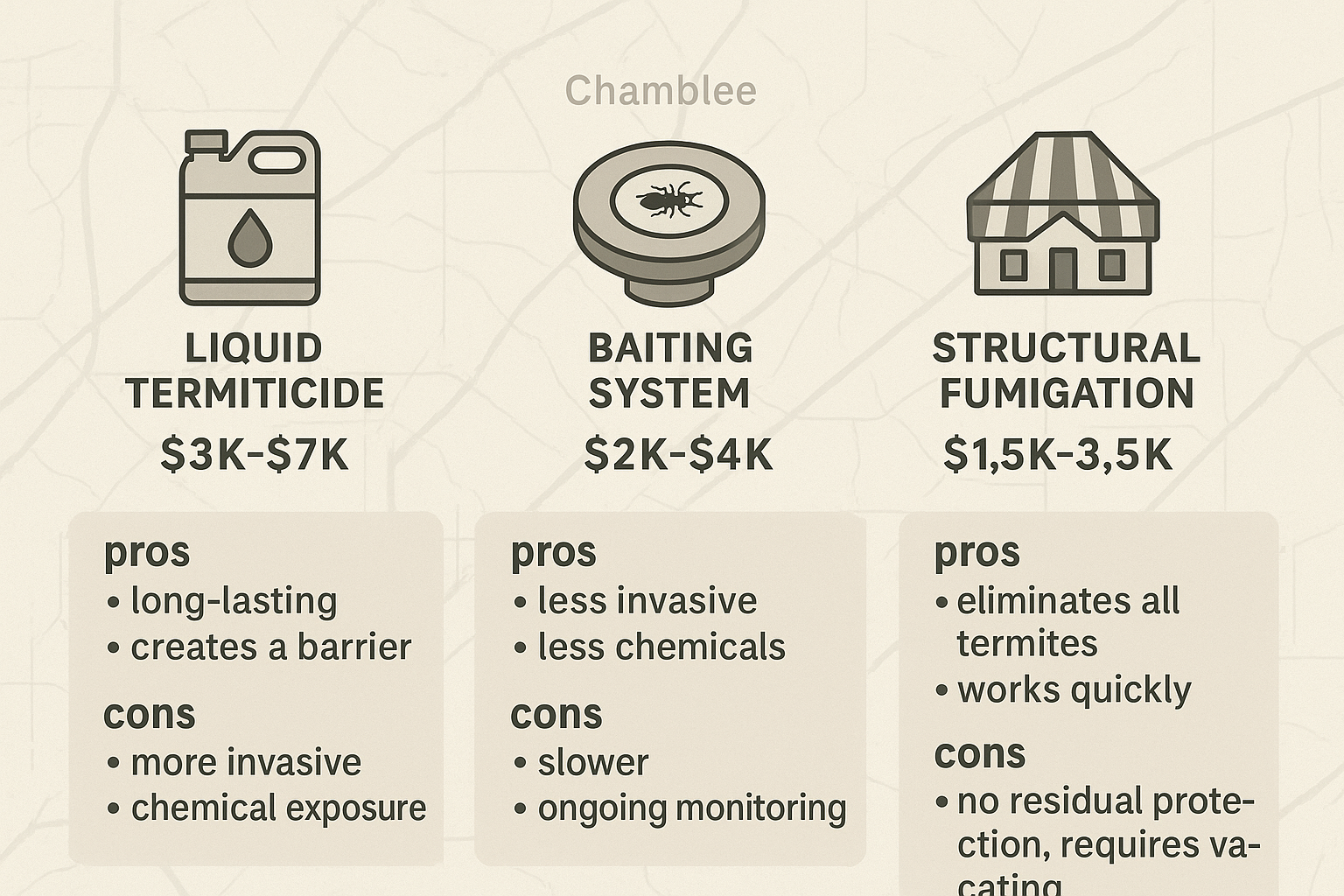
Anthem Pest Control offers four primary ways to eliminate termites, each with its own strengths and trade‑offs. The infographic above lines up liquid termiticide, baiting stations, structural fumigation, and whole‑home heat treatment so you can spot the right fit at a glance.
- Effectiveness: All four options achieve >95% kill rates when applied correctly, but heat treatment and fumigation excel in severe, widespread infestations.
- Installation time: Liquid termiticide and baiting can be set up in a single day; fumigation requires 24‑48 hours of vacating the house; heat treatment usually finishes within 6‑8 hours.
- Homeowner involvement: Baiting and liquid barriers need periodic inspections; fumigation and heat demand no ongoing upkeep after the service.
- Typical price bracket (Chamblee, GA): Liquid termiticide $800‑$1,200, baiting $1,000‑$1,800, fumigation $2,500‑$4,500, heat treatment $2,200‑$3,800.
Choosing the best method depends on three practical factors:
- Home size: Smaller ranch‑style homes often get away with liquid barriers or baiting, while larger two‑story houses may benefit from the uniform coverage of heat or fumigation.
- Infestation level: Spot‑treated colonies respond well to baiting; a deep, hidden infestation usually calls for the aggressive reach of heat or fumigation.
- Budget and timeline: If you need a quick, low‑upfront cost, liquid termiticide or baiting are the most affordable. When you can afford a higher upfront investment for a “set‑and‑forget” solution, heat or fumigation provide peace of mind with minimal follow‑up.
Match the method to your home’s footprint, the severity of termite activity, and the amount you’re prepared to spend now versus over the long term. This quick reference helps you ask the right questions when you call Anthem Pest Control for a customized quote.
Do It Yourself or Call the Pros?
When termites start chewing through the framing of a Chamblee home, the first question most homeowners ask is “Can I handle this myself?” DIY termiticide kits are widely advertised, but the reality of protecting a structure goes far beyond the price tag on a bottle.
What a DIY kit looks like
- Typical cost: $100‑$300 for a 1‑gallon concentrate.
- Application steps: read the label, mix the solution, apply to soil around the foundation, and re‑treat every 6‑12 months.
- Equipment needed: protective gloves, goggles, a garden sprayer, and a thorough understanding of where the colony is active.
The Environmental Protection Agency (EPA) requires that any pesticide used in a residence meet strict safety standards. A DIY user must follow every label instruction to stay compliant. Missing a spot, over‑mixing, or applying in windy conditions can expose family members and pets to harmful chemicals, and it may void any insurance coverage.
Why professionals are different
Hiring a licensed pest‑control company such as Anthem Pest Control brings three critical advantages:
- Comprehensive inspection: Certified technicians locate hidden galleries, moisture sources, and satellite colonies that a homeowner might miss.
- Licensed applicators: Trained professionals apply termiticides with calibrated equipment, ensuring the correct dosage and coverage while adhering to EPA regulations.
- Warranties and guarantees: Most service contracts include a multi‑year warranty that covers re‑treatment and, in many cases, structural repairs if termites return.
A professional program typically runs $1,200‑$1,800, covering a written warranty, monitoring visits, and full EPA‑compliant treatment.
Consider this real‑world risk: a homeowner attempted a DIY treatment, missed a critical entry point, and the infestation spread unchecked. Within months, the damage required $10,000 in structural repairs—a cost far exceeding the initial $250 kit.
Bottom line: a DIY kit may look affordable, but the hidden expenses—potential health hazards, incomplete coverage, and costly repairs—often outweigh the savings. When you choose a professional service, you pay for expertise, compliance, and peace of mind that your home will stay termite‑free.
Why Anthem Pest Stands Out in Chamblee
When Chamblee homeowners compare pest‑control options, Anthem Pest’s transparent pricing, solid guarantees, and local reputation make the difference. You know exactly what you’re paying for and what you’ll receive, eliminating hidden fees that plague many national chains.
Clear‑cut pricing you can see upfront
The first step is a comprehensive termite inspection, priced at a flat $79. The fee covers a detailed visual assessment, moisture meter readings, and a written report that outlines any activity and recommended next steps. After the inspection, you can choose from three clearly defined treatment packages:
- Basic Termite Shield – $899: A perimeter barrier that treats existing colonies and deters new ones for up to one year.
- Advanced Baiting – $1,699: Strategically placed bait stations that monitor and eradicate colonies over a 12‑month period, with quarterly check‑ins.
- Full‑Home Fumigation – $4,299: Complete structural fumigation that eliminates all active termites and provides a clean slate for new construction or renovation projects.
Financing that fits any budget
Anthem understands that a termite treatment is an investment. That’s why the company partners with several financing providers to offer low‑interest, no‑up‑front‑payment plans. Homeowners can spread the cost of a $4,299 fumigation over 12 months with payments as low as $375 per month, or select a 0 % APR option for the Basic Shield if they qualify.
A 2‑year guarantee you can rely on
Every package includes a two‑year service guarantee. If termites reappear within that window, Anthem will return at no additional charge, re‑treat, and cover any necessary repairs to the affected wood. The guarantee is backed by a written contract and a dedicated customer‑service line that tracks each claim from start to finish.
What Historic Chamblee homeowners are saying
“We’ve lived in the historic district for 30 years and never had a termite problem until the last two. Anthem’s inspection uncovered hidden activity, and the Advanced Baiting plan solved it within weeks. Their team was courteous and explained every step.” – Linda M., Olde Town Chamblee
“The Full‑Home Fumigation was pricey, but the peace of mind it gave us during our renovation was priceless. The two‑year guarantee means we don’t worry about surprise infestations, and the financing made it doable.” – James R., Chamblee Heights
When to Schedule for Maximum Savings
Termites are most active when they’re looking for new food sources and shelter, which typically happens during the transition seasons. In early spring, colonies emerge from their winter hideouts to forage for fresh wood as temperatures rise above 55°F (13°C). Likewise, in late fall, before the cold sets in, termites intensify their search for warmth, moving through soil and wood in the yard.
These foraging spikes create a perfect window for treatment. Because the insects are already out in the open, a targeted application can reach a larger portion of the colony with less product. That means technicians often need fewer chemicals and less labor to achieve lasting protection, translating into lower costs for you.
To capitalize on this natural rhythm, Anthem Pest Control offers a special 10 % off discount for appointments booked during the off‑season windows of February and November. Scheduling your inspection or barrier treatment in these months not only aligns with the termites’ most vulnerable periods but also maximizes your savings.
- Early spring (February–April): colonies are emerging, making them easier to intercept.
- Late fall (November–December): termites are consolidating before winter, so a barrier can stop them before they re‑activate.
- Discount: Mention “Seasonal Savings” when you call 877‑371‑8196 to lock in the 10 % off.
Because soil temperatures are moderate during these periods, the termiticides penetrate more efficiently, allowing a thinner barrier to provide the same level of protection as a thicker layer applied in summer heat.
By timing your service to these optimal windows, you protect your home when it matters most and enjoy the added benefit of Anthem’s off‑season price break. It’s a win‑win for both your peace of mind and your wallet.
Your Checklist Before the Inspection
Before the technician arrives, a little homework can turn a vague quote into a crystal‑clear, fair price. Grab a pen, a tape measure, and a few minutes of your day—these simple steps give Anthem Pest Control the data it needs to pinpoint exactly what your home requires.
- Total square footage and floor‑plan details. Measure each level and note the number of rooms, closets, and any unfinished spaces such as basements or attics. A quick sketch of the layout helps the inspector understand where wood contacts the soil and where treatment zones may overlap.
- Visible damage. Walk the perimeter and interior looking for mud tubes, hollowed wood, or discarded termite wings. Take photos or jot down the locations (e.g., “mud tube by kitchen sink” or “soft wood under bathroom vanity”). This evidence speeds up the assessment and prevents missed spots.
- Previous termite treatments. List any chemicals, baits, or fumigation you’ve had in the past, including dates and the company that performed the work. Knowing what’s already been applied avoids redundant applications and can affect product choices.
- Moisture sources. Identify leaky pipes, roof leaks, or areas with poor drainage. Termites thrive where wood stays damp, so pointing out these problem areas helps the technician recommend both treatment and preventive repairs.
When the inspector finishes, request a written estimate that breaks down labor, product costs, and warranty terms line by line. A transparent quote lets you compare options, understand long‑term protection, and feel confident that you’re getting the right service for your Chamblee home.
Quick Answers for Chamblee Homeowners
How long does a termiticide barrier last?
EPA studies show a properly applied termiticide barrier protects your home for 5‑10 years, depending on soil conditions, product type, and annual weather patterns. Inspections keep the barrier effective. Reapplication is only needed if soil disturbance occurs or if monitoring shows reduced efficacy.
Can I combine baiting with liquid treatment?
Yes. An integrated pest‑management (IPM) plan often pairs bait stations with a liquid barrier. Baits target foraging colonies, while the liquid creates a defensive wall around the structure. This dual approach maximizes control and reduces future infestations. The combination also shortens the time to eliminate a colony, saving repair costs.
What are the signs of a hidden infestation?
Watch for these subtle clues:
- Mud tubes on foundations or walls
- Discarded wings near light fixtures
- Soft, hollowed wood or visible wood damage
- Fine, dry frass (termite droppings) inside walls or crawl spaces
Does homeowner’s insurance cover termite damage?
Most standard policies exclude termite damage because it’s considered a preventable maintenance issue. The CDC notes that homeowners should rely on regular inspections and professional treatment rather than insurance claims. Check your policy’s fine print for any rider exceptions.
Protect Your Home Today
Understanding the true cost of termite control and the variety of treatment options in Chamblee is the first step toward protecting your home’s foundation. When you know the price ranges—from low‑cost baiting to comprehensive structural treatments—you can choose the plan that fits your budget and peace of mind.
At Anthem Pest, we pride ourselves on transparent pricing, a clear 2‑year guarantee, and a track record of satisfied local homeowners who know exactly what they’re paying for and why. Our Chamblee technicians combine local expertise with industry‑leading methods to keep termites out for good.
That’s why we offer a free, no‑obligation inspection, giving you a detailed assessment and an upfront estimate before any work begins.
Give us a call today at 877‑371‑8196 or email our team, and let our experts walk you through every step.
Visit Anthem Pest Control to schedule your inspection and start safeguarding your property.