Why Termites Matter for Homeowners in Cumming, GA

In Cumming, Georgia, termites aren’t just an occasional nuisance—they’re a silent, structural threat that can erode the value of your home from the inside out, often driving up termite control cost Cumming homeowners face if action is delayed. While many homeowners notice the damage only after it’s severe, the reality is that these insects begin working long before you see a single mud tube or a hollowed-out board. Understanding why termites matter locally is the first step toward protecting your biggest investment.
Georgia’s Two Main Termite Culprits
The state is home to two species that cause the majority of residential damage: subterranean termites (Reticulitermes flavipes) and drywood termites (Incisitermes minor). Subterranean termites build colonies underground and travel through moist soil, using concealed tunnels to reach wood above ground. Drywood termites, on the other hand, live entirely within the wood they consume, often remaining hidden for years. Both species thrive on cellulose, meaning any wooden framing, flooring, or trim is fair game.
Staggering Cost Statistics
According to the U.S. Environmental Protection Agency (EPA), termites are responsible for more than $5 billion in property damage nationwide each year. The National Pest Management Association (NPMA) reports that the average homeowner spends roughly $2,500 on termite remediation after an infestation is discovered. In Georgia, the figure climbs higher because of the state’s warm, humid climate—homeowners in the Peach State can expect repair bills that easily exceed $4,000 if termites go unchecked.
Local Climate and Soil: A Perfect Storm
Cumming’s climate is characterized by hot, humid summers and mild winters, creating an environment where termite colonies can stay active year‑round. The area’s loamy, moisture‑retaining soils provide the ideal conduit for subterranean termites to travel from their underground nests to the wooden structures above. Moreover, the region’s abundant hardwood trees contribute to a natural reservoir of cellulose, making it easier for drywood termites to establish satellite colonies in attics and crawl spaces.
The Critical Role of a Qualified Technician
Professional pest‑control technicians bring more than a flashlight and a keen eye; they carry specialized tools—such as moisture meters, infrared cameras, and termite detection dogs—that can uncover hidden activity before any visible damage appears. A trained technician knows where to probe for mud tubes, how to interpret subtle wood discoloration, and which soil conditions signal an active colony. Early detection not only saves money but also reduces the need for aggressive, invasive treatments.
Why a Documented Inspection Report Matters
Beyond spotting termites, a thorough, written inspection report serves as a vital record for both homeowners and insurers. The report details the locations inspected, the species identified, and any early signs of activity. Insurance companies often require this documentation before approving coverage for termite repairs, and a well‑organized report can streamline any future resale process by proving that the property has been proactively managed.
For homeowners who want to stay ahead of the threat, scheduling a professional inspection at the first sign of moisture problems, wood swelling, or even unexplained drafts can make the difference between a quick treatment and a costly reconstruction.
Ready to learn more about the science behind termite damage and how federal guidelines shape treatment standards? Visit the EPA Termite Facts page for a comprehensive overview.
Spotting the First Signs of Termite Damage
Termites are silent architects; they chew, tunnel, and hide while you go about daily life. The moment you notice a few odd clues, though, you can stop an infestation before it eats away the structural integrity of your home. Below we break down the most common visual and structural hints that signal an active colony in Cumming, Georgia.
Tell‑tale Signs to Look For
- Mud tubes – Slim, pencil‑shaped tunnels made of soil and saliva, usually found on foundations, walls, or the underside of decks. They serve as highways between the soil and the wood.
- Discarded wings – After a swarm, termites shed their wings in a neat, oval pile near light sources or entry points. The wings are transparent with a faint vein pattern.
- Hollow‑sounding wood – Tap a wooden beam or floor joist; a dull, hollow thud often means the interior has been hollowed out by termites.
- Frass – Dry, pellet‑shaped droppings that look like sawdust or tiny coffee grounds. Frass is a clear sign that termites are actively feeding.
Roof and Siding: The External Front Line

Termites love textured surfaces because the grooves give them easy footholds. Examine your roof’s wooden shingles and siding for irregular bite marks, flaking paint, or areas where the wood feels softer than surrounding panels. In Cumming’s humid climate, moisture accelerates decay, so any damp, spongy spots on the exterior should raise a red flag.
Inside the Home: Where the Damage Often Hides
Inside, the most common hotspots are baseboards, door frames, and kitchen cabinets. Look for pinhole exits—tiny, perfectly round holes about 1/8 inch in diameter—that termites use to push out frass. Sagging or warped trim, especially near moisture‑prone zones like bathrooms, also suggests hidden galleries.
Open a cabinet door and gently tap the wood. A hollow sound, coupled with a faint, sweet smell, is a classic termite cue. Don’t forget to lift up floorboards in closets or basements; termites often work from below, leaving a thin layer of dust on the surface.
Seasonal Walk‑Through Checklist
- Inspect foundation walls for mud tubes and cracks.
- Check all exterior wood (shingles, siding, decks) for bite marks or soft spots.
- Look for discarded wings near light fixtures or windows.
- Tap and listen to wooden beams, joists, and interior trim.
- Search baseboards, door frames, and cabinets for pinhole exits and frass.
- Feel for sagging or uneven sections in floors and ceilings.
- Repeat this visual sweep at least once each season—spring, summer, fall, and winter.
DIY vs. Professional Inspection
If you spot one or two of the signs above, a thorough DIY inspection can confirm the problem’s extent. However, termites are masters of concealment; a professional pest‑control technician brings specialized tools—such as moisture meters, infrared cameras, and probing equipment—to locate hidden colonies.
Call a licensed expert when you encounter any of the following:
- Multiple mud tubes or extensive frass deposits.
- Hollow‑sounding wood in structural members (beams, joists, support columns).
- Evidence of damage in load‑bearing areas.
- Uncertainty about the species or extent of infestation.
Anthem Pest Control can perform a detailed assessment, recommend a treatment plan, and ensure compliance with Georgia’s termite management guidelines, which you can review through the Georgia Dept. of Agriculture.
Treatment Options and What They Cost in Cumming
When a termite colony is discovered in a Cumming home, the next question is always “how will we get rid of it, and what will it cost?”—a concern that directly shapes termite control cost Cumming homeowners can expect. The three treatments most homeowners encounter—liquid barrier, bait stations, and foam injection—each have a distinct way of attacking the pests and a price tag that reflects the work involved. Below is a clear, side-by-side look at how they work, what you can expect during application, and the typical cost range you’ll see from local providers like Anthem Pest Control.
Liquid Barrier
A liquid barrier creates an invisible wall of termiticide that surrounds the foundation, crawl spaces, and any soil‑to‑structure contact points. Technicians drill small holes or use a trenching tool, then pump the solution into the soil so it saturates the area where termites travel.
- How it works: The chemical is either non‑repellent (termite can’t detect it) or repellent (creates a “no‑go” zone). As termites cross the treated zone, they either die on contact or carry the poison back to the colony.
- Typical application: One‑time treatment, often followed by annual inspections and a touch‑up spray if the barrier degrades.
Pros: Long‑lasting protection (often 5‑10 years), covers the entire perimeter, and is relatively low‑maintenance after the initial install. Cons: Requires excavation or drilling, can be invasive to landscaping, and some homeowners worry about chemical exposure near children or pets.
Bait Stations
Bait stations are placed strategically around the property—usually 5 to 12 per home—containing cellulose material laced with a slow‑acting insecticide. Termites find the bait, feed on it, and share the toxin with the colony, eventually collapsing the nest from the inside.
- How it works: The active ingredient is a growth regulator; it doesn’t kill instantly, allowing for transfer to other termites.
- Typical application: Install stations, then monitor monthly. Stations are replaced or refilled as needed, often for the life of the warranty.
Pros: Minimal disturbance to the yard, easy to inspect, and environmentally friendly because the chemical is contained. Cons: Effectiveness depends on termite activity—if the colony avoids the stations, control can be slower. Also, ongoing monitoring adds to labor costs.
Foam Injection
Foam injection delivers termiticide directly into voids, cracks, and galleries within walls, floors, and wooden structures. A specialized nozzle expands the liquid into a foam that fills hidden pathways, reaching termites where they hide.
- How it works: The foam spreads through the timber, coating the interior surfaces and killing termites on contact.
- Typical application: Technicians drill small holes in affected wood, inject the foam, and seal the entry points. The process can be completed in a single day.
Pros: Targets active infestations inside structures, excellent for hard‑to‑reach areas, and provides rapid knock‑down. Cons: Does not prevent future invasions, may require multiple injections for large homes, and can be more invasive to interior finishes.
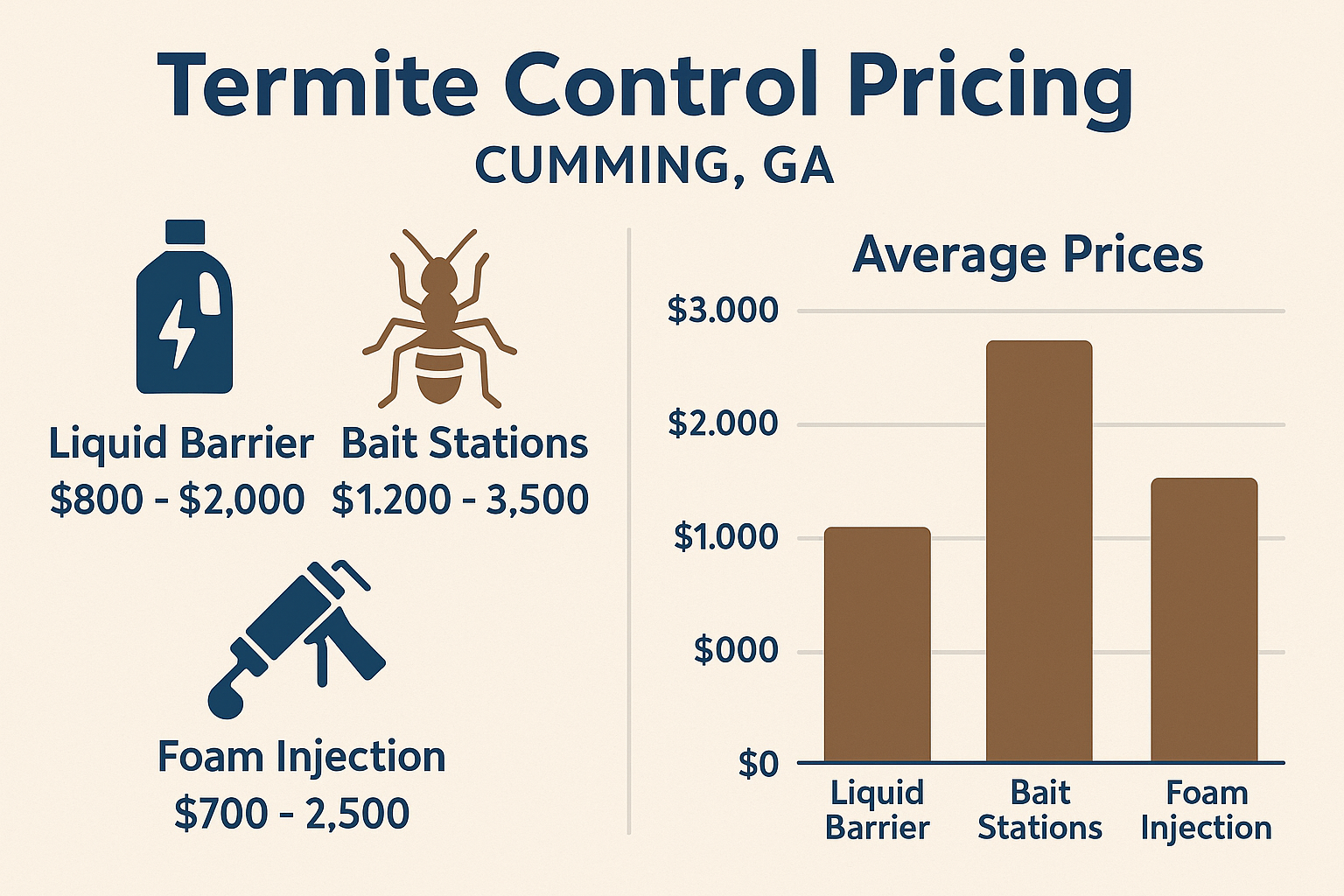
The infographic above visualizes the typical price bands for each method in Cumming. In plain terms, homeowners can expect:
- Liquid barrier: $1,200 – $2,500
- Bait stations: $800 – $1,600
- Foam injection: $1,000 – $2,200
| Treatment | Typical Price Range | Warranty Length |
|---|---|---|
| Liquid Barrier | $1,200 – $2,500 | 5–10 years |
| Bait Stations | $800 – $1,600 | 3–5 years (monitoring included) |
| Foam Injection | $1,000 – $2,200 | 1–2 years (re‑treatment as needed) |
These figures are drawn from the NPMA 2024 Survey, which aggregates pricing data from thousands of pest‑control professionals nationwide. Local market conditions in Cumming—such as labor rates and the prevalence of subterranean termites—keep the numbers in line with the national average.
Factors That Influence the Final Price
While the ranges above give a solid benchmark, the exact quote for your home will hinge on several variables:
- Property size: Larger square footage or sprawling yards demand more product and labor.
- Infestation severity: A light, early‑stage problem may be handled with fewer stations or a smaller barrier, whereas a heavy colony requires extensive treatment.
- Accessibility: Homes with tight crawl spaces, multiple foundations, or hard‑to‑reach landscaping increase setup time.
- Warranty options: Extended warranties that cover annual inspections, retreatments, or damage remediation add to the upfront cost but can save money long‑term.
For example, a 2,500 sq ft home with moderate infestation on a sloped lot might see a liquid barrier quote near the top of the range ($2,300‑$2,500), while the same size home on level ground with a light infestation could be treated for closer to $1,300.
Choosing the right method isn’t just about price; it’s about matching the treatment to your home’s unique risk profile. At Anthem Pest Control, we start with a thorough inspection, discuss the pros and cons of each option, and provide a transparent, itemized estimate so you know exactly where every dollar goes.
When to Treat – Seasonal Activity Patterns in Cumming
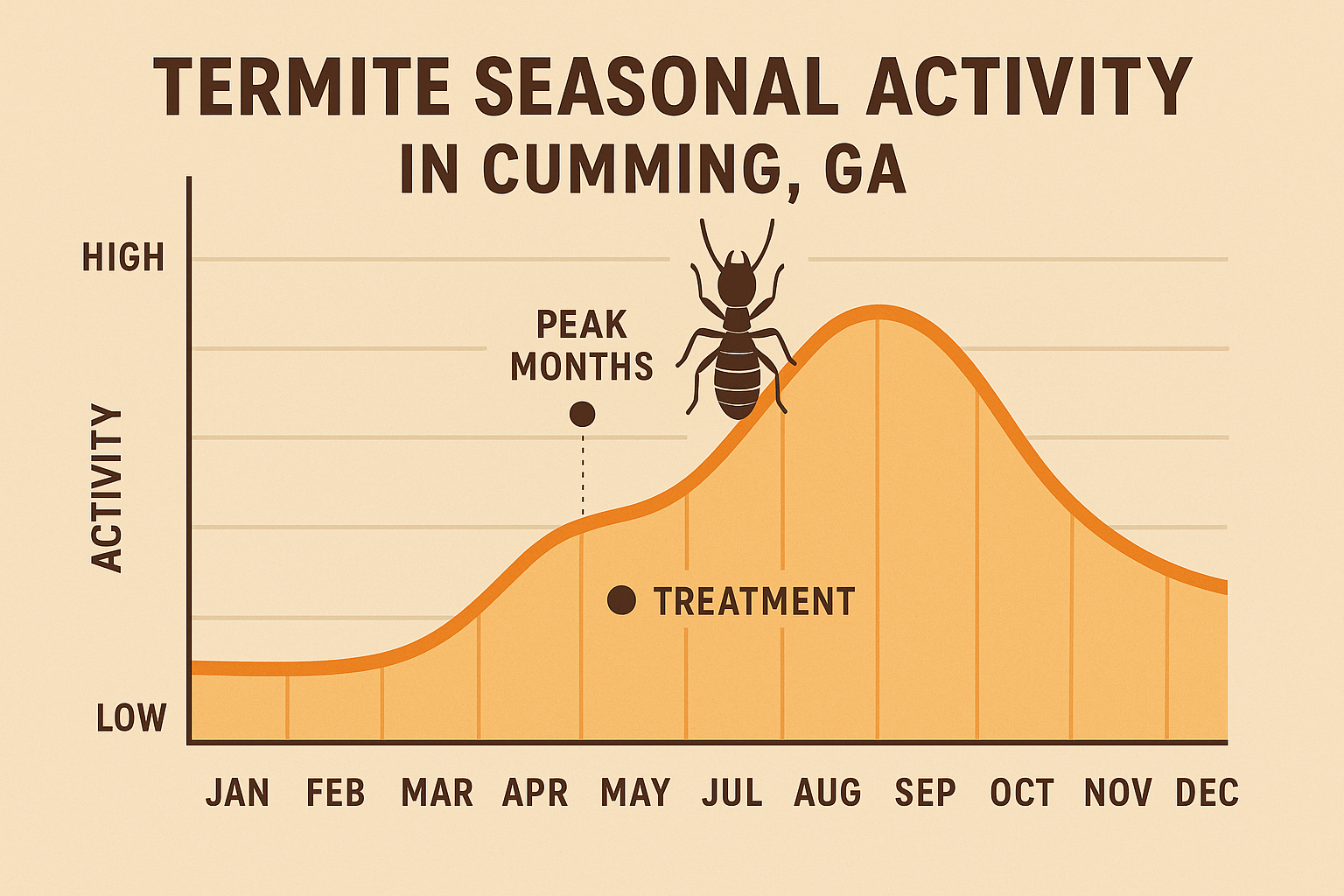
Termites in Cumming follow a predictable yearly rhythm that mirrors the region’s climate, which directly influences termite control cost Cumming homeowners may face if infestations peak unchecked. The chart above shows a clear surge in foraging activity during late spring and early summer, when both temperature and humidity reach optimal levels for colony expansion. Understanding this cycle lets homeowners schedule inspections before the insects become most aggressive, saving money and reducing damage.
How Temperature and Humidity Drive Foraging
Subterranean termites thrive when soil temperatures hover between 68°F and 86°F. As March warms into April, the soil retains enough heat to wake dormant workers, prompting them to venture outward in search of food. Humidity is equally critical; high relative humidity softens wood and keeps termite gut moisture balanced, allowing them to chew more efficiently. In Cumming, the combination of warm days and occasional rain in May creates the perfect “feeding frenzy.”
Recommended Treatment Windows
Timing is the most powerful tool in a homeowner’s pest‑management toolbox. Our experience shows three distinct windows that align with the termite calendar:
- Pre‑peak (March–April): Ideal for barrier liquid applications. Treating the soil before termites intensify their foraging creates a defensive moat that slows colony expansion.
- Mid‑peak (May–June): The best period for bait placement. Active foragers readily discover bait stations, allowing the colony to share the toxicant and accelerate elimination.
- Post‑peak (July–August): Use this time for follow‑up inspections and spot treatments. Colonies that survived the early season often retreat deeper, and a second check ensures no hidden pockets remain.
Impact of Extreme Weather Events
Heavy rain can flood the soil, forcing termites to relocate higher in the foundation or into dryer wood, which sometimes leads to sudden surface activity. Conversely, drought conditions dry out the soil, pushing colonies to seek moisture‑rich zones such as leaky pipes or over‑watered flower beds. Both scenarios can temporarily increase the likelihood of sightings inside the home, so schedule an extra inspection if you experience a prolonged storm or an extended dry spell.
Landscaping and Moisture Control Tips
Homeowners can make their property less inviting year‑round with a few simple adjustments:
- Keep gutters and downspouts clean to direct water away from the foundation.
- Avoid stacking firewood, lumber, or mulch directly against the house; maintain at least a 12‑inch gap.
- Use low‑moisture, non‑organic mulches (e.g., rubber or gravel) near the perimeter.
- Install a moisture barrier under decks and patios to prevent soil saturation.
- Consider drip irrigation timers that reduce over‑watering during hot summer weeks.
EPA Guidance on Seasonal Pest Management
The U.S. Environmental Protection Agency recommends aligning termite control actions with the insect’s life cycle to maximize efficacy and minimize chemical use. Their seasonal pest‑management guidelines reinforce the pre‑peak, mid‑peak, and post‑peak strategy outlined above, emphasizing proactive barrier treatments and targeted baiting.
By syncing inspections and treatments with Cumming’s termite calendar, you not only protect your home more effectively but also keep costs in check. If you’re ready to lock in a seasonal plan, give Anthem Pest Control a call at 877‑371‑8196 or visit our website for a free assessment.
Preventive Practices and Long‑Term Protection
Manage Soil Moisture
Termites thrive in damp environments, so keeping the soil around your home dry is one of the simplest defenses. Ensure that gutters and downspouts direct water at least six inches away from the foundation. If you notice pooling after a rain, consider installing French drains or re‑grading the landscape to promote runoff. Finally, avoid direct wood‑to‑soil contact by using concrete or metal footings for decks, porches, and any exterior framing.
Choose Termite‑Resistant Materials
When renovating or adding on, select building components that are less appealing to termites. Pressure‑treated lumber, naturally resistant woods such as cedar or redwood, and composite decking dramatically reduce the chance of an infestation taking hold. If you must use untreated wood, apply a borate‑based preservative before installation. These steps may add a modest upfront cost, but they pay off by lowering the likelihood of expensive future treatments.
Routine Home Maintenance Checklist
Consistent inspections keep hidden problems from becoming full‑blown infestations. Use the following quick checklist each spring and fall:
- Walk the perimeter and look for mud tubes, discarded wings, or damp wood.
- Trim vegetation, vines, and tree branches so they do not touch the house.
- Seal cracks in the foundation, around utility penetrations, and in exterior walls with a high‑quality caulk.
- Check that crawl‑space vents remain clear and that any vapor barriers are intact.
- Inspect wood siding, decks, and fences for signs of decay or soft spots.
Annual Monitoring vs. One‑Time Treatments
While a single barrier or bait application can stop an active infestation, termites are opportunistic and can re‑enter through unnoticed gaps. An annual monitoring contract provides peace of mind by catching early activity before damage occurs. Below is a concise comparison:
| Feature | Annual Monitoring Contract | One‑Time Treatment |
|---|---|---|
| Frequency of Inspections | Twice per year (spring & fall) plus after heavy rain events | None after the initial application |
| Cost Structure | Predictable annual fee; often includes bait refills | Lump‑sum payment; additional visits cost extra |
| Warranty Coverage | Extended warranty with guaranteed re‑treatment if activity recurs | Limited to the treatment period (usually 1‑2 years) |
| Long‑Term Protection | Continuous barrier maintenance and bait adjustments | Protection wanes as chemicals degrade |
How Anthem Pest Control Supports Ongoing Protection
Anthem Pest Control backs its services with transparent pricing and flexible warranty options. Homeowners receive a clear, itemized quote before any work begins, so there are no surprise fees. After a professional treatment, the company offers a 2‑year warranty that includes free re‑treatment if termites are detected within that window. For those who prefer a hands‑off approach, the annual monitoring plan bundles quarterly inspections, bait station maintenance, and a guaranteed response time for any new activity.
Quick FAQ
- What if I see new activity after treatment? Contact Anthem Pest Control immediately. Their warranty includes a prompt re‑inspection and, if needed, a complimentary follow‑up treatment to eradicate the resurgence.
- Can I combine bait with a barrier? Yes. Using both a liquid barrier around the foundation and strategically placed bait stations creates a layered defense, making it harder for colonies to bypass your protection.
Secure Your Home Today with Anthem Pest Control
When it comes to termites, the difference between a minor nuisance and a costly structural disaster often comes down to timing. Earlier detection, the right treatment, and consistent prevention are the pillars of effective termite management. In Cumming, Georgia, where humid summers and mild winters give these pests a year‑round advantage, staying ahead of the curve is essential.
Quick Recap of What Matters Most
- Early Detection: Spotting mud tubes, discarded wings, or subtle wood damage before colonies spread saves you thousands in repairs.
- Appropriate Treatment: Whether it’s a liquid barrier, bait stations, or a targeted foam, the method must match the species and infestation level.
- Seasonal Timing: Spring and early summer are prime for active colonies, while fall offers a strategic window for preventive barriers before the next season begins.
- Preventive Habits: Reducing moisture, clearing wood debris, and routine inspections keep your home less inviting to termites.
Anthem Pest Control brings these best practices to every Cumming homeowner we serve. Our certified technicians know the local landscape—soil types, common termite species, and the construction styles that attract them. We pair that knowledge with safe, EPA‑approved products and transparent, affordable pricing, so you never face hidden fees or guesswork.
If you suspect termites lurking in your walls, or simply want the peace of mind that comes with a professional inspection, our team is ready to help—at no cost to you. A free, thorough assessment gives you a clear picture of any activity and a customized plan that fits your budget.
Give us a call today at 877‑371‑8196 to schedule your complimentary inspection. Our friendly staff will find a convenient time, answer any questions, and ensure you understand every step of the process.
Take the first step toward a termite-free home by understanding your termite control cost Cumming homeowners can expect. Visit Anthem Pest Control online to learn more about our services, read customer testimonials, and book your free quote.