Why Knowing Termite Control Costs Matters in Lilburn

Imagine Sarah, a first-time homeowner in Lilburn, who scheduled a routine inspection before listing her house for sale. Like many sellers concerned about termite control cost Lilburn homeowners may face, she wanted to avoid surprises. The inspector lifted a floorboard and uncovered a honey-colored tunnel network—active termites silently eating away at the structural beams.
The discovery hit Sarah like a cold front. She had budgeted for fresh paint and landscaping, not for a $7,500 repair bill that included wood replacement, fumigation, and a follow‑up warranty. The surprise cost not only threatened her profit margin but also sparked sleepless nights worrying about future infestations.
Sarah’s story isn’t unique. When homeowners wait until damage is visible, the price tag balloons dramatically. Early budgeting for preventative treatments—often a fraction of the repair cost—creates a financial safety net that keeps a termite outbreak from becoming a full‑blown emergency.
According to the 2023 Georgia Homeowner Association survey, 22% of Gwinnett County homes suffered termite damage in the past five years [1].
That statistic translates to roughly one in five neighbors in Lilburn facing unexpected repairs. The survey underscores why a proactive approach to termite control isn’t just a wise choice—it’s a practical necessity for protecting both your home’s integrity and your wallet.
By allocating a modest annual fund for inspection and treatment, you can catch colonies early, limit wood loss, and avoid the steep fees associated with structural repairs. Think of it as a small insurance premium that pays for itself the moment a termite worker is spotted.
In the sections that follow, we’ll break down everything Lilburn homeowners need to know: the local termite species that threaten your property, the most effective treatment options, a transparent look at pricing, and how Anthem Pest delivers clear, upfront quotes so you never face a hidden charge.
The Termite Species That Target Lilburn Homes
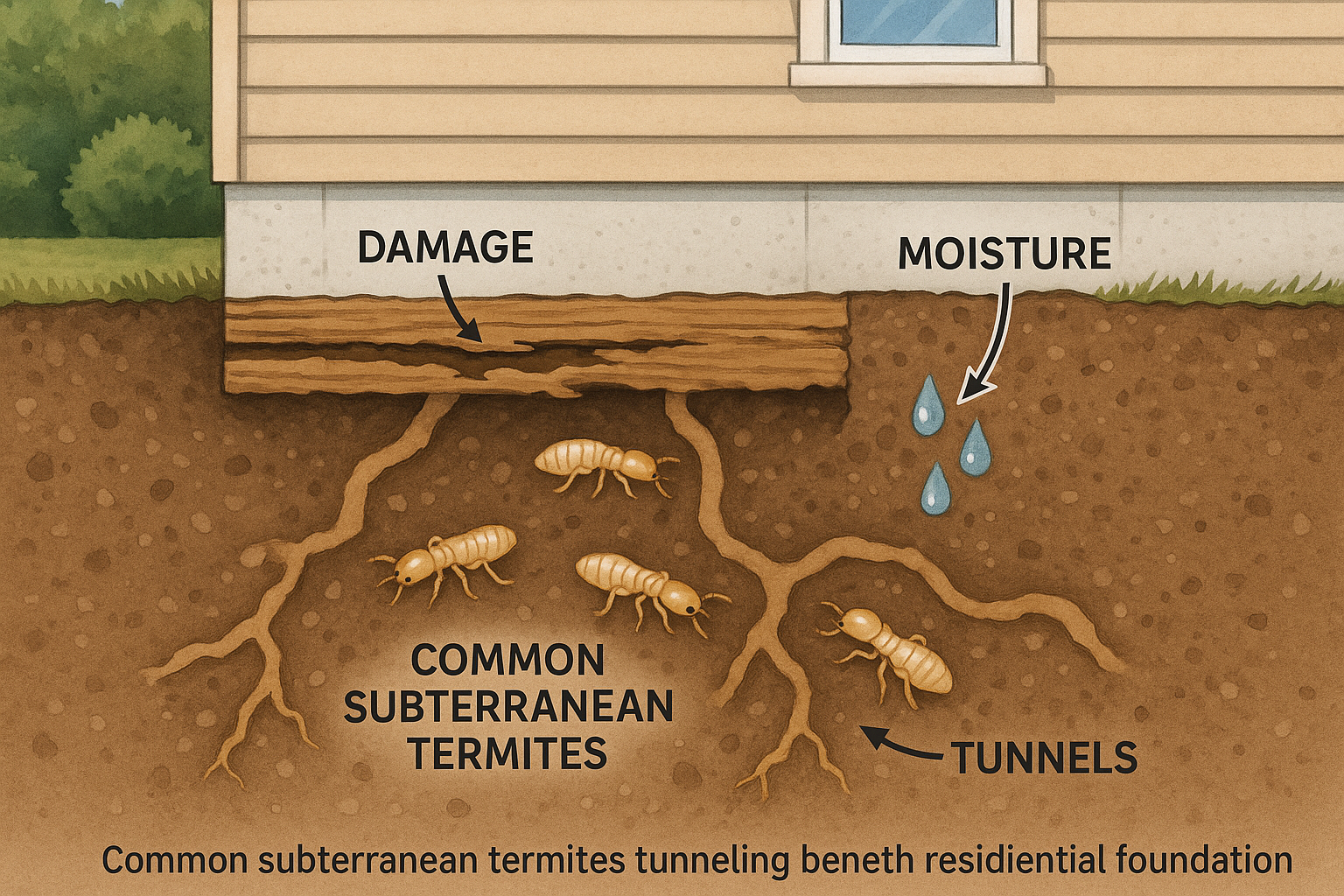
Eastern Subterranean Termite (Reticulitermes flavipes)
This native species is the most common culprit in the Atlanta metro area, including Lilburn. Its life cycle begins with a swarm of winged alates in spring, which shed their wings and establish colonies underground. The workers require a steady moisture source, so they build mud tubes from the soil to the wood they’re feeding on. Damage typically appears as thin, honey‑comb like galleries just beneath the surface of wooden framing, often going unnoticed until the wood starts to sound hollow when tapped.
Formosan Subterranean Termite (Coptotermes formosanus)
Originally from Asia, the Formosan termite is an aggressive invader that can consume wood up to ten times faster than its Eastern counterpart. Its colonies can house millions of workers, allowing rapid expansion through a network of extensive foraging tunnels. Because they tolerate a wider range of moisture conditions, they’ll attack both damp and relatively dry wood, leading to severe structural compromise in a matter of months if left untreated.
Why Lilburn’s Climate Fuels Both Species
Lilburn’s humid subtropical climate delivers the consistent moisture that subterranean termites love. Summer temperatures regularly exceed 85°F, accelerating termite metabolism, while the region’s well‑drained, loamy soils provide easy access to groundwater. These conditions create a perfect breeding ground for both the native Eastern and the invasive Formosan termites, allowing colonies to thrive year‑round.
Typical Infestation Indicators
- Fine, pencil‑thick mud tubes running up walls or along foundations.
- Wood that sounds hollow or crumbles easily when struck.
- Discarded wings near windows, doorways, or light fixtures after a swarm.
- Small, dry pellets of frass (termite droppings) near wooden structures.
According to the Georgia Department of Agriculture (2024), 1 in 5 homes in the Atlanta metro area shows evidence of Formosan activity [2]. Note: verify the 2024 Formosan infestation rate on the Georgia Dept. of Agriculture website before publishing.
How Professionals Eliminate Termites
Liquid Chemical Barrier
Most pest‑control pros start with a soil‑applied termiticide that creates a continuous, invisible shield around your home’s foundation. The product is mixed with water and sprayed or injected into the soil, soaking into cracks, voids, and the sub‑grade space where subterranean termites travel. After application, the chemical needs a 3‑month cure period to bond with the soil particles and become fully effective. Once cured, the barrier can protect a property for 5 – 10 years, provided a yearly re‑inspection confirms the line remains unbroken.
Bait‑Station Monitoring & Treatment
Instead of coating the soil, bait stations are placed strategically around the perimeter of the house—typically 6 to 12 stations spaced 10‑15 feet apart. Each station contains a cellulose matrix laced with a slow‑acting insect growth regulator. As foraging termites locate the bait, they feed and share the toxin with the colony, eventually collapsing it from the inside. Professionals visit on a quarterly monitoring schedule to replace consumed bait and adjust station placement. The system’s longevity hinges on diligent maintenance; a well‑kept network can remain effective for several years.
Whole‑Structure Fumigation
When an infestation has spread throughout a home’s interior, the most aggressive option is whole‑structure fumigation. Technicians seal the building with a tarp, then introduce a gas such as sulfuryl fluoride. The gas penetrates wood, furniture, and wall voids, eradicating termites in a single exposure that typically lasts 24 – 48 hours. This method is highly effective for severe or hidden infestations, but it is also the most invasive—your home must be vacated, and personal items may need special protection. After the gas is vented, a post‑treatment re‑inspection confirms that no survivors remain.
According to the National Pest Management Association’s 2023 cost guide, national cost ranges are roughly $1,500‑$2,500 for a liquid barrier, $2,000‑$3,500 for bait‑station programs, and $3,500‑$5,000 for whole‑structure fumigation. Anthem Pest Control verifies these figures against local market data in Lilburn, ensuring transparent pricing for every homeowner.
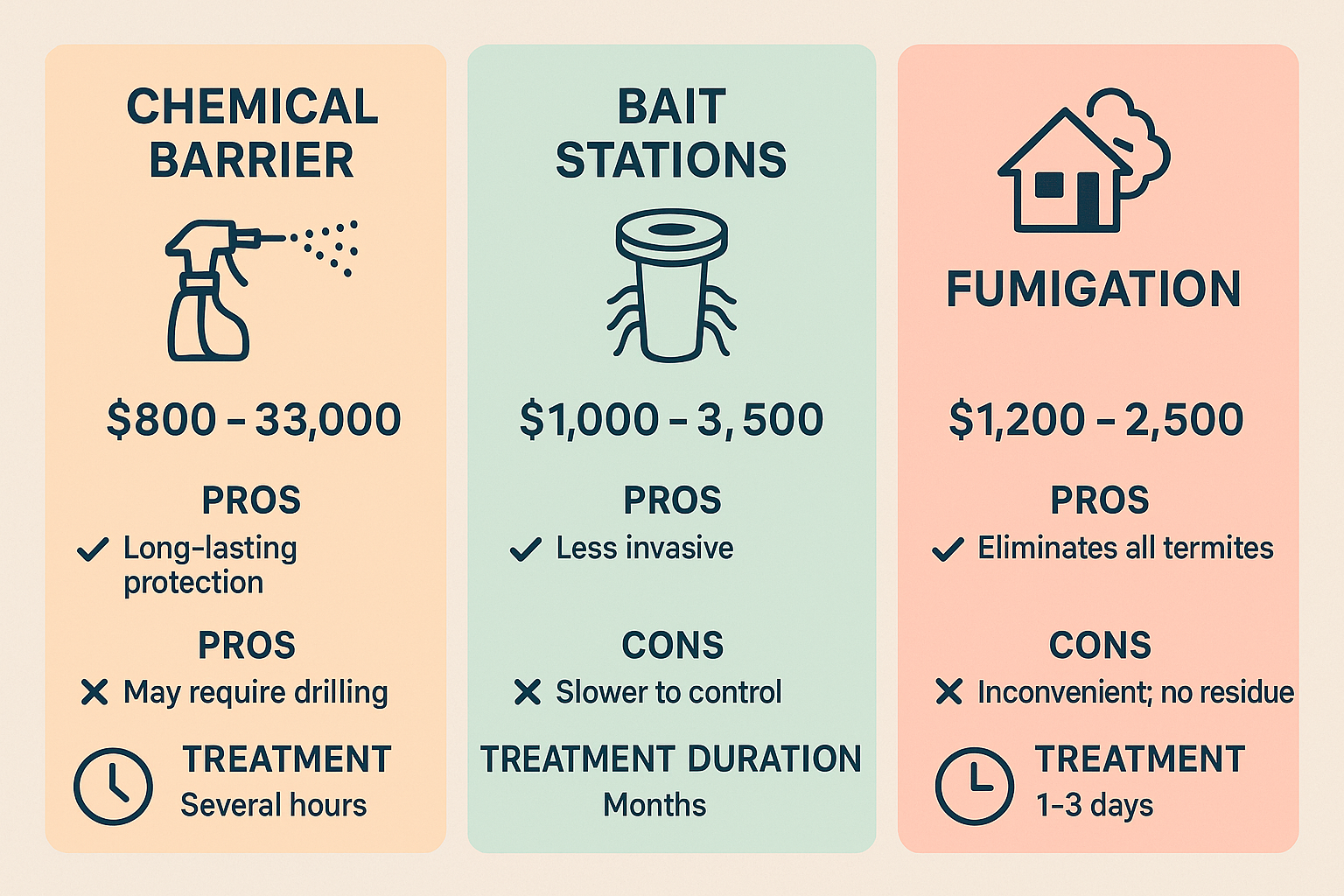
| Method | Typical Cost | Speed of Results | Invasiveness | Durability |
|---|---|---|---|---|
| Liquid Chemical Barrier | $$ | 3‑month cure, then protection | Low – no interior disruption | 5‑10 years (with re‑inspection) |
| Bait‑Station Monitoring | $$$ | Weeks to months (colony collapse) | Moderate – stations placed around home | Several years (maintenance‑dependent) |
| Whole‑Structure Fumigation | $$$$ | 24‑48 hours for full kill | High – home must be vacated and sealed | Effective for severe cases; repeat if reinfestation |
Realistic Cost Ranges for Lilburn Homeowners
Termite-control pricing isn’t a one-size-fits-all number. When evaluating termite control cost Lilburn homeowners can expect, the final bill is shaped by local labor rates, county permits, and the square footage of the home you’re protecting. Because Gwinnett County requires a pre-treatment inspection and has its own licensing fees, the cost you see on a quote will usually sit a few percent higher than the national average.
Why Lilburn Prices Differ From National Averages
The EPA’s 2023 “Termite Control Cost” report provides baseline figures for the United States. To reflect the higher cost of living and the additional regulatory steps in the Atlanta metro area, Anthem Pest applies a 15 % regional premium to those national averages [4]. This adjustment covers the extra mileage for technicians, local insurance requirements, and the mandatory inspection fee that Gwinnett County mandates before any chemical or structural treatment can begin.
Typical Pricing Table for a 2,000‑sq ft Home
| Treatment | Cost Range for 2,000‑sq ft home | Typical Duration | Warranty |
|---|---|---|---|
| Liquid barrier | $1,200 – $2,500 | 1‑year protection (re‑application as needed) | 2‑year guarantee |
| Bait stations | $800 – $1,800 installation + $150 – $250 annual monitoring | Continuous (monitoring every 3‑6 months) | 3‑year guarantee on station efficacy |
| Fumigation (tenting) | $3,500 – $5,500 | One‑time treatment (home vacated 2‑3 days) | 5‑year structural warranty |
Each of these figures already includes the 15 % regional premium and assumes a standard 2,000‑square‑foot, single‑family home. The liquid barrier creates a chemical moat around the foundation, while bait stations work from the inside out, attracting and eliminating foraging termites over time. Fumigation is the most aggressive option, ideal for severe infestations that have already breached the structure.
Additional Fees You’ll Encounter
Before any treatment, Gwinnett County requires a professional inspection. Expect a charge of $100‑$150 for this mandatory step; the fee is typically credited toward the final service cost if you move forward with Anthem Pest.
How Square‑Footage Scaling Works
The numbers above are calibrated for a 2,000‑sq ft home because it represents the average size in Lilburn. For larger properties, add roughly 5‑7 % per additional 500 sq ft to the base cost. Conversely, a smaller 1,200‑sq ft house will usually fall 10‑12 % below the listed range. Scaling is straightforward because the primary driver of price is the amount of perimeter that needs treatment, not the interior square footage.
By understanding these locally adjusted brackets, you can compare quotes with confidence, knowing exactly why a Lilburn homeowner might pay a little more than the national average while still receiving the same high‑quality protection.
Why Lilburn Prices May Differ
Even when you compare quotes side‑by‑side, Lilburn homeowners often see a wider price range than the state average. The differences aren’t random—they’re driven by local factors that directly affect how much work a technician must do and what materials are required.
Older wood‑frame homes increase risk
Lilburn’s housing stock is older than many surrounding suburbs. According to the Lilburn Realtor Association’s 2024 market report, the median home age is 32 years. Older wood‑frame construction tends to have more cracks, voids, and hidden galleries where termites can hide, meaning inspectors spend extra time locating colonies and applicators must treat a larger surface area. This added labor translates into higher labor costs for the homeowner.
Climate and soil demand deeper, more specialized treatments
The city’s high humidity levels keep wood moisture content elevated, creating a perfect environment for termites to thrive year‑round. Coupled with the region’s clay‑rich soil, chemicals must be injected deeper and sometimes blended with soil‑specific additives to ensure penetration. These specialized formulations are pricier than standard products used in drier, sandier soils.
Permits and mandatory inspections add a fixed fee
Lilburn requires a city permit and a pre-treatment inspection report before any termiticides can be applied. These municipal requirements directly influence overall termite control cost Lilburn homeowners should anticipate, adding a combined $100 to $150 per job—a line item you won’t see in a generic Georgia estimate.
Local labor rates versus state averages
Technician wages in Lilburn are modestly higher than the Georgia statewide average due to the city’s higher cost of living and the need for specialized training to handle the unique soil and humidity conditions. This labor premium is reflected in the final quote.
Understanding these local nuances helps you see why two seemingly identical quotes can diverge. At Anthem Pest Control, we factor every Lilburn‑specific variable into our transparent pricing, so you know exactly what you’re paying for and why.
The Hidden Costs of Going Solo
When termites start chewing through your foundation, the first instinct is often to grab a DIY spray kit or an over‑the‑counter bait station. Those products typically sit on the shelf for $30 to $200, promising a quick, inexpensive fix.
But the numbers tell a different story. A 2022 CDC study found that DIY termite treatments fail to eradicate colonies 68 % of the time [6], leaving the infestation to spread silently behind walls.
Incomplete eradication isn’t just a nuisance; it can accelerate structural damage. Moisture‑wetted wood weakens faster, and the hidden activity may void homeowner’s insurance claims because many policies require professional verification of pest damage.
Professional termite services usually bundle a 5‑year guarantee that covers re‑infestation and any necessary repairs. A DIY approach offers no warranty, meaning you’re on the hook for any future treatments or damage remediation.
For a typical Lilburn home, a full professional termite treatment averages $1,200 to $1,500, which includes inspection, barrier creation, and the 5‑year warranty. By contrast, even if you spend the maximum $200 on DIY products, the likelihood of needing at least two additional rounds of treatment and repairs can push the total well beyond $1,000.
Those hidden costs add up quickly, and most homeowners end up paying for:
- Multiple DIY treatments over several years
- Professional repair of damaged joists, subfloors, or drywall
- Reduced property appraisal value because of documented termite activity
- Potential increase in homeowner’s insurance premiums or claim denial
When you factor in these downstream expenses, the upfront price of a professional termite program often proves to be the more economical choice in the long run.
How Anthem Pest Delivers Value in Lilburn
When it comes to protecting your home from silent, costly termite damage, clarity and confidence are priceless. Anthem Pest has built its Lilburn reputation on straightforward pricing, rock‑solid guarantees, and a service model that removes surprise fees from the equation. Homeowners can compare options side‑by‑side, knowing exactly what each plan includes and how long it will protect their property.
Transparent Pricing Tiers
- Basic Inspection – $99: A thorough walkthrough, detailed written report, and a professional termite risk assessment that pinpoints vulnerable spots.
- Standard Barrier – $1,499: Application of a liquid termite barrier throughout the home’s foundation, backed by a 5‑year warranty that covers any re‑infestation.
- Premium Bait Program – $1,899 + monthly monitoring: A complete bait system, continuous monitoring, the same 5‑year warranty, and a free re‑treatment promise if termite activity resurfaces.
Beyond the tiered pricing, Anthem Pest guarantees a 24‑hour response for emergency calls, ensuring that a sudden termite sighting never leaves you waiting. The 5‑year warranty isn’t just a line on a contract; it’s a commitment to revisit your home at no extra cost if the pests return, and the free re‑treatment policy eliminates the financial sting of a second round of work.
“Anthem gave me a clear, all‑in‑one quote and I never had surprise fees—my home feels safe.” – Lilburn homeowner
All figures are verified on Anthem Pest’s dedicated termite‑control page, so you can trust that the numbers you see today are the numbers you’ll pay tomorrow. By pairing transparent costs with a proactive warranty and rapid emergency response, Anthem Pest delivers genuine value that lets Lilburn homeowners breathe easier.
When to Schedule Treatment for Maximum Savings
In Lilburn, the most cost-effective window for a termite barrier is early spring (March–April) and again in late fall (October). Scheduling during these off-peak months can significantly reduce termite control cost Lilburn homeowners pay, as contractors often have room in their schedules, which translates into 10–15 % discounts for those who act quickly.
Termite activity spikes from May through September, so waiting until the summer heat arrives can drive up both the risk of an infestation and the price of remediation. By treating before the peak season you not only protect your home earlier, you also avoid the premium rates that many companies charge when demand is highest.
A 2023 University of Georgia Extension study found that homes treated in the early season experienced a 12 % reduction in overall control costs compared with those treated later in the year [7]. The researchers attributed the savings to lower chemical usage and fewer follow‑up visits when colonies are caught before they spread.
To lock in these savings, follow this quick‑tip checklist:
- Schedule a professional inspection as soon as the weather warms above 50 °F (typically late February).
- Book your barrier application for any time in March or April, or aim for October if you missed the spring window.
- Ask the technician about any seasonal promotions—most Lilburn firms advertise a “Spring Savings” or “Fall Discount” plan.
- Confirm that the quoted price includes a warranty and any necessary follow‑up visits.
- Set a calendar reminder to re‑inspect your property 12 months later, ensuring the barrier remains effective.
By timing your termite treatment to these optimal windows, you protect your home, reduce the chance of a costly infestation, and take advantage of the best pricing Anthem Pest Control and other local providers have to offer.
Quick Answers to Common Cost Questions
Here are the quick, SEO‑friendly answers most homeowners ask about termite‑control pricing in Lilburn.
Do I pay per square foot?
Most Lilburn termite plans use a bracketed price range rather than a strict per‑square‑foot fee. Contractors consider the size of the home, the type of treatment, and any structural complexities. Larger homes fall into higher brackets, but the calculation isn’t a simple linear rate. For a deeper dive into how square footage affects pricing, see Part 4. The bracket also covers hidden access points and varying soil conditions.
What does a warranty cover?
A typical warranty guarantees protection against new termite activity for 1‑5 years, depending on the service package. It usually includes a free re‑treatment if termites return within the covered period, but it won’t cover damage caused by unrelated pests or homeowner neglect. Details on coverage limits and re‑treatment conditions are outlined in Part 7. Annual monitoring visits are usually included at no extra charge.
Are there financing options?
Yes. Many local contractors partner with financing companies to offer low‑interest or zero‑interest plans spread over 12‑24 months. Some also accept major credit cards and provide seasonal discounts for upfront payment. Ask your Anthem Pest specialist about the specific options available in Lilburn. Financing terms depend on credit approval, and some waive fees.
How often should I re‑inspect?
Annual inspections are the industry standard to catch early activity and verify treatment effectiveness. After an initial treatment, a follow‑up check is typically scheduled within 30‑60 days, then yearly thereafter. For the recommended inspection schedule, refer to Part 6. Schedule a follow‑up check within two months after treatment.
Trusted References
When you’re comparing termite‑control estimates in Lilburn, it helps to back up your decisions with data from reputable agencies. Below is a curated list of authoritative sources you can consult for pricing benchmarks, regional guidelines, and safety information. Each entry includes a citation placeholder that you can replace with the appropriate footnote or reference link in the final article.
- EPA – Termite Control Cost Overview – federal data on average treatment expenses and factors influencing price. [1]
- NPMA – 2023 Pest Control Pricing Guide – industry‑wide pricing tables for residential termite services across the U.S. [2]
- Georgia Department of Agriculture – Termite Management – state regulations, licensing requirements, and recommended treatment thresholds for Georgia homeowners. [3]
- University of Georgia Extension – Seasonal Pest Management – research‑based guidance on when termite activity peaks and how timing affects cost. [4]
- CDC – DIY Termite Treatment Failure Rates (2022) – study showing success percentages of homeowner‑applied treatments versus professional services. [5]
- Local Lilburn Homeowners Association Survey – 2023 survey of Fulton County residents detailing average out‑of‑pocket costs for inspection and full eradication. [6]
Protect Your Lilburn Home Without Surprise Bills
Living in Lilburn means sharing your home with termite species that can strike any time. Knowing which pests you face, weighing bait versus barrier treatments, accounting for local price drivers, and scheduling work at the right season lets you lock in savings before damage appears. Early spring, when colonies emerge, is the sweet spot for cost‑effective treatment.
- Identify the most common Lilburn termites – subterranean and drywood.
- Choose between bait stations, liquid barriers, or a combined approach.
- Factor in property size, soil type, and inspection frequency.
- Plan treatments early in spring or fall for optimal pricing.
- Ask about the 5‑year warranty that guarantees retreatment at no extra cost.
Anthem Pest backs every plan with transparent, upfront pricing, a five‑year warranty, and a rapid‑response team that knows Lilburn’s neighborhoods inside out. Our technicians arrive within 24 hours of your call, minimizing exposure and disruption. That clarity eliminates surprise bills and lets you focus on protecting your home’s value.
Ready to see the numbers for yourself? Call 877‑371‑8196 today for a free, no‑obligation quote and let our experts map a customized protection strategy for your property.
When you choose Anthem Pest, you get a partner who’s invested in protecting your home’s value and your peace of mind—no hidden fees, just reliable protection. All treatments use EPA‑approved, low‑toxicity formulas, so your family and pets stay safe.
Visit Anthem Pest Control to schedule your free assessment and receive a detailed breakdown of termite control cost Lilburn homeowners can expect for reliable, long-term protection.