Why Knowing Tick‑Control Costs Matters in Snellville
Living in Snellville means sharing your yard with the beautiful Georgia outdoors—and, unfortunately, the tiny pests that thrive in it. As tick populations rise each season, many homeowners begin researching tick control cost Snellville to better understand what professional protection may require financially. Ticks are more than a nuisance; they are vectors for several serious illnesses that affect homeowners and their families.
Tick‑borne diseases that are common in Georgia include:
- Lyme disease – caused by Borrelia burgdorferi, leading to fever, fatigue, and a characteristic “bull’s‑eye” rash.
- Rocky Mountain spotted fever – a bacterial infection transmitted by the American dog tick, producing high fever, severe headache, and a rash that can spread quickly.
- Ehrlichiosis and anaplasmosis – both spread by the lone star tick, causing flu‑like symptoms and, if untreated, complications such as organ damage.
According to the 2024 CDC Southeast tick‑borne disease report, Georgia recorded 2,312 confirmed cases of tick‑borne illnesses last year. Lyme disease accounted for roughly 1,210 cases, while Rocky Mountain spotted fever contributed 872 cases. These numbers represent a noticeable rise from previous years, underscoring why proactive tick control is no longer optional.
Understanding the cost of tick control is essential for two main reasons. First, budgeting for year‑round protection allows homeowners to spread expenses across the calendar rather than facing a surprise, large invoice after an infestation spikes in the spring. Most professional services, including Anthem Pest Control, recommend a pre‑seasonal treatment in early spring followed by a maintenance visit in late summer. Knowing the price of each visit helps you allocate funds in advance and avoid costly emergency treatments when ticks are already entrenched.
Second, cost transparency builds confidence in the service you choose. When you see a clear breakdown—inspection fee, initial treatment, follow‑up visits, and any supplemental applications—you can compare providers objectively and select the most safe, effective, and affordable option for your property. This is especially important in Snellville, where property sizes vary widely and micro‑climates (shade‑rich woods vs. open lawns) affect treatment frequency.
The remainder of this article will deliver data‑driven cost ranges for tick control in Snellville, from basic DIY kits to full‑service professional plans. We’ll also highlight local providers, including Anthem Pest Control, and explain how their transparent pricing model aligns with the health‑first mindset every Georgia homeowner needs.
Tick Species and Seasonal Activity in Snellville
Primary Tick Species
In the Snellville area two tick species cause the most concern for homeowners:
- American dog tick (Dermacentor variabilis) – commonly found on dogs, but it will also latch onto people.
- Lone Star tick (Amblyomma americanum) – recognized by the distinctive white “star” spot on the female’s back and known for causing painful bites and allergic reactions.
When Are They Most Active?
Both species follow a predictable seasonal rhythm. Their peak activity in Snellville occurs during two windows:
- Spring to early summer (April – July): Warmer temperatures and higher humidity create ideal conditions for nymphs and adult ticks to quest for a host.
- Fall (October – December): After the summer heat subsides, ticks become active again as they seek blood meals before the winter chill.
If you notice increased wildlife activity—deer, squirrels, or even a higher number of neighborhood dogs—during these periods, it’s a clear sign that tick pressure is rising in your yard.
Local Impact in Gwinnett County
The Georgia Department of Public Health reported roughly 2,300 Lyme disease cases statewide in 2024. Notably, about 15 % of those cases originated in Gwinnett County, the home of Snellville. While Lyme disease is most often linked to the black‑legged tick, the presence of other tick species still raises the risk of secondary infections and allergic reactions.
Anecdote from Brookside and Lakeview
Take the typical suburban yard in the Brookside neighborhood: a well‑maintained lawn edged with a few ornamental shrubs, a wooden fence, and a small vegetable garden. In late April, a resident noticed a cluster of tiny, dark specks on the fence—those were nymphs of the American dog tick, freshly emerged after a mild winter. By early October, the same yard in the neighboring Lakeview area saw Lone Star ticks crawling along the base of a newly planted azalea, drawn by the increased leaf litter and moisture.
Both homeowners shared a common realization: without a proactive tick control plan, the ticks quickly moved from the periphery to the play area where children and pets spend time. Scheduling a treatment before the first activity window and again before the fall surge can dramatically reduce the tick population and keep families safe.
From Barrier Sprays to Integrated Pest Management
One‑time barrier spray
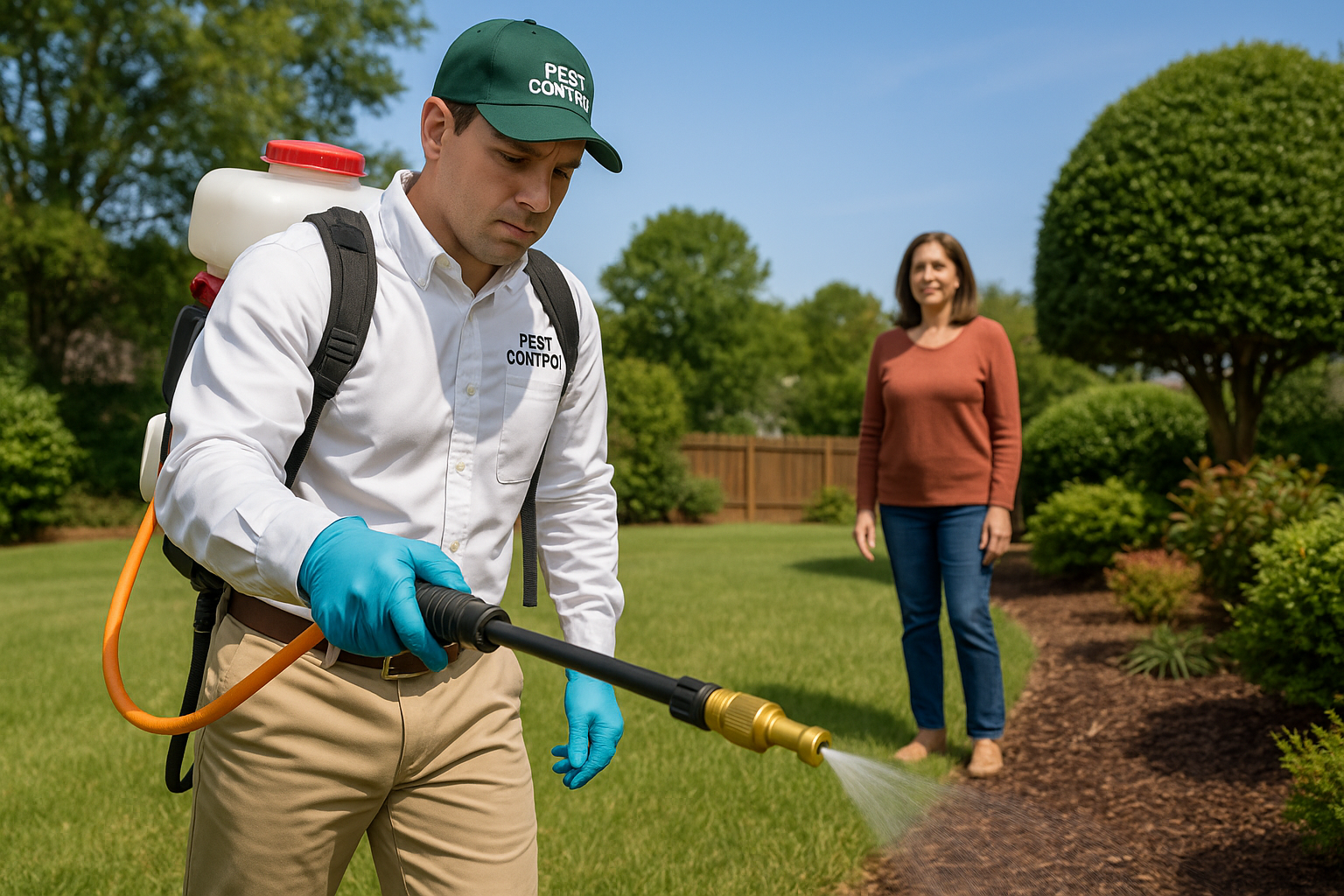
A single barrier application is the quickest way to knock down an existing tick population. Technicians treat the perimeter of your yard—flower beds, shrubs, and the shaded side of the house—using a fine mist that settles on vegetation and soil. The spray creates a protective “wall” that kills ticks on contact for up to three weeks, giving you immediate relief during peak season. Homeowners often choose this model when they need a fast fix before a weekend barbecue or a family camping trip.
Quarterly or annual treatment plans
Because ticks re‑infest from wildlife and neighboring properties, many residents opt for repeat visits. A quarterly schedule (spring, summer, fall, and early winter) maintains a consistent residual barrier, while an annual plan typically combines a spring barrier with a mid‑summer “boost” to cover any late‑season hatches. The benefits are twofold: you enjoy year‑round protection, and the cumulative effect of multiple applications reduces the overall tick load more effectively than a single spray.
Integrated pest‑management (IPM) approaches
Modern IPM doesn’t treat ticks in isolation. At Anthem Pest Control we often bundle tick control with flea and mosquito management, creating a holistic shield against all biting pests. By targeting overlapping habitats—such as tall grass, leaf litter, and damp low‑lying areas—we cut down the habitats that support ticks, fleas, and mosquitoes simultaneously. This strategy not only simplifies scheduling for homeowners but also maximizes the return on each treatment.
EPA‑registered active ingredients
- Bifenthrin – A synthetic pyrethroid that remains effective for weeks on outdoor surfaces. It has a low toxicity profile for mammals when applied according to label directions, and it degrades rapidly in sunlight.
- Permethrin – Another pyrethroid commonly used in barrier sprays. It offers quick knock‑down action and a residual effect of up to 30 days. Proper ventilation and avoiding direct skin contact during application keep it safe for pets and children.
Both chemicals are EPA‑registered for residential use and have undergone rigorous safety testing. When applied by certified technicians, exposure risks are minimal, and the products are formulated to break down after their effective period.
Advanced misting technology
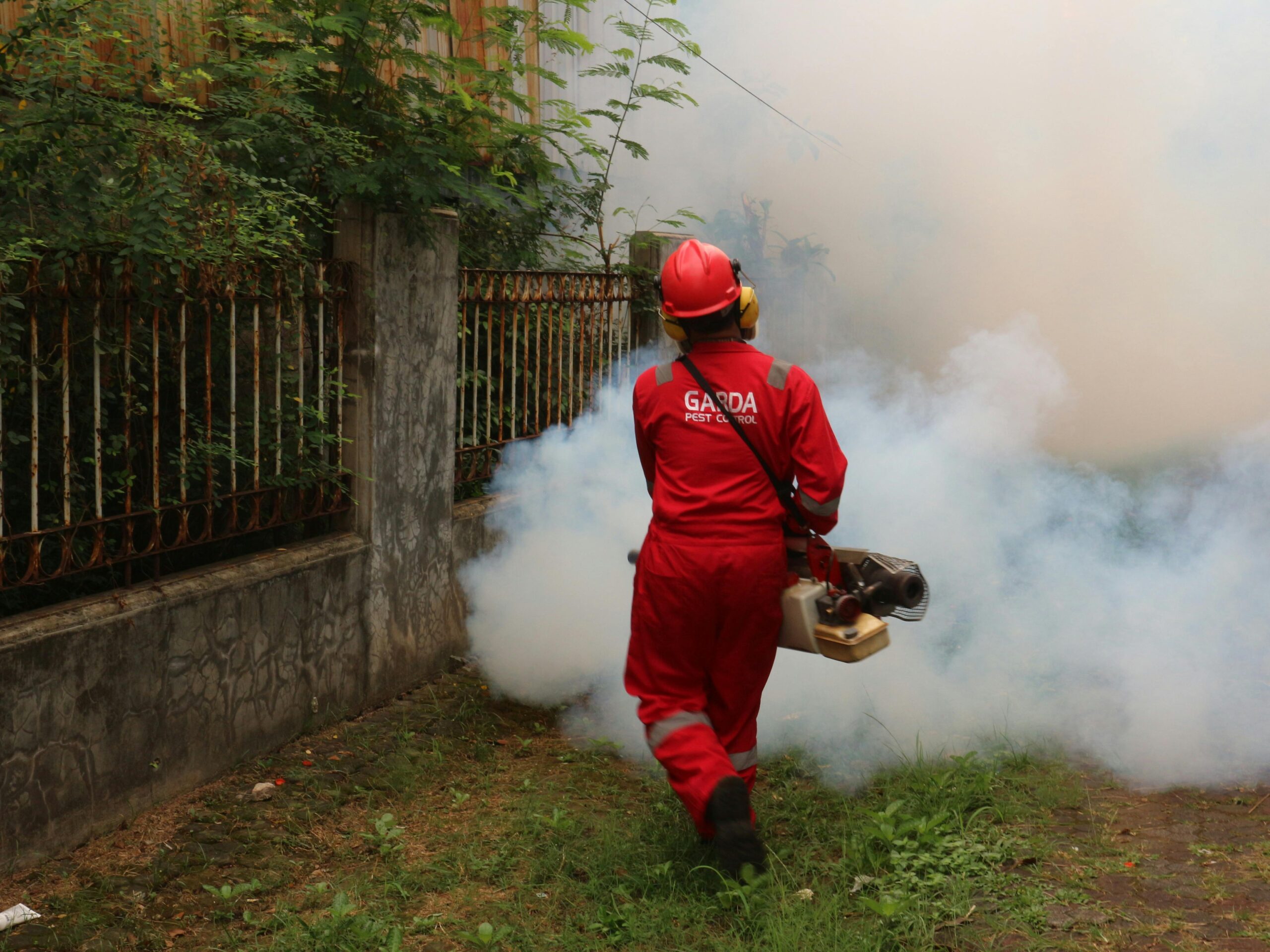
For homeowners who want continuous coverage, Mosquito Squad of Greater Atlanta offers a misting system that delivers 30‑second sprays 2‑4 times daily across the property. The system can be programmed to target ticks, mosquitoes, and even fleas, providing an automated layer of protection that works while you’re inside. Read more about the misting system here.
Baseline Costs for Home‑Wide Pest Services
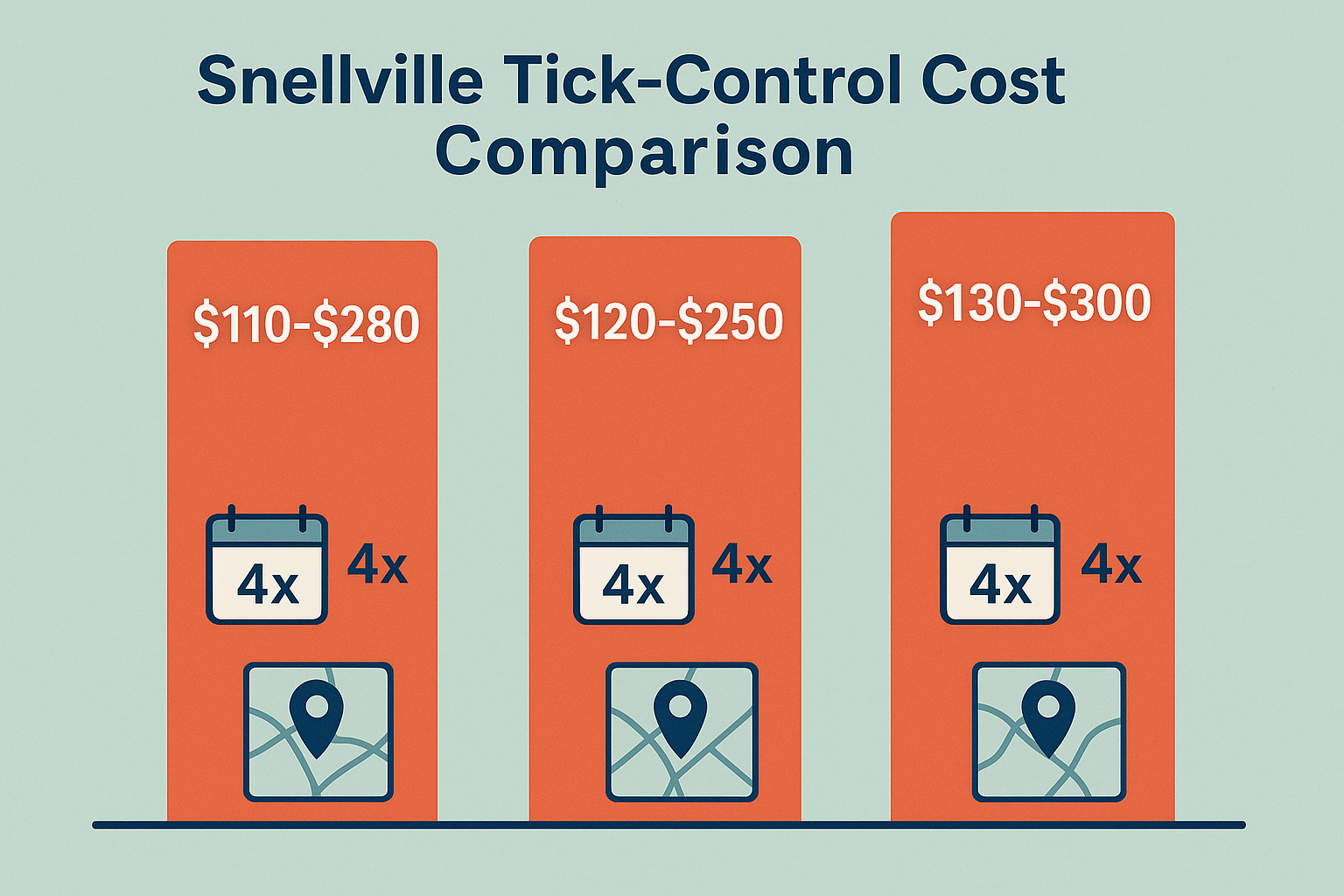
When comparing tick control cost Snellville providers typically quote, the first number you’ll hear from a professional pest-control company is the price per service. According to a recent Perplexity analysis, the typical range for a comprehensive home-wide treatment—including ticks—falls between $110 – $280 per visit (source). This bracket reflects the variation in property size, infestation severity, and the specific treatment plan chosen.
What’s Included in a Standard Service?
- Thorough inspection: A certified technician walks through every room, checks the perimeter, and identifies tick hotspots such as shaded grass, leaf litter, and pet areas.
- Interior treatment: Targeted application of EPA‑approved acaricides on baseboards, under furniture, and in cracks where ticks hide.
- Perimeter barrier: A spray around the home’s foundation creates a protective ring that stops new ticks from crossing onto the lawn.
- Follow‑up visit: About two weeks later, the technician returns to assess effectiveness, retreat any lingering zones, and answer homeowner questions.
Each of these steps is bundled into the quoted price, so you’re not paying for a single spray but for a coordinated, year‑round defense strategy. The follow‑up visit is especially valuable because tick life cycles can span weeks; catching any stragglers early prevents a full‑blown infestation.
Saving Money by Bundling Tick Control with Other Pests
Most Snellville homeowners also battle ants, cockroaches, or other common invaders. Because the inspection and perimeter work overlap, many pest‑control companies—including Anthem Pest Control—offer bundled packages. Adding ticks to an existing ant or roach program can shave 15‑25 % off the standalone tick price, bringing the total closer to the low end of the $110‑$280 spectrum.
For example, a homeowner who already schedules quarterly ant treatments may only pay an additional $40‑$70 per visit to include tick control. The shared perimeter barrier and combined follow‑up visit mean you get dual protection without duplicating effort or cost.
Understanding these baseline costs helps you budget confidently and decide whether a bundled approach makes sense for your yard and home. With transparent pricing and a clear list of services, Anthem Pest Control ensures you know exactly what you’re paying for—and why it’s a smart investment in a tick‑free environment.
Tick‑Only Packages vs. Inclusive Plans
When you’re hunting for a tick‑control solution in Snellville, the first question most homeowners ask is whether they should pay for a stand‑alone tick service or bundle it with a broader pest‑management plan. The answer hinges on three factors: transparency of pricing, the range of pests covered, and how often you’ll need treatment throughout the year.
Anthem Pest’s approach is straightforward but a bit opaque when it comes to tick‑only work. The company does not list a dedicated tick‑control price on its public site, directing visitors instead to a general inquiry form. This means you’ll need to call or submit a request to get a customized quote, which can be helpful for tailoring the service but adds an extra step for price‑sensitive shoppers. For reference, see the Anthem Pest tick‑control page.
Local competitors, however, give a rough idea of what you might expect to spend:
- Mosquito Squad – No published tick‑only price, but the company promotes a “satisfaction guarantee” and encourages homeowners to request a free estimate. This model mirrors Anthem’s in that you’ll need to reach out for a specific number.
- Proactive Pest GA – Lists a range of $120‑$250 per visit for combined flea & tick treatments. The price varies based on property size and the frequency of visits you select.
- PestNation – Offers a quarterly plan that includes tick control for $130‑$300. This package bundles ticks with other common pests, providing a predictable annual cost and the convenience of four scheduled visits.
Comparing these options, a stand‑alone tick service can be more cost‑effective if ticks are your only concern and you live in a low‑risk area. However, inclusive plans often deliver better value when you’re dealing with multiple pests or when seasonal spikes (like summer ticks and fall rodents) demand a broader shield. For example, the PestNation quarterly plan, while slightly higher than the low end of Proactive’s per‑visit rate, spreads the expense across the year and reduces the need for separate contracts.
Verification note: Prices fluctuate with market demand, regulatory changes, and seasonal promotions. Always double‑check the 2024 price listings on each provider’s website before making a final decision.
How the $110‑$280 Range Is Calculated
When you ask for a quote, the number you hear—anywhere from $110 to $280 per visit—isn’t random. It reflects a blend of measurable factors that vary from yard to yard. Understanding those drivers helps you see why a one‑size‑fits‑all price doesn’t exist, and it lets you compare options with confidence.
Property Size
Most Snellville homes sit on lots between a quarter and a half acre. Larger footprints require more product and more labor, which nudges the price upward. For example, a 0.25‑acre yard typically falls at the low end of the range, while a 0.5‑acre property can push the cost toward $280.
Infestation Level
Technicians assess how many ticks are present and how deep the problem runs. A light infestation—just a few ticks spotted on a walk—usually stays near the $110 mark. Heavy infestations, where ticks are abundant in grass, leaf litter, and shaded corners, demand additional applications and stronger formulations, driving the price higher.
Treatment Type
We offer two primary approaches. A standard barrier spray creates a protective ring around your home and lawn, suitable for most homeowners. High‑volume misting, on the other hand, distributes a finer mist over a larger area and can reach hidden micro‑habitats, but it costs more due to the equipment and extra product required.
Frequency
One‑time treatments are perfect for a quick fix, but ticks often rebound if the environment isn’t regularly managed. A single visit typically lands in the $110‑$180 band. Opting for a quarterly plan spreads the work across the season, ensuring continuous protection; the per‑visit cost may rise slightly, but the overall effectiveness improves dramatically.
Sample Calculation
Imagine a 0.35‑acre yard with a moderate tick population. You choose a quarterly barrier spray, which our technicians price at $150 per visit. Over a year that’s:
- $150 × 4 visits = $600
- + optional pet‑friendly essential‑oil additive = $80
The total annual investment becomes $680, illustrating how the base $110‑$280 range expands when you add frequency and specialty options.
Unlimited Tick Protection
For homeowners who want “set it and forget it,” Unlimited Lawn Care offers an “Unlimited Tick Protection” plan. While the exact price isn’t listed publicly, you can request a custom quote on their website. Learn more about the plan here.
In short, the $110‑$280 range is a baseline that adjusts for lot size, infestation severity, treatment method, and how often you schedule service. By breaking down each component, you can see why a $150 quote for a 0.35‑acre yard with quarterly barrier sprays—and a pet‑safe boost—makes perfect sense for a Snellville homeowner seeking reliable, year‑round tick control.
Choosing the Right Snellville Tick‑Control Company
When it comes to protecting your yard and family from ticks, the right service can mean the difference between a one-time fix and year-round peace of mind. In Snellville, several reputable firms promise low prices, but only a few combine transparent pricing, proven products, and solid warranties that clearly outline overall tick control cost Snellville homeowners can expect before committing to a plan.
Neighborhoods Served
Most local providers focus on the same core areas, but a few extend their reach to neighborhoods that often get overlooked. Look for companies that explicitly list:
- Brookhaven – dense tree cover and shaded lawns make tick hotspots.
- East Snellville – newer developments with large yards benefit from perimeter treatments.
- Historic Downtown – older homes with mature landscaping need targeted spot‑treatments.
Key Factors to Compare
Beyond price, homeowners should evaluate the following criteria to ensure lasting protection:
- Service Scope: Does the plan include both perimeter and interior treatments?
- Price Range: Transparent, all‑in‑one quotes versus hidden fees.
- Warranty: Guarantees that cover re‑treatments if ticks return within a season.
- EPA‑Registered Products: Assurance of safety for kids, pets, and the environment.
- Average Customer Rating: Google and Yelp scores give a quick snapshot of reliability.
Case Study: Lakeview Homeowner Saves $70
When the Miller family in Lakeview noticed a surge of black‑legged ticks, they called Mosquito Squad for a standard tick‑control visit. The technician suggested bundling the service with their already‑scheduled mosquito treatment. By combining the two, the Millers paid only $190 instead of $260, netting a $70 savings and a coordinated, season‑long barrier against both pests.
Bundling isn’t just a cost trick; it aligns treatment timing so that chemicals work synergistically, reducing the chance of re‑infestation. If you’re already investing in mosquito control, ask your provider whether a tick‑control add‑on can be included at a reduced rate.
Making Your Decision
Start by reviewing the cost‑comparison chart above, then verify that the company you’re eyeing serves your specific neighborhood. Ask for a written warranty, confirm they use EPA‑registered formulations, and check recent online reviews. A provider that ticks all these boxes will give you confidence that your yard stays tick‑free without surprise fees.
Hidden Variables in Tick‑Control Pricing
Landscape complexity
Every yard is unique, and features like rock gardens, steep slopes, or decorative water elements add layers of difficulty for technicians. Navigating uneven terrain or working around water requires extra labor, specialized equipment, and sometimes additional safety measures. Those added challenges are reflected in a modest surcharge on the base tick‑control rate.
Presence of pets
Pets are a top priority for most homeowners, and pest‑control pros must accommodate them. If you have dogs, cats, or other animals, the service may involve a pet‑free waiting period after application or the use of pet‑safe products that can be slightly more expensive. Some companies also offer a “pet‑protect” add‑on that guarantees no residue on pet bedding or toys.
Seasonal promotions
Timing can be a money‑saver. Early‑spring discounts are common because pest‑control firms want to treat ticks before they become a summer nuisance. Likewise, senior rebates or bundled‑service promotions (e.g., tick control plus mosquito treatment) can shave 10‑15 % off the quoted price. Keep an eye on the company’s website or ask your technician about current offers.
DIY prep work
Homeowners who tackle pre‑treatment chores can see a noticeable reduction in labor costs. Removing leaf litter, trimming low vegetation, and clearing debris give technicians a clearer path and reduce the time spent spraying. According to the National Pest Management Association’s 2024 DIY prep data, such homeowner effort can cut technician time by up to 20 %, translating into a lower bill.
Putting it all together
When you request a quote, ask the technician to break down any additional fees. Understanding whether you’re paying for complex landscaping, pet accommodations, seasonal discounts, or the lack of DIY prep helps you make an informed decision and avoid surprise charges.
Source: National Pest Management Association (NPMA), “2024 DIY Preparation Impact Study,” 2024.
Steps to Secure a Transparent Estimate
Checklist for an Accurate Quote
Before you pick a pest‑control partner, gather the facts that let you compare apples‑to‑apples. Use this quick, homeowner‑friendly checklist:
- Measure every treated area. Include the main lawn, garden beds, walkways, and any outbuildings (sheds, garages, pool houses). Write down the total square footage for each zone.
- Document your tick‑control history. Note the dates of previous treatments, the products used, and whether any re‑treatment guarantees were offered. This helps a new provider understand what’s already been applied and avoid over‑application.
- Ask for a written scope of work. The estimate should list every product name, concentration, and the exact application method. It should also spell out the re‑treatment policy (e.g., “Free second visit within 30 days if ticks persist”).
- Request a price‑per‑square‑foot breakdown. Seeing the cost per 1,000 sq ft lets you spot hidden fees and compare providers on a level field.
- Collect at least three quotes. With three independent numbers, you can gauge the market range in Snellville and negotiate confidently.
Sample Email Template
Copy the template below, fill in your details, and send it to any local pest‑control company. A clear request encourages a transparent, itemized response.
Subject: Request for Detailed Tick‑Control Estimate – [Your Address] Hello, My name is [Your Name] and I am a homeowner in Snellville, GA. I am looking for a professional tick‑control service and would appreciate a written, itemized quote based on the following information: - Total yard size: ______ sq ft - Outbuildings: ______ sq ft (list each) - Previous tick‑control dates and products (if known): • ______________________ • ______________________ - Desired treatment frequency: __________ (e.g., one‑time, seasonal, annual) Please include in your response: 1. A detailed scope of work with product names and concentrations. 2. Price per square foot and total cost for each area. 3. Your re‑treatment policy and any warranties. 4. Estimated date(s) you could perform the service. Feel free to ask for any additional details needed to finalize the estimate. I plan to compare at least three quotes before making a decision and will be in touch once I have reviewed all proposals. Thank you for your time. Best regards, [Your Name] [Phone: 877‑371‑8196] [Email: __________________]
By following the checklist and using the email template, you’ll receive clear, comparable quotes that reveal exactly what you’re paying for—no surprises, just confidence in your tick‑control investment.
When Is a DIY Approach Viable?
Before you reach for the phone, it’s worth asking whether a do‑it‑yourself tick‑control plan can meet your needs. DIY methods can work for small, isolated infestations or for homeowners who enjoy hands‑on maintenance. However, the decision hinges on property size, the level of exposure, and how comfortable you are with chemical safety.
Common DIY Tick‑Control Options
- Tick tubes: Cardboard tubes filled with permethrin‑treated cotton that rodents carry into their nests, breaking the tick life cycle.
- Cedar oil sprays: Plant‑based repellents that can be applied to lawns, garden borders, and pet bedding for short‑term deterrence.
- Over‑the‑counter acaricides: Ready‑made sprays or granules containing pyrethroids or carbaryl, sold at hardware stores for spot‑treatments.
Cost Comparison: DIY Kits vs. Professional Visits
A typical DIY tick‑control kit ranges from $30 to $70, covering enough product for a modest yard (about 5,000 sq ft). Professional services in Snellville usually charge between $110 and $280 per visit, which includes a thorough inspection, EPA‑registered treatments, and a warranty for re‑treatment if needed. While the upfront price of a DIY kit looks attractive, the long‑term value of a professional application often outweighs the savings because technicians target hidden hotspots—under leaf litter, in rodent burrows, and along fence lines—that DIY products miss.
Safety First: EPA Guidelines
The EPA 2024 tick‑control fact sheet stresses three non‑negotiable safety steps for any chemical use:
- Wear long sleeves, gloves, and eye protection to prevent skin contact.
- Apply products only when wind speeds are below 5 mph to avoid drift onto neighboring properties.
- Dispose of empty containers and leftover solution in accordance with local hazardous‑waste regulations.
“Improper handling of acaricides can lead to respiratory irritation and environmental contamination,” – EPA, 2024.
When to Call a Professional
If your household includes young children, pets, or immunocompromised individuals, the margin for error shrinks dramatically. Professional technicians are trained to select EPA‑approved products with the lowest toxicity profiles and to apply them in a way that minimizes exposure to non‑target species. Additionally, larger properties, dense shrubbery, or areas with known wildlife activity (e.g., deer trails) often require integrated approaches that go beyond the reach of a homeowner’s spray bottle.
In short, a DIY approach can be viable for low‑risk, small‑scale situations where you’re comfortable following strict safety protocols. For most Snellville families—especially those with vulnerable members—the confidence and comprehensive coverage that a licensed pest‑control service provides is well worth the investment.
Seasonal Calendar for Snellville Homeowners
Tick activity in Snellville follows a predictable rhythm tied to temperature, humidity, and the life cycle of the lone‑star and American dog ticks that dominate the area. By aligning your pest‑control plan with these natural cycles, you can keep your yard safe while avoiding unnecessary applications.
March – April: First Barrier Spray
As the ground thaws and homeowners begin fertilizing lawns, this is the ideal window for the initial barrier spray. Applying a residual insecticide right after fertilization creates a protective coat that stops newly hatched larvae from climbing onto grass blades. The treatment also works with the early‑season questing nymphs that are just beginning to emerge.
June – July: Mid‑Season Boost
Summer brings the peak of tick activity, especially the aggressive nymph stage that most often bites humans. A second application during the hottest weeks adds a fresh layer of protection, targeting both active nymphs and the adult ticks that are beginning to mate. This “mid‑season boost” is critical for maintaining a low‑tick environment during the months when families spend the most time outdoors.
September – October: Final Treatment Before Leaf Fall
As temperatures start to dip, ticks seek shelter in leaf litter and tall grass. The final spray before the first frost reduces the number of adults that will overwinter in your yard, cutting the population that will emerge the following spring. This timing also coincides with the natural decline in tick activity, making the product more effective.
Why Quarterly Visits Match Tick Development
Ticks progress through egg, larva, nymph, and adult stages roughly every 2‑3 months in Georgia’s climate. By treating in early spring, midsummer, and early fall, you interrupt each critical transition point: preventing larvae from maturing, reducing nymphs at their most aggressive, and eliminating adults before they can lay the next batch of eggs.
Pairing Tick Control with Lawn Aeration for Cost Efficiency
Many Snellville homeowners schedule lawn aeration in the spring and fall to improve soil health. Combining aeration with your tick-control visit can save both time and money. According to 2024 local lawn-care pricing, a standard aeration service averages $85-$110 per 1,000 sq ft. When you bundle the aeration with a tick barrier spray, Anthem Pest Control offers a 10% discount on the pest-control portion, effectively lowering overall tick control cost Snellville homeowners pay while delivering two essential yard-care services in a single appointment.
Quick Answers to Common Concerns
How long does a barrier treatment remain effective?
Most residential barrier sprays stay active for about 4‑6 weeks. The chemistry creates a thin protective film that kills ticks on contact as they crawl through your yard. If you opt for a micro‑encapsulated formula, the residual can linger a bit longer—sometimes up to eight weeks—because the tiny capsules release the active ingredient slowly over time.
Are the chemicals safe for children and pets?
We only apply EPA‑registered products that meet strict safety standards. After the label‑specified re‑entry interval—usually 2‑4 hours—the treated area is considered safe for kids and pets to play on. As long as you follow the waiting period and keep pets off the lawn until the spray dries, there is no measurable risk.
Can I combine tick control with mosquito or flea services?
Absolutely. Bundling tick treatment with mosquito or flea control is a common way to protect your whole outdoor space while trimming overall expense. Most homeowners see a 10‑15 % discount when they schedule two or more services together, because we can apply compatible products in a single visit.
Where can I learn more?
For detailed, science‑backed guidance on preventing tick bites, visit the CDC’s tick‑prevention page. If you want to verify the safety profile of any product we use, the EPA’s pesticide registration database provides full ingredient listings and approved uses.
Got another question? Our team at Anthem Pest Control is just a phone call away at 877‑371‑8196. We’re happy to tailor a plan that fits your family’s schedule, budget, and peace‑of‑mind needs.
Take Action with Anthem Pest Control Today
When it comes to protecting your Snellville yard and home, most residents find the tick‑control market sits between $110 and $280 per treatment. That range reflects the differences in service frequency, product choice, and the level of thoroughness each provider offers. Because prices can vary widely, taking the time to compare local companies is the smartest first step.
We recommend gathering an itemized, written estimate from at least three Snellville pest‑control firms. A detailed quote should break down every component—initial inspection, treatment applications, follow‑up visits, and any guarantees. When you see the numbers side by side, hidden fees disappear and you can pinpoint exactly where you’re getting the most value.
Having a transparent proposal also protects you from surprise charges later on. Look for clear language about the type of tick‑control product used, the coverage area, and the recommended retreat schedule. If a company can’t provide that level of detail, it’s a signal to keep looking.
At Anthem Pest Control, we understand that a homeowner’s budget is as important as peace of mind. That’s why we offer a free, no‑obligation inspection and a written cost proposal that outlines every step of the process. Our technicians will walk you through the findings, explain why a particular treatment is best for your property, and answer any questions you may have—no pressure, just clear information.
Ready to see how a professional, transparent quote compares to the $110‑$280 range you’ve heard about? Give us a call today at 877‑371‑8196. One of our friendly specialists will schedule your free inspection at a time that fits your calendar.
When you’re prepared with three solid estimates, you’ll feel confident choosing the partner that delivers both effectiveness and affordability. Visit Anthem Pest website to learn more about tick control cost Snellville homeowners can expect and to request your free quote online.