Why Millipedes Invade Roswell Homes (And What It Means for You)
If you’ve walked into your basement after a humid Georgia rain and found the floor crawling—don’t worry, you’re not alone. Here in Roswell, it’s surprisingly common to see waves of millipedes appearing overnight, especially after a downpour or a stretch of muggy weather. That’s often when homeowners start searching for a reliable millipede exterminator Roswell residents trust. These little critters might look intimidating as they wriggle across your garage or squeeze under doorways, but luckily, they’re harmless. Millipedes won’t bite, sting, or pass on any diseases, but seeing dozens (or sometimes hundreds) of them taking over your space is enough to make anyone want the problem solved, fast.
Roswell’s leafy neighborhoods—whether you’re near Historic Roswell, around Martin’s Landing, or nestled in one of our tree-lined subdivisions—are the perfect setting for millipede activity. Why? Because millipedes love two things: moisture and decaying leaves or mulch, which our city has in spades. Add in frequent storms and damp summers, and it’s practically an open invitation. Millipedes live outside under mulch, stones, and logs, but when it gets too wet or their habitat is disturbed, they sneak indoors in search of dry ground.
The nuisance is real—if you’ve dealt with them before, you know how quickly those numbers add up, and how difficult it is to keep the bugs at bay using just household sprays or DIY hacks. The mess can be frustrating: dead or squished millipedes can leave stains, and cleaning up after an invasion is a never-ending chore.
So, how much does it actually cost to deal with a millipede infestation in Roswell? On average, you’ll be looking at around $175–$300 for a full-service pest control visit. This typically includes a detailed inspection, targeted indoor and outdoor treatment, and recommendations to help keep the bugs out in the future. The price can go up (or down) depending on how bad the problem is and whether you want ongoing seasonal coverage—something a lot of homeowners here consider, especially in problem areas.
Thinking about your next step? Acting quickly and getting the right prevention advice now can save you bigger headaches—and higher costs—down the line. In the next sections, we’ll walk through exactly how to stop millipedes at the source, what to expect from professional treatments, and how Anthem Pest’s local team goes above and beyond to keep your home pest-free, for good. Ready to compare your options? Keep reading for expert tips and local solutions.
What Impacts the Cost of Millipede Extermination in Roswell?
Let’s be honest: no one wants to deal with a sudden wave of millipedes in their house, especially when you live in a place like Roswell where the mix of river valleys, rolling woods, and older homes can make things a real headache. That’s often when calling a professional millipede exterminator Roswell homeowners trust becomes the smartest move. So, what ends up driving the price up or down when you call for professional help? Let’s break it down, so there are no surprises.
- The Size of the Infestation: If you just see a few wandering across the bathroom tile, that’s a much quicker job than if you’re finding dozens in every room or, worse, have basement walls and window wells crawling with them. The heavier and more widespread the invasion, the more treatments and visits it usually takes—and that raises the price.
- How Much Needs to Be Treated: Got a big house, full basement, or lots of landscaping right up on the foundation? All that space (indoor and out) means more materials, time, and corners to check. Older homes—especially those along the Chattahoochee, Holcomb Bridge, or around those older, tree-lined streets—also have lots of cracks and organic hiding spots, so your tech is going to have to be thorough.
- The Treatment Method: Sometimes a simple treatment does the trick, but in other cases, getting control might mean a mix of barrier sprays, dusts for crawlspaces, or treating outdoor mulch beds. Each step adds to the total cost, especially if a combination of approaches is needed for lasting results.
- How Quickly You Need It Done: Emergency or same-day appointments can cost a bit more—especially after heavy rains or in spring/fall when the millipedes seem to come out of nowhere. If your phone call is after Roswell has gotten a week of steady rain, just know you won’t be the only one dialing for backup.
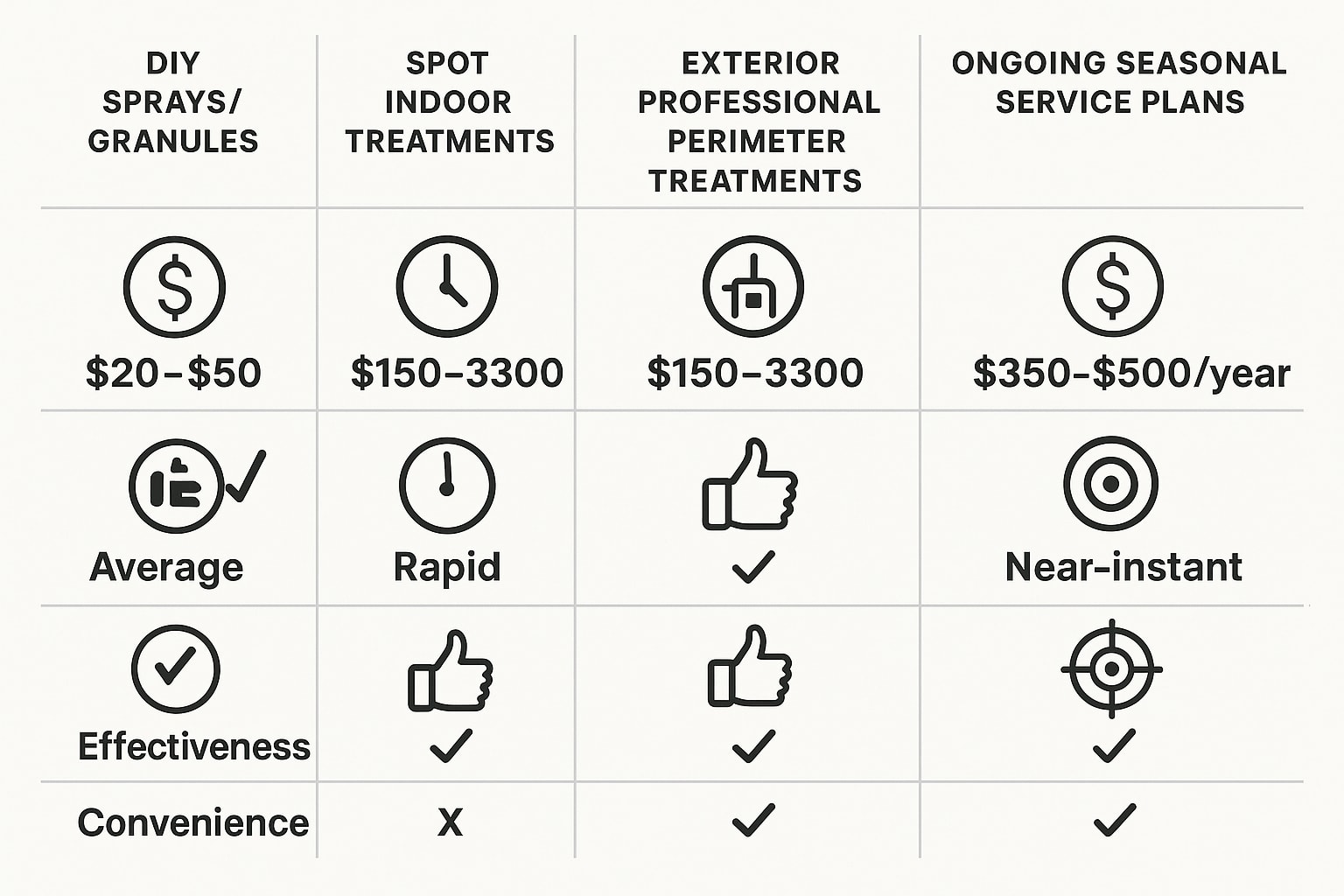
- Long-Term Protection: Some people just want the one-time cleanout (typical range, $125–$250 for average jobs), but if you’re looking to protect your home year-round, seasonal plans generally cost more up front ($350–$500/year). The positive trade-off? You’re far less likely to need urgent—and pricier—emergency treatments down the road.
Anthem Pest believes you shouldn’t pay for work you don’t need. They’ll walk you through all your options and give you honest, local pricing based on the real conditions at your property. Every home here is different, so tailored plans help you solve the problem without wasting a dime.
What Impacts the Cost of Millipede Extermination in Roswell?
Let’s be honest: no one wants to deal with a sudden wave of millipedes in their house, especially when you live in a place like Roswell where the mix of river valleys, rolling woods, and older homes can make things a real headache. That’s when many homeowners reach out to a trusted millipede exterminator Roswell residents rely on for help. So, what ends up driving the price up or down when you call for professional help? Let’s break it down, so there are no surprises.
- The Size of the Infestation: If you just see a few wandering across the bathroom tile, that’s a much quicker job than if you’re finding dozens in every room or, worse, have basement walls and window wells crawling with them. The heavier and more widespread the invasion, the more treatments and visits it usually takes—and that raises the price.
- How Much Needs to Be Treated: Got a big house, full basement, or lots of landscaping right up on the foundation? All that space (indoor and out) means more materials, time, and corners to check. Older homes—especially those along the Chattahoochee, Holcomb Bridge, or around those older, tree-lined streets—also have lots of cracks and organic hiding spots, so your tech is going to have to be thorough.
- The Treatment Method: Sometimes a simple treatment does the trick, but in other cases, getting control might mean a mix of barrier sprays, dusts for crawlspaces, or treating outdoor mulch beds. Each step adds to the total cost, especially if a combination of approaches is needed for lasting results.
- How Quickly You Need It Done: Emergency or same-day appointments can cost a bit more—especially after heavy rains or in spring/fall when the millipedes seem to come out of nowhere. If your phone call is after Roswell has gotten a week of steady rain, just know you won’t be the only one dialing for backup.
- Long-Term Protection: Some people just want the one-time cleanout (typical range, $125–$250 for average jobs), but if you’re looking to protect your home year-round, seasonal plans generally cost more up front ($350–$500/year). The positive trade-off? You’re far less likely to need urgent—and pricier—emergency treatments down the road.
Anthem Pest believes you shouldn’t pay for work you don’t need. They’ll walk you through all your options and give you honest, local pricing based on the real conditions at your property. Every home here is different, so tailored plans help you solve the problem without wasting a dime.
Why Roswell Homes Get Millipede Problems—And What That Means for Treatment
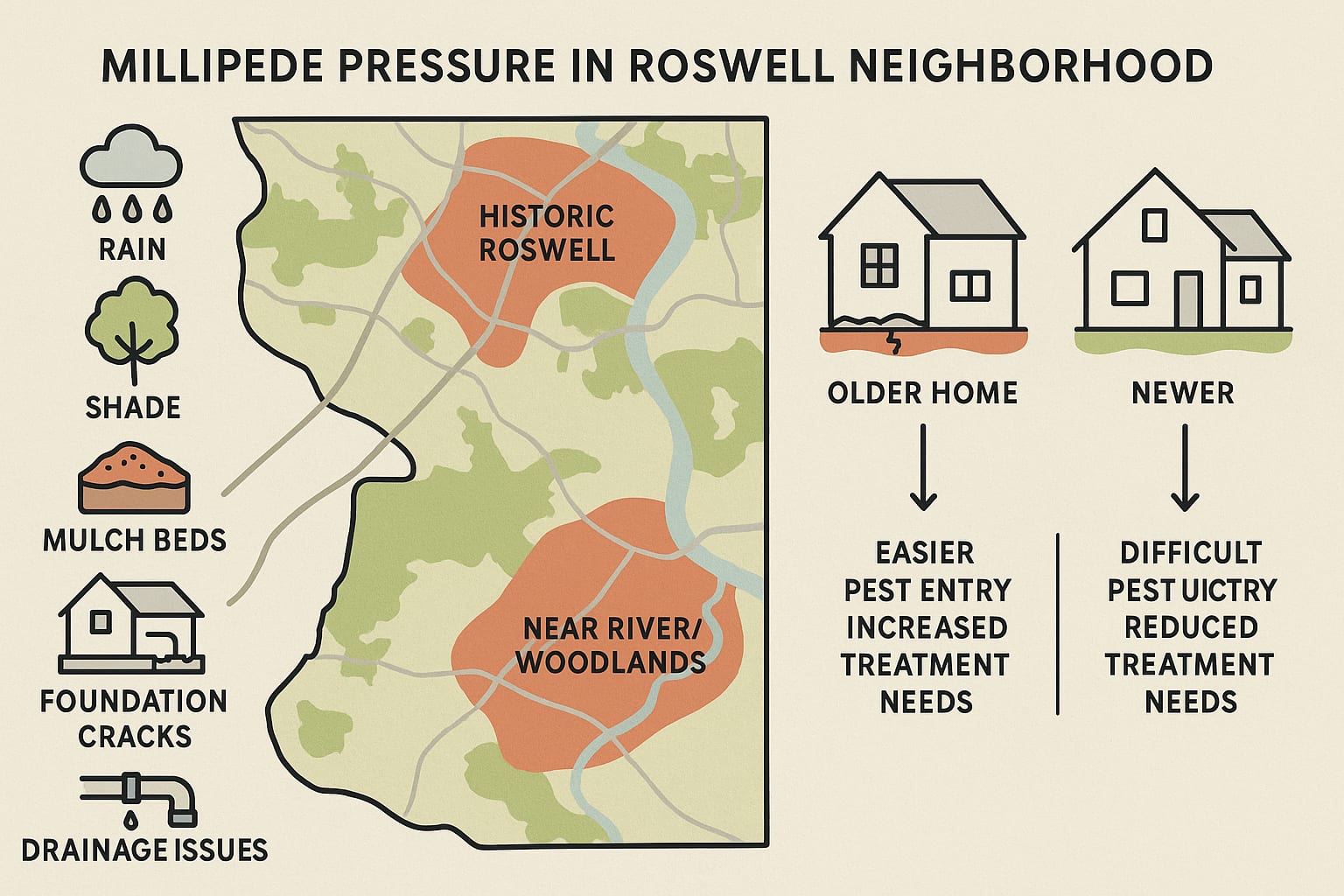
If you’ve been scratching your head about why millipedes seem to pop up around your Roswell home every time it rains, you’re not alone. Our city’s hilly landscape, heavy clay soils, and lush tree canopies all play a big role. After those classic Georgia downpours, the ground holds onto moisture like a sponge—giving millipedes the damp conditions they crave and making their numbers surge.
Older spots in Historic Roswell or lakefront houses, especially the ones with crawlspaces, really take the brunt. Shaded yards, layers of mulch right up to your slab, or yards that never seem to fully dry out are basically rolling out the red carpet for millipede invasions. That mulch stacked against the foundation, lingering puddles near gutters, or weatherstripping that’s past its prime can turn a minor nuisance into a nightly parade across your floors.
Neighborhoods with denser hedges, sprawling gardens, or irrigation running every morning see even more of these little guys. Lots of water plus thick vegetation equals, well, millipede heaven. Meanwhile, newer homes in Roswell are built a little smarter—with clean grading for drainage and better seals. You likely see fewer problems if you live in one of those, but a rainy month can still send millipedes packing for drier shelter (your house).
What’s this mean for your pest plan? The more moisture and lush landscaping on your property, the trickier the job is for pest control pros. Sometimes what works for your neighbor doesn’t quite cut it for you. Extra treatments, sealing up entry points, or putting in barriers may be needed if your place sits in a wetter pocket of town or has construction quirks. All that’s factored into the cost and approach—because no two Roswell properties are exactly the same when it comes to these moisture-loving crawlers.
Check out the infographic below for a quick look at how Roswell’s climate and home features shape your millipede service needs. And remember: a little local know-how goes a long way in keeping these intruders out for good.
How to Keep Millipedes Out of Your Roswell Home—for Good
If you’re tired of surprise millipede sightings, a little effort now can go a long way. Here in Roswell, it’s usually just a handful of simple, down-to-earth fixes that make the difference between a calm, pest-free home and a millipede parade every time it rains—often reducing the need to call a millipede exterminator Roswell homeowners rely on for emergencies. The good news? Most of these steps cost next to nothing and could save you a bundle by preventing pricey pest control calls down the road.
First up, walk around the outside of your house. If you see mulch, pine straw, or piles of damp leaves snug up against your foundation, pull them back—a good 12 to 18 inches. Millipedes live for moist, shady spots, and all that material right against the wall is like rolling out the red carpet for them. While you’re at it, trim overgrown groundcover and plants so your soil can breathe and dry out faster after a rain.
Water is a millipede magnet. Fix any drainage problems next to your gutters, hose spigots, or anywhere water tends to puddle. A little slope away from your house is all it takes to steer moisture—and millipedes—far from your doorstep.
Inside, millipedes love damp places just as much. Dehumidifiers in basements, crawlspaces, or other humid rooms are a smart move. If you do spot a millipede inside, vacuum it up instead of crushing it—less mess, no lingering odor or stains.
One of the best lines of defense? Seal the cracks and gaps that let millipedes (and all sorts of creepy-crawlies) inside in the first place. Use fresh weatherstripping on doors and windows, add door sweeps, and check around any utility lines or pipes coming into the house. This keeps humid air—and pests—where they belong: outside.
Don’t forget to give your place a good checkup every spring and fall. That’s when millipedes are most active and when you’re most likely to catch a problem before it turns into a full-blown infestation. The EPA and pest experts at Anthem recommend regular inspections for a reason: an ounce of prevention is way cheaper than a pound of treatment.
Your Quick-Start Millipede Prevention Checklist
- Keep mulch, straw, and leaf piles 12–18″ away from your foundation
- Trim back thick plants and groundcover for air flow
- Fix drainage and slope soil away from your home’s base
- Use dehumidifiers in any damp or musty rooms
- Vacuum up any millipedes you see indoors (don’t squish!)
- Seal up cracks, gaps, and holes—especially around windows, doors, and pipes
- Install or replace weatherstripping and door sweeps as needed
- Schedule seasonal inspections—early spring and fall are best
Stick to these steps, and you’ll have a solid defense against millipedes, keeping your costs and headaches to a minimum. And if you need backup, remember your local Anthem Pest team is just a call away.
The Best Time to Outsmart Millipedes in Roswell
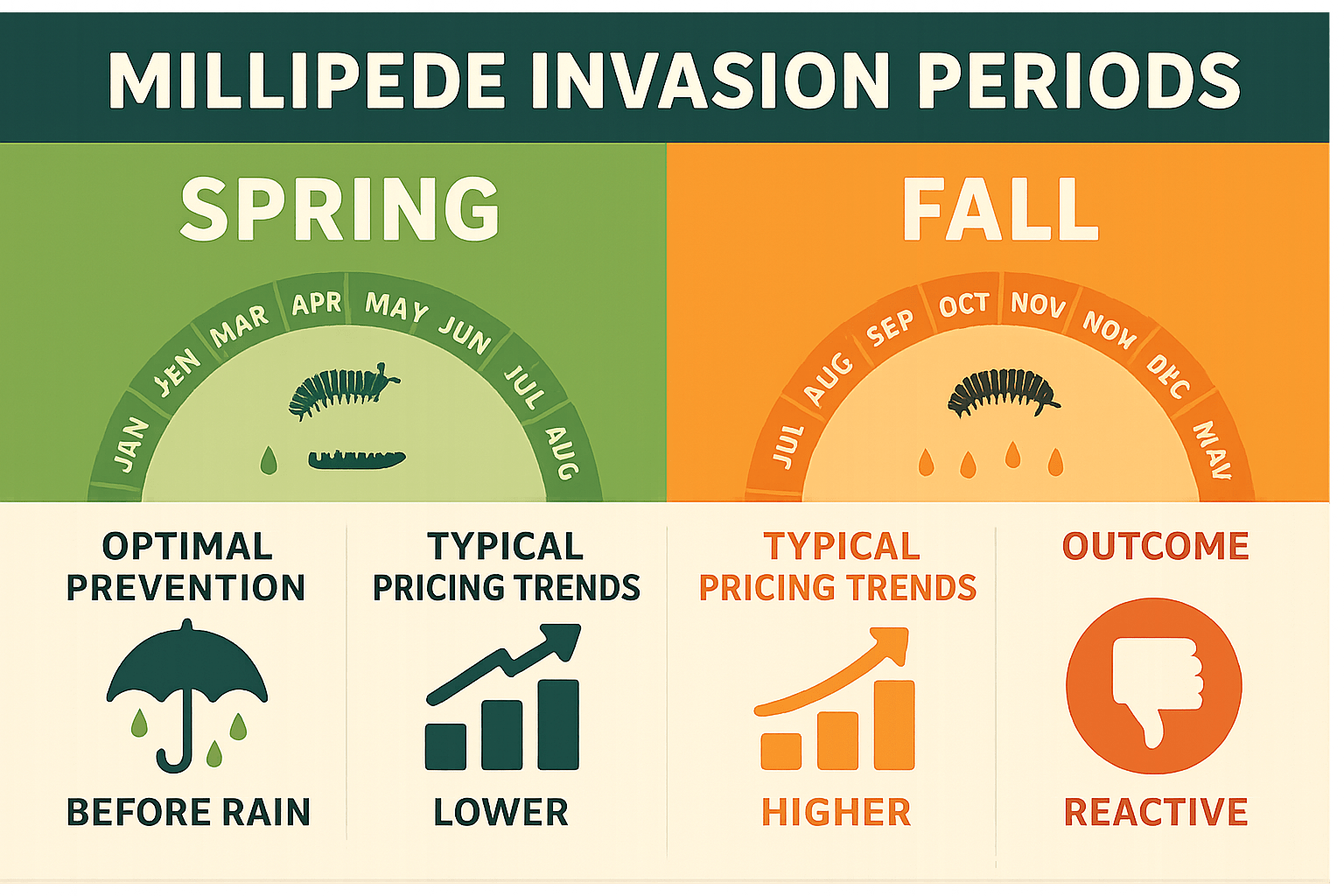
If you’ve battled a wave of millipedes crawling up your foundation—or worse, making their way inside—it’s probably happened after heavy rain or weird swings in weather. Roswell sees millipede invasions hit hardest in early spring and fall, and these critters love to sneak indoors after storms or hot-and-cold days send them searching for shelter.
The trick is to stay one step ahead. Don’t wait until you spot millipedes in your basement to get serious about it. The sweet spot for millipede defense? Right before the trouble starts—so think late winter moving into spring, or late summer before those fall rains. Bringing in a pest pro to set up a solid barrier around your home now means you’re covered when that first wave rolls in. You’ll save yourself hassle, stress, and often even money compared to the scramble of an emergency call during peak season.
Folks living in established neighborhoods with rich, mature landscaping usually notice the first uptick in millipede activity. Trust us, when everyone in the area starts calling at once, schedules get tight fast. Anthem Pest does everything we can to respond quickly, but beating the rush gets you priority service, faster relief, and a lot fewer creepy-crawlies to deal with in the first place.
- Spring: Act by late winter. It sets up a barrier before early spring rains drive millipedes indoors.
- Fall: Don’t wait until you see them. A treatment scheduled as summer wraps up keeps your home protected as temps dip and storms hit.
- After Storms: Emergency calls spike after heavy rain. Being proactive means you’re not left waiting for relief.
We see it every year: homeowners who get ahead of the game enjoy quicker, longer-lasting results and way less disruption to their day-to-day lives. So, if you want to stay ahead of the millipede curve in Roswell, working with a trusted millipede exterminator Roswell homeowners rely on and scheduling your seasonal service before the next big surge is the smart move. Your peace of mind (and your floors) will thank you.
Say Goodbye to Millipede Problems – Get Your Free Consultation Today
If millipedes are making themselves at home in your Roswell house, let’s kick them out for good. Anthem Pest is right here in your neighborhood and ready to help. Just pick up the phone and call 877-371-85196 for a free, no-obligation home inspection and quote. Our friendly local techs know every nook and cranny these pests try to hide in, and we’ve got safe, effective treatments that stop millipedes fast – plus, we make sure they stay gone.
We’ve earned our reputation as Roswell’s go-to pros for a reason. It’s not just our experience – it’s the way we make pest control easy, convenient, and hassle-free for you. Want to learn more or reserve your inspection online? Click here for more about our millipede services.
Don’t wait until these crawlers show up again. Get a custom pest plan, clear answers, and same-day service from local experts you can trust. Your neighbors in Roswell already count on Anthem Pest. Let’s get your home back to pest-free – call or click today!
Your Questions About Millipede Control in Roswell—Answered
- Why do millipedes suddenly show up in my house?
If you’ve just spotted a millipede parade in your basement or garage, blame Roswell’s rainy spells and shaded yards. Millipedes love moist ground, so when the outdoors gets soggy or their soil home gets jostled, they march right inside—especially through ground-level spots like laundry rooms, garages, and that often-damp corner near the water heater. - Are millipedes dangerous for my family or pets?
Good news: millipedes are more irritating than threatening. They don’t bite or sting. The worst they’ll do is secrete a tiny bit of fluid that can cause minor skin irritation if you grab one. Just wash your hands and you’re all set—no real risk to people or pets. - How fast can I get a pest control visit in Roswell?
Anthem Pest knows nobody wants to wait around when bugs show up. Most homeowners get same-day or next-day service, especially when millipede numbers explode after rains. We keep communication quick and clear, so you know exactly when we’re coming. - What can I do to keep millipedes from getting in again?
Prevention is huge in Roswell’s damp climate. Try moving mulch and leaves away from your foundation, seal up cracks in your exterior, install proper door sweeps, and use dehumidifiers in any muggy spots inside. Still, it’s easy to miss hidden entry points, so pro inspections are worth it for lasting peace of mind. - How long does a millipede treatment last?
Most perimeter treatments stick around for one to two months—plenty for most of the peak season. But with Roswell’s humidity and lush landscaping, a lot of folks sign up for regular treatments each spring and fall to keep things under control. - Should I try DIY sprays or bring in the pros?
DIY options can slow down a stray bug or two, but the truth is, home store sprays just aren’t designed for big invasions or regular outbreaks. Professional products are safer, last longer, and pros know how to close off those little gaps no one else spots. You’ll save money and stress in the long run. - Where in Roswell are millipedes the worst?
Historic Roswell, Martin’s Landing, anywhere near the Chattahoochee, and neighborhoods heavy with shade or landscaping tend to see the biggest millipede booms. If your yard stays damp or has lots of mulch, you’ve probably seen it firsthand.
Still dealing with millipedes or want prevention tips? Reach out to a trusted millipede exterminator Roswell homeowners rely on at Anthem Pest for advice, fast service, and real answers—from pros who know Roswell inside and out.