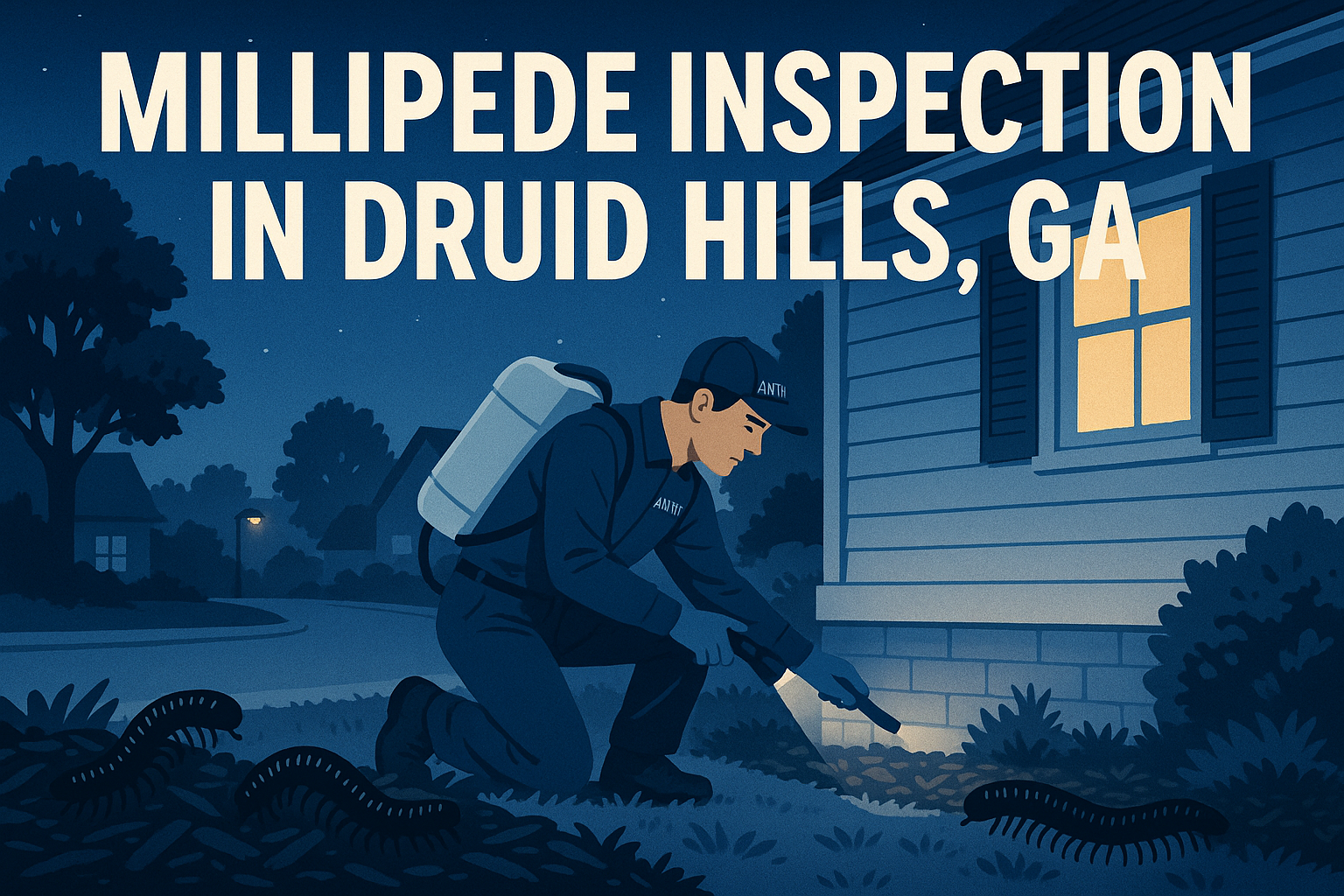
Why Millipedes Matter in Druid Hills
Millipedes are often mistaken for pests, but in reality they are harmless detritivores—creatures that feed exclusively on dead leaves, wood, and other organic debris. Their many legs and rounded bodies allow them to break down this material, returning nutrients to the soil and helping keep our gardens tidy. In the natural world of Druid Hills, they play a quiet, beneficial role, moving through leaf litter and mulch without causing any damage to structures or people.
The trouble begins when these moisture‑loving arthropods wander inside our homes. Millipedes are drawn to damp, dark places such as basements, crawl spaces, and bathroom cabinets. When the outdoor environment becomes saturated after rain, large numbers may seek refuge indoors, arriving in conspicuous clusters that can cover countertops, windowsills, or even entire rooms. While they do not bite, sting, or contaminate food, the sheer volume of bodies can be unsettling, and their presence often signals excess humidity or drainage issues that could invite other, more harmful pests.
Recent data underscore why Druid Hills homeowners should pay attention. The Georgia Department of Agriculture’s 2024 activity report documented a 42 % increase in millipede sightings across Fulton County compared with the previous year. Researchers linked the surge to an unusually wet season in late 2023, which left lawns, flower beds, and mulch beds saturated for weeks. Neighborhood surveys conducted between October 2023 and March 2024 showed that homes with poor ventilation or leaky foundations reported the highest indoor millipede counts, confirming the direct connection between moisture and indoor invasions.
What You’ll Learn in This Guide
- How to conduct a thorough millipede inspection inside and around your property.
- Key signs that indicate a developing infestation before it becomes a nuisance.
- Effective, homeowner‑friendly treatment options and when to call Anthem Pest Control for professional help.
- Long‑term prevention strategies, from proper drainage to landscape adjustments, that keep millipedes—and the moisture they love—out of your home.
Understanding why millipedes appear and what their presence means is the first step toward protecting your Druid Hills residence. The following sections will walk you through each phase of the process, giving you the confidence to manage these harmless creatures before they turn into an unwanted indoor crowd.
What Is a Millipede?
Scientific classification and anatomy
Millipedes belong to the class Diplopoda, a distinct group of arthropods separate from insects and centipedes. Their most recognizable feature is a long, segmented body—each segment (except the first few) bears two pairs of legs, giving the illusion of “thousand feet.” The head houses a pair of antennae and simple eyes, while the posterior end ends in a small tail called a telson. This anatomy allows millipedes to curl into a tight coil when threatened, protecting their softer undersides.
Global diversity and relevance to the Southeast
Scientists have cataloged more than 12,000 millipede species worldwide, thriving in habitats ranging from tropical rainforests to temperate woodlands. In the United States, however, only a fraction of those species are common, and the Southeast hosts just a handful that regularly enter homes or gardens. According to the National Pest Management Association (NPMA), the majority of millipedes encountered in Georgia belong to a small group adapted to moist, leaf‑litter environments.
Spotlight on the most common local species
The species most homeowners in Druid Hills will see is Oxidus gracilis, often called the “greenhouse millipede.” Adults measure 12–25 mm in length and display a smooth, pale brown to light gray body that may appear slightly pinkish in bright light. Their legs are short and hidden beneath each dorsal plate, giving a sleek appearance. O. gracilis thrives in the humid microclimates of garden beds, mulched flower borders, and compost piles—places where decaying organic matter provides both food and shelter. Because they prefer temperatures between 68–77 °F, they become most active during Georgia’s warm, rainy months.
Quick identification checklist for homeowners
- Color: Typically pale brown, gray, or light pink; never bright or metallic.
- Body shape: Long, cylindrical, and composed of many uniform segments; each segment shows two pairs of legs.
- Movement: Slow, deliberate crawling; they do not sprint like centipedes.
- Habitat clues: Found near mulch, leaf litter, compost, or damp foundations.
- Size: Most local adults are under 2 cm (about the length of a small paperclip).
Understanding these basics helps you distinguish harmless millipedes from other arthropods that might require immediate professional attention. While millipedes are generally benign—feeding on decaying plant material rather than living plants or structures—they can become a nuisance when they congregate in large numbers around foundations or entryways. Recognizing the species and its habits is the first step toward deciding whether a simple exclusion strategy will suffice or if a licensed pest‑control professional should be consulted.
Local Factors That Invite Millipedes

Druid Hills sits in the heart of Georgia’s humid subtropical zone, where summer temperatures regularly climb above 85°F (29°C) and humidity hovers between 70‑80%. Those conditions, paired with frequent afternoon thunderstorms, keep the soil and surface debris damp for most of the year. Millipedes thrive in such moist environments because they need a thin film of water to breathe through their porous exoskeletons.
Homeowners in the area often layer their gardens with organic mulch to retain moisture for plants. While beneficial for landscaping, this mulch becomes a soft, cool refuge for millipedes after a rainstorm. Leaf litter that accumulates beneath trees and shrubs adds another layer of shelter, creating a network of micro‑habitats that are difficult for the insects to escape.
The historic stone foundations that line many properties in the Druid Hills Historic District further encourage millipede activity. Cracks and mortar gaps in these older structures trap moisture, and the stone’s thermal mass stays cool well into the evening. Millipedes use these crevices as nighttime highways, moving from the garden into the home’s foundation walls.
Emory University’s expansive green spaces sit just minutes from most residential streets. The campus’s lawns, wooded trails, and ornamental gardens host dense populations of detritivores, including millipedes. When the campus’s irrigation system releases water, the surrounding soil becomes saturated, prompting millipedes to seek drier ground—often the adjacent neighborhoods.
Neighborhood Specifics
The Druid Hills Historic District, the Decatur‑adjacent neighborhoods, and the perimeter around Emory share three common traits: mature trees, abundant mulch, and older landscaping practices that favor organic debris. These areas were originally designed with extensive ornamental planting, and many homeowners continue the tradition by adding fresh mulch each spring. The result is a continuous supply of food and shelter for millipedes across the entire community.
According to a 2023 survey conducted by the Atlanta Homeowners Association, 68% of Druid Hills homeowners report mulch‑related pest issues. While the survey covered a range of insects, millipedes were the most frequently mentioned culprit, especially after periods of heavy rain.
When these factors converge—high humidity, saturated mulch, leaf litter, and moisture‑retaining stone foundations—millipedes are motivated to migrate indoors in search of a drier refuge. They often enter through foundation cracks, door sweeps, or even tiny gaps around utility lines. Once inside, they congregate in basements, crawl spaces, and bathrooms, where the humidity remains elevated.
Step‑by‑Step Millipede Inspection
When you call Anthem Pest for a millipede inspection in Druid Hills, you’ll notice a clear, methodical process that leaves no stone—or stone‑chip—unturned. Our technicians arrive with a purpose‑built kit, a flashlight, and a digital tablet for real‑time notes. Within an hour, they’ll have mapped out every potential hideout, identified moisture problems, and given you a written report you can reference for years to come.
1. Exterior Perimeter Walk‑around
The first 15 minutes are spent circling your home’s foundation. Technicians examine mulch piles, flower beds, and any organic debris that can retain moisture. They look for drainage issues, such as pooling water near downspouts, and inspect cracks in the concrete or brickwork that could serve as entry points. If a gap larger than a quarter‑inch is found, it’s flagged for sealing because millipedes love to slip through even the smallest openings.
2. Crawl‑Space and Basement Inspection
Next, the inspector lowers a high‑intensity flashlight into the crawl‑space or basement. These dark, humid environments are prime real estate for millipedes. The technician checks for standing water, damp insulation, and wood rot—conditions that attract the insects. They also probe hidden voids behind joists and under floor joists where millipedes might congregate during cooler months.
3. Indoor Assessment of Damp Areas
Inside the home, the focus shifts to bathrooms, kitchens, laundry rooms, and any area with a history of leaks. The inspector runs a moisture meter over tiles, grout, and cabinetry to spot hidden dampness. Door thresholds, window sills, and vent openings are examined for gaps. Any discovered entry point is photographed and noted for immediate remediation.
4. Documentation and Homeowner Briefing
Every observation is captured on a tablet: concise notes, high‑resolution photos, and a map of inspected zones. Before leaving, the technician sits down with you, walks through the findings, and explains the next steps—whether it’s a simple seal‑and‑dry solution or a more comprehensive treatment plan. You’ll receive a printed report that includes a checklist of inspected items, photos of problem spots, and a clear price estimate.

Sample Inspection Checklist (Anthem Pest)
- Exterior mulch depth and placement
- Foundation cracks larger than ¼ inch
- Downspout and gutter drainage efficiency
- Presence of standing water in crawl‑space
- Moisture levels on basement walls and floors
- Condition of basement insulation and vapor barrier
- Bathroom and kitchen tile grout integrity
- Seal integrity around doors, windows, and vents
- Visible millipede activity or droppings
- Photographic documentation of all findings
In Druid Hills, a standard millipede inspection typically falls between $79 and $129, depending on home size and accessibility of crawl‑spaces. This price includes the full walkthrough, detailed reporting, and a 15‑minute consultation on preventative measures.
Having a documented report is more than a receipt; it’s a roadmap for future protection. The written record lets you track moisture trends, plan landscaping adjustments, and prioritize repairs before a minor millipede sighting turns into a full‑blown infestation. With Anthem Pest’s transparent pricing and thorough documentation, you gain confidence that your home is defended by experts who understand the unique climate and soil conditions of Druid Hills.
Red Flags in Your Home
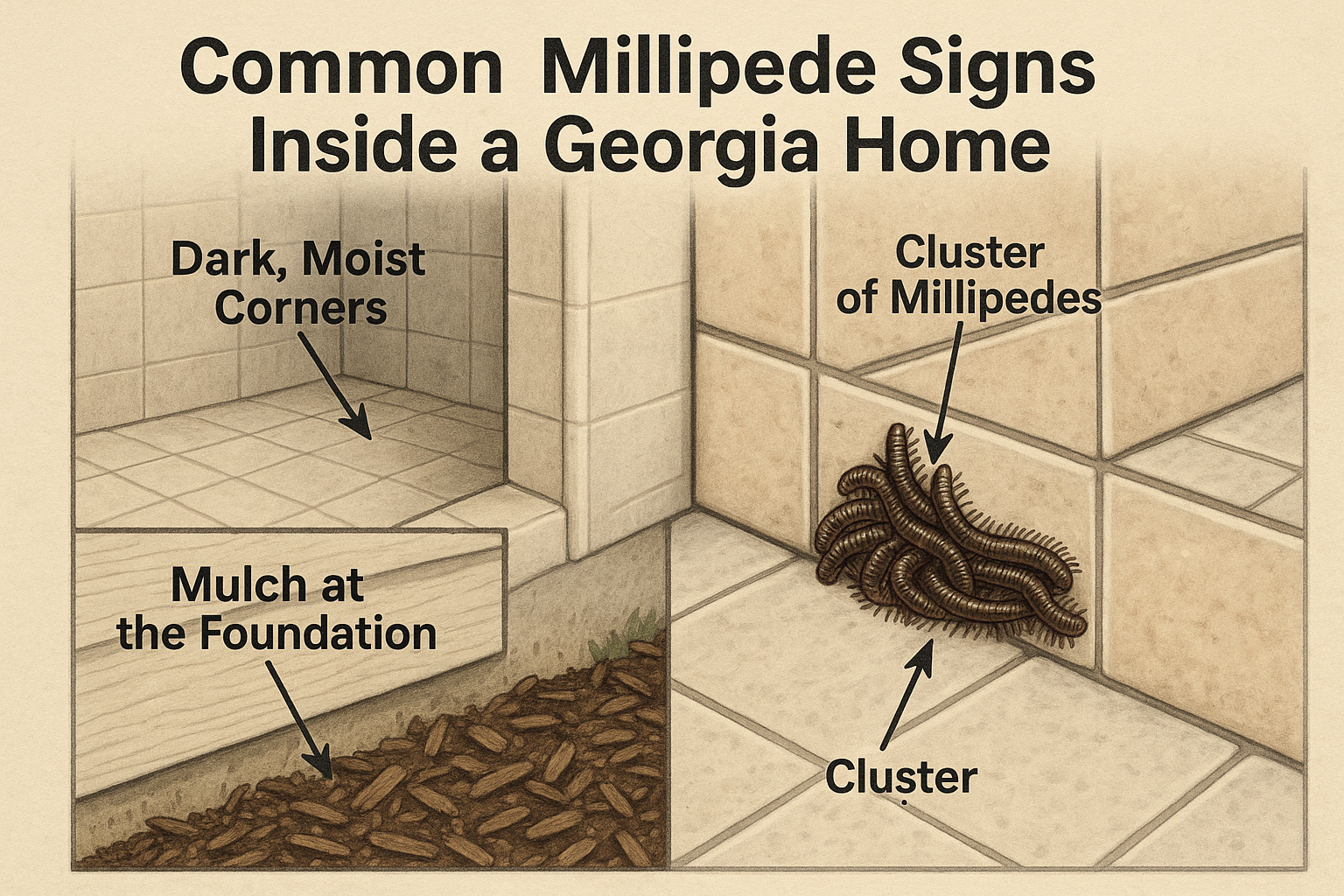
When millipedes start to make a home inside yours, the first clues are usually visual. Spotting these red flags early can keep a small nuisance from turning into a full‑blown infestation that damages landscaping and creates unpleasant odors.
Large clusters at entry points
Large clusters of millipedes are the most obvious sign. You’ll often find dozens to hundreds of the soft‑bodied creatures lined up on doorways, windowsills, or the threshold of an entryway, especially after a night of rain. Their presence in such numbers signals that moisture is drawing them indoors and that a nearby breeding site may already be established.
Moist, dark corners with a citrus‑like odor
Moist, dark corners can betray a hidden millipede population. In these low‑light spots the insects release a faint citrus‑like odor as a defensive secretion. If you notice a subtle, almost sweet smell near basement stairs, under sinks, or behind stored boxes, it’s often the tell‑tale scent of millipedes seeking refuge.
Damage to mulch and garden beds
Excessive feeding on decaying organic matter can leave visible damage in your mulch or garden beds. Look for patches where the mulch appears shredded, unusually dry, or where the soil surface is littered with tiny exoskeleton fragments. This not only weakens the mulch’s ability to retain moisture but also creates a welcoming environment for more millipedes to congregate.
Homeowner anecdote from Druid Hills
One Druid Hills Historic District homeowner, Mrs. Langley, shared her experience on the Anthem Pest website: “After a sudden downpour last October, I woke up to a river of millipedes spilling across my front porch and into the living room. Within an hour, the hallway was a moving carpet of them, and the faint citrus smell was unmistakable. I called Anthem Pest, and they explained that the heavy rain had driven the millipedes from nearby wooded areas into our home’s cracks and crevices.” This story underscores how quickly weather events can trigger an influx, turning a harmless sighting into a full‑scale nuisance.
What to do next
If any of these red flags appear in your home, don’t wait for the situation to worsen. A professional inspection can pinpoint entry points, assess the extent of the problem, and recommend a targeted treatment plan. For a broader understanding of millipede biology and health considerations, review the CDC overview of arthropod pests.
Knowing the Right Time to Call a Pro
Spotting a few millipedes in the bathroom or kitchen isn’t unusual, but when the numbers start to climb, the situation can quickly shift from a curiosity to a genuine pest problem. At Anthem Pest Control, we’ve seen homeowners waste weeks trying to “handle it themselves” only to discover the infestation has already taken root in hidden wall voids and crawl spaces.
Quantitative thresholds that signal professional help
Use these simple, data‑driven markers as your first line of defense:
- More than 20 millipedes indoors during a single day—especially if they’re congregating near windows, vents, or foundation cracks.
- Recurring sightings for two consecutive weeks or longer, even if the total count seems low. Consistency indicates a stable breeding source nearby.
- Persistent moisture problems such as damp basements, leaky pipes, or standing water in garden beds. Millipedes thrive in humid environments, and ongoing moisture creates a perfect incubator.
Health considerations you shouldn’t ignore
While most millipedes are harmless, a few species can produce defensive secretions that cause mild skin irritation or allergic reactions in sensitive individuals. The EPA’s Pest Management Fact Sheet (2022) warns that these chemical secretions may trigger respiratory discomfort or eye irritation, especially in homes with poor ventilation. If anyone in your household experiences itching, redness, or a burning sensation after contact, it’s a clear sign that professional assessment is warranted.
Quick‑Call Checklist
Before you pick up the phone, run through this short list:
- Seen >20 millipedes indoors in one day?
- Have you noticed regular sightings for more than two weeks?
- Is there a visible moisture source (leak, standing water, high humidity) that isn’t being addressed?
- Any skin irritation, itching, or respiratory symptoms after contact?
If you answered “yes” to any of these points, it’s time to call Anthem Pest Control. Early professional intervention not only stops the current outbreak but also prevents structural moisture damage, wood rot, and the costly repairs that follow an unchecked infestation. A prompt, targeted treatment plan protects your home, your health, and your peace of mind.
Effective Millipede Control Solutions
When millipedes start showing up in a Druid Hills home, a single DIY spray rarely provides lasting relief. The most dependable defense combines three professional treatments that work together to block entry, remove the moisture millipedes love, and eradicate any that manage to cross the perimeter. Anthem Pest tailors each step to the unique layout and climate of your property, ensuring a comprehensive shield that’s both safe and cost‑effective.
Barrier Treatment
Our barrier treatment creates a chemical moat around the exterior of your house. Using low‑toxicity pyrethroids, technicians apply a fine mist to foundation walls, crawl spaces, and common entry points such as doorways, windows, and vent openings. The formulation is designed to stay active for several weeks, deterring millipedes before they can crawl inside. Because the product is low‑toxicity, it poses minimal risk to pets and children while still delivering a strong knock‑down effect.
- Typical cost: $150 – $250 per application
- Coverage: Up to 2,500 sq ft of perimeter
- Re‑application interval: Every 8‑12 weeks for optimal protection
Moisture Management
Millipedes thrive in damp environments, so controlling moisture is a cornerstone of any long‑term solution. Our technicians assess your property for excess humidity, poor drainage, and water‑intrusion issues. Common interventions include installing dehumidifiers in basements, sealing foundation cracks, repairing gutter leaks, and grading the landscape to direct water away from the home’s foundation. By lowering indoor and surrounding humidity, you remove the primary food source and breeding ground that attract these arthropods.
- Average cost for basic fixes: $100 – $300
- Typical actions: dehumidifier placement, gutter repair, drainage improvement
- Long‑term benefit: Reduces not only millipedes but also mold, termites, and other moisture‑loving pests
Indoor Spot Treatments
Even with a solid perimeter, occasional millipedes may find their way indoors through cracks or utility openings. Our indoor spot treatments target these hotspots directly. Technicians apply dusts or sprays formulated for indoor use at baseboards, window sills, door thresholds, and any identified entry points. The treatment remains effective for weeks, killing insects on contact and providing a residual barrier that discourages re‑entry.
- Cost per room: $75 – $150
- Products used: Insecticide dusts, low‑odor spray concentrates
- Application time: Typically under 30 minutes per room
Anthem Pest’s “Millipede Protection Plan”
For homeowners who want a set‑and‑forget solution, Anthem Pest offers an annual Millipede Protection Plan at $199 per year. The plan includes two scheduled inspections, a full‑property barrier re‑application, and a complimentary indoor spot treatment for any new entry points discovered during the visits. By bundling services, the plan delivers a predictable expense while maintaining continuous protection throughout the humid Georgia summer and the wetter fall months when millipedes are most active.
Note: A comparison table will be inserted here in the final article, contrasting DIY methods with professional services in terms of cost, effectiveness, and long‑term results.
All treatments comply with Georgia’s pesticide regulations and prioritize environmentally safe practices. We select products that meet EPA standards for low toxicity, use precise application techniques to minimize overspray, and follow strict disposal protocols. This commitment protects your family, pets, and the surrounding ecosystem while delivering the aggressive control needed to keep millipedes at bay.
DIY Steps to Keep Millipedes Out
Millipedes love damp, dark places—especially the cozy pockets we unintentionally create around our homes. The good news is that a few inexpensive, homeowner‑friendly actions can make your property far less inviting. Below are the most effective, low‑cost steps you can start today.
1. Manage Mulch Depth and Placement
Mulch is a favorite hiding spot for millipedes, but it doesn’t have to be. Keep any organic mulch no deeper than 2–3 inches and maintain a clear 12‑inch gap between the mulch edge and your foundation. This simple adjustment reduces moisture retention and eliminates the tunnel‑like environment millipedes need to thrive.
2. Repair Leaky Gutters and Downspouts
Standing water around the house is a magnet for these critters. Inspect gutters and downspouts after each rainstorm; even a tiny leak can funnel water toward the foundation. Seal cracks, replace damaged sections, and ensure water is directed at least 6 feet away from the base of the home. A dry perimeter means fewer millipedes seeking shelter.
3. Seal Foundation Cracks Larger Than ¼ Inch
Small gaps are the perfect entry points for millipedes and other pests. Use a silicone‑based caulk to fill any cracks wider than a quarter inch in your foundation, basement walls, or crawl‑space openings. Silicone remains flexible, so it accommodates slight movement without cracking again, creating a lasting barrier.
4. Trim Vegetation Away From the House
Plants that brush against the siding trap moisture and provide shade—both conditions millipedes adore. Trim shrubs, vines, and trees to stay at least 12 inches from the exterior walls. This not only reduces shade and humidity but also makes it harder for millipedes to climb onto your home.
5. Follow Trusted Extension Guidance
The University of Georgia Cooperative Extension offers a comprehensive fact sheet on garden pest prevention. Their science‑backed recommendations align perfectly with the steps above and provide additional insight into seasonal pest cycles. You can review the full guide here: UGA Extension – Garden Pest Prevention.
6. Conduct Periodic Home Audits
Consistency is key. Use the checklist we introduced earlier in the article to perform a quick audit each spring and fall. Look for water pooling, mulch buildup, cracked caulk, and overgrown plants. By catching issues early, you stay ahead of millipedes before they become a noticeable nuisance.
Implementing these straightforward measures creates a dry, sealed environment that discourages millipedes from setting up camp. If you find that DIY efforts aren’t enough, Anthem Pest Control is ready to provide a professional inspection and targeted treatment plan—always safe, effective, and affordable for Druid Hills homeowners.
Where to Find Help in Druid Hills
If you’ve spotted millipedes marching across your foundation or inside your home, you don’t have to tackle the problem alone. Druid Hills boasts several trusted resources that can guide you from identification to a long‑lasting solution.
Local Professional Assistance
- Anthem Pest Control – Your neighborhood experts in safe, effective pest management. Call 877‑371‑8196 for a free quote and a thorough inspection. Visit their website at anthempest.com to learn more about their millipede‑specific services.
- Fulton County Extension Office – Offers a pest‑identification hotline that can confirm whether you’re dealing with millipedes or another invader. Reach them at (404) 555‑1234. Their extension agents also provide seasonal tips for keeping your yard and home pest‑free.
National Resources for In‑Depth Information
- EPA Pest Management Resources – The Environmental Protection Agency maintains an up‑to‑date library of pesticide safety guidelines and integrated pest management (IPM) strategies. Explore their portal at epa.gov/pesticides.
- NPMA Millipede Facts – The National Pest Management Association provides a concise fact sheet that explains millipede biology, why they enter homes, and the most effective control measures. Read the details at npma.org/millipedes.
When you reach out to Anthem Pest Control, you’ll receive a personalized assessment that considers the unique layout of your Druid Hills property. Their technicians will explain the treatment plan, answer any safety questions, and schedule a follow‑up to ensure the millipedes stay out for good.
Don’t wait until the next rainstorm drives more of these harmless‑looking critters inside. Pick up the phone, call 877‑371‑8196, and request your complimentary inspection today. With local expertise and national best practices at your fingertips, you’ll have peace of mind knowing your home is protected.
Protect Your Druid Hills Home Today
Early detection, a thorough professional inspection, and consistent preventive maintenance are the three pillars that keep millipedes from turning your yard and home into a bustling corridor. Spotting the tiny, dark‑backed crawlers before they multiply gives you the advantage of choosing the most effective, least invasive treatment.
That’s where Anthem Pest’s local expertise shines. Our technicians live and work in the Druid Hills area, so they understand the neighborhood’s unique soil composition, vegetation, and seasonal patterns that attract millipedes. We combine this on‑the‑ground knowledge with a data‑driven approach—tracking infestation trends, humidity levels, and entry points—to craft a customized plan that targets the problem at its source.
Transparency is built into every step. Before any work begins, you’ll receive a clear, itemized quote that outlines the recommended services, product choices, and follow‑up schedule. No hidden fees, no surprise charges—just straightforward pricing that fits a homeowner’s budget.
Choosing Anthem Pest gives you three distinct advantages:
- Local insight: We know the Druid Hills micro‑climate, so we pinpoint where millipedes are most likely to enter.
- Data‑backed treatments: Our technicians use real‑time monitoring tools to select the least toxic, most effective products.
- Transparent pricing: Every step is itemized, so you never wonder where your money goes.
Ready to safeguard your property? Schedule a free, no‑obligation millipede inspection today. Our certified technicians will assess your home, explain the findings in plain language, and recommend a treatment plan that balances safety, effectiveness, and affordability.
Give us a call at 877‑371‑8196 or click the link below to request your free quote. Let Anthem Pest help you enjoy a millipede‑free yard all year long.