Introduction to Seasonal Pest Prevention

Seasonal pest prevention means tailoring your defense strategy to the insects and rodents that are most active at a given time of year. Rather than reacting after an infestation takes hold, you stay one step ahead—adjusting treatments, sealing entry points, and eliminating attractants before pests can cause trouble.
When you act early, safety benefits multiply. Mosquitoes and ticks peak in warm months, bringing disease‑carrying threats to your family’s health. In colder seasons, rodents seek shelter inside walls, increasing the risk of fire‑hazardous chewed wiring and contaminated food supplies. By preventing these problems before they start, you protect both the people and the structure of your home.
Beyond health, proactive pest control safeguards your property’s resale value. A home with a clean pest‑history sells faster and commands a higher price than one plagued by hidden damage. According to the U.S. Environmental Protection Agency, pest‑related property damage exceeds $5 billion each year [source]. That figure underscores how costly neglect can be, especially when structural repairs or extensive remediation become necessary.
Anthem Pest Control’s guide is built on data and local expertise. We’ll walk you through the exact pests that dominate each season in your region, the optimal timing for treatments, and the affordable, EPA‑approved solutions that keep your home safe year‑round. Think of this section as the foundation of a long‑term savings plan—invest a little time now, and you’ll avoid big expenses later.
Understanding Common Household Pests
Household pests are more than a nuisance; they can damage your home, affect your health, and cost you thousands.
Termites
Termites silently eat wood from the inside out, often going unnoticed until structural damage appears. They thrive in damp, cellulose‑rich areas such as foundations and crawl spaces. The EPA estimates they cause about $5 billion in U.S. property damage each year, making early detection crucial.
Mosquitoes
Mosquitoes are most active in warm months and breed in standing water like birdbaths, clogged gutters, or rain‑filled containers. Beyond itchy bites, they can transmit serious illnesses such as West Nile virus, as reported by the CDC, and can quickly become a backyard nuisance.
Rodents
Rats and mice slip through gaps as small as a quarter‑inch, seeking shelter, food, and water. They gnaw on wiring, insulation, and wood, creating fire hazards. More importantly, they carry Hantavirus and other pathogens, posing serious health risks according to CDC data.
Cockroaches
Cockroaches hide in kitchens, bathrooms, and dark cracks, feeding on food scraps and grease. Their droppings and shed skins contaminate surfaces with bacteria like Salmonella. Allergens from their bodies often trigger asthma and other respiratory issues, especially in children and sensitive adults.
Ants
Ants enter homes in search of food and water, forming organized trails that can quickly spread throughout a house. While most are a nuisance, carpenter ants excavate wood to build nests, potentially weakening structural components over time.
Flies
Houseflies and fruit flies breed on exposed food, garbage, and organic waste, spreading germs with every landing. Although they rarely cause structural damage, they can transmit food‑borne illnesses such as E. coli and cause discomfort during meals.
Because these pests exploit different vulnerabilities, regular inspections and prompt treatment are essential. Identifying the entry points early can save you from costly repairs and health hazards.
The table below summarizes where each pest is most likely to get inside and the main risks they bring.
| Pest Type | Typical Entry Points | Primary Health/Structural Risks |
|---|---|---|
| Termites | Foundation cracks, crawl‑space vents, wood‑to‑soil contact | Extensive wood damage, costly structural repairs |
| Mosquitoes | Open doors, unscreened windows, standing water | West Nile virus, other mosquito‑borne diseases |
| Rodents | Small gaps, utility openings, vent covers | Hantavirus, salmonella, gnawed wiring/fire hazards |
| Cockroaches | Cracks, pipe entries, kitchen backsplashes | Allergens, bacterial contamination, asthma triggers |
| Ants | Door sweeps, window screens, foundation seams | Food contamination, wood damage (carpenter ants) |
| Flies | Open doors/windows, uncovered trash, pet waste | Food‑borne illnesses, general discomfort |
For a deeper dive, see the EPA pest overview. Partnering with a professional service like Anthem Pest Control ensures these risks are addressed safely and affordably.
Seasonal Threats Across the United States
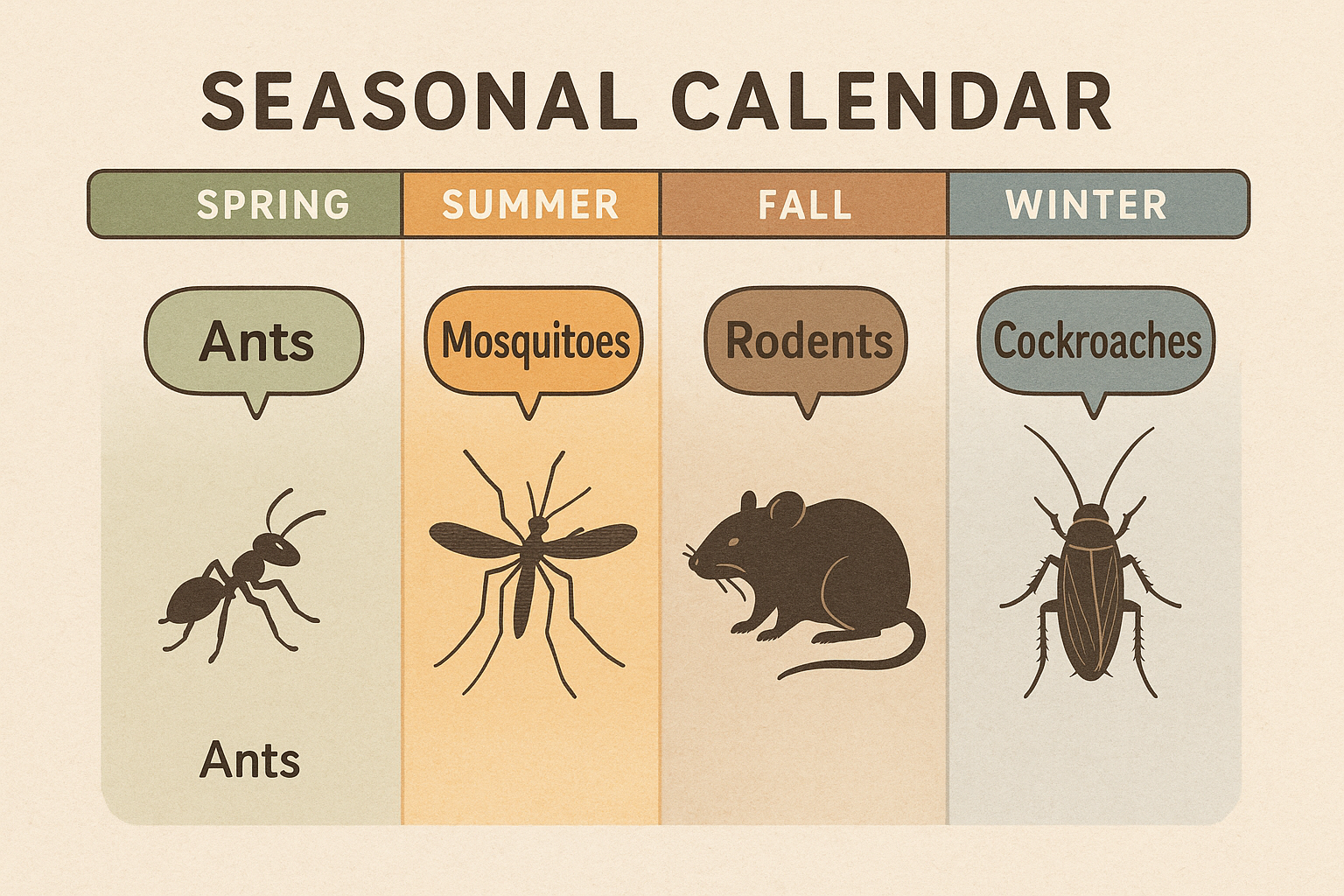
Spring – Ants and Early‑Termite Activity
When the ground thaws, colonies of carpenter ants and pavement ants emerge from their winter hideouts, often marching along foundation walls and garden beds. In the Southwest, especially around Phoenix, Arizona, this is also the time termite alates begin their mating flights, setting the stage for hidden wood damage.
Timing tip: Schedule a professional termite inspection in early March, before the first rain triggers swarming. An ant‑specific perimeter treatment applied at the same visit can stop colonies before they spread into interior walls.
Summer – Mosquitoes, Flies, and Outdoor Pests
Warm, stagnant water becomes a breeding ground for mosquitoes, and the CDC estimates that roughly 1 million mosquito‑borne illnesses occur in the United States each year.
Florida’s humid climate produces relentless mosquito activity from June through August, while the Midwest sees a surge of house flies and fruit flies in agricultural suburbs.
Timing tip: Arrange a midsummer mosquito barrier treatment in late June. The service should include larvicide applications to standing water around decks, gutters, and birdbaths, plus adulticide fogging for immediate relief.
Fall – Rodents Take Advantage of Cooler Nights
As temperatures dip, rats and mice seek shelter inside homes, especially in regions with harsh winters. In the Chicago suburbs, homeowners report a sharp rise in rodent sightings from September onward, as rodents move from fields into attics and basements.
Timing tip: Conduct a thorough rodent exclusion inspection in early October. Seal gaps larger than ¼ inch, trim tree branches that touch the roof, and set up bait stations before the first frost to curb nesting.
Winter – Cockroaches Find Warm Havens Indoors
While many pests become dormant, cockroaches remain active inside heated homes, thriving in kitchen cabinets and bathroom cracks. Even in colder states, winter sightings spike because the insects retreat to the warmest corners.
Timing tip: Book a winter cockroach treatment in December. A combination of gel baits placed in hidden crevices and a perimeter spray around the home’s foundation creates a barrier that prevents re‑infestation when spring arrives.
Putting It All Together
Understanding when each pest is most likely to appear—and where—gives homeowners a clear roadmap for proactive protection. Early‑season inspections, targeted barrier treatments, and timely follow‑ups are the most cost‑effective way to keep your home pest‑free year round.
DIY Identification and Inspection Checklist
Knowing what to look for before a pest becomes a full‑blown infestation saves you time, money, and stress. Follow this room‑by‑room routine each season, tick off each item on the printable checklist, and you’ll catch early warning signs before they spread.
Basement
- Check for mud tubes along foundation walls—classic termite pathways.
- Inspect corners and crawl‑space vents for standing water or damp wood; mosquitoes love these breeding spots.
- Look for small gnaw marks on insulation or wooden beams—rodents often start here.
- Spot any dark, oily cockroach droppings near utility panels or plumbing.
Attic
- Examine insulation for chewed fibers or shredded paper, a tell‑tale sign of rodents.
- Search for ant trails along rafters; they often travel to sweet food sources in the kitchen below.
- Notice any faint, musty odor—could indicate a hidden termite colony.
Kitchen
- Scan countertops, cabinets, and under appliances for cockroach droppings (tiny black specks) and egg cases.
- Watch for ant trails marching to crumbs or sugary spills.
- Check pantry items for perforated packaging—rodents and pantry insects love easy access.
Yard
- Look for standing water in birdbaths, gutters, or low spots—prime mosquito breeding sites.
- Inspect mulch, leaf piles, and garden beds for termite mud tubes emerging from the soil.
- Notice any burrows or fresh soil mounds indicating active rodents.
- Spot clusters of dead insects or shed skins along fence lines—often ant or cockroach activity.
When you’ve walked through each area, use the printable checklist (PDF available on our website) to mark what you’ve inspected and any signs you’ve found. Keep the sheet in a drawer so you can compare findings across seasons.
Typical Pest Profiles by Neighborhood
| Neighborhood | State | Frequent Pests |
|---|---|---|
| Oakwood | Portland, OR | Termites, carpenter ants, rodents, and mosquito breeding in damp basements |
| Maple Grove | Atlanta, GA | American cockroaches, fire ants, mosquitoes, and raccoons in yard debris |
Use this localized insight to prioritize inspections—Portland homes often need extra attention for moisture‑related pests, while Atlanta properties should focus on ant and mosquito control. By following this checklist, you’ll spot problems early and know exactly when to call Anthem Pest Control for professional help.
Prevention Strategies Tailored to Each Pest
Keeping pests out of your home isn’t about luck—it’s about creating an environment that’s inhospitable to the insects, rodents, and other critters that love to invade. The good news is that most of the work you can do yourself is both affordable and surprisingly simple. By focusing on three core areas—home maintenance, landscaping, and food storage—you’ll dramatically reduce the chances of an unwanted guest setting up shop.
Home Maintenance: Seal, Drain, Vent
- Seal cracks and gaps. Use caulk or expanding foam around windows, doors, utility penetrations, and the foundation. Even a hair‑thin opening can become a highway for ants, roaches, and mice.
- Improve drainage. Gutters and downspouts should direct water at least six inches away from the foundation. Standing water near the house attracts mosquitoes and creates moisture that encourages termites and carpenter ants.
- Ensure proper ventilation. Bathrooms, basements, and attics need adequate airflow to keep humidity low. Damp spaces are prime real estate for mold‑loving pests such as silverfish and wood‑boring insects.
Landscaping Tips: Trim, Drain, Choose Wisely
- Trim vegetation. Keep shrubs, trees, and vines at least two feet away from the exterior walls. Overhanging branches provide bridges for squirrels, raccoons, and climbing insects.
- Eliminate standing water. Empty bird baths, pet water dishes, and clogged planters weekly. Mosquitoes need just a half‑inch of water to complete their life cycle.
- Select native, pest‑deterrent plants. Plants like lavender, rosemary, and marigold emit scents that repel flies, mosquitoes, and certain beetles. Native grasses also reduce the need for excessive watering, limiting moisture‑dependent pests.
Food Storage Practices: Lock It Down
- Airtight containers. Store pantry staples—flour, cereal, sugar—in sealed plastic or glass containers. This blocks ants, cockroaches, and pantry moths from accessing food sources.
- Frequent trash removal. Empty indoor garbage bins nightly and keep outdoor dumpsters at least 10 feet from the house. Rotting waste is a magnet for flies, rodents, and beetles.
- Clean up spills immediately. Crumbs on countertops or sugary residues on floors provide a buffet for pests. A quick wipe‑down after meals removes the invitation.
DIY Measures vs. Professional Services
| Action | Typical Cost (USD) | Efficacy (Short‑Term) | Efficacy (Long‑Term) |
|---|---|---|---|
| Caulking cracks & sealing entry points | $20–$60 (materials) | High | Moderate‑High |
| Landscape trimming & water removal | $0–$150 (tools, labor) | Moderate | High (with regular upkeep) |
| Airtight food storage | $15–$40 (containers) | High | High |
| Professional IPM program (Anthem Pest) | $200–$500 (annual plan) | Very High | Very High (continuous monitoring) |
DIY steps are excellent for budget‑conscious homeowners and can stop most minor invasions. However, when you’re dealing with termites, bed bugs, or a recurring rodent problem, a professional Integrated Pest Management (IPM) program often delivers faster, more reliable results and saves money over time.
A recent study by the National Pest Management Association (NPMA) found that homes employing an IPM approach reduced chemical pesticide use by 30 % while maintaining or improving pest control effectiveness. Read the full study here.
Treatment Options Overview
Chemical Treatments
Traditional chemical treatments remain the quickest way to knock out an active infestation. Homeowners typically see three formats:
- Baits – placed in hidden locations where pests feed and carry the poison back to the colony.
- Sprays – liquid formulations applied to cracks, crevices, and interior surfaces for immediate knock‑down.
- Perimeter barriers – outdoor applications that create a protective ring around a home, deterring pests before they cross the threshold.
Pros: rapid results, proven efficacy against a wide range of insects and rodents, and relatively low upfront cost. Cons: potential exposure to chemicals for pets and children, the need for repeat applications as the barrier degrades, and the possibility of resistance developing over time. Pricing typically falls between $75 and $250 per treatment, depending on property size and pest type.
Integrated Pest Management (IPM)
IPM blends science and stewardship, aiming to keep pest populations below damaging levels while minimizing chemical use. The approach starts with a thorough inspection, followed by:
- Continuous monitoring using traps and visual checks.
- Deployment of biological controls such as beneficial insects or microbial agents that target specific pests.
- Strategic, low‑impact chemical applications only when monitoring indicates a threshold breach.
Pros: reduced chemical exposure, long‑term suppression, and alignment with environmentally conscious homeowners. Cons: requires more time for assessment, may involve higher initial labor costs, and results can be slower to appear compared to a straight‑up spray. While exact pricing varies, most IPM programs start around $150 per quarter and can scale with the complexity of the infestation.
Professional Extermination Services
When you call a licensed technician, you’re tapping into a full suite of resources designed for safety and reliability. Professional extermination typically includes:
- Use of EPA‑approved products that meet strict safety standards.
- A warranty that covers re‑treatment if pests return within a set period.
- A 24‑hour response guarantee, ensuring prompt action for urgent situations.
Pros: peace of mind from certified expertise, comprehensive coverage that often combines chemical, mechanical, and educational components, and documented follow‑up. Cons: higher price point than DIY options and the need to schedule visits around the technician’s calendar. Typical costs range from $150 to $300 per service, with discounts available for bundled seasonal plans.
Anthem Pest’s Commitment
At Anthem Pest, every treatment plan is built around safe, EPA‑approved solutions that protect your family and pets while delivering the results you expect. Our technicians follow a strict IPM philosophy, using chemicals only when data from monitoring shows they’re truly needed. Whether you choose a targeted bait program, a perimeter barrier, or a full‑service extermination, you’ll receive transparent pricing, a clear warranty, and the confidence that comes from working with a company that puts safety and effectiveness first.
Pricing Transparency and Cost Estimates
When it comes to protecting your home, knowing exactly what you’ll pay helps you plan confidently and avoid surprise invoices. Anthem Pest Control believes in open pricing, so you can compare the cost of a professional service with a typical DIY approach before you decide.
- Termite inspection: ≈ $99
- Mosquito barrier: $150 – $300
- Rodent exclusion: $200 – $400
These baseline figures are useful, but several variables can shift the final price. Larger homes require more time and materials, so square‑footage directly influences labor costs. The severity of an infestation—how many entry points a rodent has found or the extent of termite damage—adds extra steps and products, raising the fee. Seasonal demand also plays a role; peak summer months for mosquitoes or fall spikes in rodent activity can increase prices due to higher technician workload.
DIY vs. Professional Service: Cost Comparison
| Service | DIY Approx. Cost | Anthem Pest Service Fee |
|---|---|---|
| Termite inspection | $80 – $120 (store‑bought kits) | $99 (includes certified inspector & detailed report) |
| Mosquito barrier | $100 – $200 (spray cans & foggers) | $150 – $300 (licensed applicator, EPA‑approved products, 6‑month protection) |
| Rodent exclusion | $50 – $150 (traps & sealants) | $200 – $400 (custom sealing, monitoring, and follow‑up visit) |
Beyond raw numbers, professional treatment includes warranties, follow‑up inspections, and the peace of mind that comes from licensed technicians using EPA‑approved products safely around children and pets. Anthem Pest offers a free, no‑obligation estimate, so you can see the exact line‑item breakdown before any work begins.
Planning ahead is simple: start with the average prices above, factor in your home’s size and infestation level, and then request a personalized quote. Transparent pricing empowers you to choose the most cost‑effective solution without compromising on safety or effectiveness.
Choosing a Local Pest Provider
When pest pressure spikes, the last thing you want is to waste time chasing unreliable contractors. Picking the right company isn’t a gamble—it’s a checklist. Below are the five non‑negotiable criteria every homeowner should verify before signing a service agreement.
Key Evaluation Criteria
- Licensing & insurance: Confirm the provider holds a valid state pest‑control license and carries liability insurance. This protects you if a treatment goes awry.
- Customer reviews: Look for consistent five‑star feedback on Google, Yelp, or the Better Business Bureau. Pay attention to comments about follow‑up service and honesty.
- Local expertise: Pests vary by region. A company that knows the specific insects, rodents, or termites in your neighborhood will tailor treatments more effectively.
- Response time: Fast dispatch—ideally within 24 hours—prevents infestations from getting out of hand. Ask how quickly they can schedule an initial inspection.
- Guarantees & warranty: A clear satisfaction guarantee shows confidence in their work and gives you recourse if pests return.
Why Anthem Pest Stands Out
Anthem Pest checks every box, and then some. With nationwide coverage, we’re equipped to handle everything from Colorado’s ant swarms to Florida’s termite threats—all under one transparent pricing model. Our 24/7 hotline (877‑371‑8196) means you can report an emergency at any hour, and a certified technician will be on the way.
We back every treatment with a satisfaction guarantee. If pests persist after the initial service, we’ll return at no extra cost until the problem is resolved. This promise, combined with fully licensed and insured technicians, makes us a trustworthy partner for any homeowner.
“I was battling a stubborn cockroach invasion in my Cherry Creek home. Anthem Pest arrived the same day I called, identified the entry points, and treated the entire house in under two hours. The crew was courteous, explained every step, and the roaches haven’t been seen since. I’ll definitely stick with them for future pest needs.”
– Sarah L., Denver, CO
Use this checklist as your quick reference when you start researching local options. If a company can’t meet these standards, keep looking. When you find a provider that does—like Anthem Pest—you’ll gain peace of mind knowing your home is protected by professionals who prioritize safety, effectiveness, and your satisfaction.
Case Study – Preventing Termite Damage in a Suburban Neighborhood
Setting the Scene in Oak Ridge
Oak Ridge is a quiet, family‑friendly subdivision just north of Dallas, Texas. Most homes there sit on spacious lots with mature trees—perfect conditions for subterranean termites to establish hidden colonies. When a new family moved into a 2,300‑sq‑ft ranch‑style home, they noticed a faint, musty odor near the foundation and a few tiny mud tubes along the siding.
Early Detection by Anthem Pest
During a routine inspection, an Anthem Pest technician identified active termite foraging tunnels in the soil and a few satellite colonies behind the exterior trim. Because the infestation was caught before any visible wood damage, the team could recommend a targeted intervention rather than an extensive rebuild.
Action Plan: Inspection, Treatment, and Monitoring
- Inspection timeline: A detailed pre‑treatment assessment on Day 1 mapped all active zones and recorded moisture levels.
- Soil barrier treatment: On Day 3, a liquid termiticide was applied in a continuous trench around the home’s perimeter, creating a protective chemical shield that repels termites for up to five years.
- Follow‑up visit: Two weeks later, technicians re‑inspected the property, confirming the barrier’s integrity and removing any remaining mud tubes.
- Post‑treatment monitoring: Quarterly checks for the first year ensured no new activity, and a homeowner‑friendly detection kit was left on site for early alerts.
Outcome: Significant Savings and Peace of Mind
Because the infestation was halted early, the homeowner avoided an estimated $4,800 in structural repairs—costs that typically arise when termites have compromised joists, subflooring, or support beams. Beyond the financial benefit, the family gained confidence that their home is protected by a proven, professional solution. Anthem Pest’s transparent pricing and swift response turned a potential disaster into a straightforward, cost‑effective prevention story.
Frequently Asked Questions
How often should I schedule inspections?
We recommend a seasonal inspection schedule that follows the pest‑activity calendar in your region. A spring check catches emerging ants, roaches and termites, while a summer visit tackles mosquitoes and flies. Fall is ideal for rodents and bed‑bug monitoring, and a winter inspection ensures any hidden colonies stay dormant. By aligning visits with these natural cycles, you keep your home protected year‑round without unnecessary trips.
Are the chemicals safe for pets?
Absolutely. All products we apply meet EPA safety standards and are chosen for low toxicity to humans and animals. We prioritize EPA‑approved, reduced‑risk formulas and apply them in precise amounts to target pests only. For homes with cats, dogs or other pets, we can use pet‑friendly options and schedule treatments when animals are out of the treated area, giving you peace of mind.
What if I move to a new city?
Moving doesn’t mean you have to start from scratch. Contact Anthem Pest as soon as you settle in, and we’ll perform a quick‑start risk assessment based on the local pest profile. Within 24‑48 hours we can set up a customized prevention plan, matching the same transparent pricing you’re used to, so your new home stays pest‑free from day one.
Take Action with Anthem Pest Control Today
Seasonal pest pressure isn’t something to ignore—early, targeted treatment protects your family’s safety, prevents costly damage, and preserves property value. Whether it’s spring ants, summer mosquitoes, or fall rodents, a proactive plan stops infestations before they become emergencies.
Anthem Pest brings decades of nationwide experience to every doorstep. Our technicians are certified, our pricing is transparent with no hidden fees, and our network spans all 50 states, ensuring you receive the same high‑quality service whether you live in a suburban cul‑de‑sac or a rural homestead.
- Fast, locally‑trained technicians who know the pests in your climate.
- Guaranteed results with a clear, upfront price sheet.
- Year‑round support from a national network of experts.
Ready for peace of mind? Call us at 877‑371‑8196 for a complimentary inspection and a customized, season‑specific prevention plan. You can also visit our website to request a free quote—no pressure, just professional guidance. Our friendly staff will walk you through every step, answering any questions you may have.