Understanding Ant Infestations in Decatur, GA
Ants may seem harmless, but in Decatur’s humid, suburban neighborhoods they can quickly become a household headache—making professional ant control Decatur GA essential for keeping colonies from spreading. Like any insect, ants are built for survival: a queen, workers, and soldiers work together in a highly organized colony that can expand to thousands of individuals in just a few months.
Why suburban environments are ant magnets
Decatur’s mild winters, warm summers, and abundant greenery create the perfect micro-climate for ant species such as carpenter ants, odorous house ants, and pavement ants, increasing the need for effective ant control Decatur GA solutions. Lawns, flower beds, and mulch retain moisture, while shade-loving trees provide shelter. This combination lets colonies establish nests in soil, under decks, or even within the wooden framing of homes.
Local ant activity in numbers
According to the Fulton County Extension Service, ant‑related service calls rise by roughly 22 % each summer, with the highest concentration in the 30030‑30033 zip codes that cover Decatur. The city’s average temperature of 62 °F (17 °C) and annual rainfall of 50 inches give ants a year‑round food and water supply, explaining why neighbors often report multiple sightings along sidewalks, driveways, and garden beds.
What drives ants into your home?
- Food sources: Sweet crumbs, pet food, and even grease from cooking attract foraging workers.
- Water: Leaky pipes, condensation on windows, and damp basements satisfy their constant thirst.
- Shelter: Cracks in foundations, gaps under doors, and the voids inside wall cavities provide safe passage and nesting sites.
- Climate shifts: Heavy rains or extreme heat can force a colony to relocate, prompting workers to scout indoor environments for stability.
Health and structural concerns
While most ant bites are mild, some individuals experience allergic reactions that can range from itching to swelling. More importantly, ants are efficient contaminators; a single trail can transfer bacteria from garbage to countertops, jeopardizing food safety. Carpenter ants, in particular, excavate wood to expand their nests, weakening structural beams and potentially leading to costly repairs if left unchecked.
Quick visual cue: recognizing an infestation
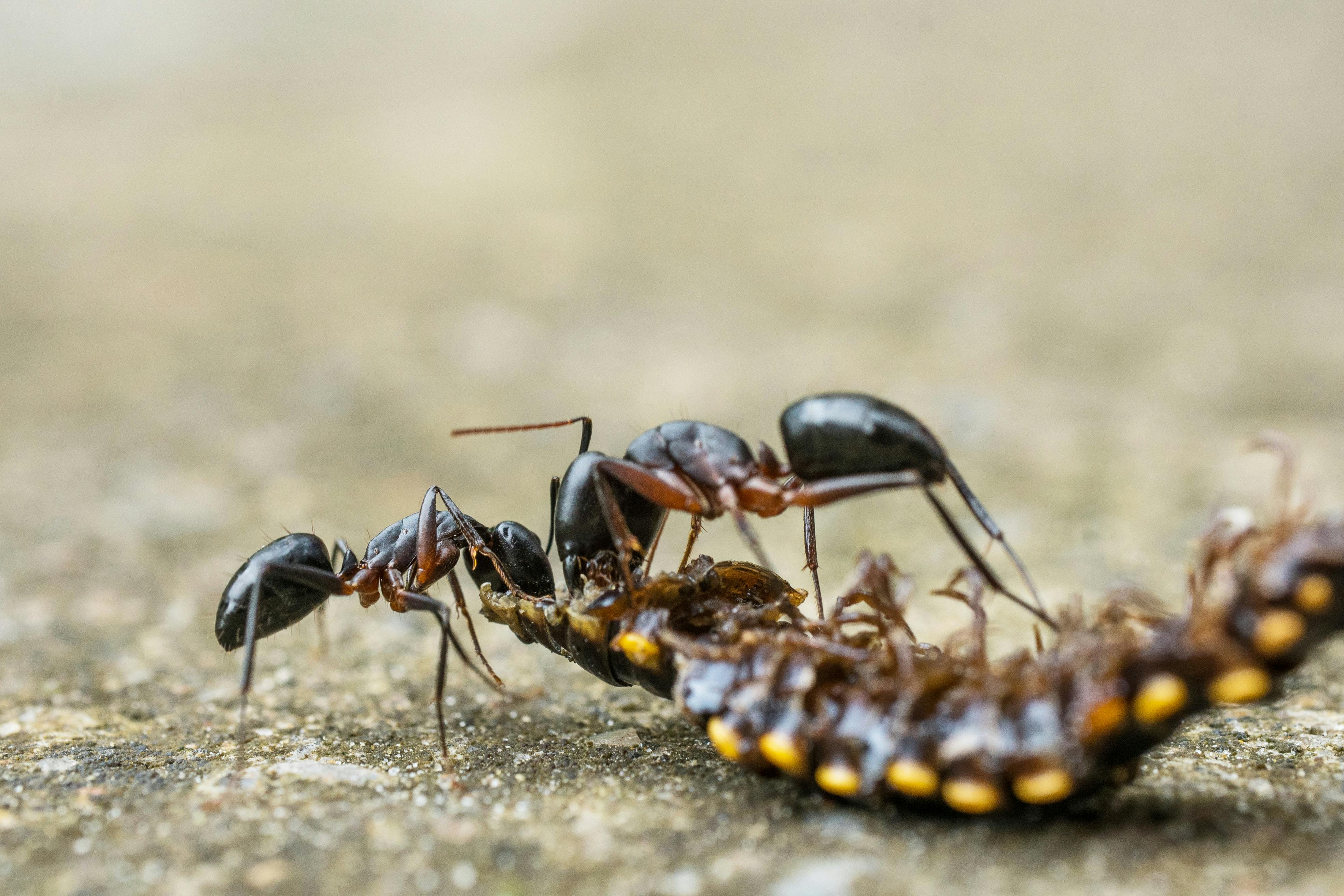
A typical ant problem shows up as a steady, oily‑looking trail along baseboards, kitchen counters, or window sills. You may also spot small, silvery droppings—ant frass—near entry points, or discover a hidden nest tucked behind a wallboard or under a porch deck. Early detection is key; the longer the trail persists, the larger the colony behind it.
For homeowners who want to handle ant problems safely, the EPA Ant Pesticides page offers guidance on approved products and application practices.
Choosing a licensed professional ensures treatments comply with state regulations while minimizing risks to children and pets.
Identifying Common Ant Species and Warning Signs

In Decatur, GA, a handful of ant species cause the most trouble for homeowners. Knowing which ant you’re dealing with helps you choose the right treatment before the problem spreads.
Carpenter Ants
These large, black‑to‑dark‑brown ants can grow up to ½ inch long and have a smooth, evenly‑segmented body. They favor moist wood inside walls, floor joists, or tree stumps, and are most active at night, scouting for sugary foods and protein.
Pavement Ants
Typically ¼ inch long, pavement ants are dark brown to black with a distinct “two‑node” petiole. They nest under concrete slabs, in cracks of foundations, or in garden mulch, and are most visible during early spring and late fall when they forage for greasy or sugary crumbs.
Pharaoh Ants
Very small—about ⅛ inch—Pharaoh ants are light yellow to reddish‑brown and have a rounded abdomen. They establish colonies inside wall voids, electrical outlets, and HVAC systems, thriving year‑round and preferring protein‑rich foods like grease or pet food.
Fire Ants
Fire ants are reddish‑brown, about ¼ inch long, and have a stinger that gives them a painful bite. They build shallow mounds in lawns, under mulch, or near irrigation lines, and are most aggressive in the warm months of late spring through summer.
Physical Traits and Nesting Quick‑Reference
| Species | Size & Color | Typical Nest Site | Active Time & Food |
|---|---|---|---|
| Carpenter | ½ in, black‑brown, smooth | Wood in walls, joists | Nocturnal; sweets & protein |
| Pavement | ¼ in, dark brown/black | Under slabs, mulch | Daylight; crumbs & grease |
| Pharaoh | ⅛ in, light yellow‑brown | Wall voids, outlets | Year‑round; protein |
| Fire | ¼ in, reddish‑brown | Lawn mounds, mulch | Daytime; insects & sweet foods |
Beyond species‑specific clues, several warning signs signal a budding infestation. Look for continuous ant trails along baseboards, small piles of sand‑like soil near entry points, and winged “swarmers” that appear in the spring. Damaged or hollow‑sounding wood often points to carpenter ants at work.
While most ant bites cause only minor irritation, fire ant stings can trigger severe pain, swelling, and, in rare cases, allergic reactions. The CDC notes that individuals with known allergies should seek medical attention promptly. (CDC Ant Bites)
DIY Monitoring vs. Professional Help
If you spot a few trail lines or a single swarm, you can start with simple prevention: seal cracks, keep food sealed, and remove standing water. However, when you notice extensive trails, recurring swarmers, or structural damage, it’s time to call a licensed pest‑control professional. Anthem Pest Control can assess the species, locate hidden nests, and apply targeted treatments that protect your home safely and affordably.
Treatment Options and Cost Comparison
When it comes to ant control Decatur GA, you have four main pathways: a preventive monthly service, a one-time professional treatment, DIY kits you can pick up at the hardware store, and natural home remedies. Each approach offers a different mix of coverage, longevity, safety, and environmental impact, so understanding the trade-offs helps you choose the right solution for your home and budget.
Preventive Monthly Service
- Pros: Continuous monitoring, regular bait placement, and residual sprays keep colonies from establishing. Ideal for high‑traffic yards or homes with a history of ant invasions.
- Cons: Higher upfront cost and a recurring monthly fee. Requires a service contract and a trusted technician to access your property each visit.
- Safety: Technicians follow EPA‑registered product guidelines, ensuring low toxicity for families and pets.
- Environmental impact: Modern baits are low‑volume and target ants specifically, reducing non‑target exposure.
One‑Time Professional Treatment
- Pros: Fast‑acting, often resolves a moderate infestation in a single visit. Includes a thorough inspection and targeted bait or spray application.
- Cons: May require a follow‑up visit if the colony is large or if new ants migrate in. Effectiveness can diminish after 4‑6 weeks.
- Safety: Certified applicators wear protective gear and apply EPA‑approved products only where needed.
- Environmental impact: Spot treatments limit chemical use, but residual sprays can affect beneficial insects if over‑applied.
DIY Ant Control Kits
- Pros: Low cost, immediate availability, and you control where the product goes.
- Cons: Limited to surface baits or sprays; no professional inspection means hidden colonies often survive.
- Safety: Homeowners must read labels carefully—some products are not pet‑friendly.
- Environmental impact: Many kits use synthetic chemicals; choose those labeled “low toxicity” or “organic” when possible.
Natural Remedies
- Pros: Non‑chemical, safe around children and pets, and inexpensive (vinegar, diatomaceous earth, essential oils).
- Cons: Typically only a deterrent; they won’t eradicate an established colony.
- Safety: Virtually risk‑free when used as directed.
- Environmental impact: Minimal—these methods break down naturally.
Typical Steps in a Professional Ant Treatment
- Inspection: A certified technician surveys interior and exterior zones to locate nests and identify ant species.
- Bait Placement: Species‑specific bait stations are positioned along foraging trails.
- Residual Spray Application: EPA‑registered micro‑encapsulated sprays are applied to cracks, voids, and entry points for up to 12 weeks of protection.
- Follow‑Up: A second visit (often 2‑4 weeks later) checks bait consumption and adds additional stations if needed.
Pricing Snapshot for Decatur Homeowners
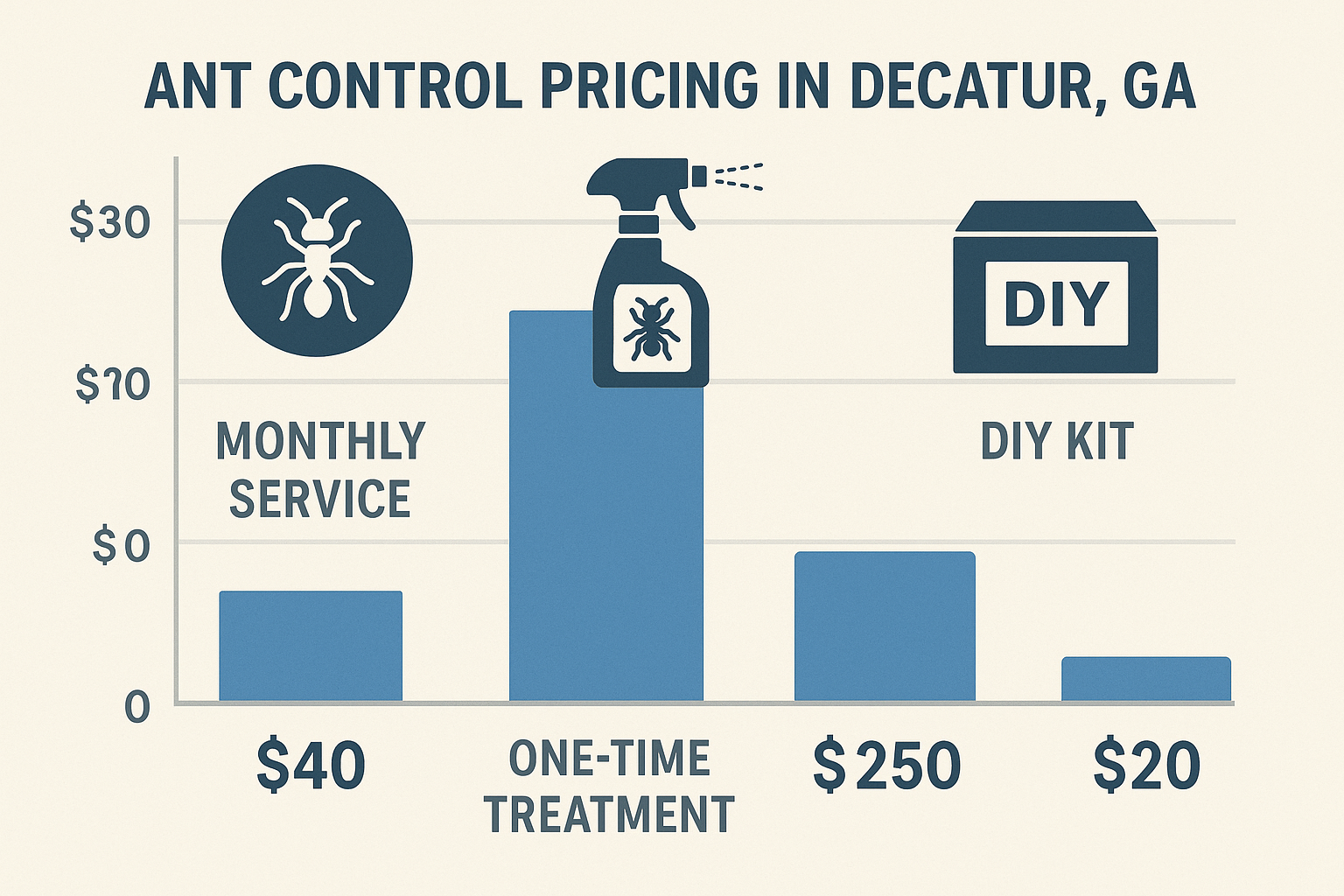
The infographic above visualizes average costs reported in the NPMA 2024 Cost Survey. Roughly, a monthly preventive plan runs $70‑$95 per month, a one‑time professional service averages $180‑$250, while DIY kits range from $15‑$40 per package.
Choosing the Right Option
If you spot a few trail lines and your budget is tight, start with a DIY kit or natural remedy while monitoring for escalation. For recurring problems or larger properties, a preventive monthly service offers the most peace of mind and long‑term cost efficiency. Homeowners with a moderate, single‑incident infestation often find a one‑time professional treatment strikes the best balance of effectiveness and price.
Regardless of the method you select, always follow EPA safety guidelines, keep chemicals out of reach of children and pets, and consider a professional inspection if ant activity persists beyond two weeks. This strategic approach ensures you protect your home without over‑paying or exposing your family to unnecessary risks.
Seasonal Activity and Timing for Effective Control
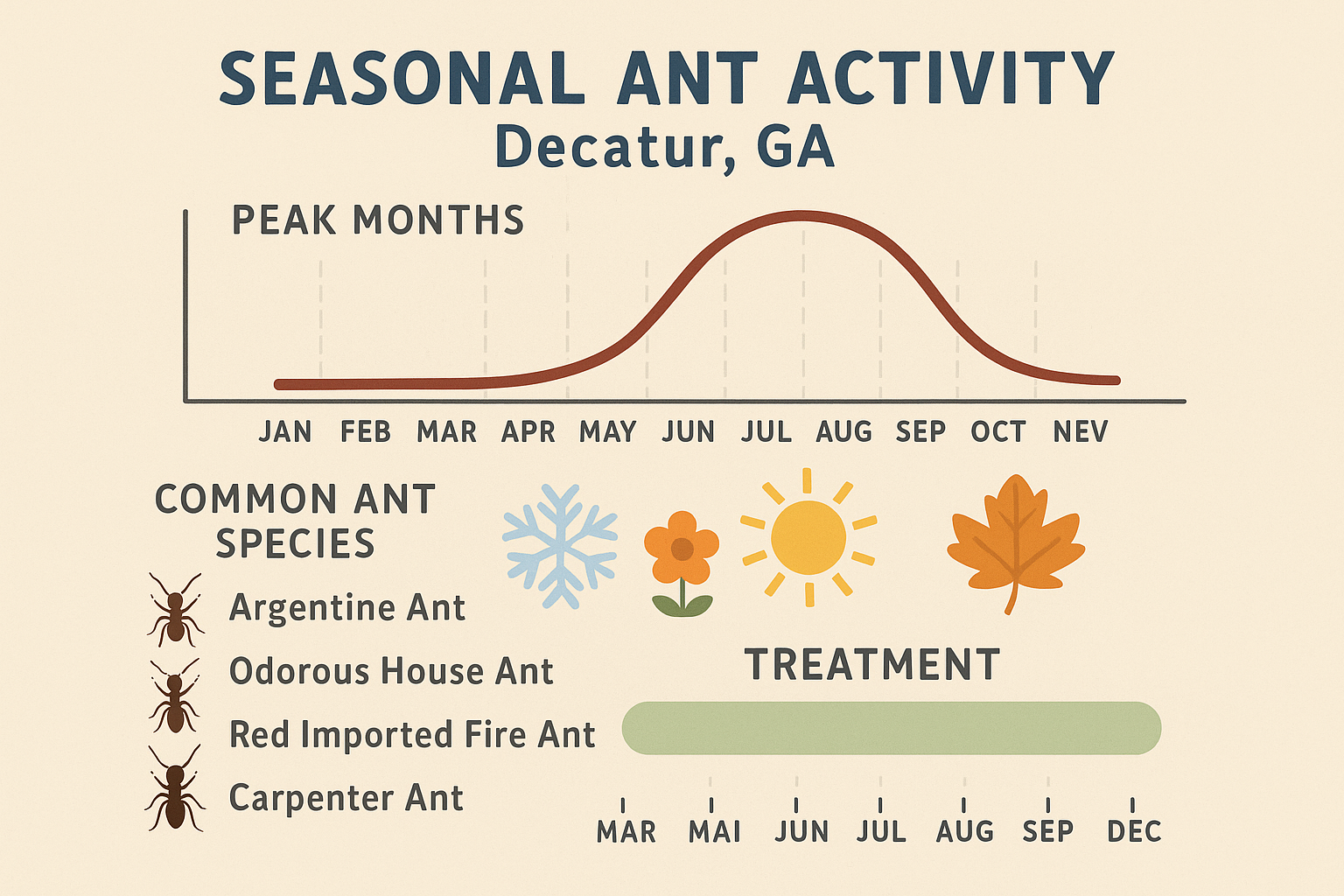
Ant activity in Decatur follows a predictable rhythm that mirrors the region’s climate, an important factor in planning effective ant control Decatur GA strategies. The chart below shows the peak foraging months (April–June and September–October) and the low-activity lull during the hottest midsummer weeks and the cooler winter period. Understanding these swings helps you plan inspections before colonies surge.
Temperature, Humidity, and Foraging Behavior
Ants are ectothermic; their metabolism speeds up as outdoor temperatures rise above 60 °F (15 °C). Warm, moist conditions—common after summer thunderstorms—trigger intense foraging as workers search for food and water. Conversely, dry heat above 90 °F slows movement, and winter’s chill forces colonies deeper underground, reducing surface sightings.
Optimal Treatment Windows by Species
- Carpenter ants: Target early spring (late March – early May) when queens begin laying eggs and colonies are still shallow.
- Fire ants: Apply treatments in late summer (mid‑August – early September) before the next generation matures.
- Odorous house ants: Intervene during the first warm spell of spring and again in early fall, aligning with their two‑year foraging peaks.
- Pavement ants: Treat in late spring and early fall, when moisture levels support their underground tunnels.
Aligning DIY or Professional Interventions with Peaks
If you prefer a DIY bait or spray, place it just before the chart’s “rising” line—usually mid‑March for most species. Professional services can schedule a pre‑emptive perimeter treatment in early April, then follow up after the summer peak to knock back any survivors. Timing your application to the colony’s most active phase maximizes bait uptake and reduces the amount of product needed.
Preventative Actions During Off‑Peak Months
- Seal cracks around foundations, windows, and utility penetrations before winter sets in.
- Fix leaky gutters and interior plumbing to eliminate moisture reservoirs that attract foragers.
- Store pantry items in airtight containers; clean crumbs and spills immediately.
- Trim vegetation away from the house to cut bridge routes that ants use to reach your foundation.
- Schedule a professional inspection in late January or early February—when colonies are dormant—to catch early signs before the first surge.
Early detection is the cornerstone of effective ant control. Spotting a few workers in spring or noticing subtle mud tubes in the fall gives you a head start, preventing a small nest from ballooning into a full‑blown infestation that requires extensive treatment later in the year.
Protect Your Home with Anthem Pest Control
Ants may seem harmless, but an unchecked colony can damage wood, contaminate food, and invite larger infestations. Prompt, professional treatment stops the problem before it spreads, protects structural integrity, and gives you peace of mind during Georgia’s humid summers.
Why Choose Anthem?
Anthem Pest Control operates nationwide, bringing the same high‑level service to Decatur that it provides to millions of homeowners. Our technicians are state‑licensed, EPA‑certified, and trained to apply safe, EPA‑approved products that eliminate ants without risking your family or pets. Transparent pricing means you know exactly what you’ll pay before any work begins—no hidden fees, no surprise invoices.
What You Get With Anthem
- Kid‑ and pet‑friendly products: EPA‑approved chemicals that target ants without harming your loved ones.
- Rapid results: Most treatments show noticeable reduction within 24‑48 hours.
- Guarantee: We stand behind our work with a satisfaction guarantee and follow‑up visits if needed.
- Transparent, upfront pricing: No hidden fees, and you receive a detailed report after every visit.
Local Expertise You Can Trust
Decatur’s climate supports several common ant species, from pavement ants that nest under driveways to carpenter ants that can hollow out wooden structures and the aggressive odorous house ant that leaves a distinct smell. Our local teams understand these patterns and schedule treatments at the optimal times of year—late spring and early fall, when temperatures hover between 70‑85°F—to target nests before they mature and prevent seasonal surges.
Ready for a Free, No‑Obligation Quote?
If you’ve spotted ants marching across your countertops or simply want a preventative plan, our friendly staff is standing by. Call us today at 877‑371‑8196 or click the link below for a complimentary inspection and quote. During the free inspection we’ll identify the species, locate hidden nests, and recommend a customized plan that fits your budget—no pressure to commit, just expert advice.
Take the first step toward a pest-free household with professional ant control Decatur GA services. Visit Anthem Pest Control website or dial the number above to schedule your free quote now.