Why Ant Problems Matter in Dunwoody
Ant control in Dunwoody is essential for homeowners dealing with persistent ant activity throughout the year. Ant infestations are one of the most common suburban nuisances in the Atlanta metro area, and Dunwoody is no exception. During the warm months, colonies emerge from soil, cracks, and even tree roots, marching into kitchens, patios, and laundry rooms in search of food and water. For many homeowners, the first warning sign is a visible trail of tiny workers crossing a countertop or the sudden appearance of a mound in the yard.

A 2023 Dunwoody homeowner survey revealed that 42 % of residents reported ant sightings during the summer 【source】. That statistic isn’t just a curiosity—it translates into real‑world headaches for families who suddenly find their pantry raided, their picnics overrun, or their children bitten by aggressive species.
Ants become a nuisance for three main reasons:
- Food contamination: Foraging ants carry bacteria and pollen back to the nest, contaminating stored grains, sugary snacks, and pet food.
- Stinging or biting: Fire ants and certain carpenter ant workers can deliver painful stings or bites, especially risky for children and pets.
- Structural damage: While most ants are harmless, carpenter ants excavate wood to expand their galleries. Over time, they can weaken support beams, window frames, and deck boards, leading to costly repairs.
Consider the real‑world example of a family in Brookhaven Village who discovered several fire‑ant mounds tucked beside their patio stones. Within days, the ants invaded their outdoor dining area, and a few bites left the children with itchy welts. The family’s quick call to a local pest professional prevented the colony from spreading to the house’s foundation.
Understanding why ants matter sets the foundation for effective control. In the next sections we’ll dive into ant behavior, seasonal activity patterns, and the treatment strategies that keep Dunwoody homes ant‑free year round.
Ant Behavior and Seasonal Peaks
Georgia’s warm, humid climate fuels ant metabolism
In the Peach State, temperatures rarely dip below the threshold that slows an ant’s internal engine. The combination of mild winters, long summers, and high humidity creates a near‑perfect buffet for these tiny insects. Warm weather accelerates their metabolism, meaning colonies can expand faster and workers stay active longer than in cooler regions. For homeowners, this translates into a constant background level of ant activity that never truly “shuts off.”
Year‑round foraging with a distinct outdoor surge
While ants are present throughout the year, their outdoor foraging peaks between May and July. During this window, soil temperatures consistently rise above 68 °F (20 °C), and humidity spikes after spring rains. Colonies seize the opportunity to send out more workers to harvest sweet nectar, dead insects, and the sugary residues we often leave on patios or around garbage cans. Inside the home, you may notice a subtle increase in ant sightings as they follow these outdoor trails back through cracks and utility openings.
Data‑driven perspective: EPA pesticide‑application figures
The Environmental Protection Agency recorded 1.8 million residential ant pesticide applications in Georgia in 2022. This staggering number underscores how pervasive the problem is across the state and highlights the importance of timing interventions correctly. EPA pesticide‑use data provides a reliable baseline, but keep an eye on the upcoming 2024 state‑level report for the most current trends.
Implications for inspections and treatments
Understanding the seasonal rhythm helps you schedule proactive measures. A thorough inspection in early spring (late March to early April) lets a professional identify budding colonies before they explode during the May‑July surge. If treatment is needed, applying a perimeter barrier or targeted bait at this stage can suppress the peak foraging wave, reducing the likelihood of indoor invasions later in summer.
Conversely, waiting until after the peak may mean you’re battling a fully established outdoor population that can quickly re‑infest interior spaces. For the most effective defense, align your service calendar with the climate‑driven ant calendar: inspect in early spring, treat before the peak, and schedule a follow‑up in late summer to catch any late‑emerging workers.
Identify the Culprit: Carpenter, Pavement, and Fire Ants
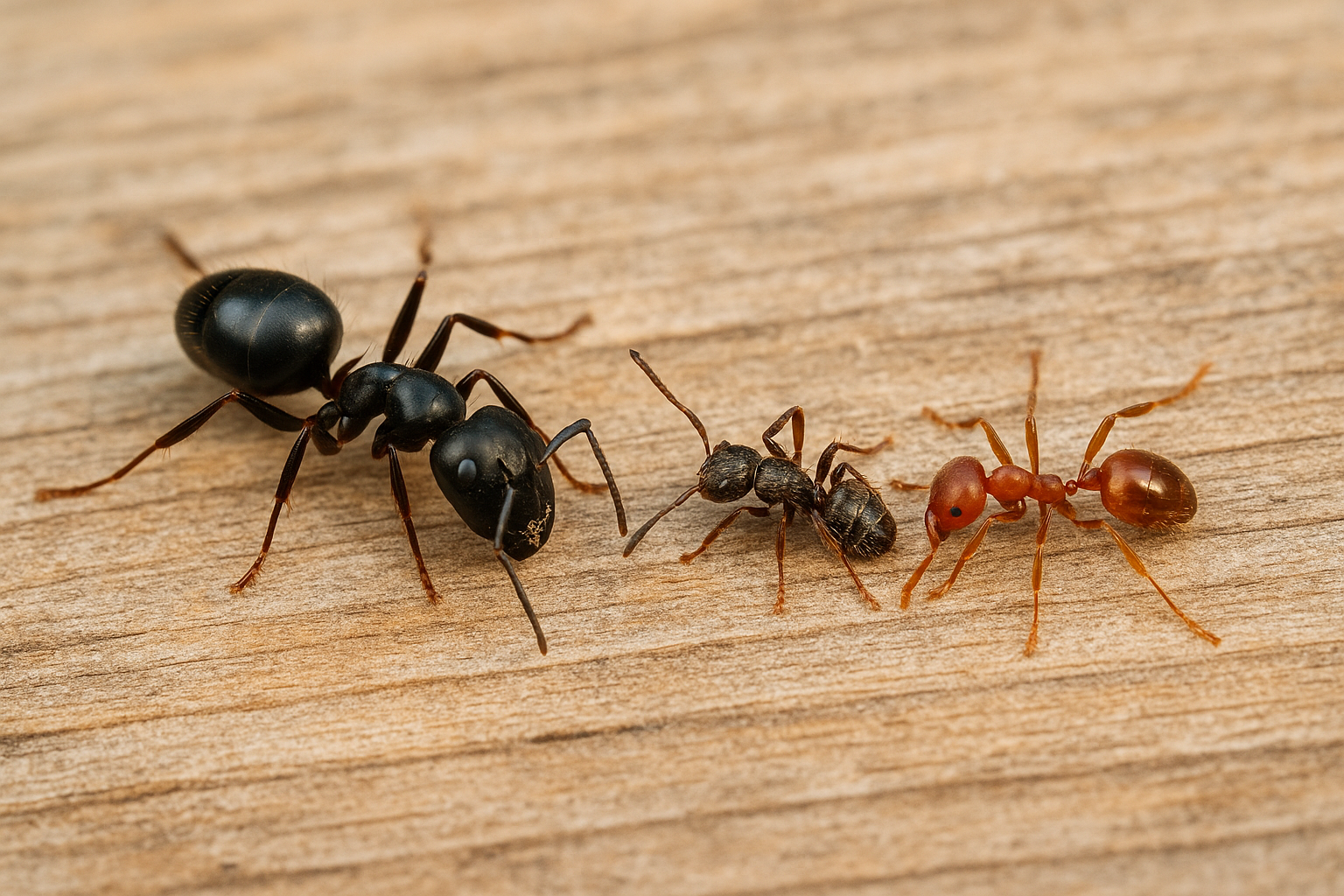
| Species | Size | Color | Typical Nest Location | Primary Damage Type |
|---|---|---|---|---|
| Carpenter Ant | 6‑12 mm | Black or dark brown, sometimes reddish | Wood structures (decks, siding, tree trunks) | Wood‑structural damage |
| Pavement Ant | 2‑4 mm | Light brown to dark brown | Cracks in concrete, under stones, indoor kitchens | Indoor foraging & food contamination |
| Fire Ant | 3‑6 mm | Reddish‑brown, glossy | Open lawns, mulch beds, mounded soil | Painful stings & mound formation |
Distinguishing Features
Carpenter ants are the largest of the trio. Their heads are noticeably broader than their thoraxes, and you’ll often see winged “swarmers” in late spring. They move slowly and tend to travel in single file.
Pavement ants are tiny, fast‑moving workers that favor the shade of concrete cracks. They leave a faint, irregular trail of pheromones that can lead you right to a hidden nest under a sidewalk or driveway.
Fire ants have a distinct, almost metallic sheen. When disturbed, they raise their abdomen and sting in a rapid, painful burst—leaving a red, itchy bump that can swell quickly.
Damage Potential
Carpenter ants excavate galleries inside wood to create brood chambers. Over time, these tunnels weaken structural members, especially in damp or decayed wood. Ignoring them can compromise decks, porches, and even load‑bearing beams.
Pavement ants don’t chew wood, but their indoor foraging can contaminate countertops, pantry items, and pet food. A few hundred workers can quickly turn a tidy kitchen into a buffet for pests.
Fire ants are notorious for their aggressive stings. A single mound can house thousands of workers, and the venom can trigger severe allergic reactions in sensitive individuals. Their mounds also disrupt lawn aesthetics and can damage irrigation lines.
Typical Hotspots in the Dunwoody Area
- Carpenter ants: Decks and wooden fences around the Dunwoody Country Club, especially where moisture accumulates after rain.
- Pavement ants: Cracks along sidewalks near Brookhaven, as well as the gaps between pavers in community parks.
- Fire ants: Lawns and mulch beds in Peachtree Corners, where the soil stays warm and slightly moist.
Homeowner Vignette: Spotting Carpenter Ant Activity
Imagine you’re enjoying a Saturday barbecue on your deck. A guest points out a faint, sawdust‑like material trailing from a hidden crack in the railing. Upon closer inspection, you notice a few dark, elongated ants marching in a line toward the wood grain. Those are carpenter ants, and the “sawdust” is actually frass—waste they push out of their tunnels. If left unchecked, those tunnels will expand, eventually compromising the deck’s support beams.
Transparent Pricing for Every Budget
When it comes to ant control, knowing exactly what you’ll pay helps you make an informed decision and avoid surprise invoices. Below is a data‑backed snapshot of the most common service options you’ll encounter in the Dunwoody area, based on the NPMA 2023 residential pricing survey. These figures reflect the national average; local rates in the Atlanta metro region may vary slightly.
Typical Price Ranges
- Single‑visit baiting: $120 – $180 per treatment. This option drops a pre‑measured bait directly where ants are active and is ideal for isolated infestations.
- Perimeter treatment: $250 – $350. Technicians apply a residual barrier around the home’s exterior, creating a chemical shield that stops foragers before they enter.
- Annual service contracts: $400 – $600 per year. Contracts usually include quarterly inspections, two to three follow‑up visits, and a guarantee that the pest will be eradicated or the next visit is free.
Quick tip: Before you lock in a price, verify the most recent NPMA average for the Atlanta metro area (the 2025 update). Prices can shift due to changes in product costs, labor rates, or regional demand.
Insurance & Local Savings
Many homeowners’ insurance policies cover pest‑related damage if the infestation results from a covered peril (e.g., water intrusion). While standard policies rarely reimburse routine extermination, some carriers offer add‑on riders for pest control services. It’s worth calling your insurer to ask about “pest‑control endorsements” or “home‑maintenance discounts.”
In addition, the City of Dunwoody occasionally partners with local pest‑management firms to provide seasonal rebates or low‑income assistance programs. Check the city’s official website or contact the Dunwoody Community Services Department for any current offers before you request a quote.
How to Evaluate Quotes
- Service frequency: A one‑time bait may be cheaper upfront, but recurring visits often prevent re‑infestations and can lower long‑term costs.
- Guarantees: Look for a written guarantee that outlines what happens if ants return—most reputable companies will offer a free follow‑up or a partial refund.
- Follow‑up visits: Some providers bundle the initial treatment with a complimentary check‑up; others charge extra. Clarify this up front.
- Scope of work: Ensure the quote details whether it covers indoor bait stations, outdoor perimeter spray, or both. Hidden add‑ons can quickly inflate the total.
- Licensing & certifications: Verify that technicians hold Georgia’s pest‑control license and any relevant certifications (e.g., NPMA Certified Pest Management Professional).
By comparing these elements side‑by‑side, you can match a service plan to your budget without sacrificing quality. Anthem Pest Control prides itself on transparent pricing, so you’ll always know exactly what’s included before any work begins.
Effective Ant Elimination Strategies
Baiting: How Slow‑Acting Baits Take Down the Colony
Slow‑acting baits are the backbone of long‑term ant control because they exploit the colony’s foraging behavior. Workers locate the bait, ingest the insecticide, and share it with nestmates through trophallaxis, eventually killing the queen and the brood. Products such as Terro Ant Gel, Advion Ant Gel, and Maxforce Ant Bait contain active ingredients like boric acid or indoxacarb that remain effective for weeks.
Placement is critical. Position bait stations along visible trails, near entry points, and under appliances where ants travel. A 2‑inch drop of gel placed directly on the trail or a small bait disc tucked into a crack works best. Replace baits only after they’re fully consumed to avoid “bait fatigue” and keep a monitoring log for each location.
Sprays & Dusts: Immediate Knock‑Down and Barrier Protection
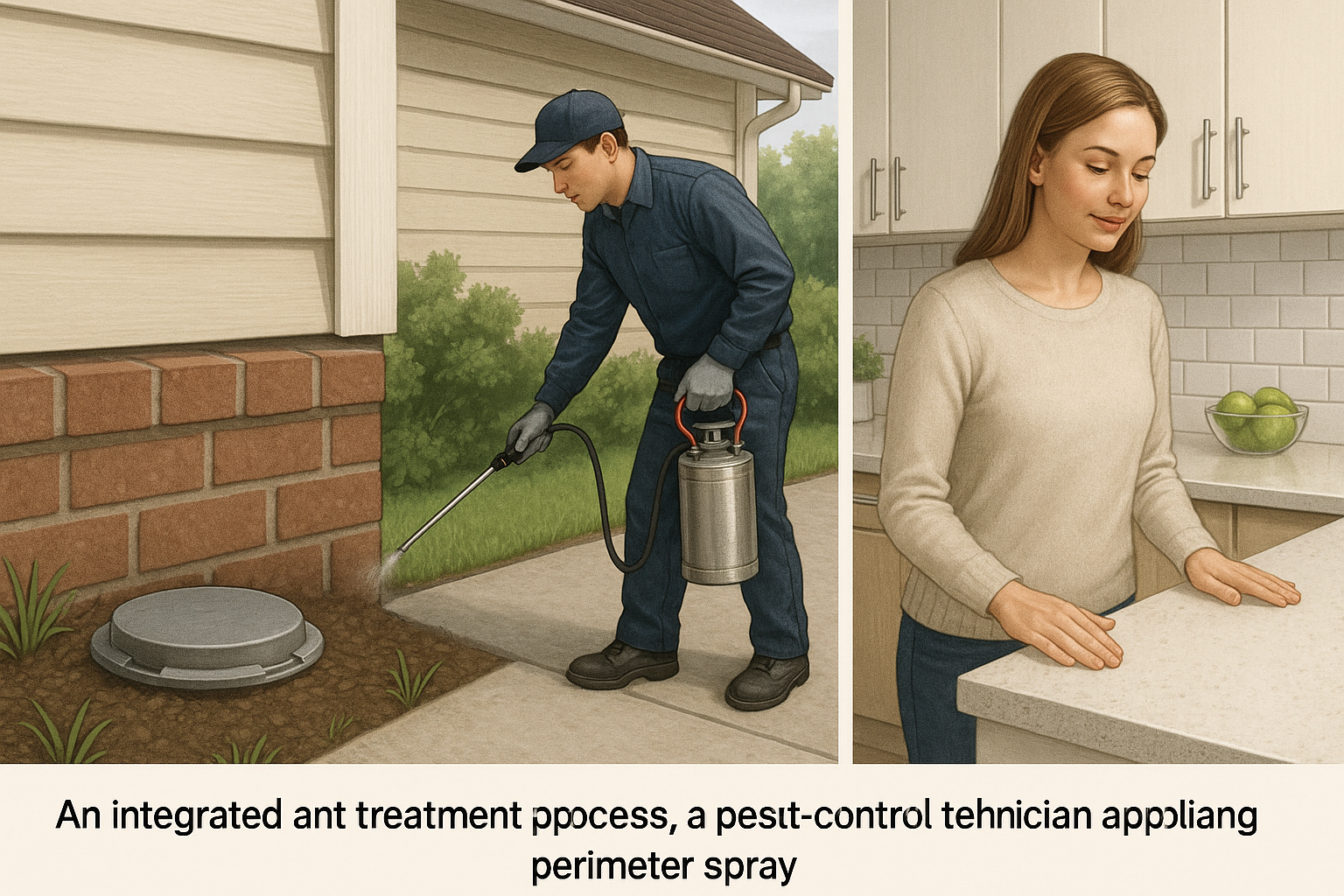
When you need rapid results, perimeter sprays and dusts create a chemical shield that stops foragers before they reach the home. Professional‑grade products like Tempo SC Ultra (a synthetic pyrethroid) or DeltaDust (silica‑based) are applied around the foundation, doorways, and window frames. Inside, a fine mist of spray or dust is pushed into cracks, crevices, and voids where ants hide.
Safety first: always follow EPA‑approved label directions, wear gloves, and keep children and pets out of treated zones until the product dries. For families with small children or sensitive pets, opt for low‑toxicity formulations such as diatomaceous earth dust or botanical sprays that degrade quickly.
Integrated Pest Management (IPM): A Holistic, Sustainable Approach
IPM blends cultural, mechanical, and chemical tactics to keep ants at bay without over‑reliance on pesticides. Start with sanitation—store food in sealed containers, fix leaky pipes, and eliminate standing water.
Exclusion steps include sealing foundation cracks, installing door sweeps, and repairing screened vents.
Monitoring tools like sticky traps or bait stations let you track activity levels and adjust treatments accordingly. When chemical control is necessary, apply the lowest‑effective dose, targeting hotspots identified during monitoring. This layered strategy not only reduces ant populations but also minimizes resistance and protects the indoor environment.
Regular inspections every two months keep the program on track.
Case Study: Anthem Pest’s Bait‑and‑Spray Combo in a Multi‑Unit Building
In a 24‑unit apartment complex in Dunwoody, residents reported recurring carpenter ant sightings near kitchen cabinets and exterior siding. Anthem Pest deployed a two‑phase plan: first, we placed sugar‑based bait stations along each unit’s kitchen perimeter; second, we applied a perimeter spray of Tempo SC Ultra around the building’s foundation and used DeltaDust in interior wall voids.
After six weeks of monitoring, carpenter ant activity dropped by 92 %. The bait eliminated the hidden colony, while the spray created a protective barrier that prevented re‑infestation. Homeowners praised the minimal disruption and the fact that pets were safely kept out of treated areas thanks to EPA‑compliant application techniques.
For detailed safety standards, always consult the EPA pesticide use guidelines. Following these protocols ensures effective control while protecting family health.
Stay One Step Ahead of Ants
Ants are opportunistic—if they find food, water, or a crack to slip through, they’ll set up shop. The best defense is a proactive, month‑by‑month checklist that matches the rhythm of Dunwoody’s climate and the quirks of its neighborhoods. Follow these steps and you’ll dramatically lower the chance of an ant invasion.
Early Spring (March – April)
- Trim back landscaping. Overgrown shrubs and tree branches that touch the house act as highways for ants. Prune them to create a clear buffer zone.
- Remove yard debris. Fallen leaves, twigs, and old mulch retain moisture—perfect ant habitats. Rake and compost or dispose of debris promptly.
- Inspect wooden structures. Check decks, fences, and the underside of eaves for signs of wood decay or ant trails. Treat any soft spots with a borate wood preservative.
Late Spring / Early Summer (May – June)
- Monitor moisture levels. Ants love damp soil. Ensure your irrigation system isn’t over‑watering and fix any leaks in hoses or sprinkler heads.
- Seal cracks and gaps. Use a silicone‑based caulk around windows, doors, and the foundation. Even a 1‑mm opening can become a main entrance for pavement ants.
- Check exterior lighting. Insects attracted to lights draw ants. Switch to yellow‑tinted bulbs that are less appealing to pests.
Summer (July – August)
- Keep trash bins sealed. Use bins with tight‑fit lids and clean them regularly to eliminate food odors.
- Avoid standing water. Empty pet water dishes at night, clear clogged gutters, and wipe down pool decks after use.
- Treat lawn edges. Apply a perimeter barrier of ant‑specific granules along the fence line and garden borders, focusing on shaded, moist zones.
Fall (September – October)
- Yard clean‑up. Rake fallen leaves, remove old plant pots, and store garden tools in a dry shed.
- Store firewood away from the home. Stack wood at least two feet off the ground and keep it at least ten feet from the house to prevent carpenter ants from nesting.
- Final inspection before winter. Walk the perimeter, seal any new cracks, and give the foundation a once‑over with a silicone sealant.
Neighborhood‑Specific Tips
- Brookhaven: Many homes have older brick foundations. Use a masonry‑grade sealant on mortar joints to block ant entry.
- Peachtree Corners: The community’s extensive cul‑de‑sacs can trap moisture. Install French drains in low‑lying spots to keep soil dry.
- Dunwoody Forest: Tree roots often intersect sidewalks. Apply a thin layer of diatomaceous earth around root zones to deter ants without harming the trees.
For a printable version of this calendar and additional local recommendations, download Anthem Pest’s free seasonal guide. Staying ahead of ants isn’t a one‑time task—it’s a habit that protects your home year after year.
Local Expertise, Transparent Service
Certified Professionals & EPA‑Approved Products
At Anthem Pest, every technician holds industry‑recognized certifications, including National Pest Management Association (NPMA) credentials and state‑specific licensing. We exclusively use EPA‑approved formulations that are proven effective against ants while remaining safe for children, pets, and the surrounding environment. This combination of expertise and responsible product selection sets a high bar for pest control in Dunwoody.
24‑Hour Response Guarantee
Ant infestations don’t wait for business hours, and neither do we. Our 24‑hour response guarantee ensures that a qualified technician will be at your doorstep within a day of your call for any urgent ant issue. Whether it’s a sudden swarm in the kitchen or an unexpected mound in the yard, you can count on a rapid, professional solution.
Customer Rating: 4.9 / 5 on Google
Homeowners in Dunwoody consistently reward us with a 4.9‑star rating on Google. One satisfied client, Sarah M., shared:
“We called Anthem Pest after spotting a line of ants marching across our porch. They arrived the next morning, identified the source, and treated it with a product that didn’t harm our kids or dog. The ants were gone within hours—best service we’ve ever experienced!”
Service Guarantees & Warranty Options
Transparency is built into every contract. All ant treatments come with a 30‑day satisfaction guarantee: if ants return, we’ll re‑treat at no extra cost. For added peace of mind, we also offer an optional one‑year warranty that covers repeat infestations and includes a complimentary follow‑up inspection.
Ready to Take the Next Step?
When you choose Anthem Pest, you’re partnering with a local team that understands Dunwoody’s unique ant challenges and delivers fast, reliable results. Call us today at 877‑371‑8196 or visit anthempest.com to schedule your free inspection. Experience the difference of certified expertise, rapid response, and a service guarantee you can trust.
Quick Answers to Common Ant Control Questions
How long does treatment last?
Most professional ant programs provide protection for 3 to 6 months. The exact duration depends on the species targeted, the size of the infestation, and how well the property is maintained after treatment. Seasonal weather, heavy rains, and landscaping changes can shorten efficacy, while regular cleaning and sealing entry points can extend it.
Are baits safe for pets?
Yes—when we use EPA‑approved ant baits, the active ingredients are low‑toxicity and formulated to be unattractive to dogs and cats. The key is proper placement: position baits behind appliances, under cabinets, or in wall voids where pets can’t reach them. Avoid laying baits on countertops or in areas where a curious pet might investigate. If you have a particularly inquisitive animal, we can opt for bait stations with locked covers for added peace of mind.
What warranty does Anthem offer?
Anthem backs every ant treatment with a 30‑day satisfaction guarantee. If you notice ant activity returning within that window, we’ll return for a complimentary follow‑up visit and re‑treat the affected area at no extra charge. For long‑term plans, we also provide an annual “Ant Protection Warranty” that includes one scheduled inspection and a touch‑up service each year.
For additional peace of mind, you can review the CDC’s ant bite information and the EPA safety guidelines. Both sources confirm that modern ant control products, when applied by certified technicians, pose minimal risk to humans and pets.
Secure Your Home with Professional Ant Control
Early detection, cost‑effective treatment, and seasonal prevention are the three pillars that keep ant invasions at bay. By staying vigilant you can stop a small trail from turning into a full‑blown infestation.
- Detect early: Look for ant trails, small nests, or droppings as soon as they appear.
- Choose value‑driven treatment: Targeted applications and follow‑up visits keep costs predictable.
- Seasonal protection: Pre‑emptive barriers in spring and fall shut the door on new colonies.
Anthem Pest brings local expertise to every Dunwoody home. Our technicians know the ant species that thrive in Georgia’s climate, and we back our work with transparent pricing and a track record of proven results. We also offer a satisfaction guarantee, so if ants return within 30 days, we’ll re‑treat at no extra charge. When you call, you’ll get a clear, written estimate—no hidden fees, no surprises.
Ready to take the next step? Schedule a free inspection and receive a personalized quote tailored to your property’s unique needs. Our team will walk you through the plan, answer any questions, and set up a schedule that fits your calendar.
Give us a call at 877‑371‑8196 or visit our service page for more information. Visit Anthem Pest Control to learn how we can protect your home today. Our friendly staff is ready to answer any concerns you may have, day or night.