Why Ants Become a Problem in Suwanee Homes
Climate that invites ants
Suwanee’s humid subtropical climate delivers warm summers, mild winters, and frequent rainfall. Those conditions keep the soil moist and the outdoor vegetation thriving—both perfect ingredients for ant colonies. Moisture softens the ground, allowing queens to dig deeper, while the steady heat speeds up colony growth. In short, the local weather creates a year‑round buffet and a welcoming nursery for ants that want to move indoors.
Common culprits and where they nest
Three ant species dominate Suwanee homes:
- Carpenter ants – Large, black or reddish workers that favor damp wood. They often establish satellite nests behind baseboards, in window frames, or inside attic insulation.
- Pavement ants – Small, dark brown ants that love cracks in sidewalks, driveways, and foundation walls. Their nests are typically shallow, just below the surface of concrete or soil.
- Pharaoh ants – Tiny, yellow‑tan ants that thrive in warm, humid indoor spaces. They nest in wall voids, under appliances, and inside electrical outlets.
Warning signs every homeowner should watch
Early detection can spare you a costly battle. Keep an eye out for:
- Thin, steady trails of ants moving between the exterior and interior of the house.
- Small, sand‑like soil mounds or “ant hills” near foundations, sidewalks, or garden beds.
- Visible damage to wood—especially in window sills, door frames, or exposed beams—that may indicate carpenter ant activity.
The hidden cost of ignoring an infestation
What starts as a few foraging ants can quickly become structural damage. Carpenter ants hollow out wood, compromising load‑bearing members and leading to expensive repairs. As colonies grow, treatment becomes more invasive, often requiring multiple visits, specialized baits, and sometimes fumigation. The longer you wait, the higher the price tag and the greater the risk to your home’s integrity.
Why a professional inspection matters
A certified pest‑control technician knows where ants love to hide. Most inspections begin in the kitchen—the hub of food, moisture, and entry points—then expand to walls, crawl spaces, and the foundation. Using bait stations, moisture meters, and visual surveys, a professional can pinpoint the exact species, locate hidden nests, and recommend a targeted treatment plan that protects your home without unnecessary chemicals.
Seasonal Ant Activity Trends in Georgia
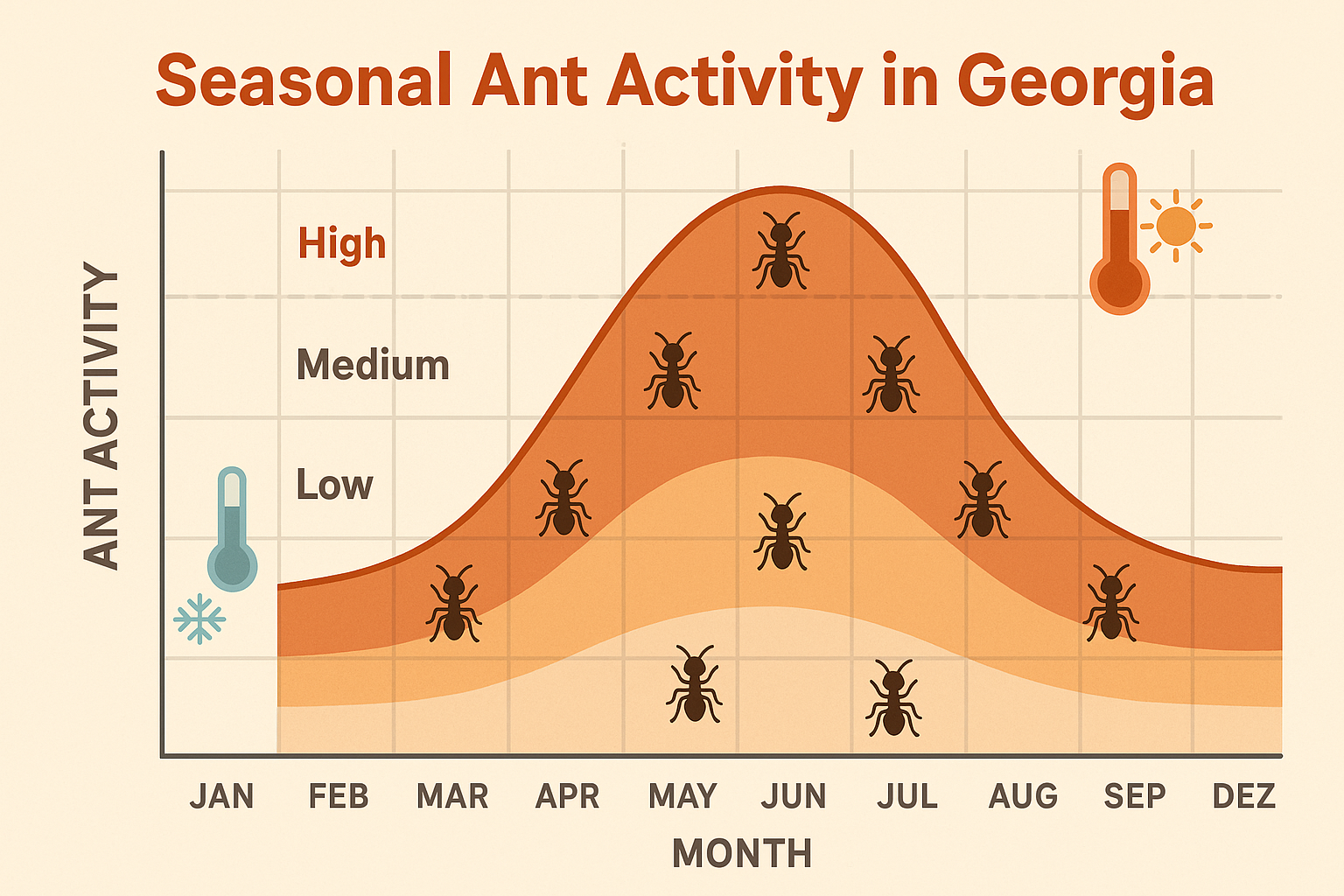
Georgia’s climate creates a predictable rhythm for ant colonies. The line chart above, compiled from regional monitoring data, shows a sharp rise in foraging activity from late May through August, followed by a gradual decline as temperatures dip in the fall. The lowest counts appear between December and February, when cooler nights and reduced humidity force ants back into deeper nest chambers.
Temperature, Humidity, and Foraging Behavior
Ants are ectothermic, meaning their metabolism is directly tied to ambient temperature. When daytime highs consistently sit between 75°F and 90°F, workers can safely leave the nest for extended periods, increasing the likelihood of indoor sightings. Humidity plays a complementary role; moist conditions soften soil, making it easier for colonies to expand their tunnels toward food sources. In Georgia, the late spring and early summer months combine warm temperatures with higher relative humidity, creating the perfect storm for ant foraging.
Why Early Summer Is the Optimal Window for Preventive Treatments
Targeting ants in May or early June gives you a strategic advantage. At this stage, colonies are still establishing new satellite nests and are more vulnerable to bait placements and barrier sprays. Treating before the peak activity period curtails the exponential growth that typically follows the summer heat surge. Moreover, early interventions reduce the need for repeated applications later in the season, saving homeowners both time and money.
Homeowner Action Steps During Peak Months
- Secure food storage: Keep pantry items in airtight containers and clean up crumbs promptly to eliminate easy attractants.
- Control moisture: Fix leaky faucets, use dehumidifiers in basements, and ensure proper drainage around the foundation to discourage ant trails.
- Seal entry points: Inspect windows, doors, and utility penetrations for gaps; caulk or weather‑strip as needed.
- Maintain landscaping: Trim vegetation away from the house and keep firewood stored off the ground to reduce bridge routes for foragers.
- Schedule a professional inspection: A licensed technician can identify hidden colonies and apply targeted treatments before the August peak.
By aligning your pest‑management plan with Georgia’s seasonal ant patterns, you’ll stay one step ahead of infestations. For a deeper dive into the data that drives these recommendations, visit the source of the regional statistics: Ant control cost in Suwanee, GA.
Ant Control Treatment Options and What They Cost
When it comes to ant infestations in Suwanee, you have three clear pathways: a straightforward Basic Treatment, a more comprehensive Premium Treatment, or a do‑it‑yourself approach with Ant Bait Kits. Understanding how each works—and what you’ll pay—helps you match the service to the severity of the problem and your budget.
Basic Treatment – Single‑Visit Spray
This entry‑level option typically involves one technician arriving, spraying a residual insecticide around entry points, cracks, and known trails. The goal is rapid knock‑down of the visible ant activity.
- Pros: Fast results, minimal disruption to your daily routine, and the lowest upfront cost.
- Cons: Protection usually lasts 30‑45 days, so repeat visits may be needed if the colony is large or if outdoor conditions push ants back inside.
Premium Treatment – Multiple Visits, Bait Stations & Monitoring
Our premium plan combines the initial spray with strategically placed bait stations and scheduled follow‑up visits. Technicians monitor bait consumption, adjust placement, and re‑treat high‑risk zones.
- Pros: Targets the colony at its source, offers 3‑6 months of protection, and includes a warranty that covers re‑treatment if ants return.
- Cons: Higher price tag and a slightly longer timeline to see full results, as ants must carry bait back to the nest.
DIY Ant Bait Kits
For homeowners who prefer a hands‑on approach, pre‑measured bait stations are available at hardware stores or online. You place them in suspected hotspots and replace as needed.
- Pros: Most affordable, you control placement, and there’s no need to schedule a technician.
- Cons: Effectiveness varies with proper placement, and you miss the professional assessment that can uncover hidden nests or species‑specific tactics.
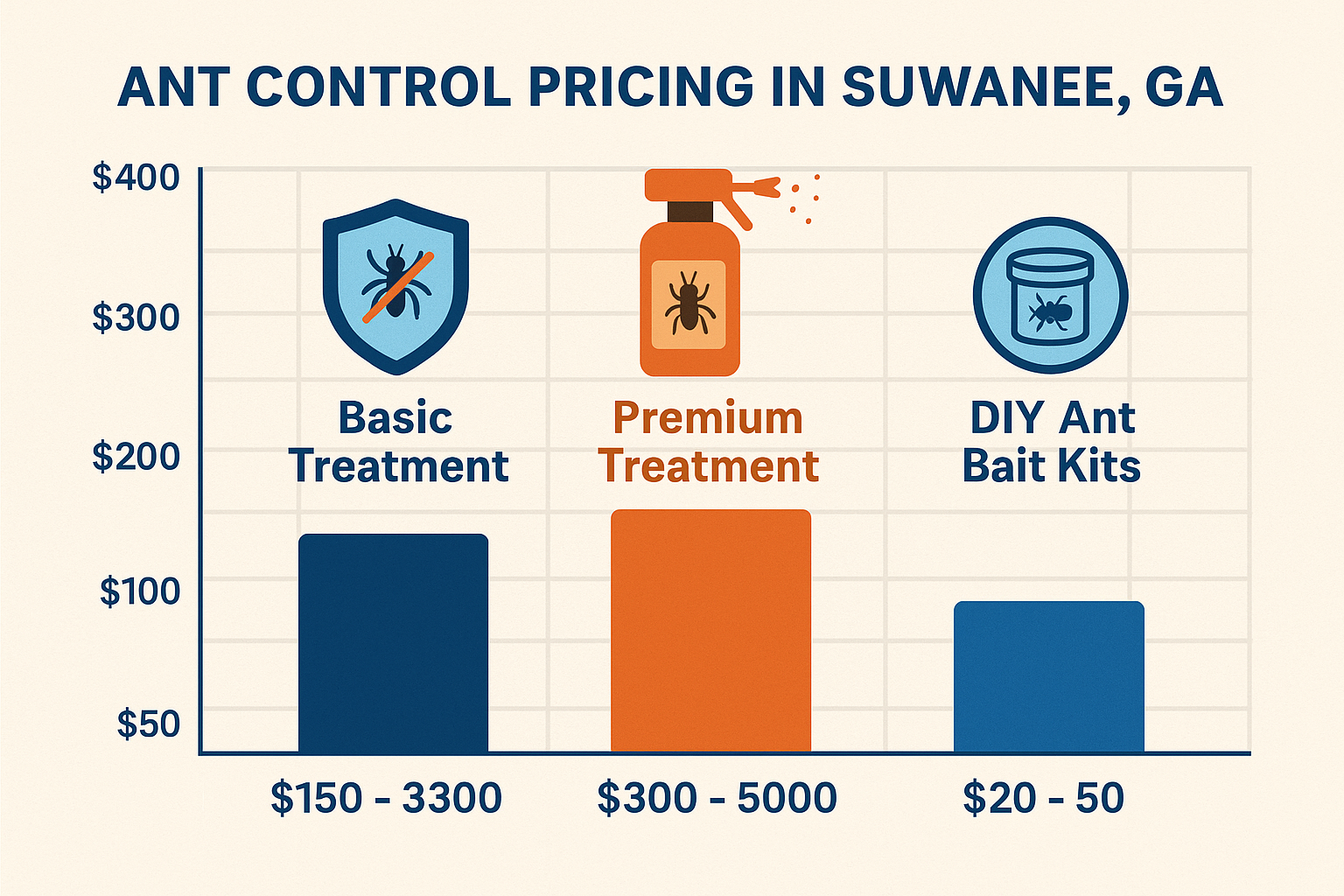
According to the infographic, Suwanee homeowners typically see the following price ranges:
- Basic Treatment: $120–$180
- Premium Treatment: $250–$350
- DIY Bait Kits: $30–$60
Anthem Pest Control prides itself on transparent pricing and backs each professional service with a clear warranty. That means if ants reappear within the coverage period, we’ll return at no extra charge.
How to Choose the Right Plan
Start by assessing the infestation:
- Spotty, occasional sightings? A Basic Treatment or a DIY kit may be sufficient.
- Multiple trails, indoor nests, or outdoor colonies near the foundation? Opt for the Premium Treatment for long‑term control.
- Budget constraints? Begin with DIY kits, but keep a professional inspection on the calendar in case the problem escalates.
Remember, the cheapest option isn’t always the most cost‑effective over time. A well‑executed premium plan can prevent repeated service calls, protect your home’s structure, and give you peace of mind for months to come.
What to Expect During a Professional Ant Treatment
When a certified Anthem Pest technician arrives at your Suwanee home, the first thing they do is a thorough inspection. The focus is on the kitchen—where food residues attract ants—and the exterior entry points such as doorways, window sills, and utility penetrations. By tracing the trails back to the source, the technician can pinpoint colonies, identify the species, and decide which treatment method will work best for your situation.
Specialized Equipment and Targeted Application
During the inspection, you’ll often see a small smoke machine or a portable vaporizer in action. The harmless smoke forces hidden ants out of their nests, making them visible for precise bait placement. Outdoor treatment typically involves applying a perimeter barrier and strategically positioning gel or granular baits around the foundation, landscaping, and any cracks or gaps.

Safety First: EPA‑Approved Products and Homeowner Prep
All chemicals used are EPA‑registered and formulated for indoor and outdoor safety. Anthem Pest technicians wear gloves and follow strict containment protocols to protect pets, children, and your belongings. Before treatment begins, you’ll be asked to clear countertops, store food in sealed containers, and move pets and small children away from the work zones for a short period—usually no more than 30 minutes.
Follow‑Up Schedule and Guarantee
One treatment rarely eliminates an entire ant colony, especially if it’s established deep in the soil. That’s why Anthem Pest includes a built‑in follow‑up schedule:
- Day 3–5: A monitoring visit to assess bait uptake and adjust placement if needed.
- Week 2: Re‑inspection of interior trails and exterior perimeters.
- Month 1: Final evaluation and confirmation that activity has ceased.
All services come with a satisfaction guarantee—if ants return within the guarantee period, we’ll schedule a complimentary retreat.
Quick FAQ
- How long until I see ants disappear? Most homeowners notice a reduction within 48–72 hours as the bait is carried back to the colony.
- What if ants come back after the treatment? Contact Anthem Pest immediately. Our guarantee covers a free re‑treatment, and we’ll investigate any missed entry points.
- Do I need to do anything after the follow‑up visits? Keep food sealed, maintain a clean kitchen, and report any new trails right away so we can intervene early.
Protect Your Home with Anthem Pest Control Today
Early detection, proper seasonal timing, and professional treatment are the three pillars of lasting ant control. Spotting a trail before it spreads, treating during the spring or fall when colonies are most vulnerable, and using a licensed technician’s expertise keep ants from setting up permanent homes in your walls, kitchens, and yards.
That’s exactly why Anthem Pest Control stands out. With a nationwide network, we bring the same high‑level service to Suwanee that we deliver across the country, while still understanding the unique habits of Georgia’s fire ants, carpenter ants and pavement ants. Our technicians use EPA‑approved products that are safe for children and pets, and our pricing is transparent—no hidden fees, just a clear estimate before any work begins.
Because we combine broad experience with local knowledge, you get a treatment plan that matches the specific ant activity in your neighborhood. Whether you need a one‑time extermination or an ongoing prevention program, our approach is customized, effective, and budget‑friendly.
Choosing Anthem means you benefit from:
- Rapid response times that fit your schedule.
- Ongoing monitoring to catch new colonies early.
- Guaranteed satisfaction with follow‑up visits if needed.
Ready to see how easy it is to protect your home? Request a free, no‑obligation quote today. Our friendly team will assess your situation, explain the steps, and give you a written estimate you can trust.
Give us a call at 877‑371‑8196 or visit Anthem Pest Control to schedule your inspection. We’re here to keep ants out, so you can enjoy a pest‑free home year‑round.