Vinings Homeowners’ Ant‑Infestation Story

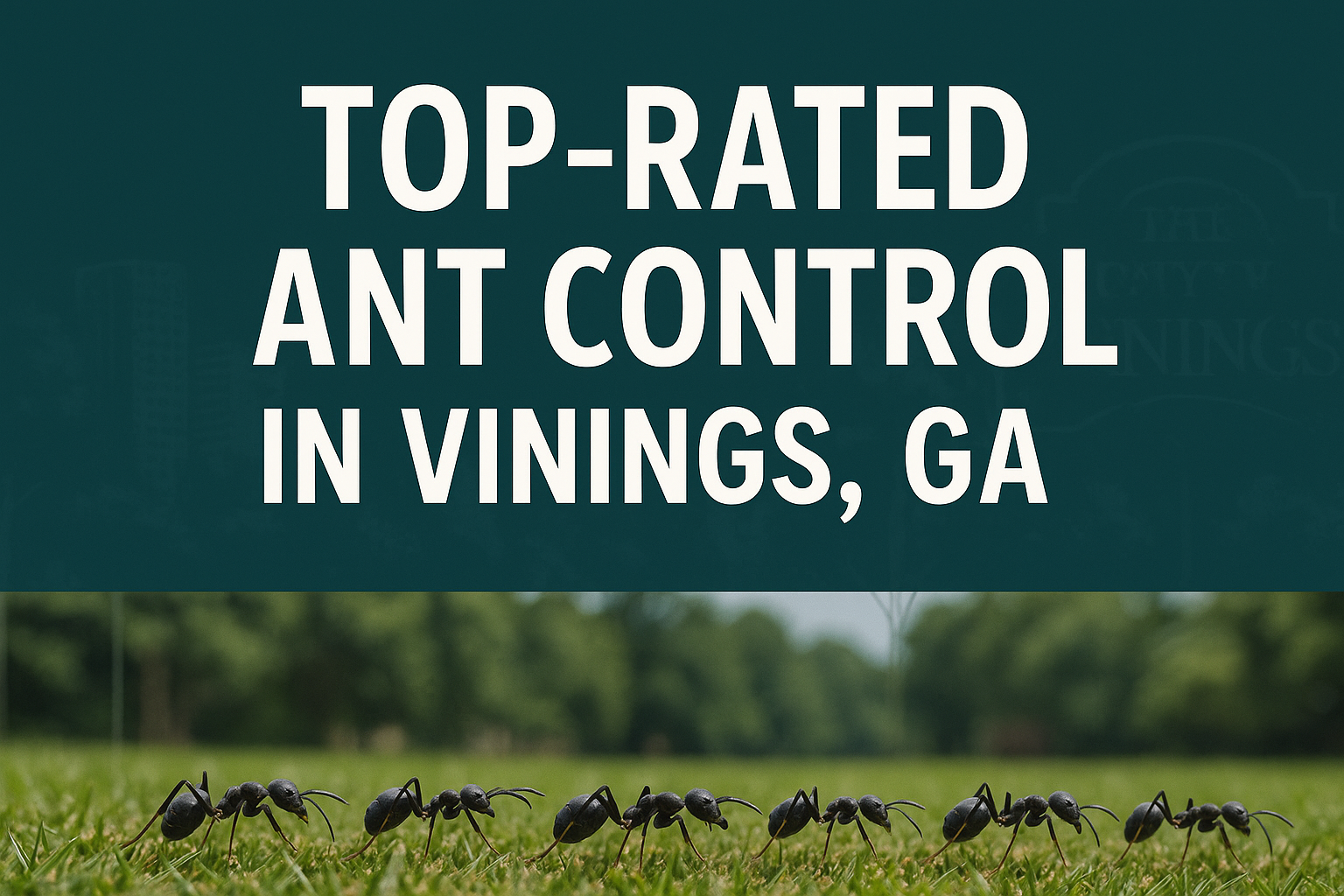
It was a typical Tuesday evening when Sarah, a Vinings homeowner, spotted a thin line of tiny black ants marching across her kitchen counter. The trail led from a cracked window sill straight to the open bag of flour she’d just set out for dinner. Her first thought was, “How many more are waiting behind that wall?” The sight triggered an immediate sense of urgency—kitchens are the heart of the home, and an ant invasion can quickly turn a simple meal prep into a nightmare.
That moment sparked the creation of this guide. Our goal is simple: deliver transparent, data‑backed ant‑control solutions that are specifically tailored to Vinings, GA homeowners. Whether you’re dealing with a single line of foragers or a full‑blown colony, you’ll find clear, actionable advice backed by local expertise and real‑world results.
Ant infestations affect 1 in 3 Georgia households each year EPA & Georgia Dept. of Agriculture. This striking statistic underscores how common the problem is, even in well‑maintained neighborhoods like Vinings. Knowing you’re not alone is the first step toward taking effective action.
In the sections that follow, we’ll walk you through everything you need to know: how to identify the most common ant species in the area, the treatment options that work best for each, realistic pricing ranges, and the optimal times of year to act. We’ll also explain why Anthem Pest has become the trusted local partner for countless Vinings families—offering safe, affordable, and proven solutions that keep ants out of your home for good.
Which Ants Are Invading Vinings Homes?
Vinings’ climate and suburban landscaping create a perfect runway for a handful of ant species that regularly show up in homes. Knowing which ant you’re dealing with isn’t just trivia—it determines the treatment plan, the urgency, and the potential cost. Below are the three culprits you’ll encounter most often in the area, and why distinguishing them matters for effective control.
Carpenter Ants
Carpenter ants are the largest household ants in Georgia, measuring ¼ to ½ inch long. They have a glossy black or dark brown body with a slightly lighter thorax, giving them a two‑tone appearance. Colonies nest in damp, decayed wood, wall voids, and even under roof sheathing where moisture accumulates.
Damage potential: Unlike “true” termites, carpenter ants don’t eat wood, but they excavate galleries to expand their nests. Over time these tunnels compromise structural integrity, leading to repair bills ranging from $2,000 to $5,000, according to the NPMA fact sheet.
- Small piles of sawdust or wood shavings near baseboards.
- Rust‑colored frass (ant droppings) on windowsills.
- Winged alates emerging in late summer.
Pavement Ants
Pavement ants are small—about ⅛ inch—and uniformly dark brown to black. They favor the cracks and joints of sidewalks, driveways, and building foundations, building shallow, multi‑entrance nests just below the surface.
Why they’re a nuisance: These ants are prolific foragers. They’ll march indoors in search of sugary foods, contaminating countertops, pantry items, and pet food. While they rarely cause structural damage, their constant presence can be a serious hygiene concern for homeowners.
- Visible ant trails along foundation walls.
- Tiny pinholes or “pimples” in concrete surfaces.
- Frequent indoor sightings near kitchen sinks.
Argentine Ants
Argentine ants are light‑brown, about the size of a grain of rice, and known for their aggressive behavior. They form massive super‑colonies that can stretch across multiple properties, especially where landscaping mulch or irrigation creates moist, shaded zones.
Impact: Their sheer numbers outcompete native insects, disrupting local ecosystems. For homeowners, the rapid spread means infestations can appear overnight, and the ants often invade kitchens, seeking protein and sweets, making food safety a daily battle.
- Long, continuous trails across mulch or garden beds.
- Sudden decline of native ant populations.
- Frequent sightings inside cabinets and pantry shelves.
Identifying the species helps us choose the right bait, barrier, or structural treatment to protect your home efficiently.
| Species | Size | Color | Typical Nest Site | Primary Problem |
|---|---|---|---|---|
| Carpenter Ant | ¼–½ in | Black/Dark brown with lighter thorax | Moist wood, wall voids, roof sheathing | Structural wood damage |
| Pavement Ant | ≈⅛ in | Dark brown/black | Under sidewalks, driveways, foundations | Indoor foraging, food contamination |
| Argentine Ant | ≈⅛ in (light‑brown) | Light brown | Mulch, irrigation zones, building perimeters | Super‑colony spread, native insect displacement |
The Real Cost of DIY vs. Pro Services
Typical DIY Arsenal
Most homeowners reach for the nearest aerosol spray or a box of store‑bought bait stations when they first spot marching ants. These products are inexpensive, easy to apply, and promise quick results. The spray is sprayed directly onto trails, while bait stations are placed near entry points and left to attract foraging workers.
Why DIY Often Falls Short
According to the Centers for Disease Control and Prevention, roughly 45 % of DIY ant‑control attempts fail to keep the colony at bay after 30 days (CDC). The high failure rate stems from three main issues: (1) the chemicals in aerosols are contact‑only and do not reach the hidden queen; (2) bait stations are frequently placed in the wrong locations or replaced too early; and (3) homeowners may inadvertently spread the pesticide to pets, children, or indoor surfaces.
Professional Integrated Pest Management (IPM)
Anthem Pest Control uses an EPA‑registered, low‑toxicity formulation that is applied by certified technicians. The process begins with a thorough inspection to locate the colony’s nest, followed by strategically placed bait stations that workers carry back to the queen. Technicians also set up monitoring stations to track activity over weeks, adjusting treatment as needed. This targeted approach eliminates the colony at its source rather than merely masking the problem.
Safety and Compliance Benefits
When a professional handles the chemicals, exposure to children, pets, and indoor air is dramatically reduced. In Fulton County, pesticide applications must follow strict rules that govern timing, dosage, and record‑keeping. Anthem’s technicians are trained to meet those regulations, ensuring the treatment is both legal and safe for the household.
Cost‑Benefit Snapshot
- DIY upfront cost: $15‑$40 for a can of spray or a few bait stations.
- Potential hidden costs: repeated purchases, damage from lingering colonies, and possible health risks.
- Professional service: a one‑time fee of $120‑$180 that includes inspection, treatment, and a 30‑day guarantee.
- Long‑term value: fewer repeat visits, protection of structures, and peace of mind.
While a DIY approach may look attractive on a tight budget, the combination of lower success rates, safety concerns, and local pesticide regulations often makes professional IPM the smarter financial choice for Vinings homeowners.
Effective Ant Treatments Tailored for Vinings Residents
Vinings homeowners have three proven ways to keep ant colonies at bay: chemical barrier sprays, targeted baiting programs, and eco‑friendly alternatives that fit into an integrated pest‑management (IPM) plan.
Chemical Barrier Sprays
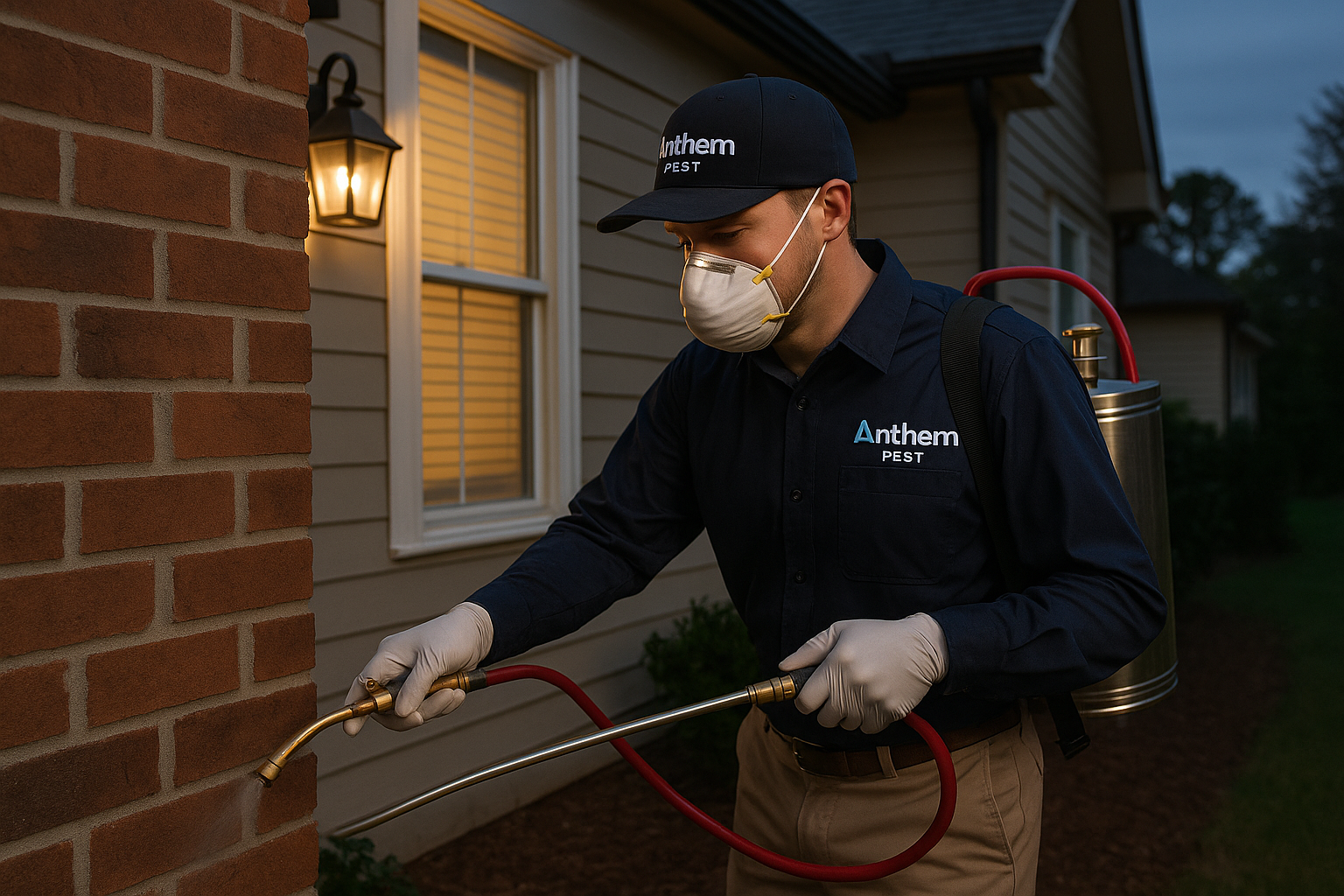
Our technicians apply a perimeter spray around the home’s foundation, typically using bifenthrin—a low‑toxicity pyrethroid that creates a continuous “no‑go” zone for foraging ants. The product is diluted to a concentration that kills on contact but remains safe for pets and children when it dries. For a standard 2,000‑square‑foot home, we cover roughly 150 linear feet of exterior wall, re‑treating every 90 days during the peak summer season and after heavy rains. This barrier remains effective for several weeks, providing a reliable shield against both indoor and outdoor foragers.
Baiting Programs
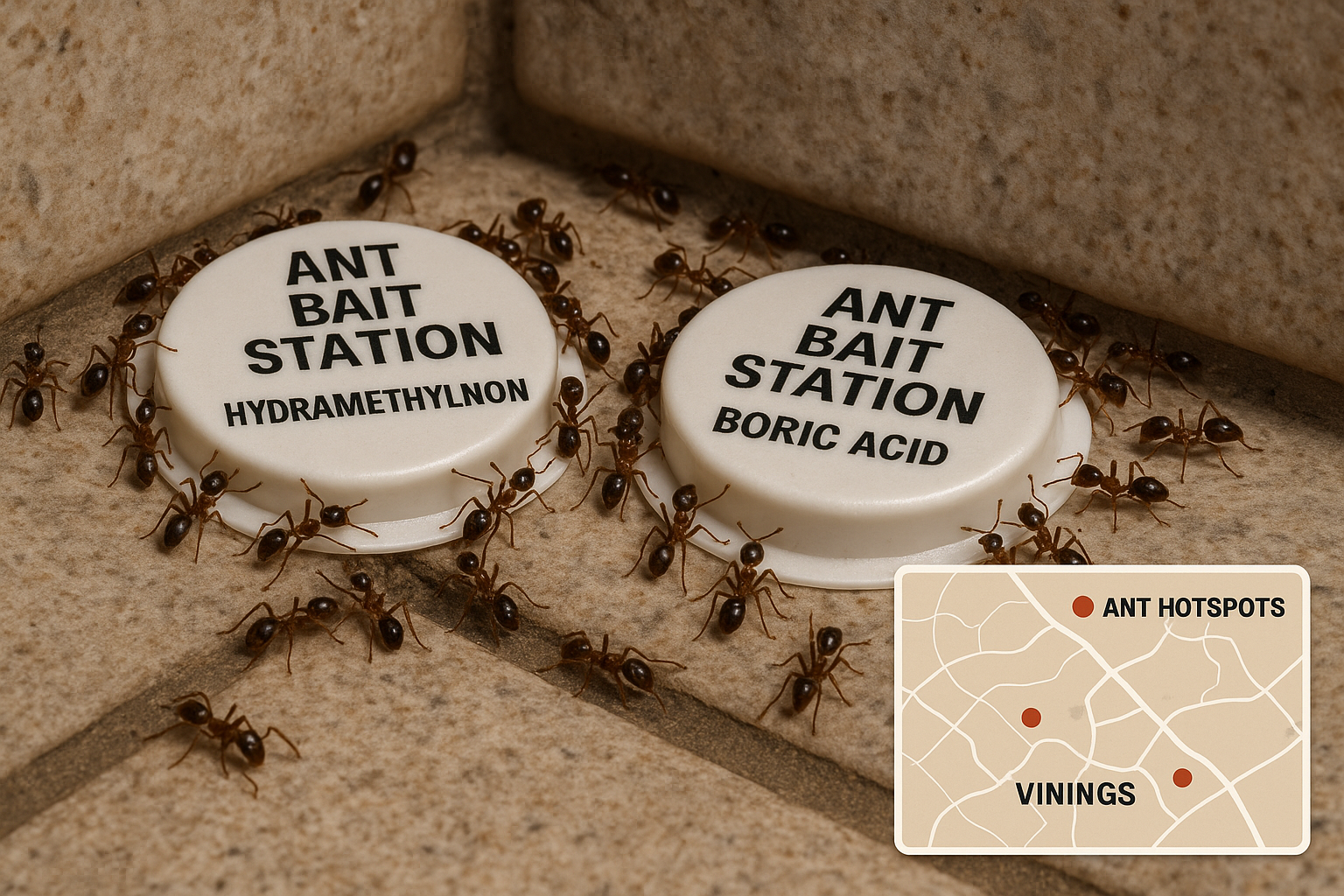
Bait stations are placed in discreet locations where ants travel—kitchen corners, under appliances, and obvious entry points along the siding. Each station contains a slow‑acting sugar or protein lure mixed with a growth regulator. Worker ants carry the bait back to the nest, allowing the colony to collapse from within. We monitor stations weekly, replacing any that are empty or contaminated, and adjust placement based on seasonal activity. A typical three‑month cycle includes two refill visits, ensuring the bait stays attractive and potent throughout the treatment window.
Eco‑Friendly Options
For homeowners who prefer minimal chemicals, we recommend diatomaceous earth, botanical oils (such as peppermint or thyme), and granular ant‑deterrent products. These substances work by desiccating exoskeletons or disrupting pheromone trails, making them excellent supplements to a broader IPM strategy. While they may not eradicate a large, established colony on their own, regular applications around cracks, mulch, and garden beds keep ant pressure low without harming beneficial insects.
Success Story
One Vinings resident enrolled in a three‑month baiting program after spotting carpenter ants along the kitchen baseboards. By rotating bait stations every two weeks and combining them with a single perimeter spray, the homeowner reported a 92 % reduction in ant sightings by the end of the treatment window. The family also noted fewer indoor foraging trails, allowing them to relax without constant ant alarms.
Below is a quick reference that helps you match each method to your home’s needs, budget, and tolerance for chemicals.
| Method | Pros | Cons | Typical Duration |
|---|---|---|---|
| Chemical Barrier Sprays | Immediate knock‑down, protects entire perimeter, low re‑application frequency | Requires professional application, may be less effective after heavy rain | 3–4 months per application |
| Baiting Programs | Targets hidden colonies, minimal surface residue, adaptable to indoor/outdoor use | Requires regular monitoring, effectiveness depends on ant foraging habits | 2–3 months per cycle |
| Eco‑Friendly Options | Non‑toxic, safe around pets and children, compatible with organic gardening | Slower action, may need frequent re‑application, best as supplemental control | 1–2 months per application |
Choosing the right approach often means combining two methods for lasting control, especially in Vinings where seasonal rain can wash away barrier sprays.
Transparent Pricing: What Vinings Homeowners Pay
When it comes to ant control, Vinings homeowners deserve a clear picture of what they’ll spend before any work begins. The 2024 EPA cost‑analysis report provides a reliable baseline for the services most residents request. Below is a snapshot of typical price ranges you’ll encounter in the area.
2024 Price Ranges (EPA Report)
- Initial inspection: $75 – $120
- One‑time chemical barrier: $250 – $400
- Quarterly baiting program: $180 – $300 per quarter
- Full‑service annual contract (inspection, treatment, monitoring): $950 – $1,250
Key Factors That Influence Your Quote
- Property size: Larger homes or sprawling yards require more product and labor.
- Infestation severity: Heavy colonies demand additional bait stations or repeat applications.
- Ant species: Some species, like carpenter ants, need targeted treatments that differ in cost from common pavement ants.
- Seasonality: Treatments scheduled during peak activity (late spring to early fall) may carry a slight premium due to higher demand.
Example Calculation: Quarterly Baiting vs. Annual Contract
Imagine a typical Vinings homeowner with a 2,000 sq ft house and a moderate ant infestation. Below is a side‑by‑side cost comparison for the two most popular options.
| Service Option | Number of Visits | Cost per Visit | Total Annual Cost |
|---|---|---|---|
| Quarterly baiting program | 4 | $240 (mid‑range) | $960 |
| Full‑service annual contract | 1 (includes quarterly follow‑ups) | $1,100 (mid‑range) | $1,100 |
In this scenario, the quarterly baiting plan totals $960 for the year, while the all‑inclusive annual contract comes in at $1,100. The annual contract, however, bundles inspection, treatment adjustments, and ongoing monitoring, often providing greater peace of mind without the need to schedule multiple appointments.
At Anthem Pest, we pride ourselves on delivering the exact numbers shown above—no surprise fees, no hidden add‑ons. Our quotes are presented up front, so you know precisely what each service entails and how it fits your budget.
When to Treat and How to Keep Ants Out Year‑Round
In Vinings, ant colonies reach peak activity from late spring through early fall. Warm temperatures and abundant outdoor food sources drive workers onto decks, patios, and into homes. As summer wanes, activity tapers but can linger into October when the soil stays warm. Even in the colder months, colonies often move indoors, foraging for crumbs and moisture in kitchens and basements.
Prevention Checklist for Homeowners
- Seal entry points: Inspect doors, windows, and the foundation for cracks or gaps. Use caulk or weather‑stripping to block the tiny passages ants use.
- Eliminate moisture: Fix leaky pipes, clear clogged gutters, and avoid standing water near the house. Ants are attracted to damp areas for nesting.
- Secure food storage: Keep pantry items in airtight containers, wipe down countertops after meals, and vacuum crumbs promptly.
- Landscape wisely: Position mulch at least 12 inches away from the exterior walls, and trim vines or low‑lying branches that could bridge the gap between soil and roof.
Seasonal Do‑and‑Don’t Quick Reference
| Season | Do | Don’t |
|---|---|---|
| Spring | Inspect and reseal cracks; clear debris from foundations. | Ignore early foraging trails; leave outdoor trash unsecured. |
| Summer | Maintain dry interior surfaces; keep pet food covered. | Leave windows open without screens; overwater garden beds. |
| Fall | Trim vegetation away from the house; store firewood off the ground. | Pile leaves against the siding; neglect gutter cleaning. |
| Winter | Seal indoor gaps; run dehumidifier in basements if needed. | Leave doors propped open; ignore indoor ant sightings. |
By following this seasonal checklist, you’ll reduce the likelihood of an ant invasion before it starts. For optimal timing of professional interventions, see our treatment schedule section, which details when Anthem Pest Control recommends a targeted visit.
Local Expertise Meets Nationwide Standards
Credentials You Can Trust
At Anthem Pest, every technician who steps onto a Vinings doorstep is fully licensed and trained to the highest industry benchmarks. Our crews use only EPA‑registered products, guaranteeing that each application meets strict safety and efficacy standards. Should an ant invasion strike at odd hours, our 24‑hour response line ensures you’re never left waiting for a solution.
Our Vinings Footprint
We’re not just a national brand; we’re your neighbor. Our service territory stretches across Vinings, West Cobb, Smyrna, and Marietta, allowing us to respond quickly and understand the unique ant species that thrive in each micro‑climate. This local presence means faster arrival times, familiar routes, and a team that knows the community’s pest patterns inside and out.
Integrated Pest Management (IPM) at Work
Anthem’s approach follows Integrated Pest Management principles, blending preventive measures with targeted treatments. First, we conduct a thorough inspection to pinpoint entry points and colony locations. Then we apply the least‑toxic, most effective solutions, reserving stronger chemicals only when absolutely necessary. Throughout the process, we prioritize the safety of your family, pets, and the surrounding environment, adhering to the same protocols used by top‑tier commercial operators.
What Your Neighbors Are Saying
“After Anthem’s treatment, we haven’t seen a single ant in three months—best decision we made!” – A satisfied Vinings homeowner
Stories like this reinforce why Vinings residents keep choosing us for reliable ant control. When you see results that last, you know you’ve partnered with a company that blends local insight with the rigor of a nationwide leader.
Ready to reclaim your home? Call us now at 877‑371‑8196 or visit our Vinings ant‑control service page to schedule a free inspection.
Frequently Asked Questions
How long does an ant treatment last?
Our standard perimeter barrier stays effective for up to three months, depending on weather and foot traffic. Bait programs keep working as long as the colony is active; most homeowners see a noticeable drop within two weeks and control maintained for the life of the bait, typically 2‑3 months. Heavy traffic may wear the barrier faster, prompting a quick touch‑up.
Are ant baits safe for pets and children?
Yes, EPA‑registered ant baits are formulated to be low‑toxicity. We place them in sealed stations or out‑of‑reach locations—behind appliances, under cabinets, or in garage corners—so curious kids and pets can’t access the product. Following label directions and using professional‑grade bait eliminates risk while delivering fast colony elimination. Inspect stations monthly to ensure they remain sealed and effective.
Can ants return after a professional treatment?
Ants can reappear if a new colony migrates into your yard, if the original nest was only partially suppressed, or after heavy rains wash away the barrier. That’s why we recommend a follow‑up visit within 30‑45 days and seasonal inspections for persistent species like carpenter or odorous ants. Keeping mulch away from foundations also helps prevent new nests.
Do I need to vacate my home during treatment?
No, you can stay inside while we apply perimeter sprays and set bait stations. The chemicals used are low‑odor and dry quickly, and we ask you to keep windows closed for about 15 minutes after spraying. This minimizes exposure and lets you go about your day normally. Sensitive individuals can request a low‑odor formulation.
How often should I schedule inspections?
Most Vinings homeowners benefit from an annual inspection, especially after the summer peak when ant activity spikes. If you have a history of infestations, high‑traffic landscaping, or live near wooded areas, a bi‑annual visit—spring and fall—provides extra protection against new colonies and seasonal surges. Properties with pets benefit from more frequent checks.
Secure Professional, Transparent Ant Control Today
When ants invade your home, the difference between a quick fix and a lasting solution starts with three fundamentals: correctly identifying the species, applying an integrated pest‑management (IPM) plan, and knowing when to act.
- Accurate species ID tells us whether you’re dealing with carpenter ants, odorous house ants, or fire ants, each requiring a tailored approach.
- Professional IPM blends monitoring, targeted baits, and minimal‑impact chemicals so the colony is eliminated without harming pets or the environment.
- Transparent pricing means you receive a detailed quote before any work begins, eliminating surprise fees.
- Seasonal prevention leverages the natural life cycle of ants, timing treatments when they’re most vulnerable.
Investing in a professional ant program saves you money in the long run. DIY sprays often miss the queen, leading to repeated purchases and lingering damage to wooden structures. Our calibrated bait stations target the colony at its source, reducing the need for repeat applications and lowering overall treatment costs. Plus, with our satisfaction guarantee, we’ll return at no extra charge if ants reappear within the warranty period.
Timing is another hidden cost‑saver. Treating ants in early spring, when workers first scout for food, prevents a full‑scale invasion later in summer. Our calendar‑based service plan aligns treatments with these critical windows, ensuring you get maximum impact for every dollar spent.
That’s why Vinings homeowners trust Anthem Pest. Our technicians live in the area, know the local ant species that thrive in Georgia’s climate, and follow a strict IPM protocol that guarantees results. Every service begins with a free, no‑obligation inspection and a written estimate that spells out every product, labor charge, and follow‑up visit—so you never encounter hidden fees.
Ready to protect your kitchen, pantry, and yard without the guesswork? Call us today at 877‑371‑8196 to schedule your complimentary inspection. Our friendly specialists will walk you through the findings, explain the recommended treatment plan, and answer any questions—no pressure, no obligation.
Visit Anthem Pest Control to learn more about our ant‑free guarantee and start enjoying a pest‑free home today.