Carpet Beetle Overview and Why They Matter

Carpet beetles belong to the family Dermestidae, a group of small, oval-shaped insects that thrive in indoor environments and often require professional carpet beetle control Druid Hills GA homeowners can rely on. In the United States, the most common household species are the Varied Carpet Beetle (Anthrenus verbasci), the Black Carpet Beetle (Attagenus unicolor), and the Furniture Carpet Beetle (Anthrenus flavipes). Adult beetles are typically 2–5 mm long, covered in fine hairs that give them a fuzzy appearance, and they are attracted to natural fibers such as wool, silk, fur, and even certain synthetic blends.
Why should homeowners worry? These beetles are not just a nuisance; their larvae feed voraciously on keratin‑rich materials. Over time, they can create noticeable holes in carpets, upholstery, blankets, and clothing. The damage often goes unnoticed until it becomes extensive, because larvae hide in dark, undisturbed areas—under furniture, in closets, or behind baseboards. In addition to material loss, the shed skins and fecal pellets of carpet beetles can trigger allergic reactions, especially in sensitive individuals.
According to the CDC, more than 20 % of U.S. households report occasional sightings of carpet beetles, and infestations are most prevalent in regions with warm, humid climates—exactly the conditions found in Druid Hills, Georgia. A recent survey of residential pest reports indicated that carpet beetles rank among the top three indoor insects causing structural damage, trailing only termites and carpenter ants.
Health implications extend beyond allergies. Some people develop contact dermatitis from the beetles’ microscopic hairs, while others experience respiratory irritation from the fine particles they leave behind. These reactions can mimic dust mite allergies, making it difficult to pinpoint the source without a professional inspection.
Understanding the scope of the problem sets the stage for early detection. Spotting telltale signs—such as tiny, irregular holes in fabrics, a peppery dust of shed skins, or the occasional adult beetle fluttering near windows—can mean the difference between a quick, targeted treatment and a costly, widespread eradication effort. In the next section, we’ll walk you through the most reliable ways to identify an infestation before it spreads.
Identifying Carpet Beetle Infestations in Your Home
Visual clues you can’t ignore
Carpet beetles are tiny—typically 2‑4 mm long—but they leave unmistakable evidence. Look for small, round holes in natural‑fiber fabrics such as wool, silk, or cotton. These perforations are often irregular and appear in clusters where the insects have been feeding. In addition, you may spot shed skins (exuviae) that look like translucent, paper‑thin shells along baseboards, under couch cushions, or tucked into pet bedding. The most distinctive sign is a sprinkling of peppery fecal pellets, which are dark, grain‑like specks that resemble ground pepper and accumulate near larvae hotspots.
Damage patterns on soft furnishings
Carpet beetle larvae chew on the protein‑rich parts of textiles, leaving a pattern that differs from random wear. On carpets and rugs, the damage often appears as tiny, circular pits that gradually enlarge into larger holes as the infestation grows. Upholstered furniture may show chewed edges along seams, especially on sofa backs and armrests where the fabric is thin. To help you visualize these signs, see the close‑up photo below that highlights the characteristic bite marks on a rug.
Where the culprits hide
Carpet beetle larvae are opportunistic hide‑outs. Inspect the seams and folds of curtains, drapes, and upholstered cushions—these tight spaces retain dust and lint, perfect food sources. Check under furniture, especially where legs meet the floor; the darkness provides shelter. Pet bedding, especially if it’s made of natural fibers, is another favorite. When you lift a couch or pull a rug from the floor, you’ll often find a carpet beetle larva curled in a tiny, silken cocoon, ready to resume feeding.
Distinguishing beetles from moths and fleas
Misidentifying damage can lead to the wrong treatment. Moth larvae also target wool, but they tend to create long, ragged strips as they tunnel, whereas carpet beetles produce neat, round holes. Flea droppings are much smaller—about the size of a grain of sand—and are usually found on pet bedding rather than on carpets. Additionally, adult carpet beetles are club‑shaped and fuzzy, while moths have slender, delicate wings with distinct patterns. Recognizing these nuances helps you choose the correct control method.
What the EPA says about carpet beetle behavior
The U.S. Environmental Protection Agency notes that carpet beetles “prefer indoor environments where they can find a steady supply of organic debris, such as dead insects, hair, and natural fibers.” Their life cycle can span several months, allowing larvae to remain hidden for extended periods. This persistence underscores the importance of early detection and thorough cleaning to break the cycle before it escalates.
DIY inspection checklist
- Walk each room with a flashlight; examine carpet edges, rug backs, and under furniture.
- Pull back curtains and check seams for tiny holes, shed skins, or fecal pellets.
- Inspect pet bedding, especially if it contains wool or fleece.
- Look inside closets for damaged sweaters, scarves, or stored blankets.
- Use a lint roller on upholstery to capture any hidden larvae or exuviae.
- Record any findings and compare them to the visual signs described above.
- If you spot more than a few signs, contact a professional like Anthem Pest Control for targeted treatment.
Carpet Beetle Life Cycle and Seasonal Activity
Development Stages Inside Your Home
Carpet beetles move through four distinct phases: egg, larva, pupa, and adult—a life cycle that makes timely carpet beetle control Druid Hills GA especially important. A female can lay up to 50 eggs on a single carpet fiber, and each clutch hatches in 1–2 weeks when conditions are warm. The larvae—often called “caterpillars”—are the real culprits; they feed on natural fibers for 6 to 12 months, depending on food availability. Once they’re ready, they spin a silken cocoon, transform into a pupa for about two weeks, and finally emerge as adult beetles that live 2–3 months to reproduce.
Seasonal Peaks You Should Watch
Temperature and daylight drive the beetle’s calendar. Larval activity peaks in spring and summer when indoor humidity climbs and food sources (wool, feathers, pet hair) are abundant. Adults, on the other hand, tend to appear in late summer through early fall, seeking mates and laying the next generation of eggs. This timing explains why homeowners often notice a sudden surge of damage after the warm months have passed.
How Temperature and Humidity Influence Development
Carpet beetles thrive in environments that stay between 70°F and 85°F with relative humidity above 50 %. At these levels, the egg‑to‑adult cycle can compress to as little as eight weeks. Cooler, drier homes slow the process dramatically—larvae may linger for a year or more, extending the window of potential damage. Understanding your home’s micro‑climate helps you predict when the beetles will be most active and when interventions will be most effective.
Seasonal Activity Chart
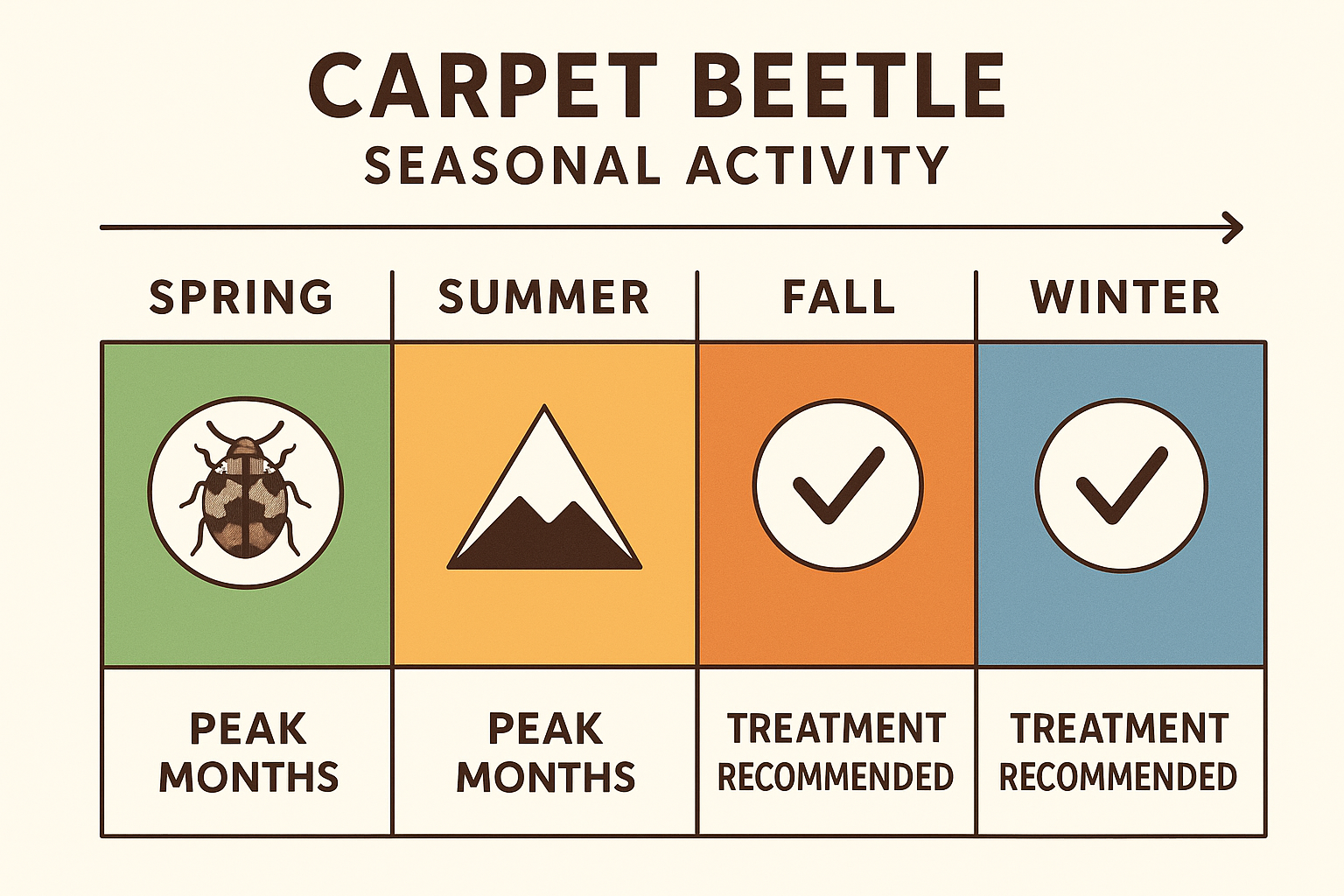
| Month | Primary Stage | Recommended Action |
|---|---|---|
| January–February | Adult dormancy | Inspect stored fabrics; seal cracks |
| March–May | Larval feeding intensifies | Deep vacuum carpets and upholstery weekly |
| June–August | Peak larval growth | Apply preventive spray to vulnerable areas |
| September–October | Adult emergence | Set up light traps; monitor for new eggs |
| November–December | Egg laying slows | Store off‑season clothing in sealed bags |
Seasonal Prevention Tips for Druid Hills Homeowners
- Vacuum before the spring surge: Run a high‑efficiency vacuum over carpets, rugs, and baseboards at least once a week from March through May to capture hidden larvae.
- Control indoor humidity: Use dehumidifiers or air conditioners to keep relative humidity below 50 % during the hottest months.
- Seal entry points: Check window screens, door sweeps, and foundation cracks before summer, preventing adults from slipping inside to lay eggs.
- Rotate and clean stored textiles: Every 2–3 months, shake out blankets, seasonal clothing, and stored quilts, then wash or dry‑clean them.
- Schedule a professional inspection: A certified pest‑control visit in early spring gives you a tailored treatment plan just as the beetles become most active.
Treatment Options: DIY Methods vs Professional Services
DIY Approaches You Can Try at Home
Most homeowners start with the tools they already have. A thorough vacuuming routine—paying special attention to closets, under furniture, and carpet edges—removes adult beetles, larvae, and shed skins before they can cause more damage. Follow up with a steam cleaning session; the high temperature (above 130°F) kills hidden stages that suction alone might miss. For active infestations, an EPA‑registered insecticidal spray applied to baseboards, window sills, and pet bedding can provide a quick knock‑down.
Natural remedies are also popular. Cedar blocks or chips release aromatic oils that repel carpet beetles, while pheromone traps lure adult males, helping you monitor the severity of the problem. These options are inexpensive and low‑risk, making them attractive for a first‑time encounter.
Why DIY May Fall Short
Even the most diligent homeowner can miss critical hiding spots. Carpet beetles nest in upholstery, draperies, and even inside the seams of mattresses—areas a standard vacuum or spray may not reach. Over time, beetles can develop resistance to over‑the‑counter chemicals, reducing the long‑term efficacy of DIY sprays.
Safety is another concern. Many insecticidal products contain neurotoxic ingredients that require careful handling, especially around children, pets, or individuals with respiratory sensitivities. Without proper protective gear and ventilation, you risk exposure while attempting to eradicate the pests.
Professional Services: What the Experts Offer
When a certified technician steps in, you gain access to tools and treatments unavailable to the average homeowner, which is especially important for effective carpet beetle control Druid Hills GA residents depend on. Targeted pesticide applications use concentrated, EPA-registered formulations that penetrate deep into wall voids, baseboard cracks, and fabric folds. Heat treatment—raising indoor temperatures to 140-150°F for several hours—destroys all life stages of carpet beetles without leaving chemical residues.
Most reputable companies, including Anthem Pest Control, employ an Integrated Pest Management (IPM) strategy. IPM combines chemical controls, environmental modifications, and ongoing monitoring to keep beetle populations below damaging levels while minimizing chemical use.

The Role of a Pest‑Control Specialist
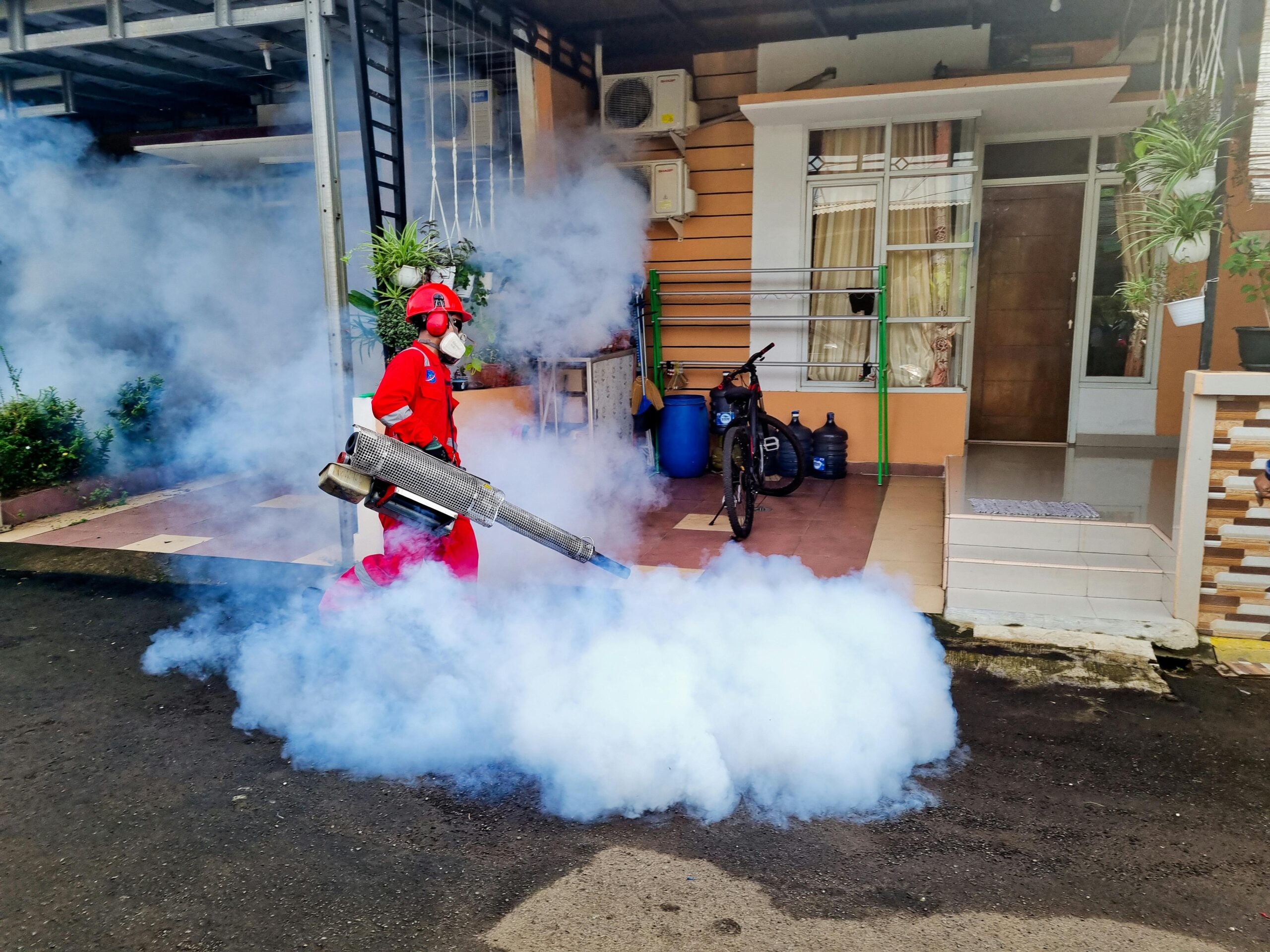
A trained specialist conducts a thorough inspection, identifying infestation hotspots that are easy to overlook. Using tools like a handheld infrared camera or a smoke machine (as shown in the image above), they can locate hidden larvae within wall cavities, upholstered furniture, and even HVAC ducts. This precise detection allows for spot‑treatment rather than a blanket approach, reducing both cost and chemical exposure.
Benefits of Choosing Professional Treatment
- Warranty protection: Most services include a guarantee that covers re‑infestation within a set period, giving you peace of mind.
- Follow‑up inspections: Technicians return to verify that beetle activity has ceased and to address any lingering hotspots.
- EPA‑registered products: Professionals have access to formulations that meet stringent safety and efficacy standards, ensuring effective eradication.
When It’s Time to Call a Pro
If you notice recurring damage to wool blankets, silk curtains, or carpet fibers despite regular vacuuming, the infestation is likely beyond DIY control. Severe cases—characterized by widespread larvae, multiple infested rooms, or damage to valuable textiles—require the comprehensive approach only a licensed pest‑control company can deliver.
Repeated infestations after several DIY attempts also signal that the beetles have found a protected refuge you haven’t accessed. In these scenarios, contacting Anthem Pest Control ensures a swift, safe, and lasting solution, protecting your home and belongings from further loss.
Pricing Guide for Carpet Beetle Control in Druid Hills, GA
Typical Service Packages
Most homeowners in Druid Hills choose from three core packages, each designed to fit a different level of need and budget:
- One‑time treatment – Ideal for a sudden outbreak. The technician conducts a full inspection, applies a targeted insecticide, and provides a 30‑day guarantee.
- Quarterly maintenance – Four visits per year that combine inspection, preventive sprays, and a follow‑up after each treatment. Great for families with pets or children who want ongoing protection.
- Annual plan – One comprehensive visit plus two “touch‑up” appointments, plus a 12‑month warranty that covers re‑treatment if beetles reappear.
What’s Included in Each Package?
Every Anthem Pest Control package bundles the same essential services, so you know exactly what you’re paying for:
- Professional inspection – A certified technician checks carpets, upholstery, stored fabrics, and hidden crevices for larvae, adult beetles, and eggs.
- Targeted treatment – EPA‑approved products are applied safely to all identified hotspots.
- Follow‑up visits – Depending on the plan, technicians return to verify that the population is eradicated and to re‑apply as needed.
- Warranty protection – One‑time plans include a 30‑day guarantee; quarterly and annual plans extend protection up to 12 months.
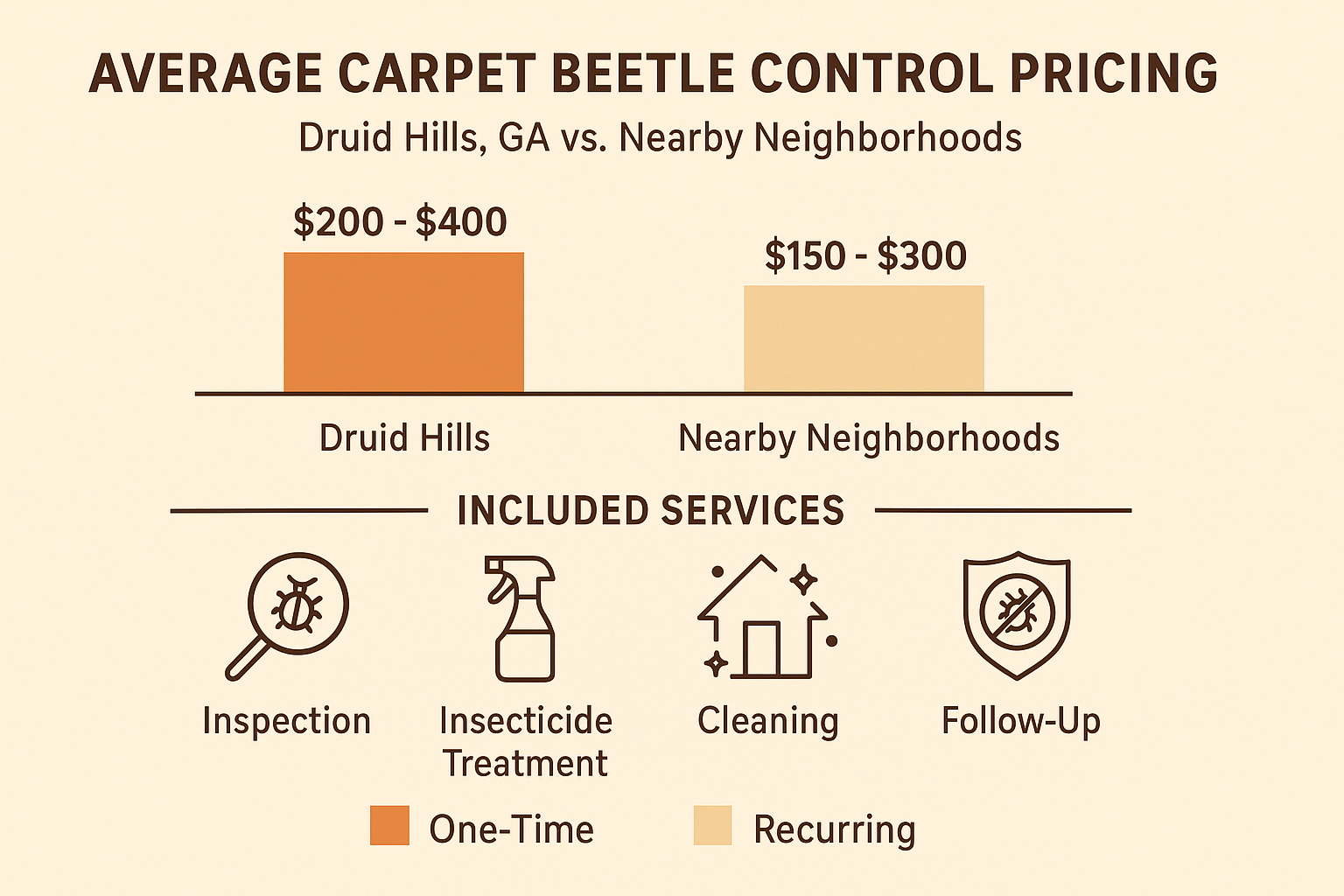
Factors That Influence the Final Price
While the infographic gives a quick snapshot, several variables can shift the actual cost:
- Home size – Larger square footage means more treatment zones and longer inspection times.
- Infestation level – A light, early‑stage problem may need only a single spray, whereas a severe infestation often requires multiple applications.
- Treatment type – Traditional liquid sprays are generally less expensive than advanced aerosol or heat‑based methods.
- Special considerations – Pets, children, or sensitive occupants may prompt the use of low‑toxicity formulas, which can affect pricing.
Tips for Getting Accurate Quotes and Evaluating Value
Follow these steps to ensure you receive a fair, transparent estimate:
- Request a free, on‑site inspection from Anthem Pest. Technicians will note the exact square footage and infestation hotspots before quoting.
- Ask for a breakdown of costs—inspection fee, product charge, labor, and any travel surcharge.
- Compare package inclusions rather than just the headline price. A lower upfront cost may lack follow‑up visits or a warranty.
- Check for local discounts or bundled offers (e.g., combining carpet beetle control with seasonal mosquito treatment).
- Read recent customer reviews in Druid Hills to gauge satisfaction with both price and effectiveness.
By understanding the structure of Anthem’s service packages, the elements that drive cost, and the best practices for quoting, you can budget confidently and protect your home from carpet beetles without surprise fees.
Protect Your Home Today with Anthem Pest Control
Early detection of carpet beetles can mean the difference between a quick fix and a costly renovation. Spotting tell‑tale signs—such as shed skins, damaged fibers, or a faint, musty odor—allows you to act before larvae spread to insulation, upholstery, or even structural wood. Proper treatment, applied promptly, stops the infestation in its tracks and protects the beauty and value of your home.
At Anthem Pest Control, we bring more than a toolbox to the job; we bring years of specialized experience in carpet beetle eradication and a full suite of pest‑management services. Our technicians are trained to identify the exact species, locate hidden breeding sites, and choose the most effective treatment plan for your situation.
All of our solutions are EPA‑approved, meaning they are safe for children, pets, and the environment while delivering the lethal edge carpet beetles need. We pride ourselves on transparent pricing—no hidden fees, no surprise charges—so you know exactly what you’re paying for before any work begins.
Because we operate nationwide, our Druid Hills team knows the local climate, common entry points, and seasonal patterns that affect carpet beetle activity. That local insight lets us tailor treatments to your home’s unique layout, ensuring faster results and longer protection.
Ready to take the next step? Schedule a free, no‑obligation inspection today. Our local technicians are just a phone call away, ready to fit a visit into your busy schedule and provide a detailed, written quote on the spot.
- Call us now at 877‑371‑8196
- Or book online at Anthem Pest Control
Protecting your home starts with a single call. Let Anthem Pest Control deliver reliable carpet beetle control Druid Hills GA homeowners trust, giving you the peace of mind that comes from knowing your carpet beetles—and any other unwanted guests—are permanently removed.