Recognizing House Centipedes in Your Home
Centipede control Druid Hills often starts with understanding the species you’re dealing with. In the Atlanta metro area, the most common centipede you’ll encounter indoors is the house centipede (Scutigera coleoptrata). This fast-moving arthropod thrives in the humid micro-climates that many Georgia homes unintentionally provide. Knowing what it looks like and where it likes to hide is the first step in keeping those many-legged visitors where they belong—outside.

Key Physical Characteristics
- Leg count: Twelve pairs of long, slender legs that give the centipede a spider‑like silhouette.
- Body shape: An elongated, flattened torso that can reach 1.5–2 inches when fully extended.
- Color pattern: A pale, yellow‑brown base with distinct dark stripes running the length of each segment—easy to spot against light‑colored flooring.
- Speed: Capable of sprinting up to 1 foot per second, they dart across walls and ceilings in a flash.
- Nocturnal habits: Most active after dusk, when lights are off and the house cools down.
Where They Like to Hide
House centipedes are drawn to moisture and shelter. In a typical Druid Hills home you’ll find them in:
- Basements and crawl spaces where humidity lingers.
- Bathrooms, especially near showers, tubs, and under sinks.
- Kitchen or laundry rooms with occasional water leaks.
- Cracks in foundations, window sills, and any gaps that allow outdoor insects to slip inside.
These spots provide the tiny insects centipedes prey on—springtails, ants, and other soft‑bodied critters that thrive in damp environments.
How to Distinguish Them from Other Arthropods
It’s easy to confuse a house centipede with a spider or a millipede, but a few visual cues set them apart:
- Spiders: Have two main body sections (cephalothorax and abdomen) and eight legs. Centipedes have a single, segmented body and twenty‑four legs.
- Millipedes: Possess two pairs of legs per segment and move slowly in a rolling motion. Centipedes have one pair per segment and are built for speed.
- Behavior: Centipedes are active hunters, often seen chasing prey, whereas spiders tend to wait in webs and millipedes are primarily detritivores.
Professional Guidance for Accurate Identification
The EPA’s indoor pest management guidance emphasizes the importance of correct species identification before deciding on a treatment plan. Misidentifying a harmless centipede as a dangerous pest can lead to unnecessary pesticide applications, which contradicts Anthem Pest Control’s commitment to safe, effective, and affordable solutions.
Quick Tip: Light Up Those Dark Corners
Because house centipedes are nocturnal, centipede control Druid Hills often begins with a simple flashlight inspection. Turn off the room lights and shine a focused beam along baseboards, under appliances, and around plumbing fixtures. The centipede’s reflective exoskeleton will catch the light, making it easier to spot activity and document findings for a pest professional.
Why Centipedes Can Become a Concern for Homeowners
Centipedes are often welcomed as natural predators that keep roaches, spiders, and other household pests in check. However, when their numbers swell, the same creatures that once protected your home can quickly turn into a nuisance. Understanding why a centipede surge matters is the first step toward keeping your family comfortable and safe.
Predatory Benefits Turned Nuisance
In small numbers, centipedes act like the house’s silent security guards—hunting insects that could damage food stores or spread disease. But an infestation signals a deeper imbalance: excess moisture, abundant food sources, or structural cracks that invite more pests. When the balance tips, you’ll start seeing centipedes roaming in plain sight, especially at night when they’re most active.
Health Considerations
Most centipede bites feel like a mild pinprick and cause only temporary redness. Yet, for a small portion of the population, the venom can trigger allergic reactions ranging from swelling to itching. The EPA notes that indoor arthropods can also affect air quality by shedding microscopic fragments that become airborne allergens. While centipedes themselves are not major disease carriers, their presence often indicates other insects that do pose health risks.
Structural Concerns
Centipedes thrive in damp environments. A sudden uptick in sightings often points to hidden water leaks, poor ventilation, or persistent humidity in basements, crawl spaces, and bathrooms. Over time, the moisture that attracts centipedes can also damage wood, promote mold growth, and weaken foundations. Addressing the underlying moisture problem not only curbs centipedes but also protects the structural integrity of your home.
Psychological Impact
Even if the physical threat is minimal, the “creepy‑crawl” factor can be unsettling. Many homeowners experience anxiety or disgust at the sight of fast‑moving, many‑legged creatures scurrying across floors or countertops. This psychological discomfort can affect sleep quality and overall peace of mind, especially for families with children or elderly members who are more sensitive to insects.
Warning Signs of an Infestation
- Frequent sightings in living areas, especially after dark.
- Small, dark droppings resembling tiny pepper grains near baseboards or under sinks.
- Shedded exoskeletons (molted skins) found in damp corners.
- Increased activity near leaky pipes, under appliances, or in bathrooms.
- Unexplained moisture or musty odors that could be attracting them.
Using Georgia’s Pest Maps to Spot Hotspots
The Georgia Department of Public Health maintains an online pest‑map tool that highlights areas with higher reported centipede activity. By entering your ZIP code, you can quickly gauge whether your neighborhood is a known hotspot. This information helps you decide if proactive treatment is warranted before the problem escalates.

Recognizing these signs early allows you to address the root causes—excess moisture, structural gaps, and food sources—before centipedes become a full‑blown concern. At Anthem Pest Control, we combine thorough inspections with targeted treatments to eliminate centipedes and the conditions that invite them, keeping your home safe, dry, and pest‑free.
Effective Treatment Options for Centipede Control
Integrated Pest Management (IPM) Foundations
At Anthem Pest Control we base every centipede program on Integrated Pest Management (IPM). IPM means we first inspect to confirm the species, locate entry points, and assess moisture hotspots. Then we prevent by eliminating the conditions that attract centipedes—excess humidity, clutter, and easy access to the home’s foundation. Finally, we control with the least‑toxic, most‑effective method available, reserving chemical treatments for situations where non‑chemical steps alone won’t keep the infestation in check.
DIY Approaches You Can Start Today
Homeowners can make a noticeable dent in centipede populations without reaching for a spray can. The following steps are safe, inexpensive, and align with IPM principles:
- Moisture Reduction: Repair leaky pipes, use a dehumidifier in basements, and ensure gutters direct water away from the foundation.
- Seal Entry Points: Apply silicone caulk around window frames, door thresholds, and any cracks in the foundation or sill plates.
- Vacuum Regularly: A shop‑vac with a HEPA filter can quickly remove wandering centipedes and their egg sacs. Empty the canister outdoors immediately.
- Non‑Chemical Repellents: Sprinkling diatomaceous earth in dark corners or using essential‑oil blends (e.g., peppermint or tea tree) creates a barrier that deters centipedes without harming pets.
Professional Treatments for Persistent Problems
When DIY measures aren’t enough, our licensed technicians deploy targeted solutions that are both EPA‑approved and pet‑friendly.
- Insecticide Sprays: Low‑volume, residual sprays are applied to baseboards, under appliances, and in wall voids where centipedes hide.
- Dusts: Insecticidal dusts such as silica‑based or boric‑acid formulations are placed in voids, crawl spaces, and behind trim. Dust adheres to the centipede’s exoskeleton, delivering a lethal dose on contact.
- Perimeter Barrier Applications: A thin, continuous band of insecticide is treated around the home’s exterior foundation. This creates a “no‑go” zone that stops centipedes before they can enter.
Specialized Tools: Smoke Machines & Localized Crack Treatments
For hard‑to‑reach cracks and crevices, we often employ a smoke machine. The device releases a fine, non‑toxic smoke that penetrates deep into foundation gaps, suffocating hidden centipedes and delivering residual insecticide that remains active for weeks.
After the smoke treatment, we follow up with a precise application of dust or spray directly into the crack. This dual‑action approach is especially effective in older homes where foundation settling creates numerous entryways.
How Often Should You Treat?
Centipede activity peaks in damp, warm months, but the insects can persist year‑round in humid micro‑environments. Treatment frequency depends on the level of infestation and the homeowner’s willingness to maintain preventive measures.
- One‑time treatment: Ideal for isolated sightings after a thorough DIY prep. A single professional visit can eradicate the current population but may not prevent future incursions.
- Quarterly maintenance plan: Our most popular option. Four visits per year align with seasonal moisture changes, ensuring barriers stay intact and any new entry points are sealed promptly.
Safety First: EPA‑Approved Products & Protective Gear
All products we use carry EPA registration and have been vetted for indoor safety. Technicians wear gloves, goggles, and respirators when applying sprays or dusts, and we always inform homeowners of any necessary ventilation steps. For pet owners, we offer pet‑friendly formulations that are low‑toxicity yet remain effective against centipedes.
Evidence‑Based Methods – What the Research Says
Our protocols are backed by the National Pest Management Association (NPMA) centipede control study, which confirms that a combination of moisture management, sealing, and targeted residual insecticides reduces indoor centipede counts by over 85% within 30 days. You can read the full study here.
Costs and Seasonal Trends for Centipede Management in Druid Hills
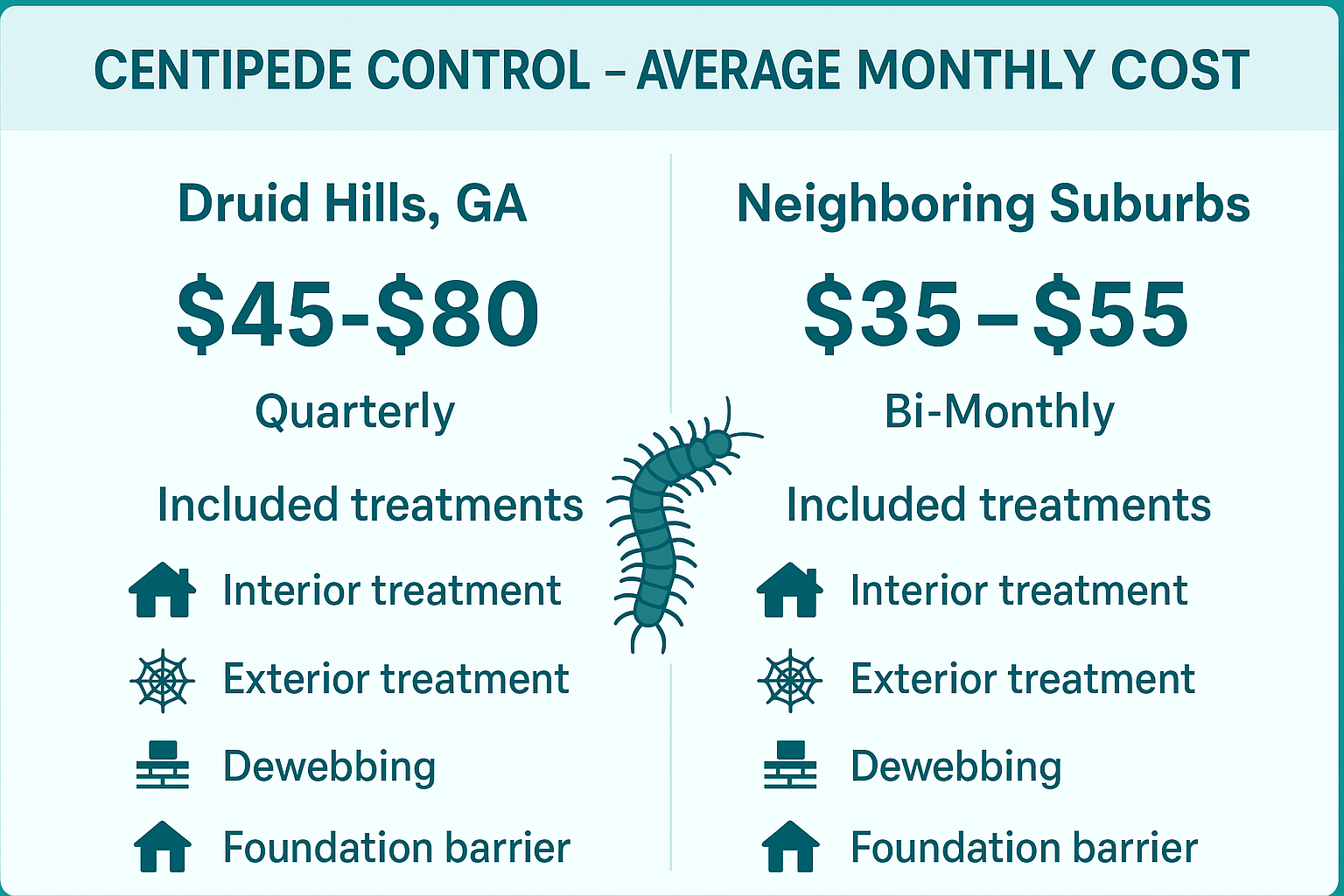
Understanding the price of centipede control helps you avoid surprise invoices and plan your budget wisely. In Druid Hills, the average cost per service ranges from $120 to $180, depending on the treatment type and frequency. Neighboring suburbs such as Decatur and Brookhaven typically sit a few dollars higher, reflecting differences in property size and local pest pressure. This infographic breaks down those monthly averages so you can see exactly where your dollars are going.
What Makes Up the Price?
The total cost of a centipede management program is a combination of three main components:
- Service Frequency: One‑time visits are the most affordable, but bi‑annual or annual plans spread the expense and often include follow‑up inspections.
- Treatment Type: Conventional liquid sprays cost less upfront, while perimeter barrier treatments or eco‑friendly options carry a premium for added safety and longer residual activity.
- Bundled Pest Packages: Many homeowners save 10‑15% by pairing centipede control with ant, roach, or mosquito services in a single contract.
Typical Service Contracts
Homeowners usually choose from three contract structures:
- One‑time Treatment: Ideal for immediate infestations. You pay the full service fee upfront, and the technician applies the chosen product.
- Bi‑annual Plan: Two visits per year—once in early spring and once in late summer—cover both the buildup and peak activity periods. This plan often includes a complimentary inspection for other common pests.
- Annual Comprehensive Package: Four to six visits, rotating between centipede control, general pest monitoring, and seasonal treatments (e.g., mosquito barrier in summer, tick prevention in fall). The annual package typically offers the best value per visit.
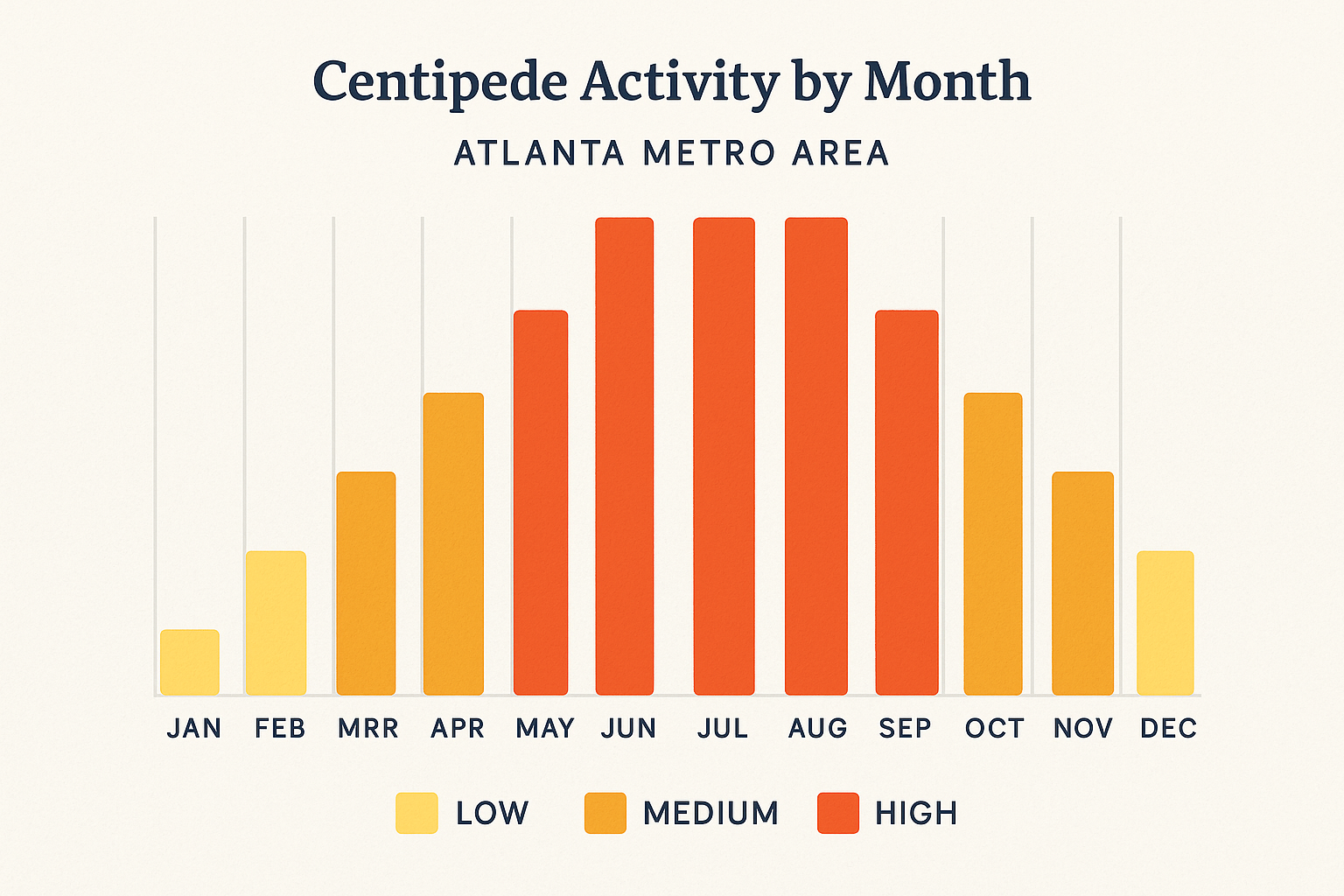
Monthly Centipede Activity Levels
The bar chart above visualizes centipede activity across the year in the greater Atlanta region. You’ll notice a sharp rise from May through September, with the highest counts in July and August. Warm, humid nights create the perfect environment for centipedes to hunt, so their numbers naturally swell during these months.
Why Early‑Season Treatment Pays Off
Targeting centipedes before the summer surge can dramatically reduce the number of insects that make it inside your home. An early‑season treatment—ideally in late March or early April—creates a protective barrier that interrupts the insects’ migration from the yard to your foundation. By the time May arrives, the barrier is already working, meaning fewer indoor sightings and less need for emergency follow‑ups later in the season.
Budgeting Tips for Homeowners
Here are three practical ways to stretch your pest‑control dollars without compromising effectiveness:
- Bundle Services: Combine centipede control with an ant or roach program to unlock bundled discounts.
- Schedule During Off‑Peak Months: Booking a one‑time treatment in February or October often yields lower labor rates, as technicians have lighter schedules.
- Leverage Referral Incentives: Anthem Pest offers a $25 credit for each neighbor you refer who signs up for a contract, reducing your net cost.
Get a Customized Quote
Every property is unique—square footage, landscaping, and construction type all influence the final price. The best way to know exactly what you’ll pay is to request a personalized quote. Our technicians will conduct a brief on‑site assessment, discuss your specific concerns, and tailor a treatment plan that fits both your pest‑control needs and your budget.
Ready to protect your Druid Hills home from centipedes? Call Anthem Pest at 877‑371‑8196 or visit anthempest.com to schedule your free inspection and receive a detailed estimate today.
Protect Your Home with Professional Centipede Control
Identifying centipedes early, recognizing their warning signs, and acting quickly are the cornerstones of keeping your Druid Hills home pest‑free. Prompt treatment prevents a small sighting from turning into a full‑blown infestation that threatens both comfort and safety.
Anthem Pest Control brings years of local expertise to every centipede job across Druid Hills and the greater Atlanta area. Our technicians are trained right here in Georgia, so they understand the habits of the species that invade our homes and the most effective ways to eliminate them.
We use only EPA‑approved products that are safe for families, pets, and the environment. Transparent pricing means you’ll know exactly what you’re paying for—no hidden fees, no surprise charges.
Ready for peace of mind? Schedule a free, no‑obligation inspection and receive a detailed quote. Call us at 877‑371‑8196 or visit our website to book online.
Taking the first step protects not just your property, but the health of everyone who lives there. Let Anthem Pest Control handle the hard work so you can enjoy a centipede‑free home.
Visit Anthem Pest Control