Spotting Cockroach Activity in Your Suwanee Home

In Suwanee’s humid climate, cockroaches can move in faster than you realize. Catching the problem early saves you money, limits health risks, and makes professional treatment far more effective. Below is a quick guide to help you spot the first signs before the infestation spreads.
Where Cockroaches Like to Hide
- Kitchen cabinets and pantry shelves – cracks, crevices, and food crumbs are a buffet.
- Bathrooms – under sinks, around the toilet base, and behind tile grout.
- Basements and crawl spaces – dark, damp areas near utility lines.
- Behind appliances – especially refrigerators, dishwashers, and stoves where heat and moisture converge.
Visual Clues You Can’t Miss
- Droppings: Tiny, pepper‑shaped specks that look like coffee grounds.
- Egg casings (oothecae): Light brown, oval shells often found in hidden corners.
- Faint oily streaks on countertops or cabinets, left by the cockroach’s waxy exoskeleton.
- Cockroach tracks: Dark, irregular lines near sinks, drains, or along baseboards where they’ve walked.
Behavioral Hints That Signal a Problem
- They are nocturnal – you’ll notice movement only when the lights go out.
- They are drawn to food residue and sugary spills left on surfaces.
- After a rainstorm, you may see an uptick in sightings as roaches seek dry shelter inside.
Health Risks of Ignoring the Signs
Beyond the unpleasant sight, cockroaches carry bacteria that can contaminate countertops, dishes, and food. Their shed skins and feces are potent allergens, often triggering asthma attacks and worsening allergy symptoms, especially in children and seniors.
Quick DIY Nightly Walk‑Through
- Turn on a bright flashlight and scan the kitchen and bathroom counters for droppings or oily streaks.
- Open cabinet doors and pull out the bottom shelf to check for egg casings.
- Inspect the area behind the refrigerator and dishwasher; use a flashlight to look into the gaps.
- Look at baseboards and under sinks for dark tracks or small, dark specks.
- Note any sightings and the exact location – this information helps a professional target treatment.
Detecting these signs early lets Anthem Pest Control design a focused, cost‑effective plan. For detailed pricing on cockroach control in Suwanee, see our Cockroach Control Cost Guide.
How Seasons Shape Cockroach Activity in Suwanee
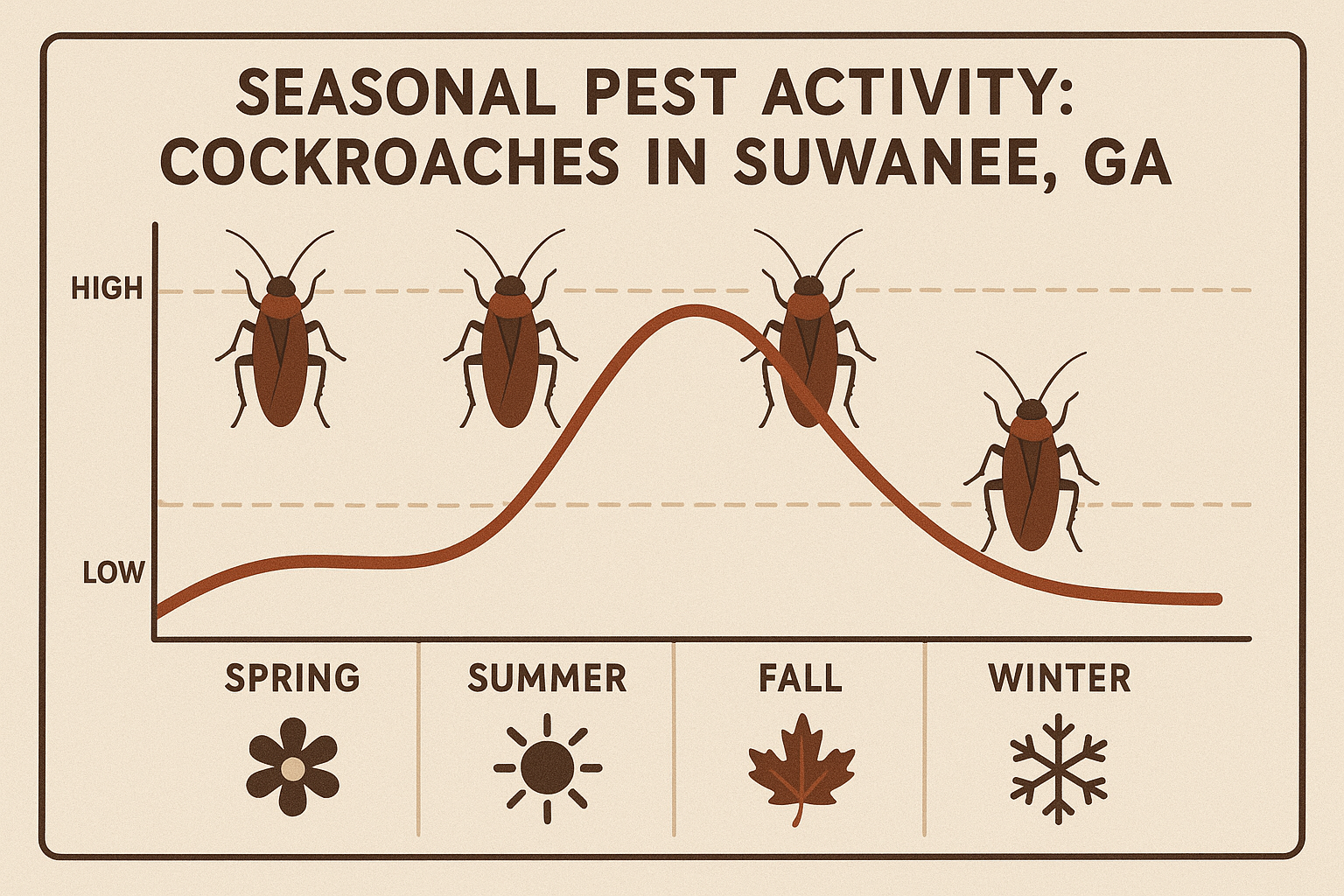
Suwanee’s humid subtropical climate—warm summers, mild winters, and plenty of rain—creates an almost perfect cocktail for cockroaches. The combination of heat and moisture speeds up their life cycle, while the region’s frequent thunderstorms provide the moisture they love to hide in. Understanding how each season influences their behavior helps you time inspections and treatments for maximum impact.
Spring: Awakening and Breeding
As temperatures climb above 68°F (20°C), cockroaches emerge from winter hideouts in wall voids, crawl spaces, and yard debris. The longer daylight and increased humidity trigger a surge in breeding; a single female can produce dozens of egg cases in just a few weeks. Homeowners should schedule a thorough inspection in early spring to catch these early colonies before they spread.
Summer: Peak Activity
Summer brings the highest activity levels. Heat accelerates development, and high humidity (often above 70%) creates ideal conditions for feeding and mating. Indoor humidity control becomes crucial—use dehumidifiers, fix bathroom and kitchen leaks, and run exhaust fans. A mid‑summer treatment targets the largest populations before they become entrenched.
Fall: Indoor Migration
When nights grow cooler, roaches start seeking the warmth of homes. They slip through cracks around doors, windows, and utility openings. Sealing these entry points in early fall reduces the number that can migrate inside. An end‑of‑season inspection helps identify any new entryways and removes lingering outdoor colonies.
Winter: Survival Mode
Cold outdoor temperatures slow cockroach activity dramatically, but survivors persist in heated spaces—kitchens, basements, and laundry rooms. Even in winter, a quick visual check for droppings or egg cases can reveal hidden pockets that will explode once temperatures rise again.
Aligning Inspections with Seasonal Peaks
Use the infographic above as a calendar: schedule a professional inspection in early spring, a treatment in midsummer, a seal‑up and follow‑up in fall, and a light check in winter. This rhythm keeps populations from building momentum.
Practical Seasonal Maintenance Tips
- Declutter: Reduce hiding places by storing boxes off the floor and clearing out cardboard.
- Fix leaks: Repair dripping faucets, roof leaks, and gutter overflows promptly.
- Rotate pantry items: Use older food first and keep dry goods in sealed containers.
- Ventilate: Run exhaust fans in bathrooms and kitchens to lower indoor humidity.
- Seal gaps: Apply caulk around baseboards, pipe penetrations, and window frames.
Mapping High‑Risk Zones in a Suburban Neighborhood
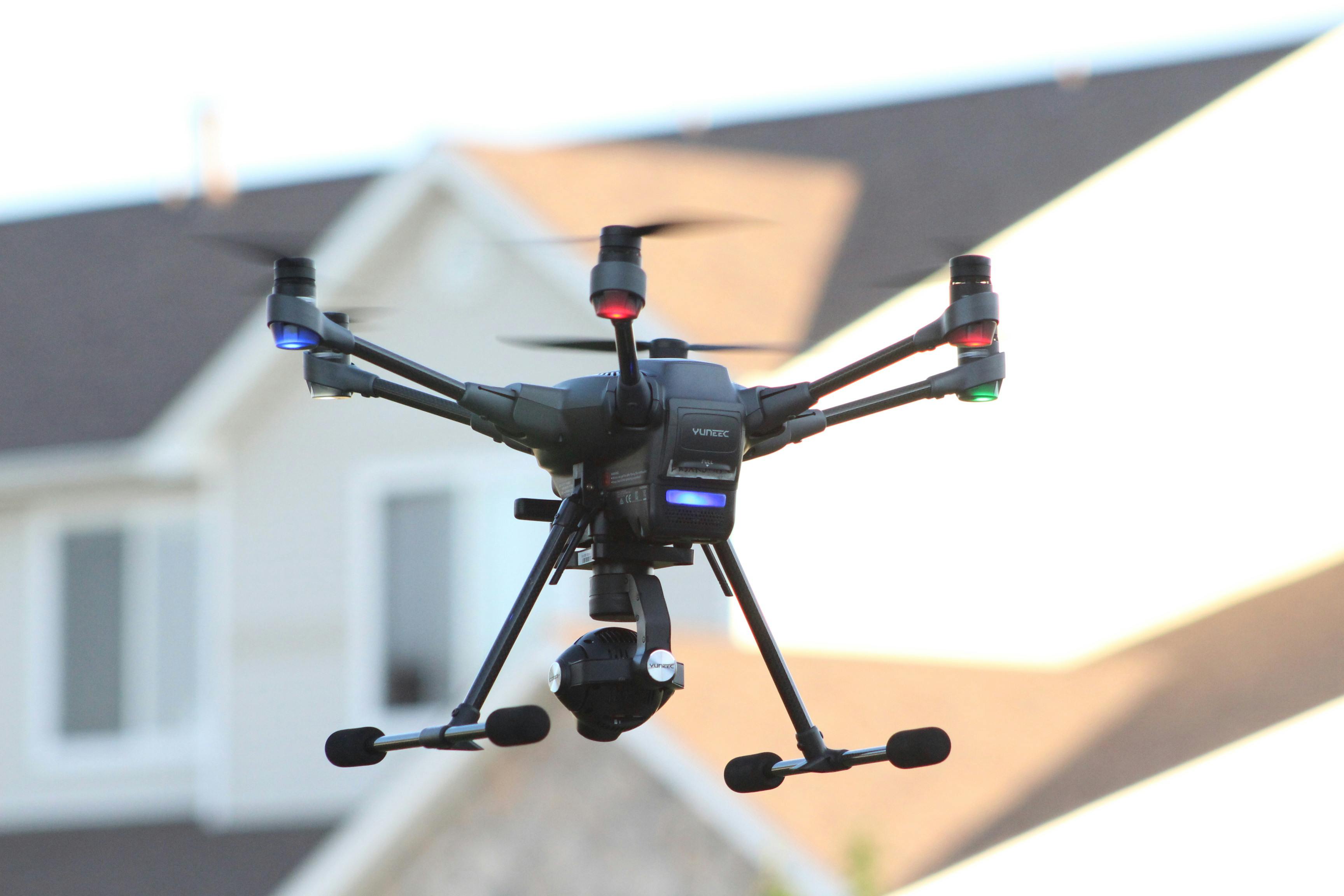
In Suwanee’s leafy subdivisions, cockroach activity rarely spreads at random. Instead, it clusters around specific “hot spots” that share food, moisture, or shelter. Understanding these zones helps you and your pest‑control professional target treatment where it matters most.
Common High‑Risk Zones
- Garbage collection points: Trash cans left near sidewalks or in shared dumpsters provide a steady buffet for roaches.
- Dense vegetation: Overgrown shrubs, mulch beds, and leaf piles retain moisture and hide cracks where roaches can hide.
- Older homes with cracks: Settling foundations, gaps around windows, and worn siding act as doorways for insects.
- Multi‑unit complexes: Shared walls, laundry rooms, and common parking areas create interconnected pathways for infestations.
Why an Aerial View Helps
Looking at a satellite or drone image of your block reveals patterns that ground‑level inspections can miss. Clusters of homes bordering a vacant lot, a storm‑drain, or a communal garden often share the same water runoff or waste pathways—prime conduits for cockroach movement. Spotting these clusters lets a technician prioritize zones that could seed neighboring houses.
Landscaping, Lighting, and Pet Food
Even well‑kept yards can invite roaches. Over‑watering creates damp soil, while low‑lying outdoor lights attract insects that roaches later follow indoors. Pet food left outdoors overnight becomes a nightly banquet. Simple tweaks—such as moving feeders indoors after dusk and trimming vegetation away from foundations—cut down on the allure.
Assessing Your Property’s Position
Ask yourself:
- Am I within 20 feet of a vacant lot or an unpaved drainage ditch?
- Do I share a wall with a home that has visible cracks or frequent pest sightings?
- Is my garden’s irrigation system leaking or pooling water near the foundation?
If the answer is “yes,” you’re likely on the edge of a high‑risk zone and should schedule a proactive inspection.
Collaborating with Neighbors
Roach control works best as a community effort. Organize a quarterly “pest‑watch” meeting, share inspection findings, and coordinate treatment dates so that neighboring homes are treated simultaneously. When everyone trims hedges, secures trash, and removes standing water, the entire block becomes less attractive to roaches—making your home’s defense far more effective.
Comparing Cockroach Control Prices in Suwanee and Nearby Cities
Why Prices Differ
Even within a single county, the cost of professional cockroach control can swing noticeably. The main drivers are the scope of service (single‑visit treatment vs. ongoing monitoring), the frequency of follow‑up visits, and the local market dynamics that affect labor and material costs. Homeowners in Suwanee often see a slightly higher median price because the area’s higher property values support a more robust service package, while neighboring towns may offer leaner options to stay competitive.
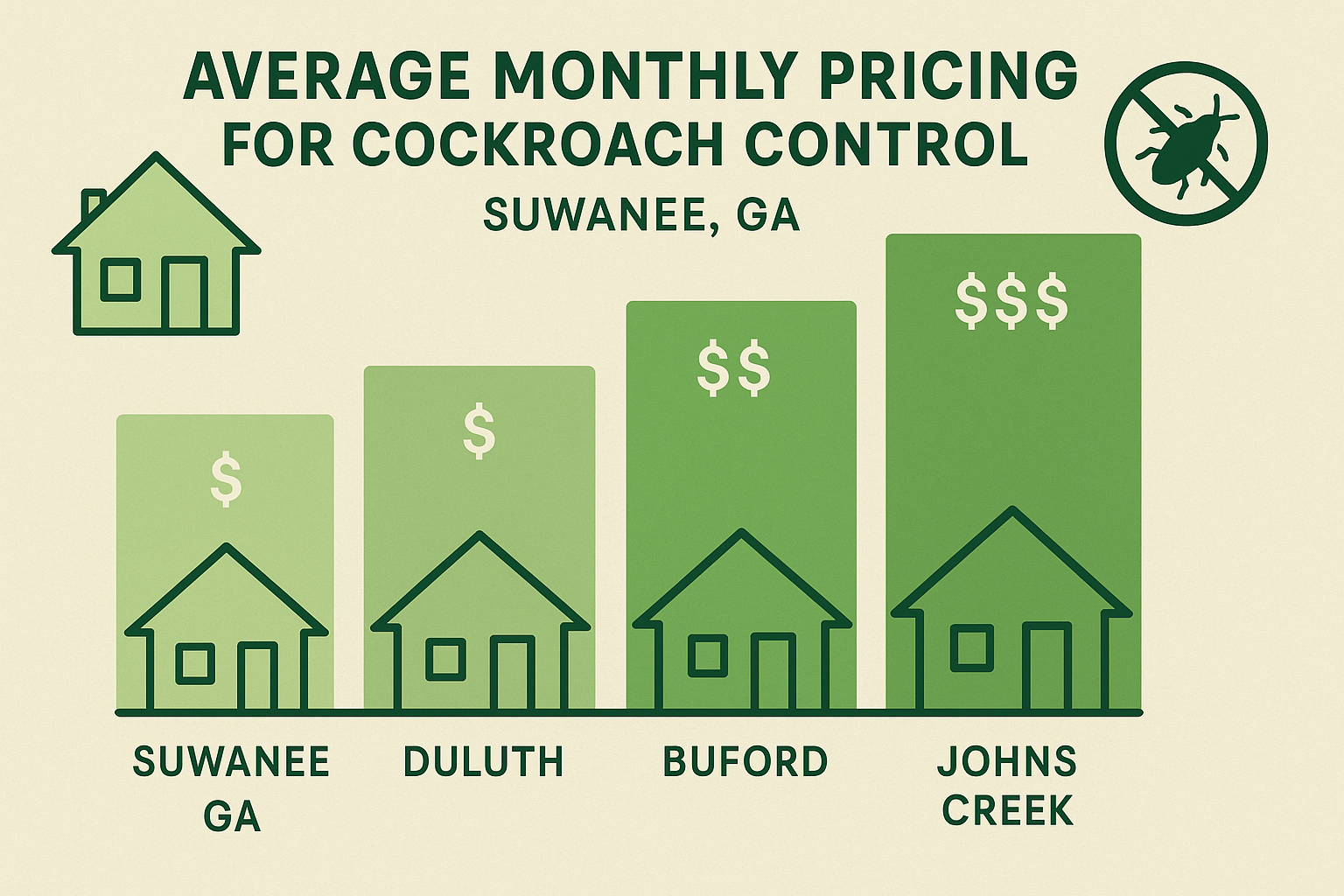
Average Monthly Costs – Bar‑Chart Overview
What the Numbers Tell Us
According to the chart, Suwanee’s median monthly cost sits at $119, nudging just above Duluth’s $112 and noticeably higher than Norcross’s $104. Lawrenceville trails at $98, reflecting a more budget‑oriented market. Higher costs in Suwanee are often linked to:
- Comprehensive initial inspections that map out infestation hotspots.
- Use of low‑dose, long‑lasting gel baits that require professional placement.
- Extended warranty periods that cover re‑treatments for up to a year.
Conversely, lower‑priced packages in surrounding cities may skip some of these extras, focusing on a single spray session without a guaranteed follow‑up.
What’s Inside a Typical Professional Package?
- Inspection: A thorough visual and trap assessment to identify species and activity levels.
- Initial Treatment: Targeted application of insecticide dusts, sprays, or gel baits in cracks, crevices, and entry points.
- Follow‑Up Visits: Usually 1–3 visits over 30‑60 days to ensure the colony is fully suppressed.
- Warranty & Monitoring: Guarantees that re‑treatment is free if cockroaches return within the warranty window, often paired with a monitoring plan.
Evaluating Cost‑Effectiveness
When comparing quotes, look beyond the upfront number. A $100 plan that only includes a single spray may save you money today but could cost more in repeat visits later. A $120‑$130 package that bundles inspection, multiple follow‑ups, and a one‑year warranty typically delivers a better return on investment because it reduces the likelihood of recurring infestations.
Reminder: Request a free, customized quote from an Anthem Pest expert in Suwanee. A tailored estimate will clarify exactly which services are included, helping you make a confident, cost‑effective decision.
Professional Treatment Options and What to Expect
Common Treatment Modalities
When a cockroach infestation takes hold, DIY sprays rarely reach the hidden nests where the real damage occurs. Professional technicians rely on a suite of proven tools:
- Gel baits – a sweet, slow‑acting gel placed in cracks and along travel paths. Cockroaches ingest the poison and share it with the colony.
- Dust formulations – silica‑based or boric‑acid powders that cling to surfaces, drying out exoskeletons and killing nymphs that crawl through them.
- Perimeter sprays – EPA‑approved residual sprays applied around the home’s exterior and in high‑traffic indoor zones to create a protective barrier.
- Integrated Pest Management (IPM) plans – a coordinated approach that blends baits, dusts, sprays, sanitation advice, and ongoing monitoring for long‑term control.
Targeting Every Life Stage
Each method attacks a different part of the cockroach life cycle. Gel baits are most effective against adult roaches that forage for food, while the poison they carry spreads to hidden nymphs and eggs. Dusts settle in wall voids and under appliances, where they contact nymphs emerging from egg cases. Perimeter sprays deter new adults from entering the home, cutting off reinfestation before it starts. An IPM plan stitches these tactics together, ensuring no stage is left untouched.
Safety First
Anthem Pest Control uses only EPA‑registered products that meet strict toxicity standards. Technicians apply treatments in a way that protects:
- Families – low‑residue gels and dusts are placed out of reach of children.
- Pets – products are pet‑safe when applied according to label directions, and technicians avoid direct contact with food‑prep surfaces.
- Food preparation areas – baits are positioned behind appliances or under cabinets, never on countertops or cooking surfaces.
All applicators are fully trained, wear protective gear, and provide a clear safety briefing before leaving the site.
Typical Service Flow
- Initial inspection – a certified technician surveys the property, identifies hot spots, and determines the infestation level.
- Customized treatment plan – based on the inspection, a mix of gels, dusts, and sprays is selected to match the specific species and entry points.
- Application – targeted treatments are placed, and the homeowner receives guidance on any short‑term precautions.
- Follow‑up visits – usually 1‑2 weeks later, technicians check bait consumption, reapply dust where needed, and adjust the strategy.
- Monitoring – optional sticky traps or electronic monitors are left in place to verify that the population stays suppressed.
Timeline for Results
Most homeowners notice a drop in activity within 3‑5 days as adults consume the bait. Full eradication, including the elimination of eggs and nymphs, typically takes 2‑4 weeks with a complete IPM program. If activity persists after the final follow‑up, a re‑treatment is scheduled to target any survivors.
When to Consider Re‑treatment or Maintenance
Seasonal spikes—especially in warm, humid months—can bring new roaches from outside. A maintenance contract, with quarterly inspections and preventive applications, keeps the barrier strong and reduces the chance of a resurgence. Homeowners should also call for re‑treatment if they spot fresh droppings, shed skins, or a sudden increase in sightings.
Why Choose Anthem Pest Control?
Anthem is a fully licensed and insured provider with technicians trained in the latest EPA‑approved techniques. Our transparent pricing means you know exactly what each step costs, and our local expertise in Suwanee, GA, ensures we understand the specific challenges of the area. By partnering with Anthem, you gain a proactive partner who not only eliminates the current infestation but also builds a long‑term shield against future cockroach invasions.
Secure a Cockroach‑Free Home with Anthem Pest Control
Early detection, seasonal timing, and transparent pricing form the backbone of effective cockroach control. Spotting the first signs—such as droppings, egg casings, or a sudden increase in activity—allows you to intervene before a full‑blown infestation takes hold. Acting during spring and summer, when roaches are most active, maximizes the potency of treatments. And understanding the cost structure—from the initial inspection to any follow‑up visits—prevents surprise expenses and keeps the plan on track.
- Detect early: Small sightings are a warning; don’t wait for a massive problem.
- Season matters: Spring‑summer treatments hit roaches when they’re breeding.
- Know the price: Transparent, upfront quotes let you budget with confidence.
Anthem Pest Control brings local expertise to Suwanee, GA, backed by certified technicians who prioritize safety, effectiveness, and affordability. Our team tailors each plan to your home’s layout, using EPA‑approved products that protect your family and pets while eliminating roaches at their source. Because we believe in clear communication, every service begins with a free, no‑obligation quote and a pricing model you can see before any work starts.
If you’ve noticed any of the signs discussed—or simply want the peace of mind that comes from a professional assessment—our certified technicians are ready to help. Give us a call at 877‑371‑8196 for your complimentary quote.
Take the next step toward a cockroach‑free home today. Visit Anthem Pest Control and let our experts protect your space.