Introduction to Cockroach Challenges in Vinins
Vinings, Georgia, sits in a humid subtropical zone where warm summers and mild winters create a perfect breeding ground for cockroaches. The neighborhood’s mix of older homes, new townhouses, and dense foliage means moisture and food sources are never far from a roach’s reach. Even a single crack in a foundation or a leaky faucet can become a highway for these resilient insects.
Because cockroaches multiply quickly—an adult female can produce up to 400 eggs in a single ootheca—early detection is critical. Left unchecked, a small sighting can explode into a full‑blown infestation that threatens both health and property. Their shed skins, droppings, and the allergens they carry can trigger asthma attacks, especially in children and seniors. Moreover, the foul odor and unsightly droppings can damage countertops, cabinets, and even the structural integrity of wood.
Anthem Pest Control understands the urgency. Our 24‑hour response line (877‑371‑8196) is staffed by local technicians who know Vinings’ unique pest pressures. When you call, you’re connected to a team that can dispatch a specialist within hours, assess the situation, and begin targeted treatment before the problem spreads.
In the sections that follow, we’ll walk you through everything you need to know: how to identify the most common cockroach species in Vinings, the health risks they pose, and the treatment options that Anthem Pest offers—from fast‑acting sprays to eco‑friendly baits. We’ll also break down the typical costs you can expect and share practical prevention tips to keep your home cockroach‑free year after year.
Why Vinings Is a Hotspot for Cockroach Infestations
Vinings sits in the heart of Georgia’s humid subtropical zone, which means long, muggy summers and relatively mild winters. Cockroaches thrive when moisture is abundant, and the region’s average summer humidity regularly climbs above 70 %. That damp environment keeps roaches active well into the night, allowing them to reproduce quickly and spread throughout homes.
Dense Residential Development Amplifies the Problem
The neighborhood’s rapid growth has packed single‑family homes, townhouses, and condominiums onto a relatively small footprint. Tight spacing between structures creates a network of hidden pathways—utility lines, crawl spaces, and shared landscaping—that roaches use to move from one property to the next. When one house harbors an infestation, the likelihood of neighboring homes becoming contaminated rises dramatically.
Statistical Backing
According to a 2024 CDC/NPMA report, Georgia ranks among the top 5 states for indoor cockroach sightings. The study surveyed over 12,000 households nationwide and found that more than 22 % of Georgia residents reported seeing roaches inside their homes during the past year—well above the national average of 14 %.
A Typical Vinings Kitchen—A Roach Magnet
Picture a typical Vinings kitchen: a countertop with a few stray crumbs, a pet water bowl left out overnight, and a sink that occasionally drips. Those tiny food particles and standing water act like a neon sign for cockroaches. Even a single slice of pizza crust can sustain a small colony, while the moisture from a leaky faucet provides the perfect breeding ground. Homeowners often underestimate how quickly a few crumbs can turn a kitchen into a thriving roach habitat.
Species That Flourish Here
The climate and home conditions in Vinings favor several common species. The American cockroach (Periplaneta americana) prefers warm, damp basements and utility tunnels. The German cockroach (Blattella germanica) excels in kitchen cabinets and pantry shelves, where food residues linger. Finally, the brown‑banded cockroach (Supella longipalpa) thrives in the cracks and crevices of newer construction. Each of these pests exploits the same environmental advantages—humidity, mild temperatures, and abundant food—that Vinings offers.
Common Cockroach Species Found in Vinings
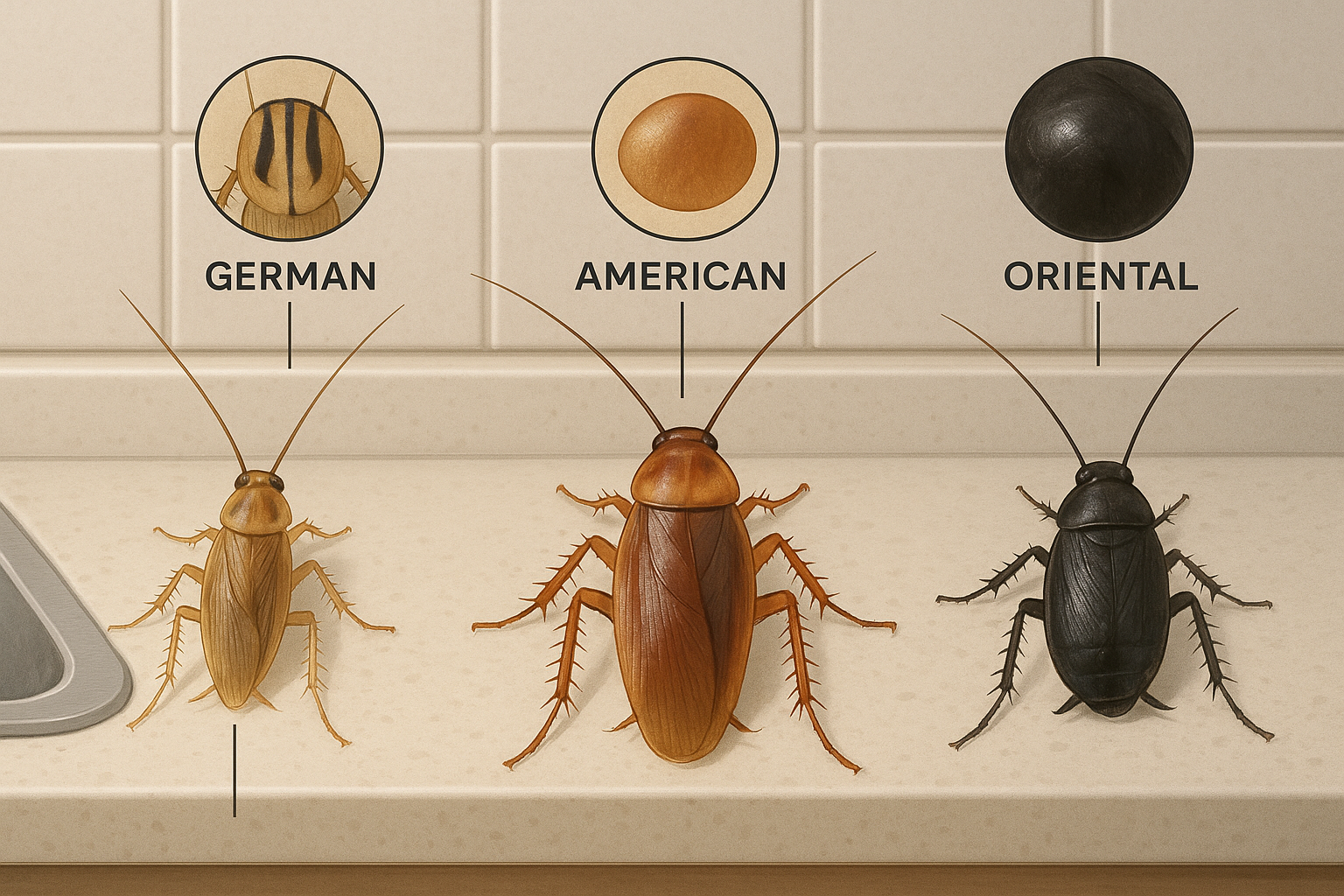
Vinings homeowners most often encounter three cockroach species, each with its own habits and look. Knowing which intruder you’re dealing with helps you choose the right treatment faster and prevents a small sighting from turning into a full‑blown infestation.
German Cockroach
The German cockroach is the tiniest of the trio, measuring about ½ inch in length. Its body is a light tan color with a glossy sheen, and you’ll notice two dark, parallel stripes across the pronotum (the shield‑like segment behind the head). These roaches love warm, humid environments and are most commonly found in kitchens—especially around food prep areas, pantries, and behind appliances. Their rapid breeding cycle means a few hidden individuals can quickly become a swarm.
American Cockroach
Often called the “water bug,” the American cockroach can grow up to 1½ inches, making it the largest household species in Vinings. Its coloration is a reddish‑brown body with a yellowish underside. This species prefers cooler, damp locations such as basements, crawl spaces, drains, and sewer lines. You’ll typically see them scurrying at night, emerging from cracks in foundation walls or along pipe penetrations.
Oriental Cockroach
The Oriental cockroach sports a dark brown to black hue and measures roughly ¾ inch. Unlike the German, it thrives in cool, damp environments like garages, crawl spaces, and shaded outdoor areas. Because they favor lower temperatures, you’ll often find them congregating near leaky pipes, basements, or under sinks. Their slower movement and nocturnal habits can make them easy to miss until they’re already established.
Quick Identification Tips
- Habitat: Kitchen = German; Basement/drains = American; Cool, damp = Oriental.
- Color: Light tan with dark stripes = German; Reddish‑brown = American; Dark brown/black = Oriental.
- Size: Small (½ in) = German; Large (up to 1½ in) = American; Medium (¾ in) = Oriental.
One Vinings homeowner, Sarah L., recalls the moment she first spotted a German cockroach in her pantry. “I was reaching for a box of cereal and saw a tiny, tan bug dart away. I thought it was a fruit fly at first, but the two dark stripes on its back gave it away. Within a week, I found a few more in the same spot, and that’s when I called Anthem Pest. Their quick assessment and targeted treatment stopped the invasion before it spread to the rest of the house.”
Health Risks and EPA Safety Guidelines
Allergens and Asthma Triggers
Every time a cockroach sheds its skin, leaves behind feces, or secretes saliva, microscopic particles drift into the air. Those particles are potent allergens that can cling to clothing, furniture, and even the walls of your home. The Centers for Disease Control and Prevention reports that “cockroach allergens contribute to 30 % of asthma cases in children under 12.” For a family with a young child, that statistic translates into frequent wheezing, nighttime coughs, and emergency‑room visits—all linked to a hidden roach problem.
Bacterial Contamination Risks
Cockroaches are indiscriminate eaters. They crawl through garbage, sewage, and pet waste, picking up pathogens like Salmonella and E. coli. When they later wander onto countertops, dishes, or food storage areas, they deposit these bacteria, turning a simple kitchen snack into a potential food‑borne illness. The result can be anything from a mild upset stomach to a serious gastrointestinal infection, especially dangerous for seniors, infants, or anyone with a weakened immune system.
EPA Indoor Pest Control Standards
The U.S. Environmental Protection Agency (EPA) publishes an Indoor Pest Control Fact Sheet that outlines which active ingredients are permitted for use inside homes and the strict residue limits that must not be exceeded. Approved chemicals such as bifenthrin, chlorpyrifos‑free pyrethrins, and silicon‑based gels have been evaluated for human safety when applied correctly. The fact sheet also mandates a minimum waiting period—often 2 to 4 hours—before re‑entering treated areas, ensuring that any lingering residue falls well below the EPA’s toxicological thresholds.
Why Professional Application Matters
When Anthem Pest Control steps in, we follow the EPA’s guidelines to the letter. Our technicians are trained to measure exact dosages, apply products only to target zones, and document each treatment for compliance. This precision reduces the risk of over‑application, protects pets and children from accidental exposure, and guarantees that residue levels remain within the EPA’s safe limits. In short, a professional job not only eliminates the roach infestation but also safeguards the health of every household member—something a DIY spray can’t reliably promise.
Inspection and Early Detection Checklist
Detecting a cockroach problem before it spreads is the smartest move any Vinings homeowner can make. Follow this simple, step‑by‑step checklist the next time you walk through your house, and you’ll spot the tell‑tale signs that a treatment is needed.
What to look for
- Droppings: Small, dark specks that resemble coffee grounds. They often appear in cabinets, under appliances, and along baseboards.
- Egg cases (oothecae): Oval, brown‑ish capsules that contain 30‑40 eggs. They are usually tucked in cracks, behind wall voids, or in the backs of refrigerators.
- Shed skins: Transparent or brown exoskeletons left behind as roaches molt. Look in hidden corners, under sinks, and in pantry shelves.
- Live sightings: Even a single adult roach at night is a red flag. They tend to hide in warm, damp places, so check under the dishwasher, around the bathtub, and in garbage areas.
Tools you’ll need
- Flashlight (a bright LED works best for spotting droppings in dark corners).
- Magnifying glass (helps identify tiny oothecae and shed skins).
- Sticky traps (place a few in high‑risk zones to confirm activity).
Anthem Pest’s inspection process
When you call Anthem Pest, our certified technicians bring the same tools you’d use—plus a few extras. First, they sweep each room with a high‑intensity flashlight, paying special attention to moisture‑prone areas such as kitchens, bathrooms, and laundry rooms. Next, they set up disposable sticky traps in strategic spots and leave them for 24‑48 hours to capture any roaming insects.
While the traps work, the technician conducts a moisture assessment, because cockroaches thrive in damp environments. They check for leaky pipes, condensation on windows, and standing water in pet dishes. Any identified moisture source is noted for immediate remediation, which dramatically reduces the likelihood of reinfestation.
Real‑world example from Vinings
Last spring, a homeowner in Vinings called Anthem after a neighbor mentioned seeing a few roaches near the back patio. Our inspector arrived within the hour, performed the full checklist, and discovered a cluster of oothecae hidden behind the kitchen cabinet base. Moisture from a slow‑dripping faucet under the sink had created an ideal breeding ground.
Because the problem was caught early, we applied a targeted, low‑dose gel in the exact entry points and repaired the faucet on the spot. The sticky traps placed that day captured three adult roaches, confirming the treatment’s success. A follow‑up visit two weeks later showed no new activity, and the family could enjoy a roach‑free home for the rest of the season.
By using this checklist regularly—especially after heavy rains or during the warm months—you’ll give Anthem Pest the information it needs to act fast and keep your Vinings home pest‑free.
Treatment Options for Cockroach Control
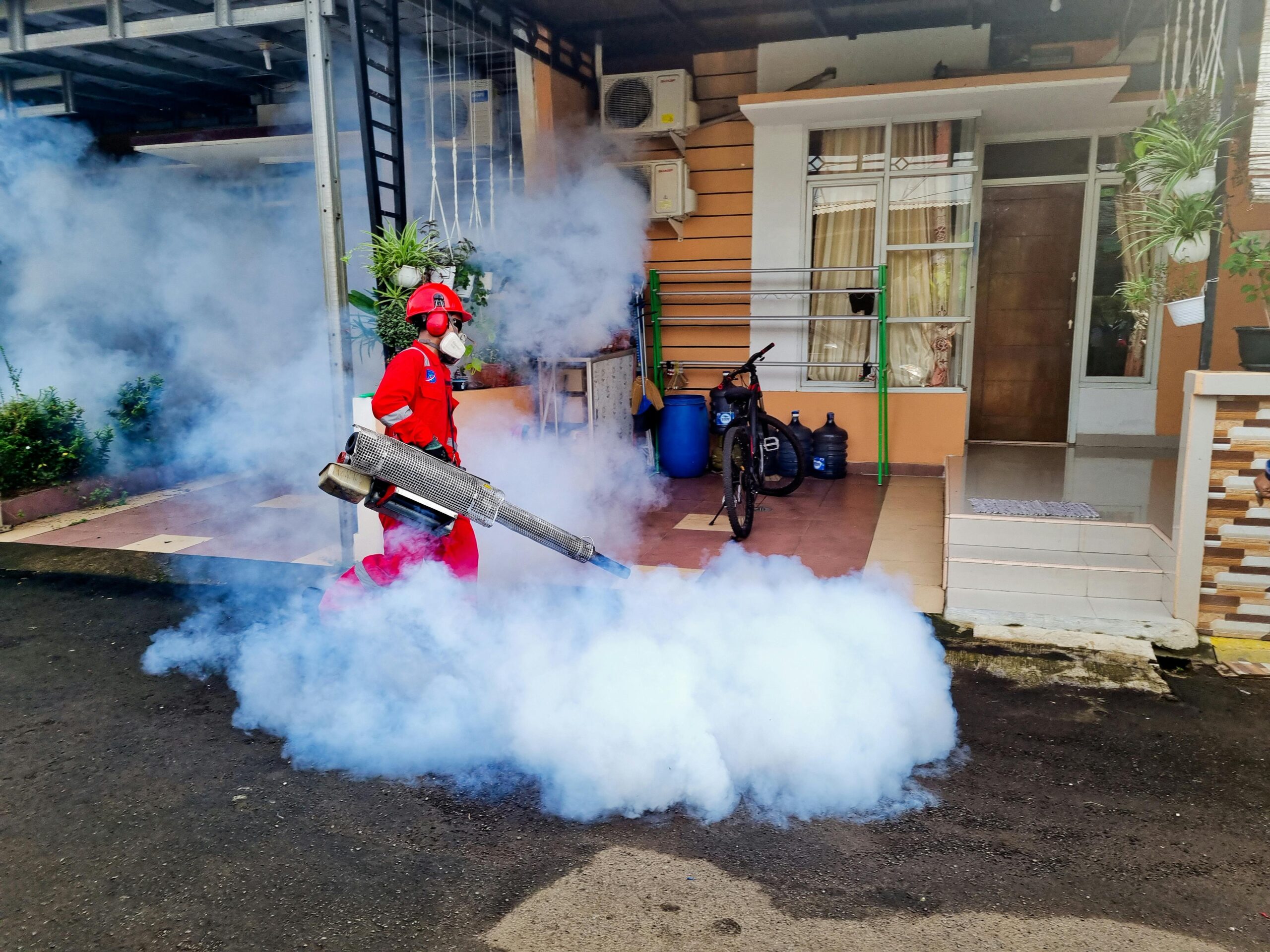
When roaches start making a home in your kitchen or bathroom, the right treatment can make the difference between a quick fix and a long‑term battle. Below, we break down the three most common approaches—chemical sprays, bait stations, and Integrated Pest Management (IPM)—and show how Anthem Pest blends them with low‑toxicity products to keep your family safe.
Chemical Sprays
Fast‑acting residual sprays are the classic “spray‑and‑go” solution many homeowners expect. These products are EPA‑approved and typically contain pyrethroids or boric acid, which knock down roaches on contact and leave a lingering barrier that kills newcomers for weeks. Because the chemicals cling to cracks, baseboards, and voids, you’ll often see a noticeable drop in activity within 24‑48 hours.
While effective, sprays must be applied carefully. Over‑application can lead to resistance, and improper placement may expose pets or children to unnecessary risk. That’s why professional applicators—like Anthem’s technicians—use calibrated equipment and target only the areas where roaches hide, reducing overall chemical load.
Bait Stations
Bait stations work on a different principle: they attract roaches with a food‑grade attractant, then deliver a slow‑acting toxin that the insects carry back to their nest. Proper placement is critical; the best spots are kitchen corners, behind appliances, and near garbage disposals—places roaches frequent but humans rarely touch.
- Place stations 1–2 feet apart along walls.
- Rotate stations every 4–6 weeks to maintain potency.
- Monitor and replace any stations that become empty or contaminated.
A 2022 study by the National Pest Management Association (NPMA) found that strategically placed bait stations achieved an 85 % reduction in cockroach populations within two weeks, making them a powerful tool for both immediate knock‑down and ongoing control.
Integrated Pest Management (IPM)
IPM is a holistic, science‑based framework that combines sanitation, exclusion, and targeted treatments. First, homeowners eliminate food and water sources by cleaning crumbs, fixing leaks, and storing food in sealed containers. Next, exclusion focuses on sealing cracks, repairing screens, and installing door sweeps to block entry points.
Finally, targeted treatments—whether a low‑toxicity spray or a bait station—are applied only where monitoring indicates activity. This layered approach not only reduces the number of chemicals used but also tackles the root causes of infestation, leading to lasting results.
Anthem Pest’s Low‑Toxicity Approach
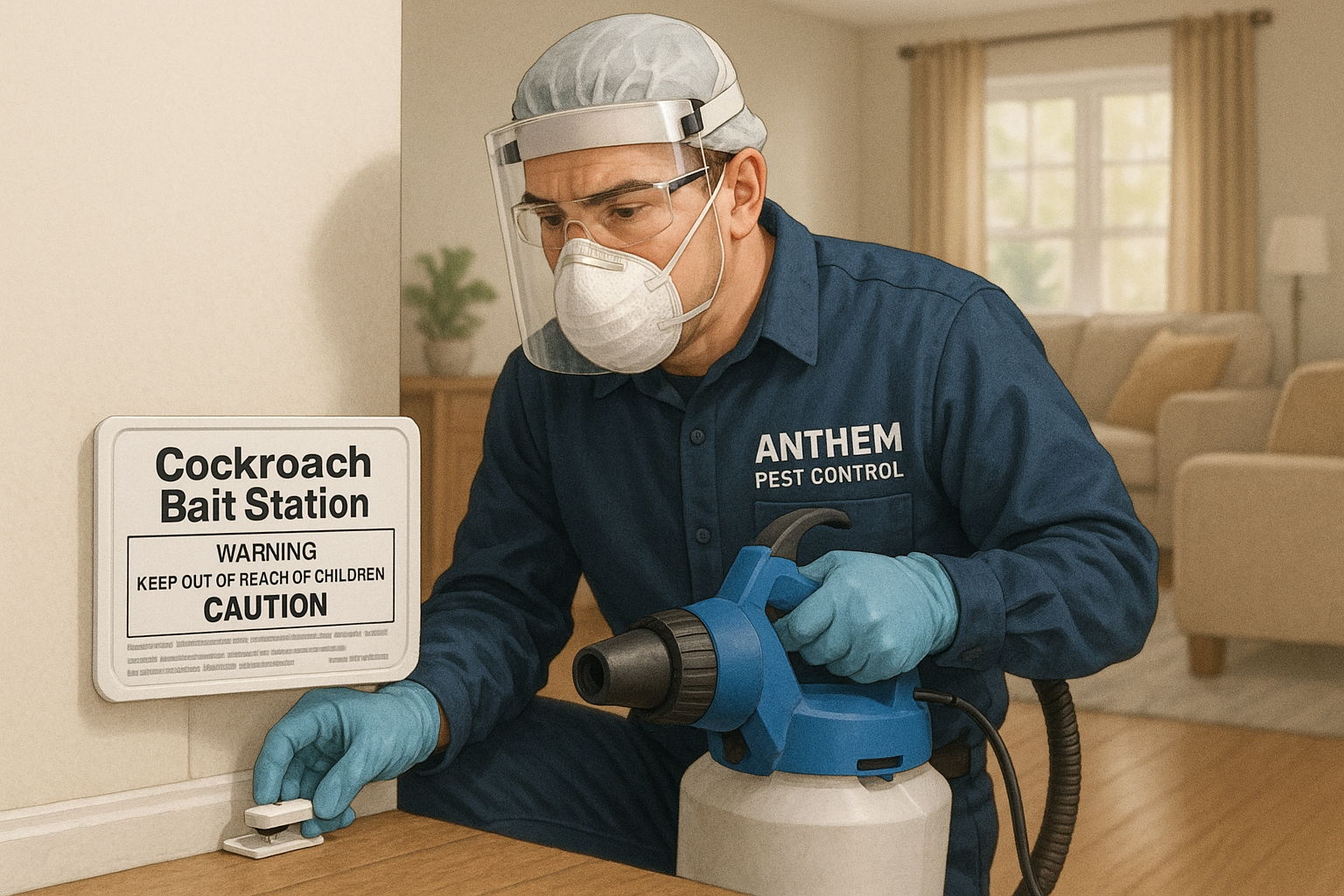
Anthem Pest distinguishes itself by prioritizing products that are both effective and safe for families and pets. Our technicians favor boric‑acid‑based sprays and food‑grade baits that meet strict EPA standards while delivering rapid knock‑down. Before any treatment, we conduct a thorough inspection to map roach pathways and identify the most vulnerable entry points.
Safety protocols include wearing protective gear, using applicators that limit drift, and clearly labeling treated areas. After the initial visit, we schedule a follow‑up monitoring appointment to assess efficacy and adjust the plan if needed—ensuring that the roach population stays suppressed without resorting to harsh chemicals.
| Method | Speed of Action | Typical Use | Safety Notes |
|---|---|---|---|
| Chemical Sprays | Immediate (24‑48 hrs) | Spot treatments in cracks, baseboards, and voids | Apply by professionals; keep children/pets away until dry |
| Bait Stations | 1–2 weeks for noticeable reduction | Strategic placement in kitchens, bathrooms, and dark corners | Low‑risk; replace regularly and monitor for contamination |
| Integrated Pest Management | Variable; builds over weeks | Combination of sanitation, exclusion, and targeted treatments | Minimizes chemicals; safe for pets and children when followed correctly |
Cost Overview for Vinings Residents
When it comes to cockroach control, Vinings homeowners want clear, upfront pricing so they can budget confidently. At Anthem Pest Control, we break down each service into easy‑to‑understand price bands, eliminating surprise fees and helping you compare options side by side. Below is a snapshot of the most common packages we offer in the Vinings area.
- Basic single‑unit treatment: $120 – $180 per targeted area (e.g., kitchen cabinet, bathroom vanity).
- Full‑home Integrated Pest Management (IPM) package: $250 – $350, which includes a thorough inspection, bait placement, and a follow‑up visit.
- Quarterly maintenance plans: $80 – $120 per visit, designed to keep populations low year‑round.
The single‑unit option is perfect for a localized outbreak—think a pantry drawer that’s become a roach hotspot. Our technicians apply a focused spray or gel, then seal entry points, delivering rapid knock‑down without treating the entire house. The full‑home IPM package is a more comprehensive approach; it starts with a detailed inspection to map activity, follows with strategically placed baits, and ends with a post‑treatment check to ensure the problem is truly eradicated.
Regular quarterly visits are the most cost‑effective way to stay ahead of reinfestations, especially in multi‑unit homes or properties with high foot traffic. Each visit typically includes a quick visual sweep, bait refresh, and any needed adjustments to existing treatments, keeping the overall expense well below the cost of a full‑scale emergency service later in the year.
What Drives the Final Cost?
- Infestation severity – heavier populations require more product and labor.
- Square footage – larger homes need additional bait stations and longer service times.
- Treatment type – gel, spray, dust, or a combination influences material costs.
- Seasonality – peak summer months can affect pricing due to higher demand.
For example, a modest 1,800‑square‑foot home with a moderate roach count may fall at the lower end of the $250‑$350 IPM range, while a larger 3,000‑square‑foot property with multiple hot spots could approach the upper limit. Likewise, a severe infestation that spreads to walls, cabinets, and plumbing voids often pushes the single‑unit price toward $180 because more product and repeat visits are required.
We always recommend confirming any quote with a local Vinings provider. Ask for a written estimate that itemizes inspection fees, product costs, and labor. Additionally, the EPA’s consumer cost guide provides national benchmarks that can help you gauge whether a price is fair for your area. Transparency builds trust, and with Anthem Pest Control you’ll know exactly what you’re paying for and why.
DIY Prevention Tips for Homeowners
You don’t always need a service truck to keep cockroaches out. A few inexpensive, everyday actions can block the pathways roaches use and make your kitchen far less inviting.
Seal and Fix Moisture Sources
- Caulk cracks in baseboards, windows, and under‑sink cabinets. Even a 1‑mm gap lets a roach slip through.
- Repair leaky pipes and wipe away any standing water. Roaches can live weeks without food but need water every few days.
Don’t forget to inspect the exterior foundation and any crawl
Why Choose Anthem Pest for Cockroach Control
Living in Vinings means enjoying beautiful neighborhoods, but it also brings the occasional unwelcome guest—cockroaches. Anthem Pest knows the layout of Vinings, West Cobb, Marietta, and the surrounding subdivisions like the back of a hand. Our technicians are your neighbors; they understand the construction styles, landscaping habits, and seasonal patterns that influence pest activity in this part of Cobb County. That local insight lets us target infestations where they hide, rather than guessing. We regularly service Glenridge, Oakdale, and the historic district of West Cobb, giving us a map of where cockroach hotspots tend to appear.
Every Anthem Pest technician holds industry‑recognized certifications and is trained to apply EPA‑registered products safely and effectively. We stay current with Georgia’s pest‑management regulations, so you never have to worry about outdated chemicals or illegal practices. In addition, we back every cockroach treatment with a satisfaction guarantee: if you spot activity within 30 days, we’ll return at no extra charge and re‑treat until the problem is gone. Our team holds NPMA certification and completes annual refresher courses on integrated pest management, ensuring we use the least invasive methods first.
- EPA‑registered products only
- 100% satisfaction guarantee
- Locally owned and operated
- 24‑hour response window
Before any chemicals touch your home, we offer a free, no‑obligation inspection. During that visit, our specialist will identify entry points, locate breeding sites, and explain exactly what will be done. Pricing is presented in a single, upfront quote—no hidden fees, no surprise add‑ons. You’ll see a clear breakdown of labor, product costs, and the expected timeline, so you can make an informed decision without guessing how much the service will cost. We also provide a post‑treatment follow‑up call within a week to confirm the results and answer any lingering questions.
“Anthem Pest arrived within an hour of my call, inspected the kitchen and garage, and had a treatment plan ready before I even finished my coffee. The roaches vanished within days, and I haven’t seen a single one since. Their price was exactly what they quoted—no surprises. I finally feel safe in my own home again.”
You can reach us at 877‑371‑8196 or schedule online at anthempest.com.
Seasonal Timing and Prevention Calendar
In Vinings, Georgia, cockroach activity follows the region’s warm, humid cycle. The insects become most aggressive when temperatures climb above 70°F and moisture levels rise, typically from late spring through early fall. Knowing exactly when they’re most active lets you stay one step ahead and keep your home cockroach‑free.
Our 12‑month prevention calendar lines up essential tasks with those seasonal peaks. By tackling the right job at the right time—whether it’s a deep‑cleaning blitz in winter or sealing cracks just before the summer surge—you create a hostile environment that discourages roaches from ever setting up shop.
| Month | Key Action |
|---|---|
| January | Declutter & deep clean |
| February | Inspect pantry for spills |
| March | Check exterior drainage |
| April | Schedule professional inspection |
| May | Monitor for early activity |
| June | Reinforce exclusion (seal entry points) |
| July | Maintain dry kitchen zones |
| August | Spot‑treat any sightings |
| September | Apply preventive bait stations |
| October | Reduce outdoor lighting |
| November | Inspect stored items |
| December | Review & plan next‑year strategy |
Key Seasonal Milestones
- May – September (Peak Season): Warm, humid conditions drive roach breeding. Keep food sealed, fix leaks, and run bait stations weekly.
- April: A professional inspection before the heat arrives can catch hidden nests and give you a treatment roadmap.
- June: Focus on exclusion—seal cracks around windows, doors, and utility penetrations to block entry.
- September: Deploy preventive bait stations as humidity begins to rise again, creating a barrier before the next cycle.
- December: Review the year’s logs, assess what worked, and schedule next‑year appointments while the home is still quiet.
Stick to this schedule and you’ll dramatically lower the chance of an infestation. The early‑year declutter and deep clean removes hidden food sources, while the April professional inspection catches any early signs before the population explodes. Reinforcing exclusion in June, deploying bait stations in September, and reviewing results in December close the loop, ensuring each year starts cleaner than the last.
Frequently Asked Questions
How long does a treatment last?
Most professional cockroach treatments remain effective for 4–6 weeks. The duration can extend further when we combine chemical applications with an Integrated Pest Management (IPM) plan that includes sanitation, sealing entry points, and routine monitoring. Homeowners who enroll in Anthem’s maintenance program often see protection lasting up to 12 weeks because the follow‑up visits reinforce the initial barrier.
Are the chemicals safe for pets and children?
Yes. All products we apply are registered with the EPA and meet strict low‑toxicity standards. Anthem follows EPA‑approved label directions and uses formulations that have a minimal residual risk when used as directed. Our technicians also apply spot‑treatments and barrier sprays in a way that limits exposure to family members, and we provide clear post‑treatment safety instructions.
What if roaches return after treatment?
Should you notice activity again, simply call us within the warranty window—typically 30 days for a standard service or 60 days for an IPM package. We’ll schedule a free re‑inspection, identify any new hiding spots, and perform a retreatment at no extra charge. Our warranty reflects confidence in the efficacy of our methods and ensures you’re not left battling a resurgence on your own.
Can cockroach infestations affect my health?
Absolutely. Cockroach droppings, shed skins, and saliva contain allergens that can trigger asthma attacks and allergic reactions, especially in children and seniors. The CDC reports that indoor cockroach allergens are a leading cause of asthma exacerbations in urban homes. Prompt, professional control reduces these health risks dramatically.
Do I need to prepare my home before a technician arrives?
We ask homeowners to clear countertops, move small appliances, and vacuum visible crumbs. This simple prep allows our technicians to target cracks, crevices, and baseboards where roaches hide, maximizing the treatment’s reach and shortening the overall time on site.
How often should I schedule preventive treatments?
For most Vinings homes, a quarterly preventive schedule aligns with the cockroach life cycle and seasonal activity spikes. If you live in a multi‑unit building or have a history of recurring infestations, a bi‑monthly plan may be more appropriate. Our customized service agreements let you choose the frequency that fits your budget and risk level.
Take Action for a Cockroach‑Free Home Today
Cockroaches aren’t just an eyesore; they carry bacteria, trigger asthma, and can contaminate food, putting your family’s health at risk. In Vinings, the most cost‑effective approach combines a targeted bait‑gel program with a one‑time crack‑and‑crevice spray, typically ranging from $150 to $250 per treatment. Because roaches multiply fastest in warm, humid months, the ideal window for intervention is early spring through late summer, before the bugs settle into walls and cabinets.
- Health risks: bacterial contamination, allergy‑induced asthma, food spoilage.
- Cost‑effective options: bait‑gel + crack‑and‑crevice spray, usually $150‑$250 per service.
- Seasonal timing: act from early spring to late summer for maximum impact.
Acting fast makes a huge difference. A professional inspection and immediate treatment stop a few hidden insects from turning into a full‑blown infestation that could cost thousands in damage and medical bills later. The sooner you call, the less likely you’ll need repeated visits, and the healthier your home stays.
If you’ve spotted droppings, a strange odor, or a live roach, pick up the phone and call Anthem Pest at 877‑371‑8196 for a free, no‑obligation quote. Our Vinings team will schedule a same‑day inspection, walk you through the plan, and give you a clear price before any work begins.
Anthem Pest is a locally owned service that knows the quirks of Georgia’s climate. We offer 24‑hour response times, EPA‑approved products that are safe for kids and pets, and a satisfaction guarantee that ensures you’re completely happy with the results. Whether you need a one‑off treatment or an ongoing prevention program, our technicians tailor the solution to your home’s layout and your budget.
Ready for a cockroach‑free home? Visit Anthem Pest Control now and schedule your inspection.