Meet the European Earwig – What’s Living in Your Garden?

If you’ve ever spotted a small, dark insect scuttling across a flower bed at dusk, you were likely looking at the European earwig (Forficula auricularia). Though it’s easy to dismiss this critter as just another garden dweller, understanding its appearance and habits is a key step in effective earwig control Decatur GA homeowners rely on to protect seedlings and landscape plants.
Physical traits you can spot instantly
European earwigs are instantly recognizable by three key features. First, they sport a long, tapered abdomen that tapers to a pair of force‑picking cerci—those “pincers” you see at the rear. Second, their body color ranges from deep brown to almost black, giving them a sleek, night‑time camouflage. Third, they are strictly nocturnal; you’ll most often see them foraging after sundown when the garden cools down.
Where they like to hang out
These insects love damp, sheltered spots. In a typical suburban yard they’ll nest in mulch, leaf litter, or the shady side of a stone wall. Garden beds with plenty of organic debris provide a perfect hide‑out, and they’re not shy about slipping under house siding, decks, or even into crawl spaces if moisture is present. In short, any place that stays cool and moist can become prime real estate for an earwig colony.
Common misconceptions
- “They’re completely harmless.” While most earwigs feed on decaying plant matter and help break down organic debris, they can also chew tender seedlings and young shoots.
- “They’ll never get inside my home.” During dry spells they may wander indoors seeking moisture, especially through cracks around doors, windows, or foundation gaps.
- “All earwigs are the same species.” The European earwig is the most widespread in North America, but other species exist with slightly different habits.
Why homeowners should pay attention
In small numbers, earwigs can be beneficial garden allies, preying on aphids and other soft‑bodied pests. However, when populations balloon—often after a wet spring—they can become a nuisance. Their mandibles are strong enough to bite through tender seedlings, causing wilted leaves, stunted growth, or even total loss of a plant batch. Ornamental shrubs and flower beds aren’t immune either; repeated feeding can create unsightly chewed edges that diminish curb appeal. And if they find a way inside, you might spot them wandering across kitchen counters at night, which is understandably unsettling for any homeowner.
Recognizing the European earwig’s look, favorite hide‑outs, and the line between helpful and harmful behavior equips you to make smarter garden decisions. If you notice a sudden spike in leaf damage or an influx of earwigs in your mulch, it’s time to consider a targeted, professional treatment to protect both your plants and the comfort of your home.
How Earwigs Impact Your Home and Landscape
Plant Damage
Earwigs are opportunistic feeders that love tender, fast‑growing tissue. In a garden they will chew on new shoots, delicate flower buds, and ripening fruit, often leaving ragged edges that look like a garden‑variety of “snip‑and‑snap.” This feeding not only reduces the aesthetic appeal of ornamental beds but also cuts yields on vegetables and fruit trees. A single earwig can strip a young tomato plant of its blossoms, turning a potential harvest into a handful of stunted, misshapen fruit.
Structural Concerns
When outdoor temperatures dip, earwigs seek shelter in the coolest, most protected spots they can find. Cracks in siding, gaps around windows, and the voids of crawl spaces become ideal hideouts. While earwigs do not chew through solid wood like termites, their constant movement and occasional nibbling on softened wood or insulation can create minor surface damage over time. These tiny entry points can later invite larger pests, turning a simple earwig hideout into a gateway for more serious structural threats.
Indoor Encounters
Because earwigs are nocturnal, most homeowners first notice them during evening kitchen or bathroom trips. They are attracted to damp areas, so a leaky sink, shower, or even a pet water bowl can become a nightly buffet. While they are harmless to humans, their sudden appearance—often in clusters on countertops or tiles—can be unsettling and may lead homeowners to assume a larger infestation is present.
Economic Impact
The 2023 EPA pest report estimates that earwig‑related damage across the United States runs between $15 million and $25 million annually, primarily from lost garden produce and minor structural repairs. For a typical suburban homeowner in Decatur, Georgia, the direct cost of earwig damage can range from $150 for a small vegetable garden to $1,200 if the pests have compromised siding or crawl‑space insulation. These figures underscore why early detection and professional treatment are cost‑effective compared to waiting for damage to accumulate.
Early Warning Signs
- Visible earwigs scurrying at night or near outdoor lights.
- Chewed or ragged edges on new shoots, flower buds, and fruit.
- Small, irregular holes or gnaw marks in siding, especially near foundation cracks.
- Increased moisture in crawl spaces or basements, attracting earwigs.
- Unexplained “silky” frass (tiny droppings) on plant leaves or indoor surfaces.
Earwig Activity Through the Year in Decatur, GA
Earwigs follow a three-stage life cycle: egg, nymph, and adult. In the warm months of Decatur, the eggs hatch faster, nymphs mature quickly, and adults become most active—making timely earwig control Decatur GA especially important. Cooler temperatures in winter slow development dramatically, often pausing the cycle until spring warms the soil again.
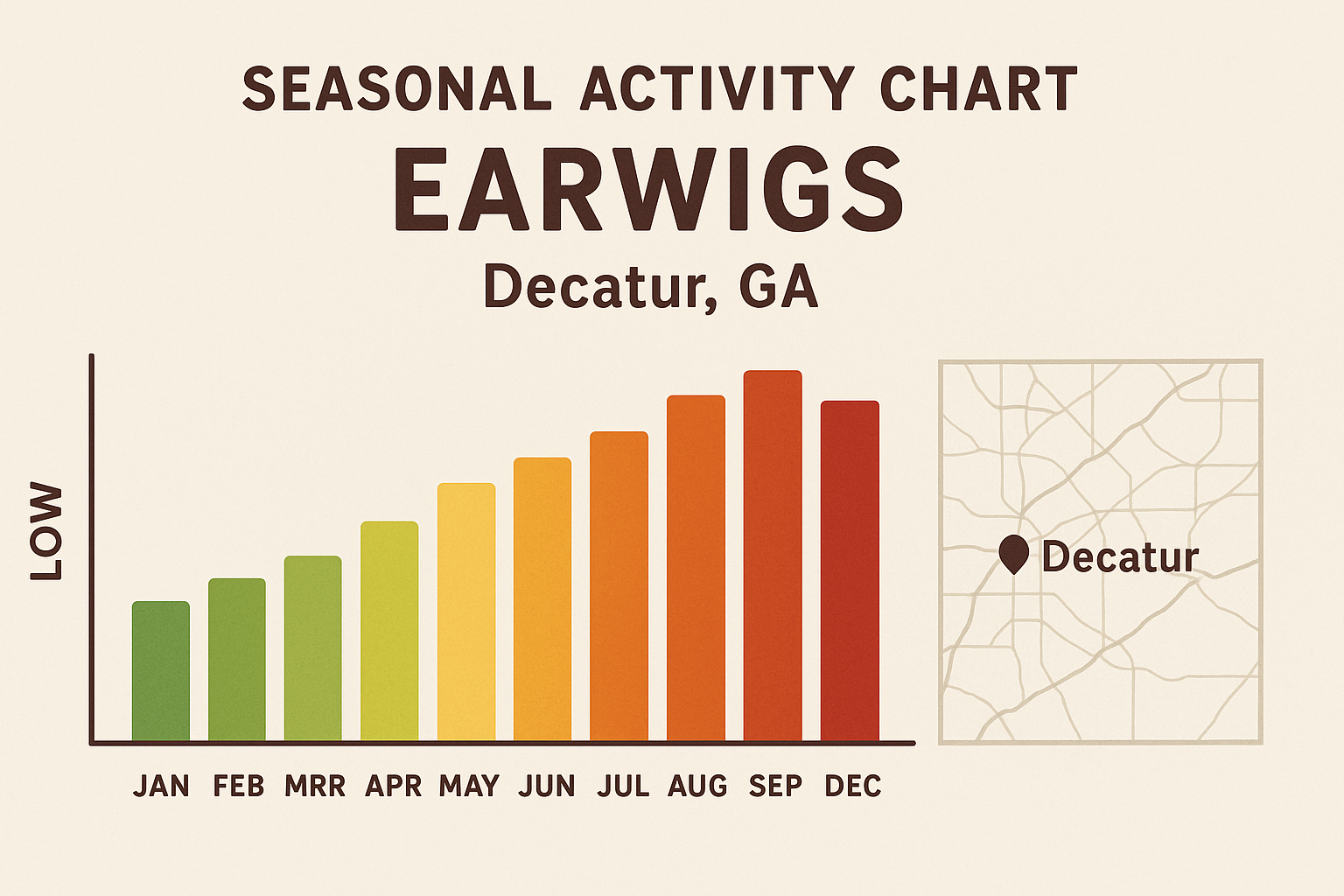
The chart above illustrates a clear pattern: high activity from May through September and a sharp decline during December to February. This spike aligns with Decatur’s average high temperatures (mid‑70s °F to low 90s °F) and increased humidity, both of which create ideal conditions for earwig breeding and foraging.
| Month | Average High (°F) | Activity Level |
|---|---|---|
| January | 50 | Very Low |
| March | 62 | Low |
| May | 78 | Increasing |
| July | 90 | Peak |
| September | 84 | High |
| November | 64 | Declining |
Decatur’s climate data mirrors this trend: average rainfall climbs in late spring and early summer, providing the moisture earwigs love for shelter and egg‑laying. Conversely, the dry, cooler winter months push them deeper into mulch, leaf litter, or indoor cracks, where they become less noticeable.
Practical tip: Schedule a professional inspection and treatment in late April, just before the activity curve begins its upward climb. Addressing the problem at this window catches emerging nymphs and adult females before they populate your yard and home, making control measures far more effective and often reducing the number of follow‑up visits.
For a broader perspective on pest seasonality, the CDC’s guidance on earwig behavior offers valuable context and reinforces the importance of timing your interventions correctly. Read the CDC’s earwig seasonality overview to stay ahead of the infestation curve.
DIY vs. Professional Earwig Control – What Works Best?

Common DIY Tactics
Many Decatur homeowners start with low‑cost, at‑home solutions before calling in a pro. The most popular methods include:
- Sticky traps: Cardboard or commercially‑available traps coated with a sweet attractant capture wandering earwigs.
- Diatomaceous earth (DE): A fine powder of fossilized algae that abrades the insect’s exoskeleton, causing dehydration.
- Neem oil sprays: A botanical oil that disrupts feeding and reproductive cycles when applied to garden beds.
- Habitat modification: Removing excess mulch, leaf litter, and wood debris eliminates the dark, moist refuges earwigs love.
Limitations of DIY
While these tactics are inexpensive, they rarely provide lasting control. DIY efforts often suffer from:
- Inconsistent coverage: Sprinkling DE or setting traps only where you see activity leaves hidden pockets untouched.
- Re‑infestation risk: Earwigs can migrate from neighboring yards or re‑enter through cracks that weren’t sealed.
- Collateral damage: Broad‑spectrum sprays and even DE can harm beneficial insects such as ladybugs and ground beetles, upsetting the garden’s natural balance.
Professional Approach
Certified technicians from Anthem Pest Control take a systematic, science‑backed route:
- Perimeter spraying: EPA‑approved granules or low‑odor liquids are applied around the home’s foundation, creating an invisible barrier that stops earwigs before they cross.
- Bait stations: Strategically placed, these contain attractants and slow‑acting insecticides that workers carry back to the nest, targeting the colony at its source.
- Targeted indoor treatments: Professionals locate hotspots—kitchens, basements, or crawl spaces—and treat them with formulations safe for occupants but lethal to earwigs.
Safety Considerations
When you handle chemicals yourself, you risk exposure to yourself, children, and pets. Professionals mitigate these risks by:
- Using products that are EPA‑approved for indoor and outdoor use, ensuring they meet strict toxicity standards.
- Wearing protective equipment—gloves, goggles, and respirators—during application.
- Applying chemicals in a way that protects non‑target areas, then providing clear post‑treatment instructions for safe re‑entry.
Cost‑Benefit Analysis
DIY solutions can appear cheaper upfront. A bag of diatomaceous earth or a pack of sticky traps might cost $20‑$40, and you can spread the expense over several weeks. However, the hidden costs quickly add up:
- Repeated purchases as earwigs return.
- Time spent researching, setting, and monitoring traps.
- Potential damage to garden plants or beneficial insects.
Professional services typically involve a one‑time treatment fee—often ranging from $120 to $250 in Decatur—followed by an optional maintenance plan. While the initial outlay is higher, homeowners gain:
- Comprehensive, long‑term control that reduces future infestations.
- Peace of mind knowing the work complies with safety regulations.
- Access to expert advice on preventing future earwig activity, such as proper grading and moisture management.
For most homeowners, the balance tips toward professional treatment when the goal is a swift, safe, and lasting solution. DIY can be a useful stopgap, but pairing it with a certified pest‑control plan delivers the most reliable protection for your home and garden.
Transparent Pricing for Earwig Control Services
When it comes to protecting your home from earwigs, knowing exactly what you’ll pay—and what you’ll get—makes the decision painless. Anthem Pest Control offers three clear-cut service tiers for reliable earwig control Decatur GA homeowners trust: Basic, Standard, and Premium. Each package is built around a transparent price per visit, a set number of annual visits, and a specific set of treatment methods so you never wonder about hidden fees.
Basic Tier – The Essentials
- Price per visit: $89
- Visits per year: 2 (spring & fall)
- Treatment methods: Perimeter spray around the foundation and a single indoor barrier application.
- What you get: Rapid knock‑down of active earwigs and a follow‑up inspection after the second visit to confirm control.
Standard Tier – Balanced Protection
- Price per visit: $119
- Visits per year: 4 (quarterly)
- Treatment methods: Perimeter spray, indoor barrier, and a targeted spot‑treatment for high‑traffic interior zones.
- What you get: Ongoing monitoring, two follow‑up inspections, and a complimentary pest‑identification guide for your family.
Premium Tier – Full‑Service Shield
- Price per visit: $149
- Visits per year: 6 (bimonthly)
- Treatment methods: Comprehensive perimeter spray, dual‑layer indoor barrier, and quarterly spot‑treatments for any resurgence.
- What you get: Unlimited follow‑up inspections, priority scheduling, and a 100 % satisfaction guarantee—if earwigs return, we’ll re‑treat at no extra cost.
Our no hidden fees policy means the price you see is the price you pay. All taxes, service calls, and follow‑up visits are baked into the listed rates, and our satisfaction guarantee ensures you’re covered if the problem persists.
Choosing the Right Tier
Pick the tier that aligns with three simple factors:
- Property size: Smaller homes (under 1,500 sq ft) often thrive on the Basic tier, while larger properties benefit from Standard or Premium coverage.
- Infestation level: A light, seasonal presence can be managed with Basic; moderate to heavy activity usually warrants Standard or Premium.
- Budget: If you prefer a low‑upfront cost, Basic offers solid protection. For peace of mind without surprise expenses, Standard or Premium spreads the cost over more visits.

| Tier | Price per Visit | Visits / Year | Main Treatments |
|---|---|---|---|
| Basic | $89 | 2 | Perimeter spray, indoor barrier |
| Standard | $119 | 4 | Perimeter spray, indoor barrier, spot‑treatment |
| Premium | $149 | 6 | Full perimeter, dual indoor barrier, quarterly spot‑treatments |
Protect Your Home Today – Call Anthem Pest Control
Quick recap: Earwigs are the slender, nocturnal insects you might spot scuttling across your foundation or hiding in damp, dark corners of your home. Their characteristic pincers and long, flattened bodies make them easy to identify, especially during the warm months of late spring through early fall when populations surge. While a few earwigs are generally harmless, a heavy infestation can damage plants, chew on soft furnishings, and become a persistent nuisance.
Why trust a professional over a DIY approach? Homeowners often reach for over‑the‑counter sprays or traps, but these solutions rarely address the root cause—moisture, cracks, and entry points that invite earwigs inside. A licensed technician can pinpoint the exact habitats, apply EPA‑approved products safely, and implement long‑lasting barriers that DIY kits simply cannot match. The result is a thorough, season‑spanning protection plan rather than a short‑term fix.
Why Anthem Pest Control is the right choice
- Local expertise: Our technicians know Decatur’s climate patterns and the specific earwig hotspots in the area.
- Safe, EPA‑approved solutions: We use products that are rigorously tested for effectiveness while protecting your family, pets, and the environment.
- Transparent pricing: No hidden fees—just a clear, upfront quote that outlines every step of the treatment.
- Comprehensive service: From inspection to follow‑up, we handle identification, treatment, and preventive measures in one seamless process.
We understand that inviting a pest‑control professional into your home is a big decision. That’s why we offer a free, no‑obligation inspection and a detailed quote tailored to your property’s unique needs. Our goal is to give you peace of mind, knowing that earwig activity will be managed before it becomes a full‑blown problem.
Ready to protect your home before the next seasonal peak? Call us today at 877‑371‑8196 to schedule your complimentary inspection. Our friendly staff will answer any questions, walk you through the treatment plan, and set up a convenient appointment time.
For more information about our services, visit Anthem Pest Control. Let us take the worry out of earwig control Decatur GA so you can enjoy a pest-free home all year round.