What Are Earwigs and Why Homeowners Should Care

In most U.S. yards you’ll encounter the common earwig (Forficula auricularia) and its close relatives, such as the European earwig and the southern earwig. These insects are members of the order Dermaptera and are easily recognized by their elongated, flattened bodies that range from half an inch to an inch in length. While they’re not exotic, their presence can signal underlying garden‑care issues that many homeowners overlook.
Earwigs sport a pair of forceps‑like pincers on the end of their abdomen, which they use for defense, mating rituals, and navigating tight spaces. Their bodies are typically brown to dark brown, with leathery forewings that protect the softer hind wings tucked underneath. Most species are nocturnal, emerging after sunset to feed and hide during daylight hours, which is why you often spot them only when you shine a flashlight into a mulch bed or under a deck.
Their favorite hangouts are damp, sheltered environments. Mulch, leaf litter, garden beds, wood piles, and the cracks around foundations provide the humidity earwigs crave. They’ll also take refuge in flower pots, compost bins, and even the undersides of siding. Because they thrive in these micro‑habitats, a single neglected corner of your yard can become a breeding ground for dozens of insects.
Common Misconceptions
- “They’re completely harmless.” While earwigs rarely bite humans, they can become a nuisance when they congregate in large numbers.
- “They never damage property.” This myth ignores the subtle yet real harm they can cause to plants and outdoor materials.
When earwigs feed, they prefer tender plant shoots, seedlings, and young foliage. Their chewing can stunt growth, create ragged leaf edges, and leave seedlings vulnerable to disease. In rare cases, they may gnaw on outdoor fabrics, garden nets, or even soft wooden structures, especially if food sources are scarce. Though the damage is usually modest, a persistent earwig population can weaken the aesthetic and health of a garden over time.
Early detection is the key to keeping earwigs from turning a small problem into a full‑blown infestation. Spotting a few individuals in mulch or under a deck signals that conditions are ideal for them to multiply. Prompt action—whether it’s removing excess moisture, clearing debris, or calling a professional pest service—prevents the insects from establishing permanent colonies that are far more difficult and costly to eradicate later.
Recognizing Earwig Activity and Seasonal Peaks
Earwig Life Cycle at a Glance
Earwigs move through three distinct stages: egg, nymph, and adult. Females lay clusters of 30‑50 eggs in moist soil or under mulch during early spring. Those eggs hatch into nymphs that look like miniature adults but lack fully developed wings. Over several weeks, nymphs molt five to six times, gradually gaining size and the characteristic cerci (pincer‑like tails). By midsummer, the majority have matured into reproductive adults ready to seek shelter for the colder months.
Seasonal Activity Chart
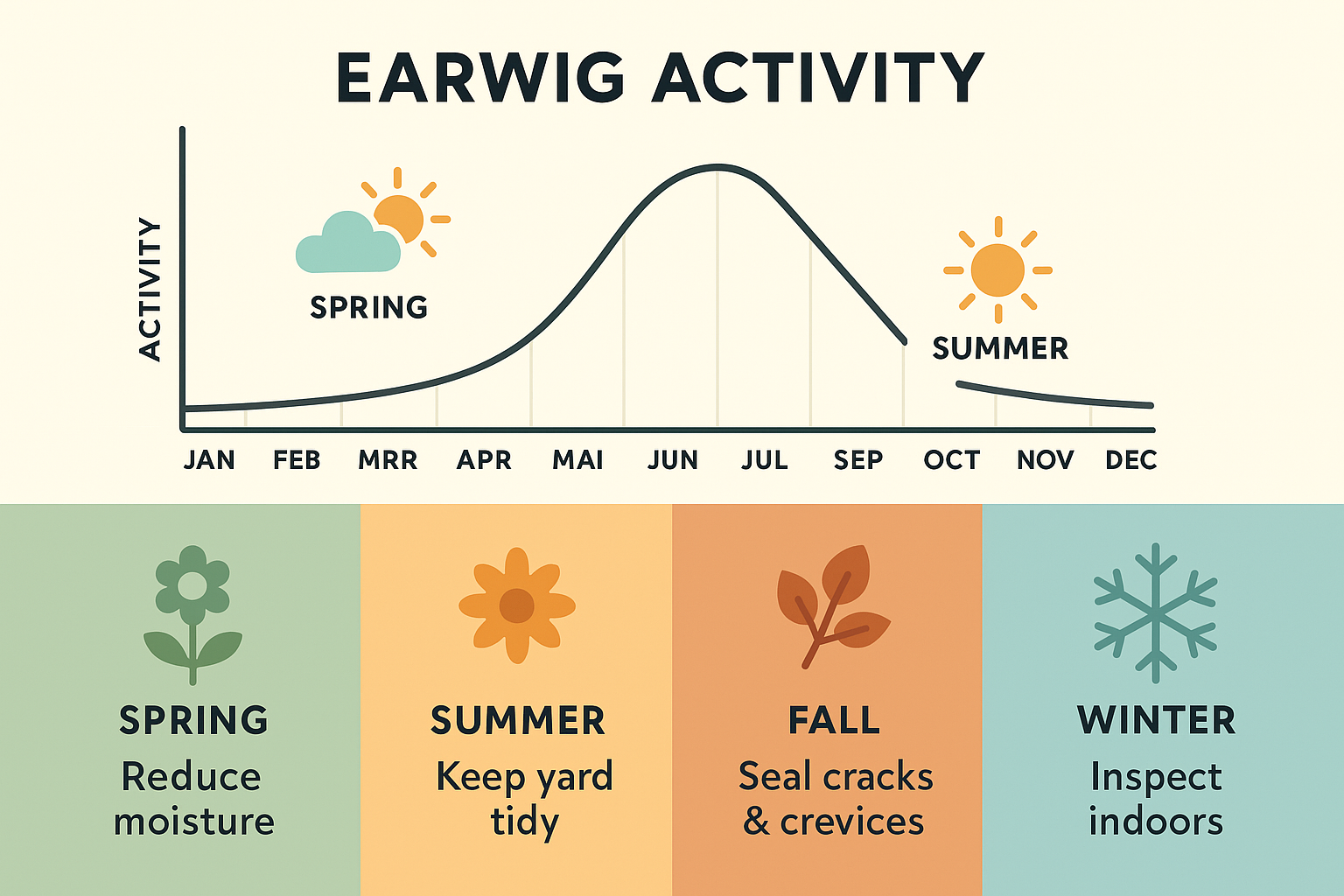
Understanding when earwigs are most active helps you time inspections and treatments. The chart below outlines typical activity levels in Suwanee, GA:
| Month | Activity Level |
|---|---|
| January | Very Low – overwintering in shelters |
| February | Low – occasional emergence |
| March | Increasing – eggs hatch |
| April | Moderate – nymphs feeding |
| May | High – nymphs maturing |
| June | Peak – large adult populations |
| July | Peak – continued breeding |
| August | High – adults still active |
| September | Moderate – adults seek shelter |
| October | Low – migration to protected sites |
| November | Very Low – overwintering |
| December | Very Low – dormant |
Visual Cues That Reveal Their Presence
- Droppings: Small, dark specks resembling pepper grains on leaves or garden paths.
- Damaged foliage: Irregular, scalloped edges on tender greens, especially at night.
- Shed skins: Translucent exoskeletons left behind after each molt.
- Nighttime sightings: Earwigs are nocturnal; a quick flashlight sweep near mulch often reveals them.
Temperature, Humidity, and Activity
Earwigs thrive when temperatures hover between 68°F and 80°F and humidity stays above 60%. Warm, damp conditions accelerate egg development and nymph growth, explaining the spring‑summer surge. Conversely, dry, cool weather forces them deeper into soil or under debris, reducing visible activity.
Practical Monitoring Tips
Set up a few simple checks to stay ahead of an infestation:
- Place sticky traps along garden borders and near entry points; check them weekly.
- Lift and inspect mulch layers each dusk—look for live earwigs or shed skins.
- Walk garden beds after sunset with a handheld light; note any movement on plant stems.
For a quick visual reference, see our seasonal activity infographic. It summarizes peak months and key environmental triggers at a glance.
DIY Prevention and Low‑Cost Control Methods
Trim the Habitat
Earwigs love cool, damp hide‑outs. Start by cutting back mulch to a depth of 2‑3 inches and keep it a few inches away from the foundation of your home. Remove any rotting wood, old pallets, or garden debris where they can nest, and rake leaf litter regularly. A tidy garden removes the shelter earwigs need to thrive.
Physical Barriers
Creating a simple barrier can keep earwigs from crossing into beds and planters. Wrap the rims of raised beds or pots with copper tape—the metal’s slight electric charge deters the insects. For a budget option, sprinkle a thin line of diatomaceous earth around the perimeter; the microscopic fossils scrape their exoskeletons, causing dehydration.
Invite Natural Predators
Birds, toads, and beneficial insects such as ladybugs and ground beetles love a diverse garden. Plant native flowering shrubs, install a small water feature, or add a few rock piles to provide shelter. A birdhouse or a low‑profile toad shelter can turn your yard into a predator‑friendly zone, naturally reducing earwig numbers.
Homemade Traps
Earwigs are attracted to dark, moist places. Roll a piece of cardboard into a tube, dampen it slightly, and tuck it near the base of plants. Alternatively, fold a few sheets of newspaper, wet them, and place them in a shallow tray. Check the traps nightly and dispose of the captured insects—this simple method can give you a clear picture of infestation levels.
Spot Treatments with Insecticidal Soaps
When you spot a few earwigs on prized plants, a quick spray of insecticidal soap or horticultural oil works wonders. These products coat the insect’s body, suffocating it without harming beneficial insects when used sparingly. Apply in the early morning or late evening, targeting only the affected foliage.
Know When DIY Isn’t Enough
If you notice earwigs multiplying despite these steps—large numbers in basements, damage to tender seedlings, or frequent sightings near entry points—it’s time to call a professional. Persistent problems often indicate hidden breeding sites that need targeted treatment beyond what a homeowner can achieve.
Professional Earwig Treatment Options and What to Expect
When earwigs start making their way into your home’s cracks and crevices, a licensed pest‑control service like Anthem Pest Control steps in with a systematic, science‑backed approach. The first visit begins with a thorough assessment that looks beyond the obvious signs. Our technicians examine the foundation for gaps, evaluate landscaping that may provide moisture or shelter, and inspect interior perimeters such as baseboards, door thresholds, and window sills. This comprehensive walk‑through helps pinpoint exactly where earwigs are entering and where they’re likely to hide.
Treatment Methods We Use
- Perimeter insecticide sprays: A low‑volume, EPA‑approved spray is applied around the exterior foundation, siding, and any outdoor structures. The formulation creates a residual barrier that kills earwigs on contact and continues to work for weeks.
- Bait stations: Discrete bait stations are placed in strategic outdoor locations. These attract foraging earwigs and deliver a slow‑acting toxin that eliminates the colony without exposing pets or children.
- Targeted granule applications: In garden beds, mulch, or under decks, granules are spread and lightly watered in. The granules release an active ingredient that penetrates soil and leaf litter where earwigs seek moisture.
Safety Protocols You’ll Appreciate
Anthem Pest Control only uses products that meet EPA standards for indoor and outdoor use. Technicians wear protective gloves, masks, and goggles, ensuring no cross‑contamination. Before we start, we’ll ask you to move pets to a safe area, cover food and utensils, and secure any children’s toys. These simple steps protect your household while allowing us to apply the treatment efficiently.
How Often Will We Visit?
Most earwig problems are resolved with a single, well‑executed perimeter treatment. However, if the inspection reveals a heavy infestation or conditions that favor rapid re‑colonization, we schedule a follow‑up visit within two to three weeks. This check‑up confirms that the residual barrier is still active and that no new entry points have opened.
Why Choose a Professional Service?
- Guaranteed coverage area: We treat every inch of your home’s exterior, not just the spots you notice.
- Long‑term residual control: Our EPA‑approved formulations continue to work for up to 90 days, reducing the need for repeated applications.
- Expert warranty: If earwigs reappear within the warranty period, we’ll return at no extra cost to re‑treat the affected zones.

Comparing Earwig Control Costs: One‑Time vs. Annual Service
When you’re weighing earwig control options, the price tag often decides whether you go with a single treatment or a year‑long plan. Below is a straightforward look at what you’ll pay, what you get, and how each option fits different homes in Suwanee.
One‑Time Treatment – What’s Included?
- Average price range: $120 – $210 per application.
- Coverage: Up to 2,000 sq ft of interior space and the immediate exterior perimeter.
- What you receive: A thorough inspection, a full‑strength earwig spray applied to cracks, crevices, and entry points, plus a follow‑up call 7 days later to confirm results.
- Best for: Small‑to‑medium homes with a single, short‑term infestation.
Annual Service Plans – What’s Different?
- Typical cost: $350 – $480 per year (often quoted as a “two‑visit” package).
- Frequency: Two scheduled visits – one in early spring and another in late summer – plus a complimentary mid‑season check‑in.
- Monitoring: Ongoing pest‑activity reports and a dedicated technician who can respond within 48 hours if earwigs reappear.
- Discounted rates: Each additional visit after the first two is reduced by 15 %.
- Coverage area: Up to 4,000 sq ft, ideal for larger properties or homes with multiple structures (garage, shed, pool house).
- Added perks: Seasonal re‑treatments, priority scheduling during peak earwig months, and a free home‑wide pest audit.
Side‑by‑Side Pricing Snapshot
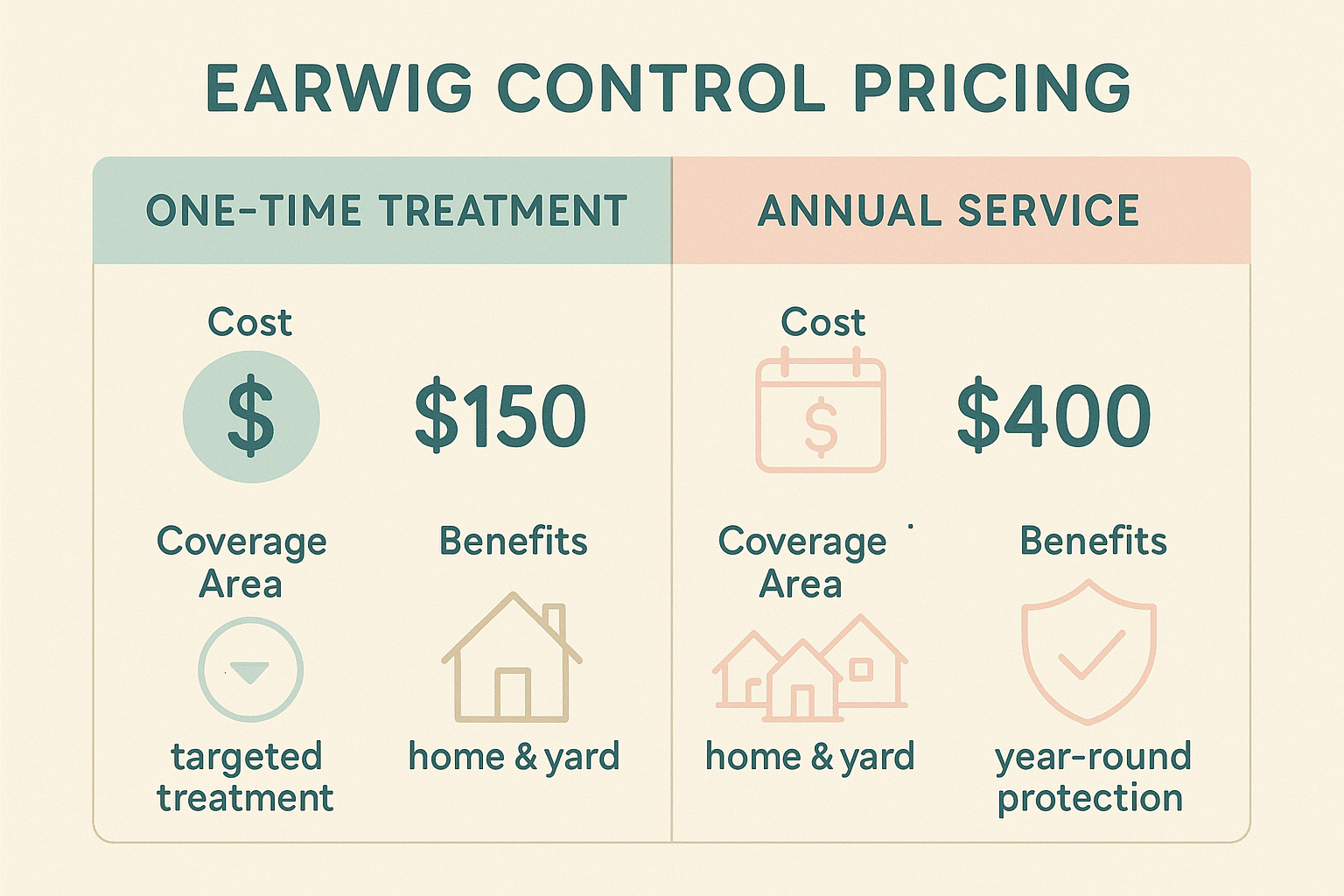
The infographic above visualizes the cost gap: a one‑time service saves money up front, while an annual plan spreads the expense and adds value through extra visits and faster response times.
How to Choose the Right Option
Property size matters. If your home is under 2,500 sq ft and you’ve only spotted earwigs a few times, the $120‑$210 one‑time treatment usually covers the job. For larger lots, or if you have a garden, shed, or multiple entry points, the annual plan’s broader coverage prevents pockets of re‑infestation.
Infestation severity. A light, isolated sighting can be knocked out with a single spray. Persistent activity—especially after the first summer—signals that earwigs are nesting nearby. In that case, the recurring visits of an annual plan protect you year‑round.
Finally, consider peace of mind. The annual service locks in a predictable budget and gives you a direct line to a technician who knows your property’s quirks. If you prefer a “set it and forget it” approach, the one‑time treatment is a solid, low‑commitment choice.
For a transparent look at the numbers we use, check Anthem Pest Control’s pricing page: Anthem Pest Control earwig pricing. Whatever you decide, the goal is the same—keeping earwigs out of your home without breaking the bank.
Choosing the Right Pest Partner and Getting a Free Quote
Earwigs may seem harmless, but their nocturnal feeding can damage tender plants, chew through mulch, and create unsightly shelters in your home’s foundation. Professional treatment stops the infestation before it spreads, protecting your garden’s yield and keeping your indoor spaces tidy.
What to Look for in a Pest‑Control Partner
- Licensed and insured technicians
- Guaranteed results or a money‑back promise
- Transparent, upfront pricing with no hidden fees
- Locally trained staff familiar with Georgia’s climate
- Eco‑friendly products safe for kids and pets
A free, no‑obligation quote lets you compare options without surprise costs. Our technicians will walk you through the treatment plan, explain each step, and answer any questions about safety or timing. Because there’s no upfront commitment, you can decide at your own pace, confident that the estimate reflects exactly what’s needed for your property.
At Anthem Pest Control, our certified technicians bring more than a decade of experience handling earwig problems across the Southeast. We use EPA‑approved, low‑toxicity treatments that target earwigs while preserving beneficial insects in your garden. Our nationwide network means you receive the same high‑quality service whether you live in Suwanee or any neighboring county, and every job comes with a clear, written estimate.
Ready for a complimentary inspection? One of our friendly representatives will visit your property, assess the level of earwig activity, and provide a personalized, no‑obligation quote on the spot. Call us today at 877‑371‑8196 and let us put our expertise to work for you.
Protect your garden and home now—visit Anthem Pest Control for more details or to schedule your free quote.