Understanding Gnats and Their Impact in Johns Creek

What Exactly Are Gnats?
In everyday conversation, “gnats” is a catch-all term for several tiny, soft-bodied flies that thrive in warm, moist environments. When homeowners research gnat control Suwanee GA, the three groups you’ll most often encounter around Johns Creek homes are:
- Fungus gnats – Small, dark‑winged insects whose larvae feed on decaying organic matter and the roots of houseplants.
- Biting midges (sometimes called “no‑see‑ums”) – Minute, blood‑sucking flies that leave itchy, red welts after a night’s outdoor gathering.
- Black‑fly larvae – Often called “maggots,” they develop in fast‑moving streams but can emerge as adult flies that swarm near water features.
Where Do They Like to Hang Out?
Gnats are opportunists. They set up shop wherever moisture and organic material meet, which in a typical Johns Creek yard includes:
- Moist soil in flower beds, especially after heavy rain.
- Over‑watered houseplants and indoor potting mixes.
- Compost piles or leaf accumulations that stay damp for days.
- Outdoor vegetation such as ornamental grasses, shrubs, and low‑lying trees that retain dew.
Because these habitats are scattered throughout a property, gnats can appear both indoors and outdoors, often making it feel like the infestation is coming from “everywhere.”
Health and Comfort Concerns for Homeowners
While gnats are tiny, their impact on comfort can be outsized, which is why homeowners often turn to gnat control Suwanee GA solutions:
- Itchy bites – Biting midges inject a tiny amount of saliva that triggers a localized allergic reaction. For sensitive skin, the result is a cluster of red, itchy bumps that can linger for days.
- Allergic reactions – Some residents develop hives or respiratory irritation after prolonged exposure to swarms, especially those with asthma or hay‑fever.
- The “swarm” effect – A dense cloud of gnats can hover around patios, decks, and outdoor dining areas, turning a pleasant evening into a nuisance.
These discomforts are why many homeowners call a pest‑control professional even before any damage to plants becomes visible.
Economic Impact: From Gardens to Service Bills
Gnats do more than irritate; they can affect your wallet in two ways:
- Plant damage – Fungus‑gnat larvae chew on the roots of ornamental plants, weakening them and making them more susceptible to disease. Over time, you may see wilting, stunted growth, or even plant loss, prompting costly replacements.
- Increased pest‑control costs – Because gnats reproduce quickly, a small problem can balloon into a full‑scale infestation. Homeowners often need multiple treatments—soil drenches, indoor foggers, and perimeter sprays—to keep the population under control.
Understanding the hidden costs helps you see why early identification and prevention are worth the investment.
Why Johns Creek’s Climate Feeds the Problem
Johns Creek sits in a zone of warm, humid summers and frequent summer thunderstorms. Those conditions create the perfect breeding ground for gnats:
- Warm temperatures accelerate the life cycle of all three gnat groups, allowing them to go from egg to adult in as little as a week.
- High humidity keeps soil and organic debris moist, preventing the larvae from drying out.
- Regular rainfall replenishes water sources, ensuring that even well‑drained beds stay damp enough for gnats to thrive.
Because the climate is a constant factor, the best defense is a proactive one: regular garden maintenance, proper watering practices, and timely professional inspections.
Key Takeaway for the Homeowner
Gnats may be small, but in Johns Creek they can quickly become a multi‑faceted problem—affecting comfort, health, and even the appearance of your landscape. Recognizing the common species, their favorite habitats, and the climate conditions that favor them gives you a solid foundation for prevention. When the tiny swarms start to feel big, reaching out to a local expert like Anthem Pest Control ensures you get a safe, effective solution before the nuisance turns into a costly battle.
Seasonal Patterns of Gnats and Related Pests in Southern Georgia
Primary Pest Groups to Watch
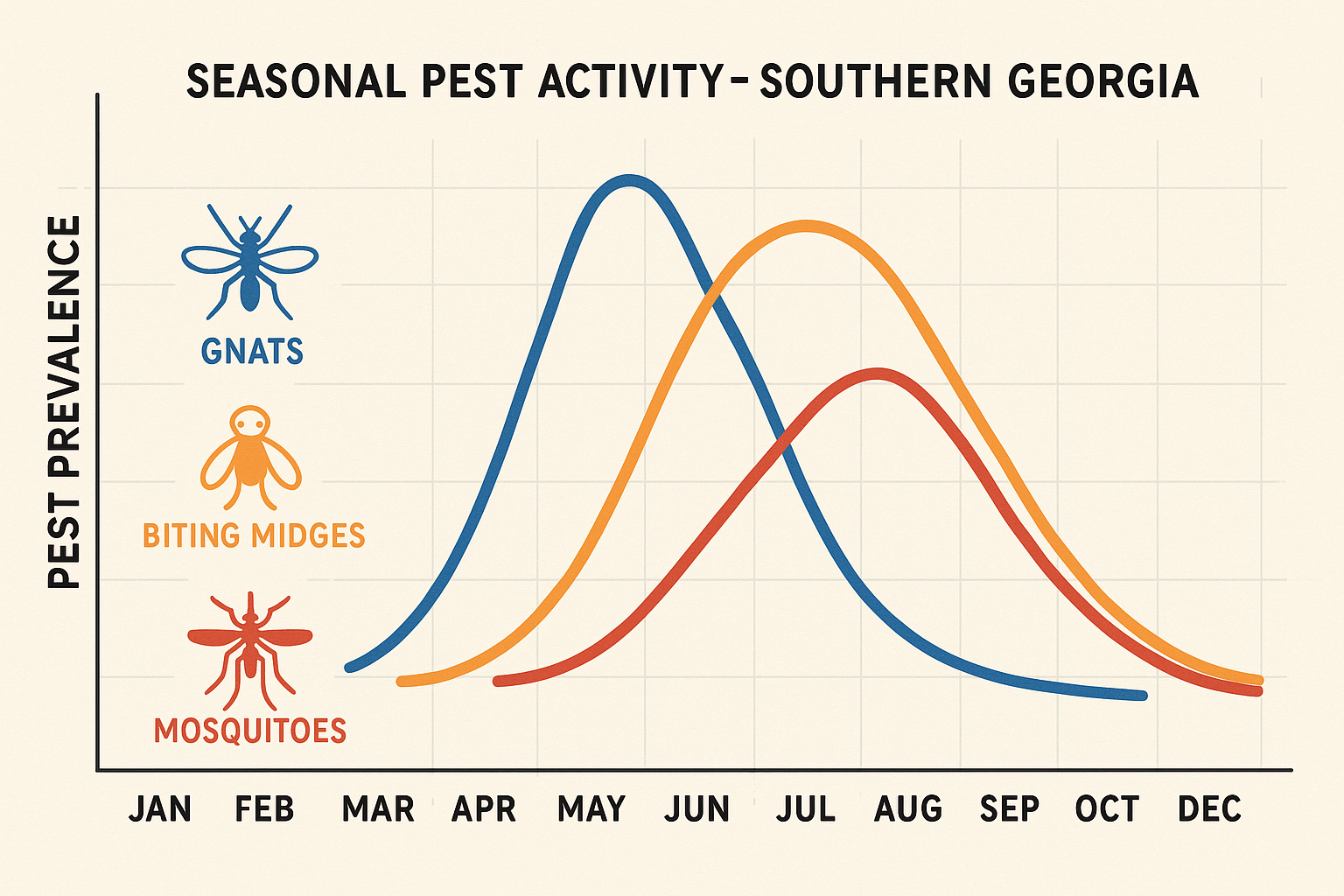
In Southern Georgia, three small-flying insects dominate the warm-weather nuisance landscape: gnats, biting midges (often called “no-see-ums”), and mosquitoes. While gnats are the tiniest and usually harmless, they thrive in moist environments and can become a visual annoyance, which is why gnat control Suwanee GA services are commonly needed during warmer months. Biting midges are slightly larger, leave itchy welts, and love damp, shady spots. Mosquitoes are the heavyweight of the trio, capable of transmitting disease and proliferating in standing water.
How Weather Drives Their Numbers
Temperature, humidity, and rainfall act like a three‑part orchestra for these pests. Warm nights (above 68°F) accelerate larval development, while high humidity prevents adult dehydration, allowing them to stay active longer. Rainfall creates the stagnant pools that serve as breeding grounds for mosquito larvae and the moist soil gnats need for their pupae. A sudden dry spell can suppress populations, but a return to wet, warm conditions usually triggers a rapid rebound.
Month‑by‑Month Activity Overview
Understanding the yearly cycle helps you schedule inspections and treatments before the pests become a problem. Below is a concise guide based on local climate data and years of field observations from Anthem Pest Control.
| Month | Gnats | Biting Midges | Mosquitoes |
|---|---|---|---|
| January – February | Very low | Very low | Low (over‑wintering adults) |
| March – April | Low, early emergence | Low, occasional | Moderate (first breeding cycles) |
| May – June | Increasing, noticeable swarms | Moderate, start biting | High, rapid population growth |
| July – September | Peak activity, especially after rains | High, frequent bites | Peak, multiple generations |
| October – November | Declining, cooler nights | Moderate, still present | Decreasing, fewer breeding sites |
| December | Very low | Very low | Low (over‑wintering adults) |
When Pest Overlap Increases the Nuisance
The most uncomfortable weeks occur when gnats and biting midges overlap with mosquito peaks, typically from late May through early September. Homeowners often notice a “cloud” of tiny insects hovering near patio lights while simultaneously dealing with itchy bites from midges and mosquito buzzes at dusk. This convergence amplifies the perceived infestation, even if each species is within its normal range.
Best‑Practice Timing for Preventive Sprays
To stay ahead of the surge, schedule a professional preventive spray in early March, just as temperatures consistently climb above 60°F. A second application in late May reinforces protection before the July‑September peak, targeting both larval habitats (standing water, damp soil) and adult resting sites (shrubs, eaves). For homeowners who prefer a DIY approach, applying a residual barrier spray around the same dates can be effective, but professional formulations typically last longer and are safer for pets and children.
Local Data and Expert Insight
Anthem Pest Control continuously monitors trap counts and weather patterns across Suwanee and the broader Southern Georgia region. Their regional insight page offers up‑to‑date heat‑maps that show exactly when each pest group is expected to surge, allowing you to fine‑tune your treatment calendar.
By aligning inspections with the low‑activity months (January–February) and applying treatments just before the rise in March, you can dramatically reduce the number of gnats, midges, and mosquitoes that make it into your home and yard. Remember, the key isn’t just reacting to a swarm—it’s anticipating it.
Spotting the Signs of a Gnat Infestation at Home
Before you pick up the phone, it helps to know exactly what you’re looking at. Gnats are tiny, often mistaken for other small flies, but they leave a trail of clues that any observant homeowner can spot. By learning these visual cues and running a few simple tests, you can confirm whether gnats have taken up residence in your home or yard.
Indoor Indicators
Inside, gnats love the moist, sheltered environments that most households unintentionally provide. Keep an eye out for these tell‑tale signs:
- Hovering near houseplants: Small, mosquito‑sized insects will circle the foliage, especially if the soil stays damp.
- Sticky traps catching many specimens: If you’ve placed yellow sticky cards around a plant and they’re quickly covered in tiny flies, gnats are likely the culprits.
- Damp soil with a musty odor: Over‑watered pots can develop a sour smell, a perfect breeding ground for fungus gnats.
One quick test is to gently tap the soil of a suspect plant. If a cloud of tiny flies erupts, you’ve just confirmed a gnat hotspot.
Outdoor Clues
Outside, gnats are attracted to light, moisture, and decaying organic matter. Look for these patterns around your home’s perimeter:
- Swarming around outdoor lighting: In the evenings, you may notice a faint, buzzing cloud hovering near porch lights or patio fixtures.
- Clusters near birdbaths or pet water dishes: Stagnant water provides an ideal larval habitat.
- Standing water in low spots: Even a shallow puddle under a deck can become a breeding site.
- Decaying leaves, compost, or mulch: Organic matter that stays moist for weeks is a magnet for gnats.
If you see a persistent congregation of tiny flies in any of these spots, it’s a strong indicator that gnats are breeding nearby.
DIY Monitoring Traps
Setting up a simple trap can give you concrete evidence without waiting for a professional inspection. One of the easiest methods uses apple cider vinegar:
- Fill a small glass jar about one‑third full with apple cider vinegar.
- Add a few drops of dish soap to break the surface tension.
- Cover the jar with plastic wrap and poke several tiny holes with a toothpick.
- Place the trap near the suspected area (e.g., beside a houseplant or under a porch light) and check it after 24–48 hours.
The vinegar’s scent lures adult gnats, and the soap ensures they sink and drown. A handful of trapped flies confirms an active population.
Distinguishing Gnats from Other Small Flies
Not all tiny flyers are gnats. Here’s a quick cheat sheet to avoid misidentification:
- Fruit flies: Usually found near ripe fruit, kitchen countertops, or trash cans. They have a tan‑brown body and a slightly larger, more rounded appearance.
- Whiteflies: Common on the undersides of indoor foliage, they appear as tiny, white‑specked insects that flutter when disturbed.
- Gnats (fungus gnats): Prefer damp soil, hover close to plants, and have slender, mosquito‑like bodies with long legs.
Observing where the insects congregate and what they’re attracted to will usually point you to the right culprit.
When to Call a Professional
Even the most diligent DIY approach has its limits. For homeowners considering gnat control Suwanee GA, scheduling a professional assessment is recommended if you encounter any of the following:
- Persistent swarms that don’t diminish after adjusting watering practices.
- Visible bite marks on skin—some gnat species can bite, causing irritation.
- Significant plant damage, such as wilting, yellowing leaves, or stunted growth despite proper care.
- Presence of standing water that cannot be easily eliminated (e.g., drainage issues).
Anthem Pest Control specializes in targeted gnat treatments that combine safe, effective products with preventive measures. A professional inspection can identify hidden breeding sites, recommend soil amendments, and apply treatments that break the life cycle—saving you time, frustration, and future damage.
Treatment Options and Service Packages for Gnat Control
Gnat invasions can turn a pleasant backyard into a buzzing nightmare, but you don’t have to suffer in silence. Whether you prefer a hands-on DIY approach or the peace of mind that comes with a professional crew, homeowners seeking gnat control Suwanee GA have effective ways to knock back these tiny pests. Below we break down the most common treatment methods, safety tips you should keep in mind, and how Anthem Pest Control’s three service tiers can fit any budget and level of urgency.
DIY Methods That Work
Many homeowners start with low‑cost, do‑it‑yourself tactics. When applied correctly, they can significantly reduce gnat populations, especially in the early stages of an infestation.
- Soil Drying: Gnats thrive in moist, organic‑rich soil. Allowing the top inch of garden soil to dry out each day deprives larvae of the humidity they need to develop. Water your beds early in the morning and let the soil dry by evening for best results.
- Organic Nematodes: These microscopic, soil‑dwelling worms hunt and consume gnat larvae. Products such as Beneficial Nematodes are applied with a garden sprayer and are safe for children, pets, and most plants.
- Yellow Sticky Traps: Gnats are attracted to the color yellow. Hang adhesive traps near plant foliage, compost bins, or patio lights. Replace them every 7‑10 days to maintain effectiveness.
- Backyard Fans: A simple oscillating fan creates a wind barrier that gnats find difficult to navigate. Position fans near seating areas or outdoor dining spaces to keep the air moving and the insects at bay.
When to Call a Professional
DIY solutions are great for light infestations, but a full‑blown gnat problem often requires a more aggressive approach. Professional treatments offer faster knock‑down and longer‑lasting protection.
- Residual Spray Applications: EPA‑approved insecticides are applied to soil, mulch, and plant bases. The chemicals remain active for weeks, targeting both adult gnats and emerging larvae.
- Perimeter Barrier Treatments: A misted barrier around the home’s foundation and outdoor structures prevents gnats from entering high‑traffic zones. This method is especially useful for patios, decks, and pool areas.
- Targeted Larvicide Drenches: For severe soil infestations, technicians inject a larvicide directly into the root zone. The product sinks to where gnat larvae feed, delivering a lethal dose without harming mature plants.
Safety Considerations
Whether you’re spraying a DIY solution or inviting a technician onto your property, safety should be front‑and‑center.
- Choose EPA‑approved products that have undergone rigorous testing for human and environmental safety.
- Look for child‑ and pet‑friendly formulations—many modern insecticides break down quickly and pose minimal risk when used as directed.
- Always read the label, wear protective gloves, and keep children and pets away from treated areas until the product has dried.
Anthem’s Service Packages
Anthem Pest Control structures its gnat‑control offerings into three clear tiers, allowing you to pick the level of coverage that matches your needs and budget.
| Feature | Basic | Standard | Premium |
|---|---|---|---|
| Number of Visits per Season | 1 | 2 | 4 |
| Coverage Area | Up to 2,500 sq ft | Up to 5,000 sq ft | Up to 10,000 sq ft |
| Treatment Types Included | Residual spray | Residual spray + perimeter barrier | Residual spray + perimeter barrier + larvicide drench |
| Follow‑up Inspection | None | One post‑treatment check | Two post‑treatment checks + warranty protection |
| Warranty | 30‑day re‑treat guarantee | 60‑day re‑treat guarantee | 90‑day re‑treat guarantee |
The Basic package is ideal for homeowners who have only a few isolated hot spots. The Standard tier adds a perimeter barrier—perfect for those who entertain outdoors or have a larger yard. The Premium plan delivers the most comprehensive protection, combining all three treatment methods and offering the longest warranty period.
Why Professional Treatment Pays Off
Choosing a professional service isn’t just about convenience; it delivers measurable benefits that DIY methods can’t match.
- Faster Knock‑Down: Trained technicians apply products at the optimal concentration and location, delivering immediate relief.
- Long‑Term Prevention: Residual chemicals and barrier treatments create a protective shield that lasts weeks, reducing the need for repeated applications.
- Warranty Protection: Anthem’s service guarantees mean that if gnats return within the warranty window, you’ll receive a free re‑treat—saving you time and money.
Ready to move beyond traps and fans? Explore the full details of Anthem’s gnat‑control options for the neighboring Johns Creek area, which mirrors the service structure we offer in Suwanee: Anthem Gnat Control – Johns Creek, GA. A quick call to 877‑371‑8196 can get you a personalized quote and schedule your first visit.

Pricing Comparison and What’s Included in Each Gnat Control Package
Choosing the right gnat‑control plan starts with understanding what you’re paying for. Below is an easy‑to‑read infographic that breaks down the three service tiers we offer in Suwanee, Georgia. It highlights price points, coverage area, treatment frequency, and the specific services bundled in each package.
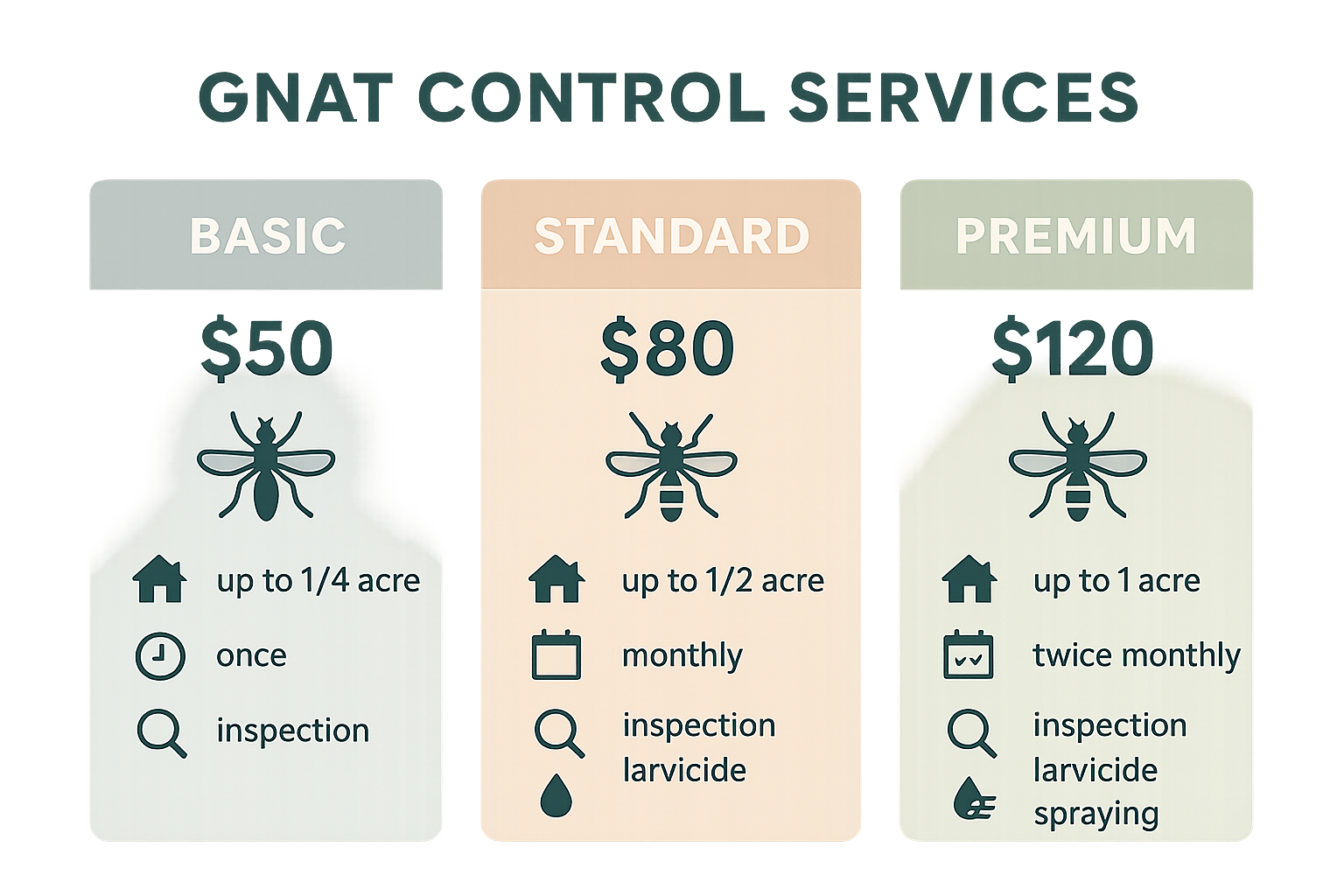
| Package | Price | Coverage Area | Treatment Frequency | Included Services |
|---|---|---|---|---|
| Basic | $79 (one‑time) | Up to 2,000 sq ft | Single visit | Standard spray, basic follow‑up call |
| Standard | $199 per quarter | Up to 4,000 sq ft | Quarterly (4 times yr) | Standard spray, monitoring traps, quarterly inspection report |
| Premium | $349 per month | Full property (no square‑foot limit) | Monthly | Premium spray, monitoring traps, garden‑care tips, 100 % satisfaction guarantee, priority scheduling |
Basic – One‑Time Treatment, Limited Coverage
The Basic package is perfect for homeowners with a small yard or a localized gnat hotspot. For those seeking gnat control Suwanee GA, a single payment of $79 covers treatment of up to 2,000 sq ft with our industry-standard spray. This tier includes a brief follow-up call to ensure the treatment was effective, but it does not provide ongoing monitoring or additional visits. If you’re dealing with a short-term flare-up, the Basic plan delivers quick relief without a long-term commitment.
Standard – Quarterly Treatments, Broader Coverage
Most Suwanee families find the Standard package to be the sweet spot between cost and protection. Priced at $199 per quarter, it covers up to 4,000 sq ft and includes four visits per year. Each visit features our standard spray plus the placement of monitoring traps that help us track gnat activity between treatments. Homeowners receive a detailed inspection report after every quarter, giving you clear insight into what’s happening on your property.
Premium – Monthly Visits, Full‑Property Coverage
The Premium tier is designed for homeowners who want the utmost peace of mind. At $349 per month, you receive monthly visits that treat the entire property—no square‑foot caps. In addition to the premium‑grade spray, we install and maintain monitoring traps, provide personalized garden‑care tips to keep plants gnat‑free, and back every service with a 100 % satisfaction guarantee. Premium customers also enjoy priority scheduling, meaning you’re first in line when the season spikes.
Cost‑Effectiveness Over Time
While the Premium plan carries the highest upfront cost, it often saves money in the long run. Frequent treatments prevent gnat populations from establishing a foothold, which reduces the need for emergency, high‑price interventions later in the season. The Standard plan also offers solid savings compared to repeatedly purchasing one‑time treatments, especially when you factor in the value of monitoring traps and quarterly reports that catch infestations early.
Budget‑Friendly Tips for Seasonal Pest Control
- Bundle services: Adding a mosquito barrier or ant protection to your gnat plan can lower the per‑service price.
- Plan ahead: Schedule your first treatment before the peak gnat months (late spring to early summer) to lock in promotional rates.
- Leverage the guarantee: Premium customers can request a free re‑treatment if gnats reappear within the guarantee window, eliminating extra costs.
- Use DIY prevention: Keep standing water to a minimum and trim vegetation regularly; these simple steps enhance the effectiveness of any professional plan.
Choose Anthem Pest Control for Effective Gnat Management Today
Over the past sections we’ve walked through everything you need to know to keep gnats from turning your yard into an airborne nuisance. You learned how to identify the most common gnat species, why the late spring and early summer months are the critical window for treatment, what subtle signs—like swarms near standing water or a persistent “buzz” around outdoor lighting—mean that an infestation is brewing, and why a professional approach often beats DIY sprays in both safety and lasting results.
Why Anthem Stands Out in Southern Georgia
- Local expertise: Our technicians know the specific habitats and weather patterns of Suwanee and the broader Southern Georgia region, allowing them to target gnats where they thrive.
- Safe, EPA‑approved products: We use treatments that protect your family, pets, and beneficial insects while delivering rapid knock‑down of adult gnats and their breeding sites.
- Transparent pricing: No hidden fees—our quote outlines every step, from the initial inspection to follow‑up applications.
- Proven customer satisfaction: Homeowners across the area rate us 5‑stars for reliability, courtesy, and results that last season after season.
Free On‑Site Inspection & Customized Treatment Plan
When you call Anthem, the first step is a no‑obligation, on‑site inspection. Our certified technician will walk your property, pinpoint moisture sources, assess vegetation density, and map out the exact treatment zones. From there, we craft a tailored plan that may include:
- Targeted larvicide applications to stop the next generation before it emerges.
- Strategic adulticide misting around patios, decks, and outdoor lighting.
- Environmental recommendations—such as proper drainage and vegetation trimming—to keep gnats from returning.
All of this is delivered on a schedule that fits your lifestyle, whether you prefer a one‑time blitz before your summer gatherings or a quarterly maintenance program that stays ahead of the peak season.
Act Now—Before the Peak Season Hits
Gnats multiply quickly once temperatures rise above 70°F, and the window for pre‑emptive treatment narrows each week. By reaching out today, you secure a spot on our calendar before demand spikes and ensure your yard stays comfortable for outdoor meals, playtime, and relaxation.
Ready to enjoy your yard without the annoyance of gnats? For reliable gnat control Suwanee GA, call Anthem Pest Control at 877-371-8196 for a free, no-obligation quote. Our certified technicians will assess your property, recommend the right service tier, and schedule timely treatments to keep gnats—and other pests—at bay.
Visit Anthem Pest Control today and take the first step toward a pest‑free home.