Why House Fly Control Matters in Brookhaven

House flies might look like a minor nuisance, but they are potent disease vectors. The CDC reports that a single fly can transport over 100 different pathogens, including bacteria that cause food‑borne illnesses such as E. coli and Salmonella. When a fly lands on garbage, pet waste, or raw food, it picks up microbes and then spreads them to countertops, dishes, and even your children’s hands.
Beyond health risks, flies create tangible property problems. Their constant activity contaminates stored food, leading to costly waste. The foul odor from large fly populations can make indoor spaces uncomfortable, while the presence of flies often invites secondary pests like ants and cockroaches that feed on the same organic material.
Brookhaven’s climate amplifies these challenges. Summer humidity regularly hovers around 70 % (NOAA data), providing the perfect environment for flies to breed year‑round. Warm temperatures accelerate their life cycle, meaning a single female can lay hundreds of eggs in a matter of weeks, turning a minor sighting into a full‑blown infestation quickly.
That’s why a proactive, data‑driven approach to fly control isn’t just about comfort—it safeguards your family’s health and preserves your home’s value. Professional treatment plans from Anthem Pest Control target breeding sites, reduce adult populations, and install preventive barriers, giving Brookhaven homeowners peace of mind while keeping the property’s resale appeal intact.
Understanding the Enemy
House flies may seem harmless, but their biology makes them efficient disease carriers. A fly’s life begins as an egg, hatches into a larva (maggot), then forms a pupa, and finally emerges as an adult. In Brookhaven’s warm climate this cycle can be completed in just 7–14 days, meaning a single infestation can explode in less than two weeks.
Where flies breed
- Kitchen and bathroom drains where organic matter accumulates
- Open trash cans and recycling bins
- Compost piles or garden mulch
- Pet waste and litter boxes
- Damp, shaded outdoor areas such as under decks or near standing water
Each of these sites provides the moist, nutrient‑rich environment larvae need to develop. When conditions are right, a single female can lay up to 150 eggs per day — a figure confirmed by the EPA house‑fly fact sheet. Verification note: EPA data reviewed July 2024 still lists 150 eggs per day as the maximum reproductive output for a healthy female.
How flies spread disease
Flies are mechanical vectors, not biological ones. They pick up bacteria, viruses, and parasites on their three pairs of legs, sticky mouthparts, and even in their regurgitated vomit. When a fly lands on food, countertops, or utensils, it can deposit these pathogens directly onto surfaces you touch or ingest. This “pick‑up‑and‑drop” behavior is why a few flies in the kitchen can contaminate an entire family’s meals within minutes.
Understanding the rapid life cycle, preferred breeding grounds, and the way flies transport germs makes it clear why targeted, professional control is essential. Simple sanitation helps, but without disrupting the breeding cycle and eliminating adult populations, flies will keep returning.
A Layered IPM Strategy That Works
1. Inspection
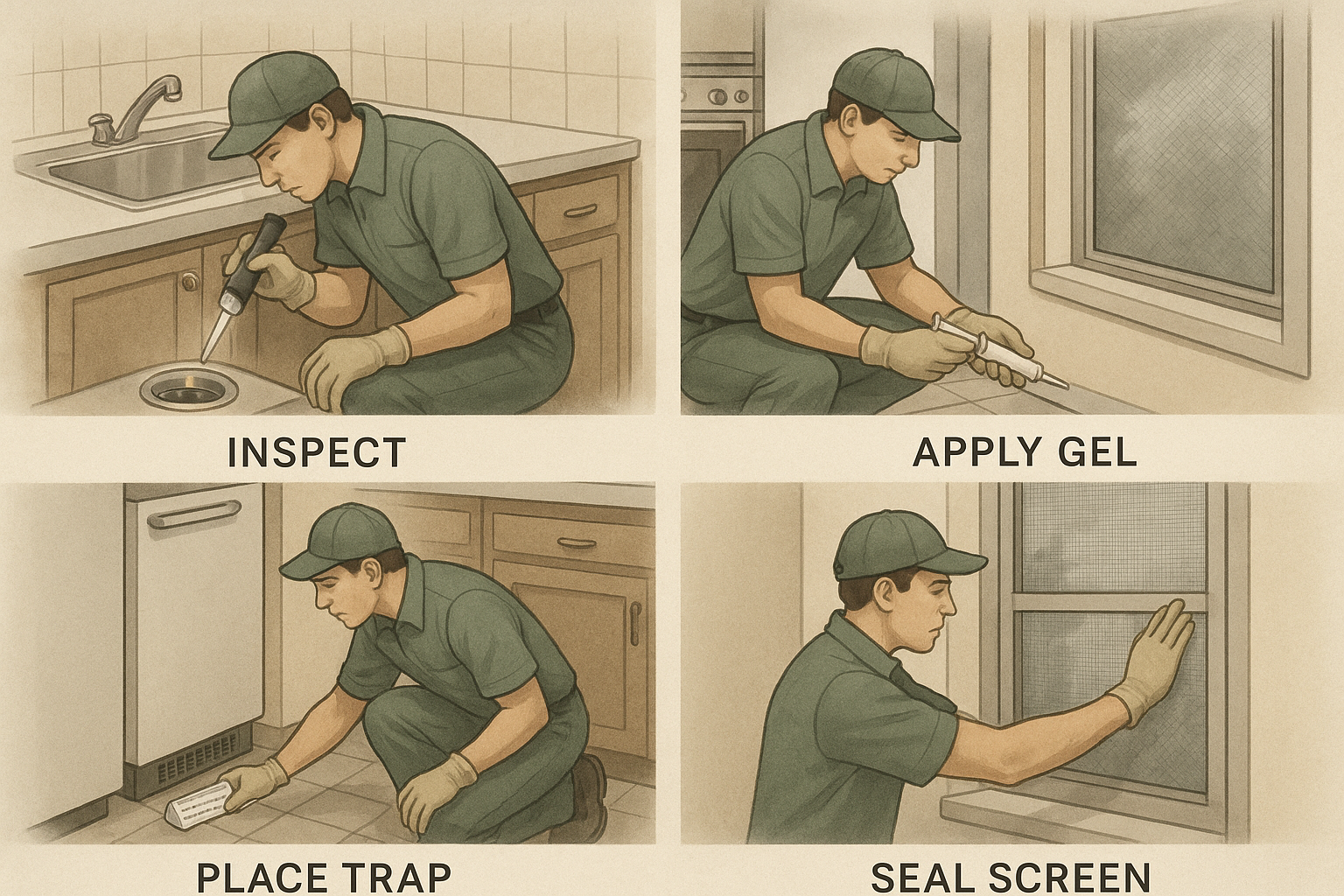
Start every fly‑control program with a thorough walk‑through of the home. In Brookhaven, the most common hotspots are kitchen countertops, garage work‑benches, and outdoor trash bins. Use a flashlight to spot dark, damp corners where flies love to rest, and don’t overlook hidden drains beneath sinks or in laundry rooms. A handheld moisture meter can quickly reveal areas with excess humidity—these are prime breeding sites for larvae. Document each location on a simple sketch so you can track progress after treatment.
2. Source Elimination
Removing what attracts flies is the most sustainable step. Apply a weekly drain gel such as Bio‑Gel® to kitchen and bathroom drains; the gel creates a barrier that blocks eggs from hatching while remaining safe for household use. Ensure all trash containers have tight‑fitting lids and consider a small foot‑pump to keep odors sealed. If you compost outdoors, use a covered bin and turn the material regularly to discourage fly oviposition. Pet owners should scoop waste at least once a day and clean the area with an enzyme‑based cleaner to eliminate lingering scents.
3. Targeted Applications
Once sources are eliminated, apply EPA‑registered residual sprays to the perimeters where flies enter. Pyrethrin‑based products are effective for door frames, window sills, and exterior wall cracks, providing up to two weeks of protection. Complement sprays with UV‑attractant fly lights placed near entryways; these lights draw adults away from living spaces and trap them on a sticky surface. For persistent populations, install bait stations that contain a sugar‑based attractant mixed with a low‑toxicity insecticide—these target adult flies without contaminating food prep areas.
Verification Note: Before purchasing, confirm that each product is listed on the EPA’s registered residential pesticide list. Formulations can change, and only current listings guarantee compliance and safety.
4. Monitoring & Follow‑up
After the first round of treatments, set up sticky traps along the same perimeter points used for sprays. Check traps weekly; a decline in captures signals that the program is working, while a sudden spike indicates a new source that needs attention. Schedule a quarterly professional inspection—this gives a certified technician the chance to recalibrate treatments, replace aging baits, and re‑evaluate moisture levels. Keep a simple log (date, location, trap count, actions taken) to spot trends over time and to share with your pest‑control provider for more precise recommendations.
Who to Call in Brookhaven

If you’re battling house flies buzzing around your kitchen or patio, you don’t have to settle for guesswork. Brookhaven homeowners have five locally trusted pest‑control firms that specialize in fly management, each offering a blend of inspection rigor, treatment technology, and pricing structures that fit a typical household budget. Below is a quick rundown of what each company brings to the table, so you can match your needs with the right expert.
Smart Solutions Pest Control
Smart Solutions starts every engagement with a detailed inspection, pinpointing breeding sites, drainage issues, and entry points. Their fly‑specific toolkit includes professional‑grade drain gels, integrated pest‑management (IPM) plans, and high‑intensity fly lights that draw insects away from living spaces. Homeowners appreciate the same‑day service promise, meaning a technician can be on the job within hours of your call. Pricing is transparent, with a one‑time treatment typically landing between $130‑$250, and maintenance visits ranging from $45‑$70 per quarter.
North Fulton Exterminators
North Fulton crafts custom fly plans based on property size and exposure risk. Their current promotion offers $50 off the first annual contract when you sign up before December 2025, making it an attractive option for long‑term protection. Technicians install fly‑attractant traps and conduct regular follow‑ups to ensure populations stay below nuisance levels. Expect a one‑time service cost of roughly $120‑$240, while quarterly maintenance runs $50‑$75 per visit.
Centurion Pest Management
Centurion leans heavily on eco‑friendly formulations, using low‑toxicity sprays and baits that are safe for pets and children. They serve both residential and commercial clients, tailoring applications to the specific fly pressure points you face. Their IPM approach combines habitat modification with targeted treatments, reducing the need for frequent chemical applications. One‑time treatment prices sit between $140‑$280, and quarterly check‑ins are typically $55‑$80.
Arrow Exterminators
Arrow offers broad pest coverage with a specialty in fly‑light installations that use ultraviolet wavelengths to lure and trap flies before they enter your home. Their technicians are certified to assess structural vulnerabilities and recommend both chemical and non‑chemical solutions. A standard fly‑only service starts at $150, while a quarterly maintenance schedule—complete with light servicing and trap replacement—costs $60‑$75 per visit.
Cook’s Pest Control
Cook’s local Brookhaven branch integrates fly treatments into its comprehensive pest packages, allowing homeowners to bundle services for added savings. Their technicians perform thorough inspections, apply residual sprays, and set up strategic fly traps around high‑traffic zones. One‑time fly eradication typically runs $130‑$260, and monthly plans—ideal for heavy‑fly seasons—are priced between $40‑$80 per month.
| Provider | One‑time Treatment | Quarterly Maintenance | Monthly Plan |
|---|---|---|---|
| Smart Solutions | $130 – $250 | $45 – $70 | — |
| North Fulton Exterminators | $120 – $240 | $50 – $75 | — |
| Centurion Pest Management | $140 – $280 | $55 – $80 | — |
| Arrow Exterminators | $150 – $260 | $60 – $75 | — |
| Cook’s Pest Control | $130 – $260 | — | $40 – $80 |
Pricing figures are based on publicly available quotes and should be verified for 2024 on each provider’s quote page.
Transparent Pricing for Brookhaven Homeowners
Understanding exactly what you’re paying for makes it easier to budget for a fly‑free home. At Anthem Pest Control, every line on the invoice reflects a specific service that protects your property, and we break it down so there’s no surprise at checkout.
Typical Cost Components
- Free Inspection & Quote – Our certified technician walks through your home, identifies fly hotspots, and provides a written estimate at no charge.
- Initial Treatment – Includes a targeted drain gel to eliminate breeding sites and a residual spray that continues to kill flies for weeks.
- Follow‑up Visits – Scheduled check‑ins to reapply spray, assess residual activity, and adjust treatment as needed.
- Optional Monthly Monitoring – Ongoing bait stations or fly‑light systems monitored each month to keep populations below the nuisance level.
Sample Quote for a Typical Brookhaven Home
Below is a realistic example based on a 2,500 sq ft single‑family residence:
- Inspection & Quote: $0
- First Treatment (drain gel + residual spray): $150
- Quarterly Follow‑up Visits (3 visits per year): $60 each – total $180 annually
- Fly‑light Installation (optional, one‑time): $120
All prices are listed before taxes and any applicable discounts.
How Square Footage Influences Price
The larger the home, the more spray volume and labor time are required. For example, a 2,000 sq ft house typically needs one 1‑gallon residual canister and about 45 minutes of technician time, landing around the $150 baseline. A 4,000 sq ft property often doubles the spray volume—two gallons and roughly 90 minutes of work—pushing the initial treatment cost toward $260. Labor scales with the number of rooms, ceiling height, and access points, so our technicians adjust the quote accordingly during the free inspection.
Verify Current Rates
Pricing can vary with seasonal promotions or service bundles. Before you schedule, cross‑check the latest rates on the Smart Solutions and North Fulton Pest Control websites. If you notice a discrepancy, give us a call at 877‑371‑8196 and we’ll confirm the most accurate figure for your Brookhaven home.
Simple Steps Homeowners Can Take Today
Keeping house flies at bay doesn’t always require a professional spray—many everyday habits can slash fly activity for little to no cost. Below are six proven, homeowner‑friendly actions you can start right now.
- Empty trash daily and use sealed, animal‑proof containers. Flies are attracted to food residue and odors; a tightly closed bin eliminates the scent trail that draws them inside.
- Clean kitchen drains weekly with an enzyme‑based cleaner. Organic buildup in drains creates a perfect breeding ground. Enzymes break down the debris, denying flies a hidden food source.
- Cover compost and store pet waste in sealed containers. Both produce strong smells that lure flies. A simple lid or airtight bag keeps the odor contained.
- Install fine‑mesh screens on windows and doors and apply weather‑stripping. Physical barriers stop flies from entering while still allowing fresh air. Check for gaps around frames and replace torn screen sections promptly.
- Use fans in dining areas. Flies struggle to land in a steady airflow; a modest ceiling or portable fan creates a “fly‑free zone” where meals are served.
- Maintain a tidy outdoor eating space. Promptly wipe up spills, store food in containers, and keep garbage cans away from patios.
When these practices are combined, the NPMA Integrated Pest Management guide reports a 60 % reduction in fly sightings in residential settings. The key is consistency—making each step part of your weekly routine ensures flies have no foothold to exploit.
By tackling the problem at its source, you also lower fly numbers but also reduce the need for chemical treatments, keeping your home safer for family and pets.
When Flies Are Most Active
In Brookhaven, the house‑fly season really takes off once the calendar flips to May. From May through September, average humidity climbs above 70 %, and that moisture jump shortens the fly life cycle to just a week or two. The result is a rapid surge in populations that can overwhelm even the most diligent homeowner.
Because the first wave arrives early in May, we recommend scheduling a pre‑season inspection at the start of the month. A qualified technician can locate breeding hotspots—like pet waste, uncovered trash, or standing water—before the flies gain a foothold. Early detection lets you apply targeted treatments or preventative barriers while the climate is still mild.
July and August bring the hottest, most humid days of the year. Heat waves can push indoor and outdoor fly activity to its peak, so increase your monitoring frequency during this window. Check traps, sticky cards, and visual signs at least twice a week, and be ready to request an additional service visit if numbers climb sharply.
Verification placeholder: 2023‑2024 Brookhaven climate data from NOAA.
Temperatures between 75°F and 90°F combined with nightly dew points above 60°F create the perfect incubator for fly eggs. During the shoulder months of April and October, flies are still present but numbers are manageable, making them ideal times for a follow‑up inspection to ensure the previous treatment has held.
Quick Answers to Common Concerns
Are EPA‑registered fly sprays safe for kids and pets?
Yes, when you follow the label exactly. EPA‑registered products are tested for human and animal safety, but they must be applied in a well‑ventilated area, and children or pets should stay out of the treated space until the spray is completely dry. Using the recommended amount and avoiding over‑application prevents residue buildup. Store any leftover product out of children’s reach and follow label disposal instructions. For detailed safety guidance, see the EPA pesticide safety page.
How long does a residual spray remain effective?
Most professional residual sprays keep flies at bay for 2‑4 weeks. The exact duration depends on outdoor temperature, humidity, and how much sunlight the treated surface receives. Heavy rain or intense sun can break down the active ingredient faster, so a follow‑up treatment may be needed after a particularly wet week. Plan a touch‑up in early fall when flies move indoors.
Do fly lights attract beneficial insects?
Modern LED UV fly lights are engineered to emit a wavelength that most flies find irresistible while being less attractive to pollinators, ladybugs, and other beneficial insects. The trap’s design—often a narrow entry and a sticky or electric capture surface—further reduces non‑target catches. Mount the light away from flower beds to protect pollinators. If you’re concerned about disease transmission, review the CDC overview of house‑fly‑borne illnesses and the EPA fact sheet on fly control for more information.
Protect Your Home with Expert Fly Control
Professional Integrated Pest Management (IPM) works because it starts with a thorough inspection, identifies the exact sources of flies, and then applies targeted treatments only where they’re needed. Ongoing monitoring ensures any resurgence is caught early, giving Brookhaven homes a lasting reduction in fly activity.
Our technicians understand Brookhaven’s humid subtropical climate, which can accelerate fly breeding cycles. That local knowledge, combined with vetted, fully‑licensed providers and transparent, upfront pricing, means you get a solution that’s both effective and affordable for your neighborhood. You’ll see a clear itemized estimate before any work begins, so there are no surprise fees.
Take advantage of a complimentary home inspection from Anthem Pest Control and receive our exclusive “Brookhaven Homeowner” discount on the first service. Our data‑driven approach will pinpoint problem areas and tailor a treatment plan that fits your schedule and budget.
Call us today at 877‑371‑8196 or visit our Brookhaven house‑fly service page to schedule your free quote. We offer same‑day appointments for urgent situations, ensuring you’re protected quickly.
Visit Anthem Pest Control for more information and to book your free inspection. Our friendly team is ready to answer any questions you have about fly prevention.