House Fly Surge in Brookhaven and Guide Overview
Over the past month, residents of Brookhaven Village and the Medlock area have reported a noticeable uptick in house fly activity. As the problem grows, many homeowners begin searching for house fly control Brookhaven solutions to stop flies from spreading indoors. Neighbors are noticing flies swarming around outdoor patios, garbage cans, and even entering homes during the warm evenings. These observations, shared on local community boards and social media groups, signal a seasonal surge that many homeowners are eager to understand and control.
According to the CDC, house flies can transmit more than 100 disease agents—including bacteria, viruses, and parasites—that affect both humans and pets. This statistic underscores why a proactive, data‑driven approach is essential for Brookhaven homeowners who want to protect their families and property.
This guide is designed to give you a clear, step‑by‑step roadmap for tackling the current fly influx. We’ll break down the most effective treatment options, explain how pricing works so there are no hidden fees, and provide seasonal prevention tactics that keep flies at bay long after the initial treatment.
What You’ll Learn
- Cost‑transparent treatment plans: from one‑time applications to ongoing maintenance contracts.
- Seasonal prevention strategies tailored to Brookhaven’s climate.
- Why Anthem Pest is the trusted local partner for house fly control.
Our focus on transparent pricing means you’ll see exactly what each service includes, the materials used, and the labor involved. No surprise invoices—just a straightforward estimate that lets you budget confidently while achieving fast, lasting results.
Seasonal tips will cover practical steps you can take now, such as securing waste containers, trimming vegetation that shelters flies, and timing outdoor activities to minimize attraction. By integrating these habits with professional treatments, you’ll create a multi‑layered defense that reduces fly populations throughout the year.
Anthem Pest stands out in Brookhaven because our technicians combine local expertise with the latest, EPA‑approved control methods. We prioritize safety for children and pets, use environmentally responsible products, and back our work with a satisfaction guarantee. When you choose Anthem Pest, you’re partnering with a team that understands the unique challenges of Georgia’s climate and the expectations of discerning homeowners.
Understanding House Flies in Brookhaven
House flies (Musca domestica) thrive in the warm, humid climate of Brookhaven, Georgia. Their life cycle moves quickly: an egg hatches into a larva (maggot) within 24 hours, the larva feeds for 3‑5 days, then forms a puparium, and emerges as an adult in about 5‑7 days. In our region the entire cycle can be completed in 2‑3 weeks, allowing populations to explode after a single warm spell.
Local breeding hotspots
- Outdoor trash areas – uncovered bins or compost piles retain moisture and organic matter that attract females to lay eggs.
- Pet waste stations – dog‑walking stations and litter boxes provide a steady food source for larvae.
- Community gardens – rich soil and decaying plant material create ideal breeding grounds, especially near vegetable plots.
A recent map of Brookhaven’s dense residential zones (the city’s western and central neighborhoods) shows clusters of these hotspots near apartment complexes, schools, and park‑adjacent housing. While the map isn’t displayed here, it highlights how tightly packed homes and shared waste stations amplify fly movement from one yard to the next.
According to the 2023 Brookhaven Health Department survey, the median fly count per household during summer months was 27 flies, a notable rise from the 2019 median of 12. This jump mirrors the fly’s rapid reproduction cycle and the abundance of breeding sites across the city.
The combination of a short life cycle, plentiful food sources, and the proximity of homes creates a perfect storm for house‑fly surges. Recognizing the life stages and where flies love to breed gives homeowners the context they need to spot an infestation early and act before numbers spiral out of control.

Health Risks and Importance of Control
House flies may seem harmless, but they are efficient disease carriers that can jeopardize the health of every member of your household—including pets. The CDC fact sheet lists several pathogens that flies routinely spread:
- Bacterial: Salmonella and Escherichia coli—both common culprits of food‑borne gastroenteritis.
- Viral: Shigella (often classified as bacterial, but included here for its flu‑like impact).
- Parasitic: Giardia—a protozoan that can cause severe diarrhea and dehydration.
The risk isn’t theoretical. According to the EPA, roughly 70 % of food‑borne illness outbreaks involve house flies, a figure that remains consistent in 2024 reports. When a fly lands on raw meat, then on a kitchen counter, it transfers microbes in seconds, turning a simple snack into a health hazard.
One vivid example occurred in 2022 at an Atlanta public‑school cafeteria. An investigation traced a spike in student stomach‑aches to a neglected fly infestation; the district had to temporarily close the kitchen and conduct a deep‑clean, costing thousands of dollars and disrupting families’ routines.
For Brookhaven residents, the stakes are personal. A single unchecked fly can contaminate family meals, spread illness to children, seniors, and immunocompromised members, and even affect pets that scavenge leftovers. Prompt, professional control—like the targeted treatments offered by Anthem Pest Control—breaks the transmission cycle before it starts, safeguarding health and preserving peace of mind.
Inspection and Identification Checklist
Step‑by‑step visual checklist
- Clusters near entry points: Look for groups of flies gathering around doors, windows, and screened vents.
- Waste and organic matter: Check garbage cans, pet litter, compost piles, and any rotting food that could serve as a food source.
- Breeding site hunt: Scan damp areas such as basements, crawl spaces, and under sinks for moist organic debris where flies lay eggs.
- Activity pattern timing: Note when flies are most active—usually mid‑morning to late afternoon—and whether they’re attracted to light fixtures.
Essential tools for a quick survey
- Flashlight – illuminates dark corners and reveals hidden clusters.
- Sticky traps – simple adhesive pads that capture flies for later identification.
- Digital camera or smartphone – records hotspots and breeding sites for your pest‑control professional.
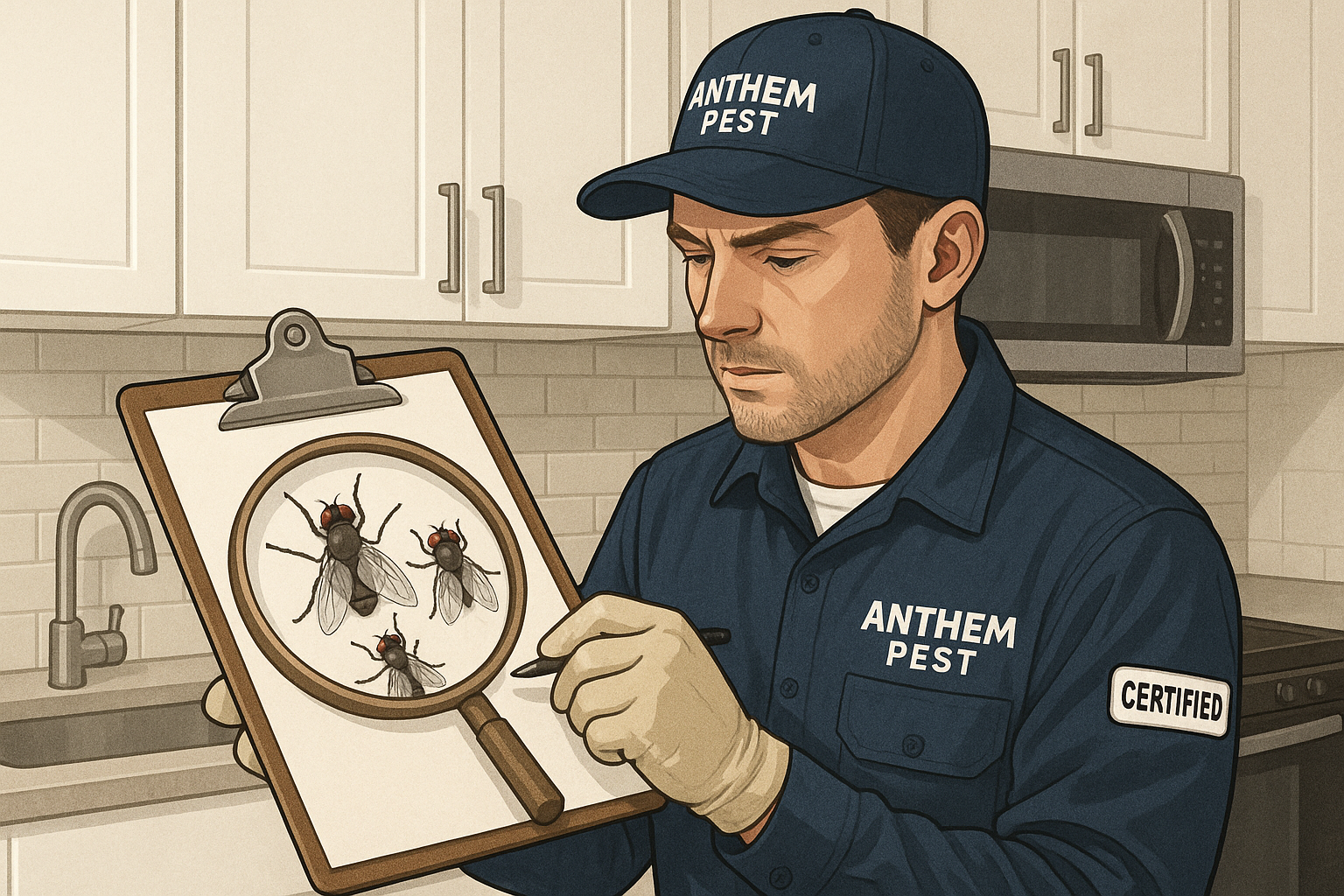
Anthem Pest’s hallmark is a 30‑minute on‑site assessment guarantee. Within half an hour, a certified technician arrives, conducts the checklist above, and delivers a concise report of what’s attracting flies to your home. This rapid evaluation saves you time and prevents the problem from escalating.
Tips for documenting findings for pest‑control professionals
- Take clear photos of each hotspot, focusing on the exact location and any visible waste.
- Record the time of day when fly activity peaks; this helps technicians pinpoint breeding cycles.
- Note any recent changes—new trash containers, outdoor lighting, or landscaping adjustments—that could influence fly populations.
- Compile your observations in a simple list (or a quick email) and attach the photos before the technician arrives.
Armed with a systematic inspection and solid documentation, you’ll empower Anthem’s experts to recommend the most effective, targeted treatment—whether it’s a one‑time fogger, a residual spray, or a preventive barrier. The result is a faster resolution and a fly‑free home that stays that way.
Treatment Options and Pros/Cons
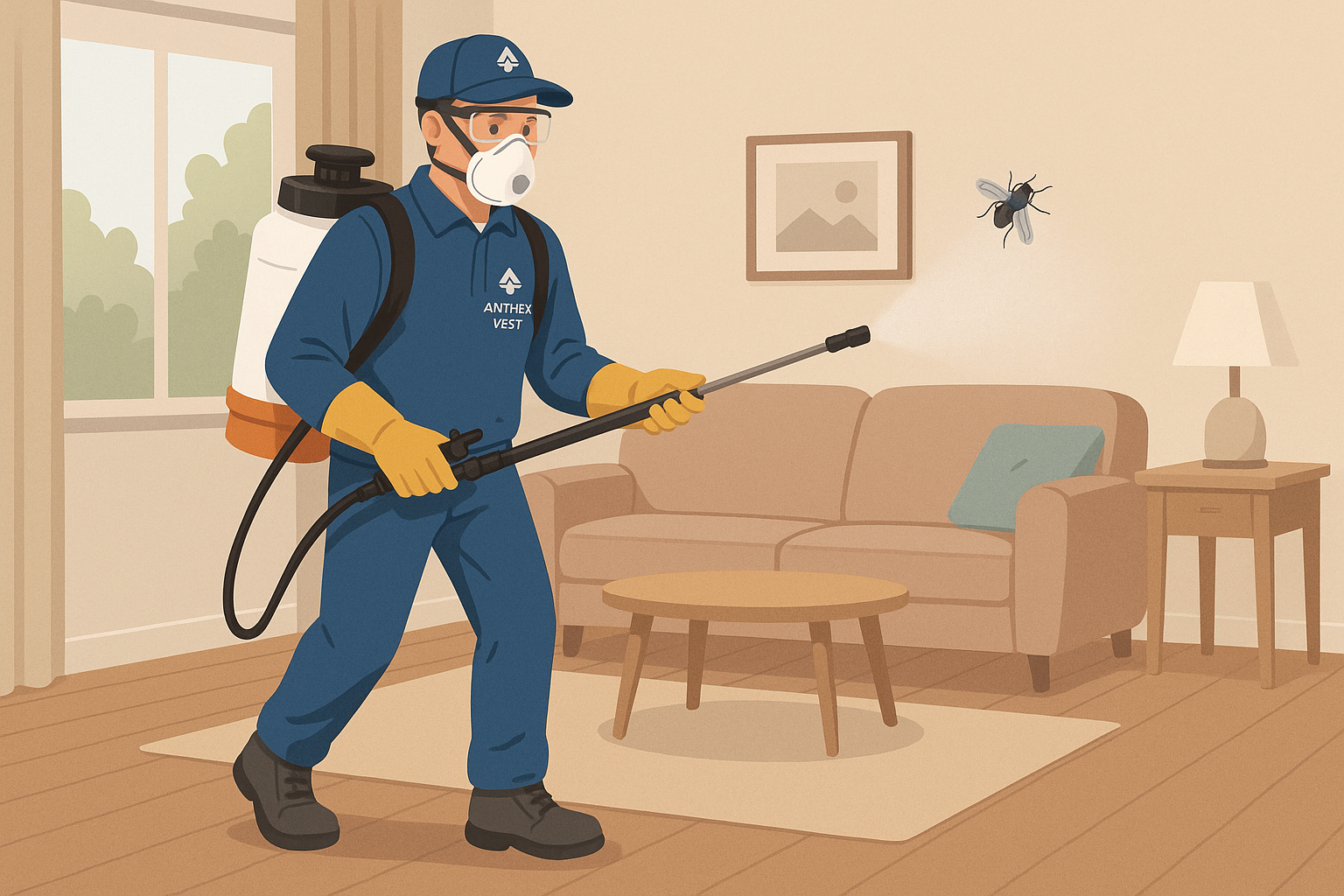
When house flies start buzzing around your kitchen, the quickest way to regain control is to understand the toolbox available to you. In Brookhaven, Georgia, homeowners typically choose between three proven approaches: chemical sprays, bait‑and‑trap systems, and a broader Integrated Pest Management (IPM) program. Each method follows strict EPA regulations and aligns with the NPMA, 2023 house‑fly guidelines.
Chemical Sprays
EPA‑registered residual insecticides remain the workhorse for rapid knock‑down. Products such as pyrethroid‑based sprays or organophosphate foggers are applied to interior walls, window frames, and ceiling corners where flies rest. When sprayed correctly, you’ll see a one‑hour knock‑down rate that dramatically reduces the visible population. Safety protocols include wearing protective gloves, ventilating the area for at least 15 minutes, and keeping children and pets out of treated zones until the label’s re‑entry time expires.
Fly Baits & Traps
Sugar‑based baits lure flies to ingest a slow‑acting toxin, while UV light traps attract them to an electrified grid or adhesive surface. Bait stations are inexpensive—often under $20 for a month’s supply—and can be placed discreetly near trash cans or pet doors. UV traps cost a bit more, but they provide immediate visual confirmation that flies are being captured. Both options work best in low‑infestation homes where sanitation is already decent, because the insects need a food source to find the bait.
Integrated Pest Management (IPM)
IPM blends sanitation, exclusion, and targeted treatments into a single, sustainable plan. First, eliminate breeding sites by securing garbage lids, cleaning pet waste, and fixing window screens. Next, install physical barriers—like door sweeps and fine mesh—to keep flies from entering. Finally, apply a reduced‑risk insecticide only where monitoring indicates activity. This layered approach not only lowers chemical use but also addresses the root causes that keep flies returning season after season.
Choosing the Right Method
If you’re dealing with a sudden swarm in a single room, a residual spray will give you the fastest relief. For ongoing, low‑level activity, bait stations or a UV trap are cost‑effective and require minimal chemical exposure. Homeowners who prefer a long‑term, environmentally conscious solution should start with IPM; the occasional spot‑treatment becomes a safety net rather than the primary strategy.
| Method | Advantages | Disadvantages |
|---|---|---|
| Chemical Sprays |
|
|
| Fly Baits & Traps |
|
|
| Integrated Pest Management |
|
|
All three methods comply with the latest EPA‑approved active ingredients, and Anthem Pest regularly verifies product registrations before each service call. By following the NPMA guidelines and choosing the approach that matches your infestation level, you can keep house flies at bay while protecting your family and the environment.
Cost Breakdown for Brookhaven Homeowners
2024 Pricing Snapshot
When comparing house fly control Brookhaven pricing, you’ll hear clear, upfront numbers from Anthem Pest Control that match the level of service you need:
- One‑time interior spray: $120 – $180 per visit.
- Full Integrated Pest Management (IPM) package (inspection, treatment, and a follow‑up visit): $250 – $350.
- Annual service contract (scheduled treatments and ongoing monitoring): $400 – $550 per year.
These ranges reflect typical homes in the Brookhaven area for 2024 and include all labor, materials, and the safety safeguards Anthem is known for.
What Drives the Price?
Several variables can push a quote toward the high end of each range:
- Square footage – Larger homes require more product and longer labor times.
- Infestation severity – A heavy fly population may need extra treatment cycles or stronger residual sprays.
- Pets and children – Homes with sensitive occupants often call for low‑toxicity formulations, which can be slightly pricier.
- Access difficulty – Tight crawl spaces, multi‑level decks, or cluttered interiors increase the time technicians spend on site.
By discussing these factors during the initial inspection, Anthem can tailor a solution that balances effectiveness with your budget.
Brookhaven vs. National Averages
The USDA’s 2024 national pest‑control survey shows that homeowners across the United States typically pay:
- One‑time interior spray: $140 – $210
- Full IPM package: $280 – $380
- Annual contract: $430 – $620
Brookhaven prices sit comfortably within—or slightly below—these averages, reflecting the competitive market and Anthem’s commitment to transparent, affordable rates.
| Service Type | Brookhaven Range | National Avg. | Long‑Term Savings* |
|---|---|---|---|
| One‑time interior spray | $120 – $180 | $140 – $210 | – |
| Full IPM package | $250 – $350 | $280 – $380 | Up to $80 per year |
| Annual contract | $400 – $550 | $430 – $620 | Potential $70‑$100 savings |
*Savings assume a typical 3‑year horizon where IPM prevents repeat infestations and reduces the need for emergency calls.
Why an IPM Plan Saves Money
An IPM approach tackles the root cause—breeding sites, waste buildup, and entry points—rather than merely knocking down adult flies. Over time, homeowners see fewer repeat visits, lower chemical usage, and a healthier indoor environment for families and pets. The modest up‑front cost of a $250‑$350 IPM package often translates into a $150‑$300 reduction in total expenses over three years compared with repeatedly purchasing one‑time sprays.
Seasonal Timing and Prevention Tips
In Brookhaven, house flies thrive when the weather warms up and humidity climbs. The most aggressive window stretches from early May through late October, covering late spring, the full summer heat, and the early days of fall. During these months, adult flies reproduce rapidly, and a single female can lay up to 150 eggs in a matter of days. That’s why you’ll notice a noticeable uptick in fly activity around outdoor gatherings, barbecues, and even on your front porch after a rainstorm.
When Are House Flies Most Active in Brookhaven?
Peak activity aligns with average daytime temperatures between 75°F and 85°F and nightly humidity above 60 percent. These conditions are typical from mid‑May to early September, but the tail end of October can still see lingering populations, especially in shaded, moist areas like garden beds or under decks. Knowing this timeline helps you schedule preventive measures before the flies become a nuisance.
Neighborhood‑Specific Prevention
- Brookhaven Village: This tightly packed community often shares communal trash areas. Keep your personal bins tightly sealed with snap‑tight lids, and if you have a shared dumpster, request regular cleaning from the property manager.
- Medlock: Many homes here have pets that spend time outdoors. Promptly scoop and dispose of pet waste, and consider a pet‑friendly enzymatic cleaner to eliminate any lingering odors that attract flies.
Year‑Round Preventive Actions
- Repair screens and windows: Even the smallest tear can become an entry point. Use fine‑mesh screen repair kits or replace damaged sections entirely.
- Install door sweeps: A simple sweep on exterior doors blocks the gap where flies slip inside, especially on humid evenings.
- Regular garbage removal: Take out trash at least twice a week during the peak season, and store bins away from doors and windows.
- Proper compost management: Keep compost piles covered, turn them regularly, and avoid adding meat or dairy scraps that accelerate fly breeding.
For a handy, printable checklist of these steps, download Anthem’s seasonal flyer once the link is available. It outlines a month‑by‑month action plan tailored to Brookhaven’s climate.
By timing your preventative measures with the local fly calendar and following neighborhood‑specific tips, you’ll reduce the chances of an infestation before it starts. If you notice flies persisting despite these steps, give Anthem Pest Control a call at 877‑371‑8196 or visit our website for a professional assessment and treatment plan.
Choosing a Professional Exterminator
When a house fly infestation takes hold, the difference between a quick fix and a lasting solution often comes down to who you hire for house fly control Brookhaven services. Not every pest-control outfit meets the rigorous standards required in Georgia, so start with a solid credentials checklist.
- Georgia state license – Guarantees the company complies with state regulations and has undergone background checks.
- EPA certification – Confirms technicians are trained to apply pesticides safely and responsibly.
- BBB rating – A high Better Business Bureau score reflects transparent business practices and satisfied customers.
Beyond licenses, confirm the exterminator carries liability insurance and backs its work with a satisfaction guarantee. A written service agreement should spell out treatment frequency, follow‑up visits, and warranty terms, giving you peace of mind and protecting your investment.
Anthem’s local office in Brookhaven coordinates rapid dispatch and keeps records for each property, ensuring consistent results year after year.
Why Anthem Pest is the premier choice
- Locally owned technicians who know the neighborhood’s pest pressure and can tailor treatments accordingly.
- 24‑hour response window – a technician will be on your doorstep within a day, minimizing fly breeding cycles.
- Transparent pricing and detailed estimates – no hidden fees; you receive a clear, itemized plan before any work begins.
- Glowing testimonials from Brookhaven residents who praise fast results and courteous service.
Choosing Anthem means you’re backed by a company that blends state‑mandated qualifications with a personal, community‑focused approach. Ready to act? Call now for a free, no‑obligation estimate and experience the Anthem difference.
Immediate contact: 877‑371‑8196
Frequently Asked Questions
Below are answers to the most common questions we receive from Brookhaven homeowners.
How long does a treatment last?
Our standard house‑fly program delivers a residual effect that typically protects your home for 2‑4 weeks. Because we pair chemical applications with Integrated Pest Management (IPM) practices—such as sanitation tips and exclusion measures—the barrier often lasts beyond the chemical window, keeping flies away until your next visit. A seasonal check‑up helps maintain the barrier throughout the year.
Are the chemicals safe for children and pets?
Yes. All products we apply are EPA‑approved and formulated for residential use. Our technicians follow strict safety protocols, including wearing protective gear and applying the lowest effective dose. After treatment we advise a brief ventilation period—usually 15‑30 minutes—to clear any airborne residue, after which families and pets can safely re‑enter the treated area. Our technicians can also show you the label details on site.
What if flies return after treatment?
We stand behind our work with Anthem’s satisfaction guarantee. If you notice a resurgence of flies within the residual period, simply call us. We’ll schedule a complimentary follow‑up visit to reassess the situation, adjust the treatment plan, and re‑apply if necessary—no extra charge. The guarantee includes a 30‑day monitoring period; we’ll revisit at no extra cost if flies persist.
Where can I find more safety information?
Detailed EPA safety data sheets for each active ingredient are available on our website and can be provided on request. These documents outline toxicity levels, first‑aid measures, and environmental impact, giving you full transparency about what’s being used in your home. PDFs are available in our online portal, or we can email them to you.
Conclusion and Call to Action
Early intervention is the most effective way to keep house flies from turning your home into a summer nuisance. Understanding realistic cost expectations—typically a modest investment for a lasting solution—helps you budget confidently. Seasonal prevention, such as sealing entry points and removing breeding sites before the warm months, reduces the need for repeat treatments. With years of local expertise, Anthem Pest combines safe, transparent pricing and proven methods to deliver fast, reliable fly control in Brookhaven.
We invite you to schedule a complimentary home inspection and see how our tailored approach can protect your family and property. Book your free inspection now or call us at 877‑371‑8196 to speak directly with a certified technician.
Ready for a fly-free home? Contact Anthem Pest today for professional house fly control Brookhaven homeowners trust, request a free, no-obligation quote, and experience the peace of mind that comes with transparent service.