Millipede Invasions Hit Dunwoody After Summer Rains
After the unusually wet summer of 2024, Dunwoody homeowners have started to notice a familiar, many‑legged visitor marching across driveways, basements, and even living rooms. The rain‑soaked lawns and lingering moisture have created the perfect highway for millipedes, and the numbers reported by local pest professionals have surged by more than 40% compared with previous years.
Why should this matter to you? Millipedes themselves don’t chew through wood or fabric, but the sheer volume of them can overwhelm a home’s drainage system, clog gutters, and attract other pests that thrive in damp conditions. A sudden influx can also signal that excess moisture is seeping into foundations, crawl spaces, or basements—issues that, if ignored, may lead to mold growth, wood rot, or structural concerns.
In the pages that follow, we’ll break down everything you need to know to take control of the situation. You’ll learn the basic biology that makes millipedes thrive after rain, how to identify the most common species in the Atlanta metro area, and the real risks they pose to your property. We’ll walk you through the most effective treatment options—from targeted chemical barriers to environmentally‑friendly baits—and give you a clear picture of pricing so you can budget with confidence. Finally, we’ll share practical prevention tips that keep moisture out of your home and stop future invasions before they start.
When it comes to fast, affordable, and safe solutions, Anthem Pest Control is the trusted name in Dunwoody. Our locally trained technicians understand the unique climate patterns that drive these infestations, and we’re ready to tailor a plan that protects your home without breaking the bank. Call us today at 877‑371‑8196 for a free inspection and fast response.
Millipede Biology and Seasonal Activity in Georgia
Common Species in Dunwoody
Two millipede species dominate residential infestations in the Atlanta metro area. The Oxidus gracilis, often called the Asian millipede, is a small, brown‑striped creature that thrives in urban mulch and garden beds. The larger Narceus americanus, known as the American giant millipede, can reach up to 12 cm in length and displays a darker, glossy exoskeleton. Both species are harmless to humans but become a nuisance when they congregate on foundations, patios, and indoor entryways.
Life‑Cycle Overview
Millipedes begin life as tiny, translucent eggs deposited in moist soil or leaf litter. After hatching, juveniles undergo a series of molts—sometimes up to 12 stages—gradually adding body segments and gaining the characteristic many‑legged appearance. Once they reach adulthood, they focus on feeding and reproduction rather than further growth. In Georgia’s climate, a full life cycle typically spans 12–18 months, with adults living another year before dying off.
Moisture Preference and Habitat
Both species are hygrophilic, meaning they seek out damp environments to prevent desiccation. You’ll often find them burrowed in leaf litter, under garden mulch, within compost piles, or along the perimeter of homes where foundations retain moisture. Cracks in concrete, clogged gutters, and over‑watered flower beds create perfect micro‑habitats that encourage millipede activity right next to your doors.
Seasonal Pattern in Georgia
Rainfall acts as a trigger for millipede movement. After a heavy summer storm, the soil’s moisture level spikes, prompting juveniles and adults to emerge in search of food and mates. Activity climbs through late summer, peaks in September and October, and then tapers off as cooler, drier air returns. Homeowners who notice swarms during this window are experiencing the natural seasonal surge rather than an isolated infestation.
According to the Georgia Department of Agriculture, millipede service requests rose 22 % in 2023 compared with the previous year, underscoring the growing visibility of these pests during the fall months.
For a deeper dive into identification, monitoring, and control strategies, consult the University of Georgia Extension – Millipede Management Guide.
Spotting Millipedes Around Your Dunwoody Home
Key Identification Traits
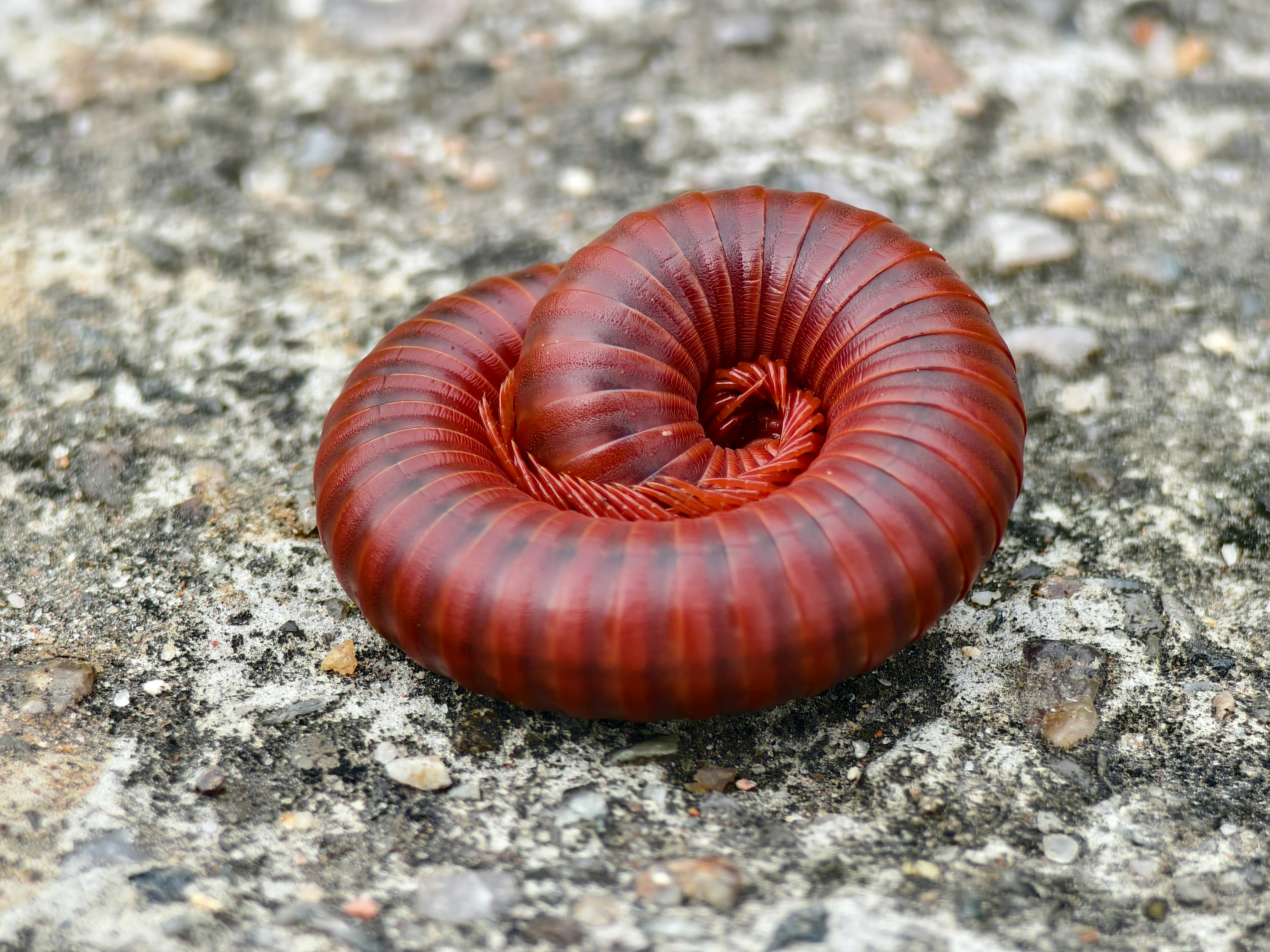
When you first see a millipede, the most obvious clue is its many legs—usually two pairs per body segment, giving the appearance of dozens of tiny feet. The body is long, cylindrical, and rounded, resembling a tiny, segmented rope. Unlike many insects, millipedes move slowly and deliberately, often in a straight line as they search for moisture and decaying organic matter.
How Millipedes Differ from Common Neighbors
- Centipedes: Fast‑moving, flattened bodies with one pair of legs per segment; they are predators, not detritivores.
- Pill bugs (woodlice): Shorter, dome‑shaped, and capable of rolling into a tight ball for defense; they have fewer legs and a harder exoskeleton.
- Millipedes: Slow, rounded, many‑legged, and prefer damp, decomposing material.
Neighborhood Hot Spots in Dunwoody
Millipedes thrive where leaf litter and moisture collect. In Dunwoody, the following areas often become gathering points:
- North Dunwoody – shaded sidewalks with abundant fallen leaves.
- Brook Run – the creekside trail creates a consistently damp micro‑climate.
- Dunwoody Village – ornamental gardens with mulched beds.
- Homes bordering I‑285 – large expanses of lawn bordering the highway tend to trap wind‑blown debris.
Real‑World Scenario: A Storm‑Triggered Parade
Imagine coming home after a heavy rainstorm to find a thin line of millipedes marching across your patio tiles. The rain has pushed them out of the leaf‑laden gutters and into the lowest point of your outdoor space. Their entry point is often a small crack in the foundation or a gap under a deck rail where moisture has seeped in. This visual cue—multiple millipedes moving together in a single file—signals that the surrounding soil is saturated and that your home’s perimeter may need sealing.
Tips for Confirming Identification
Grab a flashlight and examine the creature up close. Count the leg pairs; millipedes typically have 30 – 400 legs, depending on species, while centipedes have far fewer. Notice the gait: millipedes glide in a smooth, deliberate rhythm, whereas centipedes dart erratically. If the body can curl into a tight ball, you’re likely looking at a pill bug, not a millipede.
Risks and Damage Millipedes Can Cause
When millipedes gather in large numbers, they create a humid micro‑environment that can linger on basement floors, crawl spaces, and around foundation walls. The excess moisture they trap encourages wood rot and can seep into basement insulation, turning a dry space into a breeding ground for mold and decay.
Homeowners often notice millipedes crossing countertops or kitchen islands, especially after rain. While the insects themselves are harmless, their movement can transfer soil‑borne bacteria onto food preparation surfaces, raising the risk of contamination and food‑borne illness.
“Millipedes are indicators of excess moisture, which can foster mold.” – UGA Extension
Consider the case of a Dunwoody residence on Peachtree Road. After a heavy spring storm, the family observed dozens of millipedes crawling along the foundation and inside the basement. Within weeks, they discovered water stains on the lower walls and a soft, spongy spot on a wooden support beam. A professional inspection linked the damage to prolonged moisture retention caused by the millipede congregation, ultimately requiring foundation waterproofing and wood replacement.
This example underscores a broader truth: millipedes rarely appear out of nowhere. Their presence signals underlying drainage problems—such as clogged gutters, improper grading, or failing French drains—that allow water to pool near the home’s perimeter.
Addressing the root cause is essential. By improving site drainage, sealing cracks, and ensuring proper ventilation, homeowners can reduce both the millipede population and the associated moisture‑related risks. Regular inspections by a trusted pest‑control partner, like Anthem Pest Control, help catch these issues before they evolve into costly structural damage.
Why Professional Control Beats DIY Solutions
When a millipede invasion shows up on your porch, the instinctive reaction is often to grab the nearest spray from the garage and hope for the best. While that approach feels quick and cheap, it rarely delivers the lasting protection you need, and it can create hidden hazards for the people and pets you love.
Limitations of over‑the‑counter sprays
OTC products are formulated for short‑term knock‑down, not for the deep, residual barrier that a seasoned technician can build. Most retail sprays lose effectiveness after a few days because they lack the stabilizers and proper carrier agents that professional‑grade formulas contain. As a result, millipedes simply return once the chemical fades, forcing you into a cycle of re‑application and added expense.
Health risks to children and pets
Many household sprays contain broad‑spectrum insecticides that are not selective for millipedes. When applied indiscriminately, residues can linger on sidewalks, driveways, and even indoor thresholds where children play and dogs nap. Inhalation or skin contact with these chemicals can trigger irritation, allergic reactions, or more serious toxicity, especially in young children and sensitive pets.
Advantages of certified technicians
A licensed pest professional brings three critical advantages. First, they conduct a thorough inspection to identify the exact species, entry points, and breeding sites, allowing them to choose the most effective EPA‑registered product. Second, they apply the treatment with calibrated equipment, ensuring the correct dosage and coverage for a lasting barrier. Third, they back their work with warranty protection, so if millipedes reappear within the guaranteed period, a follow‑up visit is included at no extra cost.
Anthem Pest’s edge in Dunwoody
Anthem Pest is fully state‑licensed and uses only EPA‑registered formulations that meet strict safety standards. With a 15‑year track record serving Dunwoody homeowners, our technicians know the local soil, moisture patterns, and millipede hotspots better than anyone. That local expertise, combined with our transparent pricing and guaranteed results, means you get a solution that protects your family today and keeps the crawl‑ies away for months to come.
Treatment Options for Millipedes in Dunwoody
Millipedes are attracted to moisture and organic debris around your home’s foundation. Choosing the right control method depends on how quickly you need results, your budget, and how much you value a low‑impact solution. Below are the three primary strategies we use at Anthem Pest Control, followed by a quick side‑by‑side comparison.
Chemical Barrier Treatment
We apply EPA‑registered granules or a liquid concentrate in a continuous band around the exterior walls. The product creates a residual barrier that remains active for 30‑45 days, killing millipedes as they cross the line. This method offers fast, reliable knock‑down of existing populations and is especially useful for severe infestations.
Eco‑Friendly Options
Diatomaceous earth (DE) dusting and neem‑based sprays provide a low‑toxicity alternative. DE works mechanically, abrading the millipedes’ exoskeletons, while neem interferes with their feeding and reproduction. Both are safe around pets and children, but they may require re‑application after heavy rain or irrigation.
Integrated Pest Management (IPM)
IPM blends cultural, mechanical, and chemical tactics. We start by reducing moisture sources—fixing leaks, improving drainage, and trimming vegetation away from the house. Next, we seal cracks and gaps in the foundation. Finally, we reinforce the perimeter with either a chemical or eco‑friendly barrier, depending on your preferences. This holistic approach delivers long‑term protection while minimizing chemical use.
Side‑by‑Side Comparison
| Method | Effectiveness | Cost | Environmental Impact | Maintenance Frequency |
|---|---|---|---|---|
| Chemical Barrier | High – rapid knock‑down | Medium‑High | Moderate – synthetic chemicals | Every 30‑45 days (re‑treatment) |
| Eco‑Friendly (DE / Neem) | Medium – effective with proper coverage | Low‑Medium | Low – natural ingredients | Re‑apply after heavy rain or every 2‑3 months |
| IPM | Variable – depends on homeowner cooperation | Low‑Medium | Low – emphasizes prevention | Ongoing maintenance (moisture checks, seal inspections) |
Typical Perimeter Treatment Illustration
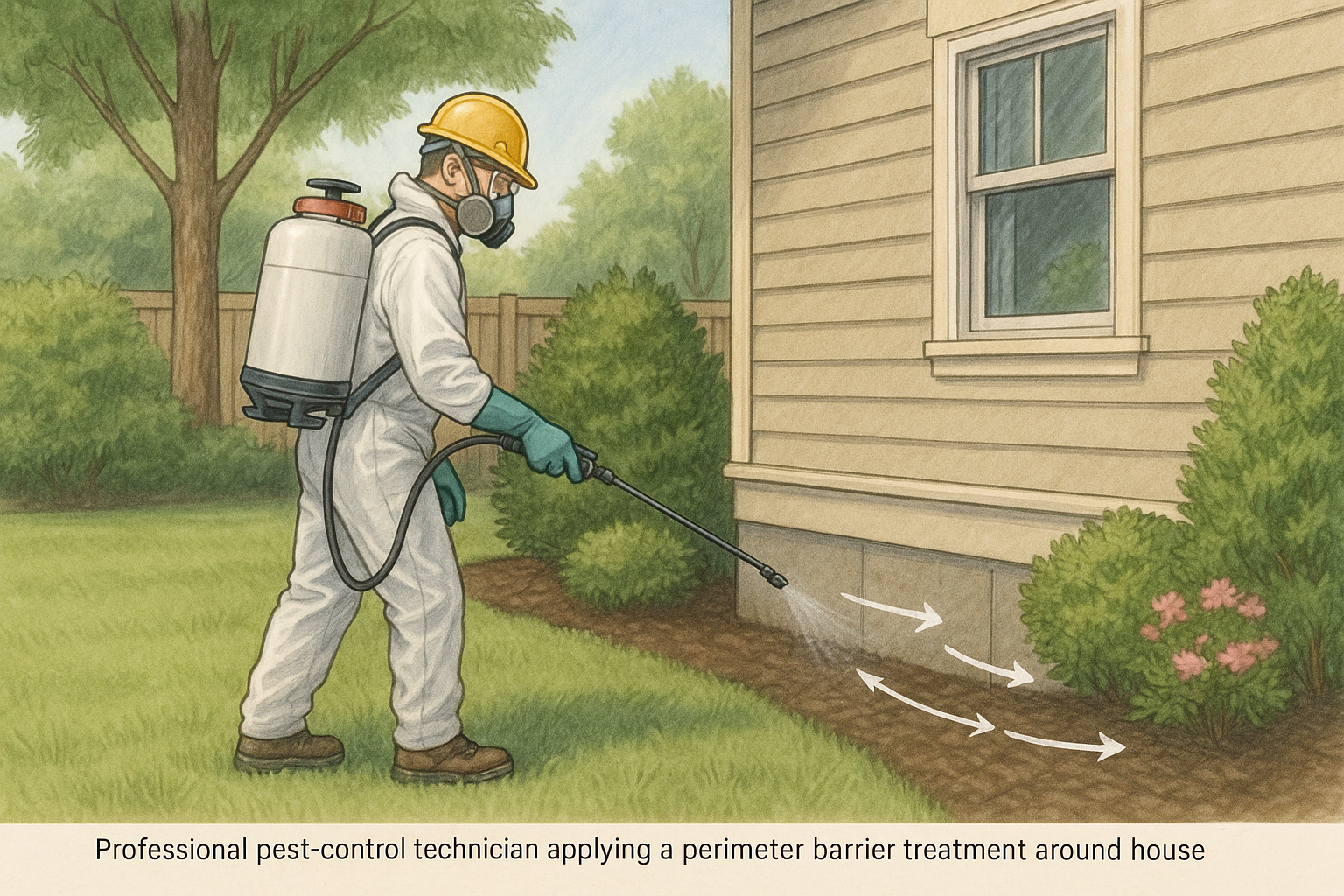
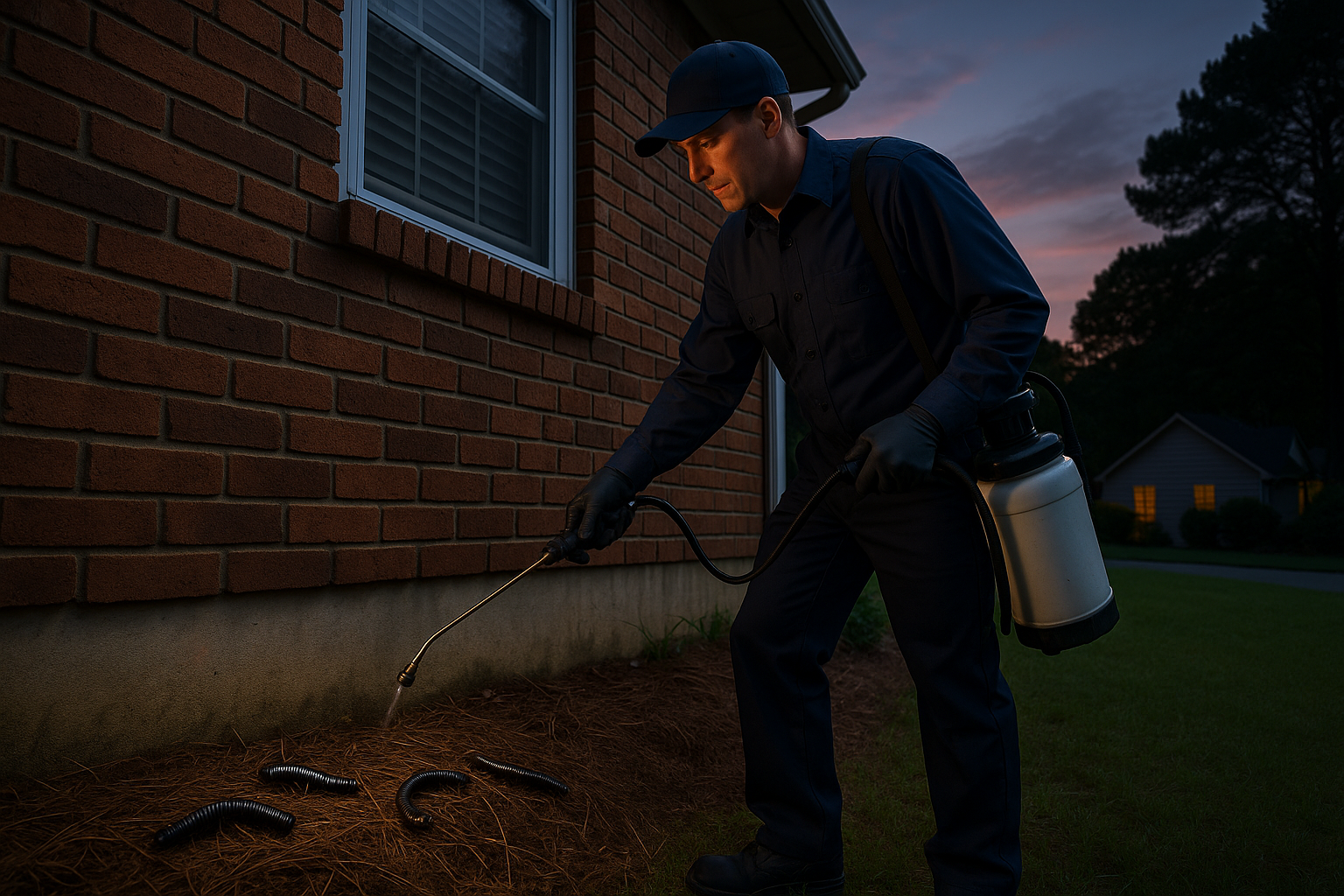
This visual shows a technician spreading granules in a continuous 12‑inch band around the foundation—exactly the step that creates a lasting shield against millipedes seeking shelter in your yard.
Transparent Pricing for Millipede Control
When it comes to protecting your home from millipedes, knowing exactly what you’ll pay is as important as the treatment itself. At Anthem Pest Control we break every charge down so you never wonder where a dollar went.
Standard Perimeter Treatment
- Cost: $95 – $130 per visit
- What’s included: A thorough inspection, the application of a professional‑grade millipede barrier around the home’s exterior, and all necessary materials.
This option is ideal for homeowners who have spotted millipedes around the foundation or need a quick, effective shield before the rainy season.
Full‑Service Package
- Cost: $210 – $280
- Includes: Standard perimeter treatment, a follow‑up visit to ensure the barrier holds, and a moisture‑assessment report that identifies conditions encouraging millipede activity.
Because millipedes thrive in damp environments, the added moisture assessment helps you address the root cause, reducing the likelihood of future invasions.
Multi‑Year Contracts & Bundled Savings
Committing to a two‑ or three‑year service plan can shave 10‑15 % off the per‑visit price. Even better, we offer bundled discounts when you pair millipede control with other services—such as ant or spider treatments—saving you up to $50 per combined visit.
How Our Prices Compare
According to the NPMA 2024 Pricing Survey, the regional average for a perimeter millipede treatment in the Southeast falls between $110 and $140. Anthem’s rates sit comfortably within that range, and our full‑service package often undercuts the national average for comparable comprehensive plans.
No Hidden Fees – Guaranteed Results
Every invoice we issue lists each service line item, so you see exactly what you’re paying for. All treatments come with a written guarantee: if millipedes return within the warranty period, we’ll re‑treat your property at no extra charge. This “free re‑treatment” promise is part of our transparent‑pricing philosophy and reflects the confidence we have in our methods.
Bottom line: you receive a clear, upfront price, a detailed service plan, and the peace of mind that comes from a company that stands behind its work.
Choosing a Local Expert – Spotlight on Anthem Pest
For more than 15 years, Anthem Pest has been a trusted name across the Atlanta metro area, and we’ve built a dedicated team right here in Dun‑Doo‑wy. Our technicians know the local climate, the common entry points, and the seasonal habits of millipedes that make this neighborhood unique. That local knowledge translates into faster, more precise treatments for your home.
When a millipede invasion strikes after a rainstorm, you shouldn’t wait. Anthem’s 24/7 emergency line puts a trained professional on the phone within minutes, and we’ll dispatch a crew to your property the same day—often within an hour. The first inspection is free, and every service comes with a satisfaction guarantee, so you never pay for a job that doesn’t work.
“Anthem Pest arrived within an hour, treated our yard, and we haven’t seen a single millipede since. Highly recommend!” – Jane D., Dunwoody resident.
Ready to protect your yard and interior from these many‑legged guests? Call us now at 877‑371‑8196 or visit anthempest.com to schedule your free inspection. Our Dunwoody specialists are standing by to give you the peace of mind that only a proven, local expert can provide.
Frequently Asked Questions
Are millipedes harmful to pets?
Millipedes are not poisonous to dogs or cats, and most pets will ignore them. If a pet does chew a millipede, the secretions can cause mild skin irritation or an upset stomach, but serious reactions are rare. Keep an eye on curious pups and discourage them from playing with these insects.
How long does a professional treatment last?
Our standard chemical barrier stays active for roughly 30‑45 days under normal conditions. We often schedule a follow‑up visit to refresh the perimeter and extend protection through the peak season. Weather, heavy rain, or landscaping changes can shorten the effective period, so a timely re‑application is key.
Can I treat my yard myself?
DIY products are available, but they usually lack the residual power of professional formulas and may expose you to unnecessary chemicals. Without proper equipment and expertise, you risk missing hidden entry points, which reduces overall effectiveness.
What if millipedes return after treatment?
Anthem stands behind its work with a warranty. If millipedes reappear within the guarantee window, we’ll return at no charge to re‑treat and adjust the barrier as needed.
For more detailed answers, visit our FAQ page.
Secure Your Home with Professional Millipede Control
Professional millipede treatment removes excess moisture, blocks entry points, and delivers lasting protection for your home. With Anthem Pest’s transparent pricing, you know exactly what you’re paying for—no hidden fees, just effective results.
Our technicians understand Dunwoody’s humid climate and clay‑rich soil, so we target the conditions that attract millipedes and keep them out year‑round.
Ready for a free inspection? Call 877‑371‑8196 or visit our website to schedule a visit at no cost.
Let our certified technicians handle the heavy lifting so you can enjoy a dry, pest‑free home. We back every treatment with a satisfaction guarantee, ensuring you receive the highest level of service and protection.
Trust the local experts who combine science, experience, and a commitment to your peace of mind. Visit Anthem Pest Control