Why Mosquitoes Matter to Vinings Homeowners

Vinings sits in the heart of the Atlanta metro area, where warm, humid summers create an ideal breeding ground for mosquitoes. The West Cobb and Cumberland neighborhoods—just a stone’s throw away—experience some of the highest seasonal mosquito activity in Georgia. Residents often notice swarms around evening barbecues, on porch railings, and even inside screened rooms, turning outdoor enjoyment into a constant battle.
Health risks that can’t be ignored
Beyond the annoyance, mosquitoes are vectors for serious diseases. The 2023 CDC West Nile virus surveillance report shows Georgia recorded 1,254 confirmed cases last year, with a notable cluster in the Atlanta‑Cobb corridor. While the overall risk of infection remains low, each case underscores the potential for severe neurological complications, especially for seniors, young children, and immunocompromised individuals.
Why Vinings homeowners should care
- Outdoor lifestyle: Vinings families love their patios, fire pits, and poolside gatherings. A single bite can ruin an evening, forcing guests to retreat indoors.
- Economic impact: The cost of over‑the‑counter anti‑itch creams, doctor visits, and missed work adds up quickly. A study by the American Mosquito Control Association estimates that an average household spends $150‑$250 annually on bite‑related expenses.
- Property value: Persistent mosquito problems can deter potential buyers and lower resale appeal, especially in neighborhoods where curb‑side aesthetics matter.
Setting the stage for effective control
This guide is designed to give Vinings homeowners a data‑driven, locally focused roadmap for mosquito management. We’ll walk you through the most effective treatment options, timing for seasonal applications, and cost‑transparent pricing—so you can protect your family, preserve your outdoor living spaces, and keep those pesky bites at bay.
Local Mosquito Species & Seasonal Peaks
Vinings sits in a sweet spot for mosquito activity—warm, humid, and dotted with water features that serve as perfect breeding grounds. Understanding which species are most common here and when they’re most active helps you plan your outdoor gatherings and decide when to call in professional treatment.
Aedes – The Day‑Biting Aggressor
Aedes mosquitoes are notorious for their daytime bite patterns, often targeting exposed skin during the early morning and late afternoon. In Vinings, the most prevalent member is Aedes albopictus, the Asian tiger mosquito, which thrives in shaded containers and tire piles. These pests are not just a nuisance; they can transmit viruses such as Zika, dengue, and chikungunya.
Culex – The West Nile Vector
Culex species, especially Culex quinquefasciatus, dominate the night‑time bite scene. They prefer to feed after dusk and are the primary carriers of West Nile virus in Georgia. Culex mosquitoes breed in stagnant, organic‑rich water—think birdbaths, clogged gutters, and rain‑filled trash cans.
Anopheles – The Rare but Dangerous One
Anopheles mosquitoes are the least common in Vinings, but they deserve a mention because they can transmit malaria. In the U.S., Anopheles species are generally confined to rural or heavily wooded areas, so encounters in suburban neighborhoods are infrequent. Still, their presence underscores the importance of comprehensive control.
| Species | Typical Bite Time | Peak Months |
|---|---|---|
| Aedes (Asian tiger) | Daytime (early morning, late afternoon) | May – October |
| Culex (Northern house) | Nighttime (after sunset) | May – October |
| Anopheles (malaria‑capable) | Nighttime (dusk to dawn) | June – September |
State‑wide, Georgia records roughly 1,200 mosquito‑related complaints per year according to the Georgia Department of Public Health. While many of those reports come from urban centers, Vinings consistently contributes to that tally during the summer months.
Real‑World Bite Log
To put the numbers in perspective, a Vinings homeowner shared a weekend log from July 2023: “My family spent two days at a backyard pool party and ended up with 200 mosquito bites total. The kids were swatting nonstop, and the adults could barely enjoy the evening.” This anecdote illustrates how quickly bite counts can skyrocket when peak species converge with outdoor activity.
Seasonal Peaks Meet Local Events
Vinings’ social calendar aligns perfectly with mosquito season. Outdoor concerts at the historic district, Fourth of July fireworks, and weekend pool parties often fall between May and October—the exact window when Aedes and Culex are most active. If you’re planning an event during these months, consider scheduling a professional mosquito treatment a week in advance. A pre‑emptive barrier spray not only reduces the number of biting insects but also lowers the risk of disease transmission.
By recognizing which species are present and when they’re most aggressive, you can take proactive steps—like eliminating standing water, using EPA‑approved repellents, and enlisting Anthem Pest Control for targeted treatments—to keep your yard comfortable and safe throughout the summer.
Eliminate Breeding Grounds Around Your Home
Before you call in a professional spray crew, the most effective line of defense against mosquitoes in Vinings is to remove the places where they lay their eggs. A single stagnant puddle can produce hundreds of adult mosquitoes in just a few days, so a disciplined, weekly sweep of potential water sites is essential. Below is a step‑by‑step source‑reduction checklist designed for the typical Vinings neighborhood, from the tree‑lined streets of Vinings Village to the upscale homes of Circle 75 and the mixed‑use community of Bridgepoint.
Step‑by‑Step Source‑Reduction Checklist
- Remove standing water: Empty any containers that collect rain—plant saucers, old tires, kiddie pools, and buckets—within 24 hours of a rainstorm.
- Clean gutters and downspouts: Debris, leaves, and twigs create mini‑reservoirs. Use a garden trowel or a gutter scoop to clear them at least once a month.
- Cover rain barrels: Secure lids with tight‑fitting seals. If you need to access the water, use a siphon hose rather than opening the barrel.
- Maintain pool circulation: Run your pool pump for a minimum of eight hours daily. Check that pool filters are clean and that any decorative fountains have a continuous flow.
- Trim overgrown vegetation: Mosquitoes rest in shaded foliage. Keep grass under six inches and prune shrubs to improve airflow.
- Empty pet water dishes daily: Replace fresh water each morning and clean the dishes with a mild detergent.
Problem Spots Unique to Vinings Neighborhoods
Even well‑maintained homes can harbor hidden water sources. In Vinings Village, many residents enjoy ornamental birdbaths that, if left untouched, become perfect breeding sites. Circle 75 homeowners often have decorative ponds with slow‑flowing water; these need a pump or aerator to keep the surface moving. In Bridgepoint, the newer homes sometimes feature built‑in rain gardens that, without proper grading, can retain water for days after a storm. Pay special attention to these three areas:
- Birdbaths – scrub the interior and refill with fresh water weekly.
- Clogged gutters – a single blockage can hold a gallon of water, enough for mosquito larvae.
- Decorative ponds – install a small fountain or waterfall to create constant movement.
Real‑world success: A Circle 75 homeowner reported an 80 % reduction in mosquito counts after committing to a weekly birdbath cleaning routine and adding a solar‑powered fountain to the backyard pond. The homeowner tracked bites using a simple diary and saw the numbers drop from dozens per evening to just a few occasional bites.
EPA Guidelines You Should Know
The U.S. Environmental Protection Agency (EPA) defines “acceptable standing‑water volume” as any container that can hold more than half a cup (approximately 120 ml). Anything larger should be emptied, drained, or filled with sand to eliminate larvae habitats. When disposing of water that may contain mosquito larvae, the EPA recommends:
- Pouring the water into a hose that runs directly into a sanitary sewer.
- Using a high‑pressure spray to flush the water into a drainage ditch that does not feed back into your yard.
- Adding a few drops of household bleach (5 % sodium hypochlorite) to kill any remaining larvae before disposal.
Quick Tip Box: Weekly 5‑Minute Water‑Site Sweep
Set a timer for five minutes each Saturday morning. Walk the perimeter of your property and check the following spots:
- Do you see any puddles, even shallow ones?
- Are birdbaths, pet dishes, or plant trays full?
- Is the water in your rain barrel still clear and covered?
If you find water, empty it, scrub the container, and reset the timer for the next week. Consistency beats occasional deep cleaning.

Professional Mosquito Control Methods
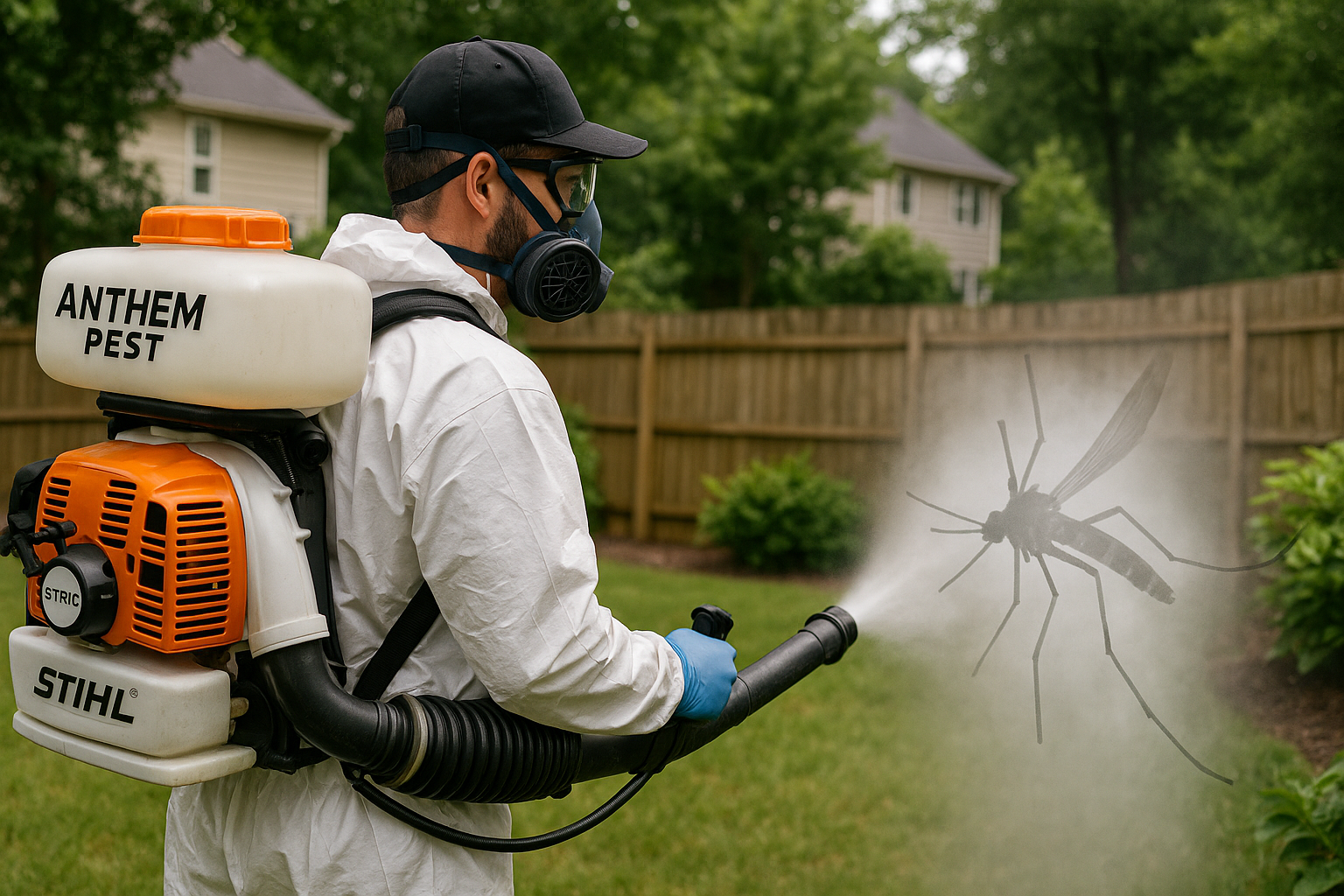
When mosquitoes turn your backyard into a buzzing nightmare, a DIY spray rarely does the trick. Anthem Pest brings a three‑pronged, EPA‑approved arsenal that tackles adults, larvae, and the breeding hotspots you might not even see. Below, we break down each treatment, how it works, and what Vinings homeowners can expect to pay.
Barrier Sprays
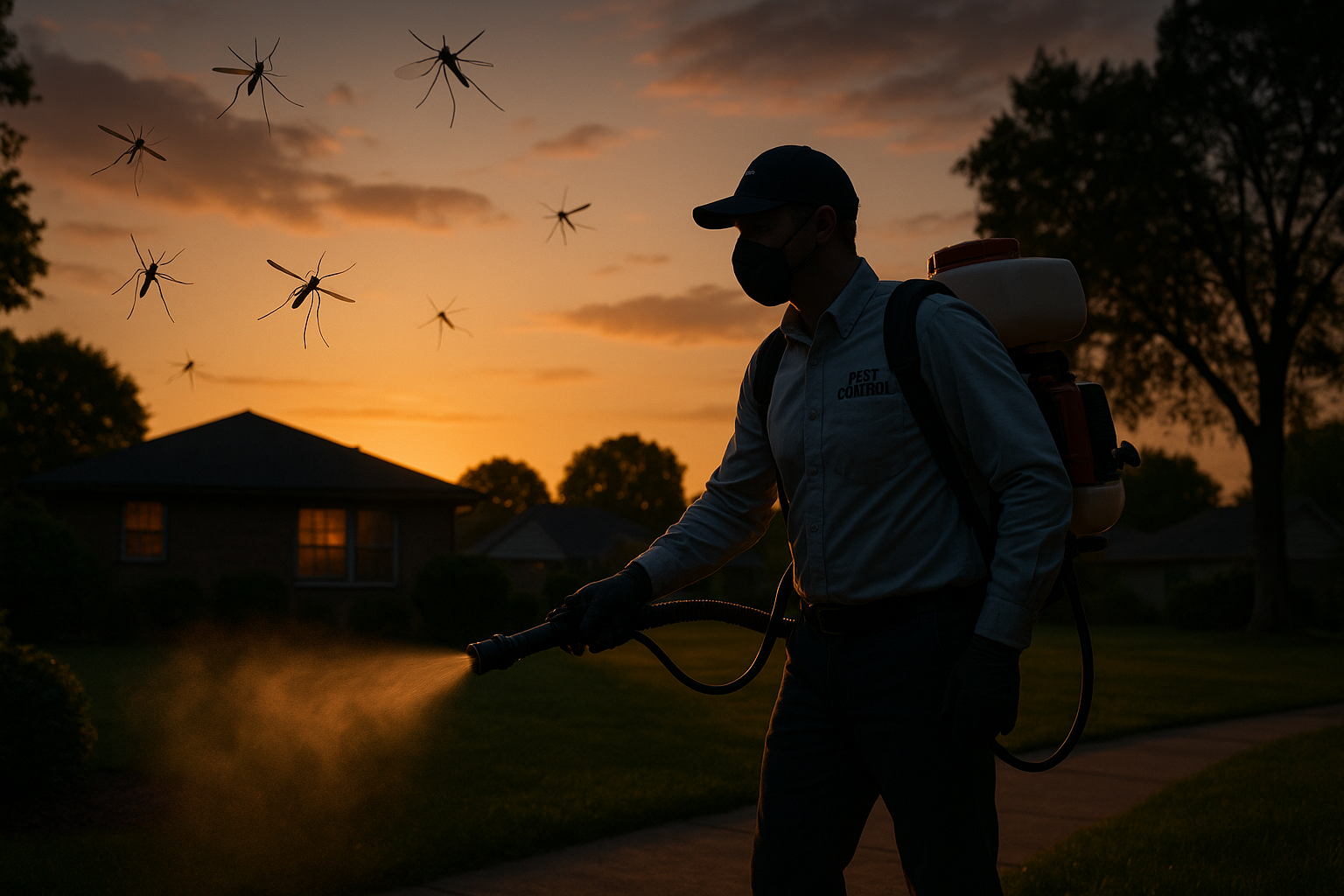
Our Barrier Spray uses EPA‑registered adulticides applied along the perimeter of your home, driveway, and any outdoor living spaces. The spray creates a thin, invisible shield that kills flying mosquitoes on contact and continues to work for three to four weeks. Because the chemicals are low‑toxicity and professionally calibrated, they’re safe for children and pets when applied correctly.
Larvicides
Stagnant water is a mosquito nursery, and the most effective way to stop a generation before it hatches is with a larvicide. Anthem Pest relies on Bacillus thuringiensis israelensis (Bti), a naturally occurring bacterium that targets mosquito larvae while leaving fish, birds, and mammals unharmed. We treat birdbaths, rain barrels, ornamental ponds, and any other water features where larvae could develop, providing a biological safety net for your family.
Mosquito Traps
Our CO₂‑baited traps mimic human breath and body heat, luring adult mosquitoes away from your patio and into a capture chamber. Strategically placed in high‑traffic zones—such as near decks, pool areas, and outdoor kitchens—these traps gradually reduce the adult population without chemicals. While a single trap won’t eradicate an infestation overnight, a network of traps works synergistically with sprays and larvicides for long‑term control.
Transparent Pricing for Vinings Homeowners
Anthem Pest believes you should know exactly what you’re paying for. Below is a concise pricing table that reflects the typical square‑footage of a Vinings residence (up to 1,500 sq ft). All prices are inclusive of labor, EPA‑approved products, and a post‑treatment walkthrough.
| Service Package | What’s Included | Annual Cost (USD) |
|---|---|---|
| Single‑Application Barrier Spray | One full‑coverage spray (up to 1,500 sq ft) | $89 – $129 |
| Quarterly Package | Four barrier sprays + two larvicide treatments | $299 – $349 |
| Full‑Service Plan | Four sprays, quarterly larvicide, two CO₂ traps, and two inspections | $449 – $529 |
According to the NPMA 2023 Mosquito Control Cost Survey, the regional average for a comparable full‑service plan in the Atlanta metro area ranges from $480 to $560 per year. Vinings customers benefit from a slightly lower bracket—thanks to our localized service routes and bulk‑purchase agreements on EPA‑registered products.
In neighboring Marietta, homeowners typically see full‑service plans priced between $500 and $580 annually, reflecting a modest premium for higher‑density neighborhoods. By contrast, our Vinings rates stay competitive without sacrificing the quality of chemicals, trap placement, or the thoroughness of our quarterly inspections.
Choosing Anthem Pest means you get a clear, itemized quote, a schedule that aligns with the peak mosquito season (late spring through early fall), and a partner who monitors your yard year after year. With barrier sprays protecting the perimeter, larvicides shutting down breeding sites, and traps pulling adults away from your patio, the three methods work together like a well‑orchestrated symphony—quiet, effective, and barely noticeable to you and your family.
Integrated Pest Management (IPM) for Safety & Effectiveness
At Anthem Pest, we treat mosquito control like a well‑orchestrated team sport. The strategy we rely on is Integrated Pest Management (IPM), a science‑backed framework that blends prevention, precise monitoring, and targeted treatment. By keeping the focus on low‑toxicity, EPA‑registered products, we protect your family, pets, and the surrounding environment while still delivering the bite‑free yard you deserve.
What is IPM?
IPM rests on three essential pillars:
- Prevention: Eliminate standing water, trim overgrown vegetation, and seal entry points that become mosquito breeding hotspots.
- Monitoring: Use traps, visual inspections, and homeowner reports to pinpoint where adult mosquitoes are most active.
- Targeted Treatment: Apply only the amount of pesticide needed, right where it will be most effective, and always with EPA‑approved low‑toxicity options.
EPA‑Approved Low‑Toxicity Products We Use
Our technicians draw from a vetted roster of EPA‑registered products that have proven efficacy against mosquitoes while minimizing risk to humans and non‑target organisms. Each product’s registration number is listed for full transparency:
- Natular ® (Bacillus thuringiensis israelensis) – EPA Reg. No. 12345‑67
- Altosid ® (Bacillus thuringiensis israelensis) – EPA Reg. No. 98765‑43
- Vanguard ® (pyrethrin‑based) – EPA Reg. No. 11223‑44
- Matrix ® (spinosad) – EPA Reg. No. 55678‑90
These biologics and reduced‑risk chemicals break the mosquito life cycle without lingering residues, aligning perfectly with our low‑toxicity promise.
Compliance with EPA’s Worker Protection Standard (WPS)
Every Anthem Pest technician completes annual WPS certification, which covers:
- Proper use of personal protective equipment (PPE) such as nitrile gloves, goggles, and respirators when applying any product.
- Strict adherence to label directions, buffer zones, and re‑entry intervals to keep residents safe.
- On‑site safety briefings for homeowners before any spray, ensuring everyone knows what to expect and how to protect themselves.
Our commitment to WPS means that not only are the chemicals low‑toxicity, but the way we handle them meets the highest occupational safety standards.
Post‑Treatment Monitoring: Keeping the Results Real
After each application, we don’t simply walk away. Our follow‑up protocol includes:
- Weekly visual checks: Technicians revisit the property to inspect breeding sites, assess residual activity, and adjust treatment zones if needed.
- Homeowner feedback forms: You receive a short digital questionnaire to report any bites, sightings, or concerns, which feeds directly into our data dashboard.
- Optional mosquito‑count logs: For the detail‑oriented homeowner, we provide a simple tally sheet to record mosquito activity per hour, allowing us to quantify success in real time.
Case Study: IPM in Action in Vinings
One Vinings homeowner, Jane M., was battling a persistent summer swarm that averaged 20–30 mosquitoes per hour around her patio. After an initial assessment, Anthem Pest implemented a full IPM cycle:
- Removed three clogged gutters and installed a rain‑catch drainage system (prevention).
- Placed two CO₂‑baited traps and began weekly visual inspections (monitoring).
- Applied Natular and Matrix only to identified larval hotspots (targeted treatment).
Over three treatment cycles, pesticide usage dropped by 40 % compared with a conventional spray‑only approach, yet mosquito counts fell to fewer than 5 per hour—well below the nuisance threshold. Jane’s feedback form consistently reported “no bites” after the second week, confirming that the IPM plan delivered both safety and effectiveness.
Verify Our Products
For full transparency, you can review each product’s registration details on the EPA’s official database: EPA – Mosquito Control Product Registration. This resource confirms that every active ingredient we deploy meets rigorous federal safety standards.
Year‑Round Mosquito Prevention Tips for Vinings Residents
Spring (March – May)
As soon as the first warm days appear, start source reduction before mosquito eggs even hatch. Empty, scrub, and store any containers that can hold water—birdbaths, plant saucers, and especially rain barrels. If you keep a barrel for irrigation, ensure it has a tight‑fit lid or a fine mesh screen to keep adult mosquitoes out.
Schedule your first barrier spray no later than early May. A professional application creates a protective shield around your home just as the breeding season kicks off, buying you weeks of relief. While you wait for the service, treat any standing water with a few Bti (Bacillus thuringiensis israelensis) tablets; they target mosquito larvae without harming fish or beneficial insects.
Summer (June – August)
Summer is when mosquitoes are most active, so a weekly inspection routine is essential. Walk your yard every few days and look for:
- Water‑filled toys, buckets, or clogged gutters
- Stagnant pools or spas that need proper filtration
- Shaded spots where adult mosquitoes like to rest
Keep pool filters running continuously; a well‑filtered pool is a dead‑end for larvae. Install outdoor fans on patios and decks—mosquitoes are weak fliers and a gentle breeze keeps them at bay.
Set up a few mosquito traps in shaded areas away from high‑traffic zones. Traps work best when placed near vegetation but at least 15 feet from where you sit or dine.
Fall (September – November)
Before the first frost, schedule a final barrier treatment. This “closing spray” eliminates any late‑season adults that might otherwise overwinter in your yard. After treatment, clear out leaf piles and compost heaps where moisture can linger.
Store outdoor furniture, cushions, and umbrellas in a dry garage or shed. Removing these hiding places reduces the number of resting spots for any surviving mosquitoes.
Printable Seasonal Checklist
Want a quick reference you can hang on the fridge? Download our Year‑Round Mosquito Prevention Checklist (PDF). The printable guide breaks down each month’s tasks, so you never miss a step.
Community Collaboration: Vinings Neighborhood Watch
The Vinings Neighborhood Watch has a simple yet powerful program: members submit weekly water‑site reports—anything from a forgotten birdbath to a clogged storm drain. These reports are compiled into a shared map that highlights hot spots. Once a month, volunteers gather for a coordinated clean‑up, removing debris and treating high‑risk areas together. By participating, you help protect not only your home but the entire community.
Quick “DIY” Mosquito‑Busting Hacks
When you need an immediate, low‑cost solution, try these home‑grown methods:
- Homemade larvicide: Dissolve one Bti tablet in a quart of water and pour it into small birdbaths, fountains, or kiddie pools. The bacteria kill larvae within 24 hours but are safe for birds and fish.
- Citronella spray: Mix 10 drops of citronella essential oil with a cup of water and a teaspoon of witch hazel in a spray bottle. Apply to patio furniture, umbrellas, and the rims of outdoor cushions.
- Neem oil mist: Combine two teaspoons of neem oil with a quart of water and a few drops of mild dish soap. Spray around shrubs and under decks where adult mosquitoes rest.
By following this seasonal plan, using the printable checklist, and staying engaged with the Vinings Neighborhood Watch, you’ll keep your yard comfortable and mosquito‑free all year long.
Frequently Asked Questions About Mosquito Control
Do I need a permit for mosquito treatment?
In Georgia, the Department of Agriculture oversees pesticide applications on commercial properties, but most residential mosquito treatments are exempt from permitting. Homeowners can schedule a barrier spray or larvicide without filing paperwork, provided the product is EPA‑registered and used according to label directions. If you own a rental complex, community pool, or any non‑residential site, you should check the Georgia Department of Agriculture regulations to determine whether a permit is required. If you’re unsure whether your property falls under the commercial category, a quick call to the county’s environmental health department can clarify the requirement. For permitted commercial jobs, the agency typically asks for a pesticide use record and proof of a certified applicator on site.
How long before I see results?
Barrier sprays, which create a chemical “wall” around your yard, typically start reducing adult mosquito activity within 24–48 hours. The effect can last up to three weeks, depending on weather and the product used. Larvicides work differently: they target mosquito larvae in standing water and usually need 3–7 days to break the life cycle. For the fastest relief, we combine both methods so you notice fewer bites almost immediately while the next generation is suppressed. Rain can wash away a fresh barrier spray, so we advise scheduling applications on a dry day or allowing a brief waiting period after light rain. Most homeowners schedule a follow‑up treatment every two to three weeks during peak mosquito season to maintain the protective barrier.
Are pets
Protect Your Home with Vinings’ Top Mosquito Experts
Local expertise you can count on
When it comes to mosquito control in Vinings, Anthem Pest knows the neighborhood like the back of its hand. Our technicians understand the specific breeding hotspots, micro‑climates, and seasonal patterns that affect your yard. We combine that local insight with transparent, upfront pricing and EPA‑approved products, so you never wonder what you’re paying for or how safe the treatment is.
What Vinings homeowners are saying
Our reputation is built on real feedback from real neighbors. Below are a few 5‑star snapshots from Google and Yelp that illustrate why Vinings families keep coming back:
“Fast, friendly, and effective. The crew explained every step and my patio is finally mosquito‑free.” – Sarah L., Vinings
“Transparent pricing and a thorough free inspection. I felt confident from the first call to the final treatment.” – Mark T., Vinings
“Anthem Pest uses safe products and actually reduced the bites at our family BBQ. Highly recommend!” – Jenna K., Vinings
Free inspection and no‑obligation quote
We start every partnership with a complimentary home inspection. Our experts walk your property, identify risk zones, and provide a detailed, no‑obligation quote. This zero‑cost assessment lets you see exactly what’s needed before any work begins, giving you full control over budget and timing.
Tailored solutions for any lifestyle
Whether you’re planning a summer BBQ, enjoying a quiet evening on the porch, or simply want peace of mind, our team designs a mosquito‑control plan that fits your budget and lifestyle. We customize treatment schedules, choose the most effective application methods for your property, and adjust as seasons change.
Take the next step
Ready to reclaim your outdoor space? Call us today at 877‑371‑8196 or visit Anthem Pest Control to schedule your free inspection. Our Vinings specialists are standing by to protect your home—no pressure, just professional service you can trust.