Recognizing Moth Infestations in Your Home
In Decatur, Georgia, three indoor moth species cause the most trouble for homeowners: the pantry moth (Plodia interpunctella), the carpet moth (Trichophaga tapetzella), and the clothes moth (Trichophaga nylandriella). Pantry moths love flour, cereal, and dried fruit, setting up shop in kitchen cabinets and pantry shelves. Carpet moths favor the fibers of rugs, upholstery, and wall hangings, while clothes moths target natural-fiber garments, blankets, and stored woolens. Knowing which species you’re dealing with helps you target the right treatment early with professional moth control Decatur GA.
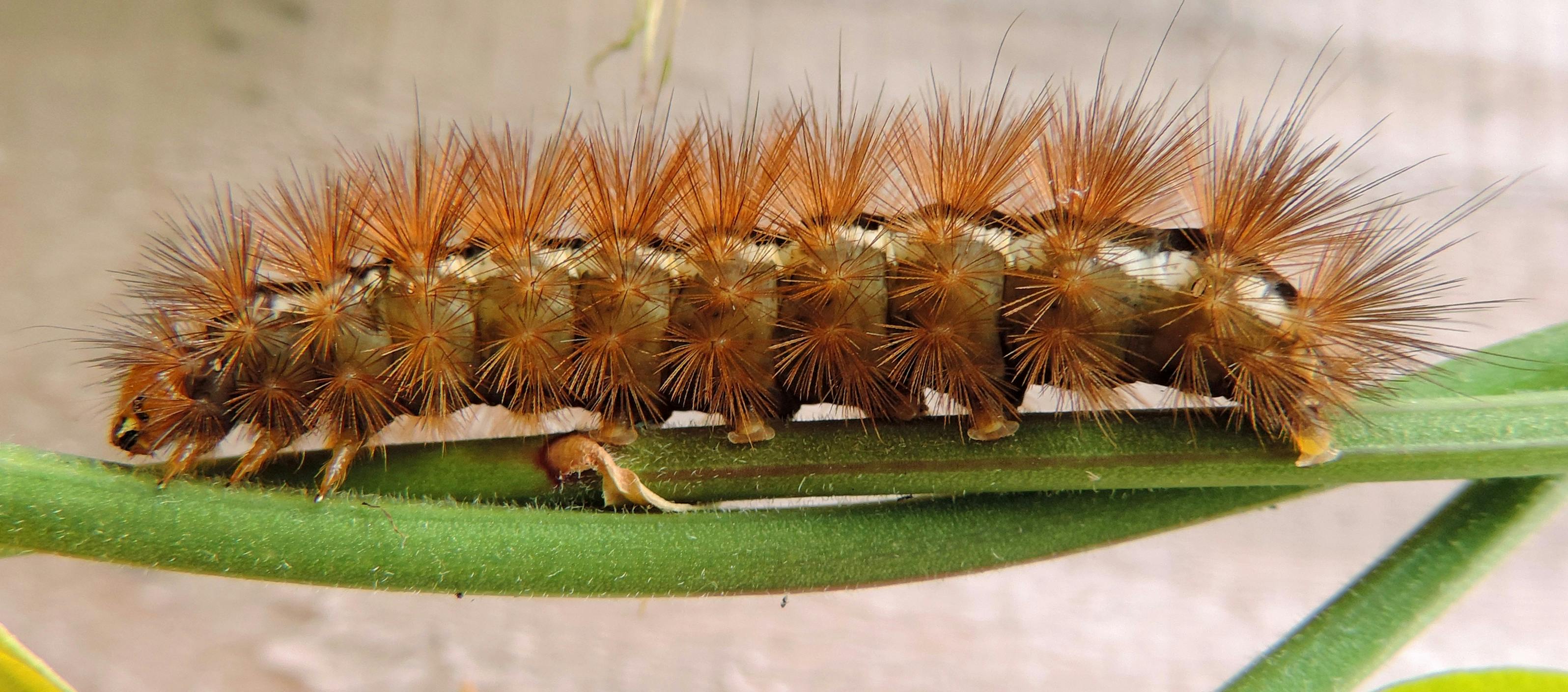
The larval stage—often described as a tiny, creamy‑white caterpillar with a brown head—spends most of its life hidden in food packages, fabric seams, or carpet fibers. Because the larvae blend into their surroundings and move slowly, they can go unnoticed for weeks, allowing the population to explode before you see the first adult moth fluttering around the light.
Key warning signs
- Webbing in pantry items: Silky threads in grain boxes, flour bags, or spice jars signal a breeding pantry moth colony.
- Damaged fabrics: Small, irregular holes in wool sweaters, curtains, or carpet fibers often point to clothes or carpet moth activity.
- Clusters of larvae: Look for tiny, creamy caterpillars near the edges of food packages or tucked into seams of clothing.
- Adult moth sightings: A sudden increase in small, tan‑brown moths near windows or light fixtures is a red flag that an infestation is underway.
Health and property impacts
Pantry moths contaminate food with droppings, silk, and shed skins, making entire packages unsafe to eat. The CDC warns that ingesting contaminated food can cause gastrointestinal upset, especially for children and the elderly. Meanwhile, carpet and clothes moths erode the integrity of textiles, leaving unsightly holes and weakening the fibers. Over time, unchecked damage can cost homeowners hundreds of dollars in food waste and fabric replacement, not to mention the expense of professional remediation once the infestation spreads.
Quick inspection checklist
- Open all pantry doors and examine each package for webbing or clumped larvae.
- Inspect the seams, folds, and under‑layers of rugs, carpets, and upholstery.
- Check closets and storage bins for holes in wool, silk, or cashmere garments.
- Look for adult moths resting on walls, lampshades, or near windows in the evening.
- Note any unusual odors or a dusty, silken residue—both are signs of active feeding.
Early detection is the most cost‑effective defense. The EPA recommends a routine monthly visual check, especially after seasonal changes when moths seek new breeding sites. If you spot any of the signs above, contact a local professional—like Anthem Pest Control—to assess the scope and apply targeted, EPA‑approved treatments before the problem escalates.
Moth Life Cycle and Seasonal Peaks in the Atlanta Metro Area
Understanding how a moth moves from egg to adult helps you spot trouble before it becomes a pantry invasion or a wardrobe nightmare. In the warm, humid climate of Decatur and the greater Atlanta metro area, each stage of the moth’s development is stretched or compressed by temperature, humidity, and the seasonal habits of homeowners.
1. Egg Stage (3‑7 days)
Female pantry or clothes moths lay tiny, milky‑white eggs on food surfaces, fabric fibers, or in hidden cracks. In Georgia’s spring temperatures (65‑80°F), eggs hatch in as little as three days. Cooler fall nights can extend this to a week, giving the moth a longer window to begin the next generation.
2. Larval Stage (4‑8 weeks)
The larva is the real damage‑maker. It feeds on grains, cereals, wool, silk, or fur, creating the characteristic webbing and “silk tunnels.” Under typical Atlanta humidity (60‑70% relative humidity), larvae grow quickly—often reaching full size in four weeks. If humidity spikes above 75% during a humid summer, development can accelerate, leading to multiple overlapping generations.
3. Pupal Stage (1‑2 weeks)
When fully fed, the larva spins a cocoon and pupates. In the mild winter months (50‑60°F), this stage can linger up to two weeks, acting as a natural brake on population growth. However, a warm mid‑winter snap can push pupae to emerge early, seeding a surprise spring outbreak.
4. Adult Stage (2‑3 weeks)
Adult moths live just long enough to mate and lay eggs. They are attracted to light, so you’ll often see them fluttering near windows in late spring and early summer. An adult’s lifespan is short—typically two weeks—but each female can deposit 100‑200 eggs, quickly rebuilding numbers if conditions stay favorable.
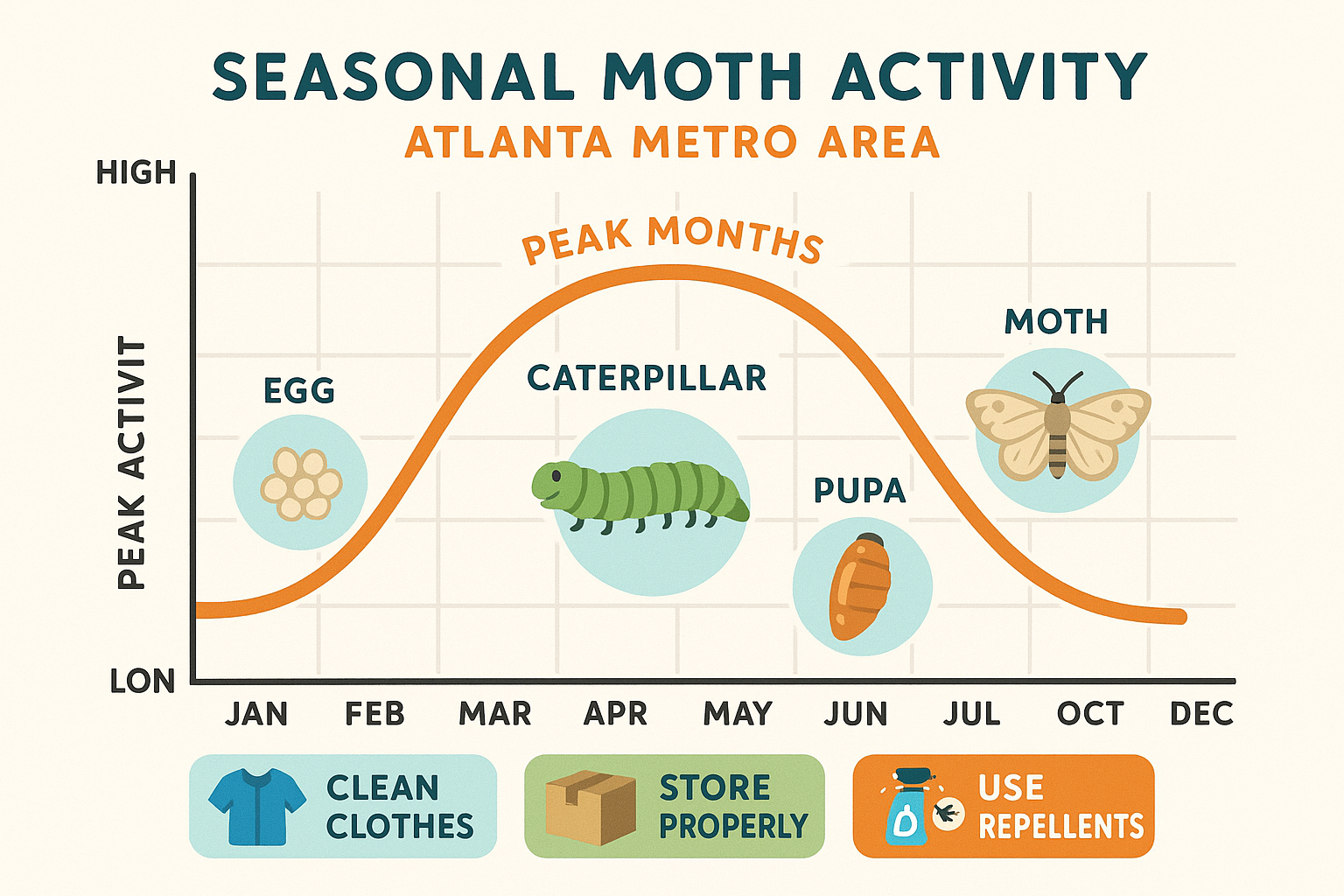
The chart above visualizes the moth’s life‑cycle timing against Atlanta’s seasonal temperature curve. Key take‑aways:
- Peak adult activity: Late April through early July, when warm days and high humidity fuel rapid egg‑to‑larva transitions.
- Secondary surge: Late September to early November, as lingering summer heat pushes a second generation into adulthood.
- Low‑risk window: Mid‑December to early February, when cooler nights slow development and many larvae enter diapause.
Why Late Spring Through Early Fall Is Critical
Temperature drives metabolism. Each 10°F rise can halve the duration of a life stage, meaning a single summer can host three full generations. Humidity keeps larvae hydrated, preventing desiccation and encouraging them to feed longer. Combine these factors, and the period from May to September becomes a breeding bonanza.
Linking Seasonal Peaks to Household Routines
Homeowners often unintentionally sync with moth activity:
- Pantry restocking (April‑June): New grain products provide fresh feeding grounds for emerging larvae.
- Wardrobe changes (August‑October): Storing summer clothes and pulling out winter fabrics creates hidden shelters for clothes‑moth larvae.
- Holiday decorations (November‑December): Natural fibers in wreaths or table runners can harbor dormant pupae that emerge when indoor heating raises humidity.
Monitoring Tips Throughout the Year
Early detection is your cheapest defense. Follow these simple steps:
- Place pheromone or sticky traps in pantry corners, under cabinets, and near closets at the start of April.
- Inspect stored grains and dried foods weekly; look for webbing, tiny larvae, or “cobweb” clusters.
- Check clothing storage areas for fine silk threads or small, creamy‑white larvae, especially after moving seasonal garments.
- Record any trap catches. A sudden increase signals that a treatment window is approaching.
- Maintain low indoor humidity (below 60%) using dehumidifiers during the peak summer months.
For a deeper dive, consult the EPA’s seasonal pest guidance and the NPMA Pest World resource on moths. Both outline best‑practice monitoring and preventive measures tailored to the Southeast.
By aligning your home‑maintenance calendar with the moth’s biological clock, you can stay one step ahead of infestations and keep your pantry and closets moth‑free all year long.
Preventive Measures Every Homeowner Should Implement
Keeping moths out of your kitchen, closet, and storage spaces doesn’t require a costly treatment plan—just a disciplined, year‑round routine. By combining smart housekeeping, textile care, simple home repairs, and a few natural deterrents, you can make your home an unattractive destination for pantry and clothing moths alike.
Housekeeping habits that starve moths
Start with airtight food storage. Transfer grains, cereals, nuts, and dried fruit into glass jars or heavy‑wall plastic containers that seal tightly; moths can’t penetrate a proper lid. Once a month, pull everything out, sweep away crumbs, and give each container a quick wipe with soapy water. A regular pantry sweep—vacuuming the floor, shelves, and especially the seams and cracks where larvae hide—removes stray eggs and larvae before they hatch. Store opened packages in sealed bins and discard any food that shows signs of infestation.
Protecting textiles and seasonal wear
Off‑season clothing, blankets, and linens should live in sealed garment bags or zip‑lock containers. Adding a cedar block or a lavender sachet inside each bag creates an aromatic barrier that moths dislike without introducing harsh chemicals. Before storing, wash all items on the warmest cycle the fabric allows; the heat kills any hidden eggs. For items you keep on hangers, rotate them occasionally and give the closet a quick vacuum of the floor and shelving. Store shoes in breathable boxes rather than cardboard, as moths are attracted to the natural fibers in shoe boxes.
Structural checks to block entry points
Small gaps are moths’ highways. Inspect windows, doors, and exterior vents for cracks, and seal them with caulk or weather‑stripping. Pay special attention to utility penetrations—pipes, cables, and dryer vents often have tiny openings that go unnoticed. Inside, use expanding foam or silicone around baseboards and where walls meet the floor to eliminate hidden crevices. A quick visual walk‑through each spring can catch new gaps before moths exploit them.
Natural deterrents you can DIY safely
Essential oils such as peppermint, eucalyptus, or tea tree mixed with water (about 10 drops per cup) make an effective spray for pantry shelves and closet interiors. Test a small area first to ensure the oil doesn’t stain surfaces. Pheromone traps—available at most hardware stores—attract male moths and interrupt breeding cycles; place them in dark corners of the pantry and change them monthly. A simple barrier spray of diluted white vinegar works well; apply, let dry, and keep pets and children away until dry. Never spray directly onto food or open containers, and store any leftover mixture out of reach of children.
When DIY methods fall short
If you notice persistent webbing, clusters of larvae, or a sudden resurgence after a few weeks of diligent cleaning, it’s time to call a professional. A licensed technician can perform a thorough inspection, identify hidden infestations, and apply targeted treatments that are safe for families and pets. Professional evaluation also ensures compliance with local regulations and helps you avoid costly damage to stored fabrics.
Follow trusted guidelines
For a deeper dive into safe household pest prevention, consult the EPA guidelines on safe household pest prevention. Following these best practices, combined with Anthem Pest Control’s expertise when needed, keeps your home moth‑free throughout the year.
Treatment Options, Costs, and Choosing the Right Service
DIY Moth‑Control Kits
Do‑it‑yourself kits are a popular first‑step for homeowners who spot a few pantry moths or carpet moth larvae. Most kits contain a blend of pyrethrin‑based spray, pheromone traps, and a cleaning concentrate that targets eggs and larvae. Application usually follows three simple steps:
- Remove infested food or textiles and vacuum the area thoroughly.
- Mix the concentrate with water (or apply the ready‑to‑spray formula) and treat cracks, baseboards, and storage containers.
- Place pheromone traps in closets or pantry shelves to catch adult moths for up to 30 days.
Pros: low upfront cost, immediate control of a minor outbreak, and the flexibility to treat only the affected rooms. Cons: limited residual protection, inconsistent coverage in larger homes, and the risk of under‑dosing if instructions aren’t followed precisely.
Professional One‑Time Treatment
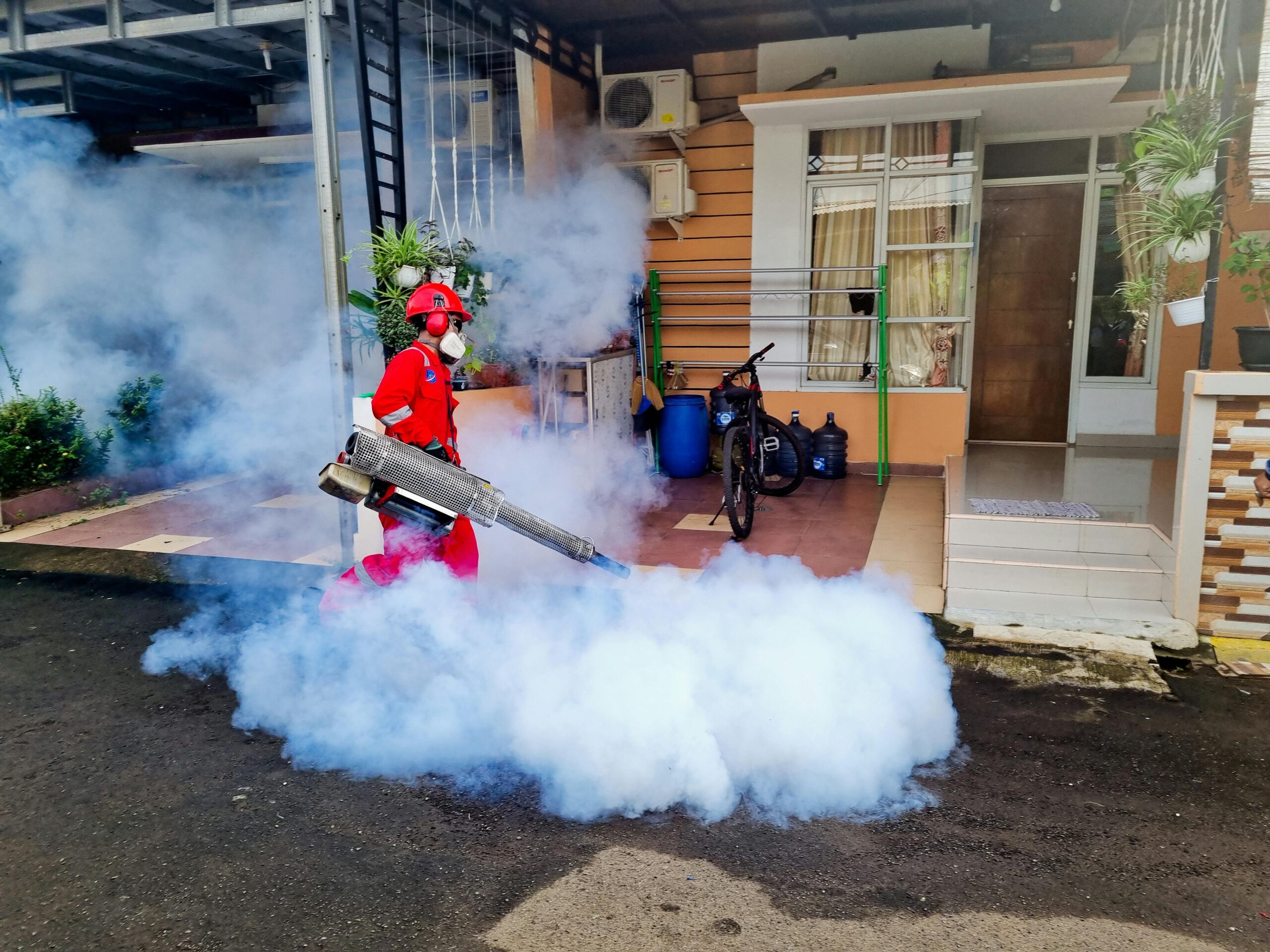
A licensed technician arrives with a commercial-grade, EPA-approved spray and a handheld fogger that can penetrate wall voids, attics, and crawl spaces as part of a professional moth control Decatur GA service. The treatment targets adult moths, larvae, and hidden egg clusters in a single, focused session. Results typically become visible within 48-72 hours, with most infestations subdued in one week.

Because the product is applied by a certified professional, the coverage is uniform, and the residual effect can last up to three months, giving homeowners a solid “reset” before the next season.
Quarterly Maintenance Plans
For those who prefer a hands‑off approach, quarterly plans combine regular inspections with scheduled re‑treatments and continuous monitoring. Each visit includes:
- A detailed inspection of vulnerable areas (kitchens, closets, basements, and HVAC ducts).
- Re‑application of EPA‑approved residual spray to maintain a protective barrier.
- Installation or servicing of pheromone monitoring devices that alert the technician to early activity.
- Advice on sanitation practices that keep moths from returning.
The cumulative benefit is a long‑term shield that reduces the chance of a full‑blown infestation and often qualifies for a price lock‑in, saving money over time.
Average Costs in Decatur, GA
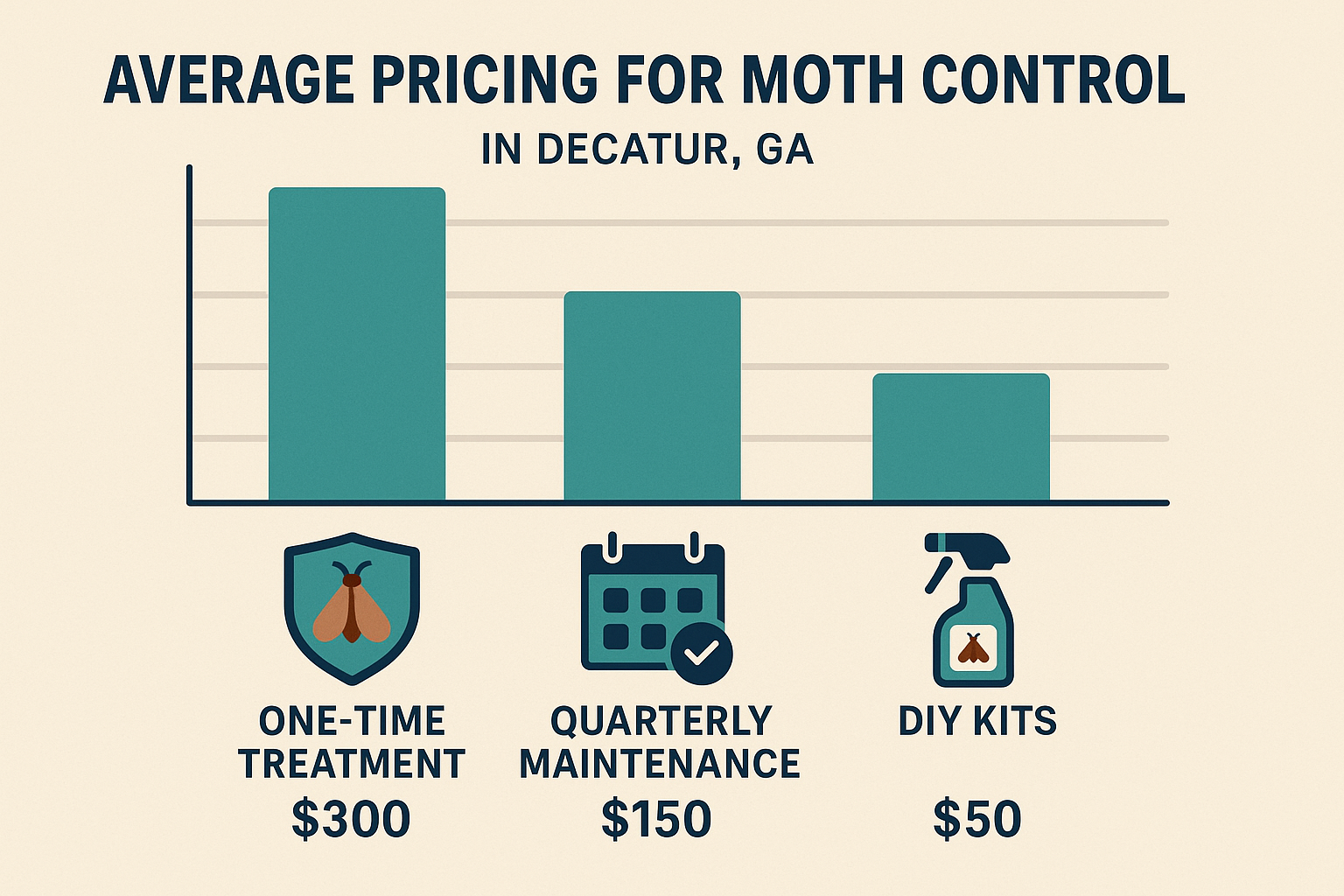
| Service | Average Cost | Coverage Area | Duration of Effect |
|---|---|---|---|
| DIY Kit (per package) | $25 – $45 | Up to 1,500 sq ft | 1 – 2 weeks |
| One‑Time Professional Treatment | $180 – $260 | Up to 2,500 sq ft | 2 – 3 months |
| Quarterly Maintenance Plan (annual) | $650 – $850 | Whole home (any size) | 12 months of protection |
What Drives the Price?
Even within Decatur’s relatively uniform housing stock, several variables can shift the final invoice for professional moth control Decatur GA services:
- Infestation severity: Heavy moth populations demand more product and longer labor.
- Square footage: Larger homes require additional spray canisters and extra travel time.
- Property type: Multi‑unit apartments often need extra safety precautions compared with single‑family homes.
- Service guarantees: Companies that offer a “no‑re‑infestation” warranty may include a modest premium.
Decision‑Making Checklist
- What is my budget for immediate vs. long‑term control?
- How extensive is the current infestation (few moths vs. visible larvae across multiple rooms)?
- Do I want ongoing monitoring and a guaranteed response to any future flare‑ups?
- Am I comfortable handling chemicals myself, or do I prefer a licensed technician?
- Is my home’s layout (attic, crawl space, HVAC) easy for me to treat, or does it need professional equipment?
Safety First: EPA‑Approved Chemicals
All Anthem Pest Control technicians are certified to apply EPA‑registered products that have undergone rigorous toxicity testing. These formulations are designed to target moths while posing minimal risk to people, pets, and the environment when used as directed. Our team follows strict safety protocols—wearing protective gear, sealing off treated zones, and providing clear post‑treatment instructions—so you can feel confident that the solution is both effective and safe.
Protect Your Home from Moths Today
By now you know how to spot a moth problem, when the seasonal risk peaks, and which preventive steps keep the insects at bay. Let’s quickly revisit the essentials so you can act with confidence:
- Identification: Look for silky webbing, small holes in fabrics, and the tell‑tale larvae that resemble tiny caterpillars.
- Seasonal risk: Moths thrive in warm, humid months—typically late spring through early fall in Decatur.
- Prevention: Regular cleaning, airtight storage, and strategic use of pheromone traps dramatically lower infestations.
- Treatment: Targeted EPA‑approved sprays, heat treatments for heavily infested items, and professional inspections ensure complete eradication.
Early action isn’t just smart—it’s economical. Addressing a minor moth presence now prevents the cascade of damage that can turn a simple closet clean‑out into costly fabric replacement, structural repairs, and even professional restoration of stored valuables. A single, well‑timed treatment often costs a fraction of the expense required to repair extensive damage after an uncontrolled infestation. In short, the sooner you intervene, the more you save—both in dollars and in peace of mind.
When you’re ready to take that step, turn to Anthem Pest Control, Decatur’s trusted local expert. Our team combines deep knowledge of Georgia’s pest patterns with transparent pricing and EPA‑compliant solutions that protect your family and pets. We pride ourselves on clear, upfront estimates—no hidden fees, no surprise charges. Whether you need a quick spot‑treatment or a comprehensive moth‑prevention plan, Anthem tailors the approach to fit your home’s unique layout and your budget.
Ready for a free, no‑obligation inspection? Give us a call at 877‑371‑8196 or click the link below to schedule online. We offer same‑day service for most Decatur neighborhoods, so you won’t be waiting weeks for relief. Our technicians arrive in uniform, explain the process in plain language, and use only family‑friendly products that meet the highest safety standards. Let us handle the moths while you focus on what matters most—enjoying a clean, comfortable home.
Visit Anthem Pest Control today to claim your free quote and protect your home with professional moth control Decatur GA before the next moth season begins.