Identifying Common Household Moths
When you notice tiny, fluttering insects near your wardrobe or pantry, it’s often a sign that moths have found a comfortable spot inside your home. Unlike outdoor moths that stay near lights or plants, indoor species are attracted to the steady temperature, low humidity, and, most importantly, the food sources you keep behind closed doors. Understanding why they’re there is the first step toward effective moth control Druid Hills homeowners can rely on.

Most Frequently Seen Species
- Clothes Moth (Tineola bisselliella) – Often called the webbing or pantry moth, this species prefers natural fibers such as wool, silk, and cashmere. Adults are 6‑9 mm long, with a golden‑brown head and narrow, silvery‑gray wings that lack distinct markings.
- Pantry Moth (Plodia interpunctella) – Also known as the Indian meal moth, it targets stored grains, cereals, and dried fruit. Adults are slightly larger (12‑20 mm) and display a distinctive two‑tone wing pattern: reddish‑brown at the base fading to a pale, peppered fringe.
- Webbing Moth (Tineola pellionella) – Similar in size to the clothes moth but usually found in areas with heavy fabric debris. Its wings are a uniform gray‑brown, and the larvae spin fine silk webs that look like dust.
Key Visual Characteristics to Spot
When you’re trying to confirm a moth infestation, focus on four visual cues:
- Size – Most indoor moths range from 6 mm to 20 mm; anything noticeably larger is likely a different insect.
- Wing pattern – Look for the subtle speckling on pantry moths or the plain, silvery wings of clothes moths.
- Antenna shape – Moths have feathery or filamentous antennae, unlike the club‑shaped antennae of many beetles.
- Behavior – Moths tend to rest with wings spread flat or slightly tented, and they are most active at dusk when lights are on.
Distinguishing Moths from Similar Insects
Butterflies are often confused with moths, but butterflies usually have brighter colors, larger wingspans, and rest with their wings held upright. Beetles, on the other hand, have hard, shell‑like elytra that cover their wings and a more robust, rounded body. If the insect you see has delicate, scaled wings and a slender body, you’re likely dealing with a moth.
Quick Inspection Tips
Grab your smartphone and enable the macro mode, or use a simple magnifying glass. Scan hidden corners of closets, the tops of pantry shelves, and the seams of upholstered furniture. Pay special attention to:
- Silky webbing or fine powder on fabrics.
- Small, pepper‑like specks in grain containers.
- Clusters of larvae near food sources.
Take a clear photo and compare it to trusted reference images. This habit not only speeds up identification but also provides useful documentation for a professional pest‑control visit.
For a deeper dive into species‑specific identification and control measures, refer to the EPA moth control guide.
Warning Signs and Risks of a Moth Infestation
What to Look For
Even a light moth problem leaves tell‑tale clues. The most common indicator is silky webbing along the edges of stored fabrics or in pantry corners. You may also spot tiny larvae crawling in grain bins, cereal boxes, or flour containers. Look for small, irregular holes in wool, cashmere, or cotton garments, and don’t forget the shed skins that larvae leave behind as they molt.
Where Moths Hide
Knowing the hotspots helps you catch an infestation early. Check these areas regularly:
- Closets and dresser drawers—especially those holding seasonal clothing.
- Pantry shelves and stored food containers; moths love grain, nuts, and dried fruit.
- Attic insulation and roof voids, where adult moths may rest and lay eggs.
- HVAC vents and ductwork, which can transport larvae and scales throughout the house.
Health Considerations
Moth scales and frass (insect droppings) can become airborne, triggering allergic reactions such as sneezing, itchy eyes, or skin irritation in sensitive individuals. When larvae contaminate food, they not only spoil the product but also create a breeding ground for bacteria, increasing the risk of food‑borne illness. Prompt detection protects both your family’s health and the cleanliness of your kitchen.
Economic Impact
The financial toll of a moth outbreak adds up quickly. Replacing damaged clothing, upholstery, or carpet can run from a few hundred to several thousand dollars, depending on the extent of the loss. In addition, you may incur higher cleaning expenses—professional deep‑cleaning of pantries, HVAC systems, and insulation is often necessary to eradicate hidden larvae and prevent re‑infestation.
When DIY Detection Isn’t Enough
Homeowners can spot early signs, but moth populations can expand beyond visible areas. If you notice recurring damage after cleaning, or if webbing and larvae appear in hard‑to‑reach places like attic insulation or ductwork, it’s time to call a professional. Certified technicians have the tools to conduct a thorough inspection, identify the species, and apply targeted treatments that protect both fabrics and structural elements.
For additional guidance, the National Pest Management Association (NPMA) offers comprehensive resources on moth identification, prevention, and control strategies.
Effective Treatment Options for Home Moths

DIY Measures You Can Start Today
Before calling a professional, a thorough home‑wide clean‑out can dramatically cut moth populations. Begin by removing all clothing, blankets, and upholstery from closets and vacuuming every shelf, seam, and baseboard. The vacuum’s bag should be sealed and discarded outdoors to prevent re‑infestation.
For items that may already be infested, use temperature extremes: place small textiles in a freezer at 0 °F (‑18 °C) for at least 72 hours, or wash larger fabrics in hot water (130 °F/54 °C) followed by a high‑heat dryer cycle. This kills larvae and eggs without chemicals.
Pantry moths require a different approach. Empty cabinets, wipe down shelves with a solution of warm water and mild detergent, and store dry goods in airtight containers. Dispose of any cracked or infested packages to break the life cycle.
Chemical Controls: Traps and Residual Sprays
EPA‑approved pheromone traps are a low‑risk way to monitor and reduce adult moth numbers. Place traps in dark corners of closets, under beds, and near pantry shelves. Replace them every 30 days for optimal capture rates.
When a chemical barrier is necessary, residual sprays formulated for moths can be applied to baseboards, cracks, and the undersides of furniture. Follow label directions closely—spray only in well‑ventilated areas, keep children and pets out of the treated zone for the recommended dwell time, and store the product out of reach.
Professional Techniques That Go Beyond DIY
Certified technicians bring tools and expertise that home owners typically lack. Common professional methods include:
- Targeted fogging: A fine mist of EPA‑registered insecticide is applied directly to infested zones, reaching crevices where larvae hide.
- Whole‑home misting: A low‑pressure system disperses a uniform spray throughout the entire residence, ensuring comprehensive coverage.
- Heat treatment: Raising interior temperatures to 120 °F (49 °C) for several hours eradicates all life stages without chemicals.
- Integrated Pest Management (IPM): A strategic blend of monitoring, sanitation, physical barriers, and selective chemical use that minimizes environmental impact.
Safety First: Protecting Families, Pets, and the Environment
Whether you choose DIY or professional services, safety is paramount. Always read product labels, wear gloves and eye protection when handling chemicals, and ensure proper ventilation. For homes with small children, aquariums, or sensitive pets, discuss low‑toxicity options with your technician. Professional crews are trained to apply treatments in a way that limits residue and prevents cross‑contamination of food preparation areas.
How Anthem Pest Control Conducts a Focused Fogging Treatment
Anthem’s certified technicians start with a detailed inspection to locate hotspots. Using a calibrated fogger, they apply a micro‑atomized, EPA‑approved insecticide directly to moth‑prone zones—wardrobes, attic corners, and pantry shelving. The fog penetrates deep into fabric folds and wood grain, where larvae are most protected. After treatment, technicians provide a written report outlining treated areas, product details, and safety instructions.
Why a Professional Approach Pays Off
Choosing Anthem means you receive guaranteed coverage, not just a one‑time spray. Technicians schedule follow‑up inspections to verify that the population has been eliminated and to address any re‑infestation signs. All work is documented, giving you a clear record for insurance or resale purposes. The combination of expert knowledge, specialized equipment, and ongoing monitoring often results in faster, longer‑lasting control compared with DIY attempts.
Ready to take the next step? Learn more about Anthem’s comprehensive moth‑control program and request a personalized quote at Anthem moth control.
Comparing Moth Control Pricing Tiers
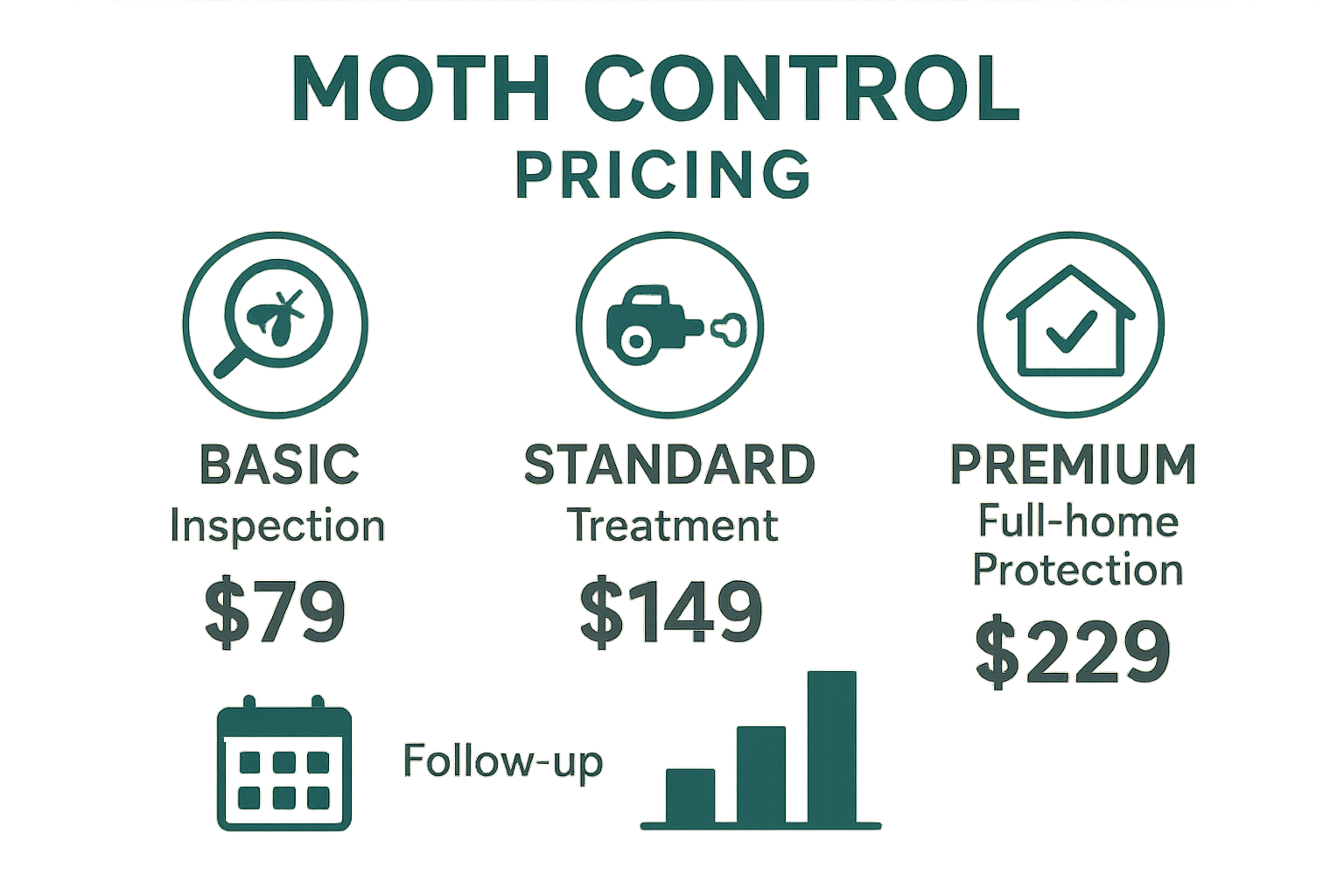
When you’re budgeting for moth protection, the numbers on a quote matter as much as the work that will be done. Anthem Pest Control offers three clearly defined packages—Basic, Standard, and Premium—so you can match the service level to your home’s size, the severity of the infestation, and your long-term moth control Druid Hills protection goals.
Three Service Packages at a Glance
- Basic Inspection – Ideal for small homes or a one‑time check‑up.
- Standard Treatment – The most popular choice for average‑sized houses with moderate moth activity.
- Premium Full‑Home Protection – Designed for larger properties or homeowners who want annual monitoring and the longest-lasting barrier.
What Each Tier Includes
| Tier | Inspection Checklist | Fogger Type | Follow‑up Visits | Warranty Period |
|---|---|---|---|---|
| Basic ($79) | Visual sweep of attic, closets, and pantry | Standard aerosol fogger | None | 30‑day |
| Standard ($149) | Detailed inspection + moisture assessment | Enhanced, low‑odor fogger | One 30‑day follow‑up | 90‑day |
| Premium ($229) | Comprehensive audit of all vulnerable zones | Professional‑grade, residual fogger | Two visits (30‑ and 60‑day) | 180‑day |
Price Points and What You Get
The Basic package starts at $79, the Standard at $149, and the Premium at $229. Each step up adds not only more product power but also additional labor, follow‑up visits, and a longer warranty—meaning you pay a little more now to avoid repeat treatments later.
Value Comparison
- Cost per square foot: Roughly $0.03 / ft² for Basic, $0.06 / ft² for Standard, and $0.09 / ft² for Premium (based on a 2,500 ft² home).
- Expected lifespan of treatment: 1 month (Basic), 3 months (Standard), 6 months (Premium).
- Added benefits: Premium includes an annual monitoring call, a complimentary moth‑trap kit, and priority scheduling for any future pest issues.
How to Choose the Right Tier
If you’ve just spotted a few adult moths in a single closet, the Basic inspection may be sufficient. For homes with multiple hotspots—kitchens, basements, and attic spaces—the Standard treatment offers a balanced mix of coverage and cost. Large properties, historic homes, or families that want peace of mind for an entire season should consider the Premium package, especially because the extended warranty and annual monitoring can save you time and money in the long run.
Regardless of the tier you select, Anthem stands behind a no‑hidden‑fees policy and a satisfaction guarantee. If the moths return within the warranty period, we’ll re‑treat the affected area at no extra charge.
Seasonal Timing, Prevention Tips, and Next Steps
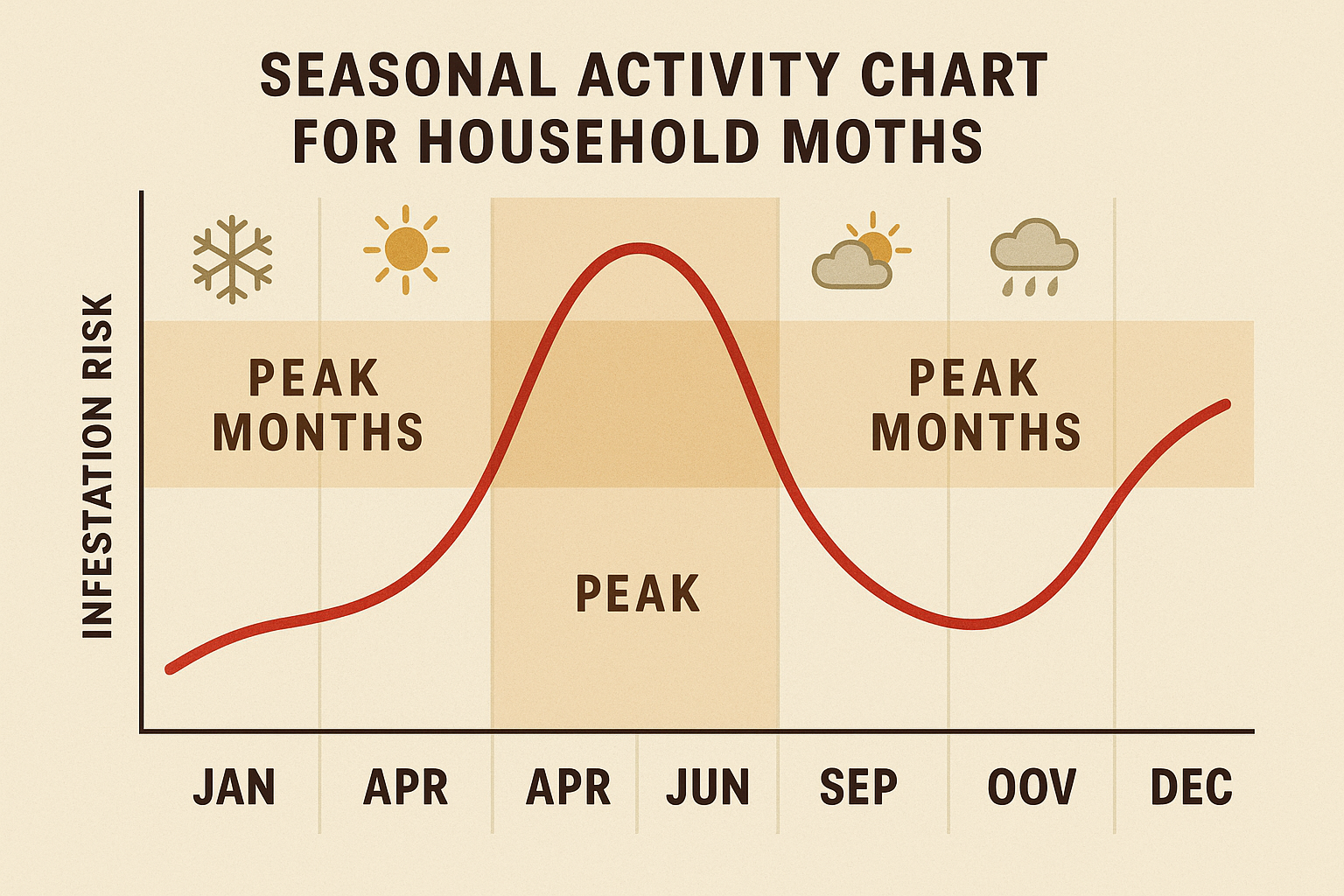
The chart above pinpoints the two peak windows when moths are most likely to invade homes in Druid Hills: late spring (April – June) and early fall (September – November). During these periods you’ll notice a surge in adult flight activity, egg-laying, and larval development, making timely moth control Druid Hills homeowners depend on especially important. Recognizing these high-risk months lets you act before the insects establish a foothold.
Why do these months matter? Moth life cycles are tightly linked to temperature and humidity. Warm days (70‑80°F) accelerate egg hatching, while moderate humidity (55‑70%) provides the moisture larvae need to thrive on fabrics and stored foods. When the climate dips below 60°F or humidity drops sharply, development slows dramatically, giving you a natural lull to implement preventative measures.
Preventive Checklist
- Vacuum regularly: Remove eggs and larvae from carpets, baseboards, and upholstery at least once a week.
- Airtight food storage: Transfer pantry staples to sealed containers to block pantry moths.
- Seasonal wardrobe rotation: Store off‑season clothing in vacuum‑sealed bags and give each item a quick brush before re‑hanging.
- Light traps: Position UV‑light traps in closets and attics to capture adult moths before they reproduce.
Timing your professional treatment is just as crucial as the checklist. Schedule an Anthem Pest Control service **before** the first peak—ideally in March or early August. A pre‑emptive barrier treatment reduces the chance of an infestation taking hold during the high‑risk windows, and it gives our technicians a clear baseline to monitor any future activity.
Ready to protect your home? Our local Druid Hills team offers a free, no‑obligation inspection and can deliver a treatment plan within 24 hours of your call. We combine fast response with the expertise of technicians who know the area’s climate patterns inside out.
Give us a call today at 877‑371‑8196 or visit anthempest.com to schedule your free quote. Acting now means you’ll enjoy a moth‑free home throughout the season—and peace of mind knowing Anthem has your back.
Protect Your Home with Anthem Pest Control Today
Early moth identification, timely treatment, and seasonal prevention are the three pillars of a moth‑free home. Spotting a few webbed fibers or a sudden increase in food stains lets you act before an infestation spreads to closets, upholstery, and stored items. By addressing the problem in the first weeks, you protect both your family’s health and the value of your belongings.
Anthem Pest Control stands behind that principle with a promise of safety, efficacy, and affordability. Our technicians use EPA‑approved products that target moths without endangering children, pets, or indoor air quality. Every service comes with transparent pricing—no hidden fees, no surprise invoices—so you know exactly what you’re paying for and why it matters.
Ready to take the next step? Call us today at 877‑371‑8196 for a free, no‑obligation quote or to schedule an on‑site inspection at a time that fits your busy schedule. Our friendly staff will walk you through the process, answer any questions, and set up a customized treatment plan that aligns with your home’s unique layout and seasonal risk factors.
We understand that inviting a service professional into your home is a matter of trust. That’s why Anthem Pest Control treats every house like our own—respecting your space, communicating clearly, and delivering results you can see and feel. Protecting your family’s health and preserving the things you cherish shouldn’t wait for an infestation to become visible.
Because we serve homeowners across the United States, our technicians stay up‑to‑date on the latest moth behavior patterns and regional climate impacts. This local knowledge translates into faster detection and more precise treatments for Druid Hills and beyond.
Take control now—your home, your family, and your peace of mind deserve proactive protection. Visit Anthem Pest Control homepage to learn more about our moth control Druid Hills services and schedule your first appointment.