Introduction to Moth Issues in Smyrna, GA

Imagine returning home after a long day at work, slipping into your bedroom, and opening the closet only to find a cluster of moths fluttering around a shredded sweater. That’s exactly what happened to a Smyrna homeowner last summer—what started as a single, unnoticed larva quickly turned into a visible infestation, highlighting the need for professional moth control Smyrna Georgia to protect treasured garments, linens, and even upholstery.
Smyrna sits squarely in Georgia’s Piedmont region, where summers are warm and humid, while winters remain relatively mild. This climate creates an almost perfect breeding ground for both pantry and clothing moths. The moisture in the air accelerates egg hatching, and the extended warm periods give larvae ample time to feed and grow before a brief chill forces them into dormancy.
According to the EPA’s climate‑pest correlation study, “regions with humid summers see a 27% higher incidence of indoor moth activity” source. The data underscores why Smyrna homeowners see moths more often than those in drier, cooler locales.
This guide is designed to cut through the confusion and give you crystal‑clear insight into every facet of moth control in Smyrna. We’ll walk you through transparent cost estimates for professional treatments, the best times of year to act, and practical, low‑cost prevention steps you can start today.
By the end of this article you’ll know:
- The most common moth species that invade Georgia homes and how to identify them.
- Seasonal timing recommendations that align with the moth life cycle.
- Effective treatment methods—ranging from DIY traps to professional EPA‑registered applications.
- Financing options and pricing structures offered by local experts like Anthem Pest Control.
- Answers to the frequently asked questions that most Smyrna residents have about moth control.
Armed with this information, you’ll be able to protect your family’s clothing, furniture, and pantry items without guesswork or surprise bills.
Common Household Moths in Smyrna
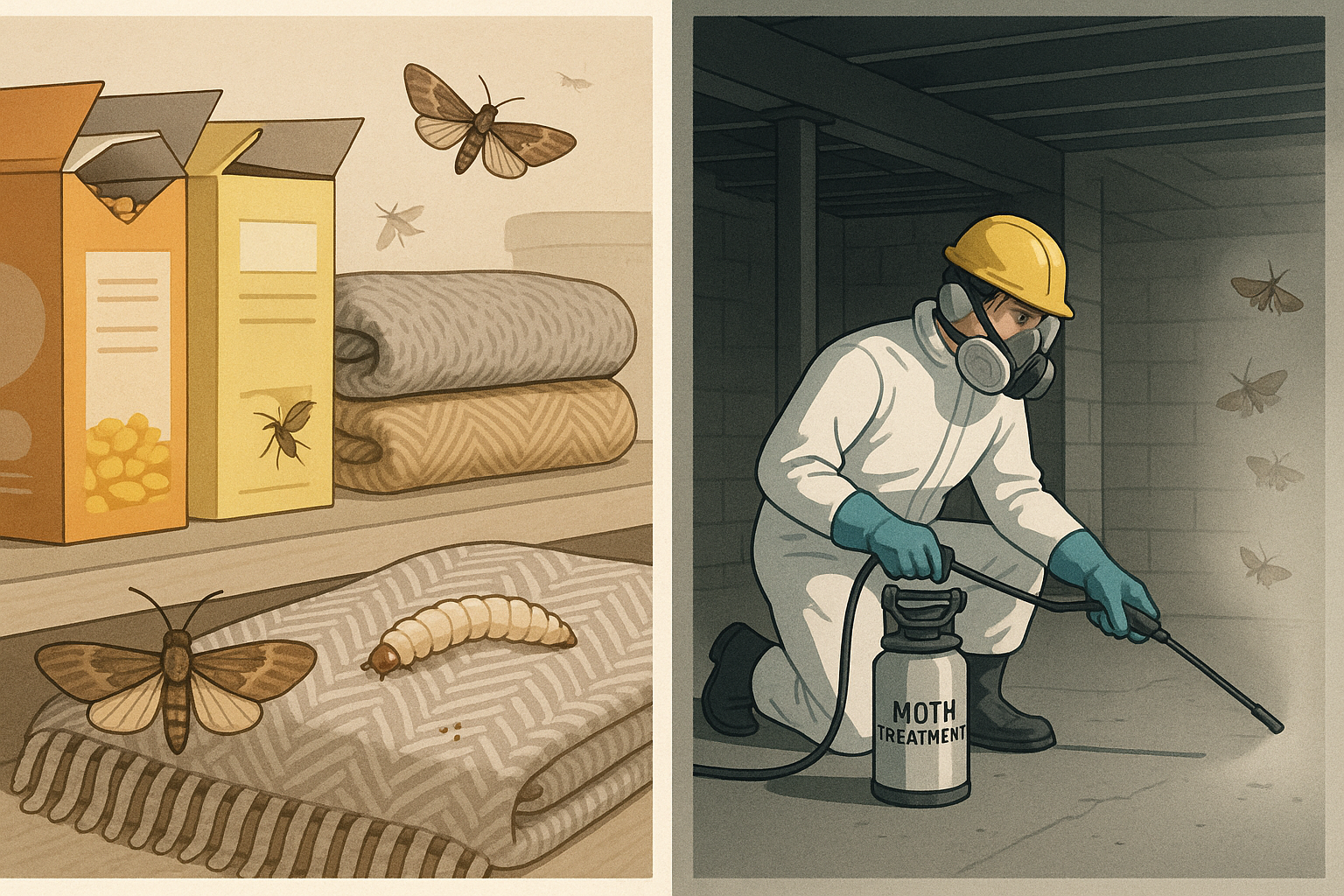
In Smyrna homes, two moth families cause the most trouble: clothes moths (the webbing and casemaking species Tineola bisselliella and Tineola pellionella) and pantry moths (the Indian meal moth, Plodia interpunctella). Though they look different, both share a similar life‑cycle that hinges on the larval stage – the only phase that actually eats.
Clothes Moths
These tiny insects favor natural fibers such as wool, silk, and fur. The adult moth is a modest 6–8 mm long, pale brown, and rarely seen because they prefer to stay hidden in closets and storage boxes.
- Egg: Laid on fabric or in crevices; hatches in 4–10 days.
- Larva (damage stage): Cream‑colored, 5–7 mm long, creates silken tunnels and webbing that look like fine cobwebs. This is when they chew holes in garments.
- Pupa: Spins a cocoon within the webbing; remains for 10–14 days.
- Adult: Lives 2–4 weeks, primarily to reproduce.
Pantry Moths
Pantry moths infest dry foods—cereals, grains, nuts, and pet food. The adult is a striking reddish‑brown moth with a coppery fringe, easily spotted near kitchen cabinets.
- Egg: Deposited on food surfaces; hatches in 3–5 days.
- Larva (damage stage): 6–8 mm, creamy white with a brown head, builds silken tunnels that bind grains into “webbed clusters.”
- Pupa: Forms within the food or in surrounding crevices; takes 10–14 days.
- Adult: Lives about 2 weeks, then seeks a mate and a place to lay eggs.
Typical Duration in Smyrna’s Climate
| Stage | Clothes Moth (days) | Pantry Moth (days) |
|---|---|---|
| Egg | 4‑10 | 3‑5 |
| Larva | 20‑30 | 18‑28 |
| Pupa | 10‑14 | 10‑14 |
| Adult | 14‑28 | 14‑21 |
According to the National Pest Management Association, 1 in 3 Georgia homes experiences moth damage annually. That’s a stark reminder that moths are more than a nuisance—they’re a real threat to your wardrobe and pantry.
Local Example
Last winter, a Smyrna Heights resident opened a sealed bag of stored rice only to find a network of silken tunnels and dozens of tiny, cream‑colored larvae. The infestation had begun in the pantry’s corner, where a single adult pantry moth had slipped in on a grocery bag. Within weeks, the larvae had turned the grain into a webbed mess, prompting the homeowner to call Anthem Pest Control for a targeted treatment and a thorough kitchen inspection.
Seasonal Peaks and Prevention Tactics
In Smyrna, Georgia, moths aren’t a year‑round nuisance—they follow the rhythm of the seasons. Homeowners typically notice a surge in activity during two distinct windows: late spring (April‑May) and early fall (September‑October). Those temperature swings create the perfect breeding environment for pantry moths, carpet moths, and the occasional clothes moth, making timely moth control Smyrna Georgia essential to keep a tidy home safe from infestation.
The CDC’s 2023 indoor pest seasonal trends confirm this pattern, noting that indoor moth populations peak when outdoor temperatures rise above 70 °F and again as they dip below 60 °F. The data line up with Smyrna’s climate, where April‑May bring warm, humid days and September‑October brings cooler, damp evenings—both ideal for moth egg hatching and larval development.
To keep these spikes from catching you off guard, treat your home maintenance calendar like a pest‑prevention planner. Mark April‑May and September‑October as “Moth Watch” periods. During those weeks, schedule a quick walkthrough of pantry shelves, closets, and storage bins, just as you would for HVAC filter changes or lawn care. A simple reminder on your phone or a sticky note on the fridge can turn a reactive approach into a proactive one.
Peak periods in Smyrna
During late spring, the combination of rising humidity and abundant fresh produce creates a buffet for pantry moths. They’re attracted to grains, cereals, and dried fruit that are often restocked after winter. Early fall, on the other hand, sees an influx of outdoor moths seeking shelter as temperatures drop. These moths can hitch a ride on outdoor clothing, blankets, or even on delivery trucks that stop at nearby warehouses.
Three practical prevention steps
- Step 1: Store dry goods in airtight containers and use natural repellents. Transfer flour, rice, nuts, and cereals into sealed plastic or glass jars. Adding a few bay leaves or a cedar block inside the pantry acts as a non‑chemical deterrent, as moths dislike the scent of these natural oils.
- Step 2: Vacuum closets and pantry shelves weekly. A thorough vacuum removes eggs, larvae, and stray webbing that can go unnoticed. Empty the vacuum bag or canister outside immediately after each session to prevent re‑infestation.
- Step 3: Seasonal garment cleaning and responsible use of moth control products. Before storing winter coats, blankets, or heirloom fabrics, give them a professional dry‑clean or a hot‑water wash. If you choose mothballs, place them in sealed containers away from living areas, and consider cedar blocks as a safer alternative for long‑term storage.
Local insight: I‑285 corridor warehouses
Smyrna’s proximity to the I‑285 corridor means many delivery trucks pass through or stop at nearby distribution centers. These warehouses often handle bulk food shipments that can harbor pantry moths. When a truck unloads at a local grocery or hardware store, a few stray moths may hitch a ride on boxes, bags, or even on the exterior of your own delivery vehicles. That’s why it’s wise to inspect any newly delivered goods—especially bulk items—before placing them in your pantry.
Effective Moth Treatments – DIY to Professional
DIY Traps & Pheromones
Sticky traps infused with sex‑pheromones are the most common do‑it‑yourself tool for pantry and clothing moths. Place one trap per 10‑square‑feet of closet or pantry shelf, positioning it near the center of the space and away from direct sunlight. The lure attracts flying adults, which become stuck on the adhesive surface. Each trap costs between $15‑$30, and a typical homeowner buys two to three for a small bedroom. While traps are inexpensive and easy to install, they only capture adult moths in flight; they do not eradicate larvae hidden in fabrics or stored food, so their overall effectiveness is limited to monitoring and modest population reduction.
Chemical Sprays & Aerosols
Over‑the‑counter aerosols and liquid sprays that contain EPA‑approved ingredients such as permethrin or pyrethrins can knock down adult moths and provide short‑term residual protection on surfaces. Apply the product to baseboards, shelving, and the undersides of closets after removing food or clothing items. Safety is paramount: ensure adequate ventilation, wear a disposable mask and gloves, and keep children and pets out of the treated area for at least two hours. A single homeowner application typically runs $50‑$120, depending on the brand and coverage area. These chemicals must be used in strict accordance with the EPA safety data sheet (SDS) to avoid respiratory irritation or surface damage.
Professional Integrated Pest Management (IPM)
Anthem Pest’s IPM approach blends inspection, targeted treatment, and ongoing monitoring to deliver effective moth control Smyrna Georgia, eliminating both adult moths and hidden larvae. The process begins with a thorough visual inspection of closets, attics, and pantry spaces to locate infestation hotspots. Technicians then apply a calibrated spray of low-toxicity, EPA-registered insecticide combined with strategically placed pheromone traps for continued capture. A follow-up visit two weeks later verifies that the life cycle has been interrupted and replaces any depleted traps. The service includes a limited-time warranty that covers a repeat visit if moth activity resurfaces, giving homeowners confidence in long-term protection.
Pricing Comparison
Below is a snapshot of typical 2024 costs for moth control in Smyrna, GA, based on Anthem’s pricing sheet and common DIY alternatives.
| Method | Typical Cost per Treatment | Coverage / Limitations |
|---|---|---|
| DIY Sticky Traps & Pheromones | $15‑$30 per trap (2‑3 traps recommended) | Captures only flying adults; no larval control |
| Chemical Sprays & Aerosols (Retail) | $50‑$120 per application | Short‑term adult knock‑down; requires careful safety measures |
| Professional IPM (Anthem Pest) | $180‑$350 per treatment | Full inspection, targeted spray, pheromone traps, follow‑up, warranty |
| Professional Follow‑Up Visit | $75‑$120 | Ensures life‑cycle interruption and trap replacement |
Case Study: Smyrna Family Saves $250
When the Johnsons noticed moths fluttering around their pantry, they first purchased three DIY pheromone traps ($75 total) and a $90 aerosol spray. After two weeks, larvae were still emerging from cereal boxes, prompting a second round of $110 in DIY products. Frustrated, they called Anthem Pest. The technician performed a single IPM visit for $300, which included inspection, spray, and two pheromone traps, plus a complimentary follow‑up two weeks later. The family avoided an additional $200 in failed DIY attempts, netting a $250 savings while finally eradicating the infestation.
Regardless of the method you choose, always verify that any chemical product complies with the current EPA safety data sheet. Proper application, ventilation, and protective gear are non‑negotiable for protecting your family’s health while keeping moths at bay.
Cost Transparency and Financing Options
Understanding exactly what you’re paying for makes the difference between a surprise bill and a confident investment in a moth‑free home. Below, we break down every line item you’ll see on an Anthem Pest invoice, compare Smyrna pricing to the national landscape, and show how our financing options keep the expense manageable.
What’s Included in the Price?
- Inspection fee: A thorough walkthrough to identify species, infestation hotspots, and vulnerable entry points.
- Treatment materials: EPA‑approved baits, sprays, or traps specifically chosen for moth control.
- Labor: Certified technicians’ time for application, safety protocols, and post‑treatment walkthrough.
- Warranty & monitoring: Ongoing protection for 6‑12 months, including a follow‑up visit to ensure the problem stays solved.
Pricing Snapshot
| Cost Component | National Average | Smyrna Range |
|---|---|---|
| Full service (inspection, treatment, follow‑up) | $200‑$400 | $180‑$350 |
Data reflects 2024 BLS labor rates and regional pricing trends.
The Smyrna range leans lower because Georgia’s labor costs are below the national median, yet you still receive the same premium products and certified expertise that Anthem Pest is known for.
Financing Made Simple
Anthem Pest offers a 0% APR financing plan spread over six months—no hidden fees, just a fixed monthly amount. Seniors enjoy an additional $25 discount on the total bill, which can be applied before financing is calculated.
Quick Cost‑Calculator Example
Imagine a typical scenario: an inspection at $75, a one‑time treatment at $250, and a follow‑up visit at $100. The raw total comes to $425. With the 0% APR, six‑month plan, you’d pay roughly $71 per month. If you qualify for the senior discount, the monthly payment drops to about $66.
These transparent figures let you budget confidently, knowing exactly where each dollar goes and how you can spread the cost without interest.
Why the Warranty Matters
Our warranty isn’t an extra charge—it’s part of the package. It includes a complimentary monitoring visit, during which we verify that moth activity remains suppressed and re‑treat if needed. This protects your investment and gives you peace of mind for the entire coverage period.
Frequently Asked Questions
How long does a professional treatment last?
A standard moth treatment from Anthem Pest Control provides roughly 8‑12 weeks of protection. The formulation is designed to stay active through the moth life cycle, covering both adult insects and developing larvae. Because moth activity peaks in late summer and early fall, we advise a re‑inspection after the peak season to confirm that the infestation is fully resolved and to discuss any touch‑up applications if needed. (EPA safety data sheet)
Are moth treatments safe for pets and children?
Yes. We use EPA‑approved products that are classified as low‑toxicity when applied exactly as the label directs. These formulations break down quickly and pose minimal risk to humans and animals. As a precaution, we recommend keeping occupants—including pets—out of the treated area for 2‑4 hours after application to allow the product to settle and dry. For more details, see the EPA residential pest‑management guidelines.
Can I prevent re‑infestation after treatment?
Absolutely. The most effective defense is a combination of good housekeeping and proactive maintenance:
- Proper storage: Keep dry goods in airtight containers and rotate pantry items regularly.
- Regular cleaning: Vacuum shelves, pantry corners, and floor crevices monthly to remove eggs and larvae.
- Annual follow‑up: Schedule a yearly inspection and preventive treatment with Anthem Pest Control to stay ahead of seasonal moth spikes.
By integrating these habits with professional service, you’ll dramatically reduce the chance of another moth invasion.
Protect Your Home with Expert Moth Control
Keeping your Smyrna home moth‑free starts with a clear, four‑step plan. First, correctly identify the species you’re dealing with—whether it’s the pantry moth that targets dry goods or the carpet moth that loves wool fibers. Next, act during the seasonal peaks: late spring and early fall are when adult moths emerge and lay eggs, so timely treatment can stop an infestation before it spreads. Then, choose the right treatment method—targeted baits, infrared light traps, or a full‑home spray—based on the species and the area of concern. Finally, adopt prevention habits such as regular vacuuming, airtight food storage, and seasonal wardrobe inspections to keep moths from returning. Regularly checking closets and pantry shelves for webbing or tiny larvae can catch an early infestation before damage becomes visible.
Why Anthem Pest Is Your Smyrna Advantage
Anthem Pest combines nationwide expertise with a deep understanding of Smyrna’s climate, housing styles, and common moth hotspots, making them a trusted choice for moth control Smyrna Georgia. Our technicians know which products work best in the humid Georgia summers and can tailor a plan that fits your home’s layout. We also offer an annual monitoring program that revisits your property each season, adjusting treatments as moth activity rises or falls. Plus, we make protection affordable:
- 0% financing on qualified services so you can spread the cost.
- Senior discount for residents 65 and older—because peace of mind shouldn’t break the bank.
- Satisfaction guarantee that ensures we return until the moths are gone.
Take the Next Step—No Obligation
For a free, no-obligation inspection tailored to Smyrna homes, call Anthem Pest today at 877-371-8196 or visit Anthem Pest Control to schedule online for expert moth control Smyrna Georgia. Our certified technicians will assess your situation, provide a transparent quote, and help you protect your family and belongings.