
Understanding Household Moths

Pantry Moths vs. Clothes Moths
The two indoor moths that most homeowners encounter are the Indian meal moth (often called the pantry moth) and the clothes moth. Pantry moths love grain‑based foods—flour, cereal, rice, dried fruit, and even pet food. A single female can lay up to 400 eggs, and the resulting larvae tunnel through kernels, leaving webby tunnels and a distinctive, unpleasant odor.
Clothes moths come in two main flavors: the webbing variety (Tineola bisselliella) and the case‑making variety (Tinea pellionella). Both target natural fibers such as wool, cashmere, and silk. The webbing moth spins silken tunnels on the surface of fabrics, while the case‑maker constructs a protective cocoon around each larva, making detection harder.
The Life Cycle: Why the Larva Matters
Moths undergo four stages: egg, larva, pupa, and adult. The adult moth is the one you see fluttering near a light fixture, but it’s the larval stage that does the real damage. Larvae feed voraciously on stored food or fibers, growing up to 1 inch long before they spin a cocoon and pupate. The entire cycle can complete in as little as 30 days under warm, humid conditions, meaning an infestation can explode before you even notice a single adult.
How Adult Moths Slip Inside
Adults are excellent hitchhikers. A pantry moth can arrive on a grocery bag that contains a single contaminated grain, while a clothes moth may be tucked inside a second‑hand sweater or a box of vintage linens. Once inside, females lay eggs near a food source or a suitable fabric, and the cycle begins anew.
Spotting the Difference: Moths vs. Other Pests
- Beetles—typically have hard, shiny elytra and move in a more deliberate, crawling fashion.
- Flies—are active fliers with two wings and often leave droppings, not silk tunnels.
- Moths—are attracted to light, have delicate, feather‑like antennae (especially males), and leave silken webbing or cases behind.
Why Moths Thrive Indoors
Moths are drawn to environments that are warm, humid, and rich in food or fiber. A pantry that stays above 70°F with high humidity provides the perfect incubator for eggs and larvae. Likewise, closets that are rarely aired out become cozy refuges for clothes moths. Poor storage practices—like keeping opened cereal boxes or piling up laundry—create the micro‑climates moths love.
Key Takeaways for Homeowners
Understanding that the larva is the destructive stage, recognizing the typical entry points, and knowing how moths differ from beetles or flies empowers you to catch an infestation early. Simple steps—sealing food in airtight containers, regularly cleaning pantry shelves, and storing seasonal clothing in vacuum‑sealed bags—can dramatically reduce the chance of a moth problem taking hold.
Spotting Early Warning Signs
Visual clues in the pantry
When moths first set up camp, they leave a trail that’s easy to miss if you’re not looking. The most common giveaway is silky webbing tucked into corners of pantry shelves or behind boxes. This webbing is usually fine and almost transparent, but a quick glance under the pantry light will reveal a faint, cobweb‑like sheen.
Another red flag is the presence of tiny cocoons—often no larger than a grain of rice—clustered near stored grains, cereal boxes, or flour bags. Adult pantry moths themselves are small, tan‑gray insects that tend to flutter around lights at night, especially near kitchen windows. If you notice these fluttering moths, it’s a clear sign that a breeding population has already taken hold.
Signs on fabrics and clothing
Clothing moths prefer natural fibers such as wool, cashmere, and silk. Look for small, irregular holes in sweaters, blankets, or suit jackets; these are often surrounded by a faint fringe of fuzz. In the worst cases, you may actually see the larvae—caterpillar‑like, cream‑colored worms—crawling among the fibers, or discover silken cocoons tucked into seams, drawers, or the back of closets.
Even if the damage seems minor, finding a single larva means an infestation is already underway. Moth larvae can chew through fabric at a rapid rate, so early detection is crucial to prevent costly wardrobe replacements.
Unusual odors and “floury” residue
Infested stored grains often develop a faint, musty odor that’s different from the usual fresh scent of flour or rice. You may also notice a fine, powdery residue—sometimes called “floury dust”—on the bottom of containers or on pantry shelves. This dust is actually the shed skins of larvae and adult moths, and its presence indicates an active breeding cycle.
How to conduct a quick inspection
Set aside 10‑15 minutes and follow this simple checklist to catch an infestation before it spreads:
- Pantry shelves: Pull out every bag, box, and can. Examine the interior and exterior for webbing, cocoons, and powdery residue. Shake out grains onto a white plate to spot any tiny larvae.
- Clothing storage: Open closets, drawers, and storage bins. Run your hands over fabrics, feeling for holes, fuzz, or silk threads. Check seams and tags where larvae love to hide.
- Rarely used rooms: Look in basements, attics, and guest rooms where stored items may have been forgotten. Moths love undisturbed spaces, so any forgotten boxes are prime real estate for them.
- Light fixtures: Turn off the lights and watch for moths fluttering near bulbs. Their attraction to light is a quick visual cue that an adult population is present.
Why swift action matters
Once you’ve identified any of the warning signs, don’t wait. Moth larvae can consume an entire garment or pantry supply in weeks, and the population can double every few days under ideal conditions. Prompt intervention—whether it’s a thorough cleaning, proper storage upgrades, or calling a professional like Anthem Pest Control—stops the life cycle in its tracks.
Early detection not only saves you money on replacement items but also reduces the need for extensive chemical treatments later. A quick, decisive response keeps your home moth‑free and protects the things you value most.
Prevention Through Proper Storage

When it comes to moth control, the battle often starts in the places you store food and clothing. Even the most effective chemical treatments can’t keep a moth population at bay if it has a secure place to lay eggs and feed. By adopting a few simple storage habits, you can turn your pantry and closets into inhospitable zones, making it far less likely that a moth will ever set up shop.
Seal It Tight: Airtight Containers for Food
Grains, cereals, nuts, and dried fruit are prime targets for pantry moths. The safest way to protect these items is to transfer them from their original packaging into containers that truly lock out air—and, more importantly, insects. Glass jars with rubber seals, such as classic mason jars, are ideal because they’re impermeable, easy to clean, and won’t retain odors that can attract pests.
When glass isn’t practical, look for heavy‑plastic options made from PET (polyethylene terephthalate) or HDPE (high‑density polyethylene). Both materials are sturdy enough to resist puncture and provide a reliable barrier against tiny moth larvae. Choose containers with snap‑on or screw‑top lids that feature a silicone gasket; this extra seal layer is what stops a moth from slipping through the smallest gap.
Rotate and Label: Keep Your Stock Fresh
Even the best containers won’t help if you’re storing food indefinitely. Moths are drawn to the scent of aged, stale products. Establish a “first‑in, first‑out” system: each time you bring a new bag or box into the pantry, place it behind the older items. Use a simple label—hand‑written or a printed sticker—to note the purchase or expiration date. This visual cue reminds you to use older supplies before they become a magnet for insects.
Guard Your Garments: Sealed Bags and Natural Repellents
Off‑season clothing, especially wool, cashmere, and silk, is a favorite feast for clothing moths. Store these items in sealed garment bags made of breathable fabric that can still accommodate natural repellents. A zip‑top bag with a double seal works well; just make sure the zipper is fully closed each time you add or remove a piece.
Enhance the protection by tucking a few cedar or lavender sachets inside each bag. The aromatic oils in cedar and lavender disrupt the moth’s ability to locate a suitable laying site. Replace sachets every three to four months, or when their scent fades, to maintain their effectiveness.
Routine Cleaning: The Unsung Hero of Moth Prevention
A clean environment is the most reliable deterrent. Once a month, pull everything off pantry shelves, vacuum the surfaces, and wipe them down with a mild soap solution. The vacuum removes any stray larvae or eggs that may have slipped past your containers, while the soap solution eliminates lingering food residues that could attract adult moths.
For textiles, give closets a quick vacuum sweep, focusing on corners and the undersides of shelves. If you notice any webbing or silky “cocoons,” discard the affected item immediately—these are clear signs of an active infestation.
Declutter: Eliminate Hiding Spots
Clutter creates micro‑habitats where moths can hide, breed, and go unnoticed. Keep countertops, shelves, and floor spaces free of unnecessary items. Store rarely used kitchen tools in cabinets rather than leaving them out, and consider a dedicated storage bin for seasonal décor that can be sealed when not in use. The less you have to clean, the fewer opportunities a moth has to slip through unnoticed.
Quick Checklist for a Moth‑Free Home
- Transfer all pantry staples into glass jars or PET/HDPE containers with rubber seals.
- Label each container with purchase dates and practice a first‑in, first‑out rotation.
- Seal off‑season clothing in zip‑top garment bags, adding cedar or lavender sachets.
- Vacuum shelves and closets monthly; wipe down surfaces with mild soap.
- Discard any items that show signs of infestation—webbing, larvae, or unusual odors.
- Maintain a clutter‑free environment to reduce hidden nooks.
By integrating these storage habits into your regular home‑care routine, you’ll dramatically lower the chances of a moth invasion. Not only do you protect your food and fabrics, but you also give Anthem Pest Control a solid foundation to work from should you ever need a professional treatment. A little organization today means a quieter, moth‑free home tomorrow.
DIY vs Professional Treatment Methods
DIY Options You Can Try at Home
Many homeowners start with low‑cost, do‑it‑yourself solutions before calling a pest professional. The most common DIY tools for moth control include:
- Pheromone traps: These sticky cards emit a scent that lures male moths, disrupting the breeding cycle. They’re inexpensive and easy to place in closets, pantries, and attics.
- Diatomaceous earth (DE): A fine powder made from fossilized algae, DE works by abrading the moth’s exoskeleton, causing dehydration. Sprinkle it in cracks, under shelving, or along baseboards.
- Temperature treatments: Freezing infested items (e.g., wool sweaters) at 0°F for at least 48 hours or heating them in a dryer at 120°F for 30 minutes can kill eggs and larvae without chemicals.
- Natural repellents: Citrus peels, lavender, or cedar oil can deter adult moths. A few drops of essential oil on cotton balls placed in storage areas can provide a pleasant scent while offering mild protection.
Why DIY May Fall Short
While these methods are appealing, they often provide only partial relief. Moth infestations can hide deep within walls, insulation, or inside upholstered furniture—areas a homeowner can’t easily reach. Consequently, DIY treatments usually require repeated applications to stay effective, and missed spots can allow the population to rebound.
Another concern is residue. Sprinkling DE or using chemical sprays near food storage can leave particles that may contaminate pantry items. Even natural repellents, if over‑applied, can stain fabrics or leave an overpowering scent that some family members find unpleasant.
Professional Methods That Deliver Consistency
When the stakes are higher—such as protecting heirloom clothing, valuable wool rugs, or large‑scale pantry stock—professional services bring tools and expertise that DIY simply can’t match.
- Targeted insecticide sprays: Licensed technicians apply EPA‑registered products precisely where moths hide, ensuring deep penetration into cracks, voids, and fabric seams.
- Heat‑treatment chambers: For whole‑house or room‑scale infestations, technicians raise ambient temperatures to 130‑140°F for several hours, a range lethal to all life stages of moths without leaving chemical residues.
- Integrated Pest Management (IPM) plans: A systematic approach that combines monitoring, sanitation, exclusion, and selective chemical use. IPM reduces reliance on pesticides while maintaining long‑term control.
Safety First: What Sets Professionals Apart
Professional pest control companies, like Anthem Pest Control, are required to use EPA‑registered products that have undergone rigorous testing for human and animal safety. Technicians follow strict protocols—such as applying low‑toxicity formulations, using protective equipment, and providing clear post‑treatment instructions—to keep children and pets safe.
Many homeowners are surprised to learn that professional treatments often involve “green” options, like bio‑based insecticides or micro‑encapsulated formulations that release only when moth activity is detected. These advances make it possible to protect your home without compromising indoor air quality.
When It’s Time to Call in the Experts
Even the most diligent DIY enthusiast will hit a point where professional help becomes the smarter choice. Consider upgrading to a licensed service when you notice any of the following:
- Large or rapidly spreading infestations: Hundreds of larvae or widespread damage to clothing and stored goods.
- Repeated DIY failures: Traps remain empty, but moths continue to appear, indicating hidden breeding sites.
- Valuable or irreplaceable items at risk: Antique textiles, wedding dresses, or museum‑grade fabrics that can’t withstand repeated heat or chemical exposure.
- Health concerns: Allergic reactions to DE dust or essential oils, or a household with infants, seniors, or immunocompromised members.
In these scenarios, a professional assessment can pinpoint hidden hotspots, recommend a customized IPM plan, and apply treatments that reach the problem at its source—saving you time, money, and the frustration of endless DIY cycles.
Building Confidence with Proven Guidance
For homeowners who want to understand the science behind safe pest control, the U.S. Environmental Protection Agency offers comprehensive resources on Integrated Pest Management. Reviewing the EPA’s Integrated Pest Management (IPM) guidelines can help you gauge the effectiveness of any treatment plan—whether you’re handling it yourself or working with a professional.
Ultimately, the decision between DIY and professional moth control hinges on the size of the problem, your comfort with chemicals, and the value of the items you’re protecting. By weighing the pros and cons outlined above, you can make an informed choice that keeps your home moth‑free while safeguarding the people—and possessions—you love.
Moth Control Pricing Comparison
When it comes to protecting your Suwanee home from moth damage, the way you pay for service can be just as important as the treatment itself. Most homeowners encounter three pricing structures: a single, one‑time treatment, a quarterly maintenance plan, or an all‑inclusive annual plan. Understanding how each model stacks up in cost, frequency, and included products helps you budget wisely and avoid surprise fees.
Side‑by‑Side Pricing Overview
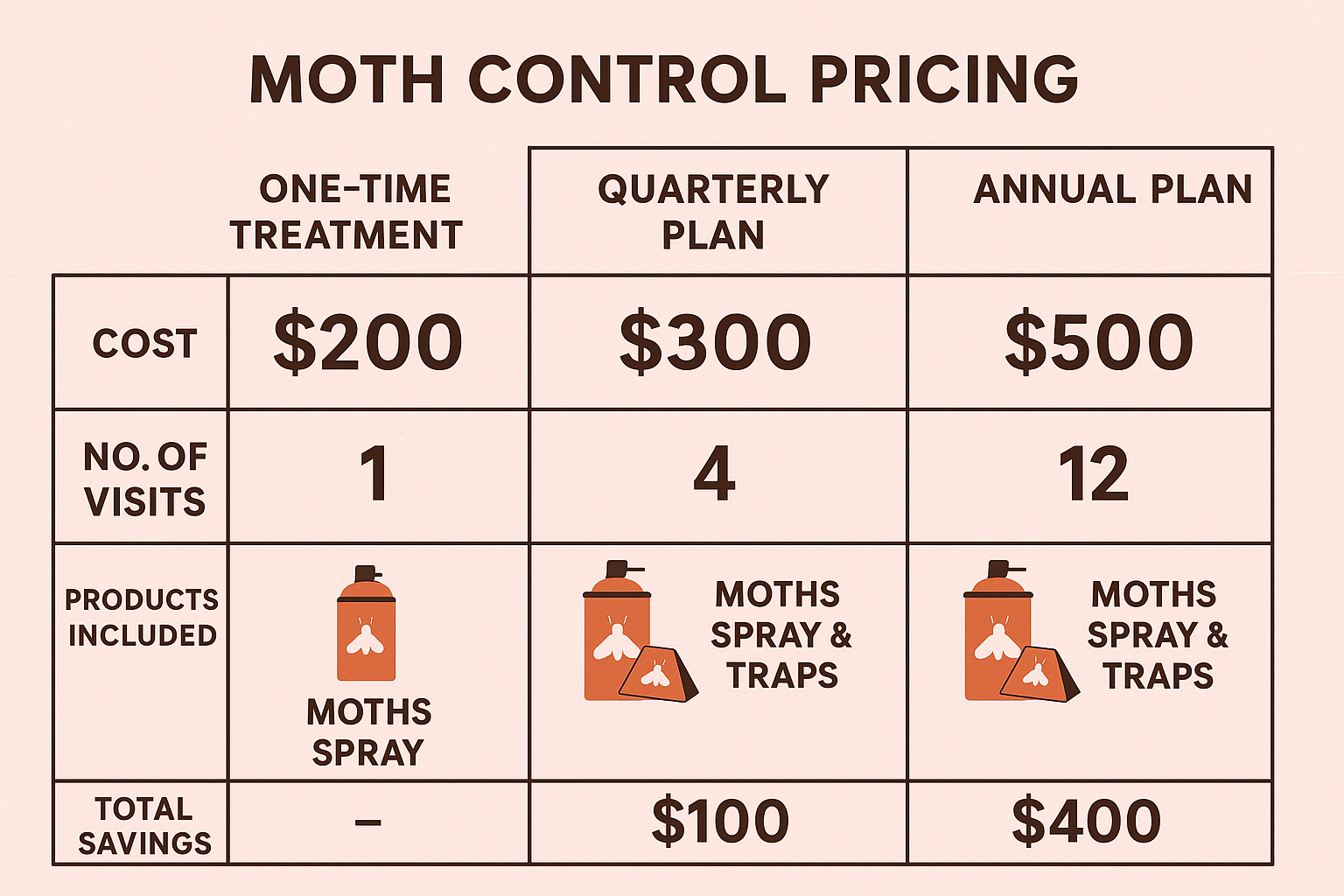
| Service Plan | Cost per Visit | Visits per Year | Products Included | Total Annual Savings |
|---|---|---|---|---|
| One‑Time Treatment | $180 | 1 | EPA‑approved spray | — |
| Quarterly Maintenance | $130 | 4 | Spray + pheromone traps | $100 |
| Annual Comprehensive | $115 | 6 | Spray, traps, residual barrier, follow‑up inspection | $250 |
The numbers speak clearly: while a single visit may appear cheaper upfront, the quarterly and annual bundles lock in lower per‑visit rates and deliver extra products that boost protection. Over a year, the annual comprehensive plan can save you roughly $250 compared with paying for each visit separately.
What “Included Products” Really Means
In these tables, “products included” refers to the tools and chemicals technicians apply during each service. EPA‑approved insecticides ensure safety for children and pets while targeting moth larvae. Monitoring devices such as pheromone traps help detect early activity, and residual barriers create a protective shield that lasts weeks between visits. When a plan lists “follow‑up inspection,” it means a professional will verify that the treatment remains effective and will re‑apply if necessary.
Tips for Evaluating Quotes
- Watch for hidden fees: Some companies add travel surcharges or equipment rentals after the initial quote. Ask for an itemized estimate.
- Check warranty length: Longer warranties usually indicate confidence in product performance and reduce future out‑of‑pocket costs.
- Guarantee of re‑treatment: A solid plan will promise a free re‑treatment if moth activity reappears within a specified window.
By comparing these core elements—price per visit, total visits, included products, and annual savings—you can select a moth‑control package that fits both your budget and your peace of mind. Anthem Pest Control’s transparent pricing and locally‑tailored plans make it easy to see exactly what you’re paying for, so you can protect your home without any guesswork.
Seasonal Moth Activity and Prevention Calendar
Moths aren’t random invaders; their life cycles sync with temperature, humidity, and the way we handle clothing and food. Warm, humid months speed up egg hatching, while cooler periods push them into dormant stages. Understanding these patterns lets you strike before an infestation takes hold.
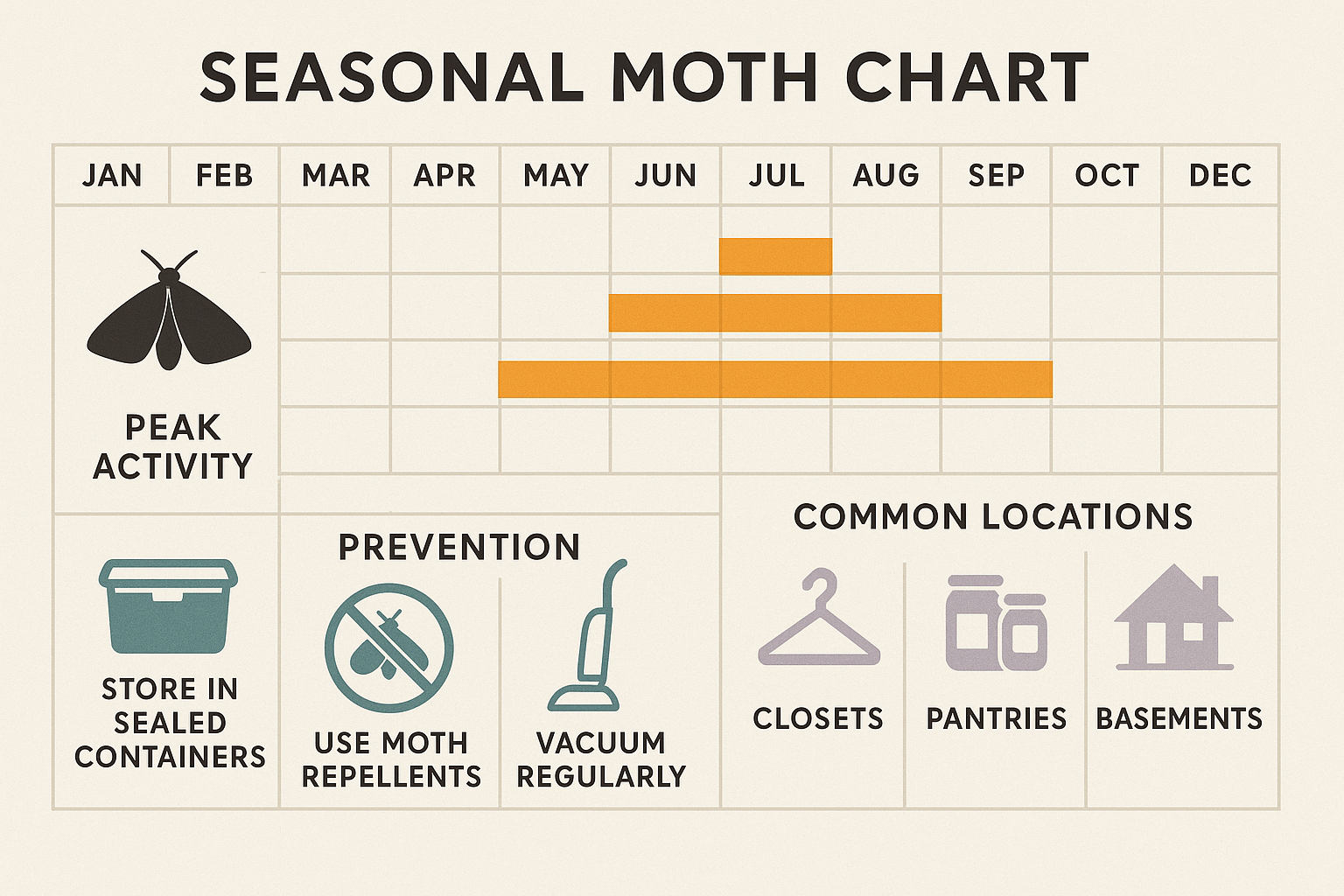
January – March: Indoor Storage Focus
Winter drives us to pull out stored coats, blankets, and holiday décor. Moths love undisturbed fabrics, especially if they’re tucked away in basements or closets.
- Action: Vacuum closets and basements, then wipe shelves with a mild detergent.
- Trap: Place pheromone traps in each storage area to catch adult moths.
- Fabric care: Air‑out winter coats, brush off lint, and consider a brief tumble‑dry on low heat.
April – June: Pantry Checks as Fresh Groceries Arrive
Spring brings new pantry staples—flour, cereal, and dried fruit. These items provide perfect food sources for pantry moths.
- Action: Remove all items, sweep shelves, and wipe with a vinegar solution.
- Inspection: Discard any product with webbing or larvae; transfer unopened goods to airtight containers.
- Trap: Hang a pantry‑specific pheromone trap near the back of the cabinet.
July – September: High Humidity Season
Georgia’s summer heat and humidity create ideal breeding conditions for both pantry and clothing moths. Moisture also encourages mold, which attracts certain moth species.
- Action: Run a dehumidifier in basements, closets, and kitchen cabinets.
- Clothing: Rotate garments, especially those stored in dark corners; shake out and sun‑dry if possible.
- Trap: Replace pheromone traps monthly to maintain effectiveness.
October – December: Holiday Season Vigilance
Gifts, new fabrics, and extra food storage increase the risk of introducing moths from outside the home.
- Action: Inspect all wrapped gifts, especially those with fabric or food items, before placing them in closets.
- Storage: Keep holiday décor in sealed plastic bins rather than cardboard boxes.
- Trap: Position a final set of traps in wardrobes and pantry corners before the holidays begin.
Common Indoor Hotspots by Season
- Winter (Jan‑Mar): Basements, attic storage, and wool coat closets.
- Spring (Apr‑Jun): Kitchen pantry shelves, spice racks, and dry‑goods cabinets.
- Summer (Jul‑Sep): Moisture‑prone closets, bathroom linen cabinets, and under‑sink areas.
- Fall/Winter (Oct‑Dec): Gift‑wrapping stations, new‑fabric wardrobes, and holiday food pantries.
Set a recurring calendar reminder—whether on your phone or a wall planner—to perform the listed tasks each month. A quick 10‑minute check can prevent a small moth problem from turning into a costly infestation that requires professional treatment.
By aligning your preventive routine with the natural rhythm of moth activity, you protect your home, your wardrobe, and your pantry all year long. If you ever spot signs of an infestation despite these steps, Anthem Pest Control is ready to provide safe, effective treatment tailored to Suwanee homeowners.
Protect Your Home with Anthem Pest Control
Early detection, proper food storage, and seasonal vigilance are the three pillars of effective moth management. Spotting a few larvae or webbing before they spread can save you from costly pantry clean‑outs and ruined clothing. Storing grains, nuts, and dried goods in airtight containers cuts off the moths’ food source, while regular checks during the spring and fall—when moth activity spikes—keeps infestations from taking hold.
Why Choose Anthem Pest Control?
Anthem’s technicians are trained to identify every common moth species that invades Georgia homes, from pantry moths to carpet moths. We use EPA‑approved, low‑toxicity treatments that target the insects without endangering your family or pets. Our pricing is transparent: you’ll receive a detailed estimate before any work begins, so there are no surprise fees.
Nationwide Coverage, Affordable Plans, and a Satisfaction Guarantee
Whether you live in Suwanee or any other U.S. city, Anthem Pest Control offers the same high‑quality service. Our flexible service plans let you choose a one‑time treatment or an ongoing protection program that fits your budget. Plus, every job is backed by a satisfaction guarantee—if you’re not happy with the results, we’ll return and make it right at no extra cost.
Take the First Step Toward a Moth‑Free Home
If you suspect a moth problem or simply want peace of mind, reach out for a free, no‑obligation quote. Our friendly team will walk you through the inspection process, explain the recommended treatment, and schedule a convenient appointment.
Ready to keep your pantry fresh and your closets moth‑free? Call Anthem Pest Control today at 877‑371‑8196 for a free quote, or visit Anthem Pest Control to learn more about our services.