
Understanding the Mouse Problem in Brookhaven, GA
Brookhaven’s humid subtropical climate creates an ideal backdrop for house mice (Mus musculus). Warm summers, mild winters, and ample rainfall keep vegetation lush, while the city’s mix of historic homes, modern townhouses, and well‑kept lawns provide plentiful shelter and food sources. Even the occasional leaf‑covered crawl space can become a cozy hideaway for these tiny invaders.
Local reports show that mouse sightings spike in the suburban neighborhoods surrounding Peachtree Road and around the Brookhaven Golf Club. According to a recent survey by the Georgia Department of Public Health, more than 65 % of homeowners in Fulton County have observed mouse activity at least once per year, with the highest frequency during late summer and early fall when outdoor food sources begin to dwindle.
While a single mouse may seem harmless, the collective impact can be significant. Mice chew through insulation, wiring, and wooden structures, leading to costly repairs. Their constant foraging contaminates pantry items, spreads droppings, and leaves urine trails that can ruin food preparation surfaces.
Beyond property damage, mice are vectors for several serious illnesses. The Centers for Disease Control and Prevention warns that rodents can transmit Hantavirus, salmonellosis, and leptospirosis, among others. For a detailed list of rodent‑borne diseases, visit the CDC’s rodent disease page.
Understanding these risks helps homeowners see why early detection matters. Simple signs—such as fresh droppings, gnaw marks on cabinetry, or the faint scent of mouse urine—often appear before a full‑blown infestation takes hold. Catching these clues early can save you from extensive damage and expensive treatment later.
Another early indicator is the presence of nests made from shredded paper, fabric, or insulation. Mice prefer hidden corners near food storage, so check under appliances, behind refrigerators, and inside attic joists. Even a faint rustling sound in the walls at night can signal a growing population.
By recognizing the environmental factors that attract mice and the warning signs they leave behind, Brookhaven homeowners can take proactive steps toward prevention. In the next section, we’ll walk you through the most reliable methods for spotting an infestation before it spreads.

Identifying Mice and Recognizing Early Warning Signs

The most common intruder in Brookhaven homes is the house mouse (Mus musculus). Adults measure 2.5–4 inches long, including a hair‑less, scaly tail that’s roughly the same length as the body. Their fur ranges from light gray to brown, often with a white belly, and they sport long whiskers that help them navigate tight spaces. These tiny mammals are agile, silent, and capable of squeezing through openings as small as a quarter‑inch.
Typical warning signs
Even if you haven’t seen a mouse, several clues betray their presence:
- Droppings: Dark, rice‑shaped pellets about ¼ inch long, usually found along walls, behind appliances, or in cabinets.
- Gnaw marks: Fresh, clean cuts on wood, plastic, or wiring—often near food sources.
- Nesting material: Shredded paper, fabric, or insulation bundled into soft piles.
- Oily footprints: Silvery streaks on smooth surfaces where mice have brushed their bellies.
- Audible activity: Soft rustling or scurrying sounds, especially at night, emanating from walls, attics, or crawl spaces.
Where they like to work
Mouse activity clusters in areas that provide food, water, and shelter. Check these hotspots first:
- Kitchens: Behind stoves, under sinks, and inside pantry boxes.
- Basements & attics: Warm, undisturbed corners, insulation, and stored boxes.
- Garages and sheds: Cluttered corners, pet food bowls, and stored garden debris.
- Utility rooms: Near water heaters, furnace filters, and HVAC ducts.
Quick self‑inspection checklist
- Look for droppings in hidden corners and along baseboards.
- Inspect cabinets, pantry shelves, and pantry boxes for gnaw marks.
- Feel for oily footprints on smooth countertops and floors.
- Listen for nighttime rustling behind walls or in ceiling spaces.
- Search for shredded nesting material in stored items or insulation.
Spotting even one of these signs warrants a closer look. Early detection lets you act before a few curious mice turn into a full‑blown infestation—saving you time, stress, and costly damage.
Preventing Entry and Securing Your Home
Before you ever call a professional, the most effective weapon against a mouse invasion is a well‑sealed home. By eliminating the tiny cracks and gaps that rodents love, you turn your house into a fortress that mice simply cannot breach.
Typical Entry Points
- Gaps around utility pipes, cables, and vent stacks – even a ¼‑inch opening is enough for a mouse.
- Cracks in the foundation or slab, especially near landscaping beds.
- Unsealed door sweeps and weather‑stripping on exterior doors.
- Openings around windows, especially where screens have been removed.
- Utility openings for dryer vents, electrical conduit, and HVAC ducts.
Materials and Tools You’ll Need
- Steel wool (coarse grade) – mice cannot chew through it.
- Caulk – silicone or acrylic for sealing small holes.
- Hardware cloth (½‑inch mesh) – ideal for larger gaps.
- Door sweeps and weather‑stripping kits.
- Utility knife, putty knife, and a sturdy screwdriver.
- Gloves and a dust mask for safety.
Step‑by‑Step Inspection and Sealing
- Walk the perimeter outside the house with a flashlight. Look for any visible cracks, holes, or torn screens.
- Push a thin piece of steel wool into each opening, then seal over it with caulk. For gaps larger than ½ inch, cut a piece of hardware cloth, staple it in place, and cover with caulk.
- Check the interior baseboards and wall corners. Use caulk to fill any hairline cracks you discover.
- Inspect all exterior doors. Install a new door sweep if the old one is worn, and apply fresh weather‑stripping around the frame.
- Examine vent covers, dryer exhausts, and utility penetrations. Fit hardware cloth over the opening before reinstalling the vent hood.
- Finally, run a thin bead of silicone caulk around window frames and any recessed lighting fixtures.
Eliminate Food and Water Attractants
Even a perfectly sealed home can invite mice if food or water is readily available. Store pantry items in airtight containers, and keep counters free of crumbs. Fix leaky faucets, roof gutters, and basement pipes—standing water is a magnet for rodents. Use sealed trash cans with tight‑fit lids, and take out the garbage regularly.
Make Maintenance a Habit
Sealing is not a one‑time project; it’s an ongoing habit. Schedule a quick “mouse‑proof walk‑through” each season. Look for new cracks after winter freezes, replace worn door sweeps, and re‑caulk any areas that have settled. By treating maintenance as the first line of defense, you reduce the need for costly treatments and keep your home comfortable year‑round.
Treatment Options, Pricing, and Service Plans
Overview of Treatment Categories
When it comes to mouse control, the most common tools fall into three buckets: traps, bait stations, and rodenticide applications. Snap traps deliver an instant kill and are inexpensive, live‑catch traps let you release the rodent outdoors, and glue boards provide a passive capture method that requires careful disposal. Bait stations conceal poisoned bait in a tamper‑proof box, protecting curious pets while allowing the poison to work over several days. Rodenticide applications—either granular or liquid—target entire colonies but demand strict adherence to safety guidelines.
Pros, Cons, and Safety Considerations
- Snap traps: quick, cheap, and effective for low‑level infestations; however, they pose a risk to children and pets if left within reach.
- Live‑catch traps: humane option that lets you relocate the mouse; the downside is the need for frequent checking and proper release, which may not be legal in every municipality.
- Glue boards: inexpensive and easy to place; they can cause distress to the animal and are often considered inhumane, plus they can trap non‑target insects.
- Bait stations: provide a controlled poison that mice carry back to hidden nests, reducing the population faster; they require professional placement to ensure compliance with local regulations and to keep children and pets safe.
- Rodenticide applications: most powerful for severe infestations; however, they demand precise dosing, may leave residues, and should be applied by certified technicians.
DIY vs. Professional Intervention
For a single mouse sighting in a well‑sealed home, a few snap traps placed along walls can be enough. If you notice droppings in multiple rooms, gnaw marks on wiring, or evidence of nesting, it’s a sign that the problem has moved beyond a DIY fix. Professional pest control brings three advantages: a thorough inspection that uncovers hidden entry points, access to EPA‑registered rodenticides, and a structured follow‑up schedule that guarantees results.
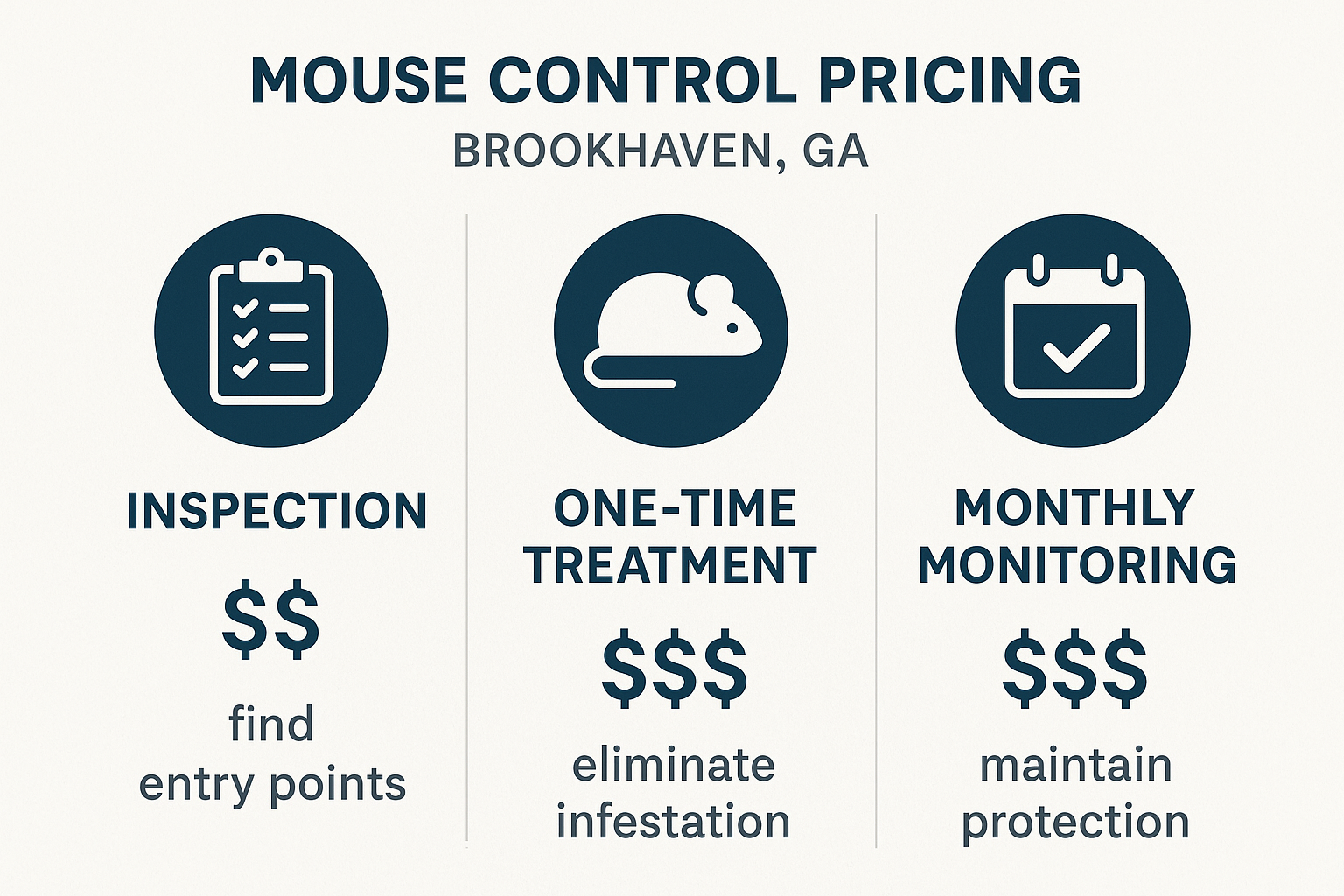
Pricing Infographic – Brookhaven, GA
What’s Included in Anthem’s Service Plans
Anthem Pest Control keeps its pricing transparent, so you know exactly what you’re paying for. The standard inspection fee covers a detailed walk‑through, identification of entry points, and a written report with remediation recommendations. A one‑time treatment adds the selected control method—whether traps, bait stations, or rodenticide—and a 30‑day guarantee that any remaining activity will be addressed at no extra charge. Our monthly monitoring plan bundles quarterly inspections, refill of bait stations, trap maintenance, and a 12‑month guarantee, providing peace of mind for busy homeowners who prefer a hands‑off approach.
Choosing a plan that matches the severity of your infestation not only protects your family and pets but also prevents future invasions. With Anthem’s clear cost structure and locally‑trained technicians, Brookhaven residents can confidently tackle mouse problems without surprise fees.
Seasonal Mouse Activity and Timing for Effective Control
Understanding the ebb and flow of mouse activity throughout the year is the first step to keeping your Brookhaven home rodent‑free. The chart below shows a clear peak in mouse sightings during the warm summer months (June‑August), while activity tapers off in the cooler winter period (December‑February). Knowing these trends helps you focus your inspection and treatment efforts when they matter most.

Why Mice Seek Shelter in Colder Months
As temperatures dip, mice instinctively look for warm, protected environments to conserve energy. Your attic, crawl spaces, and even kitchen cabinets become attractive refuges because they offer consistent heat and easy access to food stores. This seasonal migration often translates into a sudden spike in indoor sightings once the first frost hits.
Timing Your Inspections for Maximum Impact
Early spring (March‑April) is the ideal window for a thorough pre‑season inspection. During this period, mice are emerging from winter hideouts and testing the perimeter of your home. Spotting and sealing entry points now prevents a full‑blown summer invasion.
Late fall (October‑November) serves as a crucial post‑season follow‑up. After the summer peak, a second sweep helps catch any lingering rodents that have taken shelter for the winter, ensuring they don’t establish a year‑round presence.
Adjusting Preventive Measures by Season
- Summer (high risk): Intensify bait placement near known activity zones and schedule weekly checks of traps.
- Fall (moderate risk): Reinforce door sweeps, weather‑strip windows, and trim vegetation that contacts the house.
- Winter (low risk but critical): Maintain a tidy pantry, store grains in sealed containers, and keep indoor humidity low to discourage nesting.
- Spring (pre‑emptive): Conduct a full exterior inspection, seal cracks larger than ¼ inch, and consider a professional rodent barrier treatment.
By aligning your pest‑management calendar with these seasonal patterns, you’ll stay one step ahead of the mice that threaten your home. If you need a professional assessment or want to schedule a treatment, Anthem Pest Control’s licensed technicians are ready to help you protect your property year‑round.
Protect Your Home with Professional Help Today
If you’ve spotted droppings, gnaw marks, or heard the tell‑tale scurrying at night, you’ve already taken the first step toward taking back control. Our guide highlighted how simple inspections, sealing entry points, and timing treatments before the nesting season can stop a mouse invasion before it starts. These DIY steps are valuable, but they work best when paired with professional oversight to catch hidden hot spots and ensure lasting protection.
Anthem Pest Control brings certified technicians, industry‑approved bait stations, and a proven inspection protocol that eliminates rodents safely for you and your family. Because we understand Brookhaven’s climate and building styles, we tailor each plan to the specific risks of your neighborhood. The result is a solution that not only removes the current infestation but also builds a barrier that keeps future guests out.
Ready to lock down your home with a thorough, no‑obligation inspection? Give us a call at 877‑371‑8196 and one of our friendly specialists will schedule a free visit at a time that fits your busy life. We pride ourselves on transparent pricing, a satisfaction guarantee, and a quick response that prevents damage to wiring, insulation, and your peace of mind.
Visit Anthem Pest Control today to learn more about our mouse control packages and read testimonials from fellow Brookhaven homeowners. Act now—every day a mouse remains undetected increases the risk of costly repairs and health hazards, so let the experts protect your sanctuary.