
Why Mice Invade Your Home and How to Spot Early Warning Signs

Mouse biology and the lure of human dwellings
House mice (Mus musculus) are small, adaptable rodents that can squeeze through openings as tiny as a quarter-inch—one of the key reasons mouse control Druid Hills homeowners rely on is so important. Their survival kit includes a rapid reproductive cycle, keen senses, and an instinct to hoard food. In a home, they find three essentials in abundance: food (pantry scraps, pet kibble), shelter (wall voids, attics, crawl spaces), and water (leaky pipes, pet dishes). When those resources line up, a mouse can establish a colony in just a few weeks.
How common are mice in U.S. households?
According to the U.S. Environmental Protection Agency, rodents are among the most frequently reported indoor pests, with an estimated 20 % of homes experiencing a mouse problem each year. The Centers for Disease Control and Prevention echoes this, noting that mouse infestations are a nationwide concern, especially in urban and suburban neighborhoods where food waste is readily available.
Key health risks
Mice are more than a nuisance; they are vectors for disease. They can carry Hantavirus, Salmonella, and Leptospira, contaminating surfaces with urine and droppings. Their dander may trigger allergic reactions, and their constant gnawing can compromise structural integrity—chewed wiring poses fire hazards, while gnawed insulation reduces energy efficiency.
Early visual signs you shouldn’t ignore
- Droppings: Small, dark, rice‑shaped pellets often found along baseboards, behind appliances, or in pantry corners.
- Gnaw marks: Fresh, clean cuts on wood, plastic, or cardboard; look for parallel lines on wires or furniture legs.
- Damaged packaging: Crumpled snack bags, chewed cereal boxes, or torn food containers indicate a foraging mouse.
- Nesting material: Shredded paper, fabric fibers, or dried plant matter collected in hidden corners.
- Sounds: Scratching or scurrying noises in walls, ceilings, or attics, especially at night.
Behavioral clues that signal activity
Because mice are nocturnal, you may notice increased movement after dusk. Look for sightings near food storage areas—kitchens, pantries, and garages are hot spots. A sudden spike in crumbs or unexplained food disappearance often points to a mouse foraging expedition.
Distinguishing mouse evidence from other pests
While cockroaches also leave droppings, roach frass is typically darker and more irregular. Ant trails are linear and accompanied by tiny, organized colonies. In contrast, mouse signs appear in clusters: droppings are uniform, gnaw marks are larger than insect bites, and nesting material is bulkier. When in doubt, a professional inspection can confirm the culprit and prevent costly missteps.
Mapping Mouse Entry Points Inside Your Home
Mice are astonishingly flexible. An adult house mouse can compress its body enough to slip through an opening the size of a pencil eraser—about ¼ inch (6 mm) in diameter. That means a crack you might dismiss as harmless can be a highway for a rodent. Understanding just how small a mouse can get is the first step toward sealing the routes it uses to invade your living space.

Typical exterior entry points
Most mouse invasions begin outside the home. The following locations are the most common gateways:
- Gaps around the foundation—especially where concrete meets soil.
- Openings around utility lines (water, gas, electric) that pierce the exterior wall.
- Vents and exhaust fans that lack proper mesh screens.
- Improperly sealed doors and windows, including the space beneath sliding doors.
- Roof eaves and soffits where roofing material meets the siding.
- Cracks in the exterior brick or stucco.
Interior pathways
Once inside, mice travel along the path of least resistance. Look for these interior vulnerabilities:
- Hairline cracks in interior walls, especially around baseboards.
- Gaps around plumbing and electrical pipes that pass through floors and walls.
- Openings in HVAC ducts or around vent covers.
- Space behind cabinets, especially in kitchens and bathrooms.
- Unsealed gaps between floorboards or at the intersection of flooring and trim.
- Loose or missing insulation in crawl spaces and attics.
Step‑by‑step floor‑plan inspection
Visualizing your home as a map helps you spot every potential entry. Follow this walk‑through while holding a simple floor‑plan (hand‑drawn or printed):
- Start at the perimeter. Trace the outer walls on your plan and mark any visible cracks, holes, or gaps you see on the actual structure.
- Check utility penetrations. Locate where water, gas, and electrical lines enter the house. Note any spaces larger than ¼ inch.
- Inspect doors and windows. Measure the clearance under each door and the gap around each window frame. Mark any that need weather‑stripping or caulking.
- Move inside. From the kitchen outward, walk each room and use a flashlight to shine into corners, behind appliances, and under cabinets. Highlight every crack or opening you discover.
- Don’t forget the ceiling and roof. Look at attic hatches, vent flues, and eave spaces. Add these to your map.
- Prioritize. Color‑code the marks: red for high‑traffic zones (kitchens, basements, garages) and yellow for lower‑traffic areas.
Essential inspection tools
Equipping yourself with the right tools makes the job faster and more thorough:
- Flashlight: A bright LED light reveals hidden gaps in dark corners.
- Inspection mirror: A small, angled mirror lets you see behind appliances and under cabinets without moving heavy items.
- Inspection camera: A cheap USB or Wi‑Fi camera can probe tight spaces and record evidence for later reference.
- Measuring tape or ruler: Verify that openings are larger than ¼ inch before deciding they need sealing.
- Gloves and a dust mask: Protect yourself from dust, insulation fibers, or potential rodent droppings.
Prioritizing repairs: high‑traffic vs. low‑traffic zones
Not every gap poses the same risk. Focus first on areas where mice are most likely to travel:
- High‑traffic zones: Kitchens, pantries, garages, and basements. These spaces provide food, water, and shelter, so seal any openings here within 24–48 hours.
- Medium‑traffic zones: Living rooms and bedrooms. Address these next, using steel wool, caulk, or expanding foam as appropriate.
- Low‑traffic zones: Attics, crawl spaces, and rarely used closets. While still important, they can be tackled after the primary entry points are secured.
Industry data from the National Pest Management Association (NPMA) shows that over 70 % of residential mouse infestations originate from exterior gaps, with interior cracks accounting for the remainder. By systematically mapping, inspecting, and sealing these points, you dramatically reduce the chance of a repeat invasion and give your professional pest‑control partner a clearer picture of where treatment is needed.
Prevention Strategies to Keep Mice Out for Good
1. Sanitation Practices: Food, Waste, and Clutter
Mouse infestations often start where food is easy to find. Store pantry items in airtight containers made of glass, metal, or heavy‑wall plastic—simple zip‑top bags won’t cut it. Keep counters clear of crumbs, and wipe down surfaces after each meal. Garbage cans should have tight‑fitting lids and be taken out regularly; a full bin is an invitation for rodents. Finally, declutter storage areas such as basements, attics, and garages. Boxes stacked directly on the floor create hiding spots, so elevate items on shelving and keep the floor clear.
2. Landscape Management: Trim, Clear, and Grade
The exterior of your home is the first line of defense. Trim back shrubs, vines, and tree branches so they stop at least six inches from the roof and never touch the siding. Overgrown vegetation provides bridges for mice to reach the foundation. Remove leaf piles, wood debris, and any compost heaps that sit directly against the house; these become ideal nesting sites. Ensure the ground slopes away from the foundation by at least a one‑inch‑per‑foot grade. Proper drainage prevents moisture buildup, which attracts insects that, in turn, lure rodents.
3. Structural Sealing: Block Every Possible Entry
Even the tiniest opening can become a mouse highway. Conduct a thorough walk‑through with a flashlight and look for gaps around pipes, vents, and utility lines. Seal openings using a layered approach:
- Steel wool – Stuff it into gaps no larger than a quarter inch; mice can’t chew through it.
- Caulk – Apply silicone‑based caulk over the steel wool for a smooth, weather‑proof seal.
- Expanding foam – Use for larger voids, but follow with a metal flashing strip to prevent chewing.
- Metal flashing – Cut to size and secure over vulnerable areas such as where cables enter the home.
Remember to inspect the attic and crawl spaces; mice love the insulation there and will gnaw through any exposed wiring or vent screens.
4. Installing Door Sweeps and Weather Stripping
Exterior doors are frequent entry points, especially if they sit directly on the concrete slab. Install a door sweep on the bottom edge of each exterior door to eliminate the gap beneath. For interior doors that lead to basements or garages, add weather stripping around the frame to keep drafts—and rodents—out. Both products are inexpensive, easy to attach with a screwdriver, and make a noticeable difference within a single weekend.
5. Routine Inspections: Seasonal Checklists
Prevention is an ongoing task, not a one‑time project. Adopt a seasonal inspection schedule to catch problems before they become infestations. Use the table below as a quick reference.
| Season | Key Tasks |
|---|---|
| Spring | Inspect foundation for new cracks, trim vegetation, clean gutters. |
| Summer | Check door sweeps after heavy use, verify attic insulation is intact. |
| Fall | Seal any gaps revealed by leaf‑fall debris, reinforce pantry storage. |
| Winter | Monitor for gnaw marks on exterior walls, ensure heat vents are screened. |
Mark these tasks on your home maintenance calendar and set reminders on your phone. A 15‑minute walk through each season can save you weeks of rodent damage later.
6. When DIY Stops and Professional Help Is Needed
Most homeowners can handle the basics, but there are clear signs that the problem has outgrown a DIY approach:
- Frequent sightings of live mice or droppings despite sealed entry points.
- Evidence of gnaw damage to structural members, wiring, or insulation.
- Large, active burrow systems in the yard or under the foundation.
- Unexplained noises in walls that persist after traps are set.
In these cases, call a licensed rodent specialist. Anthem Pest Control offers a thorough inspection, targeted baiting, and long‑term exclusion services. Their technicians can identify hidden entryways, assess structural damage, and implement a customized prevention plan—often saving homeowners from costly repairs down the line.
Quick Tip Box – Top 5 Prevention Actions
- Store all food in sealed, rodent‑proof containers.
- Trim vegetation and maintain a 6‑inch gap between plants and the house.
- Seal gaps with steel wool + caulk; reinforce larger holes with metal flashing.
- Install door sweeps on every exterior door and weather‑strip interior doors.
- Perform a seasonal inspection using the checklist above.
Treatment Options and Pricing Packages Explained
When it comes to mouse control Druid Hills homeowners can trust, the method you choose can make a big difference in both effectiveness and peace of mind. At Anthem Pest Control, we offer a full suite of treatment modalities—from classic snap traps to comprehensive Integrated Pest Management (IPM) programs—so you can pick the approach that fits your home, family, and budget.
Overview of Treatment Modalities
Below is a quick snapshot of the most common options we deploy:
- Snap Traps – Traditional, quick‑killing devices that require manual placement.
- Live Traps – Capture‑and‑release units, ideal for homeowners who prefer a humane solution.
- Electronic Traps – Battery‑powered devices that deliver a lethal shock, eliminating the mess of a dead mouse.
- Bait Stations – Enclosed containers that hold rodenticide or non‑chemical attractants; they’re tamper‑resistant and discreet.
- Rodenticides – Professional‑grade poisons applied by certified technicians, usually in low‑traffic areas.
- Integrated Pest Management (IPM) – A holistic strategy that combines inspection, exclusion, sanitation, and targeted treatments to keep mice out for the long term.
Pros and Cons of Each Method
| Method | Effectiveness | Safety | Homeowner Involvement |
|---|---|---|---|
| Snap Traps | High – kills on contact | Moderate – sharp parts, keep children/pets away | High – placement and disposal are DIY |
| Live Traps | Medium – depends on checking frequency | High – no poison, but requires humane release | High – frequent monitoring needed |
| Electronic Traps | High – instant kill, no mess | High – no chemicals, but keep away from water | Medium – set up once, occasional battery check |
| Bait Stations | High – continuous action | Medium – tamper‑resistant, but poison present | Low – technician installs, you monitor activity |
| Rodenticides | Very High – lethal dose works quickly | Low – toxic if mishandled, pets & kids at risk | Low – applied by pros, but follow‑up is essential |
| IPM | Very High – addresses root causes | High – focuses on prevention, minimal chemicals | Medium – homeowner helps with sanitation and exclusion |
Why a Professional Assessment Matters
Even the best DIY traps can fall short if the infestation is larger than it appears. Our certified technicians conduct a thorough walkthrough, identify entry points, and map mouse activity patterns. This assessment forms the backbone of any treatment plan and ensures that follow‑up visits are targeted, not random. With Anthem’s monitoring service, you’ll receive post‑treatment reports and a guarantee period that protects you from repeat invasions.
Service Packages at a Glance
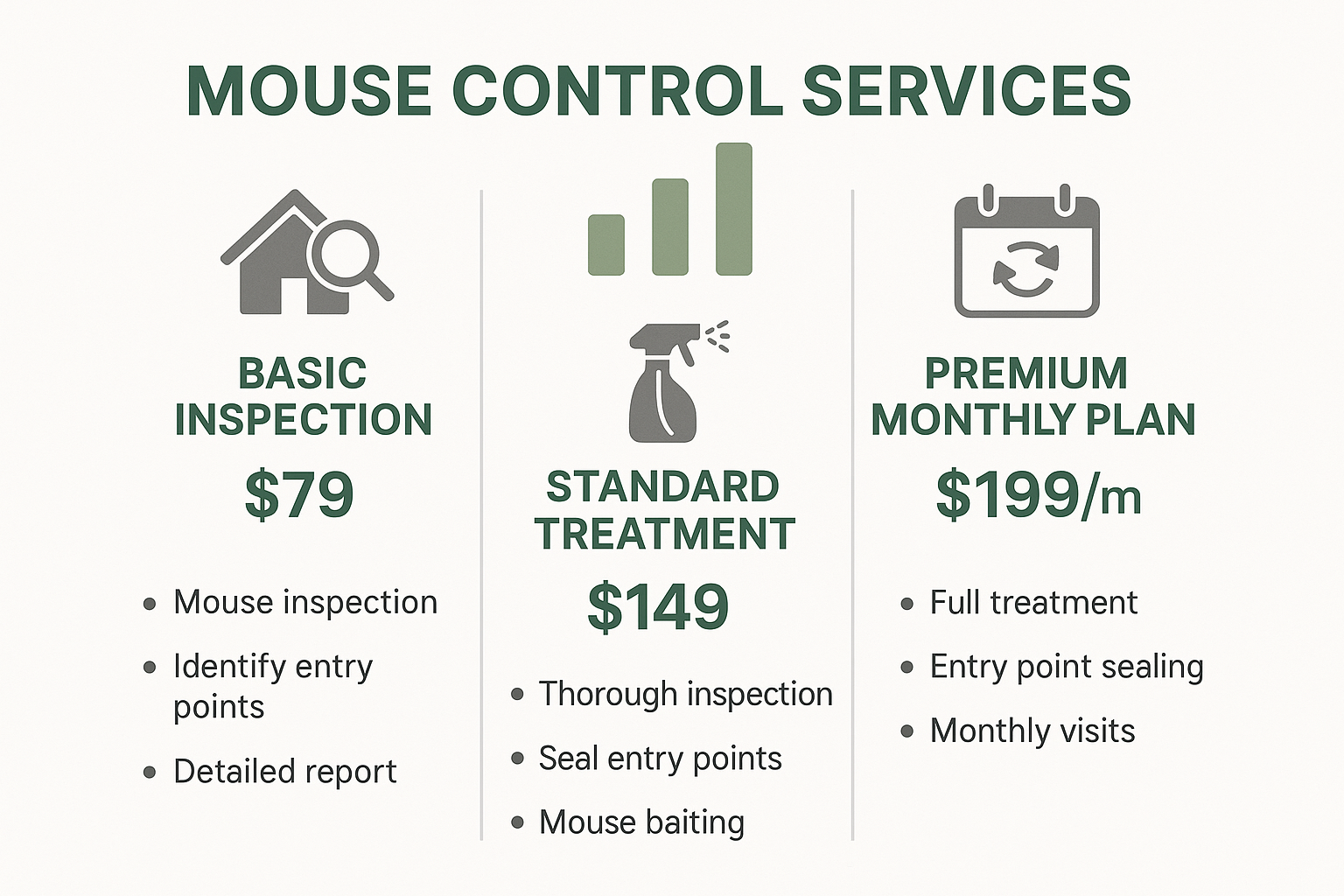
| Package | Price | What’s Included | Guarantee |
|---|---|---|---|
| Basic Inspection | $79 | One‑time visual inspection, 2 snap traps, 1 follow‑up call | 30‑day mouse‑free guarantee |
| Standard Treatment | $149 | Comprehensive inspection, up to 5 snap or electronic traps, 2 bait stations, 1 technician visit for placement, 1 follow‑up visit | 60‑day mouse‑free guarantee |
| Premium Monthly Plan | $199/month | Quarterly inspections, unlimited traps & bait stations, monthly monitoring, exclusion repairs, priority scheduling, 24‑hour emergency response | Lifetime mouse‑free guarantee while active |
Choosing the Right Package
Start by gauging the severity of your problem. A single sighting or a few droppings usually fits the Basic Inspection for mouse control Druid Hills homeowners often need—it’s cost-effective and gives you a professional opinion without a big commitment. If you’ve noticed multiple entry points, gnaw marks, or a steady increase in activity, the Standard Treatment provides enough traps and bait to knock out the current population while still being a one-time expense.
For homeowners who have recurring mouse issues, live near high‑traffic areas, or simply want “set it and forget it” peace of mind, the Premium Monthly Plan is the most economical over time. The recurring fee covers ongoing monitoring, rapid response to new activity, and structural exclusion work that eliminates the need for future emergency calls.
Quick FAQ
- Do I need to vacate my home during treatment? No. All of our methods are designed to be safe for occupied residences. For rodenticide stations, we’ll place them in low‑traffic, inaccessible areas.
- Are the treatments pet‑safe? Absolutely. Snap, live, and electronic traps pose no risk to pets when placed correctly. Our bait stations are tamper‑resistant, and we can use pet‑friendly attractants on request.
- What’s the typical timeline? From the initial inspection to the first follow‑up, most treatments are completed within 5–7 business days. Ongoing IPM plans run month‑to‑month with quarterly check‑ins.
Seasonal Mouse Activity Trends and Timely Interventions
When the temperature starts to dip, you’ll notice more mouse sightings around your home. Mice are instinctively drawn to the warmth and the food you store for the colder months, which is why activity peaks in fall and winter. As the days grow shorter, they scramble for shelter, slipping through tiny cracks and burrowing under foundations to reach the cozy interior of your house.
Come spring, the picture changes. After a winter spent nesting, mice begin their breeding cycle, resulting in a moderate increase in numbers. Females can produce a new litter every three weeks, so a small problem can quickly become a larger one if left unchecked. Summer, on the other hand, sees a dip in outdoor activity. However, extreme heat waves can force mice back inside in search of cooler, more stable conditions, especially if your attic or crawl space becomes uncomfortably hot.
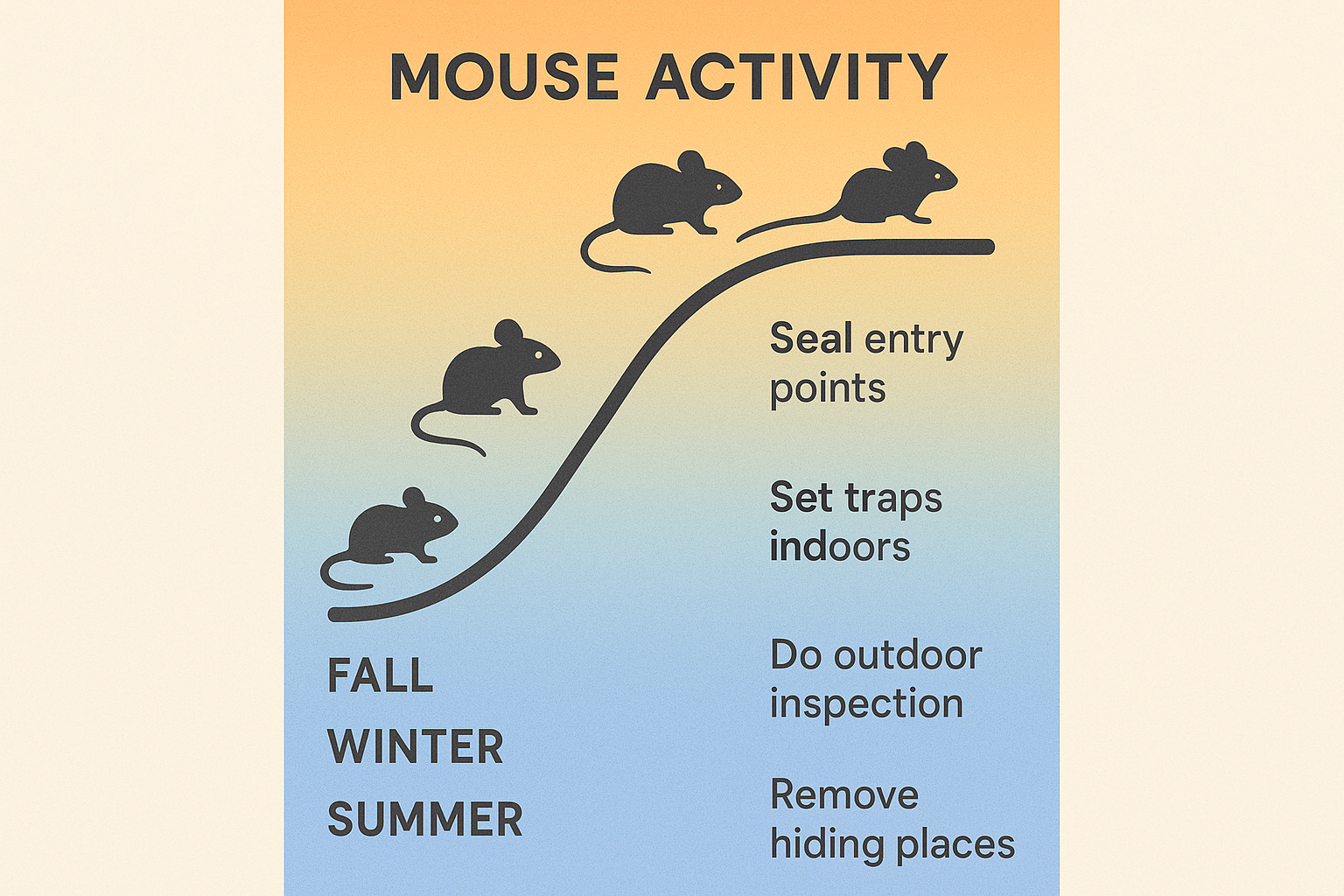
| Season | Activity Level | Key Tips |
|---|---|---|
| Fall | High | Conduct a thorough pre‑fall inspection; seal gaps; start baiting. |
| Winter | High | Check for new entry points after storms; reinforce door sweeps; keep food in airtight containers. |
| Spring | Moderate | Rotate bait types; monitor for new nests; trim vegetation away from the foundation. |
| Summer | Low (but watch for heat‑driven migration) | Maintain attic ventilation; continue regular monitoring; address any moisture issues. |
Recommended Actions by Season
- Pre‑Fall Inspection: Walk the perimeter, check for gaps larger than a quarter‑inch, and clear debris that could serve as a mouse runway.
- Winter Sealing: Focus on door thresholds, utility openings, and any cracks revealed after rain or snow melt. Use steel wool combined with caulk for a durable barrier.
- Spring Bait Rotation: Mice can become wary of a single bait type. Swap between grain‑based and protein‑based baits to keep them interested.
- Summer Monitoring: Even with lower outdoor activity, set up a few snap traps in hidden corners and keep an eye on attic temperatures; excessive heat can push mice indoors.
Weather plays a silent but powerful role in mouse behavior. Heavy rain saturates soil, forcing rodents to seek drier ground, while snow creates a blanket of insulation that pushes them toward the heat of your home. After a storm, revisit your exterior sealing—new gaps often appear where water has eroded mortar or shifted siding.
Aligning your professional pest‑control schedule with these seasonal peaks maximizes effectiveness. A pre‑fall service from Anthem Pest Control gives you a head start, ensuring entry points are sealed before mice start their migration. Follow‑up visits in winter and spring keep populations under control, while a summer check‑in catches any heat‑driven incursions before they become a full‑blown infestation.
Protect Your Home Today with Anthem Pest Control
Why Early Action Matters
Detecting mouse activity before it turns into an infestation saves you time, stress, and money. Sealing cracks, gaps, and utility openings stops newcomers from entering, while prompt treatment eliminates any residents that have already slipped inside. The sooner you act, the easier it is to keep your home mouse‑free.
Anthem’s Professional Edge
Our certified technicians bring years of field experience and a commitment to safety. We use EPA‑approved rodenticides and proven exclusion techniques that protect your family and pets. Transparent pricing means you know exactly what you’re paying for—no surprise fees, just reliable results.
Flexible Service Packages & Seasonal Support
Choose from three thoughtfully designed packages: a one‑time eradication plan, a quarterly maintenance program, and a comprehensive annual protection suite. Each option includes routine inspections, entry‑point sealing, and seasonal adjustments to address the shifting habits of mice throughout the year.
Ready When You Are
Whether you’ve just spotted the first droppings or you’re planning a seasonal inspection, our team is ready to help you reclaim a mouse‑free home without hassle or hidden fees. We tailor each visit to your schedule, ensuring minimal disruption while delivering maximum effectiveness.
Take the Next Step
Give us a call at 877‑371‑8196 or click the link below to request a free, no‑obligation quote. Our friendly representatives will walk you through the best package for your needs and set up a convenient appointment.
Visit Anthem Pest Control to learn more about mouse control Druid Hills homeowners can rely on and how we protect homes across the country.