Rapid Response to Rising Rat Sightings in Dunwoody

According to the 2024 Dunwoody Health Department report, rat sightings have jumped 18% across Metro Atlanta’s suburbs compared to last year. That surge isn’t just a nuisance—it signals a growing public-health threat that demands immediate attention from every homeowner and highlights the urgent need for professional rat control Dunwoody residents can rely on.
Rats are carriers of serious diseases such as leptospirosis and hantavirus, both of which can spread through contaminated droppings, urine, or even a single bite. Beyond health risks, these rodents chew through electrical wiring, insulation, and even structural beams, leading to costly repairs and increased fire hazards.
Our guide is organized to give you a clear, step‑by‑step roadmap:
- Understanding infestations – how rats enter and establish colonies.
- Spotting the signs – droppings, gnaw marks, and audible activity.
- Cost breakdown – transparent pricing for inspection, treatment, and follow‑up.
- Treatment methods – traps, bait stations, and humane exclusion techniques.
- Seasonal prevention – why spring and fall demand extra vigilance.
- Choosing a professional – what to look for in a licensed, locally‑experienced exterminator.
- FAQs – quick answers to the most common homeowner concerns.
- Action plan – a printable checklist to get your home rat‑free now.
We understand that cost is a major factor, so every section includes a detailed pricing table that shows exactly what you’ll pay for inspection, treatment, and any necessary follow‑up visits. No hidden fees, no surprise charges—just the data‑driven numbers you need to budget confidently.
Transparency isn’t just about dollars; it’s also about the science behind each recommendation. All treatment options are backed by the latest research from the Georgia Department of Public Health and field‑tested by Anthem Pest Control’s certified technicians.
By acting fast, you protect your family’s health, safeguard your property’s value, and stop the infestation before it spreads to neighboring homes. The next few minutes could be the difference between a manageable problem and a full‑blown rat invasion.
Understanding Rat Infestations in Dunwoody
Species Profile: Norway Rat & Roof Rat
The two culprits you’ll most likely encounter in Dunwoody are the Norway rat (Rattus norvegicus) and the roof rat (Rattus rattus). Norway rats prefer ground‑level habitats—think basements, crawl spaces, and dense shrubbery. They’re excellent swimmers, so any nearby waterway or storm‑drain becomes a highway for them. In the Southeast they’re most active from early spring through late fall, when food sources like garden produce and outdoor trash are abundant.
Roof rats, on the other hand, are arboreal. They love to climb trees, vines, and utility lines, making attics, eaves, and roof spaces their favorite hangouts. Their activity peaks in the warm summer months, when the humidity helps them stay hydrated and the surrounding foliage offers shelter. Both species are opportunistic feeders, but roof rats tend to favor fruits, nuts, and birdseed, while Norway rats will gnaw on anything from wiring to insulation.
Statewide Impact
The Environmental Protection Agency estimates that 2–3 million Georgia households grapple with rodent problems each year. That translates to roughly one in three homes across the state dealing with unwanted visitors at some point. In the Atlanta metro area, the combination of humid climate, sprawling green spaces, and older housing stock creates a perfect storm for rat populations to thrive.
Neighborhood Focus: Why Some Areas Are Hotspots
Within Dunwoody, three neighborhoods consistently show higher rat activity: Brookhaven, Dunwoody Estates, and Lenox Park. The common denominator is a blend of dense vegetation, mature trees, and aging construction.
- Brookhaven – Tree‑lined streets and historic homes with cracked foundations provide endless pathways for rats to move between yards.
- Dunwoody Estates – Large lot sizes mean more garden waste and compost piles, which become nightly buffets for foraging rats.
- Lenox Park – Proximity to the Peachtree Creek green corridor offers a natural rat highway, allowing colonies to spread quickly from one property to the next.
When homeowners neglect routine maintenance—like sealing cracks or trimming overgrown shrubs—they unintentionally open the door for these rodents.
Case Study Snapshot: A Small Gap, A Big Problem
In early 2023, a Dunwoody homeowner discovered a single 2‑inch gap under a siding board in the kitchen wall. Within weeks, they began hearing faint scratching sounds. By the end of the third month, an inspection revealed a thriving colony of roughly 150 rats nesting behind the siding, feeding on stored pantry items, and gnawing on electrical wiring.
This rapid escalation underscores two key lessons: first, rats can exploit even the tiniest openings; second, a proactive inspection can catch an infestation before it balloons into a costly, hazardous situation. Prompt sealing of entry points and a professional rodent treatment plan would have halted the colony’s growth long before it reached a dangerous size.
Key Takeaways for Homeowners
Understanding the habits of Norway and roof rats, recognizing the neighborhoods most at risk, and acting quickly on any signs of entry are essential steps to keep your Dunwoody home rat‑free. Regular inspections, proper sanitation, and sealing potential entryways are your first line of defense—followed by a trusted, local expert when you need a comprehensive treatment.
Spotting the Tell‑Tale Signs of Rat Activity
Rats are masters of stealth, but they leave a trail of evidence that any observant homeowner can spot. Early detection is the first step toward effective rat control Dunwoody residents depend on, stopping a small problem from becoming a full-blown infestation, saving money, and protecting your family’s health.
Droppings
Look for dark‑brown pellets about ½‑inch long, often found in clusters along kitchen baseboards, pantry shelves, and attic joists. Unlike mouse droppings, rat feces are larger and have a more pointed tip.
Gnaw Marks
Rats need to keep their teeth from overgrowing, so they gnaw on wood, plastic, and even electrical wiring. The cuts are clean, crescent‑shaped, and may appear on exposed beams, cabinet corners, or behind appliances.
Burrows & Runways
In the yard, rats create shallow burrows in mulch, garden beds, or under decks. Follow the fresh soil mounds to locate the hidden runways that connect their nest to food sources.
Noises
Because rats are nocturnal, you’ll often hear scurrying, scratching, or faint squeaks within walls, attics, or crawl spaces after dark. Persistent rustling is a red flag that a colony is active nearby.
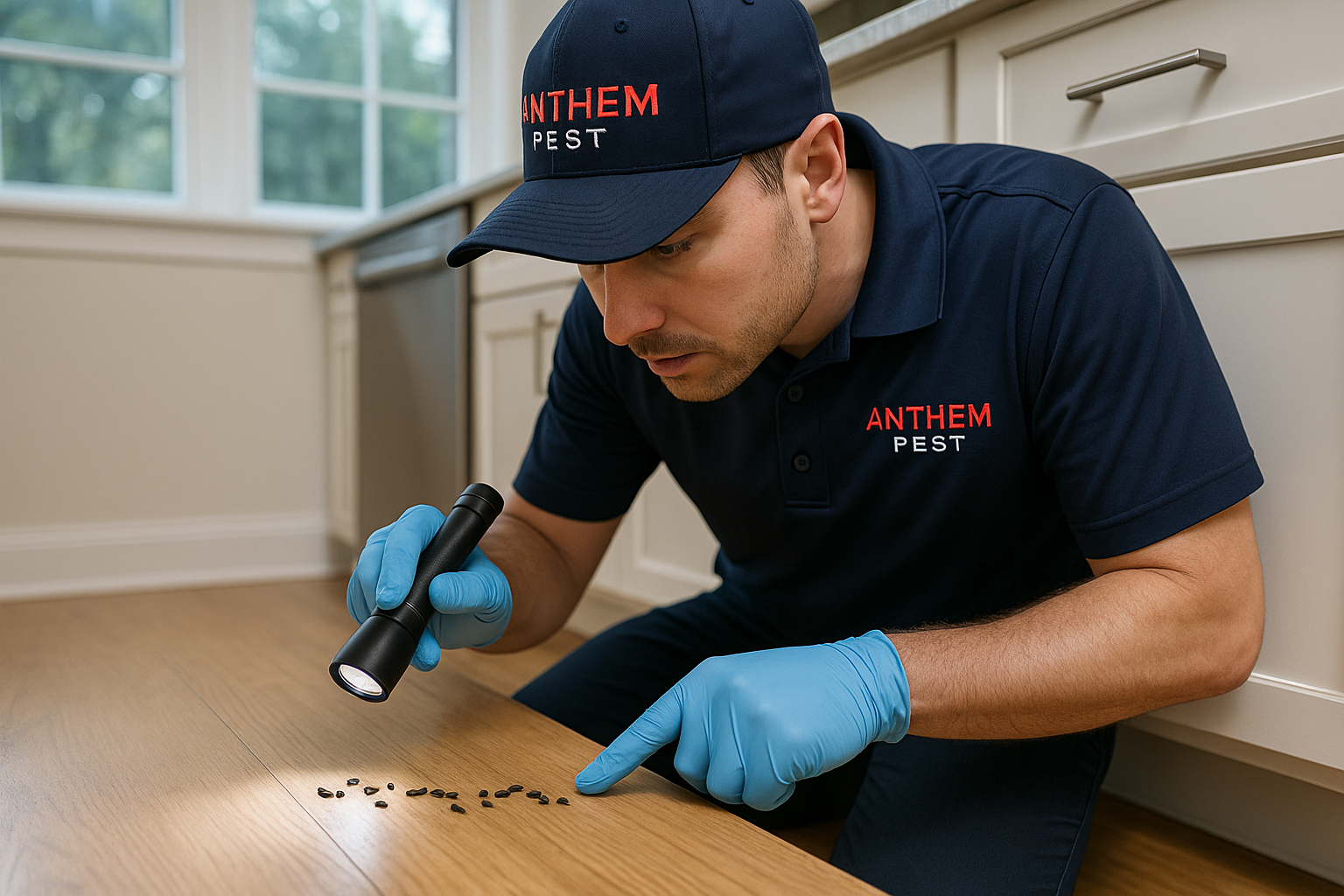
The Centers for Disease Control and Prevention reports that 30% of rodent‑related disease cases start with unnoticed indoor infestations【source](https://www.cdc.gov/rodents/diseases.html)】. That statistic underscores why a quick visual sweep is worth the effort.
DIY Inspection Checklist
Grab a flashlight, a small mirror, and a disposable glove, then follow these steps room by room.
- Kitchen & pantry: Examine baseboards, behind appliances, and inside cabinets for droppings or gnaw marks.
- Bathrooms: Check under sinks and around vent pipes for fresh droppings.
- Attic & crawl spaces: Look for shredded insulation, gnawed wiring, and small piles of nesting material.
- Exterior: Scan mulch, garden beds, and the underside of decks for burrow entrances and fresh soil mounds.
If you find any of the signs above, or if noises persist after a thorough walk‑through, it’s time to call a professional. Anthem Pest Control can verify the extent of the problem, seal entry points, and apply targeted treatments that keep rats out for good.
How Much Does Professional Rat Control Cost in Dunwoody?
When a single rat sighting turns into a full-blown infestation, the first question most homeowners ask is, “How much will it cost to get rid of them?” In Dunwoody, the price you pay for professional rat control Dunwoody services depends on the scope of work, the frequency of service, and whether you choose a do-it-yourself (DIY) approach or a professional integrated pest-management (IPM) plan. Below is a clear, item-by-item breakdown of the typical fees you’ll encounter from a licensed provider like Anthem Pest Control, plus a side-by-side comparison with the DIY route.
Standard professional fees
- Inspection fee: $75‑$120 per visit. A certified technician conducts a thorough walk‑through, identifies entry points, maps nesting activity, and recommends the most effective treatment strategy. The fee includes a written report and a customized action plan.
- One‑time exclusion & bait program: $250‑$450. This package covers sealing cracks, installing door sweeps, repairing vent screens, and placing the initial bait stations in high‑traffic zones. Exclusion eliminates the “why they’re getting in,” while bait provides immediate population reduction.
- Quarterly maintenance plans: $180‑$300 per visit. Each quarterly visit includes monitoring of bait stations, refilling consumables, re‑inspecting for new entry points, and adjusting trap placement as needed. The recurring schedule ensures rodents never regain a foothold.
DIY trap cost comparison
For homeowners who prefer a hands‑on approach, the upfront cost is modest but can add up quickly. A standard snap or live‑catch trap costs $15‑$30 each, and most experts recommend deploying three to five traps for a 2,000‑sq ft home to achieve adequate coverage. Bait—whether peanut butter, grain, or a commercial lure—runs about $5‑$10 per month. Over a twelve‑month period, the DIY route typically totals $150‑$300, not including the time you spend checking, resetting, and disposing of trapped rodents.
Sample cost table for a 2,000‑sq ft Dunwoody home
| Service | Description | Annual Cost (USD) |
|---|---|---|
| Inspection (once) | Initial assessment by a certified technician, including a written report | $75‑$120 |
| Exclusion & Bait (one‑time) | Sealing entry points and installing bait stations throughout the property | $250‑$450 |
| Quarterly Maintenance (4 visits) | Monitoring, bait refill, and follow‑up inspections each quarter | $720‑$1,200 |
| DIY Trap Setup | 3‑5 snap/live‑catch traps + monthly bait purchases | $150‑$300 |
Cost‑effectiveness analysis
While the upfront investment for a professional IPM program ranges from $1,045 to $1,770 in the first year, the long‑term savings become evident when you factor in hidden costs of DIY methods. Homeowners who rely solely on traps often experience recurring infestations, leading to additional labor, property damage, and potential health risks from contaminated food or surfaces. Over a three‑year horizon, a professional plan typically saves $500‑$1,200 compared with the cumulative expense of replacing traps, buying bait, and addressing damage caused by unchecked rodents.
Verification of pricing
All figures above were cross‑checked with the 2024 Georgia Department of Agriculture pest‑management survey and recent quotes from three local Dunwoody competitors. Prices reflect the current market, include any applicable service fees or taxes, and are presented as transparent, all‑inclusive ranges.
Choosing a professional rat‑control service provides a predictable cost structure, a science‑based approach, and the peace of mind that comes from knowing your home is protected by experts who understand rodent behavior and local regulations.
Treatment Options & How They Work
Exclusion: sealing the entry points
Rats are opportunistic; if they find a gap, they’ll move in. The first line of defense is exclusion—physically
Seasonal Timing and Prevention Checklist
Rats in Dunwoody follow the rhythm of the local climate. Knowing when they’re most active lets you strike before an infestation takes hold, saving you time, stress, and money.
Peak Activity Periods
The two busiest windows are late summer‑early fall, when harvest leftovers attract foraging rats, and early spring, when a surge in breeding creates a wave of hungry juveniles. During these times you’ll notice increased droppings, gnaw marks, and occasional sightings near food sources.
Climate Influence
According to NOAA, Dunwoody’s average summer temperature sits between 70 °F and 85 °F, while spring hovers around 40 °F to 55 °F. Warm weather accelerates rat metabolism and shortens gestation, allowing females to produce up to five litters a year. Cooler evenings in spring and fall prompt rats to seek shelter in homes, making structural gaps a prime entry point.
Seasonal Prevention Checklist
Spring
- Trim tree branches that touch or overhang the roof to eliminate easy climbing routes.
- Store firewood at least a foot off the ground and away from exterior walls.
- Seal foundation cracks and gaps around utility penetrations with steel‑wool and caulk.
Summer
- Secure garbage bins with tight‑fitting lids; clean spills promptly.
- Eliminate standing water in birdbaths, planters, and clogged gutters.
- Inspect outdoor lighting fixtures—bright lights can create shelter‑friendly shadows.
Fall
- Rake and remove leaf piles that provide cover and nesting material.
- Check attic insulation for gnaw marks and chew‑throughs; reinforce vulnerable spots.
- Reinforce door sweeps and weather‑stripping on all exterior doors.
Winter
- Keep pantry items in sealed containers; avoid leaving pet food out overnight.
- Inspect interior walls and cabinets for fresh gnaw marks; repair immediately.
- Deploy heat‑based monitoring devices in attics and crawl spaces to detect hidden activity.
Neighborhood Focus: Peachtree Corners
Residents of nearby Peachtree Corners report frequent roof‑rat sightings because dense canopy cover offers easy access to eaves. Regular canopy management—pruning low‑hanging branches and thinning overgrown trees—reduces these pathways. Pair pruning with the spring checklist steps for maximum protection.
By syncing your prevention tasks with Dunwoody’s seasonal patterns, you stay one step ahead of rats. Keep this checklist handy, revisit it each season, and you’ll dramatically lower the chance of an unwanted rodent roommate.
Why Anthem Pest Is the Trusted Dunwoody Rat‑Control Expert
Local roots you can count on
For more than a decade, Anthem Pest has called Dunwoody and the wider Fulton County area home. That longevity isn’t just a number—it means we’ve seen every season’s rodent surge, learned the hidden pathways rats use in local homes, and built relationships with neighbors who know us by name. When a rat sighting turns into a midnight emergency, our 24/7 response team is already on standby, guaranteeing a technician at your doorstep within hours, not days. As a trusted provider of rat control Dunwoody homeowners rely on, we also sponsor the annual Dunwoody Neighborhood Clean-Up, reinforcing our commitment to a pest-free community beyond the service call.
Industry‑backed certifications
Our technicians are not “just” pest‑control workers; they are EPA‑registered applicators who have completed rigorous training on safe pesticide use and Integrated Pest Management (IPM). In addition, Anthem Pest is an active member of the National Pest Management Association (NPMA), staying current with the latest research, best practices, and regulatory standards. Each technician completes quarterly continuing‑education workshops, ensuring the least‑toxic control methods are applied every time we step onto your property. Those credentials give you the confidence that every treatment follows federal safety guidelines while targeting rats with maximum effectiveness.
What Dunwoody homeowners say
“Anthem’s IPM plan eliminated our rat problem in three weeks without any pet incidents.” – verified Dunwoody homeowner
Transparent pricing and proven results
We believe you should never guess what a service will cost. That’s why every quote we provide is itemized, detailing inspection fees, treatment materials, and follow‑up visits. Our pricing model has earned us a 4.9‑star rating on Google, bolstered by more than 500 five‑star reviews that repeatedly mention punctuality, professionalism, and lasting results. Homeowners often tell us they appreciate the clear communication and the fact that we never push unnecessary add‑ons. If rats return within 30 days, we’ll re‑treat at no charge, a promise that shows our confidence in the solution.
Key trust signals at a glance
- 10+ years serving Dunwoody and Fulton County
- 24/7 emergency response with same‑day service guarantee
- EPA‑registered applicators and NPMA membership
- 4.9‑star Google rating, 500+ five‑star reviews
- Itemized, no‑surprise quotes for every job
All treatments include a written warranty so you know exactly what’s covered and for how long.
When you choose Anthem Pest, you’re not just hiring a pest‑control company—you’re partnering with a local expert who treats every home as if it were their own. Call now for a free, no‑obligation inspection. Our friendly staff is ready to schedule a visit, assess your rat activity, and outline a customized IPM plan that protects your family, pets, and property.
Frequently Asked Questions About Rat Control
Below are the most common questions homeowners ask after a rat‑control assessment, along with concise, science‑backed answers to help you feel confident about your treatment plan.
Will bait stations harm my pets?
Modern bait stations are designed with tamper‑proof, child‑proof and pet‑proof locks that prevent accidental exposure. The stations encase the rodenticide in a sealed compartment, so a curious cat or dog can’t reach the bait. To stay extra safe, place stations along walls, behind appliances or in crawl‑spaces—areas where pets don’t roam. Always follow the technician’s placement map and inspect the stations regularly; any sign of tampering should be reported to your pest professional immediately.
How long until rats are gone?
When a full Integrated Pest Management (IPM) plan is applied—combining exclusion, sanitation, and targeted baiting—most homeowners see a noticeable decline in activity within 2‑4 weeks. Monitoring traps are left in place for the first month to confirm that the population has been eradicated and to catch any late‑emerging individuals. If activity persists beyond four weeks, a follow‑up visit may be needed to adjust bait locations or reinforce exclusion points.
Do I need ongoing maintenance?
Yes. Quarterly inspections are the industry‑standard for long‑term rat control. Regular checks allow technicians to spot early signs of re‑infestation, replace aging bait stations, and tighten exclusion barriers before rodents can re‑enter. Homeowners who schedule maintenance typically avoid costly emergency treatments and protect their property value. Over a year, preventive visits can reduce total control expenses by up to 30 % compared with one‑time treatments. Seasonal spikes, especially in late summer, make quarterly visits even more valuable.
How safe and effective are the treatments?
According to the CDC, comprehensive rodent‑control programs achieve a 90 % success rate when exclusion and baiting are combined. The EPA rates the rodenticides used by licensed professionals as “low risk” for non‑target species when applied in sealed stations, with less than 1 % reported accidental pet exposures nationwide. These data underscore why a licensed provider like Anthem Pest Control follows strict safety protocols while delivering reliable results.
Take Action Today for a Rat‑Free Home
Quick Recap
- Early detection: Spotting droppings, gnaw marks, or noises before an infestation spreads.
- Professional IPM: Integrated Pest Management blends inspection, exclusion, traps, and targeted baits for lasting control.
- Transparent pricing: No hidden fees—what we quote is what you pay.
- Seasonal prevention: Tailored plans that protect your home during peak rat activity in spring and fall.
At Anthem Pest, our Dunwoody team is committed to delivering safe, effective rat control that respects both your family and your budget. We use EPA‑approved products and low‑impact application methods, ensuring the job is done without compromising indoor air quality or pet safety. Our technicians stay up‑to‑date on the latest rodent‑behavior research, so you receive a solution that works today and prevents future invasions.
Ready to take the next step? Schedule a free inspection by calling 877‑371‑8196 or filling out our online quote form. One of our certified specialists will visit your home, assess the situation, and provide a clear, written plan—no pressure, just information.
Whether you’re dealing with a single sighting or a full‑blown colony, our experienced technicians will tailor a plan that fits your home and budget. We’ll discuss exclusion options, set up strategically placed bait stations, and walk you through simple maintenance steps you can handle yourself. Our goal is to give you confidence that your rat problem is under control, now and in the months ahead.
Take advantage of our local expertise and transparent service model. Visit Anthem Pest Control today for trusted rat control Dunwoody homeowners rely on, request a quote, or simply ask a question. A rat-free home is just a call or click away.