Understanding Silverfish in Decatur, GA
Silverfish (Lepisma saccharina) are small, wingless insects that have survived for millions of years. Measuring about ½-inch long, they sport a silvery-gray, fish-like sheen and move in a rapid, wiggling motion that resembles a tiny fish swimming through water. These nocturnal scavengers prefer dark, undisturbed places where they can feed on starches, sugars, and proteins found in paper, glue, dead skin cells, and even certain fabrics. Because they can subsist on such a wide range of organic matter, silverfish often go unnoticed until they start leaving tell-tale signs of activity—prompting many homeowners to seek professional silverfish control Decatur services for early intervention.
Decatur’s humid subtropical climate creates an ideal environment for silverfish to thrive. Average summer humidity regularly exceeds 70 %, and even winter nights retain enough moisture to keep indoor spaces damp. Silverfish are hygrophilic—they seek out moisture to maintain the thin layer of water that covers their bodies. Leaky pipes, condensation on windows, and poorly ventilated basements or attics provide the perfect micro‑habitats for these pests. In a city like Decatur, where homes often feature older construction and dense landscaping, the combination of moisture and abundant food sources makes silverfish infestations more common than many homeowners realize.
Spotting an infestation early can save you from costly damage. Look for these hallmark indicators:
- Shed skins – As they grow, silverfish molt their exoskeletons, leaving translucent, paper‑like shells behind.
- Live sightings – Tiny, elongated insects with a silvery sheen, usually spotted at night near baseboards, closets, or pantry shelves.
- Paper and book damage – Small, irregular holes or yellowed edges on books, magazines, and cardboard boxes.
- Fabric wear – Fine, thread‑like holes in cotton, linen, or silk garments, especially in drawers and wardrobes.
While silverfish are not known to transmit disease, their presence can still pose health and structural concerns. The microscopic scales and shed skins can trigger allergic reactions or aggravate asthma in sensitive individuals. More importantly, the insects’ feeding habits can degrade valuable items: stained paper, ruined photographs, and compromised clothing are common complaints. Over time, extensive damage to insulation, wallpaper, and even drywall can create weak points that invite other pests, such as termites or carpenter ants, compounding the problem.
Understanding the biology and habits of silverfish empowers homeowners to act before an infestation spirals out of control. For authoritative guidance, consult the U.S. Environmental Protection Agency’s silverfish page, the Centers for Disease Control and Prevention resources on indoor hygiene, and the National Pest Management Association’s silverfish guide. These sources confirm that proactive moisture control, regular cleaning, and prompt professional treatment are the most effective defenses against these resilient pests.
Seasonal Activity and Prevention Tips
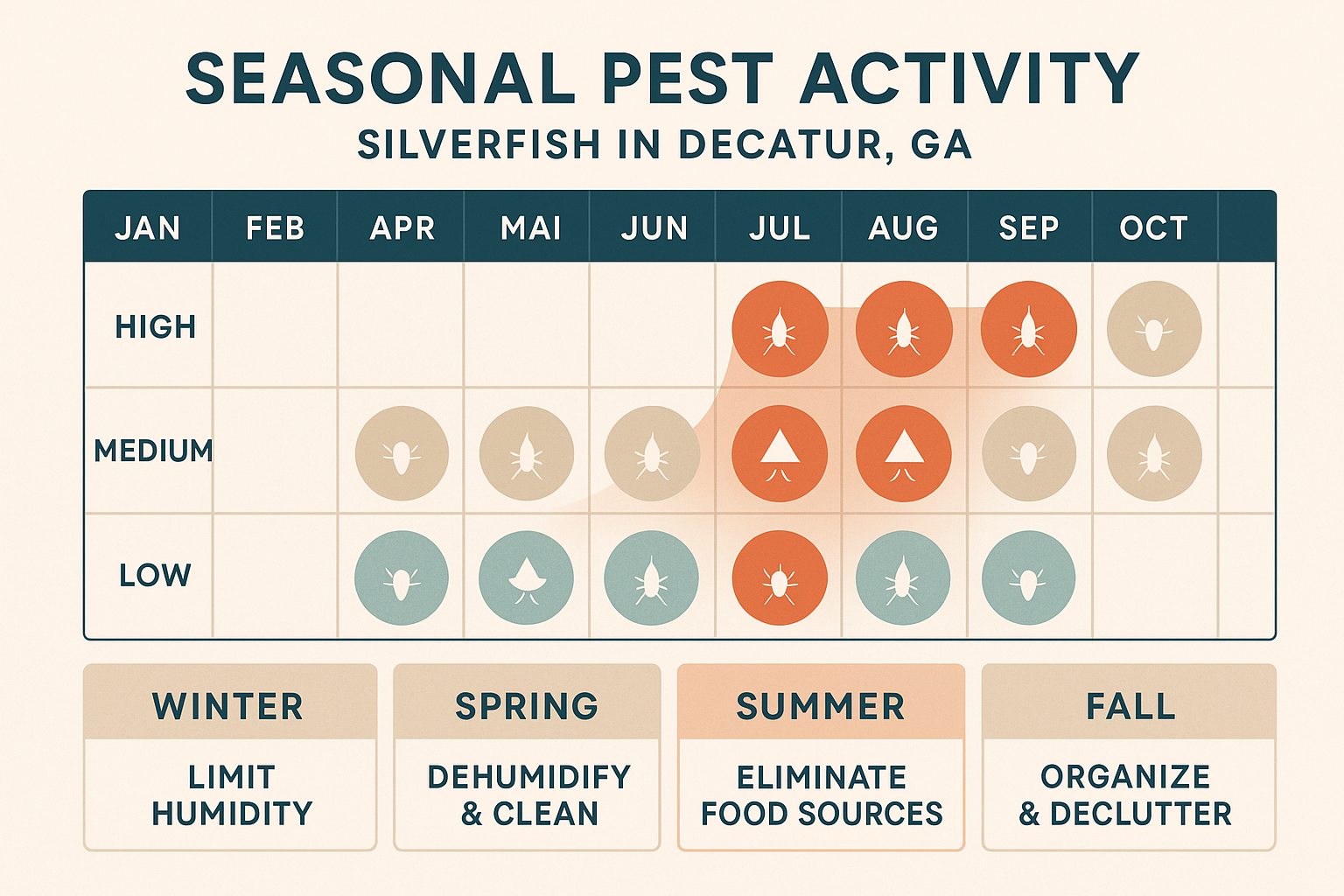
Silverfish aren’t a year-round nuisance in Decatur; they follow a predictable rhythm that mirrors the city’s warm, humid summers and milder winters. A simple chart shows peak activity in July and August, moderate movement in the shoulder months of March, April, September, and October, and a noticeable lull from December through February. Understanding this cycle lets you target the right interventions before the insects become a visible problem and plan effective silverfish control Decatur strategies ahead of peak season.
The engine behind these fluctuations is the combination of temperature and relative humidity. Silverfish thrive when indoor temperatures sit between 70 °F and 80 °F and the air holds at least 60 % humidity. Summer brings both higher heat and moisture, especially in basements and crawl spaces, creating an ideal breeding ground. In contrast, cooler winter nights and the use of indoor heating often dry out the environment, slowing their metabolism and reducing reproduction rates.
| Month | Key Prevention Action |
|---|---|
| January | Seal cracks around doors and windows; run a dehumidifier in basements. |
| February | Inspect attic insulation for moisture; clean pantry shelves. |
| March | Start a weekly vacuum routine for corners and baseboards. |
| April | Replace weather‑stripping; store seasonal clothing in sealed containers. |
| May | Increase ventilation in laundry rooms; check for water leaks. |
| June | Run a dehumidifier in crawl spaces; keep indoor humidity below 55 %. |
| July | Conduct a thorough pantry audit; discard expired dry goods. |
| August | Re‑apply silicone sealant around plumbing penetrations. |
| September | Reduce indoor humidity as temperatures drop; clean behind appliances. |
| October | Seal any new cracks from seasonal settling; store firewood away from the house. |
| November | Check basement drainage; run a fan in damp closets. |
| December | Perform a final deep clean of kitchen cabinets; keep indoor humidity steady. |
Use the table as a month‑by‑month guide, but treat each task as a habit rather than a one‑off chore. For example, running a dehumidifier in June and July isn’t just about comfort—it directly cuts the moisture level that silverfish need to lay eggs. Likewise, sealing cracks in January prevents the occasional winter wind from sneaking in, bringing humidity and tiny food particles that attract these pests.
Tips for Reducing Food Sources
Silverfish survive on starches, sugars, and protein residues found in everyday household items. By eliminating these hidden meals, you make your home far less appealing.
- Store cereals, flour, and pet food in airtight, BPA‑free containers.
- Wipe down pantry shelves with a mild detergent after each grocery run.
- Vacuum corners, under appliances, and behind bookshelves weekly to pick up crumbs and shed skin.
- Keep paper products—newspapers, magazines, cardboard—in sealed plastic bins or stored off the floor.
- Rotate pantry inventory; use older items first to avoid long‑term storage that can become a food source.
- Fix any leaks in bathrooms or kitchens promptly; damp towels are a silverfish favorite.
Early detection is the linchpin of an effective control strategy. Look for the silvery fish scurrying at night, tiny pepper‑shaped droppings, or a faint musty odor near stored items. Spotting these signs in early spring—before the summer surge—gives you a window to act, whether that means a professional inspection from Anthem Pest Control or a DIY deep‑cleaning sprint. Acting now keeps the population from exploding when humidity peaks.
DIY Control Methods and Cost Comparison
Common DIY Tactics
- Sticky traps – adhesive pads that capture wandering silverfish.
- Diatomaceous earth – a fine, natural powder that dehydrates insects on contact.
- Boric acid baits – a low‑toxicity powder mixed with attractants to poison silverfish.
- Homemade sugar‑and‑flour traps – a simple paste that lures silverfish and holds them until you remove them.
Step‑by‑step Guide for Applying Each Method Safely
Sticky Traps
- Choose a low‑traffic area near baseboards, closets, or under sinks.
- Peel the backing and press the trap firmly onto a clean surface.
- Replace the trap every 2–3 weeks or when it’s full.
- Dispose of captured insects in a sealed bag and wash your hands.
Diatomaceous Earth (Food‑Grade)
- Wear a dust mask and gloves to avoid inhaling fine particles.
- Lightly dust a thin layer along cracks, crevices, and behind appliances.
- Leave the powder undisturbed for at least 48 hours; silverfish will die after crossing it.
- Vacuum the residue and reapply after heavy cleaning or moisture exposure.
Boric Acid Baits
- Mix 1 part boric acid with 3 parts powdered sugar and a few drops of water to form a paste.
- Place small dollops on index cards or shallow dishes in dark corners.
- Keep the bait out of reach of children and pets; label the area clearly.
- Check weekly, replace as needed, and clean up any excess powder.
Homemade Sugar‑and‑Flour Traps
- Combine equal parts sugar and all‑purpose flour in a bowl.
- Add a teaspoon of water to create a crumbly mixture that sticks to silverfish.
- Spread the mixture on a piece of wax paper and place it near suspected activity.
- After a few days, collect the paper, seal it in a bag, and dispose of it.
Pros and Cons of DIY Approaches
- Control level – DIY methods can reduce low‑to‑moderate infestations but often fall short against severe outbreaks.
- Time commitment – You’ll spend hours setting traps, reapplying powders, and monitoring results.
- Safety – Food‑grade powders are low‑toxicity, yet proper protective gear is essential to avoid skin or respiratory irritation.
- Cost – Materials typically cost $10‑$30 per product, keeping the total budget under $150 for a full DIY campaign.
- Long‑term effectiveness – Without professional follow‑up, silverfish may return once the bait depletes or the powder is disturbed.
Cost Comparison
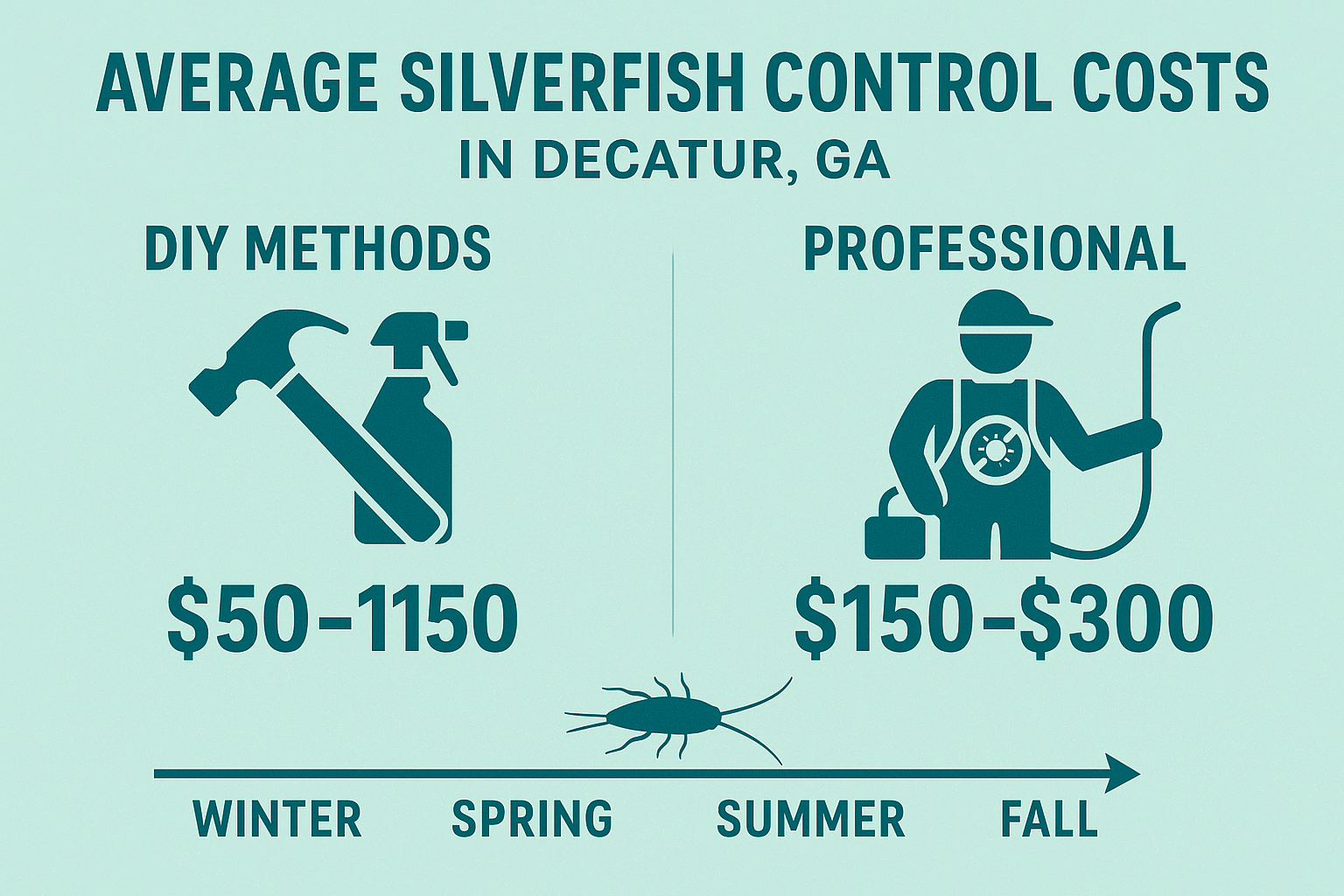
The infographic illustrates a typical price range: DIY solutions usually fall between $50–$150, while professional silverfish control Decatur services from a licensed company like Anthem Pest Control typically run about $150–$300 in the local area.
Factors Influencing the Final Price
- Severity of infestation – A handful of sight‑ings may need only traps, whereas a full‑scale invasion requires multiple applications and possibly structural treatments.
- Treatment frequency – Ongoing monthly or quarterly maintenance plans raise the cost but dramatically improve long‑term control.
- Seasonal discounts – Many pest‑control firms offer lower rates in the off‑season (late fall to early winter) when demand dips.
- Home size and layout – Larger homes with many crawl spaces or basements demand more product and labor.
By weighing the upfront expense against the time you’ll invest, you can decide whether a DIY kit fits your budget or if calling a professional service—backed by a guarantee and expert knowledge—is the smarter, stress‑free choice for your Decatur home.
Professional Treatment Options and Fumigation
What a Licensed Technician Does First
Before any chemicals touch your home, Anthem Pest’s certified technician conducts a thorough inspection. Using flashlights, moisture meters, and sometimes infrared cameras, they locate silverfish hideouts—kitchens, bathrooms, basements, and especially the dark cracks where moisture lingers. This step isn’t just about spotting adult insects; it uncovers egg‑cases and the environmental conditions that let silverfish thrive. A detailed report lets you understand why the problem started and which treatment path will be most effective.
Targeted Spot‑Treatment
For isolated pockets, a spot‑treatment is both economical and fast. Technicians apply a micro‑encapsulated insecticide directly to baseboards, under appliances, and inside wall voids. The formulation stays dormant until a silverfish walks over it, then releases a rapid‑acting toxin that kills on contact. Because the product is confined to the exact entry points, there’s minimal exposure to pets or children, and the treatment can be completed in under an hour.
Whole‑Home Applications
When inspections reveal multiple colonies, a whole‑home spray is recommended. Anthem Pest uses a professional‑grade aerosol that creates a fine mist, reaching cracks, crevices, and other hidden pathways. The mist contains both a fast‑acting adulticide and a residual component that continues to work for weeks, suppressing new hatchlings. Homeowners are asked to vacate the premises for a short period—usually 2–4 hours—allowing the chemical to settle and dry before re‑entry.
Structural Fumigation for Large Infestations
In multi‑unit buildings or homes with extensive, hidden colonies, structural fumigation becomes the most reliable option. A certified fumigator seals the building, then introduces a gaseous fumigant that penetrates every void, from attic insulation to floor joists. The gas circulates for a prescribed dwell time, ensuring that even the deepest silverfish nests are eradicated. After the exposure period, the structure is aerated, and clearance levels are verified with calibrated detectors before anyone can return.

How Professional‑Grade IGRs Disrupt Silverfish Life Cycles
Insect Growth Regulators (IGRs) are a cornerstone of Anthem Pest’s silverfish strategy. Unlike traditional insecticides that kill on contact, IGRs mimic hormones that control molting. When a silverfish ingests an IGR, the compound interferes with chitin formation, preventing the insect from shedding its exoskeleton. The result is a stalled development that leads to death before the insect reaches reproductive age. Because IGRs target the next generation, they provide long‑term suppression without the harsh residues associated with older chemicals.
When Fumigation Becomes the Smart Choice
Fumigation isn’t a first‑line treatment; it’s reserved for scenarios where other methods would fall short:
- Large, hidden colonies that have spread throughout wall cavities and under flooring.
- Multi‑unit dwellings where silverfish move between apartments via shared ventilation or plumbing shafts.
- Properties with chronic moisture problems that create a continuous breeding ground.
In these cases, the gas‑based approach guarantees that every pocket of infestation is exposed, delivering a clean slate that spot‑treatments simply cannot achieve.
Safety First: EPA‑Approved Chemicals and Protocols
All chemicals used by Anthem Pest are registered with the U.S. Environmental Protection Agency (EPA) and meet strict safety standards. Technicians wear personal protective equipment, follow OSHA guidelines, and employ sealed‑container application methods to prevent drift. For fumigation, the team uses a low‑toxicity phosphine alternative that is effective yet approved for residential use. After treatment, air quality monitors confirm that residue levels are well below EPA limits before the home is re‑occupied.
By combining precise inspections, targeted spot‑treatments, whole‑home applications, and, when necessary, structural fumigation, Anthem Pest delivers a layered defense that eliminates silverfish quickly and keeps them from returning. The integration of IGRs and EPA‑approved chemicals ensures that the solution is both powerful and safe for your family and pets.
Recognizing an Infestation and When to Call a Pro
Silverfish are masters of disguise. A few tiny fish‑shaped specks near baseboards or in a bathroom can easily be dismissed as harmless dust. However, when you start seeing clusters of shed skins, tiny fecal specks, or actual live insects, the situation is shifting from “subtle” to “clear.” The warning signs that truly demand professional attention include:
- Large numbers of silverfish congregating in one area.
- Visible damage to structural wood, book bindings, or wallpaper.
- A persistent, musty odor that won’t dissipate after routine cleaning.
These indicators suggest that the pests have established a foothold deep within your home’s fabric, and DIY measures often fall short.
When DIY Hits Its Limits
Most over‑the‑counter sprays and traps work only on the surface. Silverfish, however, love to hide in the smallest cracks, behind baseboards, inside wall voids, and even beneath floorboards. In multi‑unit dwellings, the insects can travel through shared ventilation shafts and plumbing, making a single‑apartment treatment ineffective. Attempting to seal every micro‑crevice yourself is not only time‑consuming—it’s practically impossible without specialized tools and knowledge.
Why a Licensed Professional Makes the Difference
Hiring a licensed pest‑control company like Anthem Pest Control brings three decisive advantages:
- Guaranteed results: Certified technicians use industry‑approved baits, dusts, and structural treatments that penetrate deep into cracks and voids where silverfish hide.
- Warranty protection: Most professional plans include a follow‑up visit and a written warranty, giving you peace of mind if the infestation resurfaces.
- Regulatory compliance: Georgia’s local regulations dictate specific pesticide usage and disposal methods. A licensed pro ensures every step meets legal standards, protecting both your family and the environment.
Quick Decision Checklist
Before you reach for the next bottle of spray, run through this short checklist. If you answer “yes” to two or more items, it’s time to call a pro.
- Are you seeing more than a handful of silverfish in a single day?
- Has there been noticeable damage to wood, books, or fabrics?
- Have you already spent more than a few hours attempting DIY treatments without success?
- Do you have family members with allergies, asthma, or other health sensitivities?
- Is your home part of a larger complex where pests could migrate from neighboring units?
When the answer is “yes,” a professional inspection can pinpoint hidden colonies, apply targeted treatments, and set you on a path to a silverfish‑free home—fast, safe, and backed by Anthem’s local expertise.
Protect Your Home with Anthem Pest Control
Silverfish may seem harmless, but their constant gnawing can damage books, wallpaper, clothing and even the structural glue in your home. They thrive in damp, dark places, and their activity peaks during the humid months of late spring through early fall. If you notice fish‑shaped silhouettes, tiny fecal specks, or a musty odor, it’s a sign a population is establishing itself. Effective treatment combines a thorough inspection, targeted insecticide, and long‑term moisture control to break the life cycle.
- Professional inspection to locate hidden colonies.
- Spot‑on insecticide sprays applied to baseboards, closets, and crawl spaces.
- Silica‑based powders for cracks and crevices where chemicals can’t reach.
- Moisture‑reduction with dehumidifiers and ventilation to make your home inhospitable.
Anthem Pest Control brings more than a decade of experience handling silverfish infestations throughout Decatur, Georgia, and across the nation. Our technicians are certified, locally trained, and familiar with the specific building styles and humidity patterns that give silverfish an edge in the Metro Atlanta area. Because we serve both urban apartments and suburban homes, we know how to adapt our approach to any floor plan, ensuring every hidden nook is treated.
Our pricing model is transparent and competitive: you receive a detailed quote before any work begins, with no hidden fees. We tailor each plan to the severity of the infestation, the size of your home, and your preferred level of ongoing prevention. Whether you need a one‑time eradication or a quarterly maintenance schedule, the cost is clearly outlined so you can budget confidently.
Don’t let silverfish silently damage your belongings. Call Anthem Pest Control today at 877-371-8196 to schedule a free, no-obligation inspection and get trusted silverfish control Decatur homeowners rely on. Our friendly team will walk you through the findings, explain the recommended treatment, and provide a written estimate on the spot. Ready to protect your home? Visit our website to request your free quote now.