What Are Silverfish and Why They Matter
Silverfish are small, wingless insects that most homeowners notice only when they’re already under the kitchen sink or tucked behind a bookshelf. Measuring ½ to ¾ inch (12-19 mm) in length, they have a silvery-gray, fish-like sheen and three long bristles—two at the rear and one on the tail—that give them their name. In areas where silverfish control Druid Hills homeowners rely on is necessary, these pests thrive in dark, humid environments, slipping into cracks, floorboards, and even the seams of appliances. Their nocturnal habit means they’re rarely seen, but their presence is easy to confirm by the tiny, silvery trails they leave behind.
Many people mistake silverfish for harmless house dust or assume they’re just a seasonal nuisance that disappears with the cold. In reality, they are resilient pests that can survive for months without food and reproduce quickly under the right conditions. Unlike cockroaches, they do not spread disease, but they are far from benign—they feed on starches, sugars, and protein, which includes the glue in books, wallpaper paste, and even the fibers of clothing.
The damage silverfish cause may seem minor at first glance, but it adds up. A single adult can chew through several sheets of paper, compromising important documents, tax records, or cherished family photos. Fabrics such as cotton, silk, and rayon become riddled with tiny holes, turning a favorite shirt or curtain into a costly replacement. In the kitchen, they gnaw on cereal, flour, and other dry goods, contaminating food stores with their shed skins and feces. While they are not vectors for human disease, the aesthetic and financial impact on a household can be significant.
Because silverfish prefer moisture, they are a year‑round concern in many U.S. homes, especially in regions like Druid Hills where humidity can linger even in winter. Leaky pipes, condensation on windows, and damp basements create ideal breeding grounds that persist through the seasons. Unlike insects that retreat outdoors during colder months, silverfish stay hidden indoors, emerging whenever humidity spikes. This means a single unnoticed leak can lead to a rapid population boom, turning a minor annoyance into a full‑scale infestation.
Federal agencies recognize silverfish as a common indoor pest. The U.S. Environmental Protection Agency notes that proper sanitation and moisture control are the first line of defense, while the Centers for Disease Control and Prevention highlights their potential to damage household items. For homeowners, the takeaway is clear: early identification and proactive control are essential. Simple steps—repairing leaks, using dehumidifiers, sealing cracks, and storing food in airtight containers—can dramatically reduce the likelihood of an outbreak. When those measures aren’t enough, a professional service like Anthem Pest Control can provide targeted treatments that are safe for families and pets, keeping your home silverfish‑free year after year.
Signs of a Silverfish Presence
Typical signs that silverfish have set up shop go beyond the occasional sighting. Look for fine, pepper‑like droppings near baseboards, a faint musty odor, or irregularly shaped holes in paper products and fabrics. You may also notice yellowish stains where they have been feeding on starch‑rich surfaces such as wallpaper paste or cereal boxes. If you find these clues in multiple rooms, especially bathrooms, kitchens, or closets, it’s a strong indicator that a hidden population is growing and professional intervention should be considered.
Spotting Silverfish in Your Home
Typical Hiding Spots
Silverfish love the dark, damp corners that most homeowners overlook. In Druid Hills homes you’ll often find them lurking in bathrooms where humidity is high, especially around shower stalls and under sinks. Kitchens provide another favorite hideout—think of the gaps behind appliances, pantry shelves, and the crevices under cabinets. Basements, closets, and attics aren’t exempt; these spaces retain moisture and offer the quiet refuge silverfish need to thrive.
Visual Clues to Look For
- Tiny fish‑shaped insects – About ½‑inch long, silvery‑gray, and moving in a graceful, wiggling motion.
- Silvery scales – As they shed, they leave a fine, powdery residue that looks like tiny fish scales on surfaces.
- Yellowish droppings – Small, pepper‑like specks that may appear on countertops, shelves, or near food packages.
- Damage to paper or clothing – Irregular holes or ragged edges on books, wallpaper, or delicate fabrics.
How to Conduct a Quick Visual Inspection
Start in the bathroom: lift the edge of a tile or check the grout line for scales and droppings. Move to the kitchen and pull out pantry shelves; inspect the back of boxes and the floor for tiny insects or powdery residue. In basements and closets, shine a flashlight along baseboards and behind stored items. Finally, crawl into the attic and run your hand along insulation and joists—silverfish will often hide in the soft, undisturbed fibers.
Real‑World Example: Spotting Silverfish in a Modern Bathroom

Imagine you’ve just installed glossy, large‑format tiles in your master bathroom. A week later you notice a faint, silvery line running along the grout. A closer look reveals a few tiny, fish‑shaped insects darting away when the light hits them. The scales they leave behind are especially visible on the dark grout, confirming a silverfish intrusion. This scenario is common in newer homes where moisture from showers creates the perfect micro‑climate for these pests.
Safety Tip: Handle With Care
While silverfish are not known to bite or spread disease, disturbing a hidden cluster can release a cloud of scales that irritates eyes and lungs. Wear disposable gloves and a dust mask before you start any inspection. If you need to collect a specimen for identification, use a sealed container and avoid shaking the area vigorously. When in doubt, call a professional—Anthem Pest Control can confirm the presence of silverfish and recommend a targeted, low‑impact treatment plan.
Why Silverfish Appear: Causes and Conditions
Moisture and Darkness – the Silverfish Sweet Spot
Silverfish thrive in environments that stay cool, damp, and out of the light. A relative humidity above 60 % creates the perfect backdrop for their eggs to hatch and for the nymphs to develop without drying out. Likewise, temperatures between 70 °F and 80 °F accelerate their metabolism, prompting more frequent foraging. In a typical Druid Hills home, bathrooms, basements, and under‑sink cabinets often meet both criteria, turning these spaces into covert silverfish nurseries.
What They Eat – From Starches to Skin Cells
These tiny, wingless insects are opportunistic feeders. Their diet includes anything rich in carbohydrates or proteins, such as:
- Paper, cardboard, and book bindings (cellulose and starch)
- Glue from wallpaper or book spines
- Dried food residues – flour, cereal, sugar, and pet food crumbs
- Dead skin cells shed by humans and pets
Because these sources are scattered throughout a home, silverfish can survive on the smallest crumbs left behind after a snack or the faint dust that settles on a bookshelf.
Leaks, Poor Ventilation, and Clutter – Building a Habitat
Even a slow drip from a faucet or a hidden pipe leak can raise humidity levels enough for silverfish to set up camp. When ventilation is inadequate—think closed bathroom doors, unvented laundry rooms, or tightly sealed crawl spaces—moist air becomes trapped, creating a micro‑climate that silverfish love. Add piles of newspapers, cardboard boxes, or stored clothing, and you’ve provided shelter, food, and a dark refuge all in one.
Seasonal Peaks – When Silverfish Are Most Active
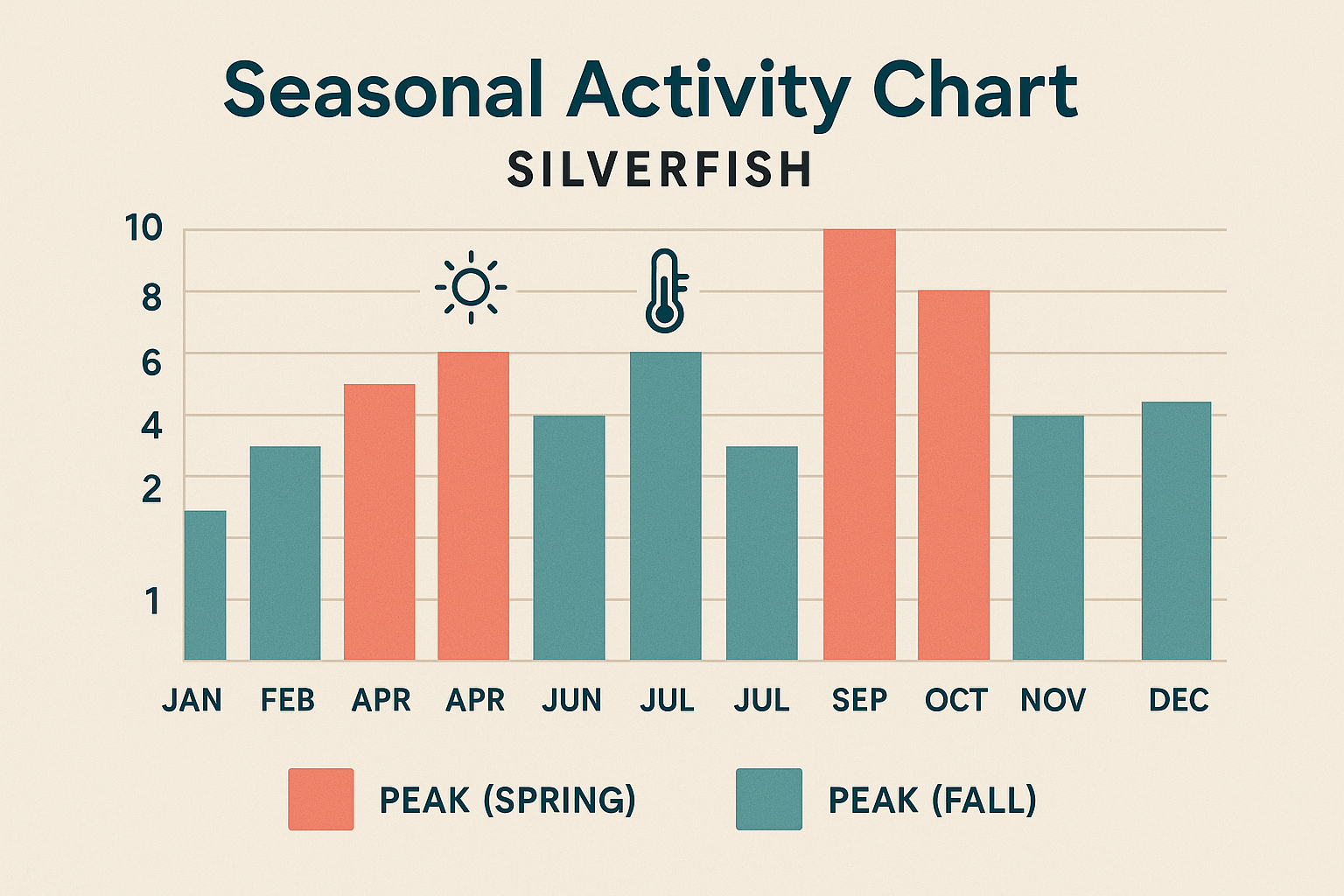
In the Georgia climate, silverfish activity spikes during the transitional seasons. Spring brings rising humidity after the winter dry spell, while fall’s cooler nights and occasional rain maintain moisture levels. During these periods, you may notice more silverfish scurrying across bathroom tiles or emerging from pantry corners. A seasonal chart (referenced later in the article) illustrates these peaks, helping homeowners time preventive treatments for maximum impact.
Pantry Organization – A Simple Defense
A cluttered pantry is a goldmine for silverfish. Open boxes of flour, spilled sugar, and crumpled packaging provide both food and hiding places. By keeping the pantry tidy—using airtight containers, rotating stock, and wiping down shelves regularly—you cut off their buffet and eliminate dark niches. Treating the pantry after a thorough clean ensures that any residual insects are caught before they can re‑infest.

Practical Steps Homeowners Can Take Today
Start by inspecting high‑risk areas for moisture—under sinks, behind appliances, and in basement corners. Fix any leaks promptly and consider a dehumidifier in damp rooms. Improve airflow with exhaust fans or by simply opening windows when weather permits. Declutter storage spaces, especially where paper or fabric items sit for months. Finally, seal food in glass or heavy‑plastic containers to deny silverfish their favorite snacks.
By understanding the environmental triggers that lure silverfish and adjusting everyday habits, Druid Hills homeowners can dramatically reduce the chance of an infestation. When these preventative measures aren’t enough, Anthem Pest Control offers targeted, low‑impact treatments that fit seamlessly into your routine, keeping your home silverfish‑free year after year.
Treatment Options: DIY Kits vs. Professional Services

DIY Kit Overview
Homeowners often start with over‑the‑counter solutions because they’re easy to find and require no appointment. The most common DIY silverfish tools include:
- Sticky traps. Small paper or plastic traps that capture wandering silverfish.
- Boric acid. A low‑tox pest powder that kills insects when they ingest it.
- Diatom‑aceous earth (DAE). A natural powder that abrases the exoskeleton of insects, leading to dehydration.
- OTC sprays. Liquid insecticides marketed for “general household pests” and often contain pyrethorins or pyrranthi‑nos.
These products are marketed as “instant solutions” and can be applied by anyone with a basic set of instructions. The key advantage is that you can purchase them at a hardware store, a grocery aisle, or online within minutes.</‑p>
Pros of DIY
- Lower upfront cost. A single trap or a small bottle of boric acid typically costs under $20.
- Immediate availability. No scheduling, phone calls, or waiting for a technician.
- Flexibility. You can place traps in hard‑to‑reach spots, like under the fridge, and adjust placement as needed.
Cons of DIY
- Limited reach. Silverfish are hidden in wall voids, floor joists, and bathroom backsinks; a trap or surface powder rarely reaches these colonies.
- Potential misuse. Using the wrong amount of boric acid or applying DAE near a moisture‑source can reduce effectiveness and even create a slip hazard.
- Risk‑free? not always. Some OTC sprays contain chemicals that can irritate eyes, lungs, or pets if not used correctly.
- May not eliminate the problem. Over time, a DIY approach often becomes a “band‑aid” that merely slows the infestation rather than eradicating it.
Professional Service Overview
Anthem Pest’s professional silverfish treatment begins with a a thorough inspection inspection. Our technicians locate hidden entry points, moisture sources, and any existing colonies in walls, basements, and kitchens. Once the problem is mapped, we apply a targeted, low‑tox pesticide that penetrates cracks and reaches the insects where they hide. The service includes a follow‑up visit to confirm the treatment’s success and a warranty that protects against a re‑infestation within a set period.
Pros of Professional Services
- Comprehensive coverage. We treat the entire home, not just the visible spots.
- Safety compliance. Our products are EPA‑registered and applied by certified technicians who wear proper protective gear.</ li>
- Transparent pricing. Anthem Pest offers a flat a clear price—starting at $199 for a full‑home silverfish treatment—so you know exactly what you’ll pay.
- Warranty options. A 90‑day guarantee gives you peace of mind that the problem will be resolved.
- Integrated pest management. We advise on moisture control, sealing cracks, and proper food storage, turning a one‑time treatment into a long‑term prevention plan.
Cons of Professional Services
- Higher initial cost. A single home‑wide treatment can range from $150 to $300, depending‑ on size and severity.
- Scheduling required. You need to coordinate a visit window that fits your calendar.
- Potential for waiting‑in‑line. In peak seasons, the next available appointment may be a few days away.
When deciding between a DIY kit and a professional service, consider the size of the infestation, the location of the colonies, and how quickly you need results. If you’re dealing with a few occasional sightings, a trap and a small amount of boric-acid treatment may be enough. However, if you notice silverfish in multiple rooms, around the bathroom, or in the pantry where they can feed on stored food, a professional inspection is often the most effective step for long-term silverfish control Druid Hills homeowners can rely on.
Preventing Future Infestations and Seasonal Timing
Daily Housekeeping Habits
Silverfish thrive in damp, food‑rich environments, so a routine of simple household habits can make a big difference. Wipe up any spills on countertops, baseboards, and bathroom floors immediately—moisture is the silverfish’s favorite snack. Repair leaking faucets, pipes, or roof leaks without delay; even a drip of water can create a micro‑hababitat. Declutter shelves, closets, and stored items, especially old paper, magazines, and fabric, because these provide both shelter and food sources. Finally, store food items—cereal, flour, and pet treats—in airtight containers; the less they can sniff, the less silverfish will linger.
Structural Fixes That Keep Moisture Out
Beyond daily chores, a few structural upgrades help lock moisture out of the home. Installing an exhaust fan in the kitchen and bathroom removes excess humidity the moment it’s generates. A small, portable dehumidifier works wonders in basements, laundry rooms, and other damp spots. Seal cracks around windows, doors, and foundation foundations with caulk or expanding foam; these tiny gaps are the secret highways for water and insects alike. In a home built on the older side, consider adding a vapor barrier under the crawl‑space floor to further protect against ground moisture.
Seasonal Timing: When Silverfish Are Most Active
Silverfish populations in Druid Hills rise after the winter chill when humidity levels climb, making timely silverfish control Druid Hills homeowners depend on especially important. The following chart outlines the typical peak months and explains why spring and fall are the most effective windows for treatment.
| Month | Peak Activity | Recommended Action |
|---|---|---|
| January – February | Low | Monitor; perform a quick inspection check. |
| March – May | Moderate to high | Apply preventive treatment; focus on kitchen and bathroom areas. |
| June – August | High | Maintain humidity control; use a dehumidifier in hot months. |
| September – October | High‑to‑moderate | Schedule a second preventive treatment; address any new cracksips. |
| November – December | Low | Conduct a final inspection before winter; store seasonal items properly. |
How to Schedule a Preventive Treatment with a Local Professional
Homeowners in Druid Hills can simplify the process by partnering with Anthem Pest Control. A quick call or visit to Anthem’s Georgia service page allows you to set up a convenient appointment for professional silverfish control Druid Hills residents can trust. During the visit, a certified technician will inspect high-risk areas, apply a low-impact silverfish bait or residual treatment, and advise on household-level adjustments—such as sealing overlooked baseboard cracks—to prevent future infestations.
Why an Annual Inspection Is Worth the Investment
Silverfish are the quiet the‑type pests that can return unnoticed year after year. An an‑yearly inspection gives you a a clear snapshot of where the moisture‑level, humidity, and structural vulnerabilities sit. By catching minor issues before they become a full‑scale infestation, you protect not only your home’s integrity but also the long‑term cost of pest control. Over time, the small the expense of a yearly check pays for itself by eliminating the need for emergency emergency treatments.
In the end, the combination of a consistent clean-up routine, a few simple home improvements, and a well-timed professional treatment creates a robust defense against silverfish. By following the seasonal schedule, using the chart as a guide, and committing to an annual inspection, Druid Hills homeowners can keep these pests out of the kitchen, bathroom, and the rest of the home for good.
Take the Next Step to Protect Your Home
By now you should be able to spot a silverfish, know why they show up, and understand the most effective ways to treat and prevent them. Here’s a quick refresher:
- Identification: Silvery, fish‑shaped insects that dart out of sight when lights are turned on, often found in kitchens, bathrooms, and basements.
- Common causes: Excess moisture, food crumbs, paper products, and cracks that let them slip indoors.
- Treatment choices: Targeted chemical sprays, dust applications, and professional heat or fogging treatments—all designed to eradicate active infestations.
- Prevention basics: Reduce humidity, seal entry points, store food in airtight containers, and schedule regular inspections.
Leaving a silverfish problem unchecked can lead to more than a few unwanted guests. Over time these tiny insects chew on paper, clothing, wallpaper, and even the glue that holds your books together. The damage may start small, but it can become costly to repair or replace cherished items and structural components.
That’s why acting quickly makes sense. If you’ve noticed the tell‑tale silver sheen in a pantry, found the tell‑tale “paper‑eating” holes, or simply want the peace of mind that comes from a professional inspection, our team at Anthem Pest Control is ready to help—no pressure, just expertise.
What sets Anthem apart is our commitment to safe, effective, and affordable solutions. All of our treatments comply with the highest industry standards, use low‑toxicity products when possible, and come with transparent pricing so you know exactly what you’re paying for. Whether you need a one‑time eradication or an ongoing prevention plan, we’ll tailor a strategy that fits your budget and your home’s unique layout.
Our pricing model is straightforward: you receive a detailed estimate before any work begins, with no hidden fees. Many Druid Hills homeowners appreciate our flat‑rate packages that cover inspection, treatment, and a follow‑up visit to confirm success. Plus, we stand behind our work with a satisfaction guarantee—if silverfish return within 30 days, we’ll re‑treat at no extra cost.
Getting started is easy. Call us at 877-371-8196 for a free, no-obligation quote, or click the link below to request your personalized estimate online. Our certified technicians will guide you through the process, answer any questions, and schedule a visit at a time that works best for you for professional silverfish control Druid Hills homeowners can trust.
Contact Anthem Pest Control today for a free, no‑obligation quote.