Recognizing Common Household Spiders
Knowing which spider you’re looking at can turn a nervous reaction into a simple, informed decision. Most spiders that wander into a Decatur home are harmless, but a few species—like the brown recluse—require extra caution. Accurate identification helps you decide whether a quick removal is enough or if spider control Decatur professionals are the safest route.

House Spider (Common House Spider)
The house spider is the most frequently encountered arachnid in Georgia homes. Adults measure 6–12 mm in body length, with a light‑tan to brown abdomen speckled with darker spots. Their webs are irregular, sheet‑like structures tucked into corners, behind baseboards, or in ceiling cracks. Because they thrive in undisturbed, slightly humid spots, you’ll often find them near windows, closets, and bathroom vents.
Brown Recluse
The brown recluse earns its reputation from a distinct violin‑shaped marking on the dorsal side of its cephalothorax. Body size ranges from 6 to 20 mm, and the coloration is uniformly light to medium brown. Unlike the house spider, recluse webs are tiny, flat retreats placed in secluded areas—under furniture, inside closets, or behind wall hangings. They tend to move indoors during the cooler months (October‑March) when they seek shelter from temperature drops.
Garden (Orb‑Weaver) Spider
Orb‑weavers are the architects of the classic round, wheel‑shaped webs you see in gardens and on porch lights. Adults can grow up to 30 mm, sporting bright yellows, oranges, or black patterns that vary by species. While they prefer outdoor vegetation, it’s not unusual to find an abandoned web in a sunny indoor corner after a storm. Their presence indoors is usually temporary and poses no risk to humans.
Quick “Look‑Alike” Checklist
- Body size: House spiders are small (≤12 mm); brown recluse can reach 20 mm; orb‑weavers are larger (up to 30 mm).
- Markings: Only the brown recluse shows a clear violin shape.
- Web type: Irregular sheets for house spiders, tiny retreats for recluse, large circular webs for orb‑weavers.
- Location: House spiders love corners; recluse hide in secluded indoor spots; orb‑weavers are mostly outdoors.
Safety Tip
Never pick up a spider you can’t positively identify. Use a clear container to trap it, then snap a close‑up photo before releasing it outside. This simple step lets a professional quickly confirm the species and advise whether treatment is necessary—saving you time, worry, and potential bites.
Health Risks and Warning Signs of Spider Infestations
Medically Important Spiders in the United States
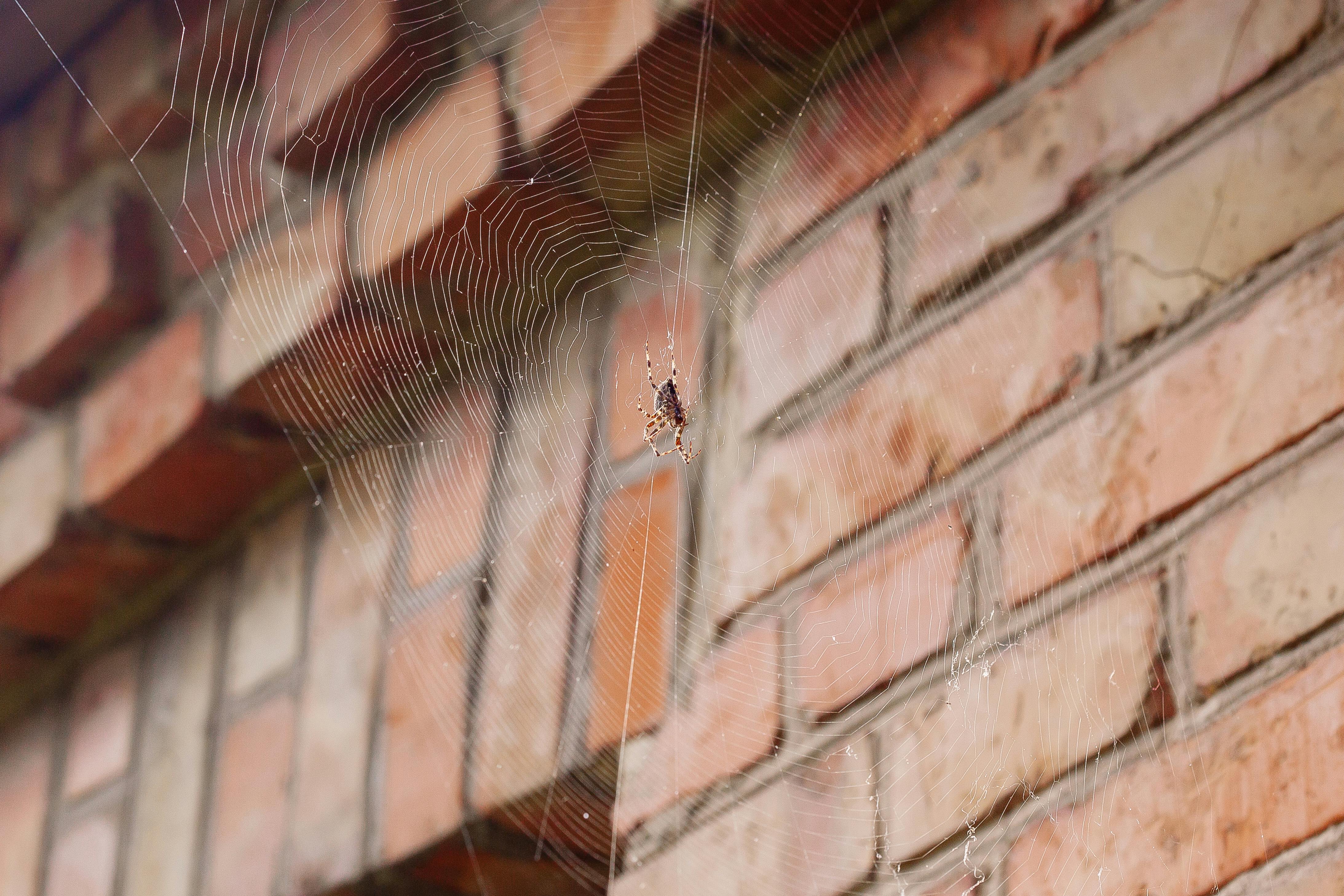
Most spiders you’ll encounter around Decatur are harmless, but a few species carry venom that can cause serious health problems. The two most concerning are the brown recluse and the black widow. A brown recluse bite can lead to necrotic tissue damage, while a black‑widow bite may trigger severe muscle cramps, hypertension, and, in rare cases, respiratory distress. Understanding which species are present in your area helps you gauge the level of risk.
Typical Bite Symptoms
Regardless of the spider, most bites begin with a sharp, localized pain that may feel like a bee sting. Within hours, you might notice:
- Redness and swelling around the puncture site.
- Development of a blister or a dark, necrotic lesion (especially with brown recluse bites).
- Systemic reactions such as nausea, fever, muscle twitching, or difficulty breathing (more common with black‑widow envenomation).
If any of these signs worsen or spread quickly, treat the bite as a medical emergency.
When to Seek Medical Attention
Contact a healthcare professional immediately if you experience:
- Rapidly expanding swelling or severe pain.
- Fever, chills, or unexplained weakness.
- Difficulty speaking, swallowing, or breathing.
- Signs of a necrotic wound that does not improve after 24‑48 hours.
When you see a doctor, bring a clear photo of the bite and, if possible, a specimen of the spider or a detailed description. This documentation helps clinicians determine the appropriate antivenom or supportive care.
Home Warning Signs of a Growing Infestation
Spiders are stealthy, but they leave clues that signal an expanding population:
- Increased webbing in corners, especially near windows, closets, or ceiling fans.
- Small, dark droppings that resemble pepper grains on surfaces.
- Silk “trails” along baseboards, door frames, and under appliances.
- Clusters of egg sacs—often cigar‑shaped and attached to hidden areas like behind picture frames or in attic insulation.
Clutter, Moisture, and Spider Activity
Spiders thrive in environments that provide shelter and consistent humidity. Piles of cardboard, stored clothing, or unused furniture create perfect hideouts, while leaky pipes, damp basements, and poorly ventilated crawl spaces raise moisture levels that attract prey insects—and, consequently, the spiders that feed on them. Regular home maintenance—decluttering storage areas, repairing leaks, and using dehumidifiers in basements—can dramatically lower the risk of an infestation.
Safe Control Practices
When you suspect a problem, follow the EPA’s guidance on safe spider control. The agency recommends using targeted, low‑toxicity treatments and always wearing protective gear when applying any pesticide. For homeowners who prefer professional help, Anthem Pest Control offers EPA‑approved solutions that protect both your family and the environment.
For detailed EPA recommendations, visit the EPA spider control page.
Seasonal Spider Activity in the Atlanta Metro Area
Atlanta’s humid subtropical climate creates a year‑round playground for spiders. Warm, moist springs encourage rapid breeding, while hot summers push many species indoors in search of cooler shelter. Cool, crisp autumns bring a surge of hunting spiders, and even the milder winters don’t completely shut down activity—spiders simply seek the warmest nooks in garages and sheds. Understanding how temperature and humidity shift across the seasons lets homeowners anticipate where spiders are most likely to appear and act before they become a nuisance.
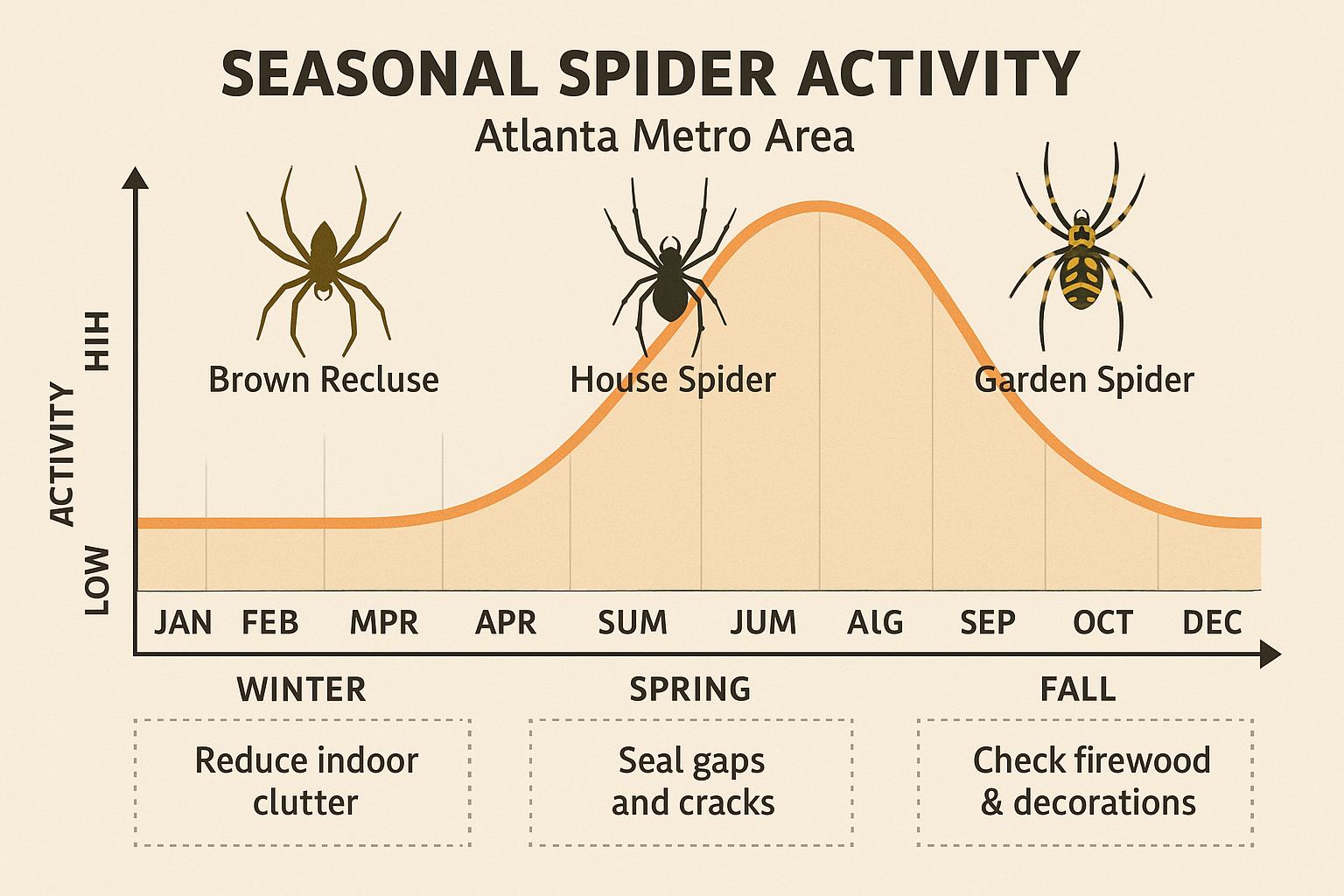
The chart above plots monthly spider activity on the Y‑axis against the calendar months on the X‑axis. Activity is low in December through February, climbs steadily in March and April, reaches a modest indoor peak in July and August, and dips again as temperatures fall in November. This visual guide helps you match your prevention efforts to the times when spiders are most active.
Spring – Garden Spiders Build New Webs
As temperatures rise, garden spiders emerge from overwintering sites and spin fresh webs in shrubs, flower beds, and along house foundations. Their webs are harmless but can be unsettling when they appear in large numbers. Prevention tip: Keep vegetation trimmed at least a foot away from the home’s exterior. Removing low‑lying branches and clearing leaf litter reduces the pathways spiders use to reach your doors and windows.
Summer – Brown Recluse Seek Cooler Spaces Indoors
Summer heat drives the brown recluse and other heat‑loving species into cooler interior zones such as basements, closets, and under furniture. They often hide in cracks, crevices, or piles of clothing left on the floor. Prevention tip: Seal foundation cracks, install door sweeps, and store clothing in sealed containers or on elevated racks. Regularly vacuum corners and under furniture to eliminate hidden hideouts.
Fall – House Spiders Hunt Seasonal Insects
When insects migrate indoors for warmth, house spiders follow, increasing indoor sightings. These spiders are beneficial predators, but their presence can alarm homeowners. Prevention tip: Reduce indoor lighting that attracts insects by using motion‑sensor bulbs and keeping exterior lights directed away from windows. Fewer insects mean fewer reasons for spiders to linger.
Winter – Overwintering in Garages and Sheds
Even in cooler months, spiders seek refuge in insulated spaces like garages, sheds, and storage rooms. They may cluster in boxes, insulation, or piles of firewood. Prevention tip: Declutter storage areas, stack firewood away from the house, and use airtight containers for seasonal items. A tidy, sealed environment discourages spiders from making a winter home.
Quick Seasonal Inspection Checklist
- Inspect foundation and trim vegetation at least 12 inches from the house (spring).
- Seal cracks, install door sweeps, and store clothing off the floor (summer).
- Turn off unnecessary outdoor lights and use motion‑sensor bulbs (fall).
- Organize garages, sheds, and storage bins; keep firewood elevated (winter).
- Run a flashlight along baseboards, under appliances, and in attic corners each season to spot hidden webs.
Treatment Options, Methods, and Pricing for Spider Control in Decatur, GA
When it comes to keeping spiders out of your home, Anthem Pest Control offers three clearly defined service tiers for effective spider control Decatur homeowners can rely on. Each tier balances speed, thoroughness, and long-term protection, so you can pick the level that matches your budget and your peace-of-mind goals.
Service‑Tier Overview
Basic Treatment
What’s included: A perimeter spray around the exterior of the house, targeted interior spot‑treatments where spider activity is evident, and one follow‑up visit to assess results.
- Fast‑acting chemicals that knock down visible spiders within 24 hours.
- Ideal for small homes or light infestations.
- Options for low‑toxicity, pet‑friendly products.
Comprehensive Treatment
What’s included: Full‑home interior spray, professional crack‑and‑crevice sealing, installation of exclusion barriers (door sweeps, window screens), plus two follow‑up visits to ensure the problem stays solved.
- Addresses hidden spiders in wall voids, basements, and attics.
- Provides medium‑term prevention by sealing entry points.
- Eco‑friendly formulations available for families with children or pets.
Premium Package
What’s included: All services from the Comprehensive tier, plus ongoing monitoring with quarterly inspections, a dedicated technician for rapid response, and a guaranteed spider‑free warranty for one year.
- Maximum protection for larger properties or severe infestations.
- Continuous monitoring catches re‑infestations before they become visible.
- Priority scheduling and a written warranty give you confidence and convenience.
Pricing Comparison
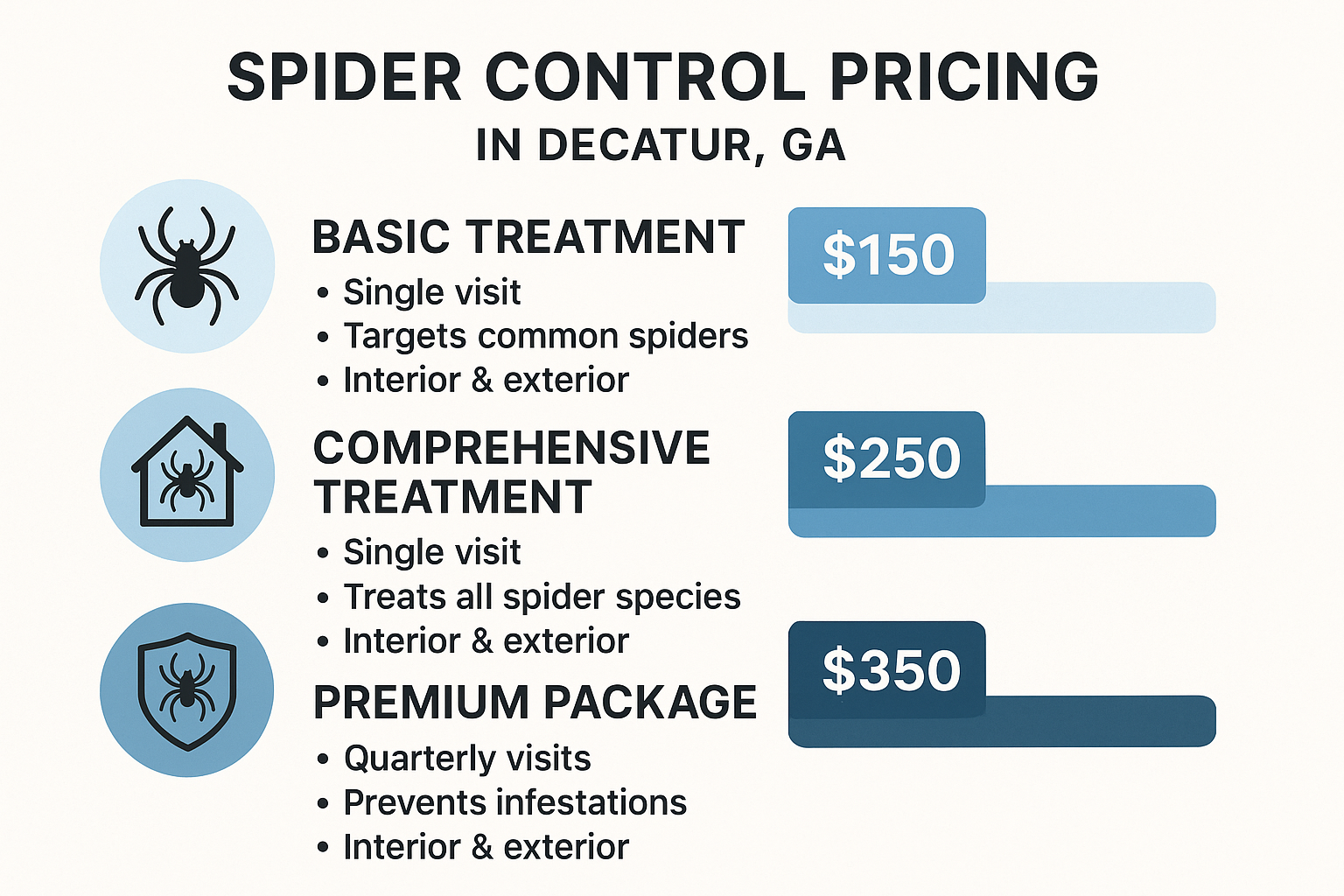
The infographic above summarizes typical costs for spider control Decatur homeowners can expect. For quick reference, the table below breaks down the average price range for each tier and highlights the core components you receive.
| Tier | Typical Cost (USD) | Key Services Included |
|---|---|---|
| Basic | $120 – $180 | Perimeter spray, spot‑treatments, 1 follow‑up |
| Comprehensive | $250 – $350 | Full interior spray, sealing, exclusion barriers, 2 follow‑ups |
| Premium | $480 – $620 | All comprehensive services, quarterly inspections, warranty |
Factors That Influence Your Final Quote
- Home size: Larger square footage requires more product and labor.
- Infestation severity: Heavy spider activity or multiple species may need extra treatments.
- Pets & children: Choosing low‑toxicity or organic products can affect price.
- Structural complexity: Homes with many crawl spaces, basements, or attic vents need additional sealing work.
- Seasonality: Early‑spring appointments often qualify for promotional discounts.
How Anthem Pest Control Customizes Each Plan
Every homeowner receives a free on‑site assessment. Our certified technicians walk your property, identify spider hotspots, and discuss any health or safety concerns you have. Based on that evaluation, they tailor the tier you select—adjusting product choices, adding extra sealant work, or scheduling more frequent monitoring if needed. The goal is a transparent, no‑surprise quote that aligns with both your pest‑control objectives and your budget.
Protect Your Home Today – Get a Free Spider Control Quote
Identifying the exact spider species, knowing when they’re most active, and applying a professional, science‑backed treatment are the three pillars of lasting spider control. When you skip any of these steps, you risk a lingering infestation, costly damage, and the unsettling feeling of sharing your home with unwanted eight‑legged guests.
A tailored spider‑control plan does more than eliminate webs—it restores peace of mind. Our certified technicians assess your property, match the treatment to the species present, and schedule applications at the optimal seasonal window. The result? A home that feels safe, clean, and spider‑free, without the guesswork or hidden chemicals.
Soft invitation: If you’ve spotted a spider you can’t identify or notice an increase in webbing around doors, windows, or corners, let Anthem Pest Control handle it safely and affordably. Our experts will pinpoint the problem, explain the biology behind it, and recommend the most effective solution for your specific situation.
Why Choose Anthem Pest Control?
- Locally trained experts: Our technicians know Decatur’s spider species inside and out, ensuring precise identification and targeted treatment.
- Transparent pricing: No surprise fees—just a clear, upfront quote that matches your budget.
- Environmentally responsible products: We use EPA‑approved, low‑impact chemicals that protect your family, pets, and the surrounding ecosystem.
- Satisfaction guarantee: If spiders return after our service, we’ll re‑treat at no extra cost.
Taking action now prevents a small spider problem from becoming a full‑blown infestation. Early intervention means fewer chemicals, lower costs, and a quicker return to a comfortable, spider‑free home.
Ready for a free, no-obligation quote? Give us a call at 877-371-8196 or visit Anthem Pest Control to schedule your assessment. Our friendly team is standing by to answer questions, set up an inspection, and put a customized spider control Decatur plan in motion—so you can relax knowing your home is protected.