Understanding Spider Issues in Suwanee, GA
Suwanee’s humid subtropical climate—warm summers, mild winters, and abundant rainfall—creates the perfect backdrop for spiders to thrive. The combination of lush vegetation, plentiful insects, and occasional indoor humidity means that spiders can move from the yard to the living room with ease, especially during the peak months of May through September.
Common Household Spiders You’ll Meet
Homeowners in Suwanee most often encounter three types of spiders:
- Brown Recluse: Recognizable by its violin‑shaped marking on the cephalothorax, this spider prefers dark, undisturbed corners such as closets, basements, and crawl spaces.
- Black Widow: Famous for the red hourglass on its glossy black abdomen, the widow favors sheltered outdoor structures—shaded decks, wood piles, and eaves—yet it can wander indoors when temperatures rise.
- Orb Weaver: These are the classic “wheel” web builders you see in sunny corners of windows or garages. While harmless, their large, conspicuous webs can be unsettling for anyone who prefers a tidy home.
Warning Signs That Spiders Are Settling In
Spotting a few tell‑tale clues early can save you a lot of stress later:
- Silky, irregular webs forming in corners, along baseboards, or behind furniture.
- Unexplained bites—especially red, painful welts that develop a day after the bite.
- Increased indoor sightings during late summer and early fall, when spiders seek cooler shelter.
Why It Matters to Homeowners
Beyond the nuisance factor, spiders can impact a homeowner’s peace of mind. A single bite from a brown recluse or black widow can cause serious medical concerns, ranging from localized tissue damage to systemic symptoms that require professional medical attention. Even non‑venomous species like orb weavers trigger anxiety simply because their webs appear in living spaces, making rooms feel less clean and safe.
Understanding which species are most common in Suwanee helps you gauge the level of risk and decide whether a DIY approach is sufficient or if professional intervention is warranted. Local expertise matters because treatment plans must consider regional weather patterns, typical spider life cycles, and the construction style of homes in the area.
For a deeper dive into cost estimates, treatment options, and seasonal timing specific to Suwanee, consult the Anthem Pest spider‑control cost guide for Suwanee, GA. Their locally‑focused data offers the most reliable benchmark for budgeting and planning.

How Much Does Spider Control Cost in Suwanee?

When it comes to spider control, Suwanee homeowners often wonder whether they’re paying for a one‑time fix or a long‑term safeguard. Below is a transparent look at the typical price points you’ll encounter in the local market, so you can compare quotes with confidence.
Base Price for a One‑Time Treatment
Most reputable pest‑control companies, including Anthem Pest Control, charge a flat rate for a single interior and exterior spider treatment. In Suwanee, the average base price falls between $120 and $180. This fee usually covers:
- Comprehensive inspection of the home’s interior and perimeter.
- Application of a professional‑grade insecticide to cracks, crevices, and common entry points.
- Follow‑up documentation confirming the treatment was completed.
Quarterly or Annual Maintenance Plans
Because spiders can re‑establish colonies after a single visit, many homeowners opt for a maintenance plan. The typical structures are:
- Quarterly Plan: 4 visits per year, priced around $350‑$420 total (about $90‑$105 per visit). This spreads the cost and keeps your home protected year‑round.
- Annual Plan: 2 visits per year, usually $200‑$250 total. While fewer visits, the plan often includes a mid‑season check‑in at no extra charge.
Both plans usually provide a 10‑15% discount compared to scheduling four separate one‑time services, making them a smart financial choice for long‑term peace of mind.
Additional Fees You Might Encounter
Beyond the core treatment price, a few extra charges can appear on the invoice:
- Inspection Charge: Some companies bill a $30‑$50 fee if you request a detailed pre‑treatment inspection without committing to service.
- Special‑Request Treatments: Pet‑safe or child‑safe formulations often add $20‑$40 per visit.
- Large‑Property Surcharge: Homes with extensive square footage or multiple structures (e.g., garages, sheds) may incur an additional $50‑$80.
Example Quote Scenarios
| Property Type | Service Requested | Estimated Cost | Notes |
|---|---|---|---|
| Single‑family home (≈2,200 sq ft) | One‑time interior/exterior | $145 | Standard formulation, no extra structures. |
| Single‑family home with detached garage | One‑time interior/exterior + garage | $190 | Includes additional $45 garage surcharge. |
| Large property (≈4,500 sq ft) with pool house | Quarterly maintenance plan | $410 | Discounted rate applied; includes pool house. |
Why a Written Estimate Matters
Before any chemicals touch your home, ask for a written estimate. A thorough quote should list:
- Exact services and number of visits.
- Products to be used (including any pet‑safe options).
- All applicable fees and taxes.
- Guarantee or warranty terms.
Having this documentation protects you from surprise charges and ensures the pest‑control provider is clear about what’s included.
Stay Updated on Pricing
Pricing can shift with seasonal demand and regulatory changes. For the most current data on Suwanee pest‑control rates, refer to the Georgia Department of Agriculture’s pest‑control pricing guide. Keeping an eye on this resource helps you gauge whether a quote is competitive.
Factors That Influence Spider Treatment Pricing
When you ask why a spider‑control job costs what it does, the answer lies in a handful of concrete variables. Understanding these factors helps you see past the headline price and evaluate the true value of a professional service.
Property size and square footage
The larger the home, the more product and labor are required. A 1,200‑square‑foot bungalow may need a single‑person crew and a few spray points, while a 3,500‑square‑foot ranch with multiple wings often requires two technicians, additional equipment, and a longer travel time. Because most pest‑control companies base their base rate on square footage, you’ll notice a proportional increase in price as the footprint expands.
Level of infestation and spider species involved
A light, occasional sighting of house spiders is far less costly to address than a full‑blown infestation of venomous species such as brown‑recluse or black‑widow. Identifying the species dictates the type and concentration of pesticide, the number of treatment cycles, and sometimes the need for specialized equipment like high‑reach foggers. The more severe the infestation, the higher the labor and material costs.
Accessibility of treatment areas
Foundations, crawl spaces, and attics can be tricky to reach. If a technician must crawl under a slab, climb ladders, or dismantle insulation, the job takes extra time and may require safety gear. Those hidden zones often command a premium because they increase both the risk and the effort involved.
Choice of chemicals vs. eco‑friendly or low‑toxicity options
Traditional broad‑spectrum insecticides are generally cheaper per ounce than newer, low‑toxicity or organic formulations. Homeowners who prioritize family and pet safety often opt for greener products, which can raise the material cost by 15‑30 %. However, many companies—Anthem Pest Control included—offer a range of options, so you can balance price with your comfort level.
Frequency of service (one‑time vs. ongoing plan)
A single, one‑off treatment is priced to cover the entire process from inspection to follow‑up. In contrast, a quarterly or semi‑annual maintenance plan spreads the cost over several visits, usually at a discounted rate per service. Ongoing plans also include monitoring and re‑treatment if spiders reappear, delivering better long‑term protection.
Seasonal demand spikes and promotional discounts
Spider activity peaks in late summer and early fall, when many homeowners notice more webbing. During these high‑demand periods, prices can inch upward due to increased workload. Conversely, many pest‑control firms run off‑season promotions—often in spring or winter—offering reduced rates or bundled services. Timing your request can therefore shave a noticeable amount off the bill.
Professional expertise and warranty coverage
Technicians with extensive training and certifications bring a higher level of confidence to the job. Companies that back their work with warranties—guaranteeing re‑treatment if spiders return within a set timeframe—typically incorporate that assurance into the price. While the upfront cost may be higher, the peace of mind and reduced risk of repeat visits often outweigh the difference.
By weighing these variables, you can have an informed conversation with Anthem Pest Control about exactly what you’re paying for and why. Transparent pricing means you know which elements drive the cost and where you might save without compromising safety or effectiveness.
Comparing Local Spider Control Providers
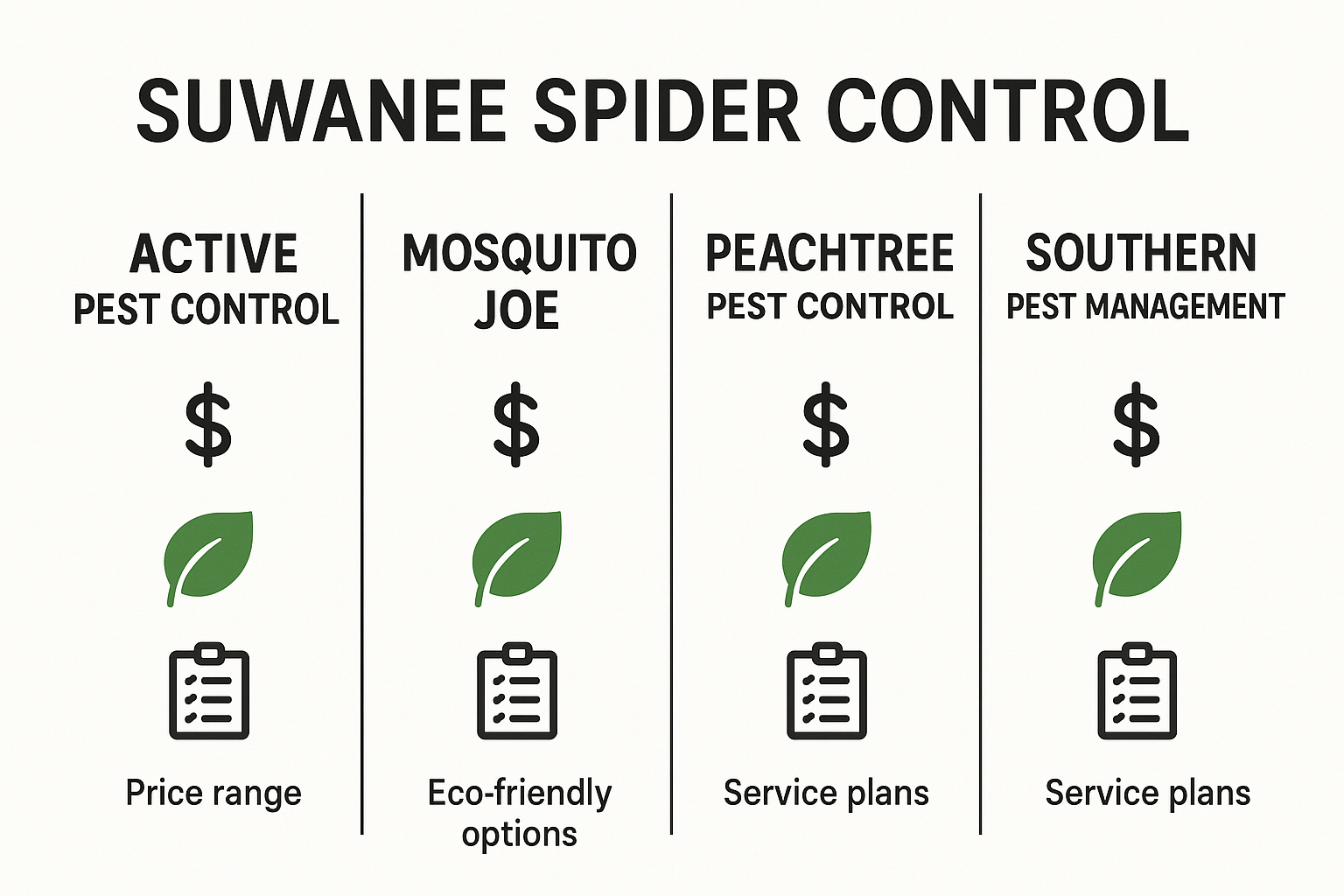
When you’re hunting for the best spider control in Suwanee, the decision often comes down to price, safety, and the little extras that make a service feel truly personalized. Below you’ll find a clear, side‑by‑side look at the four most talked‑about companies in the area, so you can match their offerings against your budget and comfort level before you pick up the phone.
Who’s in the market?
The local landscape is dominated by Active Pest Control, Mosquito Joe, Peachtree Pest Control, and Southern Pest Management. Each brand brings a slightly different philosophy—some lean heavily on aggressive treatment plans, while others prioritize eco‑friendly formulations and flexible service schedules. Knowing the basics of each helps you focus on what matters most for your home.
Side‑by‑side comparison
| Provider | Price Range (per treatment) | Eco‑Friendly Options | Typical Service Plans | Guarantees & Perks |
|---|---|---|---|---|
| Active Pest Control | $120‑$180 | Low‑toxicity, EPA‑approved sprays | Quarterly interior & exterior visits | 30‑day “spider‑free” guarantee; free re‑treatment if spiders return |
| Mosquito Joe | $130‑$200 | Organic oil‑based formulas available | Monthly outdoor barrier, optional indoor add‑on | Annual service contract includes a complimentary mosquito audit; 24‑hour response line |
| Peachtree Pest Control | $110‑$160 | Bio‑based insect growth regulators | Bi‑annual deep‑clean treatments | Lifetime warranty on structural damage caused by spiders; discounts for senior citizens |
| Southern Pest Management | $140‑$210 | Hybrid approach—synthetic + botanical blends | Customizable plans (single‑visit, quarterly, or annual) | Free home inspection; “no‑crawl‑zone” guarantee for 45 days |
From the numbers, you can see that Peachtree Pest Control offers the most budget‑friendly entry point, while Southern Pest Management leans toward premium pricing but backs it up with a highly customizable schedule and a longer‑term guarantee. If you’re environmentally conscious, both Active Pest Control and Mosquito Joe highlight low‑toxicity or organic options, making them solid choices for families with pets or small children.
Each company also adds a unique perk that can tip the scales. Active Pest’s 30‑day “spider‑free” promise is a straightforward safety net, whereas Mosquito Joe’s 24‑hour response line adds peace of mind during a sudden infestation. Peachtree’s lifetime structural warranty is especially appealing if you’ve had past damage from spider webs, and Southern’s free home inspection can uncover hidden entry points you might otherwise miss.
How to use the chart when evaluating quotes
Start by ranking the factors that matter most to you—price, eco‑friendliness, frequency of visits, or guarantee length. Then scan the table column by column: a green light in your top priority often outweighs a higher cost elsewhere. For example, a homeowner who values a rapid response might prioritize Mosquito Joe’s 24‑hour line over a slightly lower price from Peachtree.
Next, compare the quoted service plans against the baseline offerings in the chart. If a provider promises a “custom plan,” make sure it aligns with the frequency and treatment type you need; ask for a written breakdown so you can match it back to the rows above. Finally, verify any guarantees in writing—most reputable companies will include them in the contract, and a clear guarantee can save you money on follow‑up visits.
Seasonal Spider Activity and Timing Your Treatment
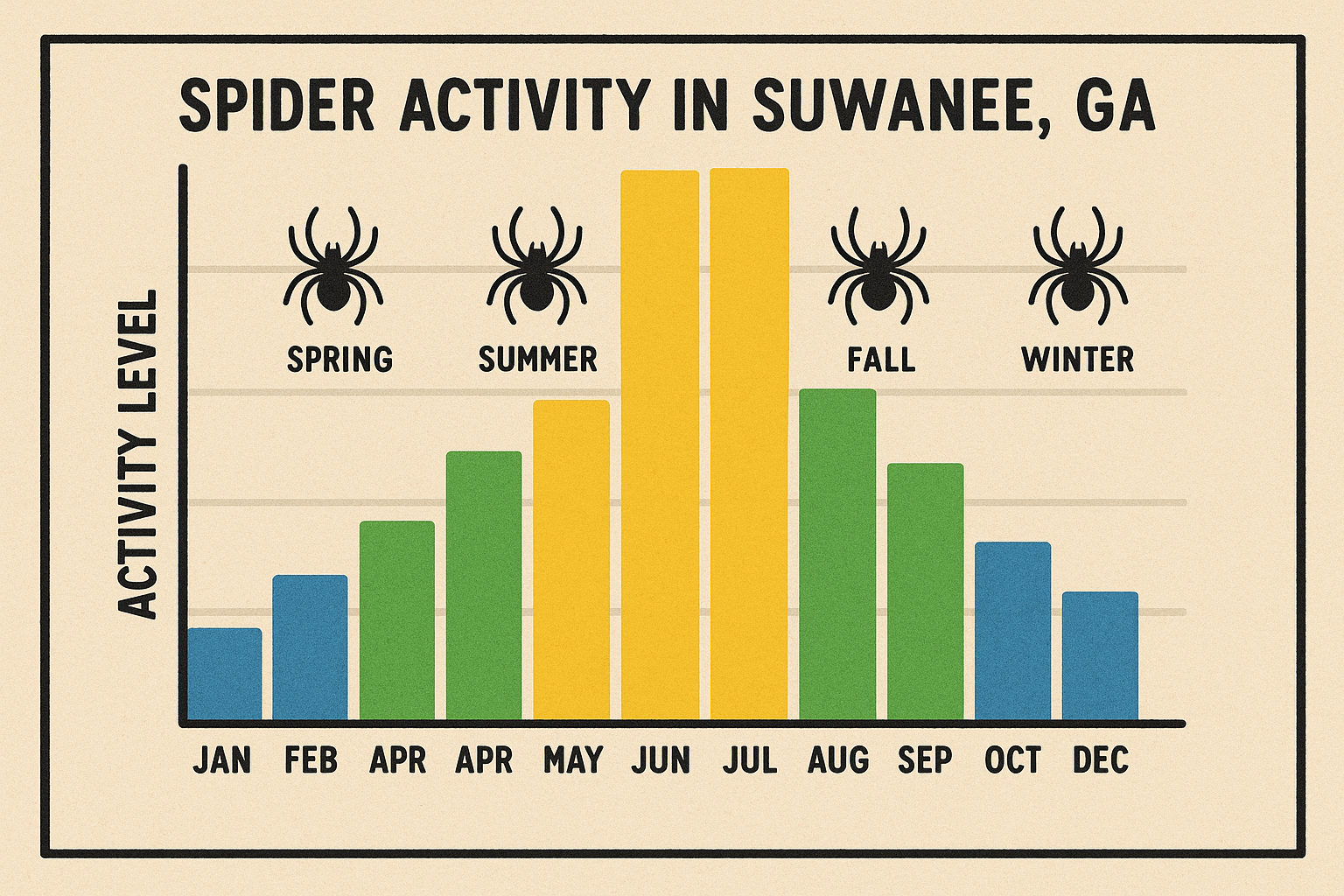
Spiders in Suwanee follow a predictable rhythm that mirrors the region’s climate. Understanding this cycle lets you intervene before the pests become a visible problem. Below is a quick snapshot of what to expect each season.
Spring Surge (March – May)
As temperatures climb above 60°F, adult spiders emerge from their winter hideouts and begin laying eggs. The bar chart’s green segment captures this surge, showing a steady rise in activity that peaks in late April. This is the perfect window for a pre‑emptive spray that targets both adult spiders and newly hatched spiderlings before they spread throughout your home.
Summer High (June – August)
Summer brings warmth and humidity—ideal conditions for spider foraging and web building. The chart’s yellow segment illustrates the highest activity levels, especially in July when outdoor insects are abundant. A mid‑summer follow‑up treatment helps knock down any survivors from the spring application and curtails the next generation of egg sacs.
Fall Decline (September – November)
As daylight shortens and temperatures dip, spider activity tapers off. The orange segment of the chart reflects this decline, with fewer sightings and less webbing. While a treatment isn’t strictly necessary during this period, a light maintenance spray can protect against lingering indoor species that seek shelter as the weather cools.
Weather’s Role in Spider Behavior
Rain and humidity are double‑edged swords. Heavy rain can wash away outdoor sprays, reducing their residual effectiveness. Conversely, high humidity encourages spiders to spin more webs and stay active longer. For the best results, schedule applications on a dry day with low wind, and consider a short‑term pause if a storm front is forecasted.
Proactive Scheduling Beats Reactive Calls
- Plan ahead: Book your early‑spring treatment at least two weeks before the first expected frost melt.
- Stay on track: Set a reminder for a mid‑summer follow‑up, ideally in the second week of July.
- Monitor weather: If a rainy spell is predicted, reschedule to maintain spray integrity.
- Think prevention: Regular inspections keep you ahead of hidden egg sacs that could hatch later in the season.
By aligning your spider control plan with Suwanee’s seasonal patterns, you’ll enjoy a quieter home and avoid the scramble of emergency calls after an infestation has taken hold. A timely, weather‑aware approach not only maximizes treatment efficacy but also stretches your investment in professional pest control.
Choosing the Right Service for Your Home
When it comes to spider control, the right provider can make the difference between a one‑time fix and a lasting peace of mind. Use the checklist below to compare companies and feel confident that you’re hiring a partner who values safety, transparency, and reliable service.
1. Verify Licensing, Insurance, and Certifications
Start by confirming that the company holds a valid Georgia pest‑control license. A licensed technician has met state‑mandated training standards, which means they understand the biology of spiders and the correct application methods. Ask for proof of general liability insurance and workers’ compensation; this protects you if an accident occurs on your property. Certifications from reputable organizations—such as the National Pest Management Association (NPMA) or a Certified Pest Management Technician (CPMT) credential—are additional signs of professionalism.
2. Inquire About the Products Used and Their Safety Profiles
Spiders are beneficial in small numbers, so many homeowners prefer low‑toxicity options that target only the unwanted species. Request a list of active ingredients and ask how each product works. Look for EPA‑registered formulations that are low in residual toxicity and safe for children, pets, and indoor environments. If you have specific concerns—like allergies or a newborn—make sure the technician can recommend an alternative, such as baits or perimeter sprays with reduced indoor exposure.
3. Demand a Detailed Written Estimate
A reputable service will provide a clear, itemized quote before any work begins. The estimate should break down:
- Labor costs per technician hour
- Materials, including the exact products and quantities
- Any warranties or guarantees (e.g., “Spider‑free for 90 days”)
- Potential follow‑up visits and their associated fees
This transparency prevents surprise charges and lets you compare value across providers.
4. Check Customer Reviews and Local Reputation
Online feedback is a powerful indicator of consistency. Scan Google reviews, the Better Business Bureau (BBB) rating, and local community forums. Look for patterns—repeated praise for thoroughness, punctuality, and courteous staff—or red flags such as missed appointments or unresolved complaints. A BBB rating of A‑ or higher, coupled with a steady stream of 4‑star+ reviews, suggests a company that delivers on its promises.
5. Evaluate the Flexibility of Service Plans
Spider activity can be seasonal, so a one‑off treatment might not suffice. Ask whether the company offers monthly, quarterly, or annual maintenance plans, and what each tier includes. Flexible plans often combine spider control with broader pest‑prevention measures, giving you a comprehensive shield against future invasions while spreading costs over time.
6. Consider Response Time for Emergencies and Follow‑Ups
Spiders can appear unexpectedly, especially after a storm or when indoor humidity spikes. A responsive provider will outline a clear emergency protocol—typically a same‑day or next‑day visit—and explain how follow‑up inspections are scheduled. Quick response times not only address the immediate problem but also demonstrate the company’s commitment to customer safety.
By running through this checklist, you’ll be equipped to select a spider‑control service that aligns with your safety standards, budget, and peace‑of‑mind expectations. A diligent, transparent provider like Anthem Pest Control can turn a spider‑prone home into a comfortable, worry‑free space.
Protect Your Home with Professional Spider Control
Key Takeaways
First, remember the four pillars that keep spider problems in check: knowing the risks each species poses, understanding the true cost of treatment, timing your service to match seasonal activity, and selecting a qualified, locally‑licensed provider. When these elements are aligned, you reduce surprise bites, protect valuable property, and avoid hidden fees.
Why Anthem Stands Out
Anthem Pest Control brings that exact formula to every Suwanee home. Our technicians are certified, undergo regular training on the latest spider‑control technologies, and know the local species patterns better than anyone else in the county. That local insight lets us target nests before they spread, using methods that are both fast‑acting and minimally disruptive to your daily life.
Beyond a one‑time spray, we offer ongoing monitoring programs that map spider hotspots around your property. By installing discreet perimeter sensors and conducting quarterly follow‑ups, we catch early activity before it becomes an infestation, saving you time and money in the long run.
Transparent, Eco‑Friendly Pricing
We back that expertise with transparent pricing you can see up front—no hidden surcharges, no surprise add‑ons. Whether you prefer a traditional chemical barrier, an eco‑friendly botanical spray, or an integrated pest‑management plan, we’ll walk you through the costs and benefits before any work begins. Plus, every treatment is covered by our satisfaction guarantee, so if spiders return, we’ll re‑treat at no extra charge.
Take the Next Step
Ready to take the next step? Request a free, no‑obligation quote and schedule a thorough inspection at a time that fits your calendar. Just call us today at 877‑371‑8196 or visit Anthem Pest Control to start the process. Our friendly team will answer any questions and set up a plan that protects every room, from the basement to the attic.
Peace of Mind, Year‑Round
With Anthem on your side, you gain a partner who monitors spider activity year‑round, adjusts treatments as seasons shift, and guarantees you won’t have to share your living space with unwanted eight‑legged visitors. Enjoy peace of mind, knowing the job is done right the first time.