Why Spider Problems Matter in Suunei

Suwanee’s humid subtropical climate is a perfect breeding ground for the spiders that most homeowners encounter. Warm summers, mild winters, and ample rainfall keep outdoor vegetation lush year‑round, creating the damp, sheltered environments that house spiders, cellar spiders, and orb weavers love. These conditions allow spider populations to thrive not only in gardens but also in the nooks and crannies of residential structures.
When you walk around a typical Suwanee home, you’ll notice a few “hot spots” where spiders are most likely to set up shop:
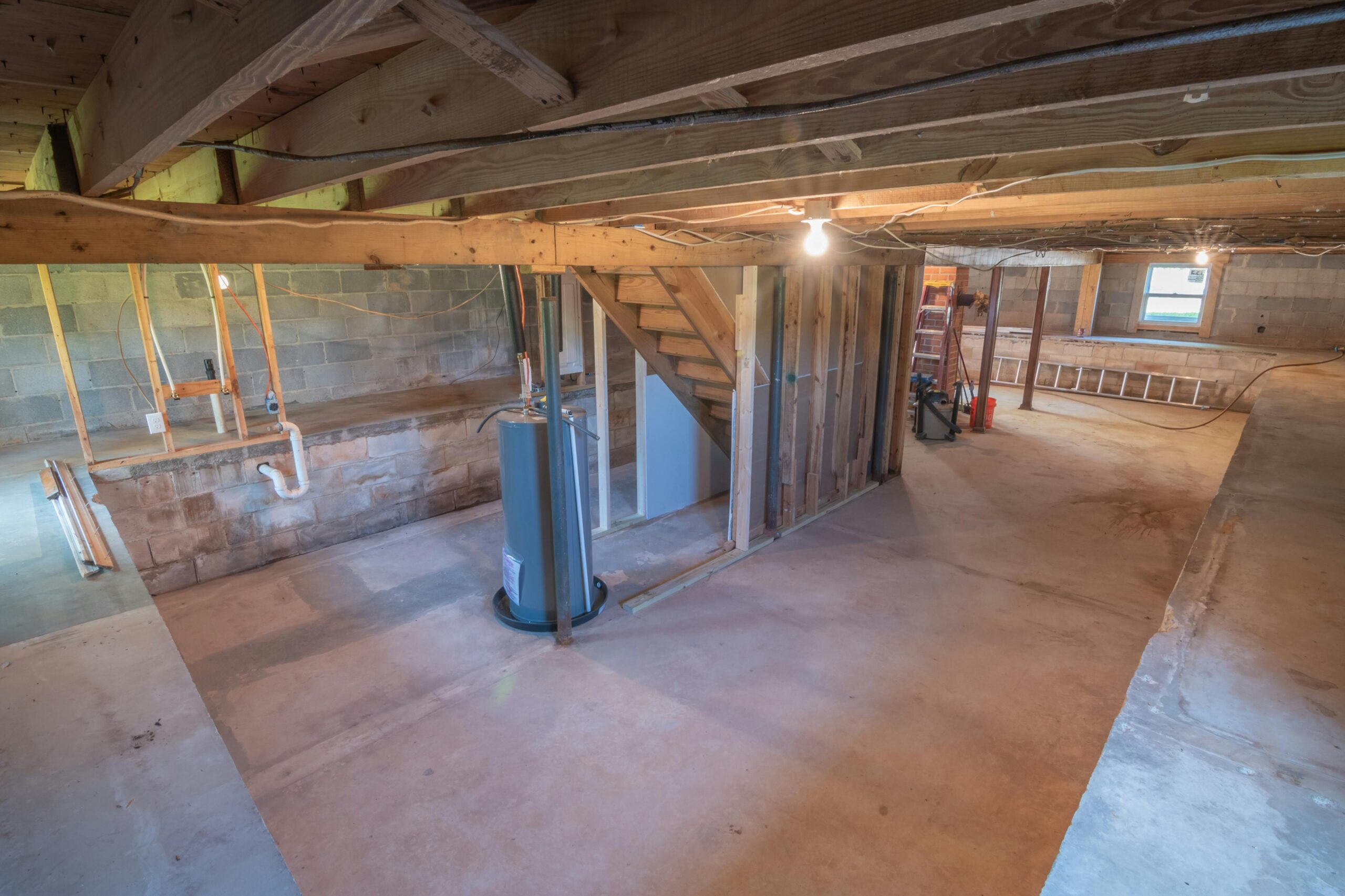
- Foundations and crawl spaces – moisture seeping through concrete provides a comfortable hideaway.
- Eaves and soffits – the gap between roof and wall offers a protected highway for spiders to travel.
- Garages and sheds – stored boxes, tools, and occasional clutter create perfect dark retreats.
- Landscaping features – mulch, stone pathways, and dense shrubbery retain humidity and attract prey.
Beyond the nuisance of tangled webs, spiders pose several risks that homeowners often overlook. A bite from a common house spider is rarely dangerous, but it can cause localized pain, swelling, and anxiety—especially for families with children or elderly members who may be more sensitive. Accumulating webs in corners, basements, or attics not only look unsightly but can also trap dust and allergens, degrading indoor air quality. Moreover, the psychological impact of spotting a spider indoors—whether it’s a quick dart across the floor or a hanging orb in a light fixture—can trigger fear and stress, reducing the comfort of your own home.
Picture a quiet, tree‑lined street in Suwanee: neatly mowed lawns, brick‑faced houses, and a well‑kept driveway. At first glance, everything seems tidy, but a closer look reveals subtle entry points—tiny cracks in the foundation, open vents under the eaves, and gaps around window screens. These are the silent doors through which spiders slip unnoticed, setting up their webs before you even step inside.
Early awareness of these conditions is the first line of defense. By recognizing the climate factors, typical hotspots, and the real‑world implications of spider activity, Suwanee homeowners can act before a minor presence turns into a full‑blown infestation. Proactive steps—such as sealing cracks, managing vegetation, and scheduling regular inspections—help keep spiders where they belong: outside, where they can do their important work without unsettling your indoor sanctuary.
Spotting the Most Common Spiders in Suwanee Homes

House Spider (Parasteatoda tepidariorum)
The house spider is the most familiar resident of Suwanee homes. Adults measure ¼ to ½ inch (6‑12 mm) with a rounded abdomen that ranges from light tan to a darker brown, often marked with faint chevron patterns. Their webs are the classic, messy, irregular cobwebs you’ll find in corners of ceilings, behind picture frames, or tucked into the folds of closets. Because they thrive in undisturbed indoor spaces, you’ll usually see them in rarely used rooms, attic corners, and even behind appliances.
Cellar Spider (Family Pholcidae)
Also called “daddy‑long‑legs,” cellar spiders are instantly recognizable by their extremely long, thin legs and small, rounded bodies. They spin loose, shaky webs that look like a tangle of silk strands suspended from ceiling joists or low‑lying beams. In Suwanee, they favor damp, dark environments—basements, crawl spaces, and unfinished attics are prime real estate. While harmless, their presence can be unsettling, especially when they dangle from the web and sway with the slightest breeze.
Brown Recluse Look‑Alikes (Wolf Spiders and Others)
Wolf spiders, garden spiders, and some ground‑hunting species often get mistaken for the dangerous brown recluse. Wolf spiders are robust, with a body length of ½ to 1 inch, and display a mottled gray‑brown pattern with a distinct eye arrangement (four small eyes on the bottom row, two large eyes on the top). Unlike the recluse, they do not build webs; they hunt at night and hide under rocks, clothing, or stored boxes. Proper identification matters because a misdiagnosis can lead to unnecessary pesticide use or, conversely, a false sense of security.
Signs of an Active Infestation
- Increased web density in corners, window frames, or ceiling edges.
- Frequent spider sightings near light sources, especially at dusk.
- Small, dark droppings resembling specks of pepper on walls or floorboards.
- Visible silk trails leading to hidden entry points such as cracks, vents, or gaps around doors.
Safety Tip: DIY vs. Professional Help
For a few isolated house or cellar spiders, a simple vacuum or sticky trap can keep the numbers down without chemicals. However, if you notice any of the following, it’s time to call a professional:
- Webs covering large surface areas or appearing in multiple rooms.
- Repeated sightings of brown‑recluse look‑alikes, especially in bedrooms or children’s play areas.
- Evidence of spiders nesting in walls, crawl spaces, or other hard‑to‑reach locations.
Anthem Pest Control offers targeted, low‑toxicity treatments that protect your family while eliminating the problem at its source. When in doubt, a quick call to 877‑371‑8196 can save you time, worry, and potential bites.
Understanding Spider Control Costs in Suwanee
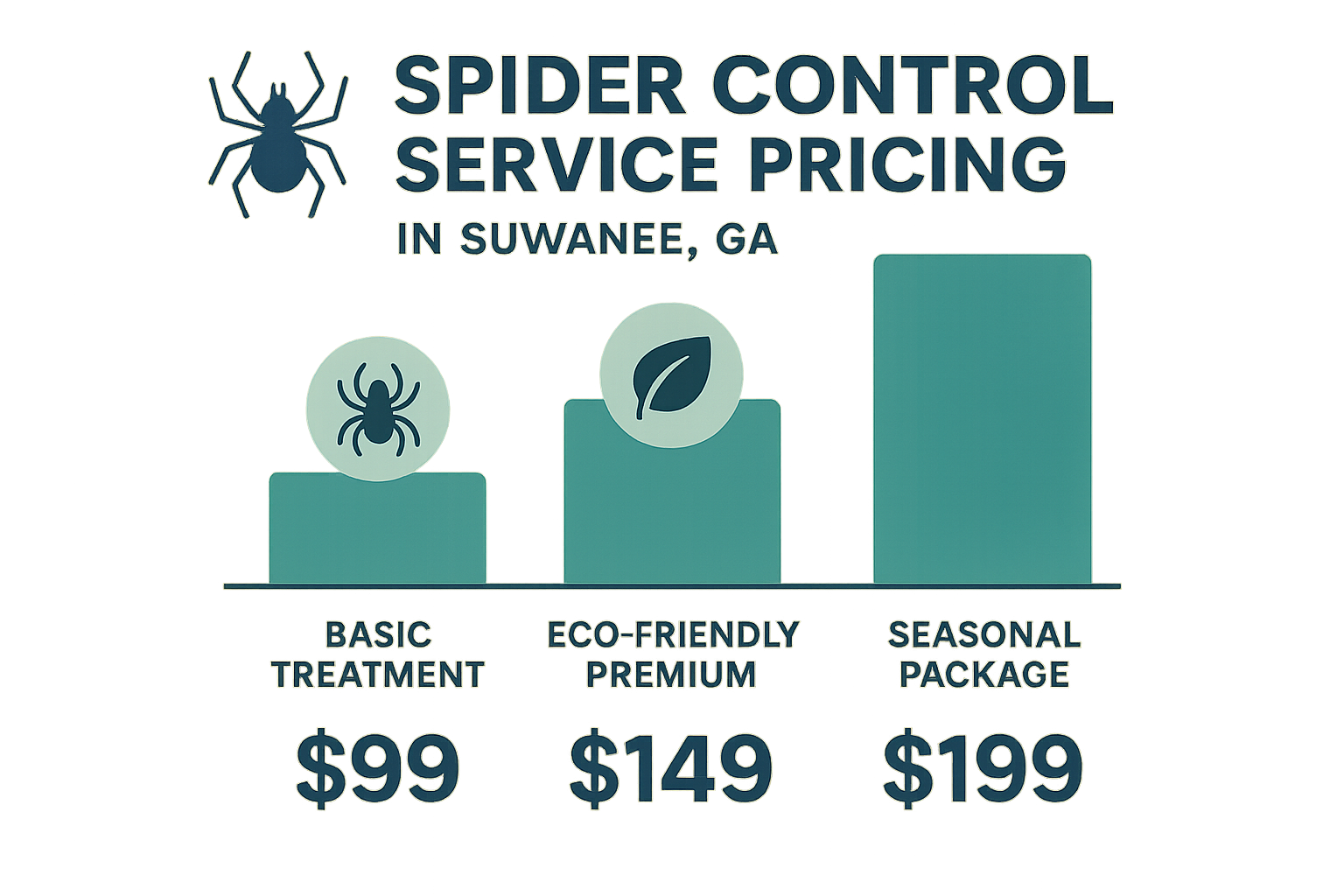
When you call a pest‑control professional, the first question on most homeowners’ minds is “How much will it cost?” In Suwanee, reputable firms like Anthem Pest Control structure their spider‑control pricing into clear service tiers. Knowing what each tier offers helps you match the treatment to your home’s specific needs and avoid over‑paying for services you don’t require.
Typical Service Tiers
- Basic Treatment – $99
- Eco‑Friendly Premium – $149
- Seasonal Package – $199
What Each Tier Includes
| Tier | Visits | Insecticide Type | Warranty | Add‑Ons |
|---|---|---|---|---|
| Basic ($99) | 1 | Standard, fast‑acting | 30 days | None |
| Eco‑Friendly Premium ($149) | 2 | Low‑toxicity, pet‑safe | 60 days | Perimeter barrier (optional) |
| Seasonal Package ($199) | 4 (quarterly) | Low‑toxicity + targeted spot‑treatments | 180 days | Perimeter barrier + interior monitoring |
Cost‑Benefit Analysis
The Basic tier is ideal for a one‑time spider sighting or for homeowners who have already sealed entry points. With a single visit and a 30‑day warranty, you’ll see quick results, but any re‑infestation after the warranty expires will require a new service call.
The Eco‑Friendly Premium tier adds a second visit and a longer warranty, giving you extra peace of mind while keeping chemicals at a low toxicity level. If you have pets, children, or a preference for greener solutions, the modest $50 upgrade often pays for itself by reducing the need for repeat treatments.
The Seasonal Package shines during Suwanee’s peak spider months (late summer through early fall). Four quarterly visits cover the entire high‑risk period, and the 180‑day warranty means you won’t be surprised by a sudden resurgence. Over a year, the $199 investment can save you up to $150 in emergency call‑outs and avoid damage to outdoor lighting or window screens caused by spider webs.
Local Pricing Confirmation
These figures align with the pricing data published on Anthem Pest Control’s spider‑control cost page for Suwanee, GA. For the most up‑to‑date rates and any promotional discounts, visit their Spider Control Cost page.
Seasonal Spider Activity and Timing Your Treatments
In Suwanee, Georgia, spider movements follow a predictable rhythm that aligns with temperature, humidity, and daylight. Knowing when spiders are most active lets you place a barrier before they even think about crossing your threshold, turning a potential infestation into a simple maintenance task.
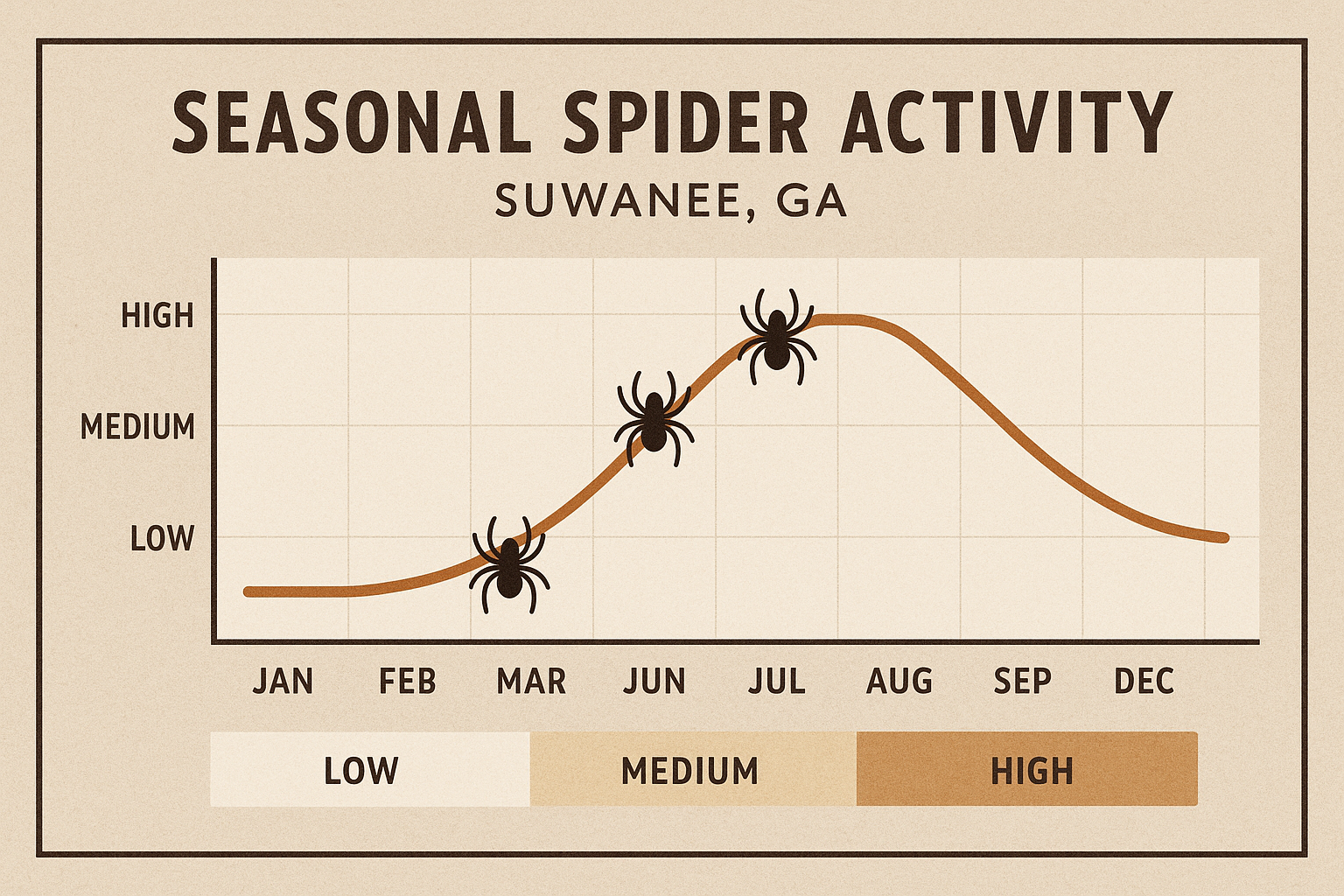
Interpreting the Seasonal Activity Chart
The chart breaks the year into three activity zones:
- High activity (June‑August): Warm nights and high humidity create ideal hunting grounds. Expect a noticeable increase in webbing around outdoor lights and inside basements.
- Medium activity (April‑May, September‑October): Spiders are either emerging from winter hideouts or preparing for the next cold spell. Their numbers rise, but they’re not yet at peak levels.
- Low activity (November‑March): Cooler temperatures and dryer air push most species into dormancy. Indoor sightings are usually limited to accidental indoor transport.
Why Peak Months Need a Pre‑emptive Barrier
During June through August, spiders reproduce rapidly and disperse widely. A pre‑emptive barrier applied in early spring stops them from establishing entry points when they’re most motivated to expand their territory. Without that barrier, you’ll likely see more webbing, occasional bites, and an increased need for emergency treatments later in the summer.
Recommended Treatment Schedule
- Early Spring (late March‑early April): Apply a full‑property barrier that targets cracks, foundation gaps, and outdoor lighting fixtures.
- Mid‑Summer Follow‑up (mid‑July): Re‑treat high‑risk zones—especially decks, patios, and garage doors—to catch any spiders that slipped through the initial line.
- Fall Maintenance (late September‑early October): A light touch‑up reinforces the barrier before cooler weather drives spiders back indoors for winter shelter.
Weather’s Role in Treatment Efficacy
Rain and high humidity can wash away or dilute barrier chemicals, reducing their residual power. Schedule applications on a dry day with at least 24 hours of forecasted clear weather. If a sudden downpour occurs after treatment, a quick re‑application of the perimeter spray ensures the protective layer remains intact.
Homeowner Tips for Reducing Indoor Attraction
- Seal cracks around windows, doors, and foundation vents with silicone or expandable foam.
- Install motion‑sensor lighting or switch to amber bulbs that attract fewer insects—the primary food source for spiders.
- Keep outdoor trash bins sealed and away from the house to eliminate additional food sources.
- Trim vegetation within three feet of the home’s exterior; overgrown plants provide bridge pathways for spiders.
- Regularly vacuum corners, basements, and attics to remove spider egg sacs before they hatch.
By aligning your treatment plan with the natural ebb and flow of spider activity, you’ll keep your home comfortable and spider‑free while minimizing the need for costly emergency visits. Anthem Pest Control is ready to tailor this schedule to your property’s unique layout and micro‑climate.
Protect Your Home with Professional Spider Control
Knowing the exact spider species, the time of year they’re most active, and the cost of treatment are the three pillars of effective control. Identification tells us if the spider is harmless or a health risk, so we can target the right solution. Seasonal timing matters because most spiders hatch in late summer and seek shelter as temperatures drop; treating at the right moment stops an infestation early. Transparent pricing lets you budget for immediate treatment and ongoing prevention without surprise fees.
Choosing a licensed, locally‑experienced provider like Anthem Pest Control means you get EPA‑approved products that are safe for children and pets, while delivering fast, effective results. Our years of service in Suwanee give us insight into local entry points and nesting habits, so we can target spiders where generic services miss. We also offer follow‑up inspections and a maintenance plan to keep your home spider‑free year after year.
If you’ve noticed an uptick in webbing, bite‑like marks, or simply want peace of mind, our experts are ready to assess your situation and recommend a tailored solution. We’ll walk you through every step, answer your questions, and schedule treatment at a time that fits your busy life.
Give us a call today at 877‑371‑8196 for a free, no‑obligation quote, or drop us a line through our website.
Ready to protect your home? Visit Anthem Pest Control now and schedule your professional spider treatment.