Identify Stink Bugs and Their Risks in Decatur, GA
The brown marmorated stink bug (Halyomorpha halys) arrived in the United States in the late 1990s and has since marched steadily into Georgia’s suburbs, including Decatur. Originally native to East Asia, this invasive pest hitch-hiked on cargo and quickly found the region’s temperate climate ideal for breeding. Today, it’s a familiar sight on porch lights and garden beds throughout the Metro Atlanta area, and its numbers swell each fall as they seek warm indoor shelter for the winter—making stink bug control Decatur homeowners rely on increasingly important during peak seasons.
Key Identification Features
Spotting a brown marmorated stink bug is easier than you might think once you know what to look for. Adults measure about ½ inch long and display a distinctive shield‑shaped, roughly triangular body. Their coloration ranges from light brown to a mottled, mahogany hue, with subtle white or yellow markings along the edges of the thorax. Most telling are the two small scent glands on the underside of the abdomen—when disturbed, the bug releases a pungent, “rotten‑egg” odor that can linger for hours.

Types of Damage
Stink bugs are not just a visual nuisance; they cause real damage to both outdoor and indoor environments. In the garden, they feed by piercing fruit, vegetables, and ornamental plants with their needle‑like mouthparts, injecting enzymes that turn blossoms into brown, sunken lesions. Apples, peaches, and tomatoes are especially vulnerable, leading to reduced yields for home growers. Inside the home, large numbers can congregate on windowsills, walls, and kitchen counters, leaving a lingering odor and, in severe cases, staining fabrics and upholstery with their defensive secretions.
Health Considerations
While stink bugs are not disease vectors, their defensive spray can trigger allergic reactions in sensitive individuals. Contact with the odor may cause skin irritation, watery eyes, or respiratory discomfort, especially for people with asthma or chemical sensitivities. The Centers for Disease Control and Prevention (CDC) notes that prolonged exposure to the compound trans‑2‑decenal—the primary component of the stink bug’s scent—can exacerbate these symptoms. Homeowners should treat infestations promptly to avoid both property damage and potential health irritations.
For broader guidance on residential pest awareness and safe management practices, consult the EPA residential pest‑management guidelines.
Seasonal Activity and How Stink Bugs Enter Homes
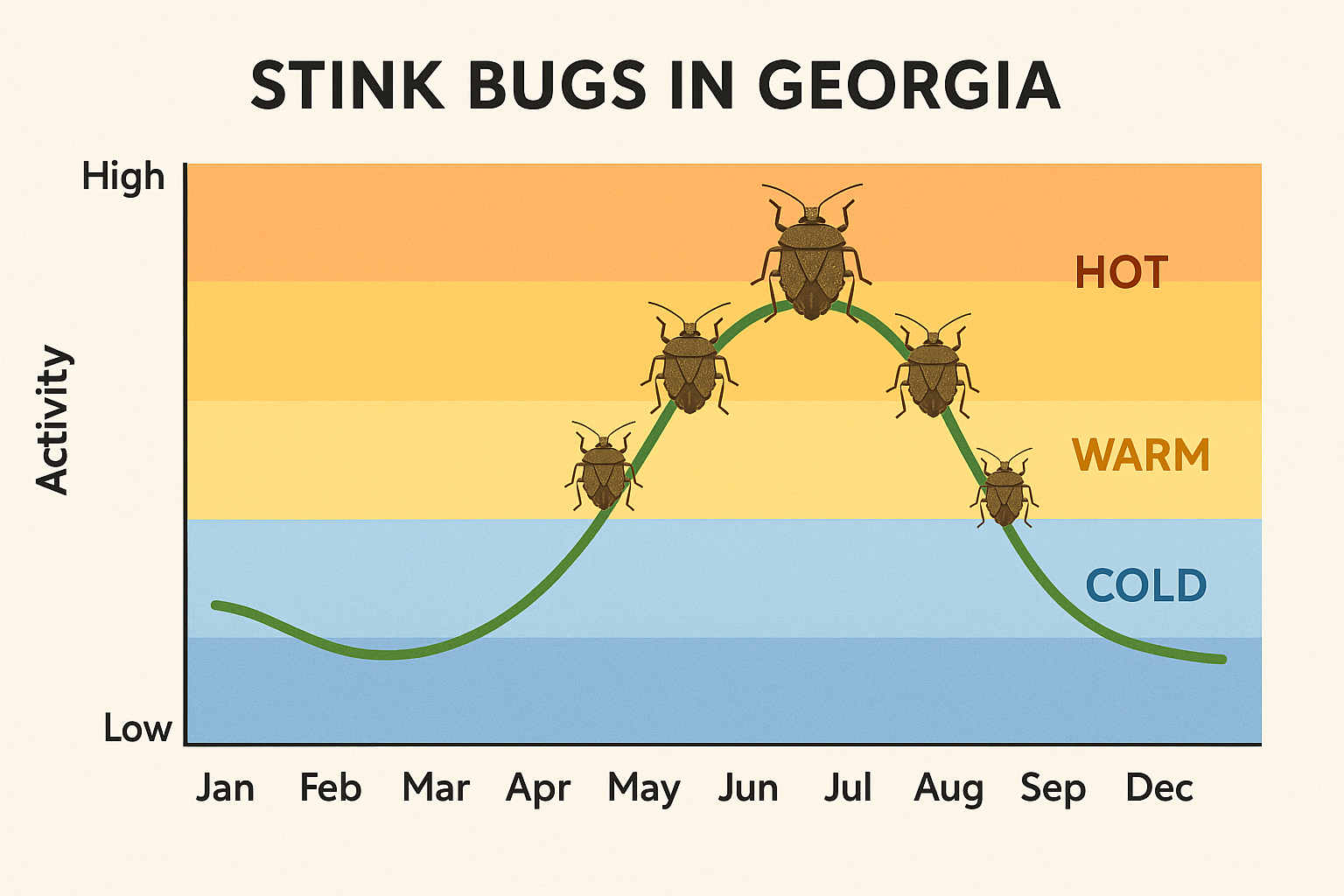
Stink bugs in Georgia follow a predictable yearly rhythm that aligns with the region’s temperature swings. The seasonal activity chart shows low numbers in early spring, a modest rise in late spring, and a sharp surge from September through November—the period most homeowners notice the insects inside their homes and begin seeking stink bug control Decatur services to prevent indoor infestations.
Temperature is the primary driver. When daytime highs dip below 70 °F (21 °C), stink bugs become sluggish, but a sudden warm spell can trigger a mass exodus from outdoor foliage into nearby structures. Humidity plays a supporting role; higher moisture levels keep the bugs hydrated, encouraging them to seek the dry shelter of a house.
By the time temperatures consistently stay below 60 °F (16 °C), the insects start scouting for winter hideaways. The most common entry routes are:
- Cracks around windows and doors
- Gaps around utility lines (cable, telephone, irrigation)
- Openings around roof vents
- Damaged siding or soffit
- Unsealed foundation cracks
Window frames that sit slightly off‑square often leave a ¼‑inch gap where a bug can slip through. Door sweeps that are worn or missing create a direct hallway to the interior. Utility lines — cable, telephone, and irrigation — are frequently routed through drilled holes that never get sealed. Roof vents, especially the passive types, have louvers that can be pried open by a determined bug.
Spotting a few individuals in these openings early — ideally in late August — gives you a window to seal gaps before the September‑November peak. Early detection is cheaper than emergency treatments after a full‑blown invasion, and it reduces the chance of a breeding population establishing inside your walls.
The most effective defense combines physical barriers with regular inspections. Apply a silicone‑based caulk to all window and door seams, install door sweeps, and use expandable foam for larger utility penetrations. For roof vents, fit fine‑mesh screens that block insects but still allow airflow. Finally, place sticky traps near suspected entry points in September; a sudden increase in captures signals that additional sealing is needed before winter sets in.
Sources: CDC, National Pest Management Association (NPMA).
Safe Indoor Treatment Methods for Stink Bugs
Integrated Pest Management (IPM) — a homeowner’s roadmap
IPM treats a stink‑bug problem like a puzzle: you combine monitoring, exclusion, and the least‑toxic controls first. By identifying where bugs enter, when they’re most active, and which areas they favor, you can target treatment precisely and keep chemical use to a minimum. This philosophy not only protects your family and pets but also preserves the indoor environment for years to come.
Low‑toxicity chemical sprays approved by the EPA
When a chemical step is needed, choose EPA‑registered products labeled for indoor use against stink bugs. Look for “low‑toxicity” or “reduced‑risk” formulations that rely on pyrethroids with a short residual life or botanical oils such as neem. Apply the spray in a fine mist, covering cracks, baseboards, and the undersides of appliances—areas where bugs hide during daylight. Always follow the label’s dosage and re‑application interval; over‑spraying offers no extra benefit and can increase exposure risk.
Non‑chemical tactics that work
- Vacuuming: A handheld shop‑vac on the “low‑suction” setting quickly removes bugs from walls, ceilings, and light fixtures. Empty the canister into a sealed bag and discard it outdoors.
- Sealing entry points: Use caulk, weather‑stripping, or expanding foam to close gaps around windows, doors, and utility penetrations. Even a 1‑mm crack can become a highway for stink bugs.
- Light traps: Place a simple LED or fluorescent trap near a window at night. Bugs are drawn to the light, then captured on a sticky surface, reducing indoor populations without chemicals.
Professional‑grade indoor spraying (visual guide)
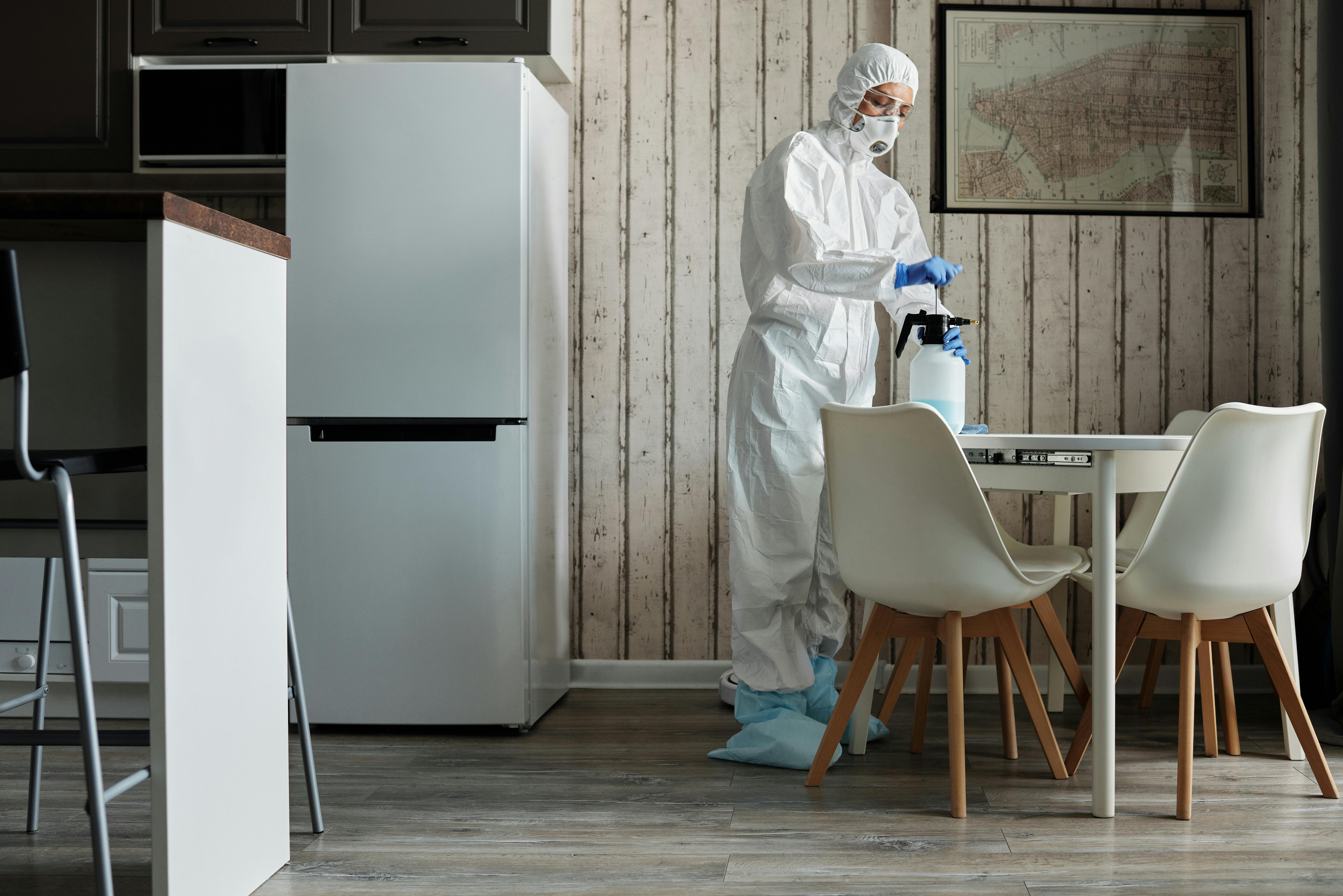
The photo illustrates why a hazmat‑style suit is essential for anyone applying pesticides indoors. Even low‑toxicity sprays can irritate skin or lungs if they’re inhaled or splashed. Trained technicians wear protective gloves, goggles, and a respirator to keep the treatment safe for occupants and pets.
Safety best practices for DIY homeowners
Before you spray, open windows and run fans to create cross‑ventilation for at least 15 minutes. Wear long sleeves, nitrile gloves, and a dust mask to guard against accidental contact. Never mix products, and always read the label for specific warnings about children, pets, or food surfaces. After application, keep the treated room vacant until the label’s “re‑entry” time has passed.
For detailed guidance on pesticide safety, visit the EPA residential pest‑management page. Following these steps lets you control stink bugs effectively while preserving a healthy indoor environment.
Pricing Options for Stink Bug Control in Decatur
When it comes to stink bug control Decatur homeowners consider, there are usually three pricing structures: a one-time treatment, a quarterly service, or an all-year contract. Understanding how each model works helps you match the service to the size of your problem and your budget.
With a one‑time treatment, you pay a single fee and receive a thorough spray that targets current hideouts. Quarterly service schedules four visits spread across the year, ideal for homes that see seasonal spikes. An annual contract bundles unlimited visits and preventive measures, offering the most hands‑off protection for busy families.
What’s Included in Every Plan
- Inspection: Certified technicians locate entry points and assess infestation severity.
- Treatment: Targeted applications of EPA‑approved products, safe for pets and children.
- Follow‑up Visits: Monitoring and re‑treatment if bugs reappear, built into quarterly and annual packages.
Cost Breakdown: Residential vs. Commercial
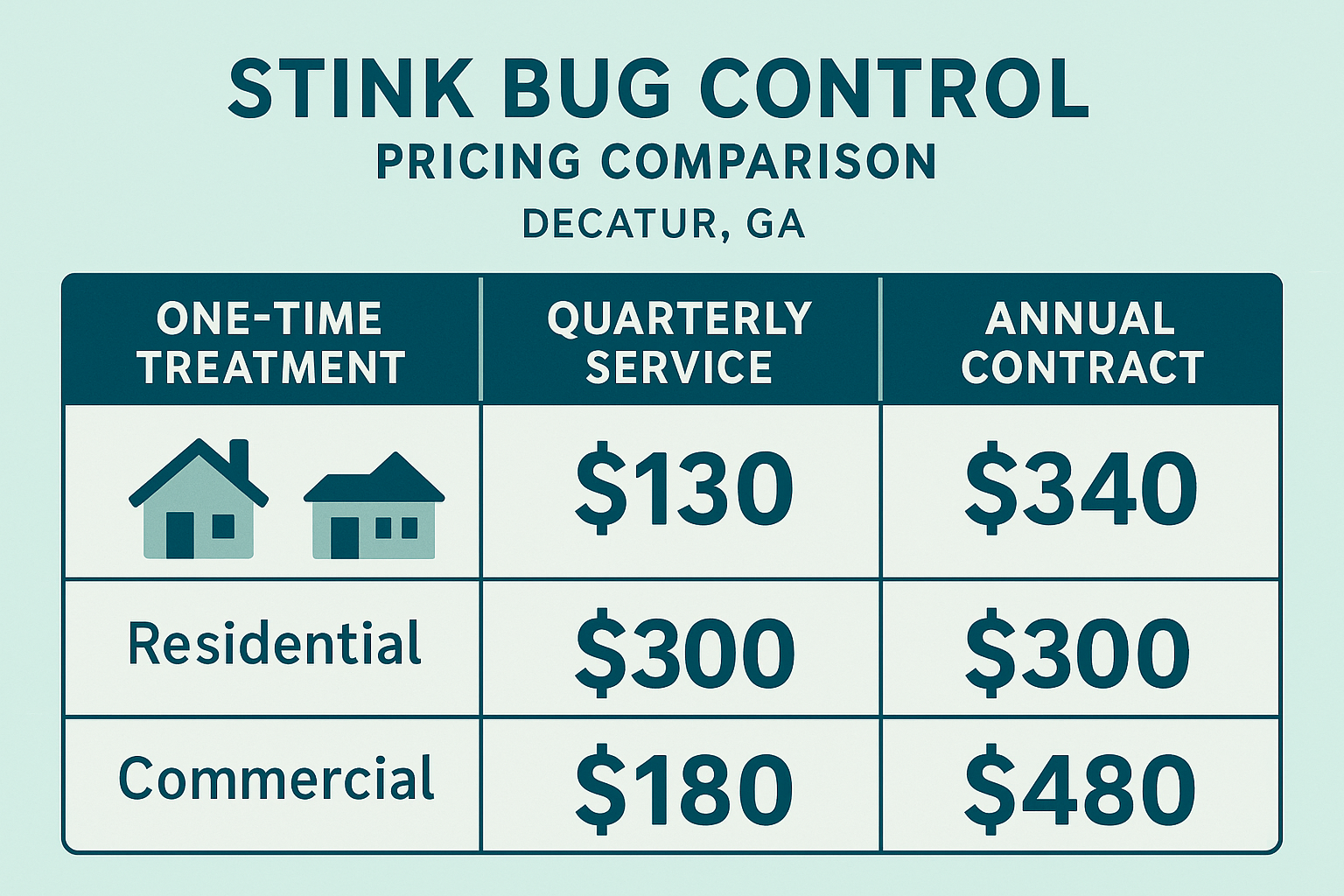
Residential and commercial rates differ mainly because commercial spaces require larger coverage areas and often more frequent monitoring. The chart below translates the typical price ranges into easy‑to‑read figures, so you can see exactly what you’d pay for a 2,000‑sq‑ft storefront versus a 2,500‑sq‑ft family home.
| Service Model | Residential (per home) | Commercial (per 1,000 sq ft) |
|---|---|---|
| One‑time Treatment | $120 – $180 | $0.15 – $0.25 per sq ft |
| Quarterly Service | $350 – $420 per year | $0.45 – $0.55 per sq ft annually |
| Annual Contract | $480 – $560 (includes 4 visits) | $0.60 – $0.70 per sq ft (includes unlimited visits) |
These numbers mirror the data visualized in the infographic, which breaks down each service tier side‑by‑side for quick comparison.
Why Ongoing Plans Make Sense for Heavy Infestations
Stink bugs reproduce quickly, especially after a warm summer. A single spray may knock back a light presence, but severe colonies can rebound within weeks. Quarterly or annual contracts spread the cost over multiple visits, reducing the per‑treatment price while keeping your home sealed against new entrants. In practice, homeowners who switch to a recurring plan often see a 30‑40 % reduction in total annual spend compared with repeated one‑time jobs.
Anthem Pest Control’s Transparent Pricing
Anthem Pest Control lists every fee up front—no hidden service charges or surprise add‑ons. For Decatur residents, the one‑time residential price starts at $149, quarterly service at $399 per year, and the full‑year contract at $489, all of which fall comfortably within the market ranges shown above. This clarity lets you compare apples‑to‑apples with other providers and choose the plan that delivers the best value for your specific situation.
Give Anthem a call at 877‑371‑8196 or visit anthempest.com to get a free, no‑obligation quote tailored to your property.
Take Action to Protect Your Home Today
Stink bugs may seem harmless at first glance, but an early infestation can quickly turn into a costly nuisance. Spotting the insects during their spring emergence, recognizing the tell‑tale shield‑shaped bodies, and acting before they seek shelter for the winter are the three pillars of effective control. Timely treatment not only prevents the foul odor that gives these pests their name but also stops damage to fruits, vegetables, and ornamental plants.
Why Choose Anthem Pest Control?
Anthem Pest Control brings a deep understanding of Georgia’s seasonal pest cycles to every job. Our technicians use EPA‑approved, low‑toxicity products that protect your family and pets while eradicating stink bugs at their source. We pride ourselves on transparent pricing—no hidden fees, just a clear, upfront quote that matches the level of service you need. Whether you require a one‑time treatment or a year‑round prevention plan, our local expertise ensures the right solution for your home.
Ready for a Stink‑Bug‑Free Home?
Take the first step toward peace of mind with a free, no‑obligation quote. Our friendly team will schedule a thorough inspection, pinpoint entry points, and recommend a customized treatment that fits your budget. It’s a simple conversation that can save you time, stress, and money later on.
Call us today at 877-371-8196 or visit Anthem Pest Control to request your free quote and lock down a trusted stink bug control Decatur protection plan before the next seasonal wave hits your home.