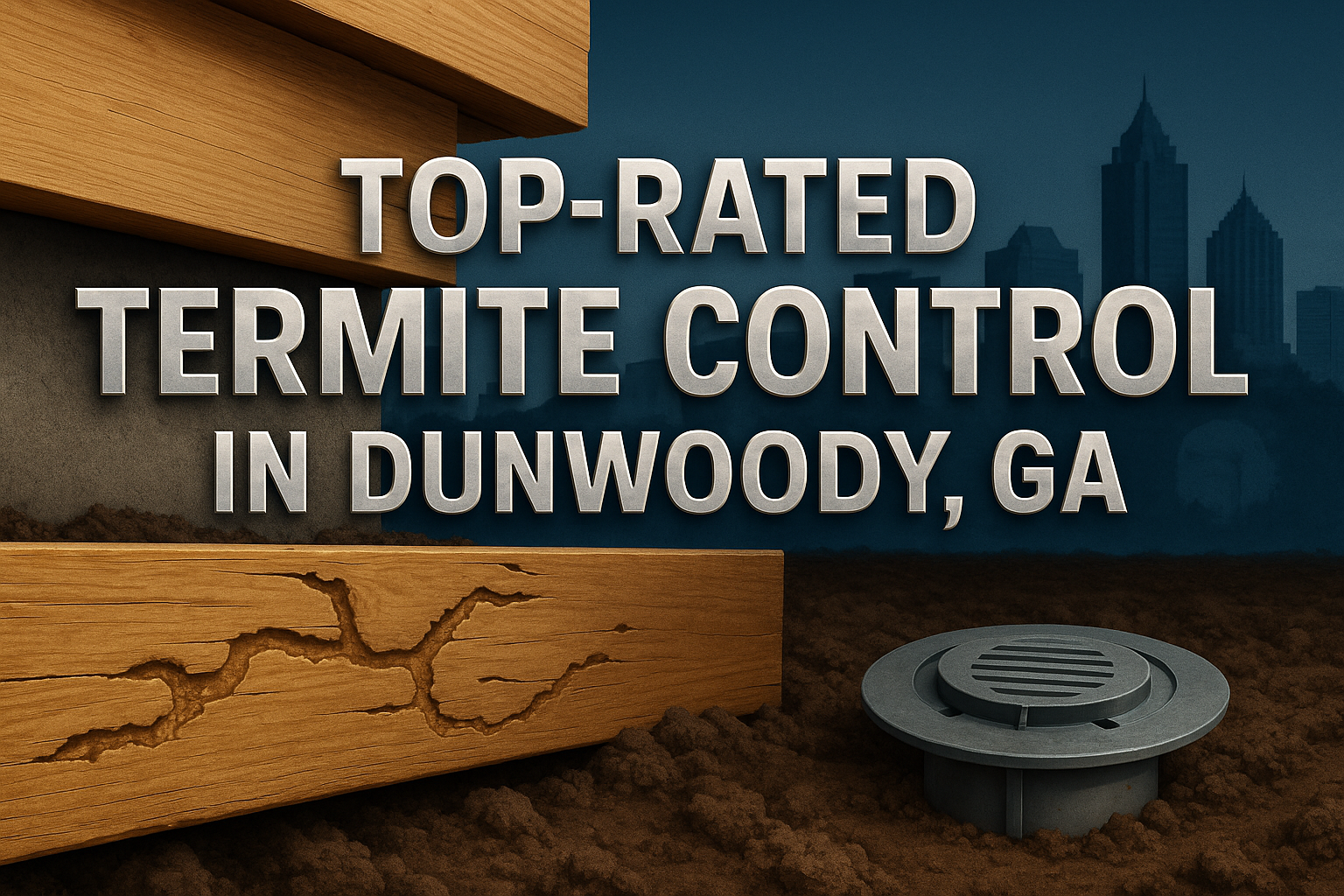
Introduction to Termite Risks in Dunwoody
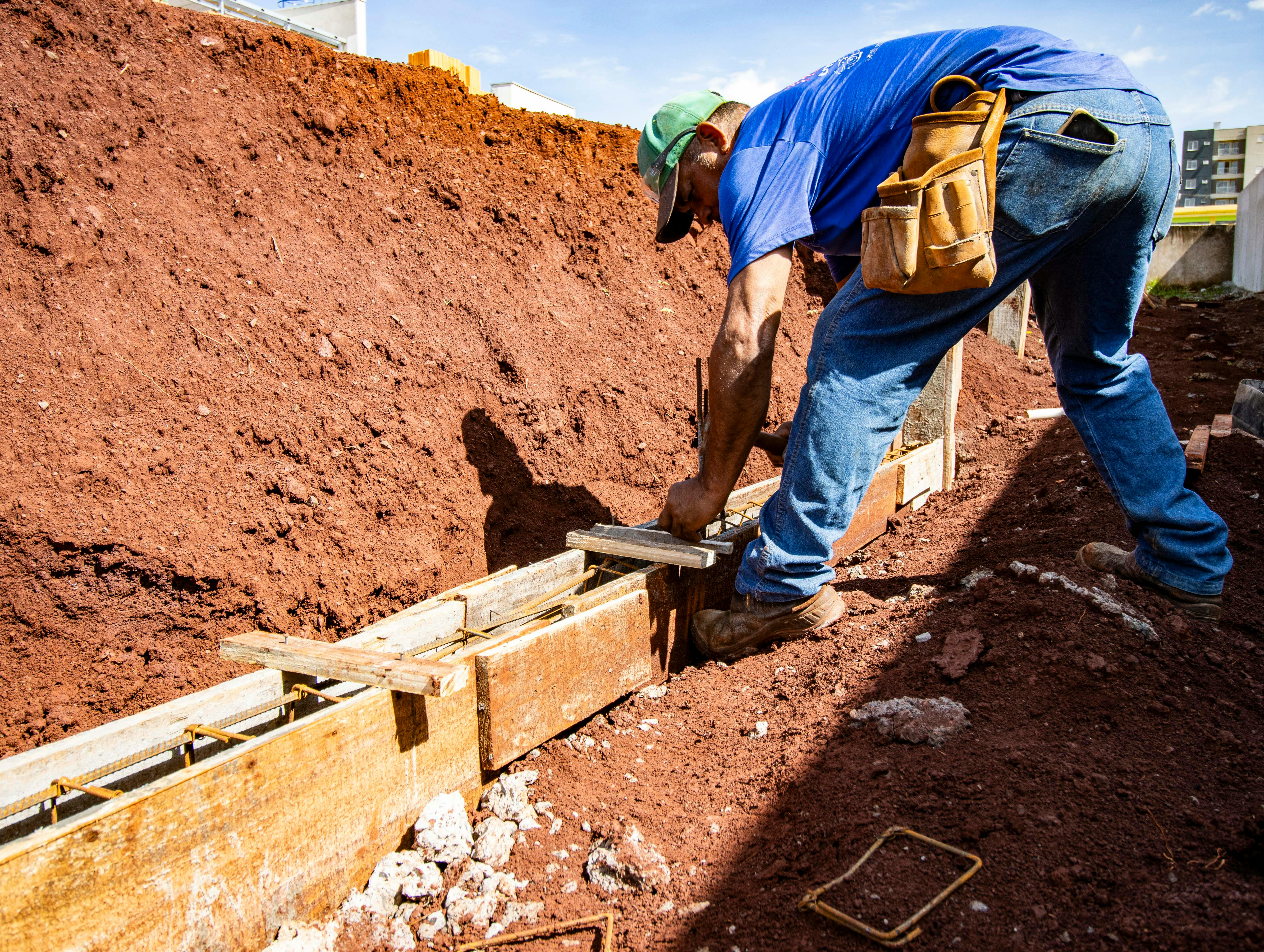
Every year, more than 600,000 homes across the United States discover they share a costly secret: silent, wood-eating invaders have been at work. The EPA/CDC estimates that these hidden destroyers generate roughly $5 billion in repair bills nationwide. While the numbers sound staggering, they become even more relevant when you consider the unique environment that makes professional termite control Dunwoody GA homeowners rely on so critical.
Why Dunwoody Is a Termite Hotspot
Dunwoody’s climate acts like a welcome mat for termites. Three key factors turn the area into a perfect breeding ground:
- Humid summers: Moisture softens wood, making it easier for termites to tunnel and feed.
- Abundant mature trees: Roots provide a natural bridge from the soil to the structure of your home.
- Wooded neighborhoods: Communities such as Brookhaven and Peachtree Corners are lined with mature landscaping, increasing the likelihood of subterranean colonies migrating into residential foundations.
Combine these conditions with the region’s warm, extended growing season, and you have a recipe for rapid colony expansion. In short, if you own a home in Dunwoody, the odds are higher that termites are already nearby—whether you’ve seen a mud tube in the basement or not.
Real‑World Hook: A Homeowner Who Dodged a $4,000 Repair Bill
Consider the case of a 2,300‑sq‑ft. ranch‑style house on the edge of a wooded cul‑de‑sac. The owners noticed a faint, honey‑colored line along the foundation in early spring. They called Anthem Pest Control, and a technician confirmed an active subterranean infestation. Because the problem was caught before any structural damage occurred, the family avoided an estimated $4,000 in wood replacement and repair costs.
This story illustrates two vital points: early detection saves money, and a knowledgeable pest partner can turn a potential disaster into a routine maintenance visit.
What You’ll Learn Next
Now that the risk is clear, the rest of this guide will walk you through everything you need to make an informed decision:
- Cost transparency: Breakdowns of typical inspection fees, treatment plans, and long‑term protection packages in the Dunwoody market.
- Treatment options: From liquid termiticides to baiting systems, we’ll compare effectiveness, safety, and timeline.
- Top local providers: A curated shortlist of reputable companies—including Anthem Pest Control—so you can choose the right partner for your home.
Understanding the scale of the problem, the local climate’s role, and the financial stakes sets the stage for proactive action. Let’s move forward and equip you with the knowledge you need to protect your Dunwoody home before termites ever get a foothold.
Understanding the Termite Threat in Dunwoody
Subterranean Termites: The Soil‑Contact Invaders
Subterranean termites (Reticulitermes flavipes) are the most common culprits in Dunwoody. They build expansive colonies underground, sending out thin, white swarmers that locate wood in direct contact with moist soil. Once a piece of timber touches the ground, the termites create mud‑tube highways that protect them from the open air while they feed continuously.
The region’s low‑lying, well‑drained soils retain enough moisture to keep these colonies thriving. After a summer rain, the water seeps into the root zones, creating the perfect humid corridor for termites to travel from their nest to the wooden framing of a home.
Drywood Termites: The Self‑Contained Destroyers
Drywood termites (Incisitermes minor) differ dramatically because they require no soil contact. An entire colony can live inside a single piece of sound wood, hollowing it out over months without obvious external signs. This ability makes them especially dangerous in older homes that feature solid‑wood siding, decking, or decorative beams.
In Dunwoody’s historic neighborhoods, where many residences still showcase original pine or oak clapboards, drywood termites find ample refuge. They chew galleries that are often only a few millimeters wide, leaving a fine powder called “frass” that can be mistaken for dust.
Climate Drivers: Why Dunwoody Is a Termite Hotspot
Humid summers, frequent afternoon thunderstorms, and a dense canopy of mature trees combine to create a micro‑climate that favors termite activity. The canopy traps moisture, keeping wood surfaces damp long after the rain stops. Meanwhile, the warm temperatures accelerate the termites’ metabolic rate, allowing colonies to expand rapidly.
Even in the cooler months, the ground stays relatively warm under the leaf litter, providing a stable environment for subterranean colonies to survive and prepare for the next swarming season.
Neighborhood Examples: Real‑World Hot Zones
Take Brookhaven’s mature oak‑lined streets: the towering oaks shed leaves that decompose into a moist mulch layer, essentially a natural termite runway. Homeowners there often report hidden mud tubes along foundation walls and in crawl spaces.
Contrast that with the newer developments in Peachtree Corners, where extensive landscaping includes irrigation systems and decorative rock beds. Over‑watering these lawns can raise soil moisture levels, inadvertently inviting subterranean termites to explore nearby foundations.
National Impact: A Statistic You Can Trust
Termites are not just a local nuisance; they pose a massive economic burden across the United States. According to the U.S. Environmental Protection Agency, “Termites affect over 600,000 U.S. homes annually,” resulting in billions of dollars in repair costs each year.
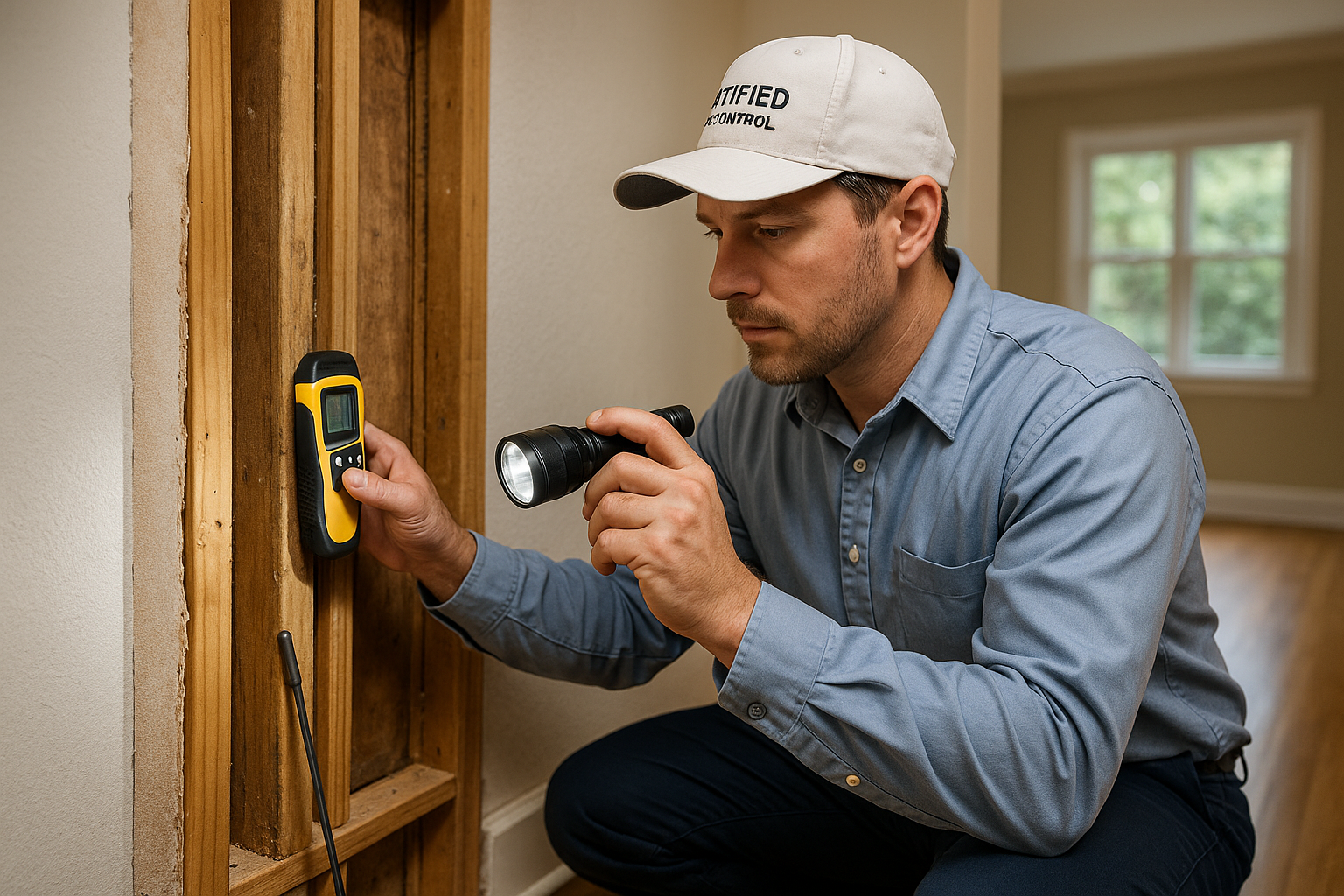
Understanding the biology of these pests and how Dunwoody’s climate fuels their growth empowers homeowners to act before damage becomes visible. Recognizing the signs—mud tubes, frass, or subtle wood hollowing—can save thousands in repair bills and preserve the structural integrity of your home.
Cost Overview for Dunwoody Homeowners
When it comes to protecting your home from termites, understanding the price tags helps you budget with confidence. Below is a clear breakdown of the most common expenses you’ll encounter for termite control Dunwoody GA homeowners rely on, followed by a quick comparison to nearby Sandy Springs and a simple first-year cost calculator.
1. Inspection Fees
Most pest‑control firms charge between $145 and $150 for a thorough termite inspection. Many companies, including Anthem Pest Control, use a free‑inspection promotion to get you in the door, but the standard fee reflects the detailed visual assessment, moisture testing, and a written report of findings.
2. Quarterly Maintenance Visits
After the initial treatment, a maintenance program keeps the perimeter and interior protected. The typical charge is $99 per quarterly visit. This includes a licensed technician, a fresh barrier application, and a brief inspection to catch any new activity before it spreads.
3. Full‑Treatment Baseline (2,500 sq ft. Home)
For a standard 2,500 sq ft. residence, the average full termite treatment in Georgia sits at $525, according to the 2025 Fixr data. The range you’ll see in quotes is wide—anywhere from $305 to $1,200—depending on the severity of infestation, type of treatment, and any structural repairs needed.
4. Treatment Type Costs
- Subterranean termites: $255 – $1,525
- Drywood termites: $1,015 – $6,560
Subterranean termites are the most common in the Atlanta metro area, so their lower‑end pricing reflects a more routine barrier application. Drywood termites require spot‑treatments and often wood replacement, which drives the higher cost.
5. Regional Pricing Trend – Sandy Springs
| Location | Typical Cost per Visit | Range (Low‑High) |
|---|---|---|
| Dunwoody | $99 | $90 – $110 |
| Sandy Springs | $185 | $100 – $270 |
The Sandy Springs column shows a broader spread, indicating that some providers charge premium rates for the same service. Knowing this helps you negotiate or shop around for the best value without sacrificing quality.
6. First‑Year Cost Calculator
Let’s walk through a typical first‑year scenario for a Dunwoody homeowner opting for a full treatment and quarterly maintenance:
- Initial inspection: $145
- Full treatment (average): $525
- Four quarterly visits: 4 × $99 = $396
Total first‑year estimate: $1,066. If you’re able to secure a free inspection promotion, you could shave $145 off, bringing the total closer to $921.
7. Keeping Costs Current
All figures above are based on the 2025 Georgia average from Fixr. Prices can shift with changes in material costs, labor rates, or new regulatory requirements. Before signing any contract, ask your provider for a detailed, itemized quote and confirm that the numbers reflect the latest market data.
By breaking down each component—inspection, treatment type, and ongoing maintenance—you can see exactly where your money goes and compare offers confidently. Anthem Pest Control prides itself on transparent pricing, so you’ll always know the “why” behind every dollar spent on protecting your home.
Treatment Options Explained
Liquid Termidor® Barrier
When Anthem Pest applies a Termidor® liquid barrier as part of its professional termite control Dunwoody GA service, the product is injected 12–18 in. below the concrete slab and around the foundation. The termiticide’s patented Transfer Effect™ allows the chemical to move through the termites’ social network—trophallaxis and grooming—so the entire colony receives a lethal dose even if only a fraction of the workers encounter the treated soil. The EPA-registered formulation boasts a 99% colony elimination claim on the product label, making it one of the most reliable preventative measures for subterranean termites in Dunwoody.
Installation typically requires a few trenching passes around the home’s perimeter, followed by a post‑treatment inspection. Homeowners can expect a one‑time cost ranging from $2,500 to $4,200 for an average 2,500‑sq‑ft residence, depending on soil type and access difficulty. The barrier remains effective for up to five years, though Anthem recommends annual checks to verify integrity.
Sentricon® Bait System
The Sentricon® system works from the outside in. Small bait stations are strategically placed in the soil around the foundation—usually 4 to 6 stations for a typical single‑family home. Each station contains a cellulose substrate laced with a low‑dose termiticide that termites share with the colony, eventually collapsing it from within.
Anthem Pest conducts monthly monitoring visits, replacing consumed bait and confirming activity levels. Many providers, including Anthem, back the system with a lifetime guarantee—if termites return, the bait stations are re‑installed at no extra charge. Pricing for a full installation runs between $1,800 and $3,000, with an ongoing monitoring fee of $100‑$150 per visit.
Tent & Tentless Fumigation
For severe dry‑wood infestations—think large, open‑frame structures or historic homes—fumigation may be the only way to reach hidden colonies. The process encloses the entire building in a gas‑tight tent, then releases a fumigant (usually sulfuryl fluoride) that penetrates wood, furniture, and wall voids.
Pricing is typically calculated per square foot for tented jobs ($8‑$12 / sq ft) and per linear foot for tentless, wall‑injection methods ($3‑$5 / lf). While fumigation delivers a rapid, total knock‑down, it also requires occupants to vacate the home for 24‑48 hours and carries a higher upfront cost—often $4,000 to $8,500 for an average home.
Integrated Approach
Many Dunwoody firms, including Anthem Pest, recommend layering treatments for maximum protection. A liquid Termidor® barrier blocks subterranean entry, while Sentricon® bait stations provide a “kill‑switch” should a colony bypass the soil shield. This dual strategy reduces the likelihood of reinfestation and spreads the cost over time, offering homeowners a balanced blend of immediate protection and long‑term control.
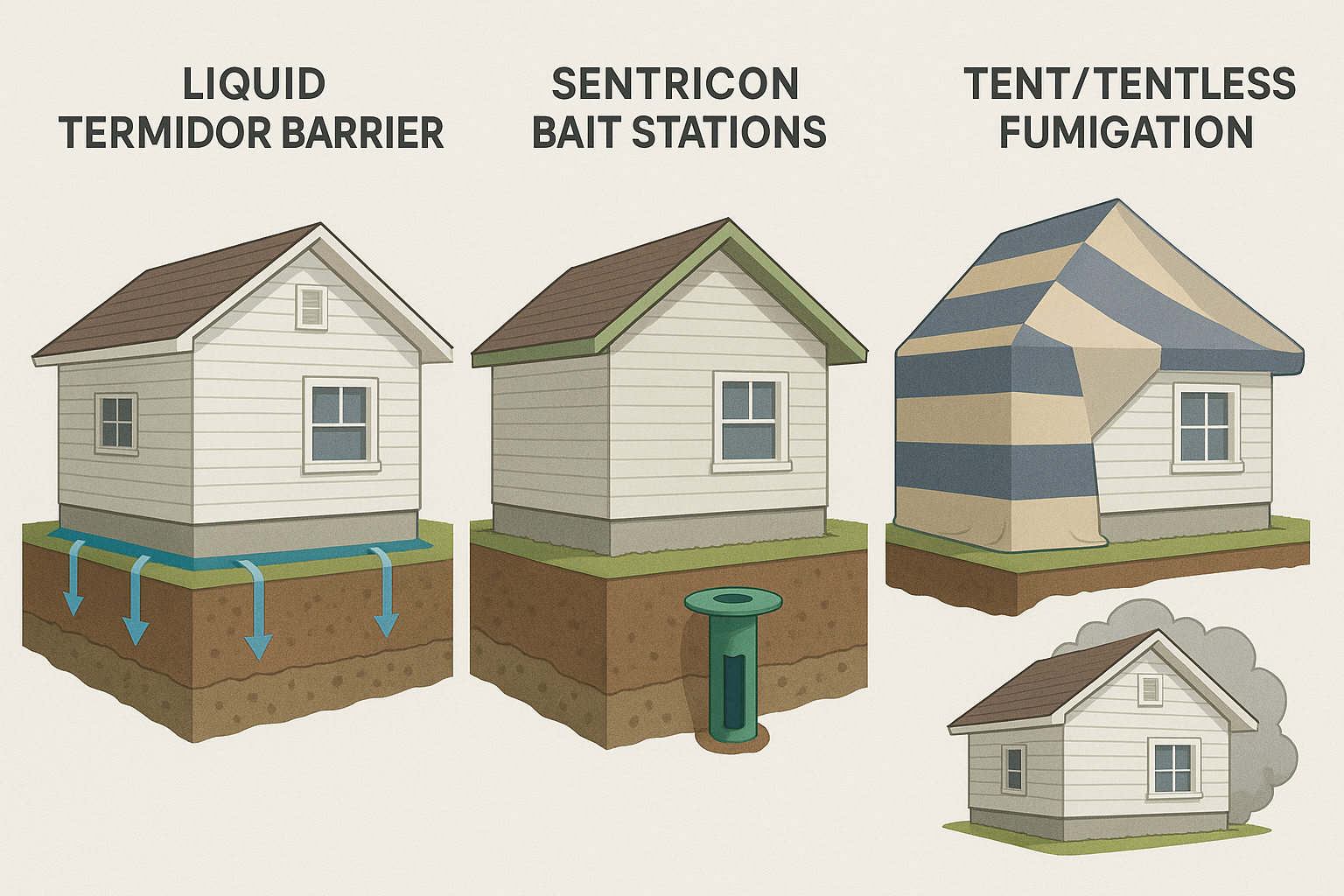
| Method | How It Works | Typical Cost | Pros | Cons |
|---|---|---|---|---|
| Liquid Termidor® Barrier | Soil injection creates a chemical moat; Transfer Effect spreads toxin through colony | $2,500‑$4,200 (one‑time) | Long‑lasting (up to 5 years); high efficacy; minimal disruption | Initial expense; requires professional trenching |
| Sentricon® Bait System | Bait stations placed around foundation; termites share toxin | $1,800‑$3,000 installation + $100‑$150/month monitoring | Lifetime guarantee; works inside the colony; adaptable to landscaping | Ongoing monitoring cost; effectiveness depends on termite activity |
| Tent & Tentless Fumigation | Whole‑structure enclosure; fumigant penetrates wood and voids | $4,000‑$8,500 (per treatment) | Rapid, complete knock‑down; reaches hidden dry‑wood colonies | Home must be vacated; higher cost; may need repeat for severe cases |
Leading Termite Control Services in Dunwoody
When termites start chewing through your home’s foundation, you need a service that’s fast, effective, and backed by solid guarantees. Below is a quick snapshot of the most trusted companies offering termite control Dunwoody GA homeowners depend on, so you can compare what they offer, how much you’ll pay, and what protection you’ll receive.
North Fulton Pest Solutions
North Fulton Pest Solutions combines cutting‑edge chemistry with structural repair expertise, making it a strong contender for homeowners who want a comprehensive approach.
- Core services: Sentricon® bait system, Termidor® liquid barrier, and on‑site structural repairs to seal cracks and replace damaged wood.
- Price range: $300 – $1,200 for a full‑home treatment, depending on property size and infestation level.
- Guarantees: Lifetime Renewable Guarantee on the bait system and a Damage Repair Guarantee that covers repair costs if termites break through after treatment.
- Service area: Brookhaven, Peachtree Corners, and the Dunwoody Village enclave.
Their technicians also provide a detailed post‑treatment report, so you know exactly what was done.
Got Bugs Pest Control
Got Bugs leans heavily on technology, offering a blend of rapid response and detailed inspection that appeals to tech‑savvy homeowners.
- Core services: Advanced detection equipment (thermal imaging and acoustic sensors), free initial inspection, and same‑day treatment for active colonies.
- Price range: $250 – $1,000, with pricing tiers that reflect the complexity of the infestation.
- Unique guarantee: 100 % satisfaction – if you’re not happy with the results, they’ll retreat at no extra charge.
- Neighborhoods served: Central Dunwoody and the Northbrook subdivision.
They also schedule quarterly follow‑ups to ensure any new activity is caught early.
How to Choose the Right Provider
Choosing a termite‑control company isn’t just about the lowest price. A trustworthy provider protects your home’s structure, your family’s health, and your budget for years to come. Use the checklist below, compare warranty options side‑by‑side, and follow a simple review‑scouting routine to make a confident decision.
Decision‑Making Checklist
- Free inspection? A no‑charge, on‑site evaluation shows confidence in the diagnostic process and gives you a baseline for cost comparison.
- What guarantees are included? Look for written guarantees that cover both the initial treatment and any re‑infestation within a set period.
- Years of local experience? Technicians who have served Dunwoody for several years understand the area’s termite species, soil conditions, and building codes.
- Georgia state license number? Verify the license on the Georgia Department of Agriculture website to ensure the contractor meets state regulations.
- Are treatment chemicals EPA‑registered? EPA registration confirms the product has been evaluated for safety and efficacy, reducing risk to pets and children.
Warranty Comparison
Not all warranties are created equal. The table below breaks down the most common guarantee structures you’ll encounter in the Dunwoody market.
| Warranty Type | Coverage Details | Renewal Cost | Duration |
|---|---|---|---|
| Lifetime Renewable | Unlimited re‑treatments for the life of the home, provided annual inspections are performed. | $120‑$150 per year after the first 3‑year term | Lifetime (renewable annually) |
| 5‑Year Guarantee | Two re‑treatments within five years, plus structural damage protection for termite activity. | $75‑$95 per year after the initial 5‑year period | 5 years |
| 2‑Year Guarantee | One re‑treatment if termites reappear, no structural coverage. | $45‑$60 per year after the initial 2‑year period | 2 years |
Evaluating Online Reviews
Digital feedback is a real‑time barometer of service quality. Start with Google Business listings for overall star ratings, but dig deeper: read the most recent comments that mention “termite,” “subterranean,” or “dry‑wood.” Angi (formerly Angie’s List) often includes verified homeowner photos of treated areas, confirming that work was actually performed. The Better Business Bureau (BBB) adds another layer—check the latest rating, any open complaints, and how quickly the provider resolved them. Consistent praise for punctuality, thoroughness, and post‑treatment follow‑up signals a reliable partner.
When you narrow your list to a few local contenders, pull their current BBB ratings directly from the BBB website. As of the latest check, companies such as Termite Solutions of Dunwoody hold an A+ rating, while Anthem Pest Control maintains an A rating with no unresolved complaints. Cite these scores in your decision matrix to ensure you’re comparing apples‑to‑apples.
By following the checklist, weighing warranty value, and vetting online reputation, you’ll select a provider who not only eliminates the current infestation but also safeguards your home against future attacks. A thoughtful choice today can save thousands in structural repairs tomorrow.
DIY Prevention Tips for Homeowners
Termites may be tiny, but the damage they cause can be massive. The good news is that many of the most common entry points are within your control. By tackling a few low‑cost tasks each year, you can keep your home dry, dry‑proof, and far less attractive to these silent destroyers.
Control Moisture at the Source
Termites thrive in damp environments, so eliminating excess moisture is the single most effective preventive measure. Start by inspecting your gutters and downspouts for leaks or clogs; a steady drip can seep into the foundation over time. Make sure water is directed at least six inches away from the house with proper grading or splash blocks. In basements and crawl spaces, place a dehumidifier set to 55 % relative humidity and run it during humid months. A small investment in a quality unit can prevent the wood beneath your home from becoming a termite buffet.
Eliminate Wood‑to‑Soil Contact
Direct contact between wood and soil provides a highway for subterranean termites. When building or repairing decks, porches, or siding, use concrete footings, steel brackets, or pressure‑treated lumber for any posts that touch the ground. If you notice existing wooden posts resting on soil, replace the lower portion with a concrete or metal base. This simple barrier forces termites to travel farther, often making the difference between a harmless foraging crew and a full‑blown infestation.
Conduct Regular Visual Inspections
Even the most diligent homeowner can miss subtle signs. Walk the perimeter of your home and look for these tell‑tale clues:
- Fine mud tubes along foundations, walls, or support beams.
- Discarded wings near light fixtures or window sills—these are the shed wings of swarmers.
- Wood that sounds hollow when tapped, indicating internal damage.
- Frass piles (dry, pellet‑like droppings) near wooden structures.
If you spot any of these, note the location and contact a professional for a thorough assessment.
Seasonal Inspection Schedule
Timing is key. Align your DIY checks with the natural termite life cycle to catch problems early. The table below outlines a practical, four‑step schedule that fits most Georgia homeowners’ calendars.
| Season | Primary Focus | Key Actions |
|---|---|---|
| Early Spring (March‑April) | Foundation Inspection | Check for mud tubes, water pooling, and damaged gutters. |
| Summer (June‑July) | Bait‑Station Check | Verify bait stations are intact, replace if empty, and note any termite activity. |
| Late Summer (August‑September) | Barrier Retreat | Reapply perimeter treatments around foundation and crawl spaces if you’ve used DIY barriers. |
| Pre‑Fall (October) | Final Sweep | Do a comprehensive visual walk‑through, tighten any loose wood, and ensure drainage is still effective. |
Quick‑Reference Checklist
- Inspect gutters & downspouts for leaks.
- Ensure proper site grading away from foundation.
- Run a dehumidifier in basements/crawl spaces.
- Replace wood‑to‑soil contacts with concrete or steel.
- Look for mud tubes, wings, hollow wood, and frass.
- Follow the seasonal schedule: spring foundation, summer bait, late‑summer barrier, pre‑fall sweep.
By integrating these straightforward steps into your routine, you’ll create an environment that’s inhospitable to termites—saving you time, stress, and costly repairs down the road.
Frequently Asked Questions
How long does a treatment last?
Most professional termiticides come with a warranty that protects your home for up to five years when applied correctly. To keep that protection at its peak, we recommend quarterly inspections. These checks verify that the barrier remains intact and catch any early signs of reinfestation before they become costly.
Will chemicals affect pets?
We use low‑toxicity termiticides that are EPA‑registered for use around pets and children. Technicians follow strict safety protocols—such as allowing the product to dry and ventilating treated areas—so the risk of exposure is minimal. Always follow the post‑treatment guidelines we provide to ensure a safe environment for your furry family members.EPA Label, 2023
Can I combine termite treatment with other pest services?
Absolutely. Many homeowners bundle termite control with rodent, ant, or mosquito management. Bundling not only streamlines scheduling but also often reduces overall costs. Our integrated approach creates a comprehensive shield against multiple pests, so you won’t need separate visits for each issue.
What is the “Transfer Effect”?
The Transfer Effect occurs when a termiticide applied to one part of a structure migrates through wood or soil, extending protection to adjacent areas that weren’t directly treated. This natural movement can enhance barrier coverage, but it’s still essential to have a professional assess the extent of treatment to guarantee full‑home protection.
How often should I schedule inspections?
We advise a full inspection at least once a year, preferably in early spring when termites become more active. If you live in a high‑risk zone or have a recent treatment, semi‑annual inspections help catch any breaches early, preserving the warranty’s validity.
Are there eco‑friendly options?
Yes. In addition to traditional termiticides, we offer baits and low‑impact products that rely on natural insect growth regulators. These alternatives reduce chemical load while still delivering effective colony control. Discuss your preferences with our technicians—they’ll recommend the best solution for your home and environmental concerns.
What should I do before a termite treatment arrives?
Clear the work area by removing items that could block access to foundation walls, crawl spaces, or soil around the perimeter. Repair any standing water, seal cracks, and ensure pets and children stay clear of the treatment zone until the product has dried—usually a few hours. Following these steps speeds up the process and maximizes efficacy.
Take Action with Anthem Pest Control Today
Finding a termite problem early can mean the difference between a quick fix and a six‑figure repair bill. When a professional installs a physical barrier or strategically places bait stations, the colony is disrupted and future damage is halted for years. In Dunwoody’s warm, humid climate termites thrive, so staying ahead of them isn’t optional—it’s essential for protecting your foundation, woodwork, and resale value. A single missed tunnel can expand into a network that eats away at joists, drywall, and even electrical wiring.
Anthem Pest Control brings that level of protection right to your doorstep. Our technicians are Dunwoody locals who know the neighborhoods, the soil types, and the hidden pathways termites use. We offer transparent, upfront pricing with no hidden fees, and our 24/7 support line means you’re never left waiting when a surprise sighting occurs. Best of all, we’ll perform a free, no‑obligation inspection so you can see the plan before any work begins. We also provide a detailed report after the inspection, outlining any vulnerable areas and the steps we’ll take to fortify them.
Benefits of Acting Now
Here’s why moving forward right now makes financial sense:
- Avoid costly structural repairs by eradicating colonies before they compromise foundations, decks, or support beams.
- Preserve your home’s resale value; a termite‑free certification is a strong selling point in the Dunwoody market.
- Benefit from Anthem’s seasonal pricing lock, which protects you from rate hikes that typically occur after summer peaks.
Ready to take the next step? Call us today at 877‑371‑8196 or visit our website to request your personalized quote. Our team will schedule a convenient time that fits your busy life. Our portal lets you track service dates and view treatment histories at a glance.
Schedule your inspection within the next 30 days to lock in current pricing and protect your home before the next termite season arrives. Acting now guarantees you avoid price increases that often follow the peak summer surge. Early scheduling also gives our technicians ample time to tailor a bait placement plan specific to your property’s layout.
Visit Anthem Pest Control for professional termite control Dunwoody GA homeowners trust and start safeguarding your property today.