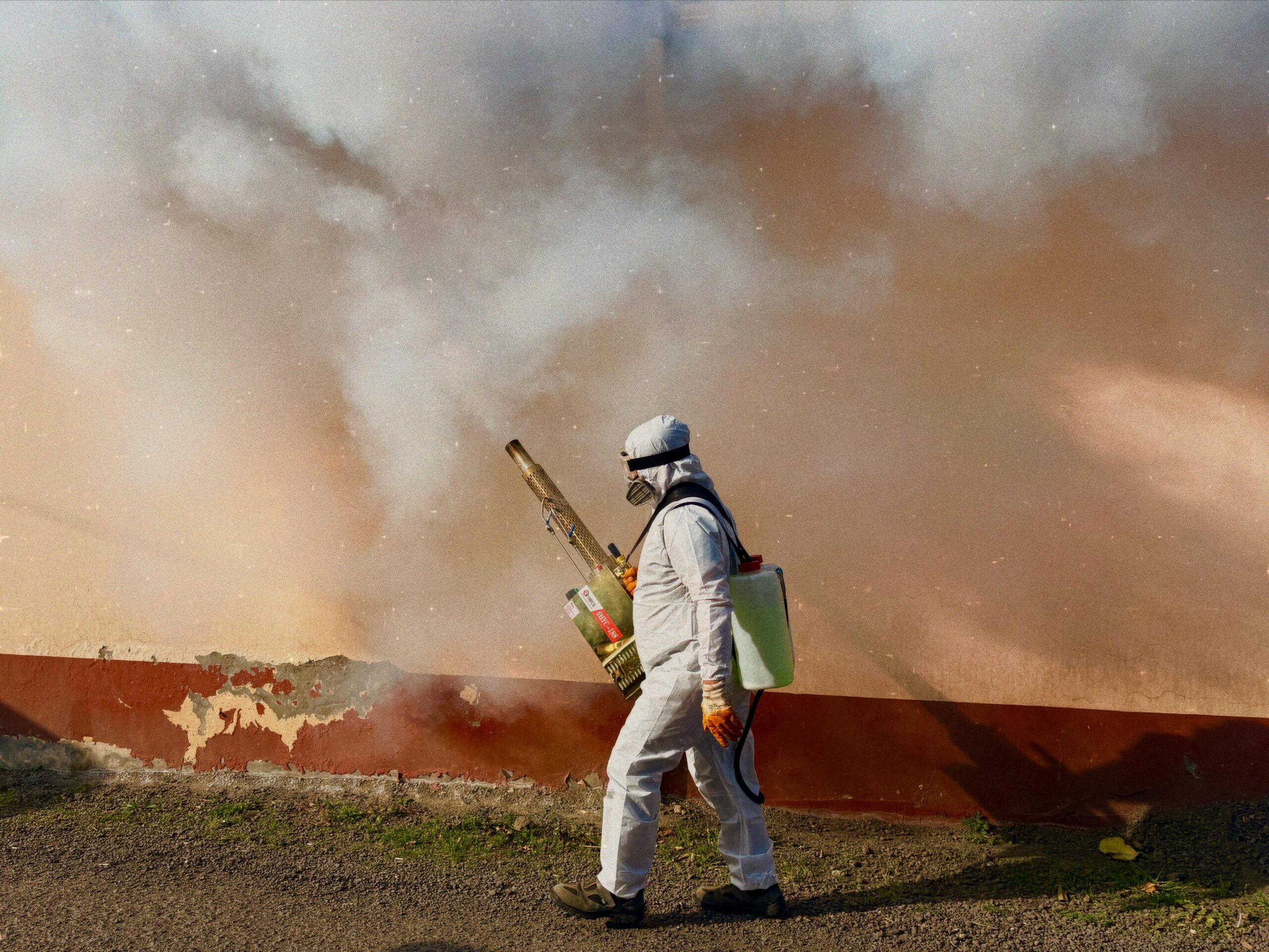
Why Termites Are a Growing Concern in Suwanee, GA
Common Termite Species in Georgia
Homeowners in Suwanee most often encounter two culprits: the eastern subterranean termite (Reticulitermes flavipes) and the invasive Formosan termite (Incisitermes minor). The eastern subterranean is native, thrives in moist wood, and builds extensive underground tunnels that can silently chew through foundations. Formosan termites, originally from Asia, are smaller but far more aggressive; they can cause damage up to ten times faster than their native counterpart. Both species are adept at exploiting any wood‑to‑soil contact, making even well‑maintained homes vulnerable.
Climate Conditions That Fuel Activity
Suwanee’s climate creates a perfect breeding ground for these pests. Warm, humid summers keep soil temperatures above the 55°F threshold that termites need to stay active, while mild winters rarely drop low enough to force a true dormancy. High humidity levels also prevent soil from drying out, preserving the moisture tunnels termites rely on for travel and food. In short, the region’s weather provides a year‑round “all‑you‑can‑eat” buffet for colonies that are already well‑adapted to the local environment.
Economic Impact on Homeowners
Termite damage is not just an eyesore; it’s a costly liability. The National Pest Management Association estimates that the average repair bill for a single infestation in the Southeast ranges from $3,000 to $10,000, depending on the extent of structural compromise. Beyond direct repairs, a home with documented termite damage can lose up to 15 % of its market value, a hit that can jeopardize refinancing or resale plans. For a typical Suwanee homeowner, those numbers translate into a significant financial burden that could be avoided with early detection.
What EPA Says About Termite Control
According to the EPA’s definition of termite control, effective management involves “the prevention, detection, and elimination of termites that threaten structures, health, or the environment.” This definition underscores three pillars—prevention, detection, and elimination—that any reputable service, including Anthem Pest Control, must address to protect your property and comply with environmental standards.
What’s Next: Inspection and Treatment Overview
In the sections that follow, we’ll walk you through the step‑by‑step inspection process that pinpoints colony locations, moisture hotspots, and structural vulnerabilities. After the assessment, we’ll explore the treatment options most effective in Suwanee—ranging from liquid termiticides and baiting systems to targeted fumigation—so you can choose a solution that balances safety, efficacy, and cost. Understanding these steps now equips you to act decisively before termites turn a small problem into a costly nightmare.
Spotting the Early Warning Signs of a Termite Infestation
Visual clues you shouldn’t ignore
Termites are masters of disguise, but they still leave a trail of evidence. The most common visual cue is a network of mud tubes running up the foundation, along walls, or under siding. These pencil‑thin tunnels protect the colony from predators and maintain the humidity they need. Another giveaway is the presence of discarded wings—tiny, translucent shells that look like a paper‑thin carpet near windows or light fixtures after a swarm. Finally, inspect any wooden components for tunnel galleries or a hollow, “ping‑pong” sound when you tap them; this indicates the wood has been hollowed out from the inside.
Behavioral signs that hint at an underground army
Termites are noisy workhorses. In a quiet crawl space you might hear a faint clicking or rustling as they chew through cellulose. While the sound is subtle, it becomes noticeable when you pause and listen closely. Another red flag is an unexpected rise in humidity or a musty smell in crawl spaces and basements. Termites thrive in damp environments, so a sudden moisture increase—often caused by leaky pipes or poor drainage—can signal that they’ve taken up residence.
DIY inspection tips for the vigilant homeowner
- Start at the foundation: Walk around the exterior of your home and press a flashlight against the baseboards. Look for mud tubes or any discoloration on the concrete.
- Check near water sources: Inspect areas around sinks, washing machines, and outdoor spigots for damp wood or swelling that could attract termites.
- Probe wood surfaces: Gently tap wooden beams, porch railings, and window frames. A solid thud means healthy wood; a hollow sound suggests internal damage.
- Examine interior walls: Remove outlet covers and look for tiny tunnels or frass (fine, sand‑like droppings) behind drywall.
- Use a moisture meter: If you have one, measure the moisture content of wood in crawl spaces. Readings above 15% are a warning sign.
Why early detection saves you money
Finding termites before they’ve compromised structural elements can cut treatment costs dramatically. Early‑stage infestations often require localized baiting or spot‑treatments, which are far less expensive than whole‑home fumigation or extensive repairs. Moreover, catching the problem early protects your home’s resale value and prevents the stress of dealing with major damage after the fact. In short, a quick visual check today can spare you a hefty repair bill tomorrow.
Trusted resources for deeper insight
For a comprehensive checklist and best‑practice guidelines, consult the EPA’s termite inspection guidance. The agency outlines professional‑grade steps you can follow to verify an infestation and decide when it’s time to call in a specialist like Anthem Pest Control.
What a Professional Termite Inspection Looks Like
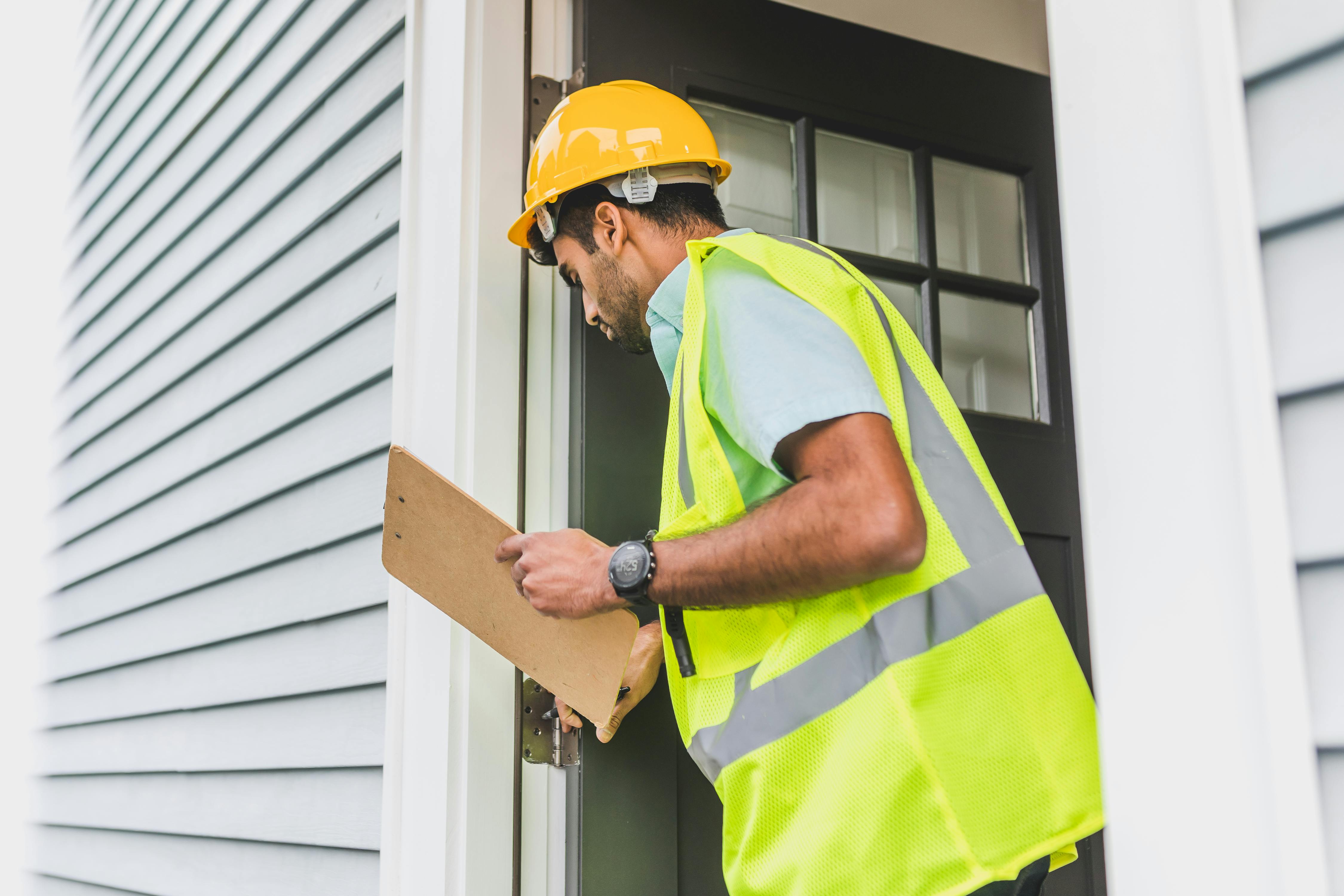
Arrival and Safety Gear
When the Anthem Pest Control technician pulls up, the first thing you’ll notice is the uniform of safety. A high‑visibility vest, hard hat, and a sturdy clipboard signal that the crew is ready for a thorough, professional assessment. The gear isn’t just for show—it protects the inspector from hidden hazards like sharp debris or low‑lying wiring, and it lets you know you’re dealing with a certified professional who follows industry safety standards.
Exterior Assessment
The inspection begins outside the home. The technician walks the perimeter, checking the foundation for cracks, gaps, or any signs of settlement that could invite termites. Grading and drainage are examined next; water pooling near the foundation creates a moist environment that termites love. Entry points such as utility penetrations, vents, and gaps around doors and windows are noted, because these are the highways termites use to get inside.
Interior Assessment
After the exterior sweep, the inspector moves indoors. Crawl spaces and basements receive special attention—these low‑lying areas often stay damp and become breeding grounds. The technician probes wall voids, examines wooden beams, joists, and any exposed timber. Even seemingly solid walls are checked with a small probe to feel for hollow spots that could hide a colony. This systematic approach ensures no hidden pocket is missed.
Tools of the Trade
Modern termite inspections rely on technology as much as on experience. A moisture meter slides across wood surfaces, instantly revealing hidden moisture that attracts termites. Infrared cameras scan walls and floors, highlighting temperature differentials that indicate moisture accumulation or active infestation. Probing devices—thin, flexible rods—allow the inspector to feel inside voids without causing damage. Together, these tools turn a visual walk‑through into a data‑driven investigation.
Documentation and Communication
Every observation is recorded on the clipboard or directly into a tablet. The technician notes the location of each potential risk, photographs key problem areas, and logs moisture readings. Once the data is compiled, the inspector meets with the homeowner to explain the findings in plain language. You’ll receive a clear report that outlines where termites could be, the severity of any existing activity, and a step‑by‑step recommendation for treatment or prevention.
Why Hire a Certified Professional?
DIY inspections often miss the subtle signs only a trained eye can spot. Certified technicians bring years of field experience, access to calibrated equipment, and a deep understanding of local termite behavior in Suwanee, Georgia. They also stay current with state regulations and industry best practices, ensuring any treatment plan complies with safety and environmental standards. In short, a professional inspection saves you time, reduces the risk of costly structural damage, and gives you peace of mind that your home is truly protected.
Comparing the Two Main Termite Treatment Options
Liquid Termiticide Barrier
Liquid termiticide barriers are applied as a continuous trench or spray around the foundation, crawl spaces, and any soil‑contact points. A technician drills shallow holes at regular intervals—usually every 12 to 18 inches—and injects a measured amount of termiticide, creating a chemical “moat” that termites cannot cross. The coverage typically ranges from 0.5 to 1.0 gallon per linear foot, depending on soil type and product concentration.
Common chemicals include fipronil, imidacloprid, and chlorantraniliprole, all of which are registered by the EPA for structural protection. These act on contact and ingestion, killing workers that attempt to breach the barrier and disrupting the colony’s foraging trails. The treatment is a one‑time application that lasts 3‑5 years, after which a re‑treatment may be recommended.
Sentricon Bait‑Station System
Sentricon relies on strategically placed bait stations rather than a chemical wall. Technicians install stations at key entry points—typically 10 to 15 stations per home—along the perimeter, in the yard, and in crawl‑space voids. Each station contains a cellulose matrix laced with a low‑dose, slow‑acting insect growth regulator (IGR) that termites share with the colony.
After installation, a trained monitor checks the stations every 3‑6 months, replacing consumed bait and confirming activity with a simple visual inspection. As termites feed, the IGR interferes with their molting process, eventually collapsing the colony from the inside out. Because the bait is continuously refreshed, the system can remain effective for many years with minimal chemical exposure to the home.
Pros and Cons
- Liquid Barrier – Speed of Action: Provides immediate protection; termites hitting the line die within hours.
- Liquid Barrier – Longevity: Effective for 3‑5 years, but effectiveness can diminish if soil shifts or landscaping is altered.
- Liquid Barrier – Environmental Impact: Requires a larger volume of chemicals applied directly to the soil, which may raise concerns for eco‑conscious homeowners.
- Sentricon – Speed of Action: Takes several months to fully suppress a colony because the bait must be consumed and shared.
- Sentricon – Longevity: Can protect a property indefinitely with annual monitoring and bait replacement.
- Sentricon – Environmental Impact: Uses a targeted, low‑dose IGR confined to stations, resulting in minimal off‑site exposure.
Pricing Overview
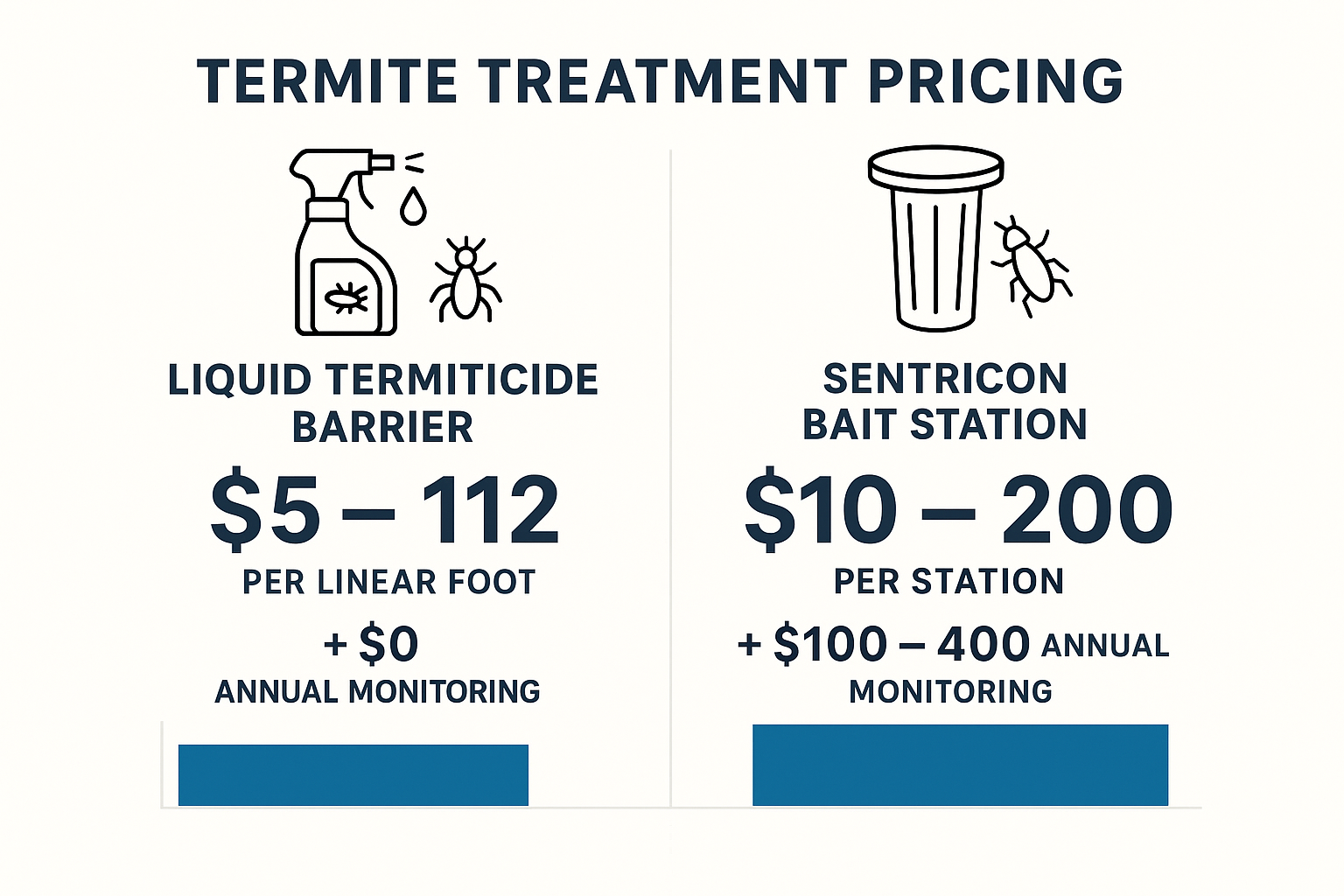
| Treatment | Initial Installation | Annual Maintenance |
|---|---|---|
| Liquid Termiticide Barrier | $2,500 – $4,500 | $0 – $300 (re‑treatment every 3‑5 years) |
| Sentricon Bait‑Station System | $2,200 – $3,800 | $150 – $250 per year (monitoring & bait replacement) |
How to Choose the Right Solution for Your Home
If your home sits on a slab with limited access to the soil, a liquid barrier often makes the most sense because it creates an immediate, invisible shield around the foundation. Conversely, homes with extensive landscaping, crawl‑space vents, or frequent soil disturbance may benefit from Sentricon’s flexibility; the bait stations can be relocated as the property evolves.
Budget is another decisive factor. While the upfront cost of a liquid barrier is slightly higher, there are few recurring fees. Sentricon typically starts a bit lower but adds a modest annual monitoring charge. Homeowners who prefer a “set‑and‑forget” approach may lean toward the barrier, whereas those comfortable with scheduled visits and a longer‑term partnership with a pest professional often choose the bait system.
Finally, consider personal preference regarding chemical use. If minimizing environmental impact is a priority, the targeted IGR in Sentricon stations usually feels less invasive than spraying hundreds of gallons of termiticide into the yard. At Anthem Pest Control, we evaluate your home’s construction, your budget, and your comfort level with chemicals before recommending a tailored plan that delivers lasting protection.
When Is the Best Time to Treat Termites in Suwanee?
Understanding the rhythm of termite activity in Suwanee is the first step toward a pest‑free home. Our local climate creates a clear seasonal pattern: colonies surge in the warm, humid months and slow down as winter sets in. Below, we break down what that looks like on the ground and how you can use the timing to your advantage.
Seasonal Activity at a Glance
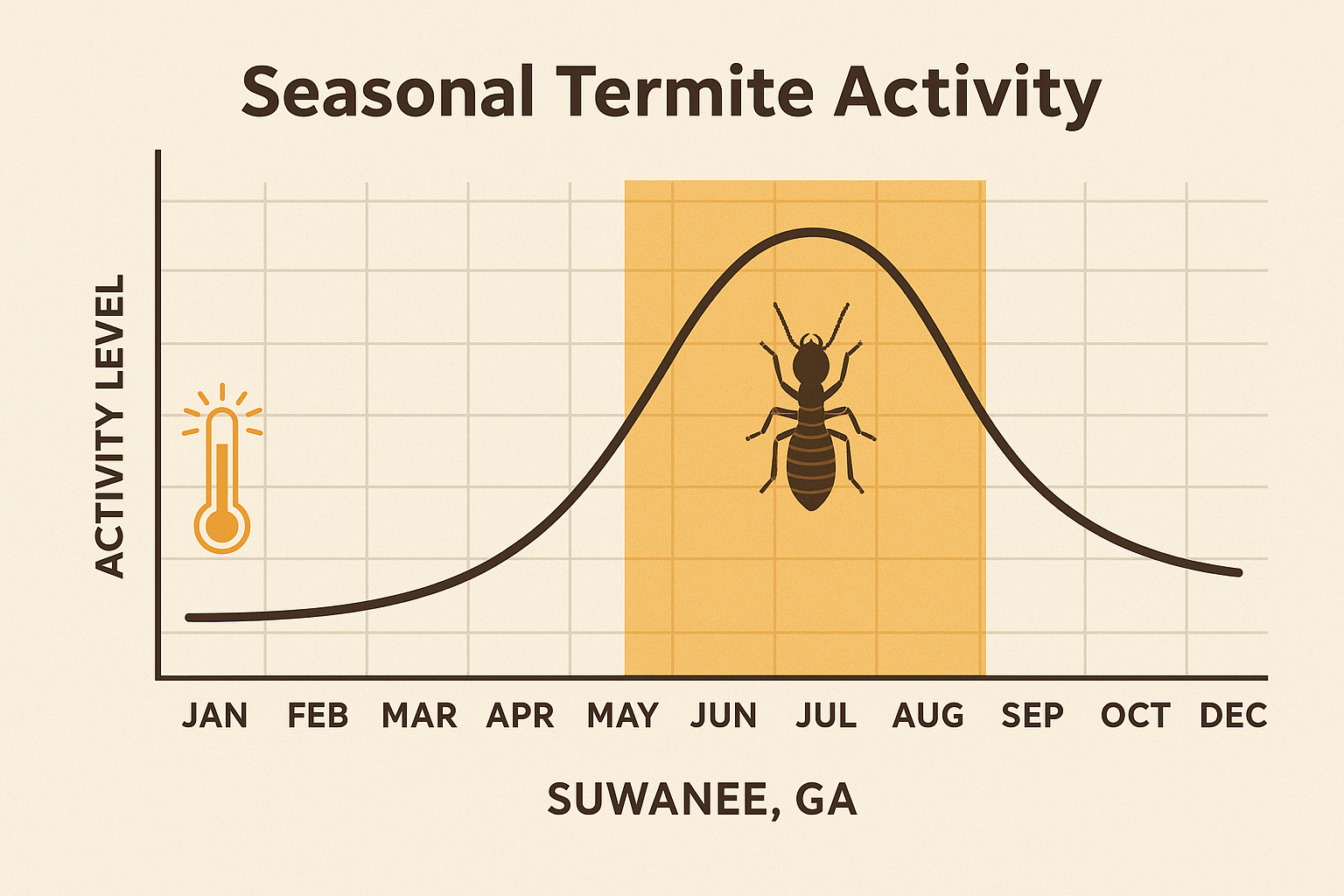
The chart shows three distinct phases:
- Winter (December – February): Cooler temperatures and lower soil moisture push termites deeper underground. Foraging above ground is minimal.
- Spring (March – May): Rising temperatures and spring rains awaken colonies. Workers begin expanding their foraging tunnels, seeking moisture and food.
- Summer (June – August): This is the peak period. Warm soil and abundant moisture create ideal conditions for rapid colony growth and surface activity.
Why Temperature and Moisture Matter
Termites are ectothermic—they rely on the environment to regulate their body heat. When soil temperatures climb above 55 °F (13 °C) and moisture levels stay above 15 % saturation, workers venture out to feed on wood. A sudden rainstorm can trigger a burst of foraging, while a dry spell forces the colony to retreat. That’s why the summer months often see the most visible damage, and why early‑season interventions are so effective.
Optimal Treatment Windows
Pre‑summer barrier applications (typically scheduled in late April to early May) give you a head start. By treating the soil before termites reach peak activity, you create a continuous chemical shield that repels workers as they emerge. This timing also aligns with the natural increase in moisture, allowing the product to penetrate deeper and bond with the soil.
Spring bait‑station installations work best from mid‑March through early May. During this window, foraging termites are actively searching for food sources, making them more likely to encounter and transport bait back to the colony. Placing stations early ensures the bait has several weeks to spread before the summer surge.
For homeowners who prefer a post‑summer touch‑up, a second barrier treatment in September can address any gaps that may have formed during the hottest months, especially after heavy rains that can leach chemicals.
Annual Inspections: Your Safety Net
Even with perfectly timed treatments, colonies can relocate or new ones can move in. Scheduling an annual inspection—ideally in early spring—lets a professional spot early signs of re‑infestation before damage escalates. During the visit, we’ll:
- Check for fresh mud tubes and wood damage.
- Assess moisture levels around foundations and crawl spaces.
- Verify the integrity of existing barriers and bait stations.
- Recommend any supplemental actions, such as localized spot‑treatments or additional bait placements.
Think of the inspection as a yearly health check‑up for your home. It’s the most reliable way to keep termite activity in check, especially after unpredictable weather patterns that can shift colony behavior.
Putting It All Together
To maximize protection, follow this simple timeline:
- March – April: Schedule a professional inspection and install bait stations.
- Late April – Early May: Apply a pre‑summer barrier treatment.
- June – August: Monitor for any signs of activity; keep moisture around the home under control.
- September: Consider a follow‑up barrier touch‑up if heavy rains occurred.
- Next Spring: Repeat the inspection and bait‑station cycle.
By aligning your termite control plan with Suwanee’s seasonal rhythms, you’ll stay one step ahead of the pests, protect your investment, and enjoy peace of mind year‑round.
Choosing Anthem Pest Control for Your Termite Needs

Nationwide Reach, Local Insight
Anthem Pest Control operates in every state, yet each technician is trained to understand the unique termite pressures that affect Suwanee, Georgia. From the humid subtropical climate to the prevalence of subterranean termites in older hardwood homes, Anthem’s local knowledge lets us anticipate where colonies are most likely to hide. That combination of broad resources and neighborhood‑specific expertise means you get a solution that’s both cutting‑edge and perfectly tuned to your yard’s micro‑environment.
Certified Technicians, Safety‑First Approach
Every Anthem field agent holds industry‑recognized certifications, including the National Pest Management Association’s (NPMA) Certified Pest Control Technician credential. Our crews follow strict safety protocols: low‑odor, EPA‑approved products, protective gear, and thorough pre‑treatment briefings for homeowners. Transparent pricing is built into every estimate—no hidden fees, no surprise add‑ons. You’ll receive a detailed work order that explains what’s being applied, why it’s needed, and how it protects your family and pets.
Comprehensive Service Offerings
| Service | What It Does | Typical Frequency |
|---|---|---|
| Full‑Home Inspection | Visual and moisture‑meter assessment of all structural wood, foundations, and crawl spaces | Once per year or after any water intrusion event |
| Liquid Barrier Application | Creates a chemical moat around the home’s perimeter to stop termites before they enter | Every 3‑5 years, depending on product lifespan |
| Sentricon Bait System | Stationary bait stations that attract and eliminate colonies at their source | Monitoring every 3 months, with bait replacement as needed |
| Ongoing Monitoring | Quarterly site visits, data logging, and proactive adjustments | Quarterly |
Real‑World Results: Testimonials & Case Studies
“We thought our old ranch‑style house was safe after a DIY spray, but termites kept coming back. Anthem sent a certified tech who installed a Sentricon system and a liquid barrier in one visit. Six months later, there’s zero activity—still counting!”
— Mark & Lisa D., Suwanee, GA
“Our 1970s home has a crawl‑space that’s always damp. Anthem’s moisture‑focused inspection uncovered hidden termite tunnels. Their tailored treatment cost less than the repair we’d need without it.”
— Jenna L., Suwanee, GA
Tailored Plans for Every Home and Budget
Anthem doesn’t believe in one‑size‑fits‑all. After the initial inspection, we map out the exact construction type—whether it’s a slab, pier‑and‑beam, or raised foundation—and match it with the most cost‑effective treatment. Homeowners on a tighter budget might start with a targeted liquid barrier and add Sentricon stations later, while larger properties can opt for a full‑scale integrated approach from day one. All options come with a clear, written proposal so you can compare costs side‑by‑side.
Ready for a Free, No‑Obligation Quote?
Take the first step toward a termite‑free home by scheduling a complimentary inspection. Our Suwanee specialists will walk you through the findings, explain each recommended service, and give you a transparent price list—no pressure, no hidden charges. Call 877‑371‑8196 or visit anthempest.com to book your free quote today.
Protect Your Home Today with Anthem Pest Control
Termites work silently, chewing through structural wood before you ever notice a problem. That’s why catching an infestation early and having a licensed professional treat it can mean the difference between a simple repair and a costly reconstruction. Early detection gives you the leverage to choose the most effective, least invasive solution, while professional treatment guarantees that the colony is eliminated at its source.
Two Proven Treatment Paths
In Suwanee, Georgia, the two most reliable termite control methods are liquid barrier applications and bait‑system installations. Both have proven track records, but each shines at a different point in the termite life cycle.
- Liquid Barrier (Termiticides) – Applied around the foundation and beneath slabs, this chemical shield creates a continuous wall that repels or kills foraging termites. The optimal window for a barrier is early spring, before the colony expands its foraging tunnels, or late summer after the soil has warmed enough for the product to penetrate deeply.
- Bait‑System Placement – Stations are strategically buried around the perimeter, drawing foragers to a slow‑acting wood‑based toxin that spreads through the colony. Bait systems work best when termite activity is at its peak, typically late summer through early fall, allowing workers to transport the bait back to the nest.
Choosing the right option depends on your home’s construction, the level of infestation, and the season. A qualified technician will assess these factors during a free inspection and recommend the most cost‑effective plan.
Why Anthem Stands Apart
Anthem Pest Control blends safety, effectiveness, and affordability into every service call. Our technicians are EPA‑certified, use low‑toxicity products whenever possible, and follow a transparent pricing model so you never face surprise fees. We also back our work with a satisfaction guarantee, giving you confidence that the job is done right the first time.
Beyond treatment, we provide a comprehensive prevention roadmap: regular monitoring, moisture control tips, and homeowner‑friendly maintenance reminders. This proactive approach reduces the chance of a future outbreak and protects the value of your investment.
Take the First Step—No Pressure, No Obligation
If you’ve spotted any of the warning signs or simply want peace of mind, let Anthem Pest Control handle the job. Our certified technicians will inspect your home, recommend the best treatment, and provide transparent pricing—so you know exactly what to expect. Call us today at 877‑371‑8196 for a free, no‑obligation quote and take the first step toward a termite‑free home. Visit Anthem Pest Control.