What Ticks Are and Why They Matter
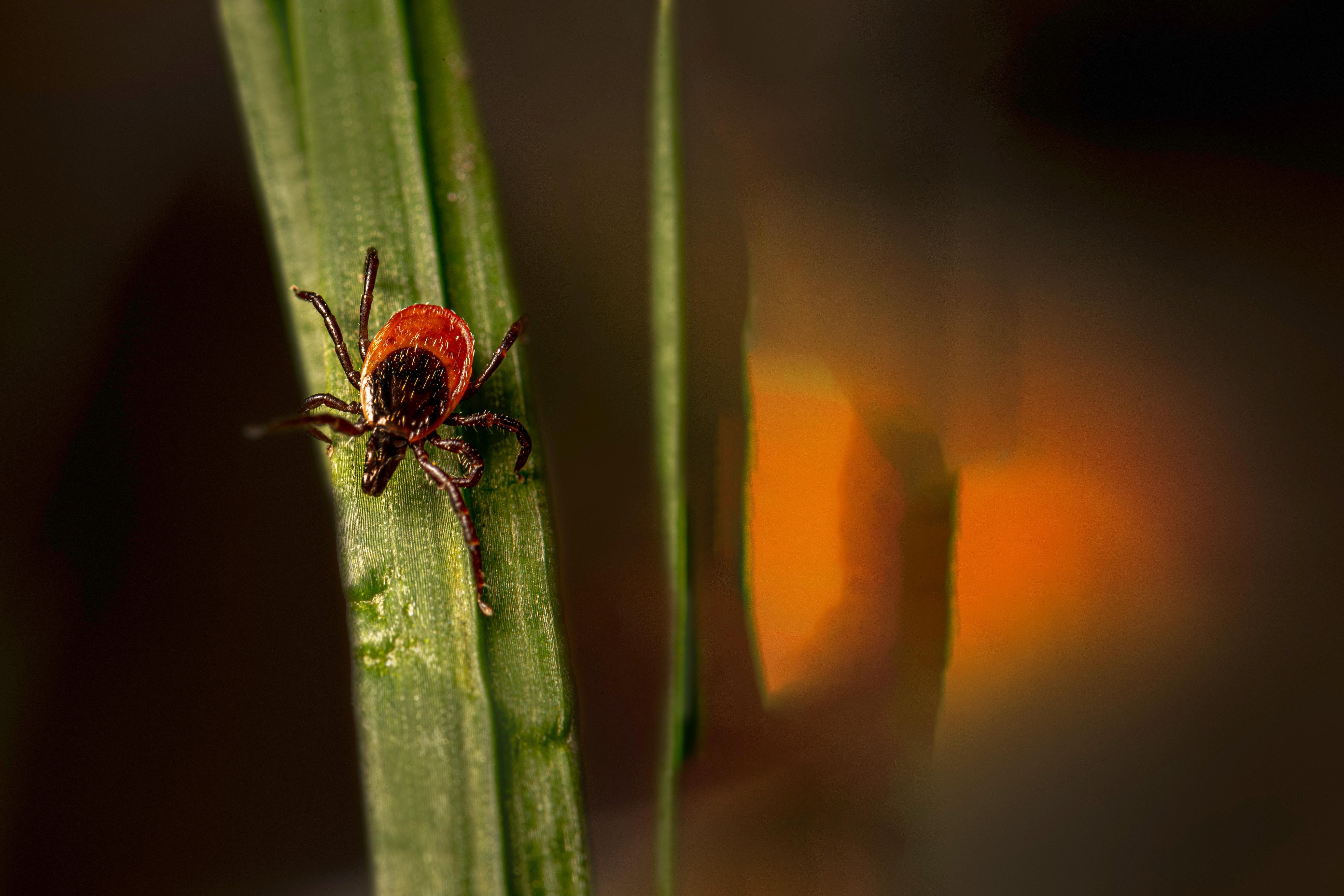
Ticks are not insects; they belong to the arachnid class, the same family as spiders and scorpions. Their life cycle consists of four distinct stages: egg, larva, nymph, and adult. After hatching, a larval tick (often called a “seed tick”) must take a blood meal to grow into a nymph. The nymph, which is only about the size of a poppy seed, also needs a host before it can mature into an adult. Once fully grown, adult ticks seek larger hosts—usually mammals or birds—to reproduce and lay the next generation of eggs.
Diseases Ticks Can Transmit
While a tick bite itself can be irritating, the real danger lies in the pathogens they carry. In the United States, three diseases dominate the tick‑borne landscape:
- Lyme disease – caused by the bacterium Borrelia burgdorferi, transmitted primarily by the black‑legged (deer) tick.
- Rocky Mountain spotted fever – a severe illness spread by the American dog tick and the Rocky Mountain wood tick.
- Ehrlichiosis – a bacterial infection carried mainly by the lone star tick.
Each of these illnesses can lead to fever, severe headaches, fatigue, and in some cases, long‑term joint or neurological problems if not treated promptly.
Tick‑Borne Illnesses in Georgia
The Georgia Department of Public Health, citing CDC data, reports that the state consistently ranks among the highest in the nation for tick‑borne disease cases. In 2023 alone, Georgia recorded roughly 1,200 confirmed cases of Lyme disease, over 300 cases of Rocky Mountain spotted fever, and nearly 150 cases of ehrlichiosis. These numbers translate to an estimated one in every 250 residents experiencing a tick‑related illness each year. The warm, humid climate and abundant woodland create an ideal environment for ticks to thrive, making vigilance a homeowner’s responsibility.
How Tick Bites Happen
Ticks wait patiently for a host in low‑lying vegetation, leaf litter, and the edges of shrubs. When you or a pet walks through these micro‑habitats, a tick can latch onto clothing or fur and crawl upward to find a bite site. The most common entry points are the ankles, waistline, and scalp—areas often missed during a quick self‑check. Because ticks attach for several hours to feed, a brief brush with grass can still result in a full‑blood meal and pathogen transmission.
Early Warning Signs for Homeowners
Spotting a tick bite early can make all the difference. Look for these red‑flag symptoms within days to weeks after a bite:
- Fever or chills that don’t resolve with over‑the‑counter medication.
- A circular “bull’s‑eye” rash, especially around the bite site (common with Lyme disease).
- Unexplained fatigue, muscle aches, or joint pain.
- Headache, neck stiffness, or neurological tingling sensations.
If any of these signs appear, contact a healthcare professional immediately and mention recent outdoor activity.
Why Proactive Tick Control Is Essential
Given the high incidence of tick‑borne illnesses in Georgia, waiting for a bite to happen is a gamble you don’t want to take. Regular tick‑control treatments—such as perimeter barrier sprays, targeted lawn applications, and habitat reduction (removing leaf litter and tall grasses)—significantly lower the chance of ticks establishing a foothold around your home. At Anthem Pest Control, we combine science‑backed products with local expertise to create a customized plan that protects your family and pets year‑round, all while staying transparent about pricing and safety.
Seasonal Tick Activity in Brookhaven, GA
Georgia’s Climate and Tick Populations
Brookhaven sits in the heart of Georgia’s humid subtropical zone. Warm, moist summers and mild winters create a near‑perfect environment for ticks to thrive year‑round. The key driver is moisture: ticks need a thin layer of humidity to stay active and to complete their life cycle. When daytime highs hover between 70°F and 85°F and nighttime lows stay above 50°F, the quest for a blood meal becomes a daily routine for these arthropods.
In contrast, the cooler months (December through February) still see some activity, but the lower temperatures and occasional frosts slow the questing behavior dramatically. Understanding this climate backdrop helps you predict when ticks are most likely to show up in your yard.
Nymphs vs. Adults: When They Bite
Ticks go through four stages—egg, larva, nymph, and adult—but it’s the nymph and adult phases that pose the biggest risk to humans. Nymphs are tiny, about the size of a poppy seed, and they’re often missed until they’ve already attached. Their activity peaks in late spring, typically from April through June. During this window, the combination of warming soil and abundant foliage creates ideal questing conditions.
Adults, on the other hand, are larger and easier to spot. They emerge in the fall, with the highest numbers recorded in September and October. The cooler, yet still humid, fall weather encourages adult females to seek a host for their final blood meal before laying eggs.
Monthly Activity at a Glance
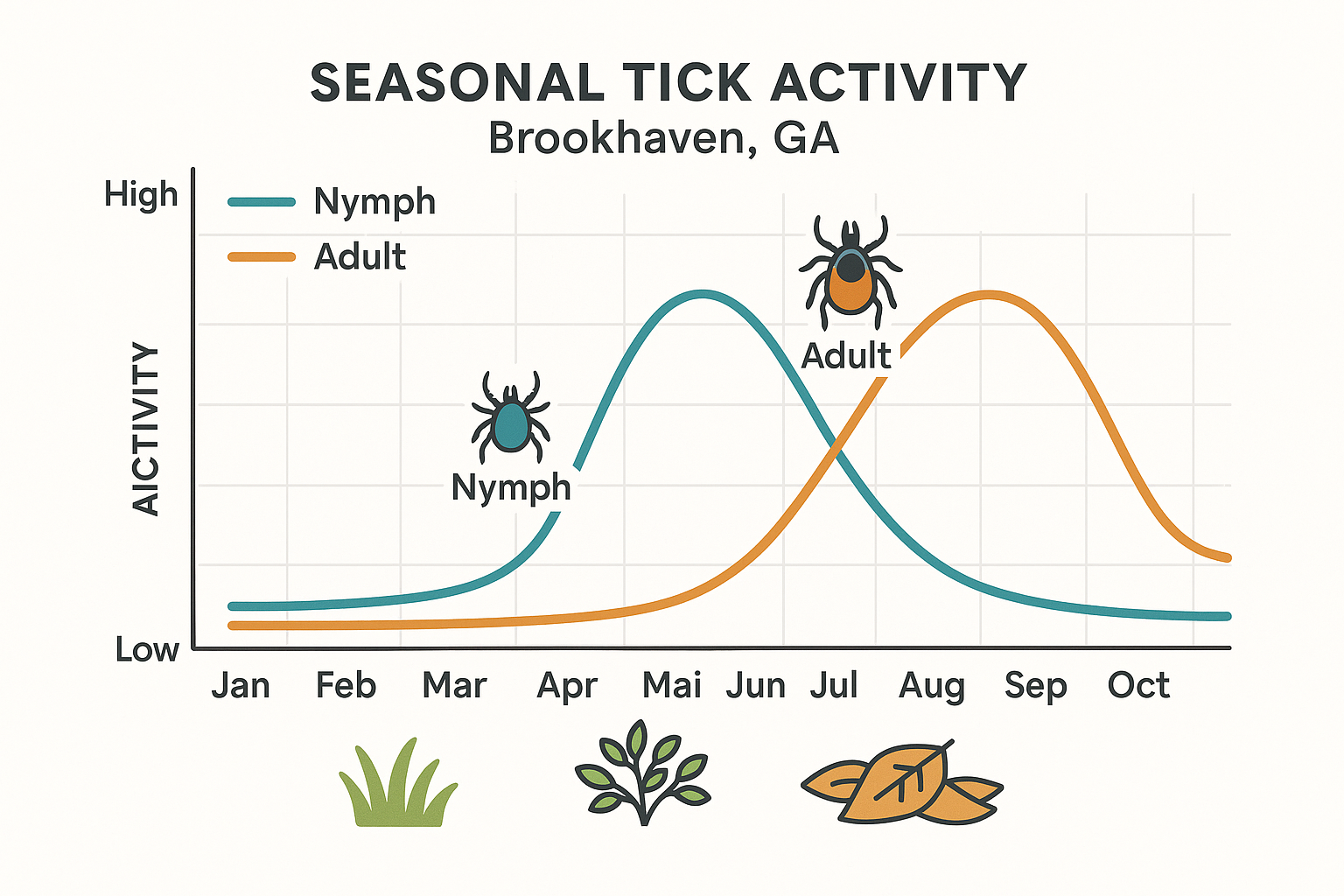
The line graph above visualizes the typical tick activity curve for Brookhaven. Notice the sharp rise for nymphs in late spring, a dip during the hot midsummer, and a secondary surge as adults prepare for the fall breeding season. Use this visual guide to align your inspections with the highest risk periods.
Weather Swings That Move the Curve
Rainfall and drought can shift the timing of these peaks. A series of heavy rains in March often accelerates nymph emergence, pushing the peak a week or two earlier. Conversely, a dry spell in May can suppress nymph activity, flattening the spring curve and extending the risk window into early summer.
Similarly, an early frost in September can truncate the adult season, while a warm, wet October can prolong it, keeping adult ticks active well into November. Keeping an eye on local weather forecasts—especially prolonged rain or drought—lets you adjust your treatment schedule before the ticks get a chance to bite.
Quick Scheduling Tip for Homeowners
To stay one step ahead, mark your calendar for two key inspection windows:
- April – June: Conduct a thorough yard sweep for nymphs. Focus on leaf litter, low grasses, and shaded borders where humidity lingers.
- September – October: Perform a second sweep targeting adult ticks, especially around shrubs, garden beds, and the perimeter of your property.
During each visit, look for the tell‑tale “questing” posture—ticks perched on the tips of grass blades waiting for a host. If you spot activity, call Anthem Pest Control at 877‑371‑8196 for a professional treatment plan tailored to Brookhaven’s seasonal rhythm.
Common Tick Species Found Around Your Home
In Brookhaven’s humid, wooded neighborhoods, a handful of tick species show up most often on lawns, gardens, and pet‑friendly paths. Knowing which critters you’re dealing with makes it easier to spot them early and choose the right control strategy.
Lone Star Tick (Amblyomma americanum)
Adult Lone Star ticks are easy to recognize by the single white spot—resembling a tiny “star”—on the back of the female. Males lack the spot but are slightly smaller, measuring about 3‑5 mm when unfed. Their bodies are reddish‑brown and they have a distinctive, hair‑like fringe along the edges of their scutum.
These ticks favor white‑tailed deer, but they also bite humans, dogs, and other mammals that wander through brushy edges or tall grass. In Brookhaven, they thrive in suburban yards with dense leaf litter, ornamental shrubs, and nearby woodlands.
Health‑wise, Lone Star ticks are linked to ehrlichiosis, tularemia, and the emerging alpha‑gal syndrome, which can cause a delayed allergic reaction to red meat. Their bite is painless, so you might not notice an attachment until the spot turns red and itchy.
Black‑legged (Deer) Tick (Ixodes scapularis)
The black‑legged tick is the primary vector of Lyme disease in the Southeast. Unfed adults are about 3 mm long, dark brown to black, with a flat, oval shape. Nymphs are even smaller—about the size of a grain of sand—making them hard to see on skin.
They prefer white‑tailed deer and small mammals such as white‑footed mice, which serve as reservoirs for the Lyme‑causing bacterium Borrelia burgdorferi. In residential areas, they hide in leaf piles, tall grasses, and the shade of fence lines.
Key identification tips: look for a dark, smooth back without distinct markings, and notice the tiny, beady eyes on the front of the head. If left untreated, a bite can lead to the classic “bull’s‑eye” rash, fever, and joint pain.
American Dog Tick (Dermacentor variabilis)
American dog ticks are larger than the black‑legged tick, reaching up to 6 mm when unfed. They have a reddish‑brown body with a white, ornate pattern on the back that may appear as a pale shield. Their legs are noticeably long—hence the name “dog tick.”
These ticks are most often found in open, sunny areas such as lawns, playgrounds, and along fence rows. While they prefer dogs and other large mammals, they will readily attach to humans, especially during late spring and early summer.
Bite symptoms can include a painful, red welt that may develop a small ulcer in the center. Dog ticks can transmit Rocky Mountain spotted fever and, less commonly, tularemia. Prompt removal reduces the risk of disease transmission.
Tick Species Comparison
| Species | Typical Size (unfed) | Primary Host Preference | Major Disease Risks |
|---|---|---|---|
| Lone Star (A. americanum) | 3‑5 mm | Deer, dogs, humans | Ehrlichiosis, Alpha‑gal allergy |
| Black‑legged (I. scapularis) | 2‑3 mm (adult) | Deer, mice, humans | Lyme disease, Anaplasmosis |
| American Dog (D. variabilis) | 4‑6 mm | Dogs, other mammals, humans | Rocky Mountain spotted fever, Tularemia |
Quick Visual Checklist for Yard Walks
- Look for a white “star” spot on the back of adult females – Lone Star tick.
- Spot tiny sand‑sized nymphs with dark smooth backs – Black‑legged tick.
- Notice a reddish‑brown body with a pale shield pattern and long legs – American Dog tick.
- Check leaf piles, brush edges, and fence lines where humidity is high.
- Inspect pets’ fur and your skin after being outdoors.
- Carry fine‑tipped tweezers to promptly remove any attached tick.
Tick Control Methods and Pricing in Georgia
Chemical Spray Treatments
Professional spray applications use residual acaricides that cling to grass, soil, and leaf litter for weeks. A single treatment typically covers 1,500–2,500 sq ft, depending on product concentration and terrain. Most Georgia homeowners schedule sprays once a year—early spring before nymphs emerge, with a follow‑up in late summer for adult ticks. The biggest advantage is rapid knock‑down across large yards, but over‑reliance can lead to resistance and may affect pollinators if not applied correctly.
Fogger Applications
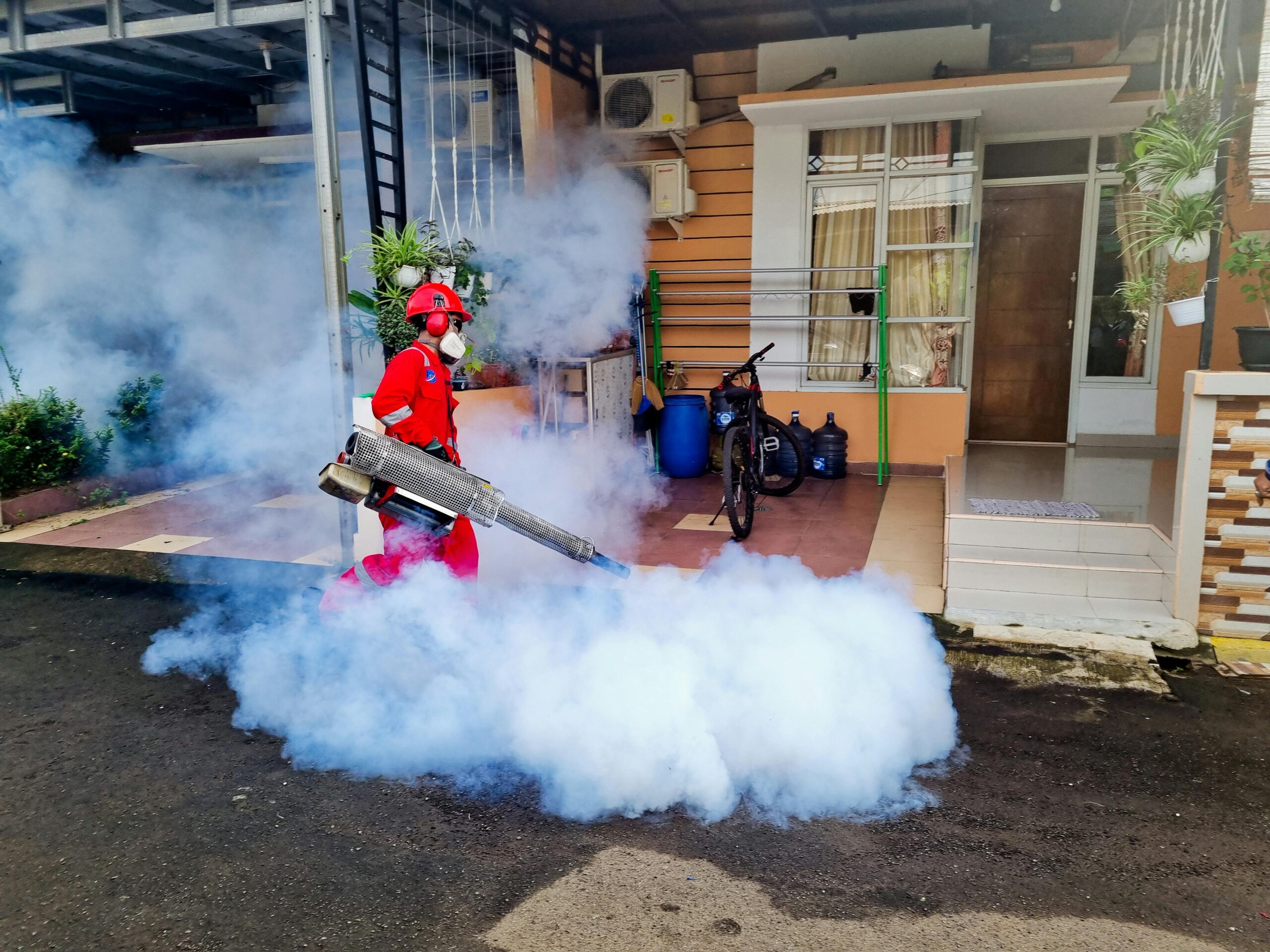
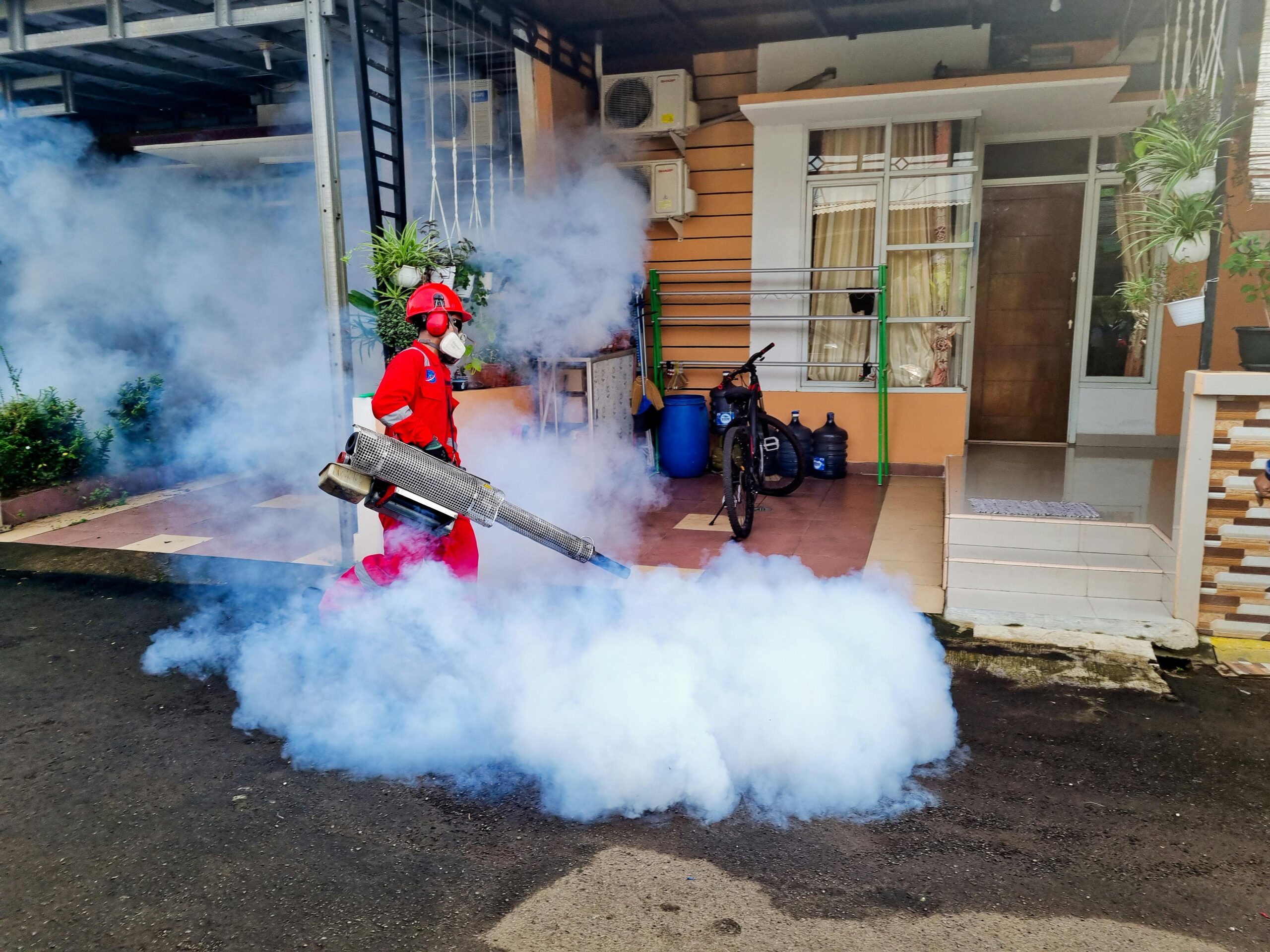
Foggers disperse a fine mist that penetrates dense shrubbery, ornamental beds, and hard‑to‑reach corners where ticks hide. This method is especially useful for properties with thick undergrowth or wooded borders. Fogging provides excellent coverage in a short time, yet it requires careful timing—ideally on a calm, dry day—to prevent drift onto neighboring homes. Safety considerations include wearing protective gear and keeping pets and children indoors until the mist settles.
Bait Stations and Acaricides
Targeted bait stations release low‑dose acaricides directly where nymphs quest for hosts. By focusing on the most active life stage, these stations reduce overall tick populations while minimizing environmental impact. They are discreet, require minimal maintenance, and can be positioned near entry points or wildlife trails. However, bait stations alone rarely eradicate an infestation; they work best when paired with sprays or foggers to address adult ticks on the surface.
Integrated Pest Management (IPM) Approach
IPM blends chemical, mechanical, and cultural tactics to keep ticks under control year‑round. A typical IPM program for a Georgia yard might start with a pre‑emptive spray, followed by strategic fogging of high‑risk zones, and the placement of a few bait stations near fence lines. Homeowners also benefit from habitat modification—trimming grass to 3‑4 inches, removing leaf litter, and creating a stone or mulch barrier between lawn and wooded areas. This layered strategy maximizes efficacy while reducing the total amount of chemicals applied.
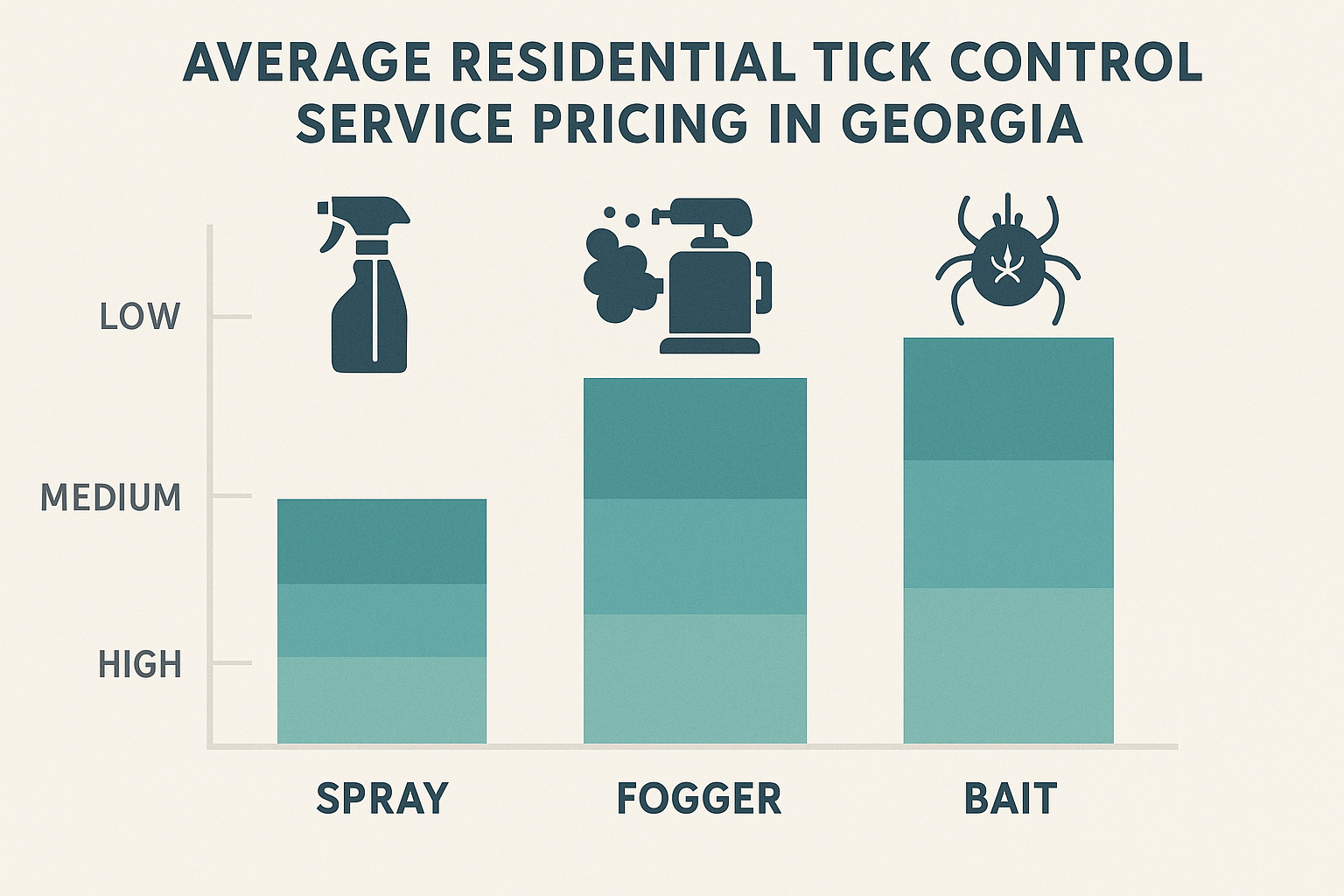
What Georgia Homeowners Can Expect to Pay
Based on recent service records, Anthem Pest Control breaks pricing into three clear tiers:
- Low tier: Basic chemical spray covering up to 1,500 sq ft – $120 – $180 per treatment.
- Medium tier: Fogger application for dense shrubbery – $220 – $300 per session.
- High tier: Full IPM package (spray + fogger + 2–3 bait stations) – $450 – $620 annually.
These ranges reflect the size of the property, the complexity of the landscape, and any additional protective measures the homeowner chooses.
How Anthem Pest Control Structures Quotes and Offers Free Estimates
Anthem begins every engagement with a complimentary on‑site estimate. A certified technician walks the yard, measures square footage, assesses vegetation density, and notes any wildlife activity. From there, they provide a detailed quote that itemizes each method—spray, fogger, bait stations—and explains the frequency needed for optimal control. Homeowners receive a transparent cost breakdown, no hidden fees, and the flexibility to select a tier that fits their budget. If you’re ready to protect your family and pets from tick‑borne illnesses, simply call 877‑371‑8196 or visit anthempest.com to schedule your free estimate.
Preventive Yard Practices to Keep Ticks at Bay

Landscape Modifications
Ticks love cool, damp environments where they can wait for a host. The simplest way to deny them a foothold is to keep your lawn tidy. Mow the grass to a height of 2‑3 inches at least once a week during the tick‑active season (April‑October). Short grass exposes the ground to sunlight, which dries out the micro‑habitat ticks need to survive.
Remove leaf litter, pine needles, and any accumulated organic debris. These layers retain moisture and act as a bridge between forested edges and your yard. Where you have a natural border—such as a wooded property line—consider installing a narrow strip of gravel or coarse mulch. This physical barrier forces ticks to cross an inhospitable surface before reaching your play area or patio.
Shrub and Brush Management
Low‑lying vegetation and dense thickets are perfect tick highways. Trim shrubs to a height of 6‑8 inches and keep the base of each plant clear of foliage. When you thin out overgrown bushes, create open space that allows sunlight to penetrate, further drying the soil.
For larger areas, prune back any dense brush to a width of at least 3 feet. This reduces the “green corridor” that wildlife use to move through your property, limiting the number of ticks that can hitch a ride into your yard.
Wildlife Control
Deer and rodents are primary hosts for adult ticks. Installing a 4‑foot high fence around the perimeter of your yard can deter deer from entering. If a full fence isn’t feasible, consider a “deer‑exclusion” gate at the most frequented entry points.
Rodent control is equally important. Seal cracks around foundations, keep compost bins tightly covered, and store firewood at least 20 feet away from the house. For added protection, use EPA‑registered wildlife repellents around the fence line and garden beds. These products emit scents that discourage deer and small mammals without harming pets or children.
Personal Protection
Even with a well‑maintained yard, occasional tick encounters are inevitable. When you’re working outdoors, wear long sleeves, long pants, and closed‑toe shoes. Tucking pants into socks creates a physical barrier that makes it harder for ticks to climb.
Apply an EPA‑registered repellent containing DEET, picaridin, or oil of lemon eucalyptus to exposed skin and clothing. Reapply according to the product label, especially after sweating or swimming. After any outdoor activity, perform a thorough tick check: run your hands over your body, paying special attention to the scalp, behind the ears, under the arms, and between the legs.
Seasonal Maintenance Calendar
Timing is everything. Align your DIY tasks with the tick life cycle to maximize effectiveness. The table below outlines a month‑by‑month checklist that complements professional treatments.
| Month | Key Tasks |
|---|---|
| March | Start weekly mowing; prune low‑lying shrubs before new growth. |
| April | Remove leaf litter; install gravel barriers along wooded edges. |
| May | Check fence integrity; apply wildlife repellent around perimeter. |
| June | Perform mid‑season lawn mowing; thin dense brush. |
| July | Inspect and repair any gaps in fencing; continue weekly mowing. |
| August | Conduct a thorough leaf‑litter sweep; reapply repellents as needed. |
| September | Final mow before foliage dies back; store firewood away from home. |
| October | Clear remaining debris; perform a comprehensive tick check on pets and family. |
By integrating these simple, cost‑effective steps into your regular yard routine, you create an environment that’s hostile to ticks while still looking inviting for family gatherings. Pairing DIY vigilance with Anthem Pest Control’s professional treatments gives you the most robust defense against tick‑borne threats in Brookhaven, Georgia.
Protect Your Home with Professional Tick Control
Recap of Tick Risks and Seasonal Peaks
Ticks thrive in the warm, humid climate of Brookhaven, especially from early spring through late fall. During these months, the combination of tall grasses, leaf litter, and outdoor activities creates a perfect highway for ticks to hitch rides onto humans and pets. The risk isn’t limited to bites; unchecked tick populations can transmit Lyme disease, Rocky Mountain spotted fever, and other serious illnesses.
Effective Treatment Options
Both homeowners and professionals rely on a layered approach to keep ticks at bay. The most reliable options include:
- Barrier sprays applied to perimeter lawns, shrubbery, and shaded areas where ticks linger.
- Granular treatments that slowly release insecticide, protecting larger yards and garden beds.
- Targeted spot‑treatments for high‑traffic zones such as decks, playgrounds, and pet pathways.
- Environmental modifications like clearing leaf litter, trimming tall grass, and creating dry, sunny zones that discourage tick habitats.
Why DIY Isn’t Enough
Do‑it‑yourself measures—regular lawn mowing, yard clean‑up, and over‑the‑counter sprays—can reduce tick numbers, but they rarely eradicate an established population. Homeowners often miss hidden hotspots, apply products inconsistently, or use chemicals that degrade quickly in Georgia’s heat. Professional services bring a systematic, thorough inspection and apply long‑lasting, EPA‑approved products that penetrate the soil and foliage where ticks hide.
Anthem Pest Control: Your Local Tick Experts
Anthem Pest Control has been serving Georgia homeowners for years, combining local knowledge with industry‑leading techniques. Our technicians use low‑toxicity, pet‑safe formulations that protect families without compromising health. Pricing is transparent—no hidden fees, just a clear quote that matches the scope of work. Satisfied clients frequently cite “peace of mind” and “noticeable drop in tick activity” after a single treatment, reinforcing our reputation for reliable, lasting results.
Take the Next Step
Don’t let ticks wait for the next peak season. Schedule a free inspection and quote today, and let our experts design a custom tick‑control plan for your property. Call 877‑371‑8196 or visit Anthem Pest Control to protect your home and family.