Understanding the Tick Threat in Brookhaven, GA
Brookhaven’s warm, humid climate makes it a prime playground for several tick species that love to hitch a ride on people and pets. The two most common culprits in the area are the Lone Star tick (Amblyomma americanum) and the Black‑legged tick, also known as the deer tick (Ixodes scapularis). The Lone Star is easily recognized by the distinctive white spot on the adult female’s back, while the Black‑legged tick is smaller and darker, often found in leaf litter.
Tick‑borne disease statistics you should know
Even though Georgia isn’t the nation’s top Lyme‑disease hotspot, the Black‑legged tick still carries Borrelia burgdorferi. The Georgia Department of Public Health reports roughly 150 confirmed Lyme cases per year statewide, with a noticeable uptick in the Brookhaven‑DeKalb County corridor. Rocky Mountain spotted fever, transmitted primarily by the American dog tick, accounts for about 30–40 hospitalizations annually in the region. Ehrlichiosis, a disease spread by the Lone Star tick, has risen by 20 % over the past five years, with an estimated 200 cases reported in the metro Atlanta area each year.
Where ticks love to hide
- Tall, uncut grass along sidewalks and backyard borders
- Leaf litter and mulch beds under trees or shrubs
- Wooded edges and trailheads where wildlife passes
- Shaded, damp areas such as garden beds, compost piles, and pet shelters
These micro‑habitats provide the humidity ticks need to survive between meals. If your yard has any of the above, the odds of encountering a tick increase dramatically during the spring and early summer months.
How ticks attach and what to look for
Ticks climb onto vegetation and wait for a host to brush past—a behavior called “questing.” When a human or pet brushes against the vegetation, the tick grabs on, inserts its mouthparts, and begins feeding. A bite often goes unnoticed because the tick’s saliva contains anesthetic compounds. Early warning signs include a small, painless bump that may turn red after a few hours, or a “bullseye” rash in the case of Lyme disease. Pets may exhibit excessive itching, redness around the ears, or a visible engorged tick attached to their skin.
The hidden cost of ignoring ticks
Beyond the obvious discomfort, untreated tick problems can lead to steep medical bills. A single course of antibiotics for early‑stage Lyme disease can run $200–$500, while more advanced cases requiring hospitalization can exceed $10,000. Add to that the loss of outdoor recreation time, missed lawn parties, and the emotional toll of worrying about your family’s health. Proactive tick control isn’t just a convenience—it’s a cost‑saving measure that protects both your wallet and your peace of mind.
When Ticks Are Most Active – Seasonal Patterns in Georgia
Understanding when ticks are most active helps you time treatments for maximum impact. In Georgia’s warm climate, tick populations don’t stay dormant for long, so a proactive schedule can keep your yard and family safe all year.
Tick life cycle and the climate factor
Ticks progress through four distinct stages: egg → larva → nymph → adult. Each stage depends heavily on temperature and humidity. Eggs hatch when soil temperatures rise above 50 °F (10 °C) and moisture levels stay above 12 %. Larvae, the smallest stage, need a humid micro‑environment to survive the first few weeks; they typically quest for a host during damp mornings. As they molt into nymphs, they become more mobile and thrive when daytime highs hover between 65–85 °F (18–29 °C) with relative humidity above 70 %. Adult ticks, which can transmit the most diseases, peak when summer heat eases and fall humidity spikes, allowing them to quest for larger hosts like deer or humans.
What the data show: seasonal peaks
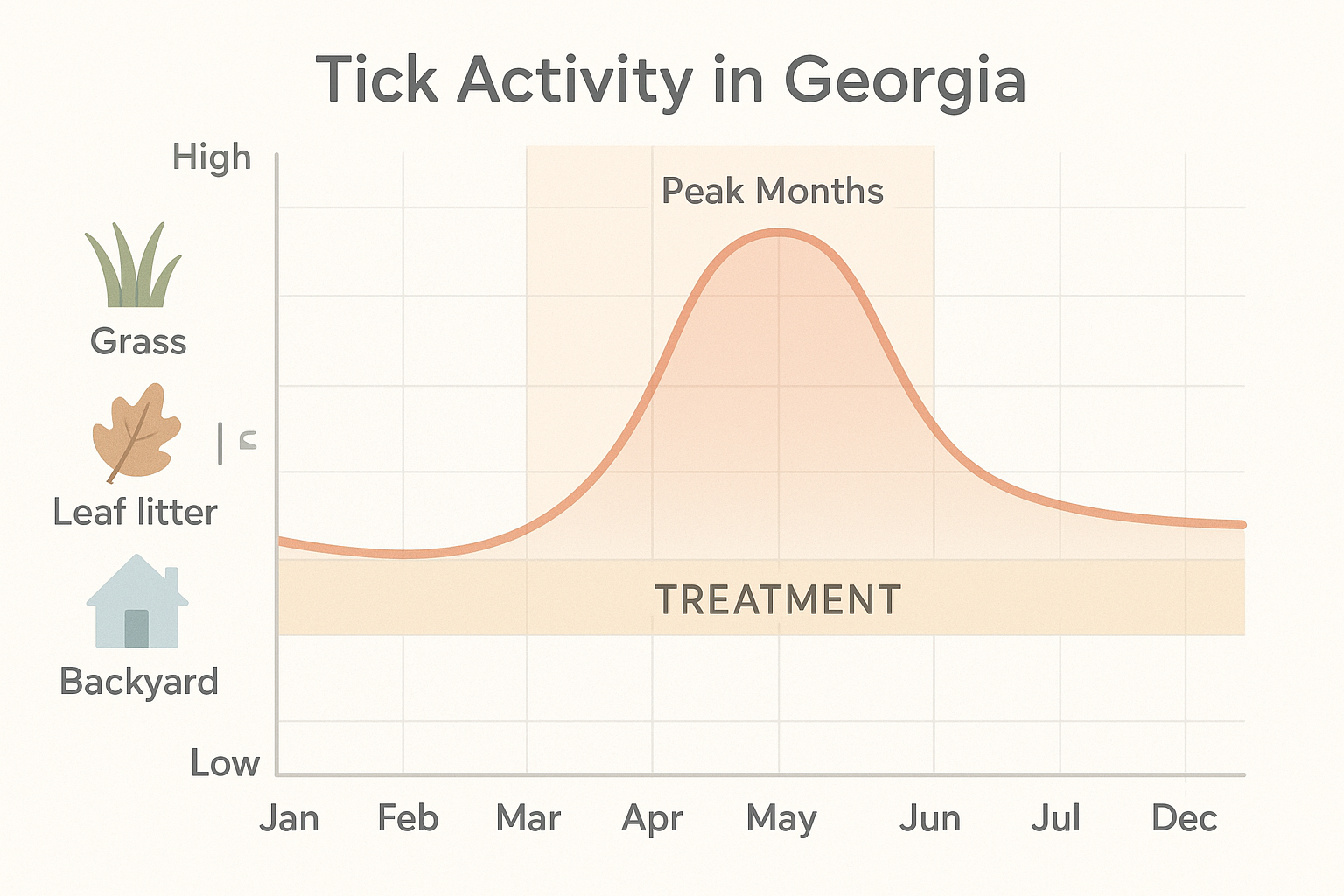
The seasonal line chart (see the infographic below) illustrates two clear activity surges in Georgia. The first, and most pronounced, occurs in late spring through early summer (mid‑May to early July) when nymphs dominate the landscape. A secondary rise appears in early fall (late September to mid‑October) as adult ticks resume questing after a brief summer lull. Between these peaks, activity drops but never disappears—especially in shaded, moist areas of your property.
Best windows for professional treatment
- Early spring (late February – early April): Apply a pre‑emptive larvicide or growth regulator before nymphs emerge. This reduces the number of disease‑carrying nymphs that will appear in May.
- Late summer (mid‑August – early September): Target adult ticks with residual sprays that remain active through the fall peak. This timing also helps protect against a second wave of nymphs that may hatch from late‑season eggs.
- Fall “maintenance” (late October): A final, low‑volume application can curb any lingering adults before winter sets in.
DIY monitoring tips for your yard
- Drag sampling: Attach a white cloth or commercial tick drag to a pole and pull it across grass and leaf litter for 10‑minute intervals. Count any attached ticks and record the date.
- Visual checks: Walk your yard weekly, especially after rain, and inspect pets, shoes, and clothing for attached ticks.
- Micro‑habitat focus: Pay extra attention to shady borders, compost piles, and areas where wildlife frequently passes.
- Log results: Keep a simple spreadsheet of counts; rising numbers signal it’s time to call a professional.
For a quick visual reference, check out our detailed infographic that maps the monthly activity curve and highlights the optimal treatment windows.
DIY Yard Practices to Reduce Tick Encounters
Ticks thrive in overgrown, moist environments, so a well‑maintained yard is your first line of defense. By taking a few simple, low‑cost steps you can dramatically cut the chances of a tick hitching a ride on you or your family.
1. Keep the grass short and tidy
Regular mowing to a height of 3–4 inches removes the humid micro‑climate ticks love. Trim the edges of flower beds and keep lawn edges crisp to eliminate hidden pathways. Weekly leaf‑raking and removal of tall weeds further reduces shelter, making the yard less inviting for questing ticks.
2. Build tick‑free zones around high‑traffic areas
Designate play zones, patios, and outdoor dining spots with a barrier of wood chips, gravel, or mulch. These materials dry quickly and create a physical gap that ticks avoid. A 2‑foot strip of stone or chip around the perimeter is inexpensive and instantly signals “no‑tick zone” to both insects and curious children.
3. Choose plants that don’t invite ticks
Sun‑loving plants such as lavender, rosemary, and ornamental grasses thrive in drier soil and provide less shade for ticks. Opt for low‑ground‑cover species like creeping thyme or sedum instead of dense, moisture‑retaining foliage. By favoring open, sun‑exposed landscaping you naturally discourage the humid pockets ticks need to survive.
4. Apply homeowner‑grade acaricides safely
If you prefer a chemical boost, choose an EPA‑approved homeowner acaricide and apply it early in the morning or late afternoon when bees are less active. Wear long sleeves, gloves, and eye protection, and follow the label’s dilution rates exactly. Treat only the perimeter and shaded areas—over‑application wastes product and can harm beneficial insects.
5. Keep pets on a tick‑preventive regimen
Dogs and cats are common tick carriers. Use a veterinarian‑recommended collar, topical medication, or oral chew that kills ticks on contact. Inspect pets after every outdoor adventure and wash their bedding regularly. Consistent preventive care on your pets dramatically reduces the number of ticks that make it into your yard.

By combining routine lawn care, smart landscaping choices, and safe, targeted treatments, you create an environment where ticks simply can’t prosper. These DIY steps are budget‑friendly, easy to implement, and give you peace of mind while your family enjoys the great outdoors.
How Professionals Apply Tick Treatments Safely
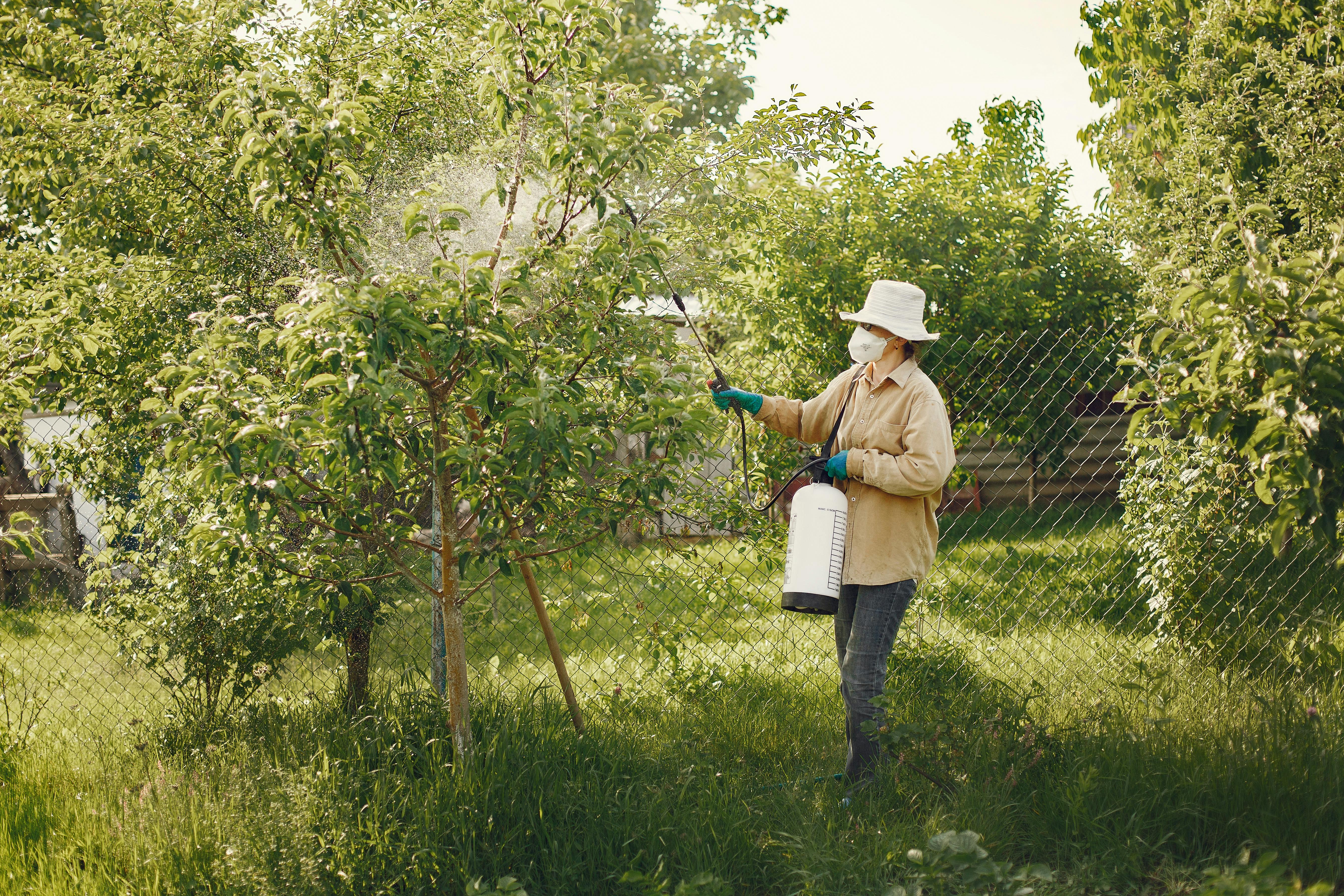
Step‑by‑step of a typical professional visit
When a certified Anthem technician arrives, the first 15‑20 minutes are dedicated to a thorough inspection. They identify high‑risk zones—such as shaded perimeters, leaf‑laden borders, and pet‑frequented areas—using handheld UV lights and tick‑dragging tools. Once the hotspots are mapped, the technician applies a perimeter treatment, creating a protective barrier that extends 12‑15 feet from the home’s foundation. After the barrier sets, any localized infestations (e.g., a tick‑laden lawn patch or a garden bed) receive a targeted spot‑on application, ensuring no safe zone is left untreated.
Products that get the job done
Anthem relies on three main product families, each chosen for its efficacy and low impact on humans and pets:
- Micro‑encapsulated granules—tiny beads that release an insecticide slowly, providing up to 90 days of protection while remaining invisible to children and animals.
- Low‑odor sprays—formulated to evaporate quickly, these sprays leave no lingering scent and can be applied to sidewalks, driveways, and wooden decks.
- Misting systems—for larger properties, a fine mist distributes the active ingredient evenly, reaching hidden crevices without over‑saturating the soil.
Safety protocols for residents, pets, and the environment
Before any product touches the ground, the technician explains re‑entry intervals—usually 2‑4 hours for low‑odor sprays and 24 hours for granular treatments. Protective gear (gloves, goggles, and respirators) is worn at all times, and all chemicals are applied according to EPA‑approved labeling. Pets are asked to stay indoors or in a confined area until the re‑entry period lapses, and children are advised to avoid treated zones until the surface is dry.
Why professional treatment beats DIY
Homeowners who tackle ticks on their own often miss hidden hotspots, leading to patchy coverage and repeated infestations. Anthem’s technicians guarantee:
- Consistent, calibrated application rates that a homeowner’s sprayer simply can’t match.
- A written warranty that covers retreatment if ticks reappear within the service window.
- Scheduled follow‑up visits, during which the technician reassesses the perimeter and adjusts the treatment plan as needed.
Anthem’s certified and continuously trained technicians
All field staff hold state‑issued pesticide applicator licenses and complete Anthem’s proprietary training program each year. This curriculum covers the latest tick biology, advances in low‑toxicity formulations, and emerging safety standards. By staying current, our technicians can recommend the most appropriate product for a Brookhaven yard—whether that’s a granular barrier for a large suburban lot or a precise misting session for a compact urban garden.
Comparing Tick Control Service Plans and Costs
When it comes to protecting your Brookhaven home from ticks, the right service plan can save you money while keeping your yard safe for kids and pets. Below is a quick look at the three most popular frequencies we offer—monthly, quarterly, and annual—so you can match the schedule to your budget and lifestyle.
What’s included in each plan
- Monthly plan: 12 visits per year, treatment of up to three zones (front yard, backyard, and garden), pet‑friendly formulations available on every visit, and a professional guarantee that covers re‑treatment if ticks reappear within 30 days.
- Quarterly plan: 4 visits per year, coverage of the same three zones, optional pet‑safe spray on the first two visits, and a guarantee that includes a free follow‑up if the tick count exceeds the pre‑treatment level.
- Annual plan: 2 comprehensive visits, full‑yard treatment plus a perimeter barrier, pet‑friendly option on both visits, and the strongest guarantee—any tick resurgence triggers a complimentary extra visit.
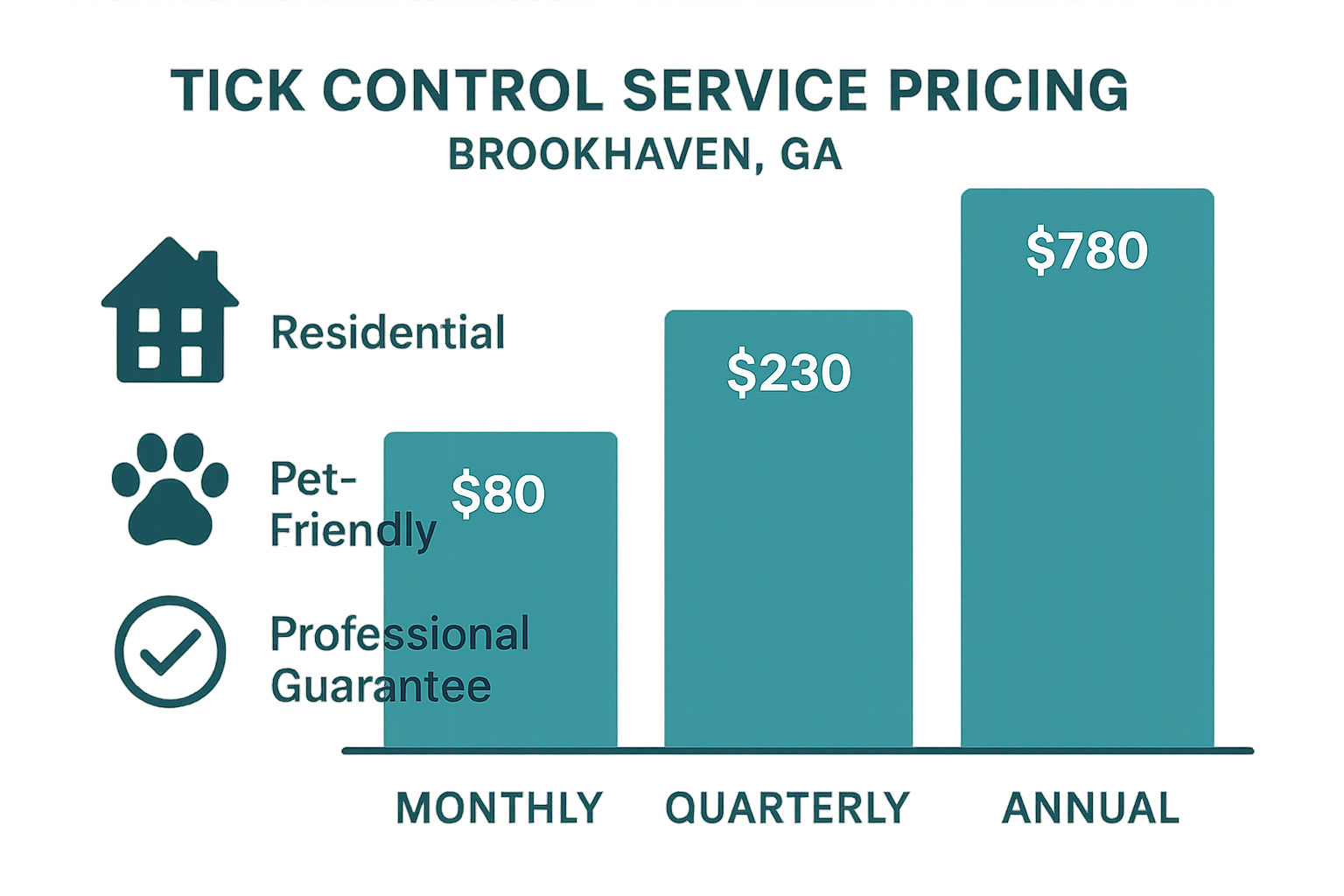
Price points at a glance
| Plan | Visits per Year | Total Cost (USD) | Cost per Visit (USD) |
|---|---|---|---|
| Monthly | 12 | $1,200 | $100 |
| Quarterly | 4 | $460 | $115 |
| Annual | 2 | $840 | $420 |
At first glance the annual plan looks pricier per visit, but when you spread the cost over the entire year the savings become clear. The monthly schedule costs $1,200 annually, while the annual plan caps the total at $840—a 30 % reduction in overall expense. Even the quarterly option saves roughly $140 compared with twelve single visits.
Calculating ROI
Consider the hidden costs of a tick‑infested yard: a single bite can lead to Lyme disease treatment that runs $2,000‑$5,000, not to mention lost time and medical follow‑ups. If a typical Brookhaven household faces two bites per year, the potential out‑of‑pocket expense easily eclipses the $840 annual fee. In addition, protecting your landscaping preserves curb‑appeal and resale value, which can add several thousand dollars to your home’s market price.
To estimate your own return on investment, start with the plan’s total cost, add the average medical expense you’d avoid (use $3,000 as a midpoint), and factor in any property‑value boost you expect. Even a conservative calculation shows a net benefit of well over $2,000 for the annual plan.
Ready to lock in your protection?
Pick the schedule that feels right for you, then request a free, no‑obligation quote today. Our technicians will confirm the exact zones, discuss pet‑safe options, and set up a treatment calendar that fits your lifestyle.
Choose Anthem Pest Control for Reliable Tick Protection
Ticks in Brookhaven aren’t just a nuisance—they can transmit Lyme disease, Rocky Mountain spotted fever, and other illnesses that affect both people and pets. Because these pests thrive in the warm, humid climate, a quick, professional response is essential to keep your family safe and your yard enjoyable.
Delaying treatment allows tick populations to multiply, increasing the risk of bites and spreading disease throughout your neighborhood. Professional barrier applications create a lasting shield that DIY sprays simply cannot match.
Why Anthem Pest Control Stands Out
- U.S.-wide service network: Consistent expertise no matter where you call.
- Certified technicians: Trained in the latest, EPA‑approved tick treatments.
- Transparent pricing: No hidden fees; you know the cost before work begins.
- Pet‑friendly solutions: Safe for dogs and cats while still lethal to ticks.
- Satisfaction guarantee: We don’t rest until your yard is tick‑free.
If you’re ready to enjoy a tick‑free yard this season, contact us for a complimentary inspection and personalized quote. Call us today at 877‑371‑8196 or visit Anthem Pest Control to schedule your free assessment.