Millipedes Crawling In? Here’s Why It’s a Problem for Peachtree City Homeowners
If you’ve noticed black, wiggly clusters of millipedes showing up along your basement floor or sneaking across the mudroom after a storm, you’re definitely not alone—especially here in Peachtree City. Our beautiful neighborhoods like Planterra Ridge and Kedron Village come with lush lawns and towering trees, but all that shade and rain also creates a perfect hideout for these critters. Once the ground gets damp, millipedes start searching for higher, drier ground… which too often means right into our homes.
On their own, millipedes aren’t going to bite or poison you. But they do let off a pretty nasty odor when disturbed, make unsightly stains if crushed, and can release fluids that irritate sensitive skin—even pets can have a reaction. It’s more the numbers that get to people: what starts as a single invader can quickly look like an army if the moisture outside lingers.
Our Peachtree City climate makes this a recurring headache, especially after heavy rain or during the spring and fall transitions. Millipedes love hanging out in the cool, dark spots you rarely check—crawl spaces, the garage, underneath patios, even along basement corners right where you were sure you sealed last year. You can sweep and trap all you want, but unless you find and treat the source, they’ll keep coming back for the humidity party.
So what’s this mean for your wallet? Most folks in town pay anywhere from $150 to $300 for that first big treatment to stamp out a millipede surge. For peace of mind, a lot of homeowners choose quarterly maintenance (think $100–$200 each visit), while a single, one-off visit (maybe after a major storm) could be $200–$400, depending on how bad it’s gotten and how big your place is. No one likes hidden fees, so we always lay out exactly what’s included and how you can actually save by tackling problems early instead of letting them get out of hand.
Stick around as we break down your treatment options, what kind of service you can expect from local pros, and some practical moves you can make to keep millipedes outside where they belong—even during Georgia’s soggy seasons.
What Really Impacts the Cost of Millipede Control in Peachtree City
If you’ve spotted millipedes winding their way through your home or piling up around your basement, you’re probably wondering how much it’ll take to get them gone for good. The truth is, what you’ll pay depends on a handful of factors—some obvious, some you might not think about straight away.
The size and spread of the invasion is a big driver. If it’s just a few here and there in your laundry room, you’re looking at a much simpler job than if you’ve got millipedes showing up in every corner, or if they’ve made their way into tough-to-reach crawlspaces. Homes in neighborhoods like Aberdeen or Wilksmoor, where yards are bigger and landscaping is more involved, might see higher costs just because there’s more ground to cover indoors and out.
Then there’s the issue of severity and urgency. Heavy infestations, especially if they keep coming back every year, often call for more than just a one-time spray. You might need multiple treatments, special follow-ups, or a routine quarterly visit to really keep things under control. The more work and trips it takes, the more the price adds up.
How the company treats the problem matters, too. Many pros will suggest a full inspection first to figure out where millipedes are sneaking in. Depending on what they find, you could get options ranging from a single perimeter spray to a plan that includes sealing up entry points and even eco-friendly or pet-safe products. If you choose premium or green solutions, expect some extra cost compared to basic chemical treatments.
Even the nitty-gritty layout of your house plays a part. If your home has areas that are tough to access—tight crawl spaces, cluttered basements, or dense shrubs up against the foundation—the service simply takes longer and needs more materials.
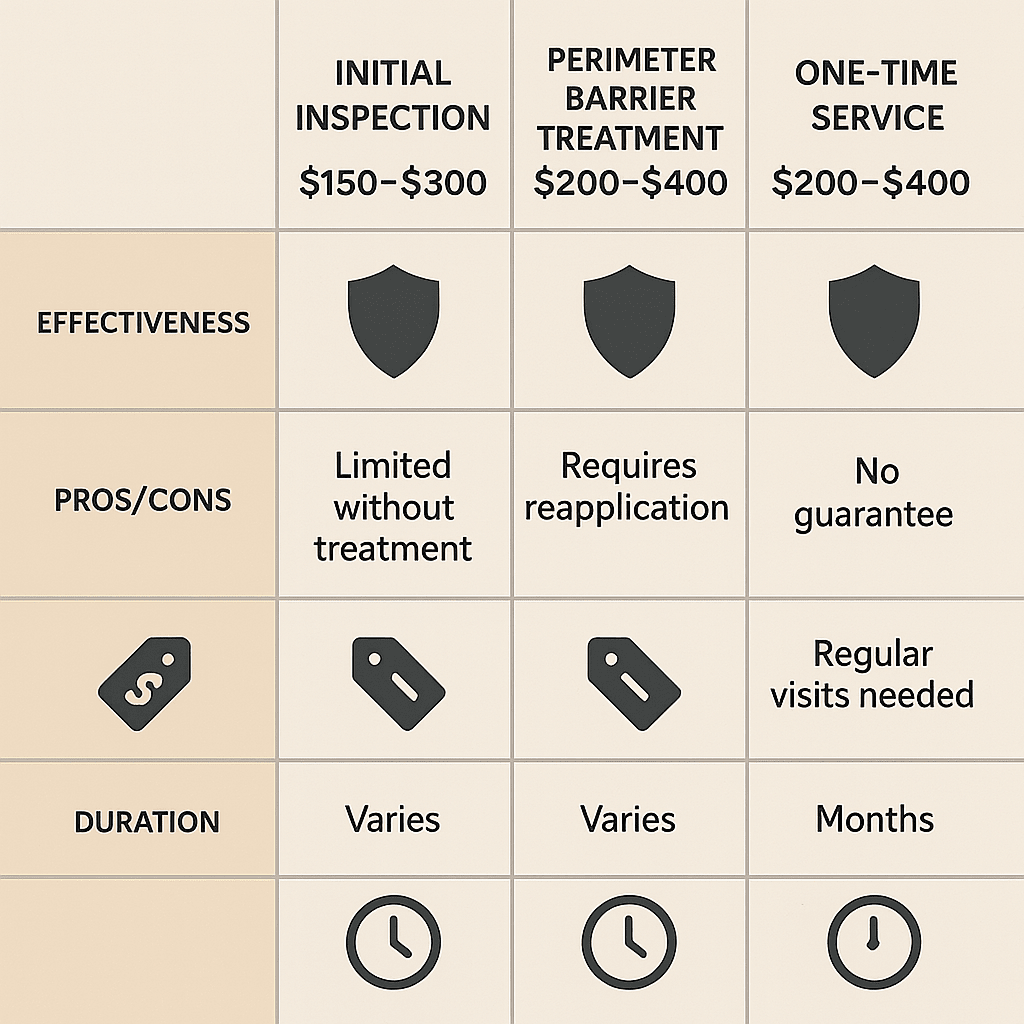
- Initial treatment: $150–$300
- Quarterly service: $100–$200 per visit
- One-time service: $200–$400
Before you commit, always get a clear written estimate and a chance to discuss which package actually fits your situation and budget. Every property in Peachtree City is a little different, so custom solutions matter. For a deeper dive on millipede control pricing tailored to local homeowners, check out Anthem Pest: Millipede Control Cost in Peachtree City.
What Really Impacts the Cost of Millipede Control in Peachtree City
If you’ve spotted millipedes winding their way through your home or piling up around your basement, you’re probably wondering how much it’ll take to get them gone for good. The truth is, what you’ll pay depends on a handful of factors—some obvious, some you might not think about straight away.
The size and spread of the invasion is a big driver. If it’s just a few here and there in your laundry room, you’re looking at a much simpler job than if you’ve got millipedes showing up in every corner, or if they’ve made their way into tough-to-reach crawlspaces. Homes in neighborhoods like Aberdeen or Wilksmoor, where yards are bigger and landscaping is more involved, might see higher costs just because there’s more ground to cover indoors and out.
Then there’s the issue of severity and urgency. Heavy infestations, especially if they keep coming back every year, often call for more than just a one-time spray. You might need multiple treatments, special follow-ups, or a routine quarterly visit to really keep things under control. The more work and trips it takes, the more the price adds up.
How the company treats the problem matters, too. Many pros will suggest a full inspection first to figure out where millipedes are sneaking in. Depending on what they find, you could get options ranging from a single perimeter spray to a plan that includes sealing up entry points and even eco-friendly or pet-safe products. If you choose premium or green solutions, expect some extra cost compared to basic chemical treatments.
Even the nitty-gritty layout of your house plays a part. If your home has areas that are tough to access—tight crawl spaces, cluttered basements, or dense shrubs up against the foundation—the service simply takes longer and needs more materials.
- Initial treatment: $150–$300
- Quarterly service: $100–$200 per visit
- One-time service: $200–$400
Before you commit, always get a clear written estimate and a chance to discuss which package actually fits your situation and budget. Every property in Peachtree City is a little different, so custom solutions matter. For a deeper dive on millipede control pricing tailored to local homeowners, check out Anthem Pest: Millipede Control Cost in Peachtree City.
Why Millipedes Love Peachtree City Homes
If you’ve ever wondered why millipedes seem to come out of nowhere—or why some houses attract more of them than others around Peachtree City—you’re not imagining things. Our climate and unique mix of house styles and landscaping have a lot to do with it.
Summers here are muggy and often rainy. All that moisture seeps into the soil, making it a perfect playground for millipedes. Eventually, when the ground gets too wet or temperatures start to change, these critters start looking for drier ground—and that usually means inside your house.
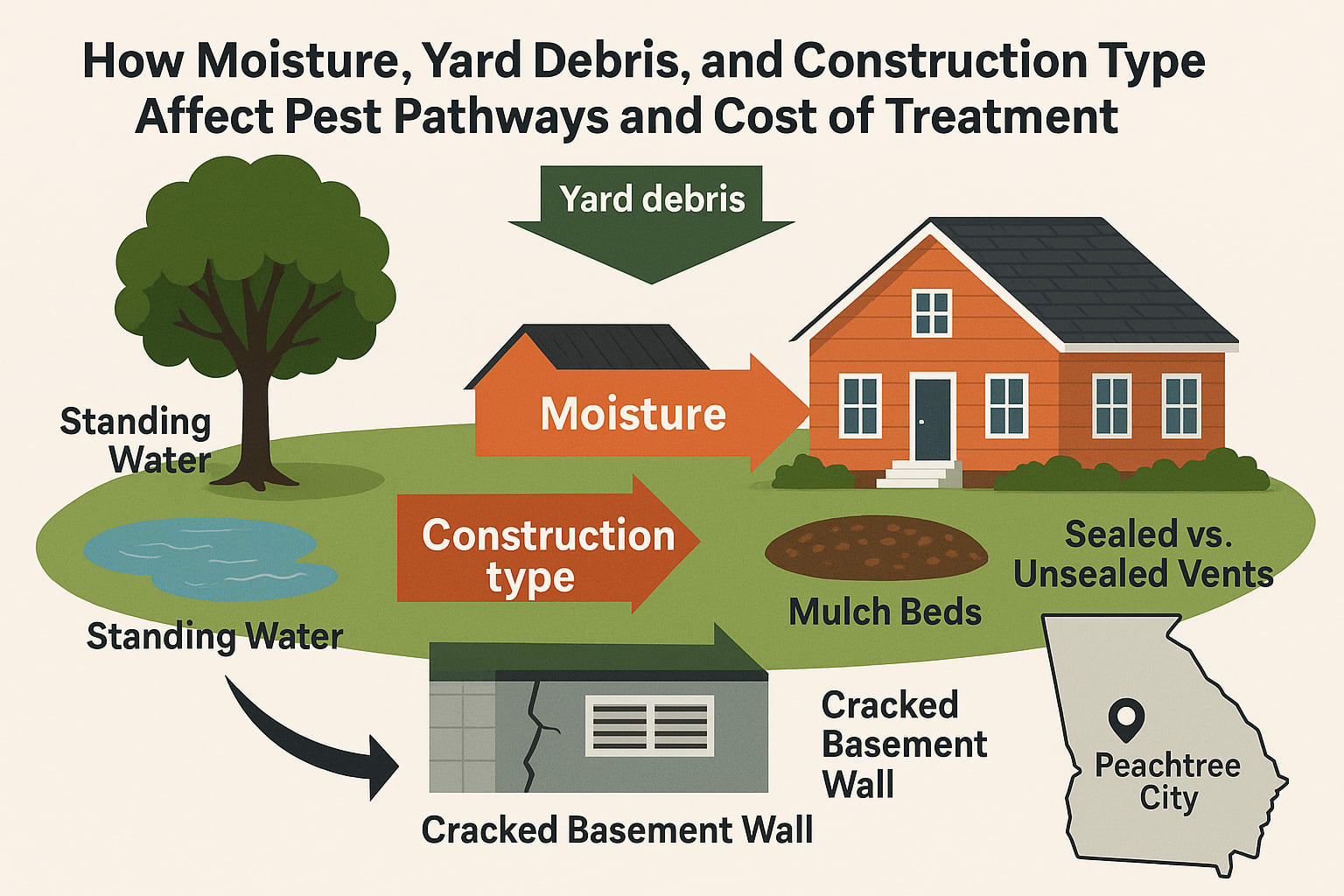
Take a stroll through neighborhoods like Lake Peachtree, Smokerise, or Pinegate and you’ll spot plenty of lush, shaded yards with thick mulch or ivy beds. It looks beautiful, but it’s exactly the kind of habitat millipedes love. All that shade and organic material gives them an almost endless supply of moisture and hiding spots right up against your walls.
Older homes, especially those with vented crawl spaces or unfinished basements, are open invitations for millipedes. Little cracks in foundation walls, loose thresholds, or gaps around plumbing pipes let them cruise right in. Newer homes might be sealed up tighter, but even the latest builds can have landscaping features—like decorative stone or heavy mulch—that hold onto moisture. That moisture draws in millipedes just the same.
It doesn’t stop there. Soil type and drainage can make a big difference. Spots in your yard where water consistently pools—maybe where the slope isn’t quite right, or near the base of a shady hill—are magnets for millipede activity. Even a modern patio or driveway that collects runoff can help funnel pests closer to your foundation.
When it comes to getting rid of millipedes, all these local quirks really matter. Damp basements, dense landscaping, and homes with lots of entry cracks mean more work to find every hiding spot and close off every path. In areas with chronic moisture problems or complex landscaping, pest control visits might need to be more frequent or more thorough—sometimes costing a bit more for effective, long-term results. On the flip side, if you’ve got a newer home with good drainage and minimal ground cover, treatment can be quicker and less invasive.
Bottom line: millipede problems in Peachtree City are as much about our weather and local building trends as about the bugs themselves. The smarter your pest control plan is about local conditions, the better—and faster—you’ll get results.
Keep Millipedes Out of Your Home Without Breaking the Bank
If you’ve ever flipped on the basement light after a rainy week and spotted a tiny millipede scooting for cover, you’re not alone—these critters love our humid Peachtree City climate. The good news? With a few smart habits, you can make your home far less inviting for millipedes while saving cash on pest bills in the long run.
- Dry things out: Millipedes crave moisture. Put a dehumidifier in damp spots like basements or crawl spaces. Fix any leaky pipes or faucets fast, before they can turn into a bug magnet.
- Mind your gutters: Make sure gutters are flowing freely and pointing water away from your foundation—don’t let water pool near the house.
- Seal it up: Little cracks in basement walls, gaps where pipes come in, or loose door sweeps are all open invitations. A weekend spent with weatherstripping and a tube of caulk goes a long way toward keeping pests outside where they belong.
- Yard work matters: Rake up those soggy leaves, keep mulch and wood piles away from the house, and trim bushes so they don’t brush right up against your siding. Millipedes love cool, damp hiding spots—don’t give them any.
- Watch your drainage: If your yard always seems soggy—especially in low spots by The Peninsula or Lexington Park—look at grading or drainage solutions before the next downpour brings out the bugs.
Schedule a walkaround once a season, or after we get a lot of rain. You can DIY a lot of this, but if you want a pro set of eyes, bring in a local pest control expert so you’re always a step ahead. Small investments in prevention now pay off in fewer headaches (and less money spent) later on.
Staying proactive isn’t just good for peace of mind—it makes solid financial sense. Up next, check our easy visual checklist to see how a little routine care compares with costly, stressful infestations down the line.
Millipede Problems in Peachtree City: Why Timing Matters
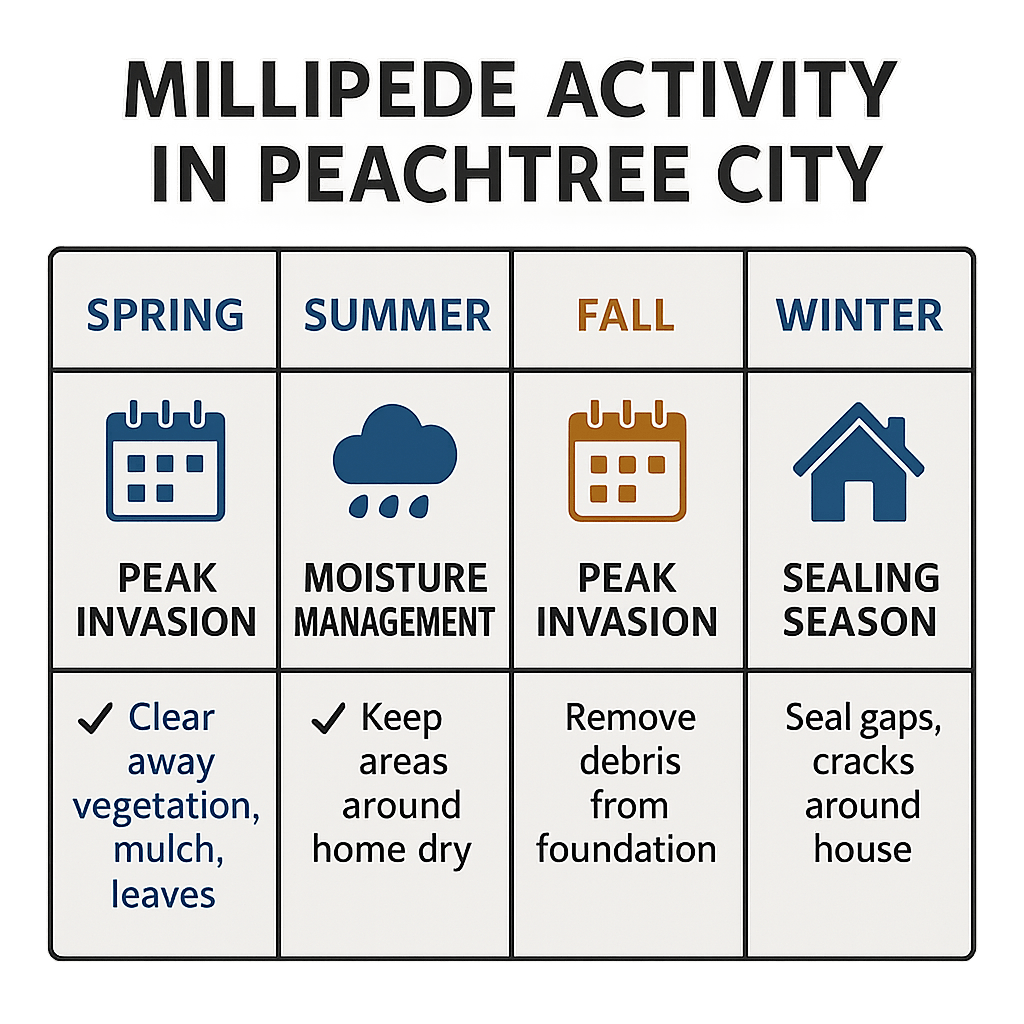
If you’ve lived in Peachtree City for a while, you already know the drill—heavy spring or fall rains hit, and suddenly those pesky millipedes seem to crawl right out of the woodwork. The reason boils down to our weather: all that moisture in spring and again later in the year gets millipedes on the move, looking for dry spots, which often means inside your home.
This natural cycle is why when you treat, and not just how you treat, can make a huge difference. The absolute best time for perimeter treatments is early spring—right before those first waves of rain and migration. Laying down a solid barrier then gives you the upper hand, stopping most millipedes before they’re even thinking about your door. If you missed that window, late summer into early fall is your second chance to fortify, cutting off a second migration before things get busy indoors.
Here’s where it gets strategic with your wallet: lots of folks in neighborhoods like The Village on the Green or Kedron hold off until after big storms, when the problem is staring them in the face. The trouble is, pest control companies see a surge in urgent calls, which sometimes means waiting longer and paying more. On the other hand, booking preventative treatments during slower months (think before the rain) often gets you better rates and more attention from your pest guy or gal, since you’re not competing with half the city.
- Spring: Best time for barriers—catch them before they enter.
- Late summer/early fall: Essential for a follow-up defense.
- Right after storms: Expect high demand, higher quotes, and the risk of a bigger mess indoors.
Take it from other homeowners here: the early bird really does get the worm (or keeps out the millipede). Being ahead of the season means fewer headaches and better pricing. Don’t wait until they’re crawling up your baseboards—schedule ahead and keep those millipedes outside, where they belong.
Get Your Free Millipede Control Quote Today
Millipedes sneaking into your Peachtree City home? Don’t stress—Anthem Pest Control is here to help you kick them out for good. Our team knows the ins and outs of Georgia’s millipede season and brings you proven solutions tailored for your home. No more Googling or guessing at DIY sprays—just real answers and honest pricing.
Wondering what it’ll cost? We make it easy. Call us at 877-3718-5196 or check out our Millipede Cost Guide for Peachtree City to get your free, no-obligation quote. That means zero pressure and full peace of mind. With Anthem, you’ll see the real price upfront and get a custom plan to suit your property—no surprises, just results. Your home’s defense starts right here. Why wait? Reach out now and make millipedes one less thing to worry about.
Millipede Control FAQs for Peachtree City Homeowners
- Will millipedes harm my family or pets?
Don’t worry—millipedes aren’t dangerous. They can’t bite or sting, and they don’t spread diseases. Sometimes they release a defensive fluid if handled, which can mildly irritate skin or eyes, so it’s best to avoid touching them directly. - Why do I keep seeing them in my house after rain?
Heavy rain and Georgia’s humidity are a millipede’s invitation inside. When the ground gets soaked or it’s super muggy, these pests wander into basements, garages, and anywhere they can stay dry. - What’s the fastest way to get rid of millipedes?
Professional pest control always wins for speed and peace of mind. Experts put down perimeter barriers and use targeted treatments. Still, you’ll want to seal up cracks and cut back moisture to keep them from coming back for good. - Are preventive treatments necessary?
Absolutely. Regular monitoring and prevention, especially in Peachtree City’s climate, help you avoid those surprise millipede invasions. It saves you time, money, and a lot of hassle down the road. - Can I do this myself or do I need an expert?
If you only spot a few millipedes and feel handy, you can seal gaps, use a dehumidifier, and tidy up yard debris. But if the problem keeps coming back or seems to spread, a pest professional’s expertise is the way to go. - Does Anthem Pest Control service all neighborhoods?
Yes, Anthem Pest has Peachtree City covered—Planterra Ridge, Kedron Village, Lake Peachtree, and every community in between. Wherever you live, their team is ready. - How much does millipede control cost locally?
Initial visits usually range from $150 to $300. Ongoing service plans tend to run $100–$200 per visit. For exact pricing and the latest deals, you can check Anthem Pest’s detailed pricing guide on their website. - When is the best time to schedule?
Spring and fall are the sweet spots for treatments, so book early. You’ll keep surprises (and millipedes) at bay all year long with a bit of advance planning.
If you have any other questions, just reach out—your local pest pro is always happy to help Peachtree City homeowners keep their homes millipede-free.