Understanding the Gnat Issue in Brookhaven Homes

Living in Brookshire’s neighboring town of Brookhaven means enjoying lush lawns, towering oaks, and a climate that stays comfortably warm through most of the summer. Those very benefits—high humidity, frequent summer showers, and a network of ponds, creeks, and irrigation ponds—create a perfect breeding ground for tiny, wing‑ed nuisances known as gnat‑type flies. While they may look like harmless “house flies,” their life cycle thrives in the moist, shaded areas that line many suburban properties, from the back‑yard pond to the moisture‑retaining mulch in flower beds.
How GniT Differ from Other Household Pests
Most homeowners can instantly recognize a termite, a roach, or a house‑fly, but the subtle differences of a gnat often go unnoticed until they become a visible sw‑sw‑sw‑swar. First, their size is considerably smaller—typically 2‑4 mm in length—making them easier to overlook on a windshield or in a glass of water. Second, their life cycle is rapid: eggs hatch within a few days, larvae develop in moist soil or organic debris, and adults emerge in as little as two weeks. Unlike ants or termites that hunt for food, adult gnats primarily feed on nectar, decaying organic matter, and, in the case of “fungus gnat” species, the fungi that thrive in damp soil. This dietary preference means they are rarely attracted to the same food scraps that lure a kitchen ant line.
Impact on Indoor Comfort and Health
When the wind stalls or the house’s air‑conditioning creates a gentle draft, adult gnat‑type flies can easily drift indoors, especially through open doors and windows. Once inside, they tend to congregate around light fixtures, kitchen trash cans, and indoor potted plants—anywhere moisture is present. Their presence can be more than just an annoyance; the tiny insects can irritate eyes and noses, leading to itching, sne sne, and in some individuals, mild allergic reactions. While they do not sting or bite, the constant swarming can exacer‑ex‑ex‑ex‑ex‑ex‑ex‑ex‑ex‑ex‑ex‑ex‑ex‑ex‑ex‑ex‑ex‑ex‑ex‑ex‑ex‑ex‑ex‑ex‑ex‑ex‑ex‑ex‑ex‑ex‑ex‑ex‑ex‑ex‑ex‑ex‑ex‑ex‑ex‑ex‑ex‑ex‑ex‑ex‑ex‑ex‑ex‑ex‑ex‑ex‑ex‑ex‑ex‑ex‑ex‑ex‑ex‑ex‑ex‑ex‑ex‑ex‑ex‑ex‑ex‑ex‑ex‑ex‑ex‑ex‑ex‑ex‑ex‑ex‑ex‑ex‑ex‑ex‑ex‑ex‑ex‑ex‑ex‑ex‑ex‑ex‑ex‑ex‑ex‑ex‑ex‑ex‑ex‑ex‑ex‑ex‑ex‑ex‑ex‑ex‑ex‑ex‑ex‑ex‑ex‑ex‑ex‑ex‑ex‑ex‑ex‑ex‑ex‑ex‑ex‑ex‑ex‑ex‑ex‑ex‑ex‑ex—propagating a feeling of “something is wrong” in the home environment.
Why Early Awareness Matters
Spotting a few swifts of these flies in a single room is often the first sign of a larger, house‑wide issue. Because the larvae develop in the soil of potted plants, in the organic debris of garden beds, and even in the moisture that accumulates in bathroom caulk, a small initial infestation can quickly become a multi‑room nuisance if left unchecked. Early detection allows homeowners to target the breeding sites—tightening irrigation, improving drainage, and applying targeted treatments—before the adult population explodes and spreads to bedrooms, living areas, and even the attic.
At Anthem Pest Control, we see the “gather‑the‑first‑few‑saw‑the‑whole‑swar” scenario more often than we’d like. The sooner you recognize the tell‑tale signs—tiny flies hovering near light, a sudden increase in “air‑conditioner‑scented” sw‑sw‑sw— the more we can preserve your home’s comfort and keep the health‑related irritations at bay. A proactive approach not only safeguards your family’s peace of mind but also prevents the need for more extensive, costly treatment later in the season.
Identifying Gnats and Their Signs
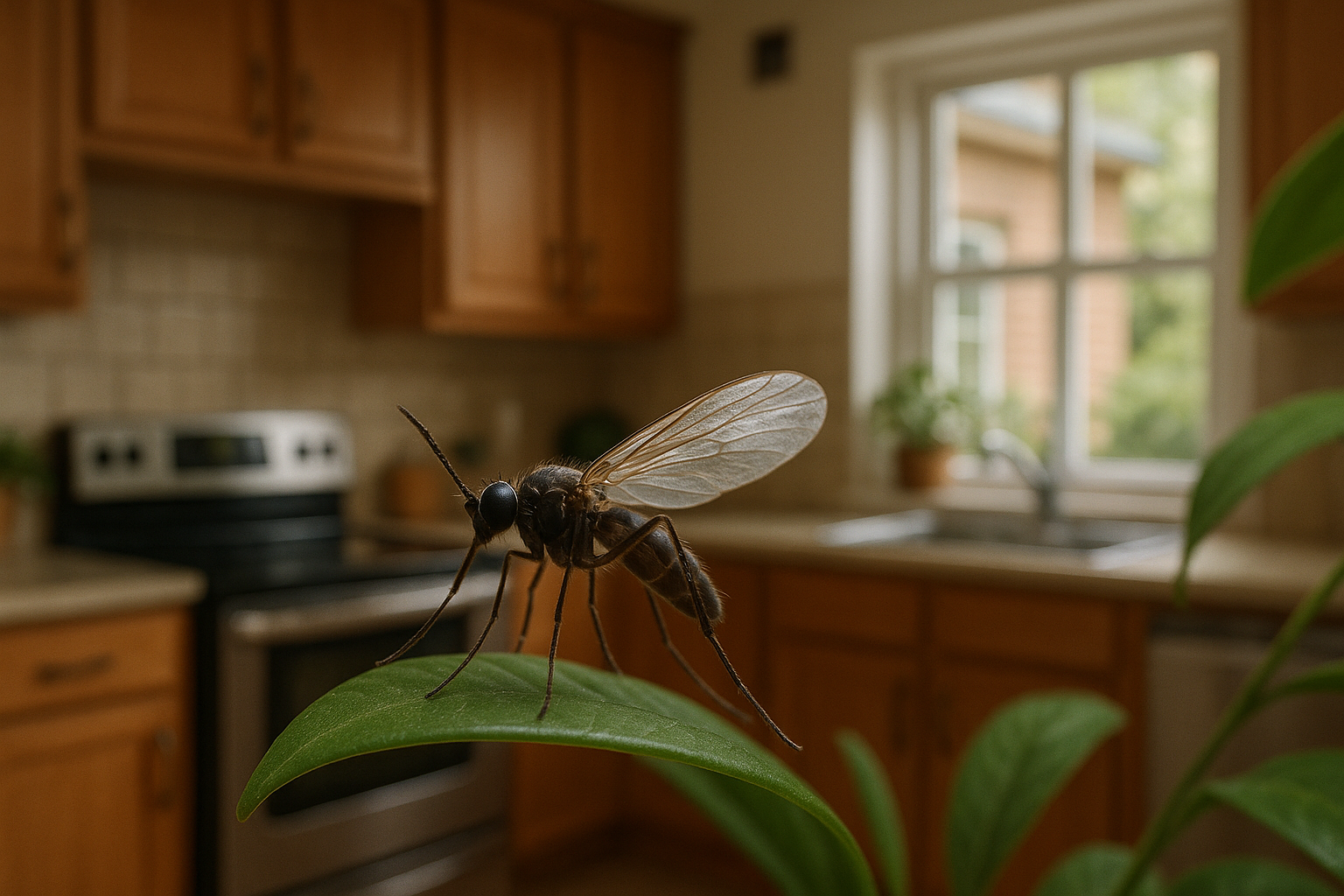
What an Adult Gnat Looks Like
Adult gnats are often mistaken for tiny mosquitoes, but they have distinct traits. Their bodies are slender and dark, usually no larger than a grain of rice, and they possess delicate, translucent wings that beat rapidly, creating a faint buzzing sound. Unlike mosquitoes, gnats rarely bite unless they’re of a species that feeds on blood; most are harmless visitors drawn to moisture.
Understanding the Life Cycle
Gnats develop through four stages: egg, larva, pupa, and adult. A female lays hundreds of microscopic eggs in damp environments—think the soggy soil of a houseplant or the organic film inside a sink drain. Within a few days, the eggs hatch into worm‑like larvae that feed on fungi, bacteria, and decaying matter. After feeding, they spin a cocoon and become pupae, emerging as the winged adults you see hovering near light sources.
Where Gnats Hide Indoors
The most common indoor hotspots are places that stay moist for extended periods. Kitchen sink drains and garbage disposals collect food residues and water, creating an ideal breeding ground. Houseplant soil that is constantly damp—especially if over‑watered—offers a perfect nursery for larvae. Bathrooms, with their tile grout and shower drains, and even garbage cans that aren’t emptied regularly, can also attract gnats.
Visual Cues That Signal an Infestation
If you notice small, dark specks on walls or ceilings, you’re likely seeing adult gnats resting after a brief flight. Swarms near open windows or doors are another red flag; gnats are drawn to light, so they often gather where sunlight streams in. Some homeowners report tiny, itchy bite marks—usually on exposed skin—though most gnats do not bite. The key is to look for a persistent, low‑level buzzing that doesn’t disappear after a quick wave.
DIY Inspection: Quick Steps for Homeowners
1. Test plant soil moisture. Stick a finger about an inch into the soil of each houseplant. If it feels soggy, let it dry out for a day or two, then check again. Dry soil discourages larvae from thriving.
2. Examine drain traps. Remove the trap from kitchen or bathroom drains and pour a cup of boiling water down the pipe. This flushes out any eggs or larvae clinging to the pipe walls. Follow with a mixture of equal parts white vinegar and baking soda to break down organic buildup.
3. Deploy sticky traps. Place yellow sticky cards near windows, plant pots, and under the sink. Gnats are attracted to the color and will become immobilized, giving you a visual count of the problem’s severity.
When to Call a Professional
If you’ve tried the above steps and still see swarms, the infestation may have moved beyond the easily reachable areas. Professional pest technicians have access to targeted treatments that can penetrate deep into wall voids, floor cavities, and plumbing systems—places DIY methods often miss. Anthem Pest Control offers a transparent, affordable inspection and treatment plan that eliminates gnats at every life stage, ensuring they don’t return.
Effective Indoor Treatment Methods
Fungus gnats may seem harmless, but a thriving colony can turn your kitchen, bathroom, or living room into a persistent nuisance. While the insects spend most of their lives hidden in soil or drains, they quickly become visible when adults swarm near lights. The good news is that homeowners have several effective tools at their disposal, from quick DIY tricks to professional fogging that reaches the hidden larvae.
Immediate DIY actions
Start with the low‑effort steps that target the most common breeding sites. These measures are inexpensive, safe for pets, and can be implemented in under ten minutes.
- Flush drains with boiling water. Pour a kettle of boiling water down kitchen and bathroom drains once a day for three days. The heat destroys larvae and eggs that cling to pipe walls.
- Apple cider vinegar traps. Fill a shallow dish with equal parts apple cider vinegar and water, add a drop of dish soap, and place it near light sources. Adult gnats are attracted to the scent, become trapped, and you can monitor population levels.
- Adjust plant watering schedules. Over‑watering creates the damp soil gnats love. Allow the top inch of potting mix to dry before the next watering, and consider using a moisture meter to avoid accidental saturation.
Chemical options you can use safely
If the DIY steps don’t bring the numbers down quickly, low‑toxicity chemicals are the next logical step. Choose products labeled for indoor use and follow the safety directions to protect family members and pets.
- Low‑toxicity aerosol sprays. Look for formulations that contain pyrethrins or neem oil. Spray directly onto adult gnats and the surface of potting soil, focusing on areas where they congregate.
- Larvicidal granules for soil. Granular products with Bacillus thuringiensis israelensis (Bti) are safe for most houseplants. Sprinkle the recommended amount on the soil surface and water lightly to activate the bacteria, which kills larvae within 24‑48 hours.
- Safety precautions. Wear gloves and a mask when applying any aerosol or granule. Keep the treated area well‑ventilated for at least 30 minutes, and store all chemicals out of reach of children and pets.
What is indoor fogging?
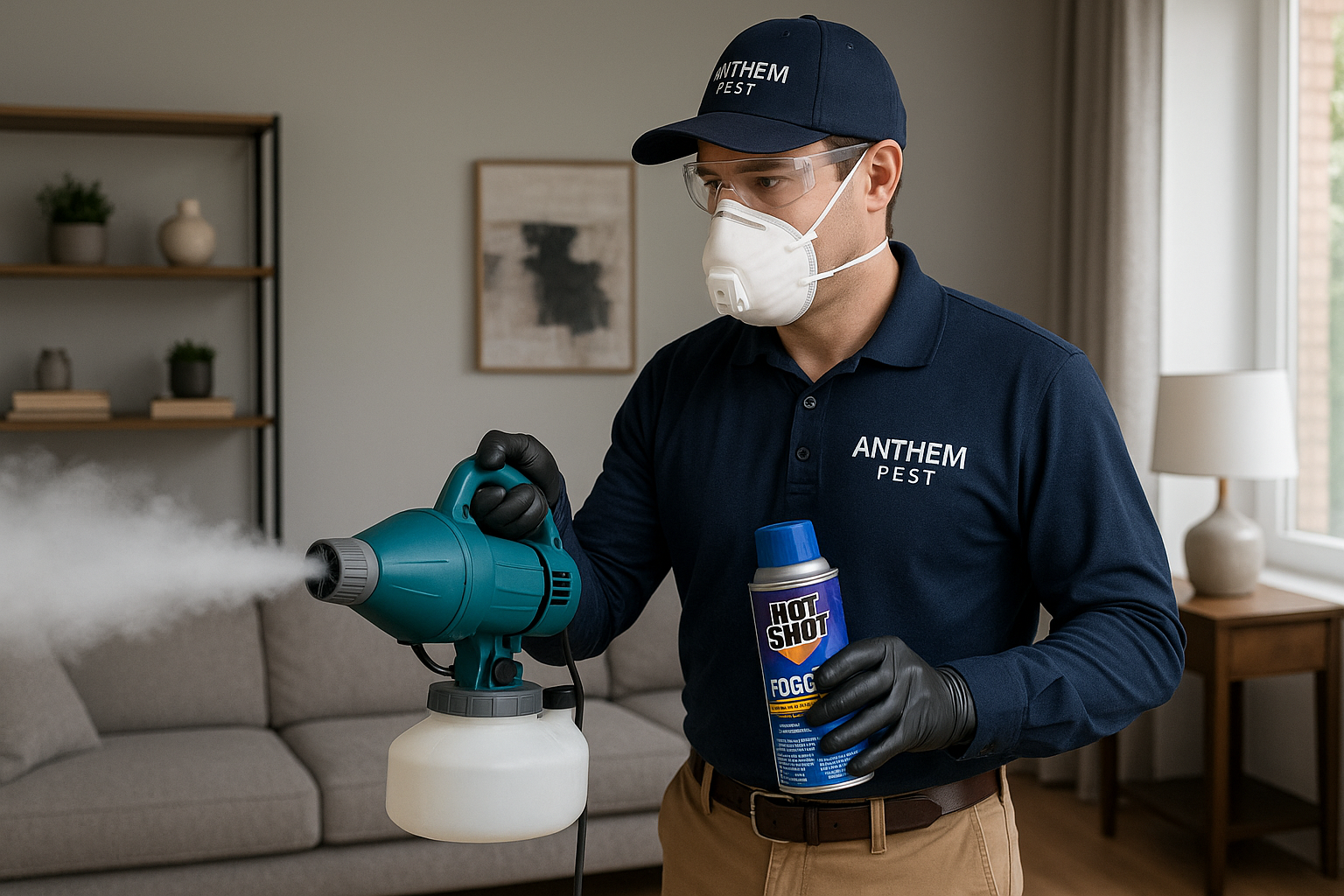
Indoor fogging uses a specialized fogger to disperse a fine mist of pesticide droplets that can penetrate cracks, crevices, and the porous medium of potting soil. Unlike a spray that settles quickly, the fog creates a cloud of microscopic particles that remain suspended long enough to contact hidden larvae, pupae, and adult gnats throughout the room.
What to expect during a fogging appointment
A professional fogging service, such as Anthem Pest Control’s indoor fogging, follows a systematic process to ensure maximum coverage while keeping your home safe.
- Pre‑treatment preparation. You’ll be asked to clear countertops, remove pet food dishes, and close windows and doors. This helps the fogger distribute evenly and prevents the pesticide from escaping the treatment zone.
- Technician safety gear. Our technicians wear disposable coveralls, gloves, and N‑95 respirators. This protects both the worker and your household from accidental exposure.
- Product label verification. Before each application, the technician confirms the product’s EPA registration number, active ingredient, and concentration. This ensures the fogger is using a formulation approved for indoor residential use.
- Fogger operation. The unit is placed in the center of the room, and a calibrated amount of pesticide is released. The fog expands to fill the space, reaching floor voids, under appliances, and the top layer of potting soil.
- Post‑treatment ventilation. After fogging, you’ll be instructed to keep the HVAC system off and open interior doors for 30‑45 minutes. This clears residual mist while the pesticide continues to work on any remaining gnats.
Why choose a professional fogging service?
DIY sprays and traps are valuable first steps, but they often miss the larvae hidden deep in soil or behind wall voids. A professional fogging appointment provides three key advantages:
- Comprehensive coverage. The fine droplets reach places a handheld spray cannot, delivering an even dose to every corner of the treated area.
- Residual control. EPA‑approved fogging formulations leave a low‑toxicity residue that continues to suppress emerging gnats for up to two weeks, reducing the chance of a quick rebound.
- Reduced re‑infestation risk. Our technicians combine fogging with a targeted inspection, identifying and sealing entry points, over‑watered plants, or clogged drains that could serve as future breeding sites.
By pairing the immediate actions you can take at home with Anthem Pest Control’s indoor fogging service, you create a two‑pronged defense that attacks fungus gnats at every life stage. The result is a noticeably calmer indoor environment and a long‑term reduction in future outbreaks.
Prevention Strategies and Seasonal Timing
Eliminate Moisture, the Gnat’s Favorite Fuel
Fungus gnat larvae thrive in damp organic material, so the first line of defense is to dry out their breeding ground. Start by repairing any leaking pipe or faucet in the house and around the foundation— even a single drip can create a moist oasis that attracts adult females. In areas prone to high humidity, place a de‑humidifier in basements, crawl‑space, or any room where moisture accumulates. Ensure the soil around your home slopes away from the foundation; a proper slope and a French‑drain system prevent water from pooling on the slab and leaking into the soil where larvae develop.
Smart Plant Care for a Gnit‑Free Garden
House‑plant lovers often unknowingly provide the perfect nursery for fungus gnat larvae. The key is to avoid excess moisture and keep the potting medium clean.
- Avoid over‑watering. Allow the top inch of soil to dry before the next watering; this interrupts the life cycle of larvae.
- Use sand‑based pot‑mix. Adding sand or perlite improves drainage and reduces the moisture‑retaining properties of typical potting soil.
- Remove decaying foliage. Fallen leaves or rotting leaf‑tip cut‑downs become a buffet for larvae, so trim and discard them promptly.
- Clean the pot base. Periodically scrape away any organic build‑up on the pot’s bottom and replace the top layer of soil with fresh, dry medium.
Kitchen Hygiene: Stop the Kitchen from Becoming a Gnat Hotspot
The kitchen is another common launchpad for adult fungus gnat activity. Even a small amount of fruit peel or spilled juice can attract females looking to lay eggs.
- Cover trash bins with tight‑fit lids and empty them daily.
- Wipe down countertops and appliance surfaces immediately after handling fruit or vegetables.
- Store ripe produce in the refrigerator or in sealed containers; avoid leaving it on the counter overnight.
- Dry the sink and mop the drain after each use; standing water in the trap is an ideal breeding site.
- Clean pet dishes and replace water frequently to deny a moist “tank” for larvae.
Seasonal Calendar: When to Act for Maximum Impact
In the Brookhaven area, fungus gnat populations surge from late spring through early fall. The first wave usually appears in late April, peaks in July, and tap‑tends to decline by early November. To stay ahead of the infestation, schedule a preventive treatment in early spring—mid‑March to early April—before the first adults are observed. A second touch‑up in mid‑summer can mop up any second‑generation larvae that escaped the initial spray, and a light “touch‑back” in early fall helps mop up late‑season survivors.
| Month | Action |
|---|---|
| March – April | Apply early‑spring professional treatment; inspect irrigation, drainage, and interior moisture sources. |
| June – July | |
August – September Protect Your Home with Professional HelpAfter learning how to spot gnats, seal entry points, and try a few DIY tricks, many homeowners wonder whether the effort is enough. The truth is that while self‑service measures can reduce a minor nuisance, a persistent indoor gnat population often hides in hard‑to‑reach cracks, wall voids, and damp basements. That’s where professional fogging makes a decisive difference. Why a Professional Fogging Treatment Beats DIY
Anthem Pest Control: Your Brookhaven Gnat SpecialistsAt Anthem Pest Control we have served Brookhaven homeowners for years, building a reputation for safe, effective gnat eradication. Our technicians know the local climate, common entry points, and the species of gnats that thrive in Georgia homes. That local knowledge lets us tailor each fogging plan to your property’s unique layout, so you get results that last. Transparent Pricing and a Free QuoteWe believe you should never be surprised by hidden fees. Our pricing structure is straightforward: a flat rate for the fogging service, plus optional follow‑up visits if you need extra assurance. To make the decision even easier, we offer a complimentary, no‑obligation quote. Simply give us a call or fill out the short form on our website, and we’ll provide a clear estimate before any work begins. Take the Next Step Toward a Gnat‑Free HomeIf gnats are turning your home into an irritation zone, let the experts handle it. Anthem Pest Control delivers fast, safe, and affordable indoor fogging that eliminates gnats at the source. Call us today for a free, no‑obligation quote at 877‑371‑8196 or learn more online. Visit Anthem Pest Control to schedule your personalized assessment and enjoy the peace of mind that comes with a professionally protected home. Related articles Fast Cockroach Exterminator in Dunwoody, GA: Quick Relief for Your HomeDiscover rapid, affordable cockroach extermination for Dunwoody homeowners. Learn effective treatments, pricing, and prevention tips from local experts at Anthem Pest Control.  How much does mosquito control cost in Canton, Georgia?Discover the true cost of mosquito control in Canton, GA, with transparent pricing, local factors, and expert insights from Anthem Pest to help homeowners protect their families affordably.  Fast Mosquito Exterminator in Vinings, GA: Quick Relief for Your HomeDiscover rapid, effective mosquito control in Vinings, GA with Anthem Pest—learn how quick treatments protect your home, reduce disease risk, and fit any budget.  Find a Mosquito Exterminator Near You in Dunwoody, GA: Local GuideDiscover how Dunwoody homeowners can quickly locate reliable mosquito exterminators, understand local risk factors, and choose cost‑effective, EPA‑approved treatments to protect families and property all season long.  Fast Ant Exterminator in Vinings, GA: Quick Relief for Your HomeDiscover fast, reliable ant extermination in Vinings, GA. Learn how Anthem Pest delivers quick relief, transparent pricing, and proven prevention to keep your home ant‑free.  House Fly Inspection in Peachtree City, Georgia: What to Expect and When to Call a ProLearn exactly what a house fly inspection looks like in Peachtree City, GA, why timing matters, and when to call Anthem Pest for fast, affordable professional help. 
trust the top google rated pest company in georgia!
Get a Free Quote for Pest, Mosquito & Termite ControlAnthem Pest experts are trained to identify and treat all types of pest issues. Since every home is unique, we customize a treatment plan tailored specifically to your property and needs.
trust the top google rated pest company in georgia!
Get a Free Quote for Pest, Mosquito & Termite Control Today!Anthem Pest experts are trained to identify and treat all types of pest issues. Since every home is unique, we customize a treatment plan tailored specifically to your property and needs.   Duluth Office
3305 Breckenridge Blvd
Ste 130 Duluth, GA 30096 Marietta Office
1710 Cumberland Point Dr
Ste 8 Marietta, GA 30067 |