Identifying the Brown Marmorated Stink Bug
The brown marmorated stink bug (Halyomorpha halys) belongs to the family Pentatomidae, a group commonly known as “shield bugs.” Native to East Asia—particularly China, Japan, and Korea—this invasive pest arrived in the United States via cargo shipments in the late 1990s and has since spread throughout the Southeast, including Decatur, Georgia, making reliable stink bug control Decatur GA increasingly important for local homeowners.
At a glance, the brown marmorated stink bug measures roughly ½ inch (12–14 mm) in length and sports a distinctive, shield‑shaped silhouette. Its overall hue is a muted brown, but the key identifier is the pair of creamy‑white bands that wrap around each antenna segment. Look also for the bold “V”‑shaped marking on the dorsal surface of the thorax, which sets it apart from native stink bugs that typically display mottled or uniformly dark backs.
When you examine the bug up close, the exoskeleton reveals a slightly rough, matte texture rather than the glossy finish of many local species. The forewings (hemelytra) are partially hardened near the base and membranous toward the tip, creating a subtle “half‑wing” appearance. These macro details—especially the white antennal bands and the V‑shaped dorsal stripe—are reliable clues for homeowners who are learning to spot the invader early.
In Decatur, BMSB often makes its first appearance on garden plants such as tomatoes, beans, and fruit trees, where it feeds on sap. Outdoor lights attract them at night, and it’s not unusual to find a few perched on window sills or crawling along the interior walls of a sunny room. Their tendency to seek shelter in homes during cooler months makes early identification crucial for preventing a full‑blown indoor infestation.
Quick Visual Checklist
- Size: about ½ inch (12–14 mm) long.
- Body shape: shield‑like, slightly flattened.
- Color: brown with two white bands on each antenna.
- Back marking: a distinct “V” shape on the thorax.
- Exoskeleton texture: matte, not shiny.
- Wing pattern: hardened base, membranous tip.
- Common locations: garden foliage, outdoor lights, indoor window sills.
For a deeper dive into the biology and control recommendations, consult the EPA’s comprehensive fact sheet: EPA Stink Bug Info.

Why Stink Bugs Become a Household Problem
When the brown‑mottled stink bug (BMSB) first appears on a porch or windowsill, many homeowners dismiss it as a harmless nuisance. In reality, these insects can quickly turn from a minor irritation into a full‑blown infestation that threatens gardens, indoor air quality, and even the structural integrity of a home. Understanding the reasons behind their rapid escalation is the first step toward stopping them before they multiply.
Feeding habits that damage plants
Stink bugs feed by inserting their needle‑like mouthparts into plant tissue and extracting sap. This feeding action not only weakens foliage but also creates tiny puncture wounds that become entry points for disease. Over time, affected leaves wilt, fruits develop unsightly discoloration, and the overall yield of garden vegetables and fruit trees can drop dramatically. For a homeowner who relies on a backyard garden for fresh produce, a moderate BMSB population can shave 20‑30 % off the harvest.
Structural concerns inside the home
When temperatures begin to fall, stink bugs seek shelter in the warmest parts of a house—typically wall voids, attics, and even HVAC ducts. In these confined spaces they congregate in massive numbers, forming dense clusters that can block airflow and increase humidity. Disturbing these hidden colonies releases the insects’ signature foul odor, a pungent mix of sulfur and decay that can linger for hours and seep into living areas, making the home feel uninviting.
Seasonal migration that drives them indoors
Stink bugs are opportunistic travelers. As autumn approaches in Decatur, the bugs abandon outdoor food sources and head for the safety of heated interiors. Their migration is not random; they follow temperature gradients, often entering through tiny cracks around windows, doors, and utility penetrations. Once inside, the bugs become a long‑term problem because they reproduce in hidden crevices, leading to exponential population growth throughout the winter months.
Potential health impacts for occupants
While stink bugs are not known to transmit disease, they can still affect human health. Direct contact may cause mild skin irritation or allergic reactions in sensitive individuals. Moreover, the strong odor they emit when crushed or disturbed contains compounds that can irritate the eyes, nose, and throat, lowering indoor air quality—especially problematic for those with asthma or respiratory sensitivities.
Economic impact on homeowners
The financial toll of a stink bug invasion extends beyond garden loss. Homeowners often face increased cleaning costs as they scrub walls, furniture, and fabrics to remove odor residues. In severe cases, professional remediation may be required to treat HVAC systems and seal entry points, adding to the expense. When you factor in lost produce, higher utility bills from clogged ventilation, and potential repairs, a single season’s infestation can easily cost several hundred dollars.
Real‑world example: a suburban infestation in one season
Consider the case of a typical Decatur suburb where a family noticed a few stink bugs on their patio in early September. Within three weeks, the insects began appearing in the kitchen and bedroom, and a faint, sour smell lingered after each disturbance. By late October, the homeowners discovered a dense cluster in the attic, hidden behind insulation. The infestation had forced them to replace a portion of the attic insulation, schedule a professional pest treatment, and discard a third of their garden’s tomato crop. All of these actions added up to an unexpected $1,200 expense—an amount most homeowners could avoid with early detection and prompt action.
Seasonal Activity Patterns of Stink Bugs
Life Cycle Overview
Stink bugs move through three distinct stages—egg, nymph, and adult—each tightly linked to temperature. In early spring, females lay clusters of pale-green eggs on the undersides of leaves. When daily highs consistently reach 65°F (18°C), those eggs hatch into nymphs that look like miniature adults but lack fully developed wings. Below about 55°F (13°C) development stalls entirely, so a warm spell is essential for the first hatch. As the summer warms above 80°F (27°C), nymphs molt five times, gaining size and coloration until they become reproductive adults ready to spread—making early stink bug control Decatur GA critical to stopping population surges.
What the Seasonal Graph Shows
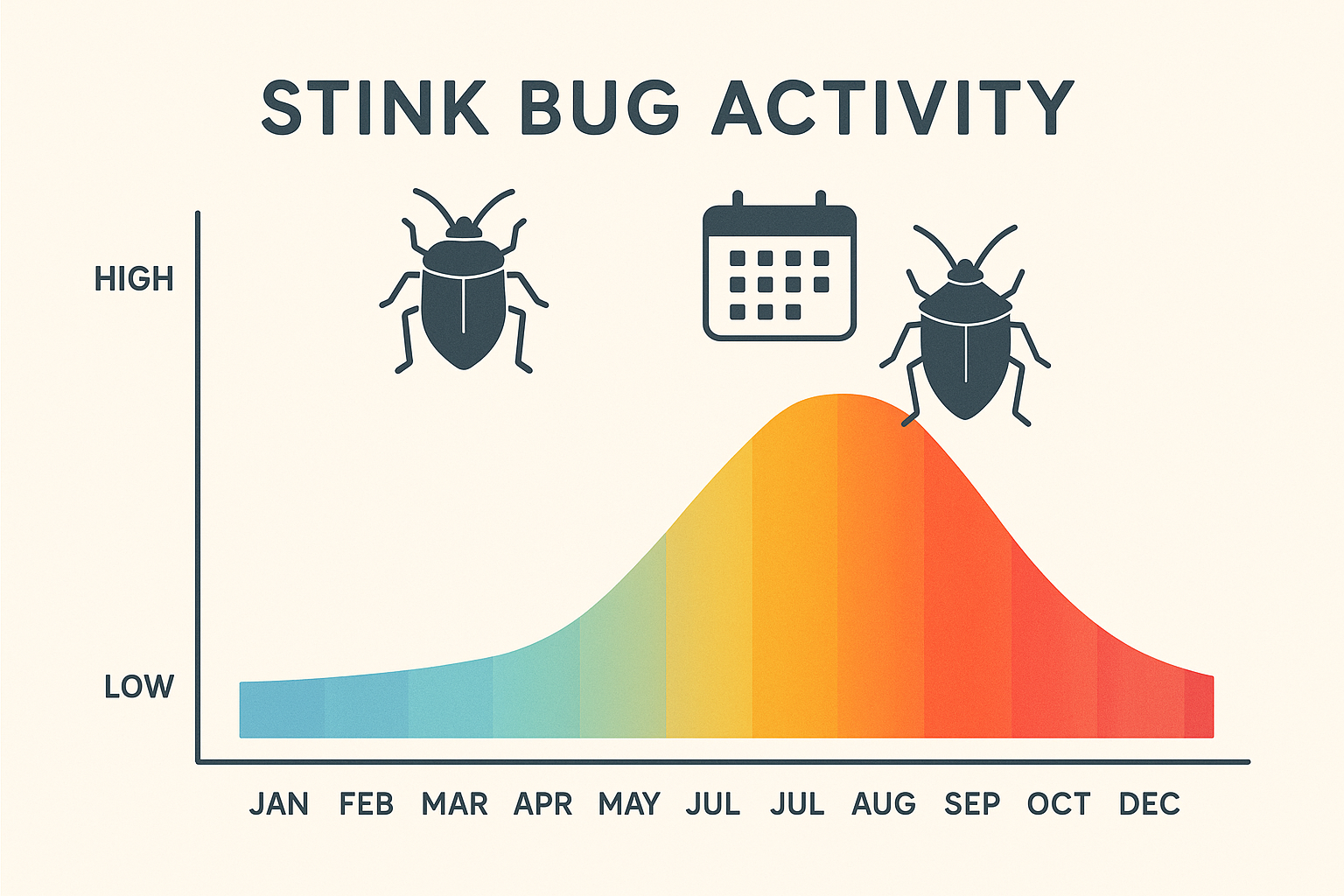
The line graph below tracks average stink‑bug activity from January through December in Decatur. Winter months (January–February) sit at the baseline because cooler temperatures stall development; you’ll see almost no activity on the chart. From March onward, activity climbs steadily, accelerating sharply in late May and June as nymphs mature. Mid‑summer (July–August) marks the peak—both the line’s highest point and the period when fields are swarming. By September, the curve dips slightly, then spikes again as adults seek shelter inside homes for the cooler months.
Regional Climate Influence
Decatur sits in USDA hardiness zone 7b, where spring temperatures rise earlier than in northern Georgia but later than in the coastal plain. That shift pushes the “rapid rise” segment of the graph a few weeks forward—expect noticeable nymph activity by early May rather than mid‑May. Neighboring counties in zone 8a may see the same surge as early as late April, while zone 7a areas can lag a week or two. Conversely, the indoor migration usually begins in late September, a bit earlier than the statewide average, because the first frost arrives sooner in our micro‑climate.
Monitoring Tips
- Light traps in late summer: Place a UV‑lit trap near garden edges in August. The bright light draws adult bugs, giving you a visual cue of population density.
- Garden inspections in May‑June: Walk your vegetable beds, flipping over leaves to spot nymph clusters. Early removal prevents them from maturing into prolific adults.
- Window‑sill checks in September: Stink bugs love warm, sunny cracks. A quick visual sweep each evening can catch the first wave before they breach walls.
Why Early Detection Matters
Stink bugs release a pungent odor when threatened, and a large indoor population can quickly overwhelm a kitchen pantry or garden harvest. Spotting a few adults in September gives you a window to seal entry points, treat interior walls, and set up perimeter traps before numbers explode. Homeowners who act in early October typically avoid costly re‑treatments later in the winter, when the bugs remain dormant but still emit that characteristic stink.
Detecting the insects before the September‑October indoor surge is the single most effective defense. Early action—whether it’s a targeted pesticide application or a simple removal of egg masses—keeps the bugs outside where they belong and spares you the unpleasant odor and crop damage that follow.
Proven Prevention Strategies for Homeowners
Seal the Exterior
Stink bugs exploit the tiniest gaps to slip inside. Walk the perimeter with a flashlight and locate cracked mortar, gaps around utility pipes, and loose siding. Apply a high‑quality silicone or acrylic caulk to seal cracks, and install door sweeps on all exterior doors to block the low‑level entry points they favor. Damaged window screens should be repaired or replaced promptly—no mesh means an open invitation.
Manage Your Landscape
Vegetation that brushes the house creates a bridge for stink bugs. Keep shrubs, vines, and tree branches trimmed at least 12 inches away from the foundation. If you have fruit‑bearing trees, soybeans, or other known host plants near the home, consider relocating them or pruning them heavily during the late summer. Removing these “bug hotels” reduces the population that can later seek shelter indoors.
Control Outdoor Lighting
Stink bugs are attracted to bright, white light, especially at night. Swap standard bulbs for yellow or amber LED fixtures on porches, deck lights, and garage entries. When possible, limit nighttime illumination to the essential areas only, and use motion sensors so lights stay off until needed. This simple swap cuts down on the visual beacon that draws insects toward your doors and windows.
Adopt Smart Indoor Habits
Even with a sealed exterior, a few bugs can slip in. Vacuum corners, baseboards, and light fixtures regularly to capture hidden stowaways before they release their odor. Store pantry items in airtight containers; crumbs and exposed food act as a secondary attractant. Finally, inspect windows, vents, and attic fans each week for tiny entry gaps and reseal them immediately.
Seasonal Prevention Checklist
Stink bug activity follows a predictable calendar in Decatur. Use the table below to focus your efforts month by month, aligning DIY tasks with the bugs’ life cycle.
| Month | Key Action |
|---|---|
| April – May | Inspect and caulk exterior cracks; begin landscape trimming. |
| June – July | Replace outdoor bulbs with yellow LEDs; prune any new growth near the house. |
| August – September | Vacuum interior hiding spots weekly; store harvested produce in sealed containers. |
| October – November | Perform a final sweep of doors, windows, and vents; install door sweeps if missing. |
When DIY Measures Are Insufficient
Even the most diligent homeowner can encounter a sudden influx that overwhelms simple barriers. If you notice large numbers gathering on windows, a persistent odor despite regular vacuuming, or repeated sightings after you’ve sealed entry points, it’s time to call a professional. Certified technicians can apply targeted, low‑toxicity treatments to cracks, voids, and interior voids that DIY products cannot reach, ensuring the infestation is eliminated before it spreads to neighboring homes.
Professional Treatment Methods for Stink Bugs
When stink bugs breach your home, a DIY spray rarely provides lasting relief. Licensed pest-control professionals bring a toolbox of science-backed treatments, precise timing, and safety protocols that protect your family, pets, and property. Below is a behind-the-scenes look at how Anthem Pest Control delivers effective stink bug control Decatur GA homeowners can rely on to eliminate infestations efficiently and responsibly.

What Professionals Offer: Perimeter Sprays, Indoor Residuals, and Spot Treatments
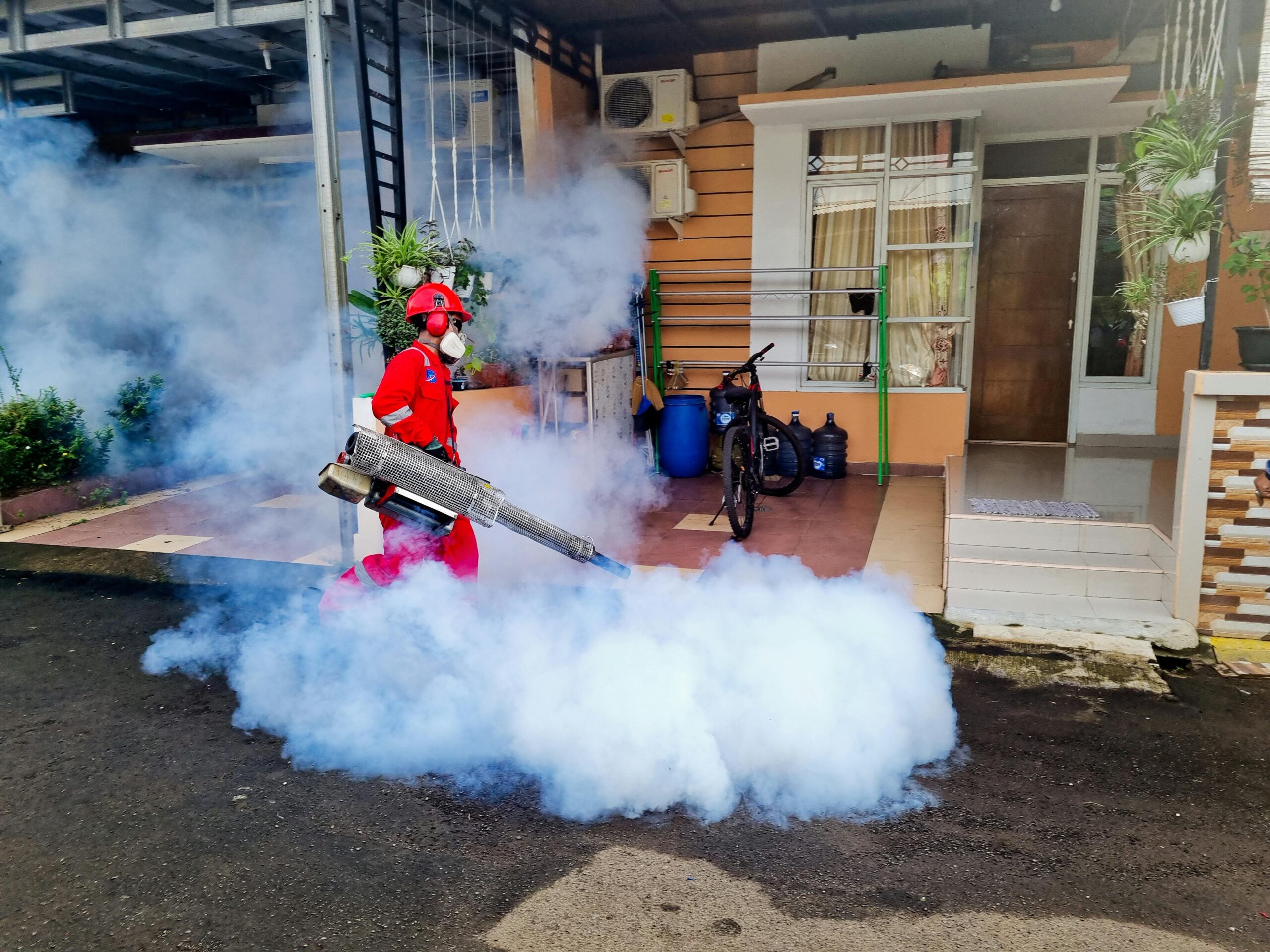
We start with a perimeter spray that creates a protective barrier around the home’s foundation, siding, and eaves—common entry points for stink bugs. Inside, a residual application is applied to wall voids, baseboards, and crawl‑space surfaces, leaving a lingering shield that kills bugs that wander indoors. For hot spots, such as a light‑filled kitchen or a sun‑warmed attic, technicians add targeted spot treatments using handheld foggers or micro‑atomizers to concentrate the active ingredient where the insects congregate.
Technician Gear: Full Protective Suit and Equipment
Every Anthem technician dons a certified, encapsulated suit—coveralls, gloves, boots, and a respirator mask—that meets OSHA standards. This gear prevents any chemical exposure to the worker and ensures that residues are applied precisely, without drift onto children’s play areas or pet zones. While the suit protects the professional, it also safeguards occupants; we seal windows and doors, use low‑odor formulations, and keep pets in a safe, ventilated space until the job is complete.
Timing Is Everything: Aligning Treatments With the Bug’s Life Cycle
Stink bugs are most vulnerable during two key phases: the late‑summer migration to overwintering sites and the early spring emergence. A pre‑emptive fall spray thins the population before they seek shelter, reducing indoor incursions. If an emergency infestation occurs, we respond with indoor fogging that targets active adults and nymphs during their feeding window, delivering rapid knock‑down while the residual product continues to work for weeks.
Choosing the Right Product: Residual Chemicals vs. Organic Alternatives
| Feature | Residual Chemical | Organic Alternative |
|---|---|---|
| EPA Registration | Full registration, extensive safety data | Limited registration, often lower toxicity |
| Duration of Control | 4–8 weeks of residual activity | 1–3 weeks, may require re‑application |
| Pet Safety | Pet‑safe when applied per label; restricted zones | Generally lower risk, but still requires pet removal |
| Application Frequency | One‑time treatment per season | Multiple applications may be needed |
| Cost | Higher upfront, lower long‑term expense | Lower upfront, higher cumulative cost |
All products we use are EPA‑approved for residential use and applied at label‑specified rates. When homeowners request a greener option, we can blend low‑impact botanicals with synthetic actives, maintaining efficacy while meeting environmental preferences.
Why Ongoing Monitoring and Follow‑Up Matter
A single application rarely eradicates every hidden bug. Our service includes a post‑treatment inspection within 7‑10 days to verify knock‑down and address any missed entry points. Seasonal follow‑ups—typically in late fall and early spring—allow us to adjust the barrier, re‑treat high‑risk zones, and keep the stink‑bug population below nuisance levels. This proactive schedule saves homeowners from costly emergency calls later in the year.
Case Study: A Decatur Home Wins the War on Stink Bugs
Homeowner Ms. Lara Jameson called Anthem after discovering dozens of stink bugs in her kitchen and attic during a September heatwave. Our technician first performed a thorough inspection, identifying gaps around the foundation and a cracked vent pipe. We applied a perimeter spray using a residual pyrethroid, sealed the vent, and followed with an indoor fogging of a low‑odor, pet‑safe formulation focused on the kitchen island and attic joists. Two weeks later, a follow‑up visit confirmed a 95 % reduction in activity. A final spring visit refreshed the barrier, and Ms. Jameson reported no further infestations throughout the year.
That success story illustrates why a licensed, full‑service provider—equipped with the right chemicals, timing, and safety gear—delivers the most reliable stink‑bug control for Decatur homeowners.
Pricing Comparison – Emergency vs. Seasonal Stink Bug Control
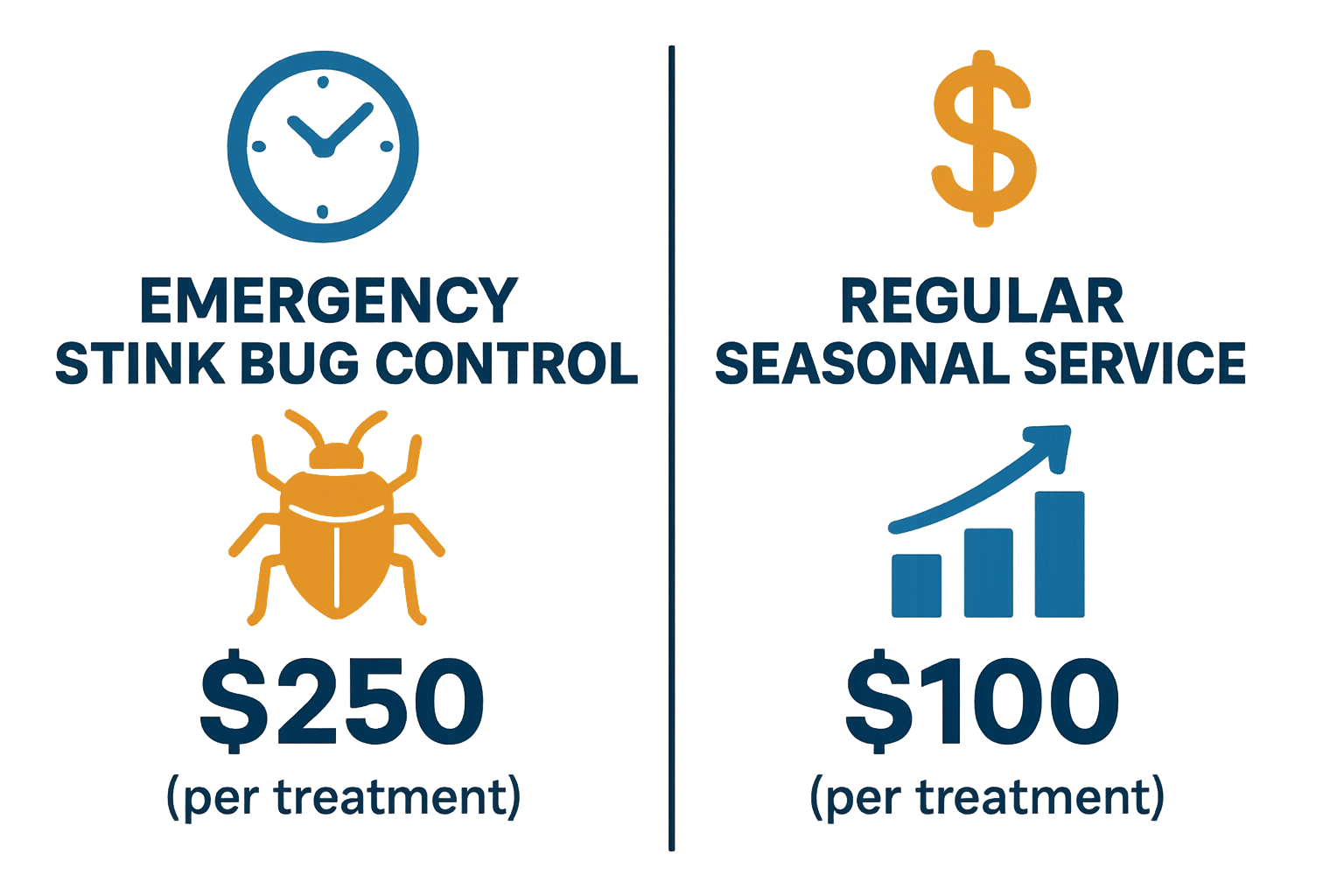
Understanding the cost difference between a one-time emergency call and a scheduled seasonal plan is the first step to a smart budget. The infographic above visualizes the per-treatment price gap: emergency visits typically carry a premium because they require after-hours labor, while seasonal services spread the expense across multiple preventative applications—making long-term stink bug control Decatur GA a more cost-effective option for many homeowners.
What’s Included in Each Price?
Both options cover the same core elements—professional inspection, EPA‑approved treatment materials, a follow‑up visit, and a limited warranty. The emergency package, however, adds a “rush‑hour” surcharge and may involve extra travel time if the call comes late at night or on a weekend. Seasonal plans bundle these services into a yearly schedule, so the individual visit cost appears lower, but you receive consistent protection throughout the stink bug season.
Typical Price Ranges and Influencing Factors
In Decatur, Georgia, homeowners can expect:
- Emergency treatment: $150 – $250 per visit.
- Seasonal service: $100 – $180 per scheduled visit.
Several variables shift these numbers. Larger homes need more product and longer labor hours, driving the price up. A severe infestation may require multiple emergency trips, while a light presence could be handled with a single seasonal application. Property age, landscaping density, and proximity to known stink bug entry points also play a role.
Long‑Term Savings with a Seasonal Plan
Choosing a seasonal plan isn’t just about a lower per‑visit fee; it’s an investment in prevention. Regular applications create a barrier that discourages bugs from establishing a foothold, dramatically reducing the likelihood of an emergency call. Over a typical three‑year window, a homeowner who spends $150 × 3 = $450 on emergencies could save up to $300–$400 by enrolling in a seasonal contract that costs $120 × 3 = $360, plus the peace of mind that comes with a guaranteed response time.
Decision Matrix – Which Option Fits Your Situation?
| Infestation Level | Recommended Service | Approx. Cost per Visit | When to Choose This Option |
|---|---|---|---|
| None or occasional sightings | Seasonal preventive plan | $100–$180 | Goal is to keep bugs out before they become a problem. |
| Moderate (visible clusters, occasional indoor sightings) | Seasonal plan + targeted spot treatment | $120–$200 | Combine regular barrier with a focused knock‑down. |
| Severe (large numbers inside, damage to plants) | Emergency call‑out | $150–$250 | Immediate action needed; after‑hours service justified. |
| Recurring emergencies each season | Switch to seasonal plan | $120–$180 (per visit) | Long‑term cost reduction and guaranteed response. |
Use this matrix as a quick reference. If you’re seeing a few bugs now but want to avoid future panic, the seasonal plan offers the best value. If the house is already overrun, an emergency visit stops the problem fast, and you can transition to a seasonal schedule afterward to keep future costs low.
Protect Your Home Today with Anthem Pest Control
Quick Recap of What We Covered
- How to spot stink bugs and recognize the damage they cause.
- Seasonal peaks that raise the risk of an infestation in Decatur.
- Simple prevention steps you can start now—seal cracks, manage exterior lighting, and keep vegetation trimmed.
- Professional treatment options, from targeted sprays to whole‑home barrier programs.
By combining vigilant monitoring with timely action, you can stop a small intrusion from turning into a full‑blown invasion.
Why Anthem Pest Control Is Your Best Ally
Anthem’s technicians are EPA‑certified and trained specifically for stink‑bug management across the United States. We pair science‑backed products with a systematic inspection process, ensuring every hidden harbor is treated before bugs can multiply. Our nationwide network gives us access to the latest resistance‑management strategies, so the solutions we apply remain effective season after season. Whether you’re in a historic neighborhood or a new subdivision, our customized approach adapts to the construction style and surrounding landscape of your home.
Commitment to Safety, Effectiveness, and Value
We prioritize the health of your family and pets. All chemicals we apply meet EPA safety standards and are used at rates that eradicate pests while minimizing exposure. For homeowners who prefer greener options, we also offer low‑toxicity formulations that protect indoor air quality. Transparent pricing means you’ll receive a clear, itemized quote before any work begins—no hidden fees, no surprise charges. Every service is backed by a satisfaction guarantee: if stink bugs reappear within the warranty window, we’ll re‑treat at no extra cost, and we’ll work with you until the problem is truly resolved.
Schedule Your Free, No‑Obligation Inspection
Ready to keep stink bugs out of your home? Our friendly team is standing by to assess your situation and recommend the best approach—whether you need an urgent emergency treatment or a seasonal protection plan. Call us today at 877‑371‑8196 for a free quote and peace of mind. We offer flexible scheduling, so you can choose a time that fits your busy lifestyle.
Take the first step toward a bug-free home. Visit Anthem Pest Control to learn more about our professional stink bug control Decatur GA, read real customer testimonials, and book your inspection online with confidence.