
Why Earwigs Matter for Homeowners in Cumming, GA
What an Earwig Looks Like
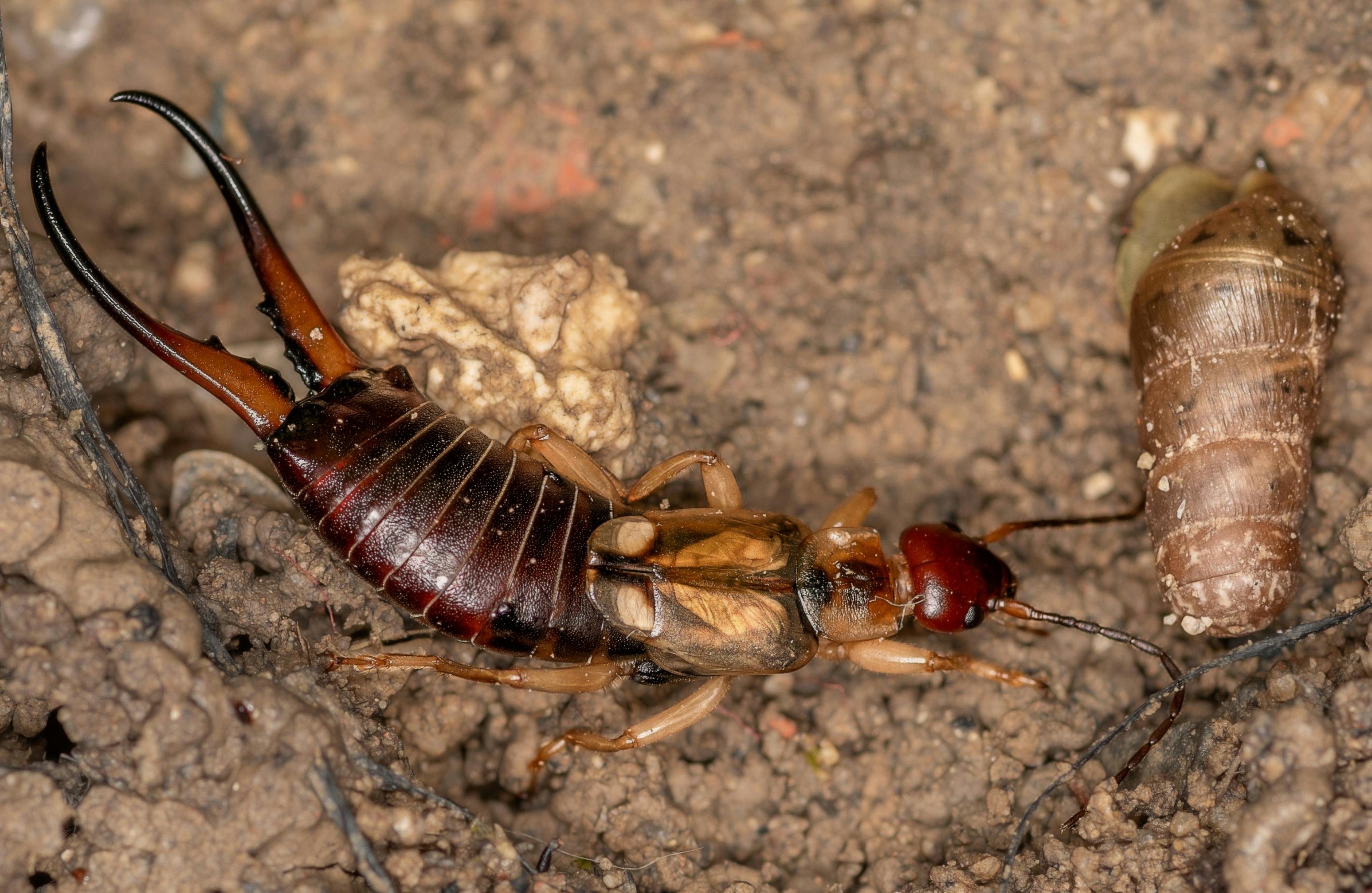
Earwigs are easily recognized by their elongated, flattened bodies and the pair of forceps-like pincers (cerci) that jut from the end of their abdomen. These pincers are not weapons; they’re primarily used for defense, mating rituals, and navigating tight spaces. Most species are dark brown to black, measuring 1–2 inches long. A key behavior to note is their nocturnal habit—earwigs hide in cracks, mulch, or leaf litter during the day and become active after sunset, when they may wander into homes, often leading homeowners to research earwig control cost Cumming as sightings increase.
How Earwigs Slip Inside Cumming Homes
In the Atlanta metro area, including Cumming, the humid subtropical climate creates ideal conditions for earwigs to thrive outdoors. They seek shelter in damp basements, crawl spaces, and garden beds, then exploit tiny gaps around doors, windows, and utility openings to cross the threshold. Cracks in foundation walls, unsealed vent pipes, and even pet doors serve as highways. Once inside, they follow the same moisture‑seeking path, often congregating near leaky pipes, bathroom fixtures, or kitchen sinks where humidity is highest.
Common Misconceptions: “Harmless” vs. Real Risks
Many homeowners dismiss earwigs as “harmless” because they rarely bite humans. While they are not aggressive, this myth can lead to complacency. Earwigs can become a nuisance when they congregate in large numbers, especially in kitchens or pantries. Their pincers can cause minor scratches on delicate fabrics or wallpaper, and their presence may signal underlying moisture problems that could attract more destructive pests such as termites or carpenter ants.
Potential Damage to Gardens, Décor, and Food
In the garden, earwigs feed on tender seedlings, ornamental flowers, and tender foliage, often leaving ragged edges that weaken plant vigor. Inside the house, they may chew on soft indoor plants, decorative wooden items, and even cardboard boxes. Although they are not primary food‑borne pathogens, earwigs can contaminate stored food items by walking across surfaces, leaving behind feces or bacterial residues. Over time, this can lead to unpleasant odors and a perception of unsanitary conditions.
EPA Guidelines on Indoor Pest Treatments
When it comes to controlling earwigs indoors, the U.S. Environmental Protection Agency (EPA) recommends using products that are specifically labeled for indoor use and following the manufacturer’s safety instructions. Integrated Pest Management (IPM) practices—such as sealing entry points, reducing moisture, and employing low‑toxicity baits—are encouraged to minimize chemical exposure. For detailed guidance, see the EPA’s Indoor Pest Management page.
Earwig Life Cycle and Seasonal Activity in Cumming
Three Stages, One Year
In the warm climate of Cumming, Georgia, earwigs complete their life cycle in roughly 12 months, moving from egg to nymph to adult. Females lay a single, parchment‑like egg case (called an ootheca) in late summer—usually August through early September. Each ootheca contains 30‑50 tiny eggs that hatch in about two weeks, giving rise to first‑instar nymphs.
The nymphs resemble miniature adults but lack fully developed wings and have softer exoskeletons. They molt five to six times, progressing through summer and into early fall. By November, most nymphs have reached the final instar and seek sheltered overwintering sites such as leaf litter, mulch, or cracks in foundations. In late February to early March, the cold barrier lifts, and the overwintered nymphs mature into breeding adults, ready to mate and start the cycle again.
What Drives Their Activity?
Three environmental factors dictate how quickly earwigs move through these stages and how active they appear around your home:
- Temperature: Earwigs thrive between 68 °F and 80 °F. When daytime highs dip below 55 °F, activity slows dramatically, and they retreat to protected micro‑habitats.
- Humidity: Moisture is essential for nymph development. Humid nights (above 60 % relative humidity) encourage foraging, while dry spells push them deeper into soil or mulch.
- Rainfall: Moderate spring rains create ideal breeding conditions, but heavy downpours can wash away egg cases and force nymphs to relocate, sometimes into homes.
Reading the Seasonal Activity Chart
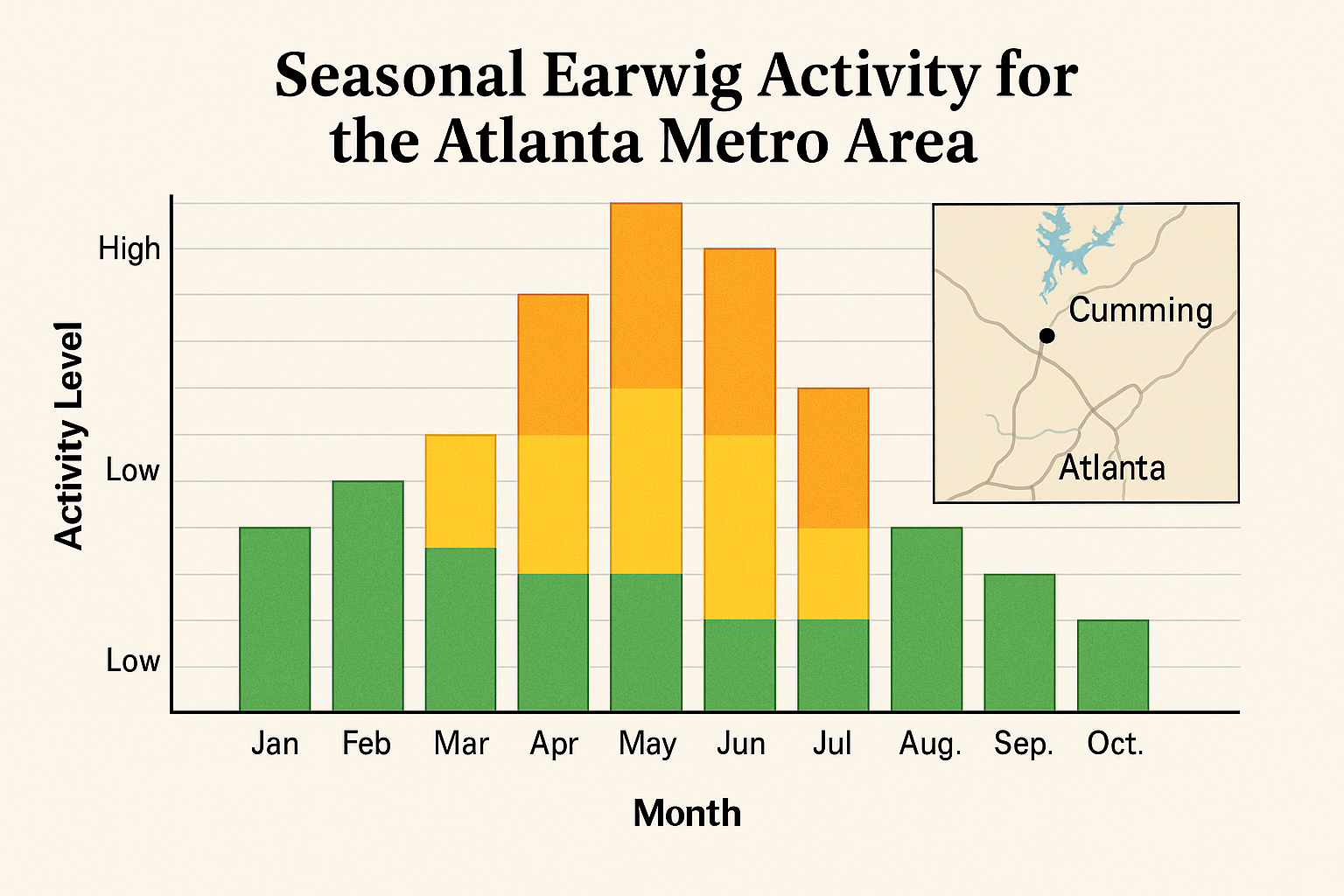
The chart above, based on data from the broader Atlanta metro area, highlights two clear peaks in earwig activity. The first peak runs from late March through May, when overwintered nymphs emerge and begin feeding. The second, smaller peak appears in September and October, coinciding with the final generation laying oothecae—periods when many homeowners begin evaluating earwig control cost Cumming to prevent seasonal infestations.
Notice the trough in July and August—high summer temperatures push earwigs into deeper, cooler soil layers, making them less visible on the surface. Likewise, activity drops sharply after early November as most individuals settle into winter hideaways.
Practical Inspection Timing
Use the chart to schedule proactive checks:
- Early Spring (mid‑March to early May): Walk around foundations, garden beds, and outdoor lighting fixtures. Look for small, dark nymphs or fresh egg cases in mulch.
- Late Summer (late August to early September): Inspect gutters, deck railings, and the undersides of patio furniture for adult earwigs preparing to lay eggs.
- Fall (late September to early November): Focus on moisture‑rich zones—flower beds, compost piles, and irrigation drip lines—to catch the second activity surge before they retreat for winter.
By aligning your inspections with these seasonal windows, you’ll catch earwig populations before they establish a foothold inside your home, saving you time and reducing the need for reactive treatments.
Identifying Earwig Infestations Inside Your Home
Earwigs are often mistaken for harmless house guests, but when they start gathering in numbers they can become a nuisance—and a sign that your home’s entry points need attention. Knowing what to look for is the first step toward an effective, affordable solution. Below you’ll find the visual clues, the hotspots where earwigs love to hide, and a quick DIY inspection you can run in under an hour.
Visual cues that scream “earwig activity”
Earwigs leave a trail of evidence that’s easy to spot once you know where to look. Keep an eye out for these tell‑tale signs:
- Droppings: Small, dark specks that resemble coffee grounds often appear near food sources, in cabinets, or along baseboards. Unlike cockroach droppings, earwig feces are smoother and less conical.
- Damaged foliage: If you notice chewed edges on indoor houseplants or wilted leaves in your garden beds, earwigs may be feeding on the tender tissue.
- Shed skins (exuviae): As earwigs molt, they leave behind translucent, papery shells. Finding several of these in a single area indicates a growing population.
- “Pincer” tracks: Earwigs move in a distinctive, slightly wavy line, often leaving faint indentations that end in a tiny “V” shape where their cerci (the rear pincers) brush the surface.
Typical hotspots inside and around the house
Earwigs prefer dark, damp environments where they can hide during the day and hunt at night. The most common gathering spots include:
- Basements and crawl spaces: Low humidity and limited light make these areas a perfect overnight refuge.
- Bathrooms: Leaky pipes, standing water, and tile grout provide the moisture earwigs crave.
- Kitchen cabinets: Crumbs, spilled food, and occasional moisture from dishwashing create an attractive buffet.
- Under sinks: The combination of water lines and occasional condensation is a magnet for these insects.
- Outdoor mulch beds: Mulch retains moisture and offers shelter, allowing earwigs to migrate indoors when the weather turns cooler.
DIY inspection: A step‑by‑step checklist
Before you call a professional, a quick visual sweep can confirm whether you’re dealing with a minor presence or a full‑blown infestation. Follow these five steps:
- Gather your tools: A flashlight, a small dustpan, a disposable glove, and a notebook for notes.
- Check under sinks: Pull the cabinet doors open, shine the light into the dark corners, and look for droppings, shed skins, or live earwigs. Use the dustpan to gently sweep any you find into a container for identification.
- Inspect door thresholds and window sills: Earwigs often travel along these seams. Look for the characteristic pincer tracks or a thin line of droppings.
- Examine garden beds and mulch: Lift a small section of mulch a few inches from the house. If you see a cluster of earwigs or their exuviae, they may be using the mulch as a staging area before entering your home.
- Search basements and crawl spaces: Walk along the perimeter with your flashlight, paying close attention to corners, joist spaces, and any pipe insulation. Spotting multiple shed skins in one spot usually means a resident colony.
Document what you find—location, number of individuals, and any damage observed. This information will be invaluable if you decide to enlist a professional, as it helps technicians target treatment precisely and avoid unnecessary applications.
Safety note: Handling earwigs without chemicals
Earwigs are not aggressive, and their pincers are primarily defensive. If you need to move them, follow these safe, chemical‑free practices:
- Wear disposable gloves: This protects both you and the earwig from accidental bites.
- Use a damp paper towel: Gently press the towel over the insect, then lift it away. The moisture prevents the earwig from escaping quickly.
- Release outdoors: Transfer the earwig to a shaded spot away from your home’s foundation, preferably near a rock pile or leaf litter where it can find shelter.
- Avoid sprays: Over‑the‑counter insecticides can harm beneficial insects and may leave residues on food‑prep surfaces. If the infestation is minor, manual removal combined with moisture control often does the trick.
By recognizing the visual clues, focusing on the right hotspots, and performing a systematic DIY inspection, you’ll be equipped to determine whether earwigs are a fleeting inconvenience or a problem that warrants professional treatment. At Anthem Pest Control, we’re ready to step in with safe, affordable solutions the moment you need them—just give us a call at 877‑371‑8196 or visit our website for a free estimate.
Control Options and Cost Comparison for Cumming Residents
When earwigs start turning your porch lights into a midnight buffet, you have two clear paths: roll up your sleeves and tackle the problem yourself, or call in a professional crew that knows how to seal the doors on these nocturnal nibblers. Below, we break down the most common DIY tricks, what a professional service actually does, and how the numbers stack up—helping homeowners compare earwig control cost Cumming options and decide which route saves time, money, and peace of mind.
DIY Methods: Traps, Diatomaceous Earth, and Natural Repellents
Most homeowners start with low‑cost, low‑effort solutions that can be bought at a local hardware store. Here’s what you’ll typically encounter:
- Traps – Simple cardboard or plastic containers baited with rolled‑up fruit or a damp piece of bread. Pros: Under $10 for a set, easy to set up, no chemicals. Cons: Traps catch only a fraction of the population, require frequent checking, and offer little long‑term control.
- Diatomaceous Earth (DE) – A powder made from fossilized algae that scratches the exoskeletons of earwigs. Pros: One‑time purchase (about $15‑$20 per bag) works for months, safe around pets when dry. Cons: Loses effectiveness when wet, must be applied in dry cracks and under mulch, and can be messy.
- Natural Repellents – Citrus oil, neem oil, or a mixture of vinegar and water sprayed around entry points. Pros: Readily available, pleasant scent, minimal health risk. Cons: Requires re‑application every few days, limited penetration into soil or deep crevices, and efficacy varies by earwig species.
Overall, DIY kits usually cost between $10 and $30 for the initial setup, with recurring expenses for bait and re‑applications. Effectiveness is modest—most homeowners see a 20‑40% reduction in sightings, which can be enough for a light infestation but rarely eliminates the problem.
Professional Services: Inspection, Targeted Applications, and Barrier Treatments
A licensed pest‑control provider like Anthem Pest Control starts with a thorough inspection to locate nesting sites, entry points, and any contributing moisture problems. From there, the service typically includes:
- Targeted pesticide applications – EPA‑approved granules or sprays placed directly in earwig hideouts. These chemicals act quickly and stay active for weeks.
- Barrier treatments – A perimeter spray around the home’s foundation and any outdoor structures, creating a protective wall that deters earwigs from crossing onto your property.
- Follow‑up visits – Most plans schedule a second visit 2‑4 weeks after the initial treatment to assess results and apply a booster if needed.
Professional earwig control in Cumming typically runs $120‑$200 for a single‑visit package, with multi‑visit or annual prevention plans ranging from $250 to $350. The trade‑off is a 80‑95% reduction in earwig activity after the first treatment, and a long‑term barrier that keeps new arrivals at bay.
Cost Comparison Infographic
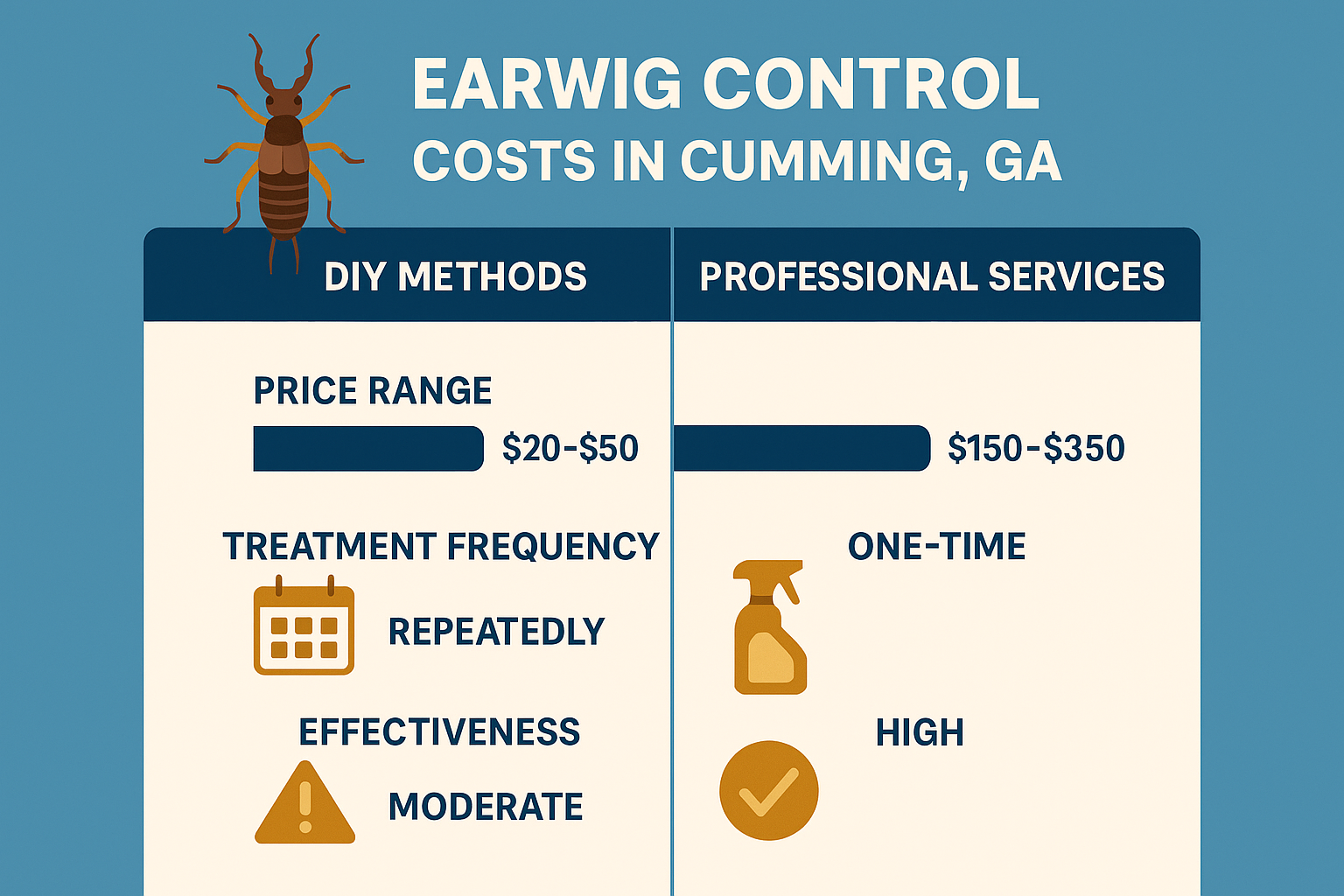
| Aspect | DIY Approach | Professional Service |
|---|---|---|
| Initial Cost | $10‑$30 | $120‑$200 |
| Ongoing Expenses | $5‑$15 per month (baits, re‑applications) | Included in annual plan ($250‑$350) |
| Treatment Frequency | Weekly checks, re‑apply as needed | 1‑2 visits per season, then annual barrier |
| Typical Efficacy | 20‑40% reduction | 80‑95% reduction |
| Time Investment | 2‑3 hours per month | 1‑2 hours total (technician visits) |
Long‑Term Savings: Why Professional Prevention Often Pays Off
At first glance, spending $150 on a one‑time professional visit might seem steep compared with a $20 DIY starter kit. However, consider the hidden costs of repeated DIY attempts: you’ll be buying bait every few weeks, re‑spraying repellents, and spending valuable weekend hours chasing earwigs that keep re‑emerging from moist soil or wood piles. Over a full year, those small purchases can add up to $150‑$200, and the frustration factor is hard to quantify.
Professional barrier treatments, on the other hand, create a lasting shield. Once the perimeter is treated, most earwigs are unable to cross the protected zone, meaning you won’t need to restock traps or powders for months. For homeowners who experience seasonal spikes—particularly after the rainy summer months—an annual plan eliminates the need for reactive DIY fixes and reduces the risk of secondary pest problems (like ants or spiders that follow earwig trails).
Anthem Pest Control’s Transparent Pricing Model
Anthem Pest Control stands out in the Cumming market by offering a clear, upfront price structure. The company provides a single‑visit earwig treatment at $149, which includes a detailed inspection, targeted pesticide application, and a 30‑day guarantee: if you spot earwigs again within that window, a technician returns at no extra charge. For homeowners who prefer a hands‑off approach, the annual prevention package is $299, covering two seasonal visits, a full‑home barrier, and unlimited follow‑up calls.
All products used are EPA‑approved and applied by certified technicians, ensuring safety for children, pets, and the surrounding environment. Anthem’s commitment to transparent pricing means you’ll never encounter surprise fees—what you see on the quote is what you pay.
Choosing a Professional Partner – Anthem Pest Control
When earwigs start invading your porch lights or hiding in your garden beds, the temptation to grab a DIY spray is strong. However, professional treatment consistently outperforms home remedies because licensed technicians know exactly where earwigs breed, how they travel, and which products work without harming your family or pets. A single, well‑executed application from a trained expert can eradicate a colony faster and prevent future infestations—something most over‑the‑counter solutions simply can’t guarantee.

Why Anthem Stands Out in Cumming
Anthem Pest Control brings local insight and national standards together. All technicians are fully licensed, undergo continuous training, and use EPA‑approved products that are proven effective against earwigs while meeting strict safety regulations. Because our team lives and works in the Cumming area, we understand the seasonal patterns that drive earwig activity and can tailor interventions to the unique micro‑climates of your neighborhood.
Service Highlights You’ll Appreciate
- Comprehensive inspection: We start with a thorough walk‑through to locate nesting sites, entry points, and any contributing factors.
- Customized treatment plan: Based on the inspection, we select the right formulation and application method for your property.
- Follow‑up guarantee: A second visit ensures the earwig population stays suppressed, and we’ll re‑treat at no extra charge if needed.
- Transparent pricing: No hidden fees—just a clear, upfront quote that matches the scope of work.
Safety and Environmental Responsibility
Our products are chosen for their low toxicity to children and pets, and we follow integrated pest management practices that minimize environmental impact. You can rest easy knowing the treatment targets earwigs specifically, leaving beneficial insects and your backyard ecosystem intact.
Ready to Take the Next Step?
If you’re ready for a reliable, locally‑trusted solution, request a free, no‑obligation quote today. Call us at 877‑371‑8196 or visit anthempest.com to schedule your inspection. Let Anthem Pest Control give you peace of mind—one earwig‑free yard at a time.
Take Action Today – Protect Your Home from Earwigs
Spotting earwigs early can save you from costly damage and sleepless nights. Prompt detection, followed by timely treatment, stops these nocturnal invaders before they establish a foothold in your crawl spaces, gardens, or indoor rooms.
Remember that earwig activity spikes in the warm months of late spring and early summer, then again in the humid fall. These seasonal peaks are the perfect moments to enlist a professional who knows the local climate, the species that thrive in Cumming, and the most effective control methods.
We invite you to schedule a free inspection so our technicians can evaluate your property’s risk level and design a customized plan that fits your budget and lifestyle.
Whether you prefer a one‑time treatment or an ongoing protection program, our team is ready to help you enjoy a pest‑free home.
Call us today at 877-371-8196 or visit Anthem Pest Control to get started and get clear answers about earwig control cost Cumming for your home.