Understanding Gnat Problems in Druid Hills, GA

What Exactly Are Gnats?
Gnats are tiny, flying insects that belong primarily to two families: Ceratopogonidae (biting midges) and Sciaridae (fungus gnats), and they are a common reason homeowners seek gnat control Druid Hills GA services. In Georgia you’ll most often encounter the biting midge, which leaves a noticeable, itchy welt, and the fungus gnat, which flutters around houseplants and decaying organic matter. Both species are usually under a quarter-inch long, making them easy to overlook until they gather in large numbers.
How to Spot a Gnat Infestation
Homeowners typically notice gnats in three ways:
- Swarming near lights: Adult gnats are attracted to indoor lighting, so a sudden cloud of tiny flies around a porch light or kitchen fixture is a red flag.
- Biting or irritating bites: Biting midges leave small, red, itchy bumps, often on exposed skin during dusk or early evening.
- “Fuzzy” presence around plants: Fungus gnats hover near potted plants, especially if the soil stays moist; you may see a fine, dust‑like cloud when you disturb the foliage.
Why Druid Hills Is a Gnat Hotspot
Druid Hills’ humid summers, abundant shade trees, and decorative water features create a perfect breeding ground for gnats. Moist soil in flower beds and the constant presence of standing water in fountains provide the damp environments that both families of gnats need to lay eggs. Additionally, the neighborhood’s mature landscaping means there’s plenty of organic material for fungus gnats to feed on, while the warm evenings encourage adult biting midges to emerge and seek blood meals.
Potential Health Impacts
While gnats are not the most dangerous pests, they can still affect homeowner comfort and health:
- Allergic reactions: Some people develop heightened skin sensitivity after repeated bites, leading to swelling and prolonged itching.
- Skin irritation: Even non‑biting fungus gnats can cause irritation simply by swarming on exposed skin.
- Minor pathogen transmission: According to the National Pest Management Association’s Gnat Guide, certain biting midges can carry viruses that affect wildlife and, in rare cases, humans. The risk for homeowners is low but not negligible.
Where to Learn More
For a deeper dive into species identification, life cycles, and control strategies, visit the NPMA’s comprehensive guide on gnats: NPMA Gnat Guide. Understanding the biology behind these insects is the first step toward effective, lasting control.
Common Gnat Breeding Sites Around Your Home
Gnats may seem harmless, but a few hidden hotspots can turn a quiet yard into a buzzing nightmare. By learning where these tiny insects love to lay their eggs, you can strike before the population explodes. Below we break down the most common outdoor and indoor breeding zones, explain why they’re perfect for gnats, and give you a quick‑scan checklist to eliminate each one.
Moisture‑rich zones
Gnats need water to complete their life cycle, so any standing or slowly dripping source is a magnet. Look for:
- Birdbaths that haven’t been changed in a week.
- Fountains with clogged pumps or hidden leaks.
- Clogged gutters that hold rainwater for days.
- Leaky outdoor faucets or irrigation heads that drip continuously.
Even a shallow puddle that evaporates after a few hours can support dozens of larvae if organic debris is present.
Organic debris
Decaying plant material provides the food gnats need to grow from larvae into adults. Common culprits include:
- Compost piles that are too moist or uncovered.
- Mulched flower beds where leaves and twigs accumulate.
- Over‑watered potted plants that sit in saucers.
- Stacks of fallen leaves or garden clippings left near the foundation.
When organic matter sits in damp conditions, it becomes a miniature nursery that can sustain a gnat population for weeks.
Indoor sources
Gnats don’t stay outside—they’ll follow the moisture indoors. Typical indoor hotspots are:
- Houseplants with soggy soil or poor drainage.
- Bathroom or kitchen drains that trap food particles.
- Poorly sealed windows and doors that let humid air seep in, raising indoor humidity.
- Pet water dishes left uncovered for long periods.
These areas create a continuous supply of moisture and organic residue, allowing gnats to reproduce right in your living space.
Why standing water and organic matter matter
Gnats lay eggs on the surface of water or in moist, decomposing material. The eggs hatch into larvae that feed on bacteria and fungi thriving in that same environment. Within 5‑7 days, larvae mature into adults, which then lay more eggs. As long as you have a combination of water and organic debris, the cycle repeats, and a small infestation can quickly become a full‑blown swarm.
Home inspection checklist
- Check birdbaths and pet water dishes daily; change water at least every 48 hours.
- Inspect fountains and pond filters for clogs; run them for a few minutes each morning.
- Clear gutters and downspouts after every rainstorm.
- Repair any leaking outdoor faucets, sprinklers, or irrigation heads.
- Turn compost piles frequently and keep them covered with a breathable tarp.
- Remove fallen leaves and garden debris from around foundations.
- Allow mulch to dry between watering; consider using inorganic mulch in high‑moisture zones.
- Empty saucers under potted plants; use pots with drainage holes.
- Run kitchen and bathroom drains with hot, soapy water weekly.
- Seal gaps around windows and doors; use weatherstripping to reduce indoor humidity.
Seasonal Gnat Activity and Prevention Tips
In Druid Hills, gnat populations follow a predictable rhythm that mirrors the local climate, which is why gnat control Druid Hills GA efforts are most effective when timed seasonally. Expect a sharp surge during the hot, humid summer months, a moderate presence in spring and fall, and a noticeable lull once winter’s chill sets in. Understanding this pattern helps you time your preventive actions for maximum impact.
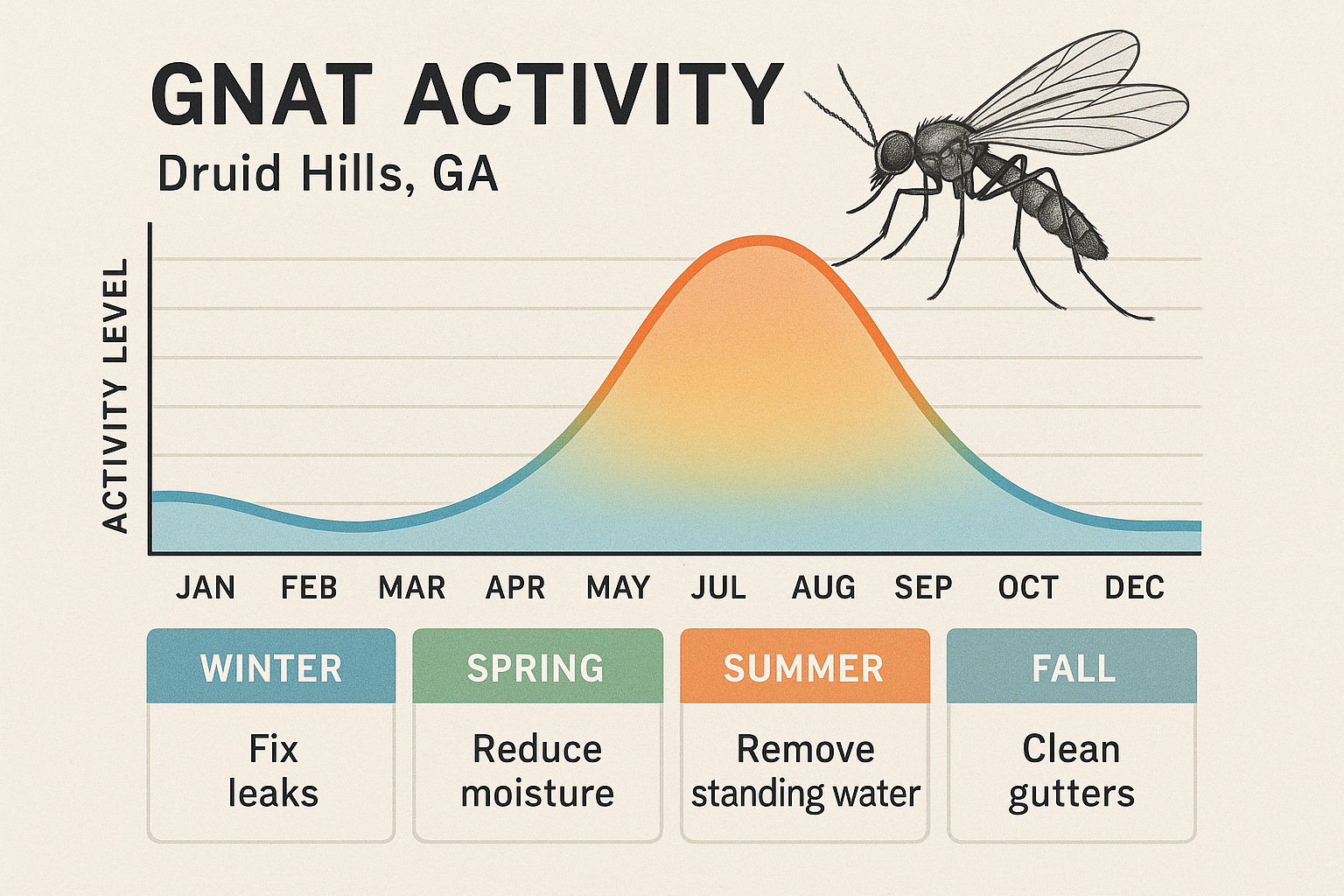
| Season | Activity Level |
|---|---|
| Spring (Mar‑May) | Moderate – early breeding begins |
| Summer (Jun‑Aug) | High – peak breeding and adult emergence |
| Fall (Sep‑Nov) | Moderate – activity tapers as temperatures drop |
| Winter (Dec‑Feb) | Low – most adults die off, only a few overwintering larvae remain |
Why does summer become a gnat hotspot? Warm temperatures accelerate the life cycle, while high humidity provides the moisture larvae need to develop. Stagnant water, dew‑covered foliage, and poorly drained soils become ideal breeding grounds, allowing populations to explode in just a few weeks.
Spring Prevention
- Trim back overgrown shrubs and lawn edges to improve air circulation.
- Clear gutters and downspouts of leaves and debris to eliminate standing water.
- Reduce excessive irrigation; water early in the day so surfaces dry before nightfall.
Summer Prevention
- Install misting systems or oscillating fans on patios to create a dry, breezy environment that deters gnats.
- Cover ornamental ponds, birdbaths, and other water features at night to prevent larvae from maturing.
- Swap traditional outdoor bulbs for yellow‑light (amber) fixtures, which are less attractive to flying insects.
Fall Prevention
- Rake and compost fallen leaves promptly; they retain moisture and shelter larvae.
- Store garden tools, pots, and hoses in a dry location to avoid hidden water sources.
- Inspect indoor plant soil for soggy patches and replace with well‑draining potting mix.
Winter Prevention
- Maintain indoor relative humidity below 50% using dehumidifiers or proper ventilation.
- Seal cracks around windows, doors, and foundation vents that let cold, damp air seep indoors.
- Check attic and crawl‑space ventilation to prevent condensation that could attract gnats seeking shelter.
Professional Gnat Control Methods and What to Expect

Low‑Pressure Misting
Our technicians use a calibrated low‑pressure misting system that creates a fine, cloud‑like spray. The mist penetrates cracks, foundation seams, and the base of ornamental plants without soaking surfaces. Because the droplets are ultra‑fine, they settle gently on surfaces and dry quickly, keeping floors, carpets, and furniture safe for children and pets. The formulation is specifically chosen for gnat larvae and adult flies, delivering a lethal dose while remaining non‑toxic to mammals when used as directed.
Soil Drenches for Indoor and Outdoor Plants
Gnats often breed in the moist potting media of houseplants or garden beds. We apply a targeted soil drench that circulates through the root zone, reaching larvae hidden deep in the substrate. The product is water‑soluble and breaks down within days, leaving no residue that could harm foliage. After treatment, you’ll notice fewer adult gnats emerging from the soil within 48 hours.
Barrier Treatments
To protect the home’s perimeter, we spray a residual barrier around doors, windows, and foundation walls. This creates an invisible shield that kills gnats on contact and discourages new adults from entering. The barrier remains active for up to three weeks, buying you time between service visits and reducing the need for repeat indoor applications.
Safety Protocols
All products we use are EPA‑approved and formulated for residential use. Technicians wear full personal protective equipment (gloves, goggles, and respirators) and follow strict handling procedures. Homeowners are asked to:
- Cover or store all food, utensils, and pet dishes.
- Secure pets in a separate room or move them outdoors for the duration of the treatment.
- Close windows and doors for at least 30 minutes after application to allow the mist to settle.
These simple steps ensure the chemicals work efficiently while keeping your family safe.
Timeline and What to Expect
From the first visit, most homeowners see a noticeable drop in gnat activity within 1–2 weeks. The initial misting tackles adult flies, while soil drenches eliminate the hidden larvae. If hotspots persist—often around over‑watered plants or damp basements—we schedule a follow‑up visit within 7–10 days to re‑treat those zones. Full eradication typically requires 2–3 visits, depending on the severity of the infestation and the homeowner’s moisture management practices.
Why Choose Professional Service Over DIY?
DIY sprays may look attractive on a price tag, but they rarely reach the hidden breeding sites that sustain a gnat problem. Our comprehensive approach offers:
- Thorough coverage: Specialized equipment reaches cracks and soil that household sprayers miss.
- Expert identification: We confirm that gnats—not fruit flies or fungus gnats—are the culprit, tailoring the treatment accordingly.
- Warranty protection: All Anthem Pest services come with a satisfaction guarantee, so if gnats return within the warranty period, we’ll re‑treat at no extra cost.
Choosing Anthem Pest means you get a safe, science‑backed solution that protects your home, your family, and your peace of mind.
Pricing Options for Gnat Control Services
Choosing the right gnat control Druid Hills GA plan depends on how severe the problem is and how proactive you want to be. Anthem Pest Control keeps its pricing simple and transparent, so you can match a service tier to your home’s specific needs without any hidden fees.

Service Tier Overview
| Tier | Price | Treatment Frequency | Coverage Area | Guarantee | Key Features |
|---|---|---|---|---|---|
| Basic | $80 | One-time low‑pressure mist | Up to 1,500 sq ft (single zone) | 30‑day | Single mist application; basic preventative tips |
| Standard | $120 | Mist + soil drenches (up to 5 indoor plants) | Up to 2,500 sq ft (multiple zones) | 60‑day | Includes plant soil treatment; extended tips on indoor humidity control |
| Premium | $180 | Full perimeter barrier, misting, unlimited soil drenches, quarterly follow‑ups | Whole property (no square‑foot limit) | 90‑day | Comprehensive barrier; quarterly inspections; detailed preventive guide for garden and patio areas |
What Sets the Tiers Apart?
- Treatment frequency: Basic is a single visit, Standard adds targeted plant care, while Premium includes quarterly check‑ins to keep gnats at bay year‑round.
- Coverage area: If you have a modest patio or balcony, Basic may suffice. Larger yards, multiple decks, or extensive landscaping benefit from Standard or Premium.
- Preventative tips: All plans receive a written guide, but Premium customers get a customized checklist covering soil moisture, outdoor lighting, and waste management.
Optional Add‑Ons
If gnats aren’t the only nuisance, you can enhance any tier with these add‑ons:
- Mosquito barrier – $45 per treatment
- Rodent exclusion package – $70 one‑time, then $30 per quarterly follow‑up
- Seasonal foliage spray – $30 per application
Use the infographic above for a quick visual comparison, then pick the tier that aligns with your home’s size, plant inventory, and how aggressively you want to prevent future infestations. If you’re unsure, our friendly technicians are just a call away at 877‑371‑8196 to walk you through the options.
Take Action to Keep Your Home Gnat‑Free
Gnats may seem harmless, but an unchecked infestation can turn your backyard into an uncomfortable, buzzing zone. The fastest way to stay ahead is to focus on three core habits:
- Early detection: Spotting the first signs—tiny swarms around plants or damp areas—lets you intervene before numbers explode.
- Seasonal prevention: Warm, humid months are prime gnat time. Schedule inspections and treatments early in spring to break the life cycle.
- Eliminate breeding sites: Remove standing water, clean clogged gutters, and keep compost piles covered. Without moisture, gnats lose their nursery.
When DIY steps aren’t enough, Anthem Pest Control’s certified technicians bring a blend of science‑backed methods and deep local knowledge to every job. Our team knows the specific habitats and weather patterns of Druid Hills, GA, so we target the exact sources of gnat activity. Using EPA‑approved treatments, moisture‑reducing techniques, and ongoing monitoring, we create a barrier that lasts beyond a single spray, giving you peace of mind throughout the season.
If you’re ready to enjoy your backyard without the nuisance of gnats, let Anthem Pest Control handle the problem for you. Our transparent pricing and satisfaction guarantee make it easy to protect your family and home.
Call us today at 877‑371‑8196 for a free, no‑obligation quote. Our friendly staff will walk you through the process, answer any questions, and schedule a treatment that fits your calendar.
Take the first step toward a gnat-free oasis—visit Anthem Pest Control online and discover how simple, effective gnat control Druid Hills GA protection can be.