Understanding Earwigs and Their Impact in Sugar Hill, GA
What Exactly Is an Earwig?
Earwigs belong to the order Dermaptera, a small group of insects that includes roughly 2,000 species worldwide. In North America, the most common household species is the European earwig (Forficula auricularia), a pest often discussed when homeowners research earwig control cost Sugar Hill solutions. These nocturnal insects are easily recognized by their elongated, flattened bodies that taper toward a pair of force-like cerci (the “pincers” at the rear). Adults typically measure 12–25 mm, sporting a reddish-brown exoskeleton that can appear darker in shaded garden spots.
Key Identification Markers
- Cerci: Curved, pincer‑like appendages used for defense and mating rituals.
- Body shape: Soft, laterally compressed abdomen that allows them to slip under mulch and bark.
- Coloration: Uniform brown to dark brown; younger nymphs are lighter and lack fully developed cerci.
- Wings: Some adults have short, non‑functional wings folded beneath short forewings; they rarely fly.
Where Earwigs Hang Out in a Sugar Hill Yard
In the humid climate of Sugar Hill, earwigs thrive in any damp, sheltered micro‑habitat. Typical hotspots include:
- Fresh or decomposing mulch that retains moisture.
- Garden beds with dense foliage or compost piles.
- Wood piles, firewood stacks, and even the undersides of deck railings.
- Cracks in foundation walls or gaps around exterior doors where moisture accumulates.
Because they are nocturnal, you’ll most often see them emerging after sunset, especially after a rainstorm.
Potential Damage to Your Home and Garden
Earwigs are primarily omnivorous scavengers, but they can become a nuisance when their numbers swell. Common damage includes:
- Plants: Feeding on tender shoots, seedlings, and flower buds, they can cause ragged leaf edges and stunted growth.
- Outdoor furniture: Chewing on wood or plastic components, especially if the material is damp.
- Home exteriors: While they rarely chew through structural wood, they may gnaw at paint or caulking, creating entry points for more destructive pests.
Most homeowners notice earwigs after they’ve already caused minor aesthetic damage, which is why early identification matters.
Why Earwig Presence Signals a Larger Pest Management Need
Seeing earwigs in your yard often indicates that the environment is moist and offers abundant organic debris—conditions that also attract termites, carpenter ants, and other hidden threats. An earwig infestation can serve as an early warning sign that your property’s moisture control and sanitation practices need a review. Addressing the root causes—such as fixing drainage issues, reducing mulch depth, and sealing cracks—helps prevent not only earwigs but also the more costly pests that could damage your home’s structure.
Credible Facts from the EPA
The U.S. Environmental Protection Agency notes that earwigs are “generally harmless to humans but can become a nuisance when they enter homes in large numbers” and emphasizes the importance of proper sanitation and moisture control to keep populations low. For a deeper dive into earwig biology and management recommendations, visit the EPA’s pest fact sheet: https://www.epa.gov/pests/earwig.
Seasonal Activity Patterns of Earwigs in Sugar Hill
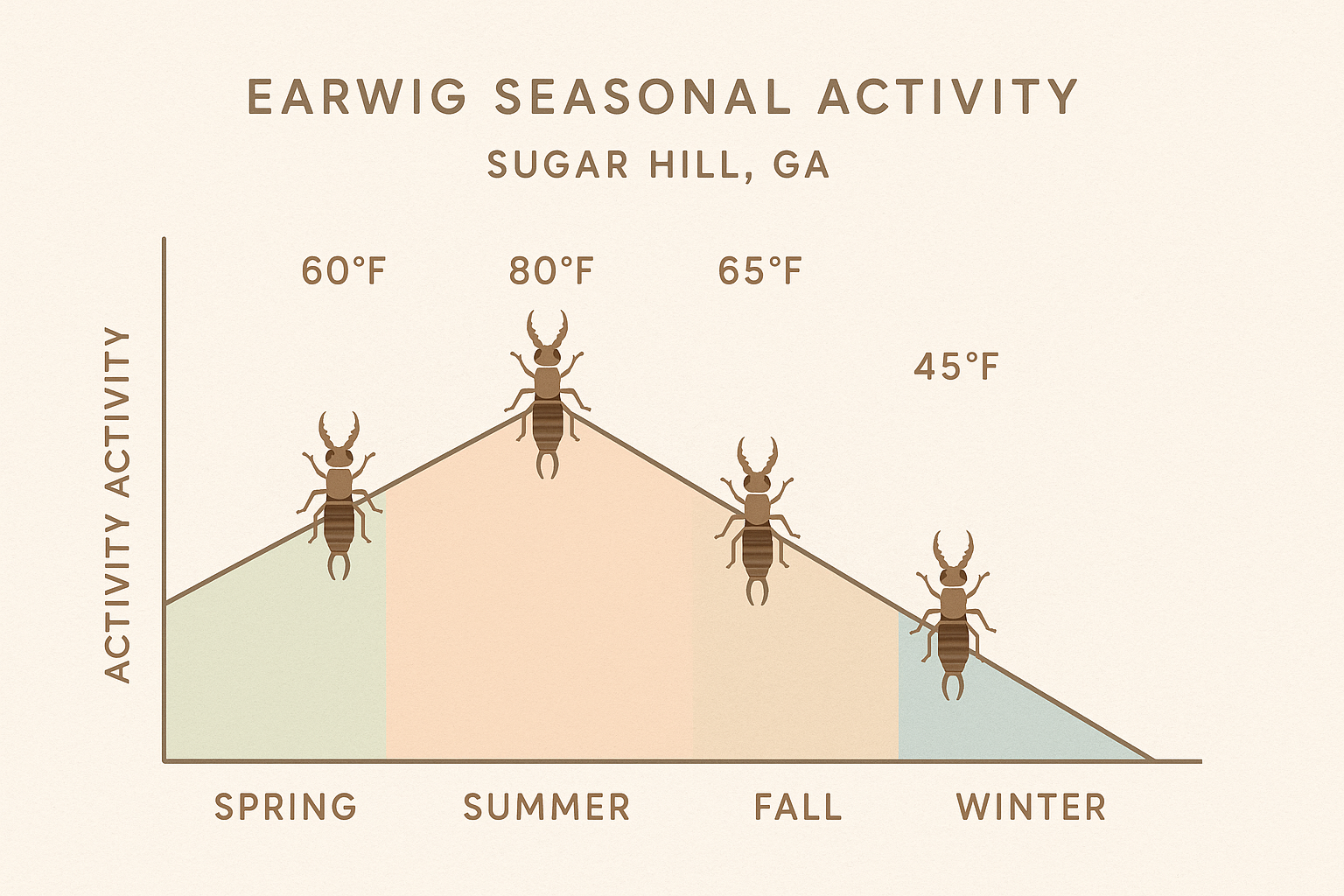
Earwigs aren’t active year-round; they follow a predictable four-season rhythm that mirrors Sugar Hill’s humid subtropical climate—a pattern that directly influences earwig control cost Sugar Hill homeowners may face throughout the year. Understanding this cycle lets you schedule inspections, set traps, and call in a professional before the bugs become a nuisance.
Four‑Season Activity Cycle
In the southeastern U.S., earwigs move through four distinct phases:
- Winter (December‑February): Temperatures dip below 50 °F (10 °C) at night, driving earwigs deep into soil, leaf litter, and protected crevices. Surface activity is minimal.
- Spring (March‑May): Soil warms to 60‑70 °F (15‑21 °C) and moisture levels rise after winter rains. This is the first major surge in foraging and mating.
- Summer (June‑August): Daytime heat often exceeds 90 °F (32 °C) with lower humidity. Earwigs retreat to cooler, damp micro‑habitats, reducing visible movement.
- Fall (September‑November): Temperatures moderate and rainfall increases, prompting a second peak of activity as earwigs seek mates and suitable overwintering sites.
Why Temperature and Moisture Matter
Earwigs are cold‑blooded; their metabolism speeds up when the ground stays between 55‑75 °F (13‑24 °C) and when humidity stays above 60 %. Sugar Hill’s average monthly data (U.S. Climate Data) shows:
| Season | Avg. Temp (°F) | Avg. Humidity | Activity Level | Recommended Action |
|---|---|---|---|---|
| Winter | 38‑48 | 70 % | Low | Inspect foundations, seal cracks |
| Spring | 55‑70 | 75‑85 % | High | Deploy DIY traps, schedule pro treatment |
| Summer | 80‑92 | 55‑65 % | Moderate‑Low | Maintain moisture barriers, keep yard tidy |
| Fall | 60‑70 | 80‑90 % | High | Final trap placement, prep for winter |
Visual Timeline
Actionable Tips for Homeowners
Best months for DIY traps: Late March through early May and again from late September to early November. Place rolled‑up newspaper or cardboard traps near garden beds, exterior walls, and under decks. Check daily and dispose of captured insects.
Optimal windows for professional treatment: Early April and late October give technicians the chance to apply perimeter sprays or bait stations when earwigs are actively foraging but not yet seeking deep shelter. A pre‑treatment inspection in late February helps identify vulnerable entry points.
Remember to reduce excess moisture around your home—fix leaky gutters, keep mulch no deeper than three inches, and ventilate crawl spaces. These simple steps cut down the humidity that earwigs love.
For a deeper dive into regional pest data, consult the University of Georgia Extension publication C874 – Earwigs (Dermaptera) in Georgia. It offers county‑specific temperature trends and management recommendations that align perfectly with the seasonal patterns outlined here.
Effective Earwig Control Methods for Homeowners
Earwigs are nocturnal scavengers that can become a nuisance when they enter basements, crawl spaces, or garden beds. Sugar Hill homeowners have tools ranging from simple DIY measures to full‑service professional treatments. Knowing each option’s strengths and limits lets you choose a safe, cost‑effective solution.
Chemical Options
Over‑the‑counter (OTC) sprays and granules are the most accessible chemicals. Products containing pyrethroids or carbaryl can be applied around doorways, foundation cracks, and garden borders. Professional‑grade insecticides—often formulated with bifenthrin or chlorpyrifos—provide deeper penetration and longer residual activity, but they usually require a licensed applicator.
- Pros: Immediate knock‑down, widely available, inexpensive for small areas.
- Cons: Limited residual, possible toxicity to pets/children, resistance risk.
- Safety: Apply in early evening, wear gloves and eye protection, follow label re‑entry intervals.
Physical Controls
Physical barriers work without chemicals and are ideal for homeowners who prefer a “green” approach. Sticky traps placed along baseboards capture wandering earwigs, while shallow pitfall traps—filled with a few centimeters of soapy water—draw them in and drown them. A perimeter barrier of copper tape or diatomaceous earth around the foundation creates a dry, abrasive surface that earwigs avoid.
- Pros: No chemical exposure, inexpensive, easy to install and monitor.
- Cons: Requires regular inspection and replacement, less effective for large, hidden colonies.
- Safety: Position traps away from pet feeding areas, and wear shoes when walking through diatomaceous earth to avoid skin irritation.
Biological Approaches
Encouraging natural predators can keep earwig numbers in check over the long term. Birds such as wrens and sparrows, as well as toads and ground beetles, feed on earwigs when habitat is suitable. For a more targeted method, apply beneficial nematodes (e.g., Steinernema carpocapsae) to moist soil; these microscopic worms infect and kill earwigs without harming humans, pets, or plants.
- Pros: Sustainable, minimal chemical footprint, improves overall garden biodiversity.
- Cons: Predator attraction takes time to establish, nematode efficacy drops in dry conditions.
- Safety: Distribute nematodes evenly with a garden sprayer during early morning or evening when soil is cool and moist.
Cultural Practices
Most earwig problems stem from favorable micro‑environments. Removing leaf litter, wood piles, and other debris eliminates daytime shelters. Fixing leaky gutters, basement cracks, and indoor moisture sources reduces the humidity earwigs love. Finally, seal exterior gaps with silicone caulk or weatherstripping to block entry points.
- Pros: Prevents future infestations, reduces need for chemicals, improves home energy efficiency.
- Cons: Requires upfront labor and occasional maintenance.
- Safety: Use a ladder safely when inspecting roof gutters, and wear a dust mask when cleaning dusty crawl spaces.
When to Call a Professional
If you notice earwigs inside living spaces, encounter a dense colony in a basement, or live in a rental where chemical use is restricted, it’s time to enlist a licensed technician. Professionals can perform targeted fogging, apply EPA‑registered residuals, and provide a comprehensive inspection that identifies hidden entry points. Fogging, in particular, disperses a fine mist that reaches cracks and voids that DIY sprays often miss.

Anthem Pest Control offers a transparent pricing model that aligns with the national averages published by the National Pest Management Association. For a detailed breakdown of typical earwig treatment costs, see the NPMA cost data. When a professional handles the job, you gain the peace of mind that comes from proper formulation, calibrated equipment, and a warranty that covers re‑infestation.
Earwig Control Pricing – What Homeowners Should Expect
When you call a pest-control professional in Sugar Hill, you’ll quickly notice that most companies break their earwig services into three clear tiers—a structure that directly affects earwig control cost Sugar Hill homeowners pay. Understanding what each tier delivers helps you compare quotes side-by-side and choose a plan that fits both your budget and the severity of the infestation.
Service Tiers Explained
- Basic – A single, one‑time treatment covering the interior of your home. Ideal for homeowners who have spotted a few earwigs and want a quick knock‑down.
- Standard – Includes the initial treatment plus two follow‑up visits spaced three months apart. This tier often adds a simple monitoring device (like a sticky trap) to track any rebound activity.
- Premium – A comprehensive package with quarterly visits for a full year, advanced monitoring (electronic sensors or pheromone traps), and a preventive barrier applied around the foundation. Premium plans also typically feature a satisfaction guarantee.
Pricing Infographic
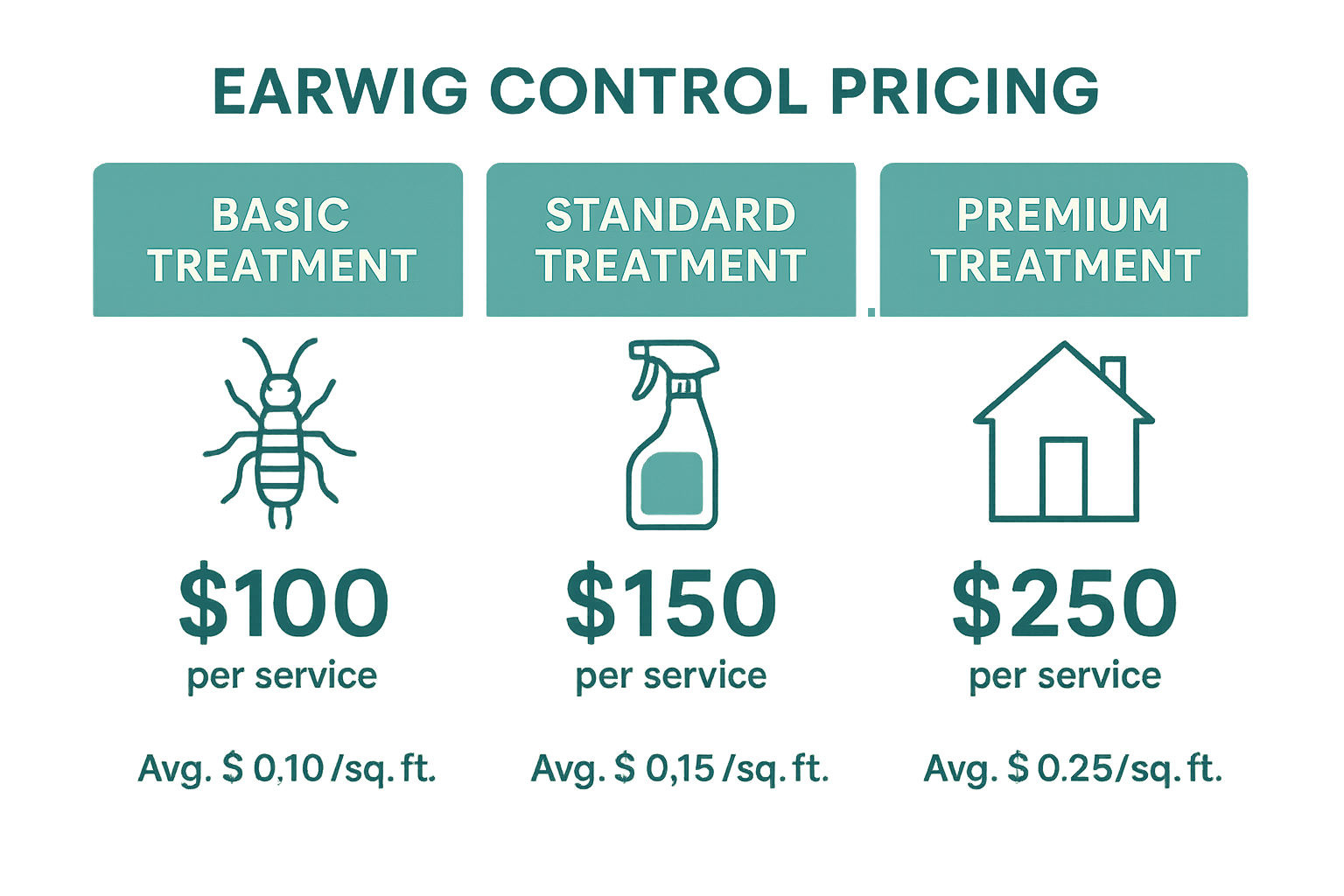
| Tier | Per‑Service Cost | Average Cost per Sq ft |
|---|---|---|
| Basic | $120 – $150 | $0.10 – $0.12 |
| Standard | $300 – $380 | $0.18 – $0.22 |
| Premium | $620 – $750 | $0.35 – $0.40 |
Factors That Influence the Final Price
Even within the same tier, a few variables can shift the total cost. Larger properties require more product and labor, so square‑footage is a primary driver. A heavy earwig infestation may need stronger, possibly organic, formulations, which can raise material costs. Treatment type matters too—chemical sprays are usually less expensive than integrated pest‑management (IPM) approaches that combine baits, traps, and habitat modification. Finally, geographic nuances such as local regulations or seasonal demand in Sugar Hill can add a modest premium.
How to Evaluate a Quote
When you receive a written estimate, look for these transparent line items:
- Initial inspection fee (if any) and its purpose.
- Detailed breakdown of product costs versus labor.
- Frequency of follow‑up visits and what each visit entails.
- Any monitoring devices included, along with replacement schedules.
- Warranty or guarantee language—most reputable firms offer a “no‑re‑infestation” guarantee for a set period.
Affordable, Effective Solutions Without Hidden Fees
Anthem Pest Control believes you shouldn’t have to choose between price and protection. Our tiered pricing is designed to give homeowners a clear roadmap: start with a Basic treatment if the problem is isolated, upgrade to Standard for seasonal coverage, or opt for Premium when you want a year‑long shield with proactive monitoring. Because every line item is itemized up front, there are no surprise charges after the job is done. This transparency lets you budget confidently while keeping earwigs out of your home.
Choosing a Reliable Pest Control Provider in Sugar Hill
Check Licensing, Insurance, and Certifications
Before you sign a contract, confirm that the company holds a valid Georgia pest‑control license and carries general liability insurance. These two safeguards protect you if something goes wrong during a treatment. Look for certifications such as EPA‑registered applicator status or membership in professional bodies like the National Pest Management Association (NPMA). A provider that can show these credentials demonstrates a commitment to regulatory compliance and industry best practices.
Experience with Earwig‑Specific Treatments and Local Knowledge
Earwigs thrive in the humid, wooded environment around Sugar Hill, and their activity peaks in late summer and early fall. A reputable pest‑control firm should be able to explain how local climate patterns influence earwig behavior and describe the specific methods they use—whether it’s baiting, perimeter sprays, or habitat modification. Ask how many years they have treated earwigs in the area; seasoned technicians will have refined their approach based on real‑world results, reducing the need for repeat visits.
Safety Protocols Matter
Homeowners increasingly demand low‑toxicity or pet‑friendly solutions. Verify that the provider follows safety protocols such as using Integrated Pest Management (IPM) techniques, applying only the amount of product needed, and wearing appropriate protective equipment. Ask whether they offer alternatives like botanical oils or dust formulations that pose minimal risk to children, pets, and beneficial insects. A company that prioritizes safety will also provide clear instructions for post‑treatment ventilation and pet re‑entry.
Transparent Pricing and Written Agreements
Hidden fees are a common complaint in the pest‑control industry. Request a detailed quote that breaks down labor, materials, and any follow‑up visits. The best providers present this information in a written service agreement that outlines the scope of work, warranty terms, and the exact price you’ll pay. Transparent pricing not only builds trust but also helps you compare options without guessing about extra costs.
Customer Service: Response Time, Guarantees, and Follow‑Up
When an earwig infestation spikes, you need a company that can respond quickly. Ask about typical scheduling windows for emergency calls and whether they offer a same‑day or next‑day service guarantee. Look for a clear guarantee—such as “free re‑treatment within 30 days if pests return”—which signals confidence in their work. Post‑treatment follow‑up, whether via a phone call or a site visit, shows the provider cares about long‑term results, not just a one‑time payout.
Why Anthem Pest Control Stands Out
Anthem Pest Control combines national resources with a local focus on Sugar Hill. Their technicians are EPA‑registered applicators, fully insured, and trained in the latest earwig‑specific IPM strategies. Because Anthem serves homeowners across the United States, they bring a wealth of data on pest cycles and proven treatment protocols, yet they customize each plan to the micro‑climate of Sugar Hill.
Safety is a cornerstone of Anthem’s service. They prioritize low‑toxicity products, offer pet‑friendly options, and follow strict protective procedures on every job. Pricing is presented up front in a clear written agreement, and their “Satisfaction Guarantee” promises a free re‑treatment if earwigs persist after the initial visit.
Beyond the treatment itself, Anthem’s customer service team is known for rapid response times, friendly communication, and diligent post‑treatment follow‑up. For homeowners who want a trustworthy partner that blends national expertise with local knowledge, Anthem Pest Control is a top choice for earwig control in Sugar Hill.
Protect Your Home from Earwigs Today
Earwigs may seem harmless, but when they multiply they can damage plants, invade basements, and become a nightly nuisance. Catching them early—ideally before the first warm rains of spring—gives you the best chance to keep your home comfortable and your garden thriving. A quick visual check of doorways, window screens, and garden mulch can reveal the first signs of activity.
Why Early Identification Matters
Spotting earwigs during their seasonal surge lets you intervene before they establish hidden breeding sites in wall voids or crawl spaces. Early action reduces the amount of pesticide needed, protects beneficial insects, and saves you money by avoiding a full‑scale infestation. Think of it like changing a tire before you’re stranded; a small effort now prevents a big problem later.
Professional Treatment vs. DIY
Many homeowners start with DIY sprays, but once earwig numbers climb, those solutions often miss the hidden nests and can lead to repeated applications. Licensed technicians bring targeted, low‑toxicity products that penetrate cracks, crevices, and soil where earwigs hide. They also conduct a thorough inspection to identify other pests that may be sharing the same entry points. In short, a professional approach stops the invasion at its source, while a DIY fix merely masks the symptoms.
Get Your Free, No‑Obligation Quote
At Anthem Pest Control, we combine local expertise with safe, effective solutions to keep earwigs and other pests out of your home. Our transparent pricing and satisfied customers make us the trusted choice for Sugar Hill homeowners. We’ll assess your property, recommend a customized treatment plan, and provide a clear, upfront estimate—no hidden fees, no pressure.
Ready to safeguard your home? For clear answers on earwig control cost Sugar Hill, call Anthem Pest Control today at 877-371-8196 for a free quote, or visit Anthem Pest Control to request your no-obligation assessment. Acting now means you’ll enjoy a pest-free season and peace of mind for years to come.