Why Spider Infestations Matter in Decatur, GA
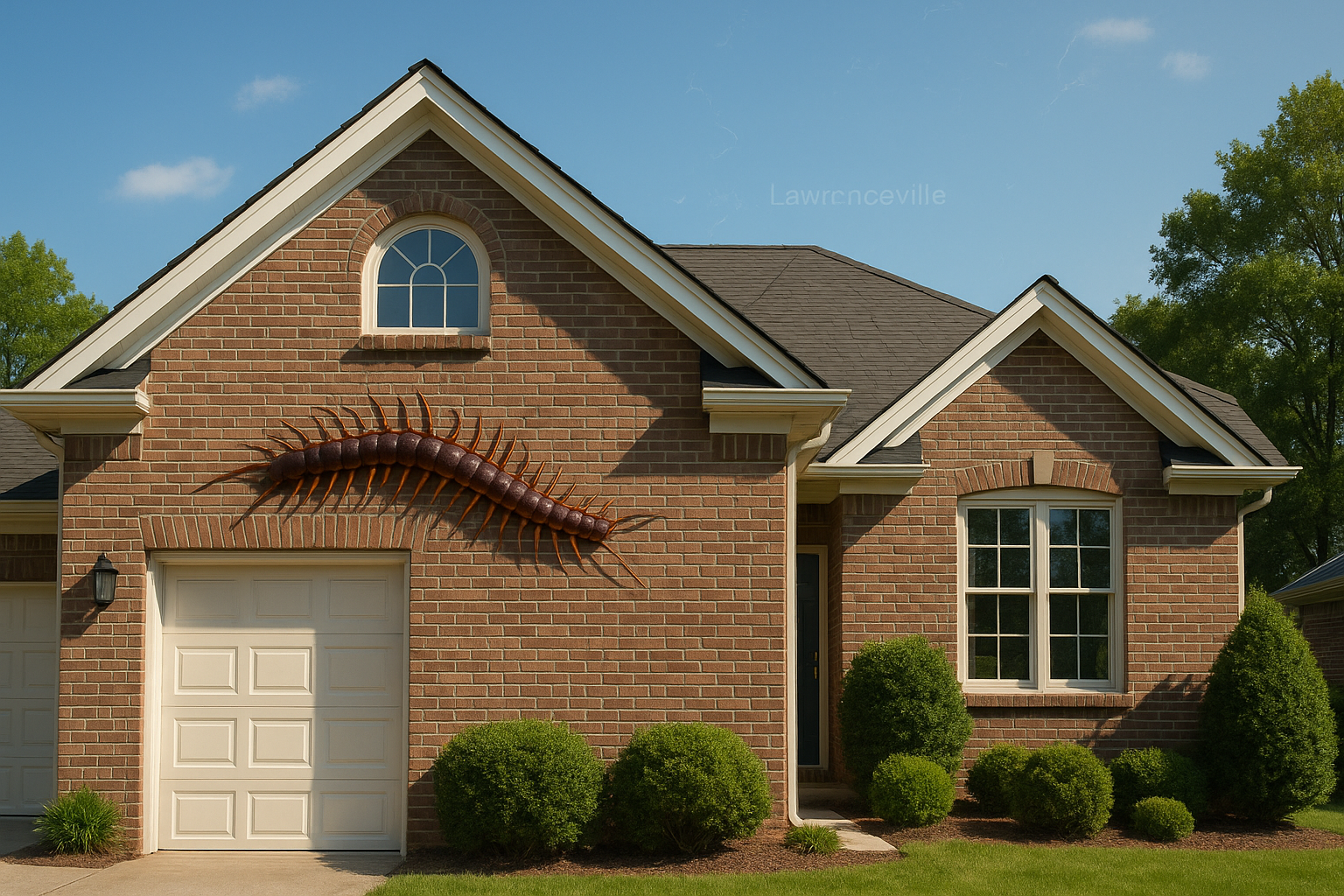
Spiders are a natural part of the Southeast’s ecosystem, and you’ll find them thriving in the warm, humid climate of Decatur. From the common house spider that spins quiet corners in basements to the more aggressive garden varieties, the region’s spider population is among the densest in the United States. While many species are harmless and even beneficial—preying on flies, mosquitoes, and other nuisance insects—certain circumstances can turn a simple spider sighting into a serious homeowner concern, making a spider inspection Decatur homeowners rely on an essential step in early detection and prevention.
Health risks that deserve your attention
The primary reason to take spider activity seriously is the presence of medically significant species. In Georgia, the black widow and the brown recluse are the two venomous spiders that pose real danger to people and pets. A black‑widow bite can cause intense muscle cramps, nausea, and, in rare cases, systemic reactions that require emergency care. Brown‑recluse bites are notorious for producing necrotic skin lesions that may become infected if not treated promptly.
Even if you never encounter a venomous spider, bites from non‑dangerous species can trigger allergic reactions ranging from mild itching to severe anaphylaxis in sensitive individuals. The CDC’s spider safety guidance highlights these risks and recommends immediate medical attention for any unexplained bite symptoms.
Impact on property value and peace of mind
Beyond health concerns, a visible spider infestation can erode the comfort and marketability of your home. Prospective buyers often view webs in corners, basements, or attics as a sign of broader pest neglect, which can lower offers or lead to costly negotiations. Homeowners who live with constant spider sightings may experience heightened anxiety, disrupted sleep, and an overall sense of unease—especially families with young children or pets who are more vulnerable to bites.
In Decatur’s tightly knit neighborhoods, reputation matters. A single spider problem that spreads to adjacent houses can quickly become a community issue, prompting HOA complaints and even affecting neighborhood insurance rates. Addressing spider activity early helps preserve both your property’s financial value and the tranquil atmosphere you expect from a suburban home.
Local context: Why Decatur needs a focused approach
Decatur’s historic homes, mature trees, and abundant foliage create ideal habitats for spiders to hide and reproduce. Seasonal humidity spikes in late summer and early fall encourage spiders to seek shelter indoors, while construction projects and landscaping disturbances can displace colonies, prompting them to move into nearby residences. Understanding these local patterns is essential for effective prevention.
Moreover, Decatur’s proximity to Atlanta means a higher turnover of renters and frequent home renovations—both of which can inadvertently introduce spider populations from other areas. A one‑size‑fits‑all pest plan that works in arid regions simply won’t address the unique challenges faced by homeowners here.
How Anthem Pest Control protects Decardians
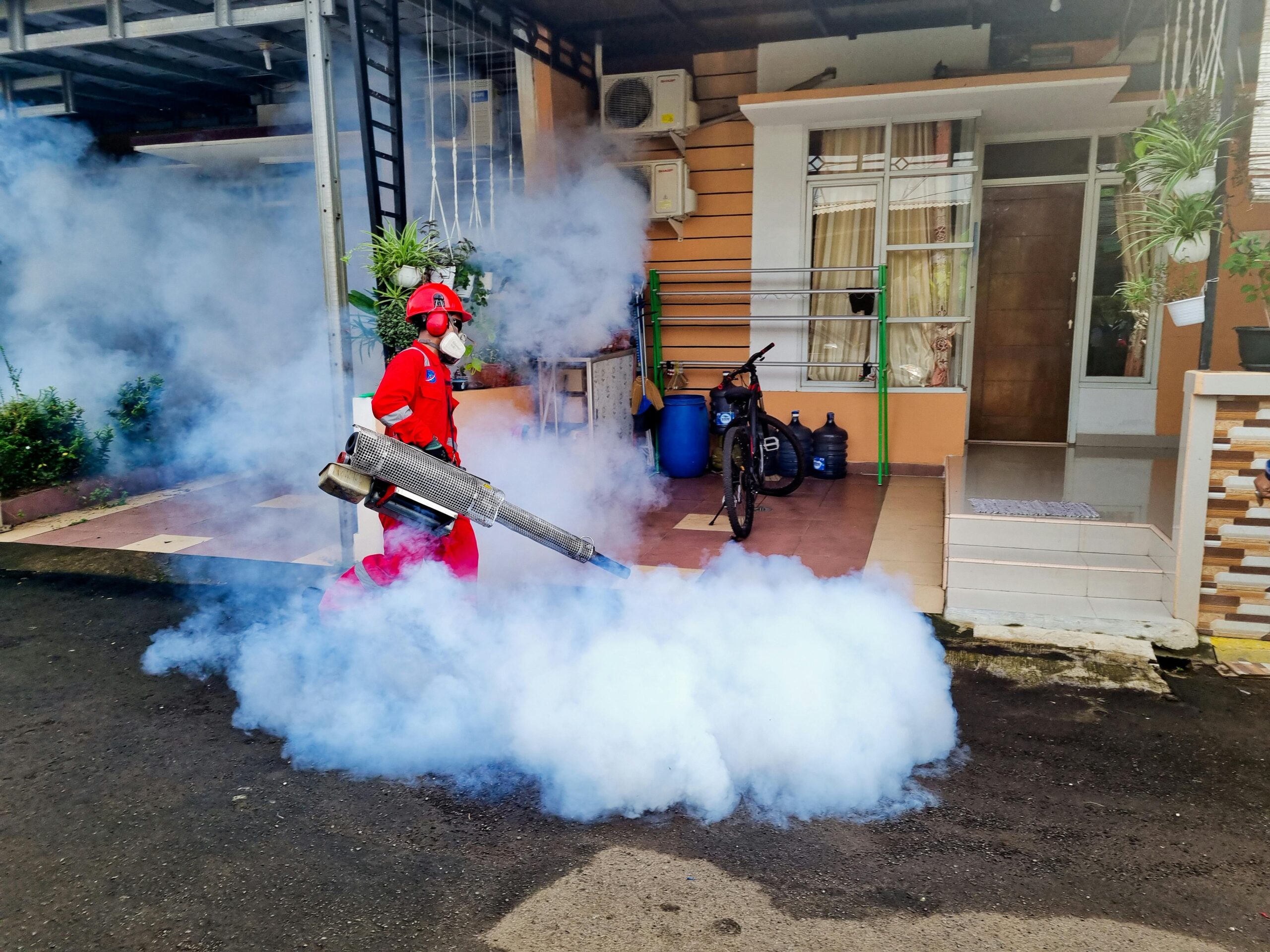
Anthem Pest Control leverages decades of experience in the Southeast to deliver targeted spider management that goes beyond surface‑level cleaning. Our certified technicians conduct a thorough inspection to identify entry points, locate hidden nests, and assess the presence of high‑risk species. Using EPA‑approved, low‑toxicity treatments, we create a barrier that deters spiders while keeping your family and pets safe.
In addition to immediate removal, Anthem offers a proactive maintenance program tailored to Decatur’s climate. Seasonal treatments, structural sealing, and homeowner education empower you to keep spider activity at bay year after year. When you choose Anthem, you’re not just hiring a pest service—you’re partnering with a local expert who understands the specific spider dynamics of your neighborhood.
Common Harmful Spiders in Decatur
Black Widow (Latrodectus mactans)
The female black widow is instantly recognizable by its glossy black body and the iconic bright red hourglass on the underside of the abdomen. Males are much smaller, lighter in color, and lack the hourglass, which often leads homeowners to overlook them.
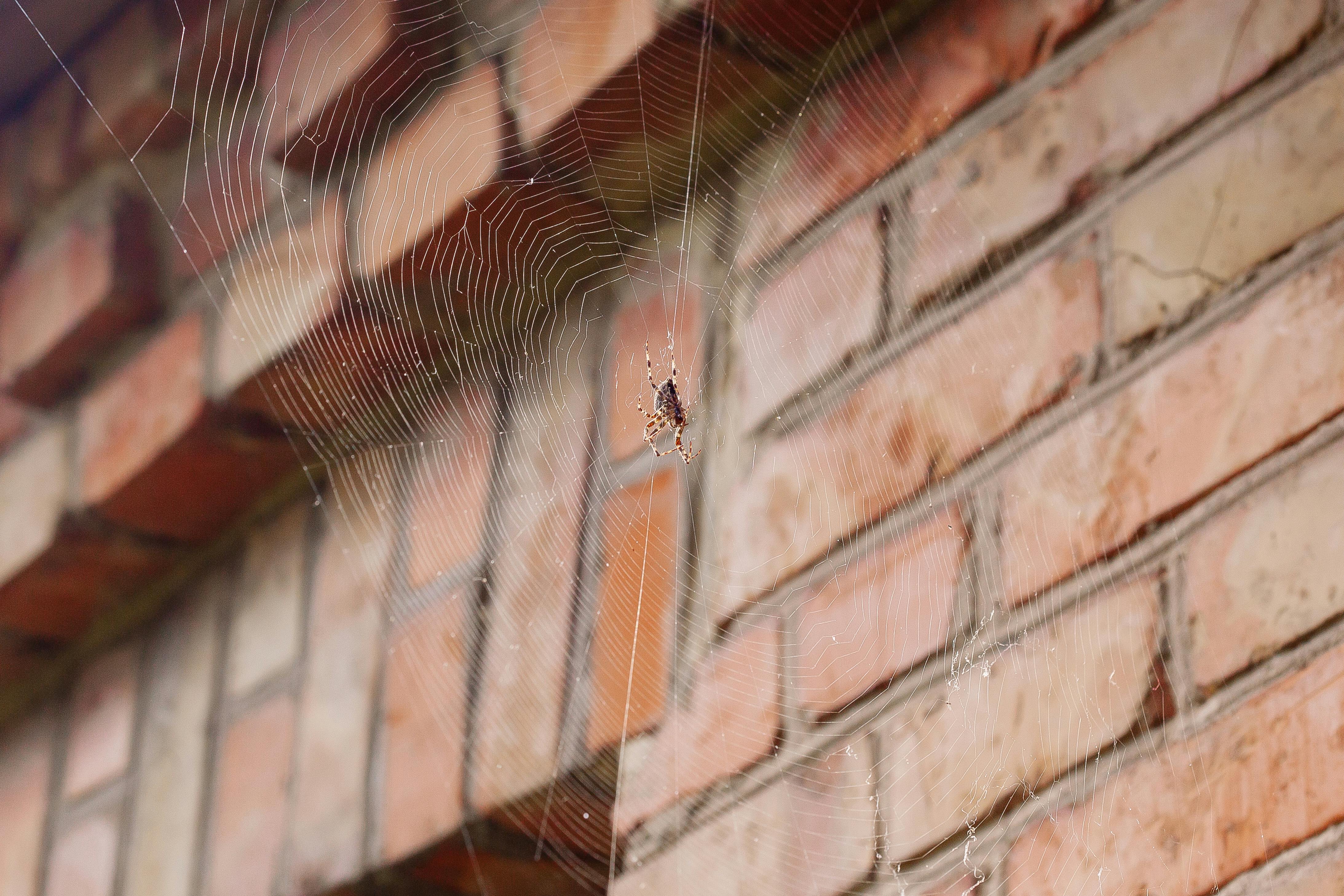
In Decatur, black widows favor quiet indoor hiding spots—think undisturbed corners of basements, garages, crawl spaces, and even behind stored boxes in closets. They build irregular, tangled webs close to the ground, and you’ll often find a single egg sac tucked into the web’s center.
A bite from a female black widow can cause muscle cramps, abdominal pain, nausea, and a feeling of intense fatigue. Symptoms usually appear within 30 minutes and can last several days. While rarely fatal to healthy adults, the bite is medically significant and warrants prompt medical attention, especially for children, the elderly, or anyone with a compromised immune system.
Brown Recluse (Loxosceles reclusa)
The brown recluse is smaller than the black widow, measuring about ¼ to ½ inch in body length. Its most distinctive feature is the dark violin‑shaped marking on the dorsal side of the cephalothorax, with the “neck” of the violin pointing toward the abdomen.
These spiders thrive in undisturbed indoor environments. In Decatur homes they’re often found in closets, under furniture, in attics, or inside wall voids where they can remain hidden for months. They construct a loose, irregular web that looks more like a sheet of silk than a classic orb.
A brown recluse bite can be deceptive; the puncture may feel like a minor pinch, but the venom can cause necrotic lesions that develop over 24–48 hours. The wound may turn white, then darken, and can leave a scar if not treated promptly. Medical evaluation is essential, particularly if the bite site shows increasing pain, swelling, or ulceration.
Other Nuisance Spiders
Decatur also hosts several spider species that are more of a nuisance than a health threat. Two common examples are the house spider (Parasteatoda tepidariorum) and the cellar spider (Pholcus phalangioides).
- House spider: Often found in corners of rooms, windowsills, and ceiling corners. They spin small, messy cobwebs and are harmless to humans. Their presence can indicate excess moisture or a buildup of dust.
- Cellar spider: Recognizable by their long, spindly legs and delicate, irregular webs in basements, crawl spaces, and attics. Despite their unsettling appearance, they are harmless and actually help control other insects.
While these spiders don’t pose a venomous risk, their webs can be unsightly, and large populations may signal that other pest insects are thriving, which could eventually attract the more dangerous species.
How to Differentiate Harmful Spiders from Harmless Ones
During a visual inspection, focus on three key characteristics: size and body shape, distinctive markings, and web type. Below is a quick reference guide:
| Feature | Black Widow | Brown Recluse | Harmless Common Spiders |
|---|---|---|---|
| Body color | Glossy black | Light to dark brown | Varies (gray, tan, brown) |
| Distinctive marking | Red hourglass (underside) | Violin‑shaped dorsal marking | None or faint patterns |
| Web type | Irregular, sticky, close to ground | Loose, sheet‑like, often in corners | Messy cobwebs, long‑legged sheet webs |
| Preferred location | Basements, garages, dark corners | Undisturbed indoor spaces (closets, attics) | Everywhere – windows, ceilings, basements |
Tips for Homeowners to Spot Early Signs
Even if you’re not an arachnid expert, a few simple observations can alert you to a potential problem:
- Web patterns: A dense, sticky web in low‑traffic areas often points to a black widow. Loose, sheet‑like webs in corners may indicate a brown recluse.
- Droppings: Small, dark specks resembling pepper grains can be spider feces. An increase in these droppings suggests a growing population.
- Bite marks: Unexplained red welts, especially with a “target” appearance, could be a spider bite. Note any accompanying muscle pain or necrotic skin changes.
- Location clues: Check storage boxes, behind appliances, and the underside of furniture where spiders love to hide.
If you notice any of these signs, especially the presence of the distinctive markings described above, it’s wise to contact a professional pest control service like Anthem Pest Control. Our locally trained technicians can safely identify the species, assess the risk, and implement a targeted treatment plan that protects your family while minimizing chemical exposure.
Seasonal Spider Activity Trends
Life‑Cycle Basics and Weather Influence
In Decatur, most household spiders follow a simple annual rhythm. Females lay egg sacs in early spring, the tiny spiderlings hatch as temperatures rise, and by midsummer the adults are fully active. As fall cools and humidity drops, many species retreat to hidden crevices or die off, only to re‑emerge the next spring. Warm, humid days accelerate development, while dry, cool periods put spiders into a low‑energy state.
Monthly Peaks for Problem Species
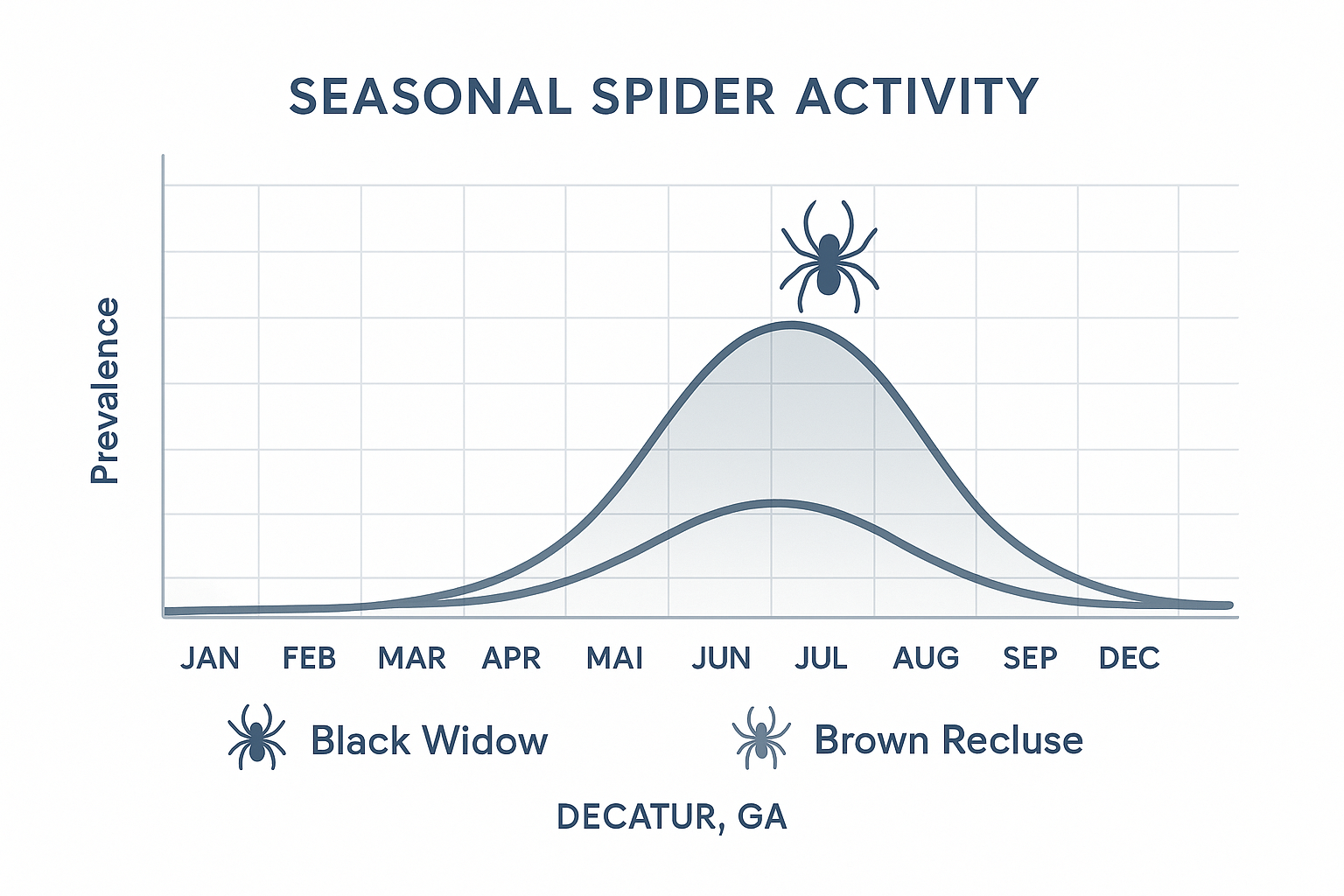
Two medically significant spiders—black widows and brown recluse—show distinct seasonal peaks. Black widows thrive in the hottest months; adult activity typically spikes from June through August, with August often marking the highest encounter rates in homes and outdoor decks. Brown recluse spiders prefer slightly cooler, still‑humid conditions, so their numbers climb later, peaking from late August into September and sometimes lingering into early October.
How Indoor Heating and Cooling Shift the Calendar
Modern homes can blunt the natural outdoor cycle. Air‑conditioned spaces keep temperatures in the 70‑80°F range well into the fall, extending the window when black widows remain active inside. Conversely, winter heating maintains a warm indoor environment that can sustain brown recluse activity longer than the outdoor chill would allow. In short, the moment you flip the thermostat can also be the moment a spider decides to stay.
Seasonal Monitoring Checklist
- Spring (March–May): Inspect crawl spaces and basements for new egg sacs; clear debris around the foundation.
- Summer (June–August): Conduct visual sweeps of outdoor lighting fixtures, decks, and sheds where black widows love to build webs.
- Late Summer/Fall (September–October): Focus on closets, attics, and undisturbed furniture for brown recluse sightings; seal cracks that lead to wall voids.
- Winter (November–February): Even if outdoor activity drops, check heated rooms, especially basements and laundry areas, for lingering adults.
Preventive Actions to Keep Spiders at Bay
Proactive steps are most effective when timed with the seasonal peaks. Begin each month by reducing moisture: fix leaky pipes, use dehumidifiers in basements, and ensure gutters direct water away from the foundation. Trim vegetation at least two feet from the house to eliminate bridge pathways for wandering spiders. Inside, vacuum corners, under furniture, and storage boxes regularly—this removes both webs and potential egg sacs.
When you notice a spider that matches the description of a black widow or brown recluse, don’t wait for a bite. Contact a licensed professional like Anthem Pest Control before the peak month ends. Early treatment can disrupt the breeding cycle, dramatically lowering the chance of a later infestation.
Why Seasonal Planning Matters
Understanding the ebb and flow of spider activity lets homeowners act before a problem becomes an emergency. By aligning inspections, cleaning routines, and professional treatments with the natural calendar—and by accounting for indoor climate control—you’ll reduce the likelihood of an unexpected encounter and keep your home safe year‑round.
Spider Inspection Pricing in Decatur vs Nearby Cities
What’s Included in a Typical Spider Inspection?
A standard spider inspection Decatur homeowners schedule usually starts with a fixed inspection fee that covers a thorough visual walk-through of your home’s interior and exterior. If technicians spot activity, the next line item is the treatment cost, which may involve sprays, dusts, or perimeter barriers tailored to the species identified. Finally, many companies charge a modest follow-up fee for a post-treatment check to confirm that the spiders have been eradicated and to address any lingering hotspots.
Average Costs Across the Region
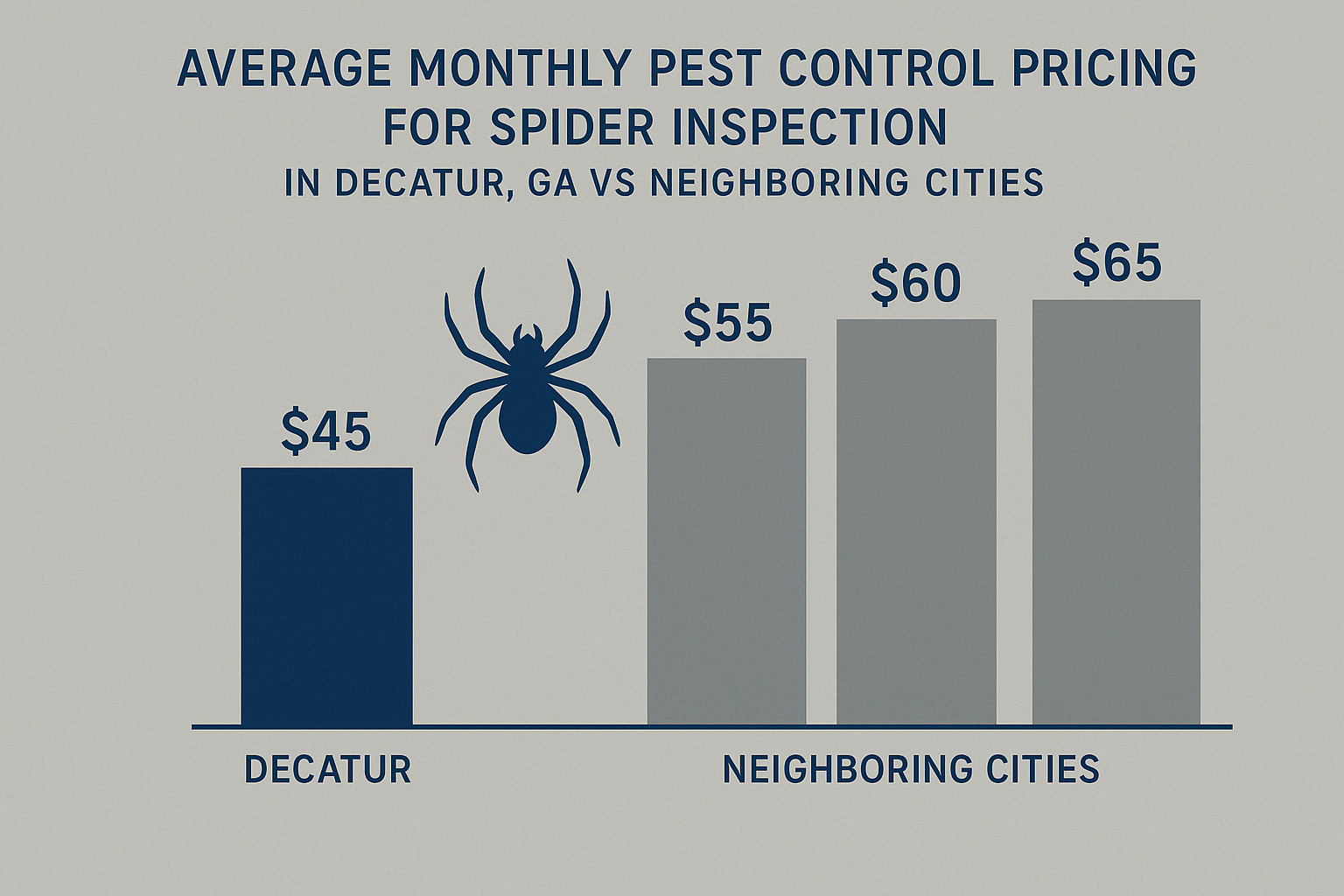
The infographic above illustrates the average monthly cost of a full spider inspection package in Decatur compared with four neighboring cities. Decatur’s median price sits at $129, while nearby Atlanta, Marietta, Stone Mountain, and Lithonia range from $140 to $165, reflecting regional variations in labor rates and market competition.
Why Prices Vary: Key Influencing Factors
- Property size: Larger homes require more technician time and additional product coverage.
- Infestation severity: Heavy spider activity often demands multiple treatment modalities and extra visits.
- Treatment type: Eco‑friendly or low‑toxicity options can carry a premium over standard chemical sprays.
- Seasonality: Prices may rise during peak spider season (late summer to early fall) when demand spikes.
Anthem’s Flat‑Rate Promise vs. Competitor Pricing
Anthem Pest Control simplifies the decision‑making process with a flat‑rate pricing model that bundles inspection, treatment, and one follow‑up visit into a single, upfront charge. In Decatur, that all‑inclusive price is $129, matching the local median but offering a clearer value proposition than competitors who often separate each service and add hidden surcharges. Additionally, Anthem backs every job with a service guarantee: if spiders reappear within 30 days, we’ll return at no extra cost.
No Hidden Fees – What You See Is What You Pay
Transparency is the cornerstone of Anthem’s approach. The quote you receive includes every line item—inspection, chosen treatment, and the scheduled follow‑up—so you never encounter surprise fees on your final invoice. This straightforward pricing, combined with our proven expertise, ensures homeowners can protect their families without worrying about unexpected costs.
What to Expect During a Professional Spider Inspection
When a spider problem creeps into your Decatur home, the last thing you want is uncertainty about what the pest‑control visit will look like. At Anthem Pest Control we’ve refined our inspection routine so you know exactly who will show up, what they’ll examine, and how they’ll communicate the results. Understanding each step helps you feel confident that the job will be thorough, safe, and tailored to your property.
Scheduling Your Appointment and Getting the Home Ready
Booking a spider inspection Decatur homeowners trust is as simple as a quick phone call or online request. Once the date is set, we’ll send a reminder with a short checklist to prepare your home. Clear away any clutter that could hide webs—think piles of newspapers, boxes, or seasonal decorations. Make sure exterior doors, garage doors, and crawl-space entries are accessible; the technician may need to open a few panels to reach hidden corners.
- Remove shoes, toys, and pet supplies from entryways.
- Trim vegetation that brushes against the house.
- Ensure utilities (electricity, water) are on for attic and basement access.
Technician Arrival: Who’s at Your Door?
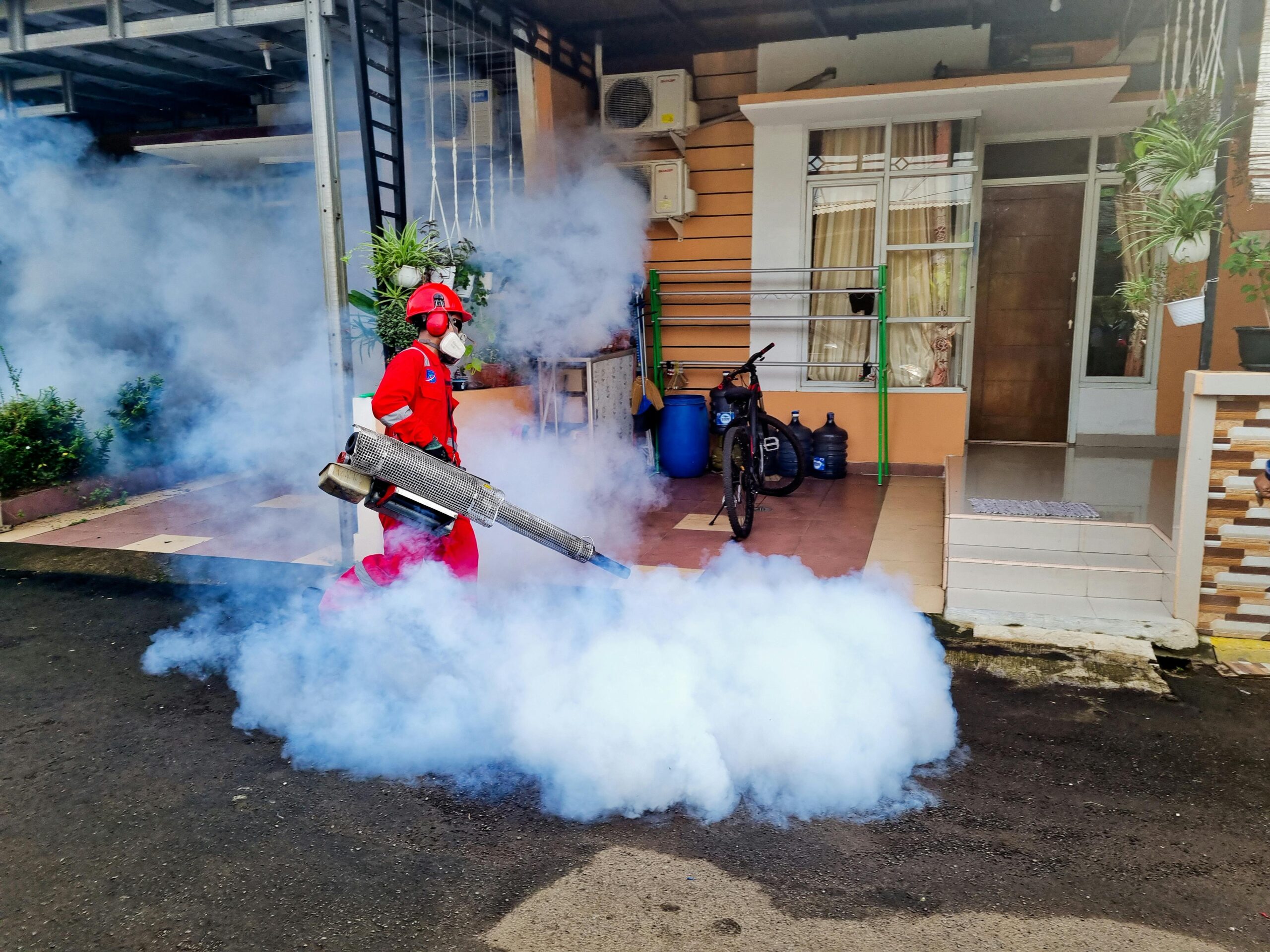
Our technicians arrive in a clean, branded uniform that identifies them as Anthem professionals. You’ll notice a sturdy backpack containing inspection tools, a flashlight, and a handheld tablet for documentation. Safety is a priority, so you’ll see gloves, protective eyewear, and a brief safety briefing before any work begins. If you have pets, we’ll ask you to keep them in a separate room to avoid stress for both parties.

The Inspection Walkthrough, Step by Step
Our inspection follows a logical, repeatable flow that leaves no stone unturned. First, we assess the exterior perimeter—checking foundation cracks, siding gaps, and window seals where spiders can slip inside. Next, we move indoors, focusing on high‑traffic corners, behind baseboards, and under appliances where webs often accumulate.
- Exterior Perimeter: We examine the foundation, siding, gutters, and outdoor lighting fixtures for entry points.
- Interior Corners & Crevices: Baseboards, crown molding, and wall junctions are inspected for spider webs and egg sacs.
- Attic & Roof Spaces: Using a ladder and flashlight, we look for webs in rafters, insulation, and ventilation openings.
- Basement & Crawl Spaces: Damp areas are prime spider habitats; we check walls, joists, and stored items.
- Hidden Spaces: Behind appliances, under furniture, and inside closets receive a close look with a magnifying lens.
Tools of the Trade: Light, Lenses, and More
A high‑intensity LED flashlight helps us spot faint silk threads in dim corners, while a portable magnifier reveals tiny spider markings that differentiate species. We also use a moisture meter to identify damp zones that attract certain spiders, and a digital camera to capture evidence for your records. All equipment is sanitized between jobs to maintain a hygienic environment.
Identifying Species and Assessing Risk
Once a spider or web is found, we pause to identify the species. Common household spiders—such as cellar spiders, house spiders, and the occasional brown recluse—each pose different levels of risk. Our technicians note the location, count, and any visible egg sacs, then log this data on a tablet. This documentation creates a clear picture of infestation severity and guides the treatment plan.
Treatment Options Explained After the Inspection
At the end of the walkthrough, we sit down with you—either in person or over the phone—to review the findings. If treatment is needed, we outline three main approaches:
- Chemical: Targeted, EPA‑approved sprays applied to entry points and hiding spots, safe for pets and children when used correctly.
- Mechanical: Physical removal of webs, egg sacs, and captured spiders, often combined with vacuuming.
- Exclusion: Sealing cracks, installing door sweeps, and trimming vegetation to prevent future entry.
We provide a transparent quote, explain the expected timeline, and answer any questions about safety or follow‑up visits. With Anthem’s expertise, you’ll know exactly what steps are being taken and why, giving you peace of mind that your home will stay spider‑free.
Protect Your Home with Anthem Pest Control – Free Quote
Spider activity in Decatur isn’t just an eyes‑wide‑open surprise—it’s a genuine health and property concern. Many resident species, such as the black‑widow and brown recluse, carry venom that can trigger severe reactions, especially in children, seniors, or anyone with allergies. Beyond bites, spiders can compromise the integrity of your home by nesting in insulation, wiring, and stored items, creating a hidden mess that attracts other pests.
Seasonal Peaks Demand Prompt Action
In our region, spider populations surge during two key periods: early spring, when adults emerge to lay eggs, and late summer into early fall, when juveniles disperse in search of shelter. These windows are when you’ll notice more webs in corners, basements, and attics. Waiting until the infestation is visible often means the problem has already spread, making treatment more intensive and costly. A timely inspection—ideally before the first peak and again after the second—lets you stay one step ahead, preventing spiders from establishing permanent colonies inside your walls.
Why Choose Anthem Pest Control?
- Local Expertise: Our technicians live and work in the Decatur area. They know which spider species are most common here, their preferred hiding spots, and the most effective strategies for each.
- Transparent Pricing: No hidden fees or surprise add‑ons. You’ll receive a clear, itemized estimate before any work begins, so you can budget confidently.
- Safe Treatment Methods: We prioritize the health of your family, pets, and the environment. Our Integrated Pest Management (IPM) approach combines low‑toxicity products with targeted applications, reducing exposure while delivering lasting results.
- Certified Technicians: Every member of our team holds industry certifications and undergoes continuous training, ensuring you get the most up‑to‑date, science‑backed solutions.
Take the First Step—No Obligation, No Pressure
Protecting your home from spiders doesn’t have to be a daunting task. A quick, professional inspection can pinpoint entry points, identify high‑risk zones, and outline a customized prevention plan—all before the next seasonal surge.
Ready to safeguard your family and property? Contact us for a free, no‑obligation quote and protect your family today. Our friendly staff will schedule a convenient time, answer any questions, and provide a transparent estimate that respects your budget.
Call us now at 877-371-8196 or visit Anthem Pest Control to request your free quote. Our certified technicians will schedule a professional spider inspection Decatur homeowners can rely on, helping keep your home spider-free so you can enjoy a safe, comfortable space year-round.